Join us on a unique adventure across a land that connects millennia of history with breathtaking nature, modern megacities, and incredible spirituality. This journey will take you from futuristic metropolises through the mystical mists of the Zhangjiajie mountains, the karst paradises around Guilin, and the poetic countryside of Yangshuo, all the way to ancient Xi’an with its legendary Terracotta Army, and finally to imperial Beijing, where you will touch the very heart of Chinese civilization. You can look forward to boat cruises, high-speed train rides, walks across glass bridges, strolls through neighborhoods filled with the scents of street food, morning tai-chi in the parks, the charms of traditional teahouses, and moments of silence in Buddhist temples. Every day has its own story, and every moment writes another chapter of your Chinese journey.
Practical information about traveling in China can be found here.
Hello, welcome to China!! You've just landed and found yourself in a completely different world. Today is all about first impressions, arrival formalities, and heading to your accommodation. After that, it’s up to you whether you want to take a break or dive straight into the hustle and bustle of the city? Thanks to your hotel's great location, you’re within reach of the iconic Bund waterfront promenade with its view of the futuristic Pudong skyscrapers – right where you landed a little while ago. Or, head down the famous Nanjing Road, where history meets modernity. Whatever you choose, one thing is certain: the adventure is just beginning. And a first taste of Chinese cuisine? That’s a must. Enjoy your first day in style.
After landing and exiting the plane, you might encounter a slightly longer airport procedure than you are used to back home. First, airport staff will direct you toward immigration, where you'll need to fill out a customs declaration form at the desks before passing through passport control. You'll enter basic information about yourself and your travel documents, along with additional details (e.g., your occupation, travel history, whether you have anything to declare, etc.). Then, you'll provide info about your stay in China—mention the cities you plan to visit and your accommodation (for the first night). Filling this out and the subsequent check by the immigration officer should be straightforward; just be sure to provide honest information. As long as your details match those on your visa, you will certainly be allowed into the country. Once you have finished the customs declaration, join the (likely) long and slow-moving queue until you reach an officer. They will then take your passport with your visa and the declaration form, take your photo, and scan your fingerprints. After that, you are cleared to head off and pick up your luggage (don't be surprised if someone checks your passport and visa again on the way—the Chinese are very cautious about this).
After picking up your bags, you will go through a security check—everything will pass through a conveyor belt scanner, just like during check-in. You might have to show your passport and visa again during this process. After that, you should finally be "free" and will find yourself in the arrival hall.
The journey from the airport itself is the first attraction you'll experience in China. It's provided by the Maglev high-speed train, traveling up to 300 km/h, even though it's designed for speeds exceeding 400 km/h.
Maglev high-speed train:
route: airport (arrival hall) → Longyang Road metro station
operating hours (from the airport): 07:02 - 21:42
frequency: 20 min
travel time to Longyang Road station: 12 min
ticket: 50 CNY (one-way), purchase at the machine in front of the station (international cards accepted)
Trip to the city center (Nanjing Road main street and The Bund waterfront):
metro, green line 2:
frequency - 5 min
travel time to the center (East Nanjing Road station) - approx. 30 min
price - approx. 5 CNY
No matter when you arrive, definitely don't miss a walk along the famous The Bund promenade to start with. From there, you'll have the skyscrapers, led by the Oriental Pearl Tower in the Pudong district opposite, right in the palm of your hand. But the other side of the promenade isn't bad either – it offers magnificent colonial buildings that light up at night.


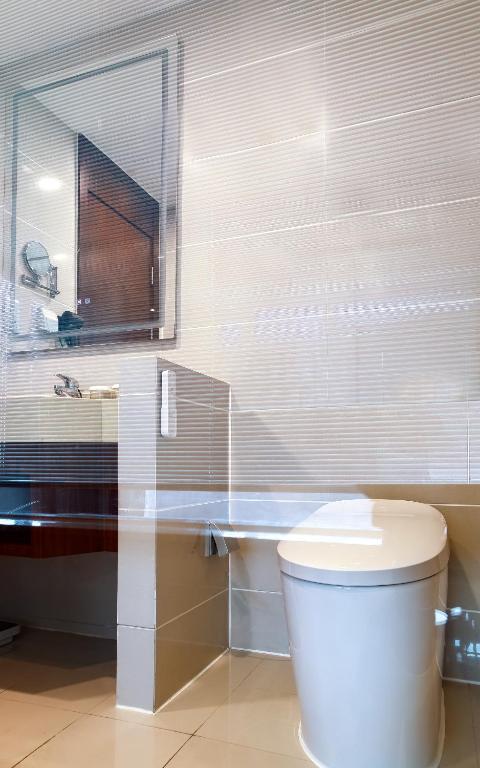

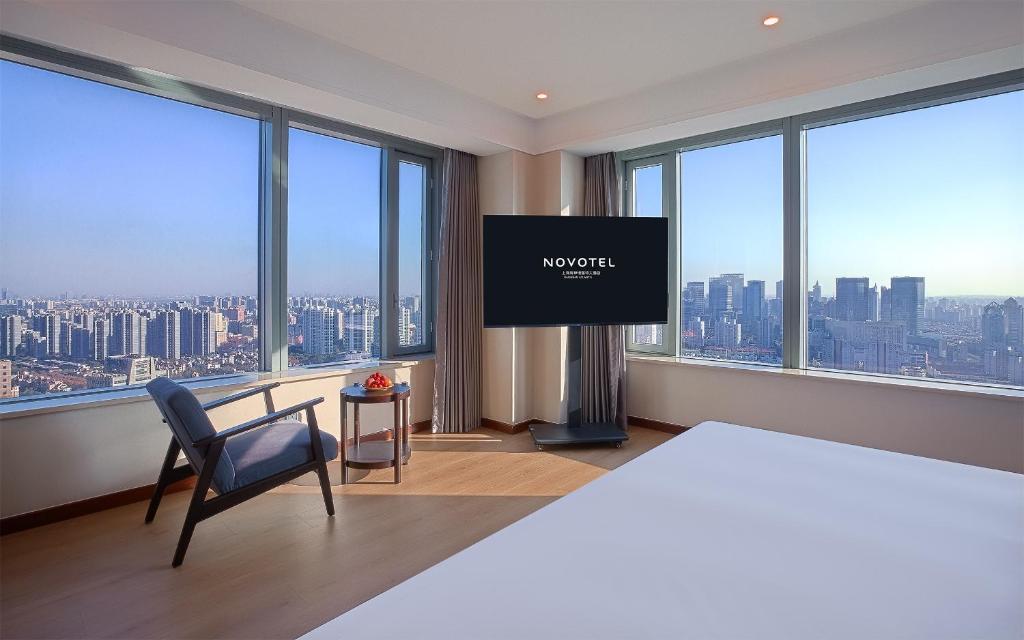
Today is a day full of contrasts, from the vibrant alleyways of Old Shanghai to breathtaking views from nearly half a kilometer up. You'll start in the labyrinth of Yu Yuan Old Street, where you'll soak up the atmosphere of old China among tea houses, lanterns, and the scent of street food. Don't forget to visit the Yu Garden itself, a masterpiece of Chinese garden architecture. From there, you'll head into the modern world of skyscrapers in the Pudong district. That's where, among a forest of glass and steel, the Oriental Pearl Tower rises, one of the most iconic structures in the world. The trip to the observation deck will literally take your breath away, and the city below will look like something from another universe. Ideally, plan your visit for sunset so you can experience Shanghai transforming from a daytime city into a glowing nocturnal metropolis. You can end your evening with a stroll along the Bund, the waterfront, where you can look back at the Oriental Pearl from the opposite bank. As the entire Shanghai skyline lights up, you'll realize this city isn't just another stop on a map, but a true experience that will stay with you forever.
If you didn't manage to head out last night, no worries – Nanjing Road isn't going anywhere. This legendary street is the heart of Shanghai life: endless shops, neon signs, street performers, and traditional teahouses. It's one of the busiest shopping streets in Asia, where history meets the city's modern pulse. The perfect spot for a casual stroll, trying some street food, or just soaking up the atmosphere of Shanghai on the move.
Just a few steps from the hustle and bustle of the main streets, you'll find a surprisingly peaceful spot: People’s Square park. Once a horse racing track, today it's a vibrant cultural hub surrounded by greenery, museums, and fountains. Locals come here to stroll, dance, play chess, or just sit on a bench and watch the city in motion. It's the perfect place for a quick break between experiences and a great chance to get a glimpse into everyday life in the heart of Shanghai.
metro: red line 1, direction Fujin Road, People's Square → Hanzhong Road, transfer
metro: pink line 13, direction Jinyun Road, Hanzhong Road → Jiangning Road
the temple is just a few hundred meters from the metro station
The greatest treasure is the sitting Buddha carved from a single piece of white jade, brought from Burma. A place where time stands still for a moment and the city goes quiet – ideal for a moment of calm, watching the monks, or just soaking up the atmosphere of traditional Chinese spirituality.

metro: pink line 13, direction Zhangjiang Road, Jiangning Road → Site of the First CPC National Congress·Xintiandi
metro: light purple line 10, direction Jilong Road, Site of the First CPC... → Yu Garden
Narrow alleys, traditional architecture, red lanterns, and stalls filled with aromas – that's Yu Yuan Old Street, a place where old Shanghai comes to life. You can taste local dumplings, buy souvenirs, tea, or handmade sweets here.

Hidden behind the walls of the old town is one of the most beautiful corners of Shanghai, the Yu Garden. Established in the 16th century as a private garden for a wealthy merchant, it is today a perfect example of traditional Chinese aesthetics. Winding paths, carp ponds, ornate pavilions, stone bridges, and symbolic rockeries create a carefully balanced whole – peaceful, harmonious, and visually fascinating.

Every world metropolis has its landmark, and in Shanghai, it is undoubtedly this distinctive television and radio tower. It stands 468 meters tall, and while it is not the tallest building in the city (that title belongs to the Shanghai Tower), its futuristic design, strategic location by the Huangpu River, and evening light shows make it one of the most photographed and memorable spots in all of China. From the observation decks, you get a breathtaking view of the entire city and the river, both day and night. The tower is fascinating from the outside, but the real experience begins when you take the elevator to the top. There are several types of tickets available that will take you to different parts of the tower—from classic galleries to a revolving restaurant or a glass floor.
metro, green line 2, direction Panxiang Road, Lujiazui → Shanghai Hongqiao railway st.
frequency - 5 min
travel time - approx. 50 - 60 min
price - approx. 8 CNY
high-speed train: 19:34 Shanghai Hongqiao → 22:14 Huangshanbei (Huangshan North)
line - C3609
travel time: 2 hrs 40 min
!!ATTENTION!! Don't forget to book well in advance via Trip.com or the Chinese railway website (if you have a Chinese SIM card). You can find information on how Chinese trains work in the practical overview of the country (link in the introduction of the itinerary)
The DiDi Chuxing service is fully available and legal in the Yellow Mountains area, offering a reliable way to get around Huangshan city, surrounding tourist villages, and mountain entry points. Travelers can easily plan trips between key locations, including less accessible spots like Tangkou or Hongcun. For a smooth experience, it is recommended to have the DiDi app installed and linked to a Chinese payment system, such as WeChat Pay or Alipay. This ensures seamless and efficient transport for foreign visitors as well.


Today takes you into a magical world of granite peaks, misty chasms, and pine trees that bow only to those who know how to slow down. The cable car will whisk you in an instant to heights where time loses its meaning and every step becomes part of a story that the mountains have been telling for thousands of years. The walk leads through a landscape that feels like a dream – stone paths wind along precipices, amidst which stand legendary formations like Lotus Peak, the Guest-Greeting Pine, or gorges with poetic names like the Sky Thread.
Get to the national park entrance and the Yungu cable car lower station comfortably using the Didi app. It's the fastest and most reliable way to get straight there in the morning without any unnecessary delays.
TIP: If you want to save money, there's a bus from the bus terminal that takes you to the Yellow Mountains area every hour; the ride takes about an hour and costs around 20 CNY. The bus will drop you off at the terminal near the town of Tangkou, which is the gateway to the park.
You can book tickets for the cable car and the Huangshan area itself online, for example via Trip.com or on the official provincial tourism platform. We recommend booking everything in advance, especially during the peak season.
The Jade Screen Cablecar (Yuping) is one of the main entry points to the Yellow Mountains area. The cabins hold up to six people and the ride itself takes about six to ten minutes, depending on the conditions. On regular days, the cable car operates from Monday to Friday from 7:10 AM to 5:10 PM. On weekends and during national holidays, it starts earlier, at 6:30 AM, and service ends at 5:40 PM.
You'll start today's trip with a ride on the Jade Screen Cablecar (Yuping), which takes you to the southern part of the park – right into the heart of the Yellow Mountains. From there, you'll head on a loop trail taking you past some of the most iconic spots in the entire range. At the end, you'll return to the top cable car station to comfortably head back down to the valley. Along the way, look forward to famous peaks and viewpoints like Lotus Peak, Jade Screen Pavilion, Heavenly Capital Peak, the Guest-Greeting Pine, Bright Summit Peak, Turtle Cave, or dramatic sections like the 100-step Scaling Ladder, Thread of the Sky, and New Thread of the Sky.
For better orientation, I've included a map screenshot (from Mapy.cz). You don't have to follow the route strictly – it all depends on the weather, your mood, and how many extra steps you're up for. Today is mainly about peacefully discovering the beauty hidden around every corner of these mountains.

To get back to the entrance gate, you can take the cable car again or hike down the hill via a short, easy trail.
Use the Didi taxi service or the bus.
If you're looking for a truly authentic gourmet experience in Huangshan, I recommend Dasha Huicai Garden (大傻徽菜园) – a great restaurant featuring genuine Anhui cuisine, located right at the entrance to Tunxi Old Street (37 Sānmǎ Lù).
This day takes you not only through kilometers and transfers, but above all transports you from the peaceful areas of the Yellow Mountains to the wilderness of Zhangjiajie – a landscape that inspired the movie Avatar. The train journey is an experience in itself, combining peace, tradition, and the gradual revealing of breathtaking panoramas. And the evening? You can spice it up with either a fragile touch of glass over an abyss, or a magical show that will awaken all your senses.
Your train journey begins at Tunxi North Railway Station, where you will depart on an early morning connection towards Changsha South, transferring there to a modern high-speed train bound for Zhangjiajie West Station. The ride is comfortable—in a 3+2 seat configuration in second class, you have plenty of legroom and a window to watch the changing Chinese landscapes: rolling rice terraces, traditional villages, and industrial panoramas. The roughly 8-hour trip passes pleasantly thanks to Wi-Fi, onboard snacks, and the chance to chat with fellow passengers or simply relax while enjoying the magic of the moving scenery. In Zhangjiajie, you will arrive at Zhangjiajie West, a modern transit hub located about a 30-minute drive from the center of Wulingyuan, the main gateway to natural wonders. You can conveniently purchase tickets online in advance, for example through platforms like Trip.com or 12306 China Railway—the official Chinese railway portal, which also offers an English version. You can either print the purchased tickets or use the QR code directly at the station.


Today takes you to one of the most breathtaking places in all of China – the Zhangjiajie Grand Canyon area. You're in for a walk across the world's most famous glass bridge, which hovers up to 300 meters above the deep canyon. The glass floor beneath you will reveal fascinating views straight into the abyss – an experience that will leave a lasting impression even on the bravest souls.
You can also easily reach the Wulingyuan area, which forms the heart of Zhangjiajie National Park, by taxi – and it's a surprisingly comfortable and quick option. If you're heading out from the city of Zhangjiajie or the Zhangjiajie West Railway Station, for example, the trip takes about 40 to 50 minutes, depending on traffic. Prices range from around 100 to 150 RMB per car, and if you split the cost with others, it's a very affordable choice. Most drivers are used to tourists and know the common entry points to the park – just say "Wulingyuan Scenic Area" or simply show the name in Chinese: 武陵源风景区. If you don't want to risk any misunderstanding, it's worth having the destination written down or saved on your phone. And as always in China – have cash on hand or WeChat/Alipay ready, as not all drivers accept credit cards.
The taxi will drop you off right at one of the main park entrances, where you'll find ticket offices, shuttle buses, and route maps waiting for you. No worries, no transfers – straight to the adventure.
After passing through the security gate, the bridge itself awaits you – a 430-meter-long structure gracefully arching over the canyon. The view down is stunning, and for the daring, there’s an option to add something extra: bungee jumping from a height of over 300 meters – the highest in the world, or a zip-line that lets you soar through the air right over the canyon. If you prefer a less extreme experience, choose the slide down the canyon wall or the comfortable elevator that will take you all the way down to the river.
The lower part of the canyon offers a more relaxed pace – a quiet walk along wooden paths awaits you beside the turquoise-colored river, surrounded by lush vegetation and forested karst formations. You will finish the route with a small boat ride that will carry you back to the exit. Once the circuit is finished, you can return to Wulingyuan by tourist bus or call a taxi.
Possibility of using the Didi app
After returning from the canyon, I recommend visiting Tang Shifu Tujia Restaurant (唐师傅湘西名菜馆), located right in the Wulingyuan area. This restaurant is a local favorite – it offers traditional Hunan and Tujia flavors, including spicy specialties like Chopped Chili Fish Head, Tang Shifu Fragrant Leaf Duck, or Spicy Frog Pot.
While yesterday's trip to the Grand Canyon offered adrenaline and heights from the outside, today takes you right into the heart of a miracle – the Wulingyuan scenic area, the core of Zhangjiajie National Forest Park. And it is here that nature truly showed off in all its power. The landscape has transformed into another world – hundreds of narrow, sky-piercing sandstone pillars create the illusion as if the entire planet Pandora had emerged before you.
You can also easily reach the Wulingyuan area, which forms the heart of Zhangjiajie National Park, by taxi – and it's a surprisingly comfortable and quick option. If you're heading out from, for example, the city of Zhangjiajie or Zhangjiajie West Railway Station, the ride takes about 40 to 50 minutes, depending on traffic. Prices range from around 100 to 150 RMB per car, and if you split the cost with others, it's a very affordable option. Most drivers are used to tourists and know the main park entrances – just say "Wulingyuan Scenic Area" or simply show the name in Chinese: 武陵源风景区. If you don't want to risk any misunderstandings, it's worth having your destination written down or saved on your phone. And as always in China – have cash on hand or WeChat/Alipay ready, as not all drivers accept credit cards.
A taxi will take you directly to one of the main park entrances, where not only ticket offices but also shuttle buses and trail maps are waiting for you. No worries, no transfers – straight to the adventure. Upon arriving at the main entrance to the Wulingyuan area, a day full of breathtaking nature and stunning views awaits you – but before you dive in, you need to have everything ready. Tickets to Zhangjiajie National Forest Park must be booked in advance, ideally several days ahead. You can book through the official Zhangjiajie National Forest Park portal, via the WeChat app (search for the "Zhangjiajie Ticket Booking" mini-program), or through reliable platforms like Trip.com. Tickets are linked to your name and passport, which you must have with you physically – without it, you won't be allowed entry.
And since we are in China, where nature and technology often come together, there is even an ingenious elevator that takes you right up the cliff face. The Bailong Elevator is the world's tallest outdoor elevator and offers not only a dramatic ascent, but also a stunning view of the surrounding landscape. From the upper platform, trails lead out to viewpoints that are among the most famous in all of China.
The main star of the day is Hallelujah Mountain, a rock pillar that towers nearly a kilometer above the surrounding terrain and became famous as the inspiration for the floating mountains in the movie Avatar. In the misty haze, these formations look almost supernatural. And it's not just about the views – the local nature is alive. Monkeys often roam the trails, having learned that tourists sometimes drop something tasty. If you're not quick enough, they might even take something right out of your backpack – with their characteristic cheeky smiles.


Today is like a long breath between two adventures. You're in for the longest train ride of the entire trip, a journey connecting the high peaks of Zhangjiajie with the soft landscape of Guangxi province. In the rhythm of the tracks, with the countryside rushing by outside, you have time to slow down, relax, and let the experiences of the past few days sink in. As you head south, the landscape begins to change: limestone cones, river bends, and green rice terraces start to create a picture that feels like a living painting. Your destination is Guilin, a city famous not only for its scenery but also its nightlife – especially around the Li River, where things come alive after dark with the scent of street food and lights reflecting on the water.
Today you'll have to wake up a little early; the train to Guilin leaves just after 7 a.m. and it's the only one of the day. The good news is that your accommodation is just a few steps from the station, which was the plan all along. The station is small and easy to navigate, so checking in will be quick and stress-free. We trust you've booked your ticket in advance—for such a busy connection, it's almost a necessity. And if you're not quite ready to wake up yet, no problem, the comfortable train offers seven hours of peace, perfect for catching up on sleep, reading, or just calmly watching the landscape as it turns into something more magical with every kilometer. Tickets can be booked online, and the Trip.com portal works best, offering a simple English interface, secure card payment, and the ability to track your booking status. Alternatively, you can use the official Chinese railways website 12306.cn or the mini-app in WeChat. Don't forget that you need to enter your name and passport number when purchasing, and you will need to physically present your passport when boarding the train—it's impossible to get through the turnstiles without it.

Your first stop in Guilin takes you right to the heart of the city, at the confluence of the Li and Taohua rivers, where the iconic Elephant Trunk Hill rises—a limestone hill whose shape resembles an elephant drinking from the river. This formation is not just a symbol of Guilin, but also a gateway to the local unique karst landscape. The place feels calm and welcoming, yet it offers several remarkable spots to explore. Right at the foot of the hill is the Water Moon Cave—a natural arch that creates the illusion of a moon floating on the water's surface. At the top of the hill stands the Ming Dynasty-era Puxian Pagoda, which offers views of the surrounding river and city. The peaceful atmosphere is complemented by the Yunfeng Temple, dedicated to Buddhist deities, and on the riverbank, you will also find Love Island—a small islet ideal for a short walk or a quiet moment. If you decide to return in the evening, an extraordinary spectacle awaits. The entire hill becomes a living canvas for a light show, during which laser animations are projected onto the 'body of the elephant,' telling the story of Guilin—its nature, history, and poetry. The combination of rocks, water, and light creates an atmosphere that stays with you.
The area is open daily from 7:00 AM to 9:00 PM, and admission is free. However, it is recommended to book in advance, ideally 1 to 7 days before your planned visit, either via the official website of the Guilin tourism administration or through the WeChat app.
If you're looking for an authentic taste of rural China, there's no better spot than the bustling street food strip stretching from Shanhu Lake in the south up to East Jiefang Road in the north. This is where a vibrant world of flavors, aromas, and colors—so typical of Asian streets—comes to life before your eyes. Along this entire promenade, dozens of stalls line the path, offering everything from local specialties to a surprisingly diverse range of international bites.


Today, one of the highlights of the entire trip awaits you—a cruise along the Li River. You'll drift slowly through a landscape that resembles a traditional Chinese painting: limestone karsts, quiet river meanders, and traditional bamboo rafts with fishermen and their cormorants. Once you arrive in Yangshuo, you'll hop on a bike and ride along the peaceful Yulong River. The scenery around you is so beautiful that you'll even find it on a banknote—and it's even more impressive in person. This is the China you know from fairy tales.
A cruise on the Li River is one of the highlights of your trip, so it deserves a bit of planning. Boats depart from Zhujiang Wharf, which is about a 40-minute drive from Guilin city center, and sail south to the town of Yangshuo, where you will be staying overnight—no need to worry about the return trip. The cruise takes about 4 hours and offers breathtaking views of the limestone karsts, which form one of China's most iconic landscapes. Tickets must be booked in advance and are tied to your name and passport number, which you must have with you both when booking and boarding. It is recommended to book a few days in advance, ideally before you even arrive in Guilin. The best way is to ask the staff at your accommodation for help (they are usually happy to help you book the best option). Alternatively, you can use platforms like Trip.com, the official website en.liriver.com.cn, or a WeChat mini-program. We recommend choosing a 3-star boat—it offers plenty of comfort and great views. More expensive 4-star boats don't offer a significant difference, as you'll spend most of your time on the outdoor deck anyway. Avoid the lunch option—it's much nicer to bring your own snacks and plenty of water. If you don't have your own transport, it's definitely worth booking a package with hotel pickup, as the port isn't easily accessible by public transport. In that case, an operator will contact you to arrange the time and meeting point, often via WeChat. We recommend departing around 9:00 AM so you have plenty of time for afternoon activities once you arrive in Yangshuo.


Your Li River cruise ends in Yangshuo, either at the Shuidongmen Wharf near Green Lotus Peak or at the Fu’an Wharf not far from Shutong Hill. Although the river journey ends at this moment, another chapter opens before you – a new adventure is just beginning in the heart of one of China's most picturesque regions.
Compared to Guilin, Yangshuo is a small, cozy town surrounded by nature that is literally at your fingertips. In the evening, the town center turns into a lively place full of people, lights, and scents, but just a few minutes by bike and you'll find yourself in a quiet landscape among rice paddies and limestone karsts. And a bicycle is exactly the ideal way to explore the area around the Yulong River.
You can easily rent bikes in the side streets near the main square or along West Street. Just look for signs or ask at the info center right on the square – they'll point you in the right direction. Don't expect much paperwork – you just pick a bike (usually an older mountain or road bike), pay cash, and leave a deposit of about 100 CNY. We don't recommend leaving your passport as a security deposit. Definitely check the brakes, tires, and the lock, which should be included. You get the bike for the whole day, usually with a return around 8:00 PM, depending on your agreement with the owner.
The trip back to town itself won't take longer than 30 minutes. It depends on whether you extend your route along the river or head straight back to Yangshuo town by road.
Return the bike, get your deposit back and enjoy the evening atmosphere of Yangshuo, including the square, the lake and the shopping West street.

In the evening, grab a taxi and head to the hotel.


Your first evening in imperial Xi’an will sweep you into the magical atmosphere of the old city. In the alleys of the Muslim Quarter, you'll taste scents and flavors you won't find anywhere else in China—from legendary noodles to grilled skewers. Then, climb up to the famous city walls, which transform into a peaceful, illuminated promenade at night. Rent a bike at one of the main gates and ride the entire historic circuit around the center—above the busy streets, in the shadow of the towers, and with a view you won't soon forget. Xi’an after dark? Magic that starts right now.
High-speed trains leave Yangshuo from Yangshuo Railway Station, which is about a 30-minute drive from the city center (we recommend taking a taxi). The trains head to Guilin North or Guilin West, and the journey takes just 40–50 minutes. Tickets must be booked in advance—for example via Trip.com—and as always, you'll need your passport to verify your identity when entering the station.
After arriving at the train station, use the Didi app to order a taxi to the airport. Don't forget to leave yourself plenty of time so you can catch your flight without any stress.
The flight takes about 2 hours and there are several connections daily. We recommend booking your tickets in advance via Trip.com or Skyscanner. You can easily get to Guilin airport by taxi or airport bus from the city center (the trip takes about 45 minutes). After arriving in Xi’an, you can get to the city center by taxi.
Enjoy a peaceful evening with a night walk or bike ride around the Xi’an City Walls. Bike rentals are right at the gates—South, West, North, or East Gate—where you'll pay 45 CNY for 3 hours (tandems are around 90 CNY) plus a deposit of about 100 CNY. The route circles the entire wall (13–14 km) and offers beautiful panoramic views of the illuminated city. The evening is perfect—fewer crowds, pleasant temperatures, and striking contrasts between the ancient architecture and modern Xi’an.
A restaurant located by the Bell Tower, known for its selection of traditional dumplings – often served as a tasting menu with dozens of variations.


Today, you'll step into history so vivid you'll feel as if you've been transported to the heart of an ancient empire. An unforgettable experience awaits—a meeting with the legendary Terracotta Army, thousands of clay warriors who have been silently guarding the tomb of China's first emperor for over two thousand years. Every soldier has a unique expression, stance, and gear—no two statues are the same. They stand in perfect formations, side by side with chariots and horses, as if waiting for the command to attack. It's more than just an exhibit—it's a chillingly beautiful testament to power, faith, and an obsession with immortality. Being there in person, seeing them with your own eyes—it's a moment that will consume you and stay with you forever.
You can choose between two convenient ways to get to the legendary Terracotta Army. If you want to have everything under control and travel without transfers, the easiest way is to call a taxi directly from your hotel – the ride from the city center takes about 45 minutes and costs around 160–220 CNY. The driver will take you straight to the main entrance of the site, without any unnecessary stops. A cheaper alternative is to take tourist bus no. 306 (Tourist Bus 5). It departs from Fangzhicheng metro station (line 1), which is easy to reach from the city center by transferring at Beidajie. The bus will take you right to the entrance gate of the Terracotta Museum. The ride takes about 1 to 1.5 hours and the ticket costs just a few yuan. Be sure to book your tickets online in advance – ideally through the official portal bmy.albatrip.cn, where you can choose a specific date and time for your visit. Keep your passport with you during purchase and entry, as the ticket is personalized and you won't be let in without it. The basic entrance fee is about 120 CNY and includes internal transport between the pavilions. No matter how you get there, you are entering one of the most breathtaking archaeological sites in the world – and the whole day will be marked by ancient history, military precision, and the true cultural heritage of China.
The Terracotta Army, guardians of the tomb of China's first emperor, Qin Shi Huang. Thousands of life-sized statues, including warriors, horses, and chariots, were carved with incredible precision and have been silently guarding their ruler for over two millennia. And what is most impressive about this discovery? There was no historical mention of the entire army until 1974, when a local farmer accidentally uncovered it while digging a well. The visit is divided into two parts – the first and main part is the Museum of the Terracotta Warriors, which houses three excavated pits. The largest and most visited is Pit 1, where you will see over 6,000 statues in battle formations, each with a unique expression, hairstyle, and posture. In Pit 2, you can see arrangements of war chariots, cavalry, and infantry with detailed displays of armor and weaponry. Pit 3 is often referred to as the command center of the army – it is dominated by the famous chariot pulled by four horses.
The second part of the complex, the Mausoleum of Emperor Qin in the Lishan gardens, is not open to the public, but an underground museum has been built in its vicinity featuring replicas of ceramic officials, acrobats, bronze vessels, and other items discovered during research. A shuttle bus runs between the museum and the mausoleum, or you can walk the route (approx. 1.5 km).
Right in the heart of old Xi’an stands the elegant 36-meter-tall Bell Tower, a historic city landmark and a natural point of orientation. From its center, the main streets radiate out to the four city gates. Originally, it served as a watchtower used to warn of enemies. Today, inside its walls, you can find the famous Jingyun bell from the Tang Dynasty. You can enter the tower directly from the subway station below, and in the surrounding area, you'll find a lively square and shopping centers. Be sure to stop by again in the evening, as the night illumination of the tower is truly magical.
The Muslim Quarter in the heart of Xi'an is a vibrant world of scents, flavors, and history. Stretching north from West Street, it is a maze of alleys packed with stalls, markets, and craft shops. The main artery is the bustling Beiyuanmen Street, just a few steps from the Drum Tower, where the aroma of spices, grilled meat, and sweets blends with a colorful array of souvenirs. You'll find everything here, from local Shaanxi province specialties to traditional Muslim cuisine. The streets never truly sleep – shops and stalls typically operate from 8:00 AM to 11:00 PM, though most of the life here happens in the open air without a fixed closing time.
Welcome to Beijing – a city where the history of empires, revolutions, and modern China has been written. Upon arrival, you will head to the famous Tiananmen Square, the largest public space in the world. This is where you can visit the mausoleum of Mao Zedong, who also watches over you from his iconic portrait above the Gate of Heavenly Peace. Behind it lies the Forbidden City, the former residence of emperors with magnificent palaces, courtyards, and temples where, for centuries, commoners were forbidden to step. In the afternoon, you can escape the hustle and bustle of the big city at the Shichahai lake area, surrounded by parks and teahouses. You will end the day with a walk through the traditional hutongs – the narrow alleys of old Beijing, where an authentic atmosphere still breathes. Enjoy local food, stop for tea, or pick up a souvenir with the true soul of the place.
You can easily get to Xi’an airport using the Didi app (Chinese Uber) – the ride from the city center takes about 45–60 minutes and costs around 100–150 CNY. Alternatively, you can use the airport shuttle bus or the metro (Airport Express line, transfer from line 4).
The fastest way to get from Xi'an to Beijing is a direct flight from Xi'an Xianyang International Airport. The flight takes about 2 hours, and there are several flights daily, ideally early in the morning or in the evening.
After arriving in Beijing, we recommend using Didi again, which will take you quickly and comfortably straight to your accommodation or right into the heart of the action.
The Forbidden City is Beijing's most famous landmark and the former residence of Chinese emperors. This vast complex of palaces, courtyards, and temples is the largest preserved wooden palace complex in the world and is rightfully listed as a UNESCO World Heritage site. Today, it serves as the Palace Museum, housing collections of art, calligraphy, and imperial treasures. A tour takes about 3–4 hours. Entry is through the southern Meridian Gate, and we recommend exiting through the northern Gate of Divine Prowess. It is open daily except Mondays, from 8:30 AM to 5:00 PM in the summer, and until 4:30 PM in the winter. Tickets must be booked in advance (sales open 7 days ahead at 8:00 PM) via bookingticket.dpm.org.cn, Trip.com, or WeChat. They sell out quickly, but sometimes it is possible to buy them directly on-site at the box office. More info and a map of the complex can be found at travelchinaguide.com.
Jingshan Park, located right behind the north gate of the Forbidden City, is the perfect spot to finish your tour of the imperial complex. This former royal garden offers one of the most beautiful views of all of Beijing from the central Wanchun Pavilion—to the south, you can see the sprawling roofs of the Forbidden City; to the north, the Drum and Bell Towers; and to the west, Beihai Park. Pavilions stand on the five man-made peaks, which emperors once used for rest and meditation. Today, you can enjoy the peace among the mature trees and historic structures. On the north side of the hill lies the Shouhuang Hall, where Qing dynasty emperors worshipped their ancestors, and to the east of it is the Yongsi Hall, intended for the rest of deceased rulers. The park is open daily—from April to October from 6:00 to 21:00, and in the winter season from 6:30 to 20:00. Entry is permitted up to 30 minutes before closing time.
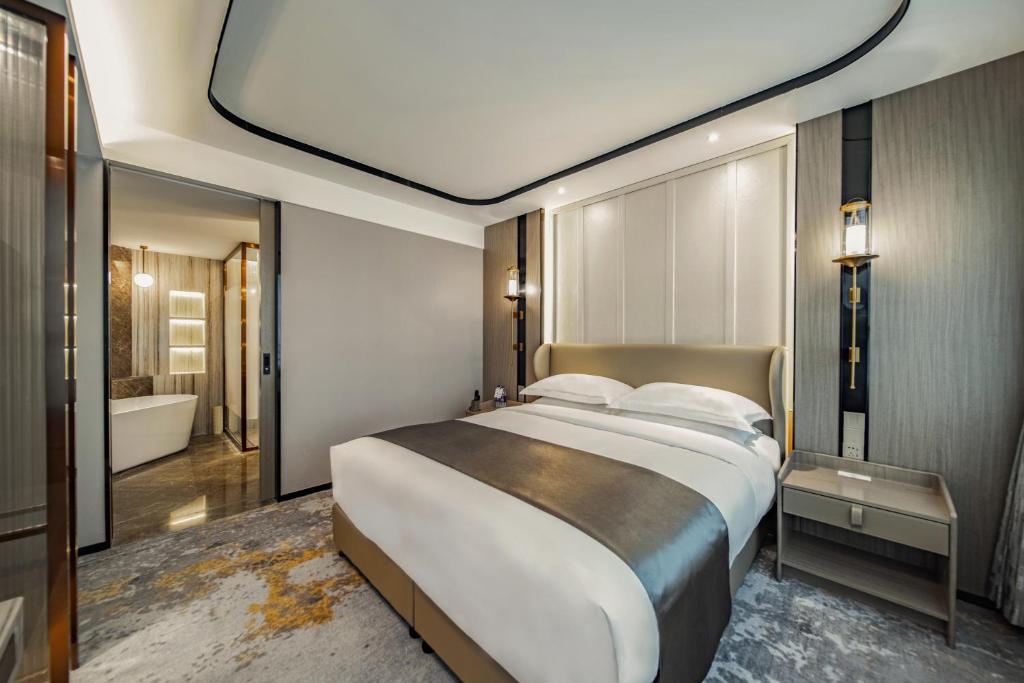
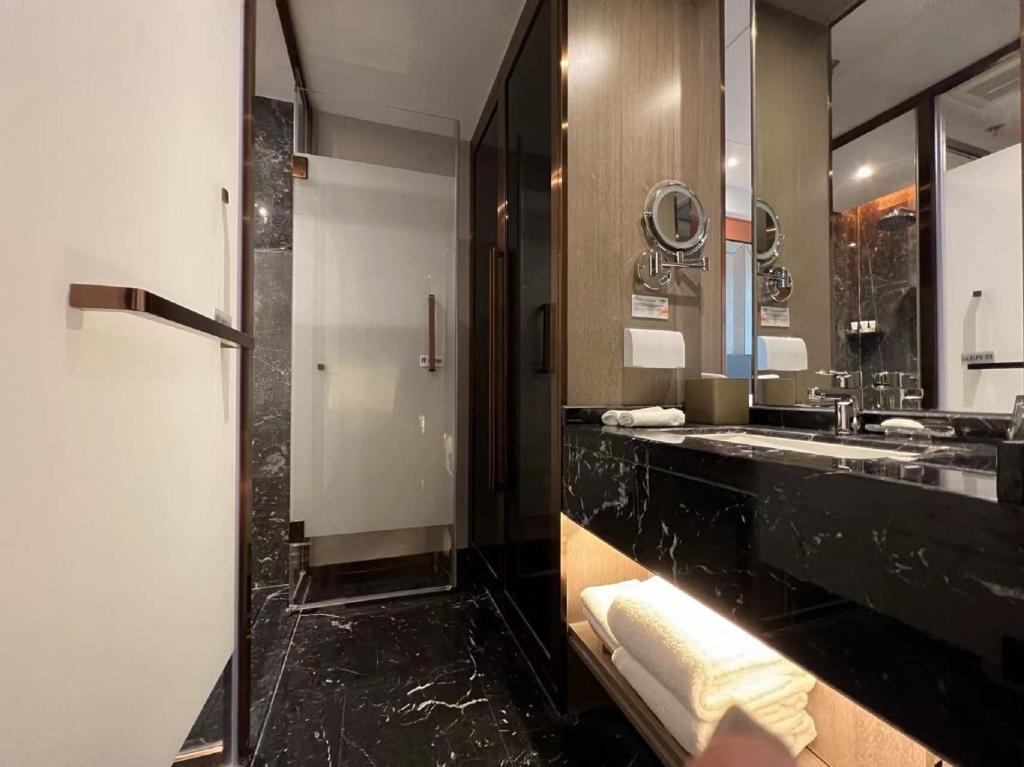

Today, one of the most iconic moments of the entire trip awaits you—climbing the Great Wall of China. Few places in the world carry such power and symbolism. Once you stand on the stone blocks of this fortress, stretching for thousands of kilometers, you will touch history that has shaped the face of the Middle Kingdom for centuries. Walk along its best-preserved sections and watch the wall wind over green mountain ridges, disappearing into the distance. The towers, steep climbs, and breathtaking views will give you a taste of ancient times when the wall protected China from northern invasions. After returning to the city, enjoy the modern contrast with a visit to the Olympic Park and the iconic Bird's Nest stadium—a demonstration that Beijing is not just a guardian of tradition, but also the face of the future.
The best choice for your visit is the Mutianyu section, known for being well-preserved and less crowded than the more famous Badaling. You can get there from central Beijing in about an hour and a half via the Didi app. The price is around 300–400 CNY per trip (good if you're traveling in a group). The route takes you through beautiful nature, with the final stretch winding through mountain serpentines.
Upon arrival, you can either climb the stairs to the ramparts or take the cable car that takes you all the way up. On the way down, you can even take a toboggan – a popular attraction for both kids and adults. We recommend heading out as early as possible in the morning (before 9 AM) to avoid the crowds and the intense sun.
Tickets can be purchased on-site, but it's better to book in advance, for example via Trip.com or mutianyugreatwall.com, where you can book entry, the cable car, and the shuttle bus all at once. Don't forget to wear comfortable shoes, bring plenty of water, and carry a camera – you'll want to keep this experience forever.
The Beijing Olympic Park is an ideal spot for an evening stroll and for getting to know the modern face of the city. Unlike some world capitals where sports venues fall into decay after the Olympics, the area here is fully functional, well-maintained, and lively. The central landmark is the famous National Stadium, nicknamed the "Bird's Nest," which attracts visitors from all over the world thanks to its unique architecture and evening lighting. Next to it stands the National Aquatics Center, known as the Water Cube, which has since been partially converted for relaxation and entertainment. North of the stadium lies the vast Olympic Forest Park – perfect for peaceful walks among the trees or sports activities. The entire area is complemented by several museums, including a modern science and technology museum, and the tall Olympic Tower, which offers a beautiful view of the Beijing skyline. The park is open daily; the forest section is open from early morning (from 6:00 AM), the Bird's Nest is generally open from 10:00 AM to 10:00 PM, and the swimming center from 9:30 AM to 7:30 PM. The science museum closes at 5:00 PM and is usually closed on Mondays. The entire complex is easily accessible by subway and makes for a great end to a day full of discovery.
Today you'll dive into the world of ancient dynasties and the scents of modern China. You'll spend the morning among lakes, temples, and pavilions once reserved for the most powerful. You'll walk through the Imperial Temple of Heaven, where emperors prayed for a bountiful harvest, and visit the sprawling Summer Palace, a favorite retreat for emperors to escape the Peking heat. All surrounded by beautiful nature and a peaceful atmosphere.
In the evening, you'll move into the vibrant network of Peking's hutongs, where history meets the scent of jasmine tea and freshly roasted duck. A feast of flavors awaits you—and if you haven't tasted authentic Peking duck yet, tonight is the perfect time. In small family bistros or elegant restaurants, you'll get to know Peking the way it tastes to the locals.
The Temple of Heaven in southern Beijing is one of the most sacred sites in imperial China. In a vast park that exceeds even the Forbidden City in size, emperors of the Ming and Qing dynasties performed rituals to ask Heaven for a good harvest. The complex is a masterpiece of symbolism—the northern semicircle represents the sky, while the southern square represents the earth. You will find the main monuments along the central axis: the Hall of Prayer for Good Harvests, the Imperial Vault of Heaven, and the Circular Mound Altar—each with unique architecture and spiritual significance. Nature lovers will enjoy the 500-year-old "Nine-Dragon Cypress" and the morning atmosphere of the park, filled with locals exercising. The park is also a popular spot for relaxing, jogging, or traditional games.
Entry is possible from 6:00 AM to 10:00 PM, and the main monuments are accessible from 8:00 AM to 6:00 PM (closed on Mondays). We recommend booking tickets in advance, for example through the official website or Trip.com. There are entrance gates from all directions, but the north gate is the most commonly used, from where a recommended sightseeing route begins.
Go out through the west gate. From there, it's less than a kilometer to the start (south side) of Qianmen Street.
South of Tiananmen Square lies the lively Qianmen Street – a historic avenue that used to be the ceremonial path for emperors heading from the Temple of Heaven. Today, it is one of the busiest streets in Beijing, lined with elegant facades, a replica of an old tram, and landmarks like the Qianmen Gate Tower or the Archery Tower (interiors are currently inaccessible). The street is full of shops, boutiques, and restaurants, ranging from luxury ones to traditional bistros. You might just walk through here during the day while moving from the Temple of Heaven to the subway, but we recommend returning in the evening when the street comes alive with the atmosphere of old Beijing. Be sure to check out the adjacent Dashilan and Qianmen Food Streets, where an authentic mix of flavors, scents, and life of the capital awaits you.
The Summer Palace, the pearl of Beijing's imperial gardens, is the largest and best-preserved royal park in China and is often dubbed the "Museum of Royal Gardens." It stretches around Kunming Lake at the foot of Longevity Hill, offering a perfect blend of natural scenery and historical architecture. During the Ming and Qing dynasties, it served as the summer residence for the imperial family; today, it is open to the public and is one of the most visited spots in Beijing.
The grounds are divided into several sections—the northeastern court area with pavilions where the emperor received his officials, the front part of the hill with a massive tower and temples, the peaceful back of the hill perfect for a walk, and finally the area around Kunming Lake, which you can walk around via the dikes, cross by boat, or explore by renting a pedal boat. A popular destination is the South Lake Island with its gazebo, offering beautiful views of the main tower and the water. You can start your tour at the North Gate, walk through the market styled after ancient Suzhou Street, climb to the top of the hill, and then continue around the lake to the East Gate. If you want to spice up your visit, don't forget to climb the observation tower or walk along the famous Marble Boat, which is anchored by the western shore.
We recommend planning your visit for the morning when the grounds are quieter, and it's best to book your tickets in advance online or with the help of your accommodation staff—the Summer Palace is a popular destination for both domestic and foreign tourists. The grounds are open daily from 6:00 AM to 8:00 PM, while the interior pavilions are open from 8:00 AM to 5:30 PM (closed on Mondays). The total tour route is about 8 km long, but it can be adapted according to your preference and time. A trip to the Summer Palace is an ideal way to combine relaxation in nature with discovering the fascinating history of the Chinese empire.
Today, Beijing offers you one last chance to soak up the atmosphere of this fascinating city. If your flight schedule allows, spend your remaining time visiting some peaceful spiritual sites—the neighboring Lama Temple (Yonghe Lamasery), the most significant Tibetan Buddhist temple in Beijing, and the Confucius Temple, where you can pay tribute to China's greatest thinker. If you have the whole day, consider a trip to the majestic Ming Tombs, which lie at the foot of the mountains north of the city and offer an interesting insight into imperial funerary architecture. Alternatively, enjoy a quiet walk through one of the traditional hutongs, pick up some last-minute souvenirs, or enjoy some local specialties one last time.
When it's time to head to the airport, simply book a ride using the DiDi mobile app (the Chinese equivalent of Uber). Most hotels will be happy to help you with the booking if you're not sure how to do it. Beijing is a huge city with heavy traffic, so we recommend setting off with plenty of time to spare – ideally, arrive at the airport at least 3 hours before your flight so you can get through security and passport control without any stress.
In just a few days, you've seen more than most people could even imagine. You stood on mountain peaks with the rainforest disappearing in the mist below, and a few days later, you looked into the eyes of statues that haven't blinked in two millennia. You've sailed along the country's most picturesque rivers, traveled through landscapes that look like traditional Chinese paintings on high-speed trains, and tasted dishes prepared by master chefs and grandmothers at street stalls alike.
At the end of your journey, you're not just heading home, but taking back a real souvenir—memories that won't fade. This isn't just a vacation. It's an experience that changes you. Welcome back—and the next time you look at a map of the world, China won't just be a distant land, but a familiar face with a story you lived yourself.
Join us on a unique adventure across a land that connects millennia of history with breathtaking nature, modern megacities, and incredible spirituality. This journey will take you from futuristic metropolises through the mystical mists of the Zhangjiajie mountains, the karst paradises around Guilin, and the poetic countryside of Yangshuo, all the way to ancient Xi’an with its legendary Terracotta Army, and finally to imperial Beijing, where you will touch the very heart of Chinese civilization. You can look forward to boat cruises, high-speed train rides, walks across glass bridges, strolls through neighborhoods filled with the scents of street food, morning tai-chi in the parks, the charms of traditional teahouses, and moments of silence in Buddhist temples. Every day has its own story, and every moment writes another chapter of your Chinese journey.
Practical information about traveling in China can be found here.
Hello, welcome to China!! You've just landed and found yourself in a completely different world. Today is all about first impressions, arrival formalities, and heading to your accommodation. After that, it’s up to you whether you want to take a break or dive straight into the hustle and bustle of the city? Thanks to your hotel's great location, you’re within reach of the iconic Bund waterfront promenade with its view of the futuristic Pudong skyscrapers – right where you landed a little while ago. Or, head down the famous Nanjing Road, where history meets modernity. Whatever you choose, one thing is certain: the adventure is just beginning. And a first taste of Chinese cuisine? That’s a must. Enjoy your first day in style.
After landing and exiting the plane, you might encounter a slightly longer airport procedure than you are used to back home. First, airport staff will direct you toward immigration, where you'll need to fill out a customs declaration form at the desks before passing through passport control. You'll enter basic information about yourself and your travel documents, along with additional details (e.g., your occupation, travel history, whether you have anything to declare, etc.). Then, you'll provide info about your stay in China—mention the cities you plan to visit and your accommodation (for the first night). Filling this out and the subsequent check by the immigration officer should be straightforward; just be sure to provide honest information. As long as your details match those on your visa, you will certainly be allowed into the country. Once you have finished the customs declaration, join the (likely) long and slow-moving queue until you reach an officer. They will then take your passport with your visa and the declaration form, take your photo, and scan your fingerprints. After that, you are cleared to head off and pick up your luggage (don't be surprised if someone checks your passport and visa again on the way—the Chinese are very cautious about this).
After picking up your bags, you will go through a security check—everything will pass through a conveyor belt scanner, just like during check-in. You might have to show your passport and visa again during this process. After that, you should finally be "free" and will find yourself in the arrival hall.
The journey from the airport itself is the first attraction you'll experience in China. It's provided by the Maglev high-speed train, traveling up to 300 km/h, even though it's designed for speeds exceeding 400 km/h.
Maglev high-speed train:
route: airport (arrival hall) → Longyang Road metro station
operating hours (from the airport): 07:02 - 21:42
frequency: 20 min
travel time to Longyang Road station: 12 min
ticket: 50 CNY (one-way), purchase at the machine in front of the station (international cards accepted)
Trip to the city center (Nanjing Road main street and The Bund waterfront):
metro, green line 2:
frequency - 5 min
travel time to the center (East Nanjing Road station) - approx. 30 min
price - approx. 5 CNY
No matter when you arrive, definitely don't miss a walk along the famous The Bund promenade to start with. From there, you'll have the skyscrapers, led by the Oriental Pearl Tower in the Pudong district opposite, right in the palm of your hand. But the other side of the promenade isn't bad either – it offers magnificent colonial buildings that light up at night.
Today is a day full of contrasts, from the vibrant alleyways of Old Shanghai to breathtaking views from nearly half a kilometer up. You'll start in the labyrinth of Yu Yuan Old Street, where you'll soak up the atmosphere of old China among tea houses, lanterns, and the scent of street food. Don't forget to visit the Yu Garden itself, a masterpiece of Chinese garden architecture. From there, you'll head into the modern world of skyscrapers in the Pudong district. That's where, among a forest of glass and steel, the Oriental Pearl Tower rises, one of the most iconic structures in the world. The trip to the observation deck will literally take your breath away, and the city below will look like something from another universe. Ideally, plan your visit for sunset so you can experience Shanghai transforming from a daytime city into a glowing nocturnal metropolis. You can end your evening with a stroll along the Bund, the waterfront, where you can look back at the Oriental Pearl from the opposite bank. As the entire Shanghai skyline lights up, you'll realize this city isn't just another stop on a map, but a true experience that will stay with you forever.
If you didn't manage to head out last night, no worries – Nanjing Road isn't going anywhere. This legendary street is the heart of Shanghai life: endless shops, neon signs, street performers, and traditional teahouses. It's one of the busiest shopping streets in Asia, where history meets the city's modern pulse. The perfect spot for a casual stroll, trying some street food, or just soaking up the atmosphere of Shanghai on the move.
Just a few steps from the hustle and bustle of the main streets, you'll find a surprisingly peaceful spot: People’s Square park. Once a horse racing track, today it's a vibrant cultural hub surrounded by greenery, museums, and fountains. Locals come here to stroll, dance, play chess, or just sit on a bench and watch the city in motion. It's the perfect place for a quick break between experiences and a great chance to get a glimpse into everyday life in the heart of Shanghai.
metro: red line 1, direction Fujin Road, People's Square → Hanzhong Road, transfer
metro: pink line 13, direction Jinyun Road, Hanzhong Road → Jiangning Road
the temple is just a few hundred meters from the metro station
The greatest treasure is the sitting Buddha carved from a single piece of white jade, brought from Burma. A place where time stands still for a moment and the city goes quiet – ideal for a moment of calm, watching the monks, or just soaking up the atmosphere of traditional Chinese spirituality.
metro: pink line 13, direction Zhangjiang Road, Jiangning Road → Site of the First CPC National Congress·Xintiandi
metro: light purple line 10, direction Jilong Road, Site of the First CPC... → Yu Garden
Narrow alleys, traditional architecture, red lanterns, and stalls filled with aromas – that's Yu Yuan Old Street, a place where old Shanghai comes to life. You can taste local dumplings, buy souvenirs, tea, or handmade sweets here.
Hidden behind the walls of the old town is one of the most beautiful corners of Shanghai, the Yu Garden. Established in the 16th century as a private garden for a wealthy merchant, it is today a perfect example of traditional Chinese aesthetics. Winding paths, carp ponds, ornate pavilions, stone bridges, and symbolic rockeries create a carefully balanced whole – peaceful, harmonious, and visually fascinating.
Every world metropolis has its landmark, and in Shanghai, it is undoubtedly this distinctive television and radio tower. It stands 468 meters tall, and while it is not the tallest building in the city (that title belongs to the Shanghai Tower), its futuristic design, strategic location by the Huangpu River, and evening light shows make it one of the most photographed and memorable spots in all of China. From the observation decks, you get a breathtaking view of the entire city and the river, both day and night. The tower is fascinating from the outside, but the real experience begins when you take the elevator to the top. There are several types of tickets available that will take you to different parts of the tower—from classic galleries to a revolving restaurant or a glass floor.
metro, green line 2, direction Panxiang Road, Lujiazui → Shanghai Hongqiao railway st.
frequency - 5 min
travel time - approx. 50 - 60 min
price - approx. 8 CNY
high-speed train: 19:34 Shanghai Hongqiao → 22:14 Huangshanbei (Huangshan North)
line - C3609
travel time: 2 hrs 40 min
!!ATTENTION!! Don't forget to book well in advance via Trip.com or the Chinese railway website (if you have a Chinese SIM card). You can find information on how Chinese trains work in the practical overview of the country (link in the introduction of the itinerary)
The DiDi Chuxing service is fully available and legal in the Yellow Mountains area, offering a reliable way to get around Huangshan city, surrounding tourist villages, and mountain entry points. Travelers can easily plan trips between key locations, including less accessible spots like Tangkou or Hongcun. For a smooth experience, it is recommended to have the DiDi app installed and linked to a Chinese payment system, such as WeChat Pay or Alipay. This ensures seamless and efficient transport for foreign visitors as well.
Today takes you into a magical world of granite peaks, misty chasms, and pine trees that bow only to those who know how to slow down. The cable car will whisk you in an instant to heights where time loses its meaning and every step becomes part of a story that the mountains have been telling for thousands of years. The walk leads through a landscape that feels like a dream – stone paths wind along precipices, amidst which stand legendary formations like Lotus Peak, the Guest-Greeting Pine, or gorges with poetic names like the Sky Thread.
Get to the national park entrance and the Yungu cable car lower station comfortably using the Didi app. It's the fastest and most reliable way to get straight there in the morning without any unnecessary delays.
TIP: If you want to save money, there's a bus from the bus terminal that takes you to the Yellow Mountains area every hour; the ride takes about an hour and costs around 20 CNY. The bus will drop you off at the terminal near the town of Tangkou, which is the gateway to the park.
You can book tickets for the cable car and the Huangshan area itself online, for example via Trip.com or on the official provincial tourism platform. We recommend booking everything in advance, especially during the peak season.
The Jade Screen Cablecar (Yuping) is one of the main entry points to the Yellow Mountains area. The cabins hold up to six people and the ride itself takes about six to ten minutes, depending on the conditions. On regular days, the cable car operates from Monday to Friday from 7:10 AM to 5:10 PM. On weekends and during national holidays, it starts earlier, at 6:30 AM, and service ends at 5:40 PM.
You'll start today's trip with a ride on the Jade Screen Cablecar (Yuping), which takes you to the southern part of the park – right into the heart of the Yellow Mountains. From there, you'll head on a loop trail taking you past some of the most iconic spots in the entire range. At the end, you'll return to the top cable car station to comfortably head back down to the valley. Along the way, look forward to famous peaks and viewpoints like Lotus Peak, Jade Screen Pavilion, Heavenly Capital Peak, the Guest-Greeting Pine, Bright Summit Peak, Turtle Cave, or dramatic sections like the 100-step Scaling Ladder, Thread of the Sky, and New Thread of the Sky.
For better orientation, I've included a map screenshot (from Mapy.cz). You don't have to follow the route strictly – it all depends on the weather, your mood, and how many extra steps you're up for. Today is mainly about peacefully discovering the beauty hidden around every corner of these mountains.
To get back to the entrance gate, you can take the cable car again or hike down the hill via a short, easy trail.
Use the Didi taxi service or the bus.
If you're looking for a truly authentic gourmet experience in Huangshan, I recommend Dasha Huicai Garden (大傻徽菜园) – a great restaurant featuring genuine Anhui cuisine, located right at the entrance to Tunxi Old Street (37 Sānmǎ Lù).
This day takes you not only through kilometers and transfers, but above all transports you from the peaceful areas of the Yellow Mountains to the wilderness of Zhangjiajie – a landscape that inspired the movie Avatar. The train journey is an experience in itself, combining peace, tradition, and the gradual revealing of breathtaking panoramas. And the evening? You can spice it up with either a fragile touch of glass over an abyss, or a magical show that will awaken all your senses.
Your train journey begins at Tunxi North Railway Station, where you will depart on an early morning connection towards Changsha South, transferring there to a modern high-speed train bound for Zhangjiajie West Station. The ride is comfortable—in a 3+2 seat configuration in second class, you have plenty of legroom and a window to watch the changing Chinese landscapes: rolling rice terraces, traditional villages, and industrial panoramas. The roughly 8-hour trip passes pleasantly thanks to Wi-Fi, onboard snacks, and the chance to chat with fellow passengers or simply relax while enjoying the magic of the moving scenery. In Zhangjiajie, you will arrive at Zhangjiajie West, a modern transit hub located about a 30-minute drive from the center of Wulingyuan, the main gateway to natural wonders. You can conveniently purchase tickets online in advance, for example through platforms like Trip.com or 12306 China Railway—the official Chinese railway portal, which also offers an English version. You can either print the purchased tickets or use the QR code directly at the station.
Today takes you to one of the most breathtaking places in all of China – the Zhangjiajie Grand Canyon area. You're in for a walk across the world's most famous glass bridge, which hovers up to 300 meters above the deep canyon. The glass floor beneath you will reveal fascinating views straight into the abyss – an experience that will leave a lasting impression even on the bravest souls.
You can also easily reach the Wulingyuan area, which forms the heart of Zhangjiajie National Park, by taxi – and it's a surprisingly comfortable and quick option. If you're heading out from the city of Zhangjiajie or the Zhangjiajie West Railway Station, for example, the trip takes about 40 to 50 minutes, depending on traffic. Prices range from around 100 to 150 RMB per car, and if you split the cost with others, it's a very affordable choice. Most drivers are used to tourists and know the common entry points to the park – just say "Wulingyuan Scenic Area" or simply show the name in Chinese: 武陵源风景区. If you don't want to risk any misunderstanding, it's worth having the destination written down or saved on your phone. And as always in China – have cash on hand or WeChat/Alipay ready, as not all drivers accept credit cards.
The taxi will drop you off right at one of the main park entrances, where you'll find ticket offices, shuttle buses, and route maps waiting for you. No worries, no transfers – straight to the adventure.
After passing through the security gate, the bridge itself awaits you – a 430-meter-long structure gracefully arching over the canyon. The view down is stunning, and for the daring, there’s an option to add something extra: bungee jumping from a height of over 300 meters – the highest in the world, or a zip-line that lets you soar through the air right over the canyon. If you prefer a less extreme experience, choose the slide down the canyon wall or the comfortable elevator that will take you all the way down to the river.
The lower part of the canyon offers a more relaxed pace – a quiet walk along wooden paths awaits you beside the turquoise-colored river, surrounded by lush vegetation and forested karst formations. You will finish the route with a small boat ride that will carry you back to the exit. Once the circuit is finished, you can return to Wulingyuan by tourist bus or call a taxi.
Possibility of using the Didi app
After returning from the canyon, I recommend visiting Tang Shifu Tujia Restaurant (唐师傅湘西名菜馆), located right in the Wulingyuan area. This restaurant is a local favorite – it offers traditional Hunan and Tujia flavors, including spicy specialties like Chopped Chili Fish Head, Tang Shifu Fragrant Leaf Duck, or Spicy Frog Pot.
While yesterday's trip to the Grand Canyon offered adrenaline and heights from the outside, today takes you right into the heart of a miracle – the Wulingyuan scenic area, the core of Zhangjiajie National Forest Park. And it is here that nature truly showed off in all its power. The landscape has transformed into another world – hundreds of narrow, sky-piercing sandstone pillars create the illusion as if the entire planet Pandora had emerged before you.
You can also easily reach the Wulingyuan area, which forms the heart of Zhangjiajie National Park, by taxi – and it's a surprisingly comfortable and quick option. If you're heading out from, for example, the city of Zhangjiajie or Zhangjiajie West Railway Station, the ride takes about 40 to 50 minutes, depending on traffic. Prices range from around 100 to 150 RMB per car, and if you split the cost with others, it's a very affordable option. Most drivers are used to tourists and know the main park entrances – just say "Wulingyuan Scenic Area" or simply show the name in Chinese: 武陵源风景区. If you don't want to risk any misunderstandings, it's worth having your destination written down or saved on your phone. And as always in China – have cash on hand or WeChat/Alipay ready, as not all drivers accept credit cards.
A taxi will take you directly to one of the main park entrances, where not only ticket offices but also shuttle buses and trail maps are waiting for you. No worries, no transfers – straight to the adventure. Upon arriving at the main entrance to the Wulingyuan area, a day full of breathtaking nature and stunning views awaits you – but before you dive in, you need to have everything ready. Tickets to Zhangjiajie National Forest Park must be booked in advance, ideally several days ahead. You can book through the official Zhangjiajie National Forest Park portal, via the WeChat app (search for the "Zhangjiajie Ticket Booking" mini-program), or through reliable platforms like Trip.com. Tickets are linked to your name and passport, which you must have with you physically – without it, you won't be allowed entry.
And since we are in China, where nature and technology often come together, there is even an ingenious elevator that takes you right up the cliff face. The Bailong Elevator is the world's tallest outdoor elevator and offers not only a dramatic ascent, but also a stunning view of the surrounding landscape. From the upper platform, trails lead out to viewpoints that are among the most famous in all of China.
The main star of the day is Hallelujah Mountain, a rock pillar that towers nearly a kilometer above the surrounding terrain and became famous as the inspiration for the floating mountains in the movie Avatar. In the misty haze, these formations look almost supernatural. And it's not just about the views – the local nature is alive. Monkeys often roam the trails, having learned that tourists sometimes drop something tasty. If you're not quick enough, they might even take something right out of your backpack – with their characteristic cheeky smiles.
Today is like a long breath between two adventures. You're in for the longest train ride of the entire trip, a journey connecting the high peaks of Zhangjiajie with the soft landscape of Guangxi province. In the rhythm of the tracks, with the countryside rushing by outside, you have time to slow down, relax, and let the experiences of the past few days sink in. As you head south, the landscape begins to change: limestone cones, river bends, and green rice terraces start to create a picture that feels like a living painting. Your destination is Guilin, a city famous not only for its scenery but also its nightlife – especially around the Li River, where things come alive after dark with the scent of street food and lights reflecting on the water.
Today you'll have to wake up a little early; the train to Guilin leaves just after 7 a.m. and it's the only one of the day. The good news is that your accommodation is just a few steps from the station, which was the plan all along. The station is small and easy to navigate, so checking in will be quick and stress-free. We trust you've booked your ticket in advance—for such a busy connection, it's almost a necessity. And if you're not quite ready to wake up yet, no problem, the comfortable train offers seven hours of peace, perfect for catching up on sleep, reading, or just calmly watching the landscape as it turns into something more magical with every kilometer. Tickets can be booked online, and the Trip.com portal works best, offering a simple English interface, secure card payment, and the ability to track your booking status. Alternatively, you can use the official Chinese railways website 12306.cn or the mini-app in WeChat. Don't forget that you need to enter your name and passport number when purchasing, and you will need to physically present your passport when boarding the train—it's impossible to get through the turnstiles without it.
Your first stop in Guilin takes you right to the heart of the city, at the confluence of the Li and Taohua rivers, where the iconic Elephant Trunk Hill rises—a limestone hill whose shape resembles an elephant drinking from the river. This formation is not just a symbol of Guilin, but also a gateway to the local unique karst landscape. The place feels calm and welcoming, yet it offers several remarkable spots to explore. Right at the foot of the hill is the Water Moon Cave—a natural arch that creates the illusion of a moon floating on the water's surface. At the top of the hill stands the Ming Dynasty-era Puxian Pagoda, which offers views of the surrounding river and city. The peaceful atmosphere is complemented by the Yunfeng Temple, dedicated to Buddhist deities, and on the riverbank, you will also find Love Island—a small islet ideal for a short walk or a quiet moment. If you decide to return in the evening, an extraordinary spectacle awaits. The entire hill becomes a living canvas for a light show, during which laser animations are projected onto the 'body of the elephant,' telling the story of Guilin—its nature, history, and poetry. The combination of rocks, water, and light creates an atmosphere that stays with you.
The area is open daily from 7:00 AM to 9:00 PM, and admission is free. However, it is recommended to book in advance, ideally 1 to 7 days before your planned visit, either via the official website of the Guilin tourism administration or through the WeChat app.
If you're looking for an authentic taste of rural China, there's no better spot than the bustling street food strip stretching from Shanhu Lake in the south up to East Jiefang Road in the north. This is where a vibrant world of flavors, aromas, and colors—so typical of Asian streets—comes to life before your eyes. Along this entire promenade, dozens of stalls line the path, offering everything from local specialties to a surprisingly diverse range of international bites.
Today, one of the highlights of the entire trip awaits you—a cruise along the Li River. You'll drift slowly through a landscape that resembles a traditional Chinese painting: limestone karsts, quiet river meanders, and traditional bamboo rafts with fishermen and their cormorants. Once you arrive in Yangshuo, you'll hop on a bike and ride along the peaceful Yulong River. The scenery around you is so beautiful that you'll even find it on a banknote—and it's even more impressive in person. This is the China you know from fairy tales.
A cruise on the Li River is one of the highlights of your trip, so it deserves a bit of planning. Boats depart from Zhujiang Wharf, which is about a 40-minute drive from Guilin city center, and sail south to the town of Yangshuo, where you will be staying overnight—no need to worry about the return trip. The cruise takes about 4 hours and offers breathtaking views of the limestone karsts, which form one of China's most iconic landscapes. Tickets must be booked in advance and are tied to your name and passport number, which you must have with you both when booking and boarding. It is recommended to book a few days in advance, ideally before you even arrive in Guilin. The best way is to ask the staff at your accommodation for help (they are usually happy to help you book the best option). Alternatively, you can use platforms like Trip.com, the official website en.liriver.com.cn, or a WeChat mini-program. We recommend choosing a 3-star boat—it offers plenty of comfort and great views. More expensive 4-star boats don't offer a significant difference, as you'll spend most of your time on the outdoor deck anyway. Avoid the lunch option—it's much nicer to bring your own snacks and plenty of water. If you don't have your own transport, it's definitely worth booking a package with hotel pickup, as the port isn't easily accessible by public transport. In that case, an operator will contact you to arrange the time and meeting point, often via WeChat. We recommend departing around 9:00 AM so you have plenty of time for afternoon activities once you arrive in Yangshuo.
Your Li River cruise ends in Yangshuo, either at the Shuidongmen Wharf near Green Lotus Peak or at the Fu’an Wharf not far from Shutong Hill. Although the river journey ends at this moment, another chapter opens before you – a new adventure is just beginning in the heart of one of China's most picturesque regions.
Compared to Guilin, Yangshuo is a small, cozy town surrounded by nature that is literally at your fingertips. In the evening, the town center turns into a lively place full of people, lights, and scents, but just a few minutes by bike and you'll find yourself in a quiet landscape among rice paddies and limestone karsts. And a bicycle is exactly the ideal way to explore the area around the Yulong River.
You can easily rent bikes in the side streets near the main square or along West Street. Just look for signs or ask at the info center right on the square – they'll point you in the right direction. Don't expect much paperwork – you just pick a bike (usually an older mountain or road bike), pay cash, and leave a deposit of about 100 CNY. We don't recommend leaving your passport as a security deposit. Definitely check the brakes, tires, and the lock, which should be included. You get the bike for the whole day, usually with a return around 8:00 PM, depending on your agreement with the owner.
The trip back to town itself won't take longer than 30 minutes. It depends on whether you extend your route along the river or head straight back to Yangshuo town by road.
Return the bike, get your deposit back and enjoy the evening atmosphere of Yangshuo, including the square, the lake and the shopping West street.
In the evening, grab a taxi and head to the hotel.
Your first evening in imperial Xi’an will sweep you into the magical atmosphere of the old city. In the alleys of the Muslim Quarter, you'll taste scents and flavors you won't find anywhere else in China—from legendary noodles to grilled skewers. Then, climb up to the famous city walls, which transform into a peaceful, illuminated promenade at night. Rent a bike at one of the main gates and ride the entire historic circuit around the center—above the busy streets, in the shadow of the towers, and with a view you won't soon forget. Xi’an after dark? Magic that starts right now.
High-speed trains leave Yangshuo from Yangshuo Railway Station, which is about a 30-minute drive from the city center (we recommend taking a taxi). The trains head to Guilin North or Guilin West, and the journey takes just 40–50 minutes. Tickets must be booked in advance—for example via Trip.com—and as always, you'll need your passport to verify your identity when entering the station.
After arriving at the train station, use the Didi app to order a taxi to the airport. Don't forget to leave yourself plenty of time so you can catch your flight without any stress.
The flight takes about 2 hours and there are several connections daily. We recommend booking your tickets in advance via Trip.com or Skyscanner. You can easily get to Guilin airport by taxi or airport bus from the city center (the trip takes about 45 minutes). After arriving in Xi’an, you can get to the city center by taxi.
Enjoy a peaceful evening with a night walk or bike ride around the Xi’an City Walls. Bike rentals are right at the gates—South, West, North, or East Gate—where you'll pay 45 CNY for 3 hours (tandems are around 90 CNY) plus a deposit of about 100 CNY. The route circles the entire wall (13–14 km) and offers beautiful panoramic views of the illuminated city. The evening is perfect—fewer crowds, pleasant temperatures, and striking contrasts between the ancient architecture and modern Xi’an.
A restaurant located by the Bell Tower, known for its selection of traditional dumplings – often served as a tasting menu with dozens of variations.
Today, you'll step into history so vivid you'll feel as if you've been transported to the heart of an ancient empire. An unforgettable experience awaits—a meeting with the legendary Terracotta Army, thousands of clay warriors who have been silently guarding the tomb of China's first emperor for over two thousand years. Every soldier has a unique expression, stance, and gear—no two statues are the same. They stand in perfect formations, side by side with chariots and horses, as if waiting for the command to attack. It's more than just an exhibit—it's a chillingly beautiful testament to power, faith, and an obsession with immortality. Being there in person, seeing them with your own eyes—it's a moment that will consume you and stay with you forever.
You can choose between two convenient ways to get to the legendary Terracotta Army. If you want to have everything under control and travel without transfers, the easiest way is to call a taxi directly from your hotel – the ride from the city center takes about 45 minutes and costs around 160–220 CNY. The driver will take you straight to the main entrance of the site, without any unnecessary stops. A cheaper alternative is to take tourist bus no. 306 (Tourist Bus 5). It departs from Fangzhicheng metro station (line 1), which is easy to reach from the city center by transferring at Beidajie. The bus will take you right to the entrance gate of the Terracotta Museum. The ride takes about 1 to 1.5 hours and the ticket costs just a few yuan. Be sure to book your tickets online in advance – ideally through the official portal bmy.albatrip.cn, where you can choose a specific date and time for your visit. Keep your passport with you during purchase and entry, as the ticket is personalized and you won't be let in without it. The basic entrance fee is about 120 CNY and includes internal transport between the pavilions. No matter how you get there, you are entering one of the most breathtaking archaeological sites in the world – and the whole day will be marked by ancient history, military precision, and the true cultural heritage of China.
The Terracotta Army, guardians of the tomb of China's first emperor, Qin Shi Huang. Thousands of life-sized statues, including warriors, horses, and chariots, were carved with incredible precision and have been silently guarding their ruler for over two millennia. And what is most impressive about this discovery? There was no historical mention of the entire army until 1974, when a local farmer accidentally uncovered it while digging a well. The visit is divided into two parts – the first and main part is the Museum of the Terracotta Warriors, which houses three excavated pits. The largest and most visited is Pit 1, where you will see over 6,000 statues in battle formations, each with a unique expression, hairstyle, and posture. In Pit 2, you can see arrangements of war chariots, cavalry, and infantry with detailed displays of armor and weaponry. Pit 3 is often referred to as the command center of the army – it is dominated by the famous chariot pulled by four horses.
The second part of the complex, the Mausoleum of Emperor Qin in the Lishan gardens, is not open to the public, but an underground museum has been built in its vicinity featuring replicas of ceramic officials, acrobats, bronze vessels, and other items discovered during research. A shuttle bus runs between the museum and the mausoleum, or you can walk the route (approx. 1.5 km).
Right in the heart of old Xi’an stands the elegant 36-meter-tall Bell Tower, a historic city landmark and a natural point of orientation. From its center, the main streets radiate out to the four city gates. Originally, it served as a watchtower used to warn of enemies. Today, inside its walls, you can find the famous Jingyun bell from the Tang Dynasty. You can enter the tower directly from the subway station below, and in the surrounding area, you'll find a lively square and shopping centers. Be sure to stop by again in the evening, as the night illumination of the tower is truly magical.
The Muslim Quarter in the heart of Xi'an is a vibrant world of scents, flavors, and history. Stretching north from West Street, it is a maze of alleys packed with stalls, markets, and craft shops. The main artery is the bustling Beiyuanmen Street, just a few steps from the Drum Tower, where the aroma of spices, grilled meat, and sweets blends with a colorful array of souvenirs. You'll find everything here, from local Shaanxi province specialties to traditional Muslim cuisine. The streets never truly sleep – shops and stalls typically operate from 8:00 AM to 11:00 PM, though most of the life here happens in the open air without a fixed closing time.
Welcome to Beijing – a city where the history of empires, revolutions, and modern China has been written. Upon arrival, you will head to the famous Tiananmen Square, the largest public space in the world. This is where you can visit the mausoleum of Mao Zedong, who also watches over you from his iconic portrait above the Gate of Heavenly Peace. Behind it lies the Forbidden City, the former residence of emperors with magnificent palaces, courtyards, and temples where, for centuries, commoners were forbidden to step. In the afternoon, you can escape the hustle and bustle of the big city at the Shichahai lake area, surrounded by parks and teahouses. You will end the day with a walk through the traditional hutongs – the narrow alleys of old Beijing, where an authentic atmosphere still breathes. Enjoy local food, stop for tea, or pick up a souvenir with the true soul of the place.
You can easily get to Xi’an airport using the Didi app (Chinese Uber) – the ride from the city center takes about 45–60 minutes and costs around 100–150 CNY. Alternatively, you can use the airport shuttle bus or the metro (Airport Express line, transfer from line 4).
The fastest way to get from Xi'an to Beijing is a direct flight from Xi'an Xianyang International Airport. The flight takes about 2 hours, and there are several flights daily, ideally early in the morning or in the evening.
After arriving in Beijing, we recommend using Didi again, which will take you quickly and comfortably straight to your accommodation or right into the heart of the action.
The Forbidden City is Beijing's most famous landmark and the former residence of Chinese emperors. This vast complex of palaces, courtyards, and temples is the largest preserved wooden palace complex in the world and is rightfully listed as a UNESCO World Heritage site. Today, it serves as the Palace Museum, housing collections of art, calligraphy, and imperial treasures. A tour takes about 3–4 hours. Entry is through the southern Meridian Gate, and we recommend exiting through the northern Gate of Divine Prowess. It is open daily except Mondays, from 8:30 AM to 5:00 PM in the summer, and until 4:30 PM in the winter. Tickets must be booked in advance (sales open 7 days ahead at 8:00 PM) via bookingticket.dpm.org.cn, Trip.com, or WeChat. They sell out quickly, but sometimes it is possible to buy them directly on-site at the box office. More info and a map of the complex can be found at travelchinaguide.com.
Jingshan Park, located right behind the north gate of the Forbidden City, is the perfect spot to finish your tour of the imperial complex. This former royal garden offers one of the most beautiful views of all of Beijing from the central Wanchun Pavilion—to the south, you can see the sprawling roofs of the Forbidden City; to the north, the Drum and Bell Towers; and to the west, Beihai Park. Pavilions stand on the five man-made peaks, which emperors once used for rest and meditation. Today, you can enjoy the peace among the mature trees and historic structures. On the north side of the hill lies the Shouhuang Hall, where Qing dynasty emperors worshipped their ancestors, and to the east of it is the Yongsi Hall, intended for the rest of deceased rulers. The park is open daily—from April to October from 6:00 to 21:00, and in the winter season from 6:30 to 20:00. Entry is permitted up to 30 minutes before closing time.
Today, one of the most iconic moments of the entire trip awaits you—climbing the Great Wall of China. Few places in the world carry such power and symbolism. Once you stand on the stone blocks of this fortress, stretching for thousands of kilometers, you will touch history that has shaped the face of the Middle Kingdom for centuries. Walk along its best-preserved sections and watch the wall wind over green mountain ridges, disappearing into the distance. The towers, steep climbs, and breathtaking views will give you a taste of ancient times when the wall protected China from northern invasions. After returning to the city, enjoy the modern contrast with a visit to the Olympic Park and the iconic Bird's Nest stadium—a demonstration that Beijing is not just a guardian of tradition, but also the face of the future.
The best choice for your visit is the Mutianyu section, known for being well-preserved and less crowded than the more famous Badaling. You can get there from central Beijing in about an hour and a half via the Didi app. The price is around 300–400 CNY per trip (good if you're traveling in a group). The route takes you through beautiful nature, with the final stretch winding through mountain serpentines.
Upon arrival, you can either climb the stairs to the ramparts or take the cable car that takes you all the way up. On the way down, you can even take a toboggan – a popular attraction for both kids and adults. We recommend heading out as early as possible in the morning (before 9 AM) to avoid the crowds and the intense sun.
Tickets can be purchased on-site, but it's better to book in advance, for example via Trip.com or mutianyugreatwall.com, where you can book entry, the cable car, and the shuttle bus all at once. Don't forget to wear comfortable shoes, bring plenty of water, and carry a camera – you'll want to keep this experience forever.
The Beijing Olympic Park is an ideal spot for an evening stroll and for getting to know the modern face of the city. Unlike some world capitals where sports venues fall into decay after the Olympics, the area here is fully functional, well-maintained, and lively. The central landmark is the famous National Stadium, nicknamed the "Bird's Nest," which attracts visitors from all over the world thanks to its unique architecture and evening lighting. Next to it stands the National Aquatics Center, known as the Water Cube, which has since been partially converted for relaxation and entertainment. North of the stadium lies the vast Olympic Forest Park – perfect for peaceful walks among the trees or sports activities. The entire area is complemented by several museums, including a modern science and technology museum, and the tall Olympic Tower, which offers a beautiful view of the Beijing skyline. The park is open daily; the forest section is open from early morning (from 6:00 AM), the Bird's Nest is generally open from 10:00 AM to 10:00 PM, and the swimming center from 9:30 AM to 7:30 PM. The science museum closes at 5:00 PM and is usually closed on Mondays. The entire complex is easily accessible by subway and makes for a great end to a day full of discovery.
Today you'll dive into the world of ancient dynasties and the scents of modern China. You'll spend the morning among lakes, temples, and pavilions once reserved for the most powerful. You'll walk through the Imperial Temple of Heaven, where emperors prayed for a bountiful harvest, and visit the sprawling Summer Palace, a favorite retreat for emperors to escape the Peking heat. All surrounded by beautiful nature and a peaceful atmosphere.
In the evening, you'll move into the vibrant network of Peking's hutongs, where history meets the scent of jasmine tea and freshly roasted duck. A feast of flavors awaits you—and if you haven't tasted authentic Peking duck yet, tonight is the perfect time. In small family bistros or elegant restaurants, you'll get to know Peking the way it tastes to the locals.
The Temple of Heaven in southern Beijing is one of the most sacred sites in imperial China. In a vast park that exceeds even the Forbidden City in size, emperors of the Ming and Qing dynasties performed rituals to ask Heaven for a good harvest. The complex is a masterpiece of symbolism—the northern semicircle represents the sky, while the southern square represents the earth. You will find the main monuments along the central axis: the Hall of Prayer for Good Harvests, the Imperial Vault of Heaven, and the Circular Mound Altar—each with unique architecture and spiritual significance. Nature lovers will enjoy the 500-year-old "Nine-Dragon Cypress" and the morning atmosphere of the park, filled with locals exercising. The park is also a popular spot for relaxing, jogging, or traditional games.
Entry is possible from 6:00 AM to 10:00 PM, and the main monuments are accessible from 8:00 AM to 6:00 PM (closed on Mondays). We recommend booking tickets in advance, for example through the official website or Trip.com. There are entrance gates from all directions, but the north gate is the most commonly used, from where a recommended sightseeing route begins.
Go out through the west gate. From there, it's less than a kilometer to the start (south side) of Qianmen Street.
South of Tiananmen Square lies the lively Qianmen Street – a historic avenue that used to be the ceremonial path for emperors heading from the Temple of Heaven. Today, it is one of the busiest streets in Beijing, lined with elegant facades, a replica of an old tram, and landmarks like the Qianmen Gate Tower or the Archery Tower (interiors are currently inaccessible). The street is full of shops, boutiques, and restaurants, ranging from luxury ones to traditional bistros. You might just walk through here during the day while moving from the Temple of Heaven to the subway, but we recommend returning in the evening when the street comes alive with the atmosphere of old Beijing. Be sure to check out the adjacent Dashilan and Qianmen Food Streets, where an authentic mix of flavors, scents, and life of the capital awaits you.
The Summer Palace, the pearl of Beijing's imperial gardens, is the largest and best-preserved royal park in China and is often dubbed the "Museum of Royal Gardens." It stretches around Kunming Lake at the foot of Longevity Hill, offering a perfect blend of natural scenery and historical architecture. During the Ming and Qing dynasties, it served as the summer residence for the imperial family; today, it is open to the public and is one of the most visited spots in Beijing.
The grounds are divided into several sections—the northeastern court area with pavilions where the emperor received his officials, the front part of the hill with a massive tower and temples, the peaceful back of the hill perfect for a walk, and finally the area around Kunming Lake, which you can walk around via the dikes, cross by boat, or explore by renting a pedal boat. A popular destination is the South Lake Island with its gazebo, offering beautiful views of the main tower and the water. You can start your tour at the North Gate, walk through the market styled after ancient Suzhou Street, climb to the top of the hill, and then continue around the lake to the East Gate. If you want to spice up your visit, don't forget to climb the observation tower or walk along the famous Marble Boat, which is anchored by the western shore.
We recommend planning your visit for the morning when the grounds are quieter, and it's best to book your tickets in advance online or with the help of your accommodation staff—the Summer Palace is a popular destination for both domestic and foreign tourists. The grounds are open daily from 6:00 AM to 8:00 PM, while the interior pavilions are open from 8:00 AM to 5:30 PM (closed on Mondays). The total tour route is about 8 km long, but it can be adapted according to your preference and time. A trip to the Summer Palace is an ideal way to combine relaxation in nature with discovering the fascinating history of the Chinese empire.
Today, Beijing offers you one last chance to soak up the atmosphere of this fascinating city. If your flight schedule allows, spend your remaining time visiting some peaceful spiritual sites—the neighboring Lama Temple (Yonghe Lamasery), the most significant Tibetan Buddhist temple in Beijing, and the Confucius Temple, where you can pay tribute to China's greatest thinker. If you have the whole day, consider a trip to the majestic Ming Tombs, which lie at the foot of the mountains north of the city and offer an interesting insight into imperial funerary architecture. Alternatively, enjoy a quiet walk through one of the traditional hutongs, pick up some last-minute souvenirs, or enjoy some local specialties one last time.
When it's time to head to the airport, simply book a ride using the DiDi mobile app (the Chinese equivalent of Uber). Most hotels will be happy to help you with the booking if you're not sure how to do it. Beijing is a huge city with heavy traffic, so we recommend setting off with plenty of time to spare – ideally, arrive at the airport at least 3 hours before your flight so you can get through security and passport control without any stress.
In just a few days, you've seen more than most people could even imagine. You stood on mountain peaks with the rainforest disappearing in the mist below, and a few days later, you looked into the eyes of statues that haven't blinked in two millennia. You've sailed along the country's most picturesque rivers, traveled through landscapes that look like traditional Chinese paintings on high-speed trains, and tasted dishes prepared by master chefs and grandmothers at street stalls alike.
At the end of your journey, you're not just heading home, but taking back a real souvenir—memories that won't fade. This isn't just a vacation. It's an experience that changes you. Welcome back—and the next time you look at a map of the world, China won't just be a distant land, but a familiar face with a story you lived yourself.




itinerary by Jakub Rajsigl
Join us on a unique adventure across a land that connects millennia of history with breathtaking nature, modern megacities, and incredible spirituality. This journey will take you from futuristic metropolises through the mystical mists of the Zhangjiajie mountains, the karst paradises around Guilin, and the poetic countryside of Yangshuo, all the way to ancient Xi’an with its legendary Terracotta Army, and finally to imperial Beijing, where you will touch the very heart of Chinese civilization. You can look forward to boat cruises, high-speed train rides, walks across glass bridges, strolls through neighborhoods filled with the scents of street food, morning tai-chi in the parks, the charms of traditional teahouses, and moments of silence in Buddhist temples. Every day has its own story, and every moment writes another chapter of your Chinese journey.
Practical information about traveling in China can be found here.
Hello, welcome to China!! You've just landed and found yourself in a completely different world. Today is all about first impressions, arrival formalities, and heading to your accommodation. After that, it’s up to you whether you want to take a break or dive straight into the hustle and bustle of the city? Thanks to your hotel's great location, you’re within reach of the iconic Bund waterfront promenade with its view of the futuristic Pudong skyscrapers – right where you landed a little while ago. Or, head down the famous Nanjing Road, where history meets modernity. Whatever you choose, one thing is certain: the adventure is just beginning. And a first taste of Chinese cuisine? That’s a must. Enjoy your first day in style.
After landing and exiting the plane, you might encounter a slightly longer airport procedure than you are used to back home. First, airport staff will direct you toward immigration, where you'll need to fill out a customs declaration form at the desks before passing through passport control. You'll enter basic information about yourself and your travel documents, along with additional details (e.g., your occupation, travel history, whether you have anything to declare, etc.). Then, you'll provide info about your stay in China—mention the cities you plan to visit and your accommodation (for the first night). Filling this out and the subsequent check by the immigration officer should be straightforward; just be sure to provide honest information. As long as your details match those on your visa, you will certainly be allowed into the country. Once you have finished the customs declaration, join the (likely) long and slow-moving queue until you reach an officer. They will then take your passport with your visa and the declaration form, take your photo, and scan your fingerprints. After that, you are cleared to head off and pick up your luggage (don't be surprised if someone checks your passport and visa again on the way—the Chinese are very cautious about this).
After picking up your bags, you will go through a security check—everything will pass through a conveyor belt scanner, just like during check-in. You might have to show your passport and visa again during this process. After that, you should finally be "free" and will find yourself in the arrival hall.
The journey from the airport itself is the first attraction you'll experience in China. It's provided by the Maglev high-speed train, traveling up to 300 km/h, even though it's designed for speeds exceeding 400 km/h.
Maglev high-speed train:
route: airport (arrival hall) → Longyang Road metro station
operating hours (from the airport): 07:02 - 21:42
frequency: 20 min
travel time to Longyang Road station: 12 min
ticket: 50 CNY (one-way), purchase at the machine in front of the station (international cards accepted)
Trip to the city center (Nanjing Road main street and The Bund waterfront):
metro, green line 2:
frequency - 5 min
travel time to the center (East Nanjing Road station) - approx. 30 min
price - approx. 5 CNY
No matter when you arrive, definitely don't miss a walk along the famous The Bund promenade to start with. From there, you'll have the skyscrapers, led by the Oriental Pearl Tower in the Pudong district opposite, right in the palm of your hand. But the other side of the promenade isn't bad either – it offers magnificent colonial buildings that light up at night.
Today is a day full of contrasts, from the vibrant alleyways of Old Shanghai to breathtaking views from nearly half a kilometer up. You'll start in the labyrinth of Yu Yuan Old Street, where you'll soak up the atmosphere of old China among tea houses, lanterns, and the scent of street food. Don't forget to visit the Yu Garden itself, a masterpiece of Chinese garden architecture. From there, you'll head into the modern world of skyscrapers in the Pudong district. That's where, among a forest of glass and steel, the Oriental Pearl Tower rises, one of the most iconic structures in the world. The trip to the observation deck will literally take your breath away, and the city below will look like something from another universe. Ideally, plan your visit for sunset so you can experience Shanghai transforming from a daytime city into a glowing nocturnal metropolis. You can end your evening with a stroll along the Bund, the waterfront, where you can look back at the Oriental Pearl from the opposite bank. As the entire Shanghai skyline lights up, you'll realize this city isn't just another stop on a map, but a true experience that will stay with you forever.
If you didn't manage to head out last night, no worries – Nanjing Road isn't going anywhere. This legendary street is the heart of Shanghai life: endless shops, neon signs, street performers, and traditional teahouses. It's one of the busiest shopping streets in Asia, where history meets the city's modern pulse. The perfect spot for a casual stroll, trying some street food, or just soaking up the atmosphere of Shanghai on the move.
Just a few steps from the hustle and bustle of the main streets, you'll find a surprisingly peaceful spot: People’s Square park. Once a horse racing track, today it's a vibrant cultural hub surrounded by greenery, museums, and fountains. Locals come here to stroll, dance, play chess, or just sit on a bench and watch the city in motion. It's the perfect place for a quick break between experiences and a great chance to get a glimpse into everyday life in the heart of Shanghai.
metro: red line 1, direction Fujin Road, People's Square → Hanzhong Road, transfer
metro: pink line 13, direction Jinyun Road, Hanzhong Road → Jiangning Road
the temple is just a few hundred meters from the metro station
The greatest treasure is the sitting Buddha carved from a single piece of white jade, brought from Burma. A place where time stands still for a moment and the city goes quiet – ideal for a moment of calm, watching the monks, or just soaking up the atmosphere of traditional Chinese spirituality.
metro: pink line 13, direction Zhangjiang Road, Jiangning Road → Site of the First CPC National Congress·Xintiandi
metro: light purple line 10, direction Jilong Road, Site of the First CPC... → Yu Garden
Narrow alleys, traditional architecture, red lanterns, and stalls filled with aromas – that's Yu Yuan Old Street, a place where old Shanghai comes to life. You can taste local dumplings, buy souvenirs, tea, or handmade sweets here.
Hidden behind the walls of the old town is one of the most beautiful corners of Shanghai, the Yu Garden. Established in the 16th century as a private garden for a wealthy merchant, it is today a perfect example of traditional Chinese aesthetics. Winding paths, carp ponds, ornate pavilions, stone bridges, and symbolic rockeries create a carefully balanced whole – peaceful, harmonious, and visually fascinating.
Every world metropolis has its landmark, and in Shanghai, it is undoubtedly this distinctive television and radio tower. It stands 468 meters tall, and while it is not the tallest building in the city (that title belongs to the Shanghai Tower), its futuristic design, strategic location by the Huangpu River, and evening light shows make it one of the most photographed and memorable spots in all of China. From the observation decks, you get a breathtaking view of the entire city and the river, both day and night. The tower is fascinating from the outside, but the real experience begins when you take the elevator to the top. There are several types of tickets available that will take you to different parts of the tower—from classic galleries to a revolving restaurant or a glass floor.
metro, green line 2, direction Panxiang Road, Lujiazui → Shanghai Hongqiao railway st.
frequency - 5 min
travel time - approx. 50 - 60 min
price - approx. 8 CNY
high-speed train: 19:34 Shanghai Hongqiao → 22:14 Huangshanbei (Huangshan North)
line - C3609
travel time: 2 hrs 40 min
!!ATTENTION!! Don't forget to book well in advance via Trip.com or the Chinese railway website (if you have a Chinese SIM card). You can find information on how Chinese trains work in the practical overview of the country (link in the introduction of the itinerary)
The DiDi Chuxing service is fully available and legal in the Yellow Mountains area, offering a reliable way to get around Huangshan city, surrounding tourist villages, and mountain entry points. Travelers can easily plan trips between key locations, including less accessible spots like Tangkou or Hongcun. For a smooth experience, it is recommended to have the DiDi app installed and linked to a Chinese payment system, such as WeChat Pay or Alipay. This ensures seamless and efficient transport for foreign visitors as well.
Today takes you into a magical world of granite peaks, misty chasms, and pine trees that bow only to those who know how to slow down. The cable car will whisk you in an instant to heights where time loses its meaning and every step becomes part of a story that the mountains have been telling for thousands of years. The walk leads through a landscape that feels like a dream – stone paths wind along precipices, amidst which stand legendary formations like Lotus Peak, the Guest-Greeting Pine, or gorges with poetic names like the Sky Thread.
Get to the national park entrance and the Yungu cable car lower station comfortably using the Didi app. It's the fastest and most reliable way to get straight there in the morning without any unnecessary delays.
TIP: If you want to save money, there's a bus from the bus terminal that takes you to the Yellow Mountains area every hour; the ride takes about an hour and costs around 20 CNY. The bus will drop you off at the terminal near the town of Tangkou, which is the gateway to the park.
You can book tickets for the cable car and the Huangshan area itself online, for example via Trip.com or on the official provincial tourism platform. We recommend booking everything in advance, especially during the peak season.
The Jade Screen Cablecar (Yuping) is one of the main entry points to the Yellow Mountains area. The cabins hold up to six people and the ride itself takes about six to ten minutes, depending on the conditions. On regular days, the cable car operates from Monday to Friday from 7:10 AM to 5:10 PM. On weekends and during national holidays, it starts earlier, at 6:30 AM, and service ends at 5:40 PM.
You'll start today's trip with a ride on the Jade Screen Cablecar (Yuping), which takes you to the southern part of the park – right into the heart of the Yellow Mountains. From there, you'll head on a loop trail taking you past some of the most iconic spots in the entire range. At the end, you'll return to the top cable car station to comfortably head back down to the valley. Along the way, look forward to famous peaks and viewpoints like Lotus Peak, Jade Screen Pavilion, Heavenly Capital Peak, the Guest-Greeting Pine, Bright Summit Peak, Turtle Cave, or dramatic sections like the 100-step Scaling Ladder, Thread of the Sky, and New Thread of the Sky.
For better orientation, I've included a map screenshot (from Mapy.cz). You don't have to follow the route strictly – it all depends on the weather, your mood, and how many extra steps you're up for. Today is mainly about peacefully discovering the beauty hidden around every corner of these mountains.
To get back to the entrance gate, you can take the cable car again or hike down the hill via a short, easy trail.
Use the Didi taxi service or the bus.
If you're looking for a truly authentic gourmet experience in Huangshan, I recommend Dasha Huicai Garden (大傻徽菜园) – a great restaurant featuring genuine Anhui cuisine, located right at the entrance to Tunxi Old Street (37 Sānmǎ Lù).
This day takes you not only through kilometers and transfers, but above all transports you from the peaceful areas of the Yellow Mountains to the wilderness of Zhangjiajie – a landscape that inspired the movie Avatar. The train journey is an experience in itself, combining peace, tradition, and the gradual revealing of breathtaking panoramas. And the evening? You can spice it up with either a fragile touch of glass over an abyss, or a magical show that will awaken all your senses.
Your train journey begins at Tunxi North Railway Station, where you will depart on an early morning connection towards Changsha South, transferring there to a modern high-speed train bound for Zhangjiajie West Station. The ride is comfortable—in a 3+2 seat configuration in second class, you have plenty of legroom and a window to watch the changing Chinese landscapes: rolling rice terraces, traditional villages, and industrial panoramas. The roughly 8-hour trip passes pleasantly thanks to Wi-Fi, onboard snacks, and the chance to chat with fellow passengers or simply relax while enjoying the magic of the moving scenery. In Zhangjiajie, you will arrive at Zhangjiajie West, a modern transit hub located about a 30-minute drive from the center of Wulingyuan, the main gateway to natural wonders. You can conveniently purchase tickets online in advance, for example through platforms like Trip.com or 12306 China Railway—the official Chinese railway portal, which also offers an English version. You can either print the purchased tickets or use the QR code directly at the station.
Today takes you to one of the most breathtaking places in all of China – the Zhangjiajie Grand Canyon area. You're in for a walk across the world's most famous glass bridge, which hovers up to 300 meters above the deep canyon. The glass floor beneath you will reveal fascinating views straight into the abyss – an experience that will leave a lasting impression even on the bravest souls.
You can also easily reach the Wulingyuan area, which forms the heart of Zhangjiajie National Park, by taxi – and it's a surprisingly comfortable and quick option. If you're heading out from the city of Zhangjiajie or the Zhangjiajie West Railway Station, for example, the trip takes about 40 to 50 minutes, depending on traffic. Prices range from around 100 to 150 RMB per car, and if you split the cost with others, it's a very affordable choice. Most drivers are used to tourists and know the common entry points to the park – just say "Wulingyuan Scenic Area" or simply show the name in Chinese: 武陵源风景区. If you don't want to risk any misunderstanding, it's worth having the destination written down or saved on your phone. And as always in China – have cash on hand or WeChat/Alipay ready, as not all drivers accept credit cards.
The taxi will drop you off right at one of the main park entrances, where you'll find ticket offices, shuttle buses, and route maps waiting for you. No worries, no transfers – straight to the adventure.
After passing through the security gate, the bridge itself awaits you – a 430-meter-long structure gracefully arching over the canyon. The view down is stunning, and for the daring, there’s an option to add something extra: bungee jumping from a height of over 300 meters – the highest in the world, or a zip-line that lets you soar through the air right over the canyon. If you prefer a less extreme experience, choose the slide down the canyon wall or the comfortable elevator that will take you all the way down to the river.
The lower part of the canyon offers a more relaxed pace – a quiet walk along wooden paths awaits you beside the turquoise-colored river, surrounded by lush vegetation and forested karst formations. You will finish the route with a small boat ride that will carry you back to the exit. Once the circuit is finished, you can return to Wulingyuan by tourist bus or call a taxi.
Possibility of using the Didi app
After returning from the canyon, I recommend visiting Tang Shifu Tujia Restaurant (唐师傅湘西名菜馆), located right in the Wulingyuan area. This restaurant is a local favorite – it offers traditional Hunan and Tujia flavors, including spicy specialties like Chopped Chili Fish Head, Tang Shifu Fragrant Leaf Duck, or Spicy Frog Pot.
While yesterday's trip to the Grand Canyon offered adrenaline and heights from the outside, today takes you right into the heart of a miracle – the Wulingyuan scenic area, the core of Zhangjiajie National Forest Park. And it is here that nature truly showed off in all its power. The landscape has transformed into another world – hundreds of narrow, sky-piercing sandstone pillars create the illusion as if the entire planet Pandora had emerged before you.
You can also easily reach the Wulingyuan area, which forms the heart of Zhangjiajie National Park, by taxi – and it's a surprisingly comfortable and quick option. If you're heading out from, for example, the city of Zhangjiajie or Zhangjiajie West Railway Station, the ride takes about 40 to 50 minutes, depending on traffic. Prices range from around 100 to 150 RMB per car, and if you split the cost with others, it's a very affordable option. Most drivers are used to tourists and know the main park entrances – just say "Wulingyuan Scenic Area" or simply show the name in Chinese: 武陵源风景区. If you don't want to risk any misunderstandings, it's worth having your destination written down or saved on your phone. And as always in China – have cash on hand or WeChat/Alipay ready, as not all drivers accept credit cards.
A taxi will take you directly to one of the main park entrances, where not only ticket offices but also shuttle buses and trail maps are waiting for you. No worries, no transfers – straight to the adventure. Upon arriving at the main entrance to the Wulingyuan area, a day full of breathtaking nature and stunning views awaits you – but before you dive in, you need to have everything ready. Tickets to Zhangjiajie National Forest Park must be booked in advance, ideally several days ahead. You can book through the official Zhangjiajie National Forest Park portal, via the WeChat app (search for the "Zhangjiajie Ticket Booking" mini-program), or through reliable platforms like Trip.com. Tickets are linked to your name and passport, which you must have with you physically – without it, you won't be allowed entry.
And since we are in China, where nature and technology often come together, there is even an ingenious elevator that takes you right up the cliff face. The Bailong Elevator is the world's tallest outdoor elevator and offers not only a dramatic ascent, but also a stunning view of the surrounding landscape. From the upper platform, trails lead out to viewpoints that are among the most famous in all of China.
The main star of the day is Hallelujah Mountain, a rock pillar that towers nearly a kilometer above the surrounding terrain and became famous as the inspiration for the floating mountains in the movie Avatar. In the misty haze, these formations look almost supernatural. And it's not just about the views – the local nature is alive. Monkeys often roam the trails, having learned that tourists sometimes drop something tasty. If you're not quick enough, they might even take something right out of your backpack – with their characteristic cheeky smiles.
Today is like a long breath between two adventures. You're in for the longest train ride of the entire trip, a journey connecting the high peaks of Zhangjiajie with the soft landscape of Guangxi province. In the rhythm of the tracks, with the countryside rushing by outside, you have time to slow down, relax, and let the experiences of the past few days sink in. As you head south, the landscape begins to change: limestone cones, river bends, and green rice terraces start to create a picture that feels like a living painting. Your destination is Guilin, a city famous not only for its scenery but also its nightlife – especially around the Li River, where things come alive after dark with the scent of street food and lights reflecting on the water.
Today you'll have to wake up a little early; the train to Guilin leaves just after 7 a.m. and it's the only one of the day. The good news is that your accommodation is just a few steps from the station, which was the plan all along. The station is small and easy to navigate, so checking in will be quick and stress-free. We trust you've booked your ticket in advance—for such a busy connection, it's almost a necessity. And if you're not quite ready to wake up yet, no problem, the comfortable train offers seven hours of peace, perfect for catching up on sleep, reading, or just calmly watching the landscape as it turns into something more magical with every kilometer. Tickets can be booked online, and the Trip.com portal works best, offering a simple English interface, secure card payment, and the ability to track your booking status. Alternatively, you can use the official Chinese railways website 12306.cn or the mini-app in WeChat. Don't forget that you need to enter your name and passport number when purchasing, and you will need to physically present your passport when boarding the train—it's impossible to get through the turnstiles without it.
Your first stop in Guilin takes you right to the heart of the city, at the confluence of the Li and Taohua rivers, where the iconic Elephant Trunk Hill rises—a limestone hill whose shape resembles an elephant drinking from the river. This formation is not just a symbol of Guilin, but also a gateway to the local unique karst landscape. The place feels calm and welcoming, yet it offers several remarkable spots to explore. Right at the foot of the hill is the Water Moon Cave—a natural arch that creates the illusion of a moon floating on the water's surface. At the top of the hill stands the Ming Dynasty-era Puxian Pagoda, which offers views of the surrounding river and city. The peaceful atmosphere is complemented by the Yunfeng Temple, dedicated to Buddhist deities, and on the riverbank, you will also find Love Island—a small islet ideal for a short walk or a quiet moment. If you decide to return in the evening, an extraordinary spectacle awaits. The entire hill becomes a living canvas for a light show, during which laser animations are projected onto the 'body of the elephant,' telling the story of Guilin—its nature, history, and poetry. The combination of rocks, water, and light creates an atmosphere that stays with you.
The area is open daily from 7:00 AM to 9:00 PM, and admission is free. However, it is recommended to book in advance, ideally 1 to 7 days before your planned visit, either via the official website of the Guilin tourism administration or through the WeChat app.
If you're looking for an authentic taste of rural China, there's no better spot than the bustling street food strip stretching from Shanhu Lake in the south up to East Jiefang Road in the north. This is where a vibrant world of flavors, aromas, and colors—so typical of Asian streets—comes to life before your eyes. Along this entire promenade, dozens of stalls line the path, offering everything from local specialties to a surprisingly diverse range of international bites.
Today, one of the highlights of the entire trip awaits you—a cruise along the Li River. You'll drift slowly through a landscape that resembles a traditional Chinese painting: limestone karsts, quiet river meanders, and traditional bamboo rafts with fishermen and their cormorants. Once you arrive in Yangshuo, you'll hop on a bike and ride along the peaceful Yulong River. The scenery around you is so beautiful that you'll even find it on a banknote—and it's even more impressive in person. This is the China you know from fairy tales.
A cruise on the Li River is one of the highlights of your trip, so it deserves a bit of planning. Boats depart from Zhujiang Wharf, which is about a 40-minute drive from Guilin city center, and sail south to the town of Yangshuo, where you will be staying overnight—no need to worry about the return trip. The cruise takes about 4 hours and offers breathtaking views of the limestone karsts, which form one of China's most iconic landscapes. Tickets must be booked in advance and are tied to your name and passport number, which you must have with you both when booking and boarding. It is recommended to book a few days in advance, ideally before you even arrive in Guilin. The best way is to ask the staff at your accommodation for help (they are usually happy to help you book the best option). Alternatively, you can use platforms like Trip.com, the official website en.liriver.com.cn, or a WeChat mini-program. We recommend choosing a 3-star boat—it offers plenty of comfort and great views. More expensive 4-star boats don't offer a significant difference, as you'll spend most of your time on the outdoor deck anyway. Avoid the lunch option—it's much nicer to bring your own snacks and plenty of water. If you don't have your own transport, it's definitely worth booking a package with hotel pickup, as the port isn't easily accessible by public transport. In that case, an operator will contact you to arrange the time and meeting point, often via WeChat. We recommend departing around 9:00 AM so you have plenty of time for afternoon activities once you arrive in Yangshuo.
Your Li River cruise ends in Yangshuo, either at the Shuidongmen Wharf near Green Lotus Peak or at the Fu’an Wharf not far from Shutong Hill. Although the river journey ends at this moment, another chapter opens before you – a new adventure is just beginning in the heart of one of China's most picturesque regions.
Compared to Guilin, Yangshuo is a small, cozy town surrounded by nature that is literally at your fingertips. In the evening, the town center turns into a lively place full of people, lights, and scents, but just a few minutes by bike and you'll find yourself in a quiet landscape among rice paddies and limestone karsts. And a bicycle is exactly the ideal way to explore the area around the Yulong River.
You can easily rent bikes in the side streets near the main square or along West Street. Just look for signs or ask at the info center right on the square – they'll point you in the right direction. Don't expect much paperwork – you just pick a bike (usually an older mountain or road bike), pay cash, and leave a deposit of about 100 CNY. We don't recommend leaving your passport as a security deposit. Definitely check the brakes, tires, and the lock, which should be included. You get the bike for the whole day, usually with a return around 8:00 PM, depending on your agreement with the owner.
The trip back to town itself won't take longer than 30 minutes. It depends on whether you extend your route along the river or head straight back to Yangshuo town by road.
Return the bike, get your deposit back and enjoy the evening atmosphere of Yangshuo, including the square, the lake and the shopping West street.
In the evening, grab a taxi and head to the hotel.
Your first evening in imperial Xi’an will sweep you into the magical atmosphere of the old city. In the alleys of the Muslim Quarter, you'll taste scents and flavors you won't find anywhere else in China—from legendary noodles to grilled skewers. Then, climb up to the famous city walls, which transform into a peaceful, illuminated promenade at night. Rent a bike at one of the main gates and ride the entire historic circuit around the center—above the busy streets, in the shadow of the towers, and with a view you won't soon forget. Xi’an after dark? Magic that starts right now.
High-speed trains leave Yangshuo from Yangshuo Railway Station, which is about a 30-minute drive from the city center (we recommend taking a taxi). The trains head to Guilin North or Guilin West, and the journey takes just 40–50 minutes. Tickets must be booked in advance—for example via Trip.com—and as always, you'll need your passport to verify your identity when entering the station.
After arriving at the train station, use the Didi app to order a taxi to the airport. Don't forget to leave yourself plenty of time so you can catch your flight without any stress.
The flight takes about 2 hours and there are several connections daily. We recommend booking your tickets in advance via Trip.com or Skyscanner. You can easily get to Guilin airport by taxi or airport bus from the city center (the trip takes about 45 minutes). After arriving in Xi’an, you can get to the city center by taxi.
Enjoy a peaceful evening with a night walk or bike ride around the Xi’an City Walls. Bike rentals are right at the gates—South, West, North, or East Gate—where you'll pay 45 CNY for 3 hours (tandems are around 90 CNY) plus a deposit of about 100 CNY. The route circles the entire wall (13–14 km) and offers beautiful panoramic views of the illuminated city. The evening is perfect—fewer crowds, pleasant temperatures, and striking contrasts between the ancient architecture and modern Xi’an.
A restaurant located by the Bell Tower, known for its selection of traditional dumplings – often served as a tasting menu with dozens of variations.
Today, you'll step into history so vivid you'll feel as if you've been transported to the heart of an ancient empire. An unforgettable experience awaits—a meeting with the legendary Terracotta Army, thousands of clay warriors who have been silently guarding the tomb of China's first emperor for over two thousand years. Every soldier has a unique expression, stance, and gear—no two statues are the same. They stand in perfect formations, side by side with chariots and horses, as if waiting for the command to attack. It's more than just an exhibit—it's a chillingly beautiful testament to power, faith, and an obsession with immortality. Being there in person, seeing them with your own eyes—it's a moment that will consume you and stay with you forever.
You can choose between two convenient ways to get to the legendary Terracotta Army. If you want to have everything under control and travel without transfers, the easiest way is to call a taxi directly from your hotel – the ride from the city center takes about 45 minutes and costs around 160–220 CNY. The driver will take you straight to the main entrance of the site, without any unnecessary stops. A cheaper alternative is to take tourist bus no. 306 (Tourist Bus 5). It departs from Fangzhicheng metro station (line 1), which is easy to reach from the city center by transferring at Beidajie. The bus will take you right to the entrance gate of the Terracotta Museum. The ride takes about 1 to 1.5 hours and the ticket costs just a few yuan. Be sure to book your tickets online in advance – ideally through the official portal bmy.albatrip.cn, where you can choose a specific date and time for your visit. Keep your passport with you during purchase and entry, as the ticket is personalized and you won't be let in without it. The basic entrance fee is about 120 CNY and includes internal transport between the pavilions. No matter how you get there, you are entering one of the most breathtaking archaeological sites in the world – and the whole day will be marked by ancient history, military precision, and the true cultural heritage of China.
The Terracotta Army, guardians of the tomb of China's first emperor, Qin Shi Huang. Thousands of life-sized statues, including warriors, horses, and chariots, were carved with incredible precision and have been silently guarding their ruler for over two millennia. And what is most impressive about this discovery? There was no historical mention of the entire army until 1974, when a local farmer accidentally uncovered it while digging a well. The visit is divided into two parts – the first and main part is the Museum of the Terracotta Warriors, which houses three excavated pits. The largest and most visited is Pit 1, where you will see over 6,000 statues in battle formations, each with a unique expression, hairstyle, and posture. In Pit 2, you can see arrangements of war chariots, cavalry, and infantry with detailed displays of armor and weaponry. Pit 3 is often referred to as the command center of the army – it is dominated by the famous chariot pulled by four horses.
The second part of the complex, the Mausoleum of Emperor Qin in the Lishan gardens, is not open to the public, but an underground museum has been built in its vicinity featuring replicas of ceramic officials, acrobats, bronze vessels, and other items discovered during research. A shuttle bus runs between the museum and the mausoleum, or you can walk the route (approx. 1.5 km).
Right in the heart of old Xi’an stands the elegant 36-meter-tall Bell Tower, a historic city landmark and a natural point of orientation. From its center, the main streets radiate out to the four city gates. Originally, it served as a watchtower used to warn of enemies. Today, inside its walls, you can find the famous Jingyun bell from the Tang Dynasty. You can enter the tower directly from the subway station below, and in the surrounding area, you'll find a lively square and shopping centers. Be sure to stop by again in the evening, as the night illumination of the tower is truly magical.
The Muslim Quarter in the heart of Xi'an is a vibrant world of scents, flavors, and history. Stretching north from West Street, it is a maze of alleys packed with stalls, markets, and craft shops. The main artery is the bustling Beiyuanmen Street, just a few steps from the Drum Tower, where the aroma of spices, grilled meat, and sweets blends with a colorful array of souvenirs. You'll find everything here, from local Shaanxi province specialties to traditional Muslim cuisine. The streets never truly sleep – shops and stalls typically operate from 8:00 AM to 11:00 PM, though most of the life here happens in the open air without a fixed closing time.
Welcome to Beijing – a city where the history of empires, revolutions, and modern China has been written. Upon arrival, you will head to the famous Tiananmen Square, the largest public space in the world. This is where you can visit the mausoleum of Mao Zedong, who also watches over you from his iconic portrait above the Gate of Heavenly Peace. Behind it lies the Forbidden City, the former residence of emperors with magnificent palaces, courtyards, and temples where, for centuries, commoners were forbidden to step. In the afternoon, you can escape the hustle and bustle of the big city at the Shichahai lake area, surrounded by parks and teahouses. You will end the day with a walk through the traditional hutongs – the narrow alleys of old Beijing, where an authentic atmosphere still breathes. Enjoy local food, stop for tea, or pick up a souvenir with the true soul of the place.
You can easily get to Xi’an airport using the Didi app (Chinese Uber) – the ride from the city center takes about 45–60 minutes and costs around 100–150 CNY. Alternatively, you can use the airport shuttle bus or the metro (Airport Express line, transfer from line 4).
The fastest way to get from Xi'an to Beijing is a direct flight from Xi'an Xianyang International Airport. The flight takes about 2 hours, and there are several flights daily, ideally early in the morning or in the evening.
After arriving in Beijing, we recommend using Didi again, which will take you quickly and comfortably straight to your accommodation or right into the heart of the action.
The Forbidden City is Beijing's most famous landmark and the former residence of Chinese emperors. This vast complex of palaces, courtyards, and temples is the largest preserved wooden palace complex in the world and is rightfully listed as a UNESCO World Heritage site. Today, it serves as the Palace Museum, housing collections of art, calligraphy, and imperial treasures. A tour takes about 3–4 hours. Entry is through the southern Meridian Gate, and we recommend exiting through the northern Gate of Divine Prowess. It is open daily except Mondays, from 8:30 AM to 5:00 PM in the summer, and until 4:30 PM in the winter. Tickets must be booked in advance (sales open 7 days ahead at 8:00 PM) via bookingticket.dpm.org.cn, Trip.com, or WeChat. They sell out quickly, but sometimes it is possible to buy them directly on-site at the box office. More info and a map of the complex can be found at travelchinaguide.com.
Jingshan Park, located right behind the north gate of the Forbidden City, is the perfect spot to finish your tour of the imperial complex. This former royal garden offers one of the most beautiful views of all of Beijing from the central Wanchun Pavilion—to the south, you can see the sprawling roofs of the Forbidden City; to the north, the Drum and Bell Towers; and to the west, Beihai Park. Pavilions stand on the five man-made peaks, which emperors once used for rest and meditation. Today, you can enjoy the peace among the mature trees and historic structures. On the north side of the hill lies the Shouhuang Hall, where Qing dynasty emperors worshipped their ancestors, and to the east of it is the Yongsi Hall, intended for the rest of deceased rulers. The park is open daily—from April to October from 6:00 to 21:00, and in the winter season from 6:30 to 20:00. Entry is permitted up to 30 minutes before closing time.
Today, one of the most iconic moments of the entire trip awaits you—climbing the Great Wall of China. Few places in the world carry such power and symbolism. Once you stand on the stone blocks of this fortress, stretching for thousands of kilometers, you will touch history that has shaped the face of the Middle Kingdom for centuries. Walk along its best-preserved sections and watch the wall wind over green mountain ridges, disappearing into the distance. The towers, steep climbs, and breathtaking views will give you a taste of ancient times when the wall protected China from northern invasions. After returning to the city, enjoy the modern contrast with a visit to the Olympic Park and the iconic Bird's Nest stadium—a demonstration that Beijing is not just a guardian of tradition, but also the face of the future.
The best choice for your visit is the Mutianyu section, known for being well-preserved and less crowded than the more famous Badaling. You can get there from central Beijing in about an hour and a half via the Didi app. The price is around 300–400 CNY per trip (good if you're traveling in a group). The route takes you through beautiful nature, with the final stretch winding through mountain serpentines.
Upon arrival, you can either climb the stairs to the ramparts or take the cable car that takes you all the way up. On the way down, you can even take a toboggan – a popular attraction for both kids and adults. We recommend heading out as early as possible in the morning (before 9 AM) to avoid the crowds and the intense sun.
Tickets can be purchased on-site, but it's better to book in advance, for example via Trip.com or mutianyugreatwall.com, where you can book entry, the cable car, and the shuttle bus all at once. Don't forget to wear comfortable shoes, bring plenty of water, and carry a camera – you'll want to keep this experience forever.
The Beijing Olympic Park is an ideal spot for an evening stroll and for getting to know the modern face of the city. Unlike some world capitals where sports venues fall into decay after the Olympics, the area here is fully functional, well-maintained, and lively. The central landmark is the famous National Stadium, nicknamed the "Bird's Nest," which attracts visitors from all over the world thanks to its unique architecture and evening lighting. Next to it stands the National Aquatics Center, known as the Water Cube, which has since been partially converted for relaxation and entertainment. North of the stadium lies the vast Olympic Forest Park – perfect for peaceful walks among the trees or sports activities. The entire area is complemented by several museums, including a modern science and technology museum, and the tall Olympic Tower, which offers a beautiful view of the Beijing skyline. The park is open daily; the forest section is open from early morning (from 6:00 AM), the Bird's Nest is generally open from 10:00 AM to 10:00 PM, and the swimming center from 9:30 AM to 7:30 PM. The science museum closes at 5:00 PM and is usually closed on Mondays. The entire complex is easily accessible by subway and makes for a great end to a day full of discovery.
Today you'll dive into the world of ancient dynasties and the scents of modern China. You'll spend the morning among lakes, temples, and pavilions once reserved for the most powerful. You'll walk through the Imperial Temple of Heaven, where emperors prayed for a bountiful harvest, and visit the sprawling Summer Palace, a favorite retreat for emperors to escape the Peking heat. All surrounded by beautiful nature and a peaceful atmosphere.
In the evening, you'll move into the vibrant network of Peking's hutongs, where history meets the scent of jasmine tea and freshly roasted duck. A feast of flavors awaits you—and if you haven't tasted authentic Peking duck yet, tonight is the perfect time. In small family bistros or elegant restaurants, you'll get to know Peking the way it tastes to the locals.
The Temple of Heaven in southern Beijing is one of the most sacred sites in imperial China. In a vast park that exceeds even the Forbidden City in size, emperors of the Ming and Qing dynasties performed rituals to ask Heaven for a good harvest. The complex is a masterpiece of symbolism—the northern semicircle represents the sky, while the southern square represents the earth. You will find the main monuments along the central axis: the Hall of Prayer for Good Harvests, the Imperial Vault of Heaven, and the Circular Mound Altar—each with unique architecture and spiritual significance. Nature lovers will enjoy the 500-year-old "Nine-Dragon Cypress" and the morning atmosphere of the park, filled with locals exercising. The park is also a popular spot for relaxing, jogging, or traditional games.
Entry is possible from 6:00 AM to 10:00 PM, and the main monuments are accessible from 8:00 AM to 6:00 PM (closed on Mondays). We recommend booking tickets in advance, for example through the official website or Trip.com. There are entrance gates from all directions, but the north gate is the most commonly used, from where a recommended sightseeing route begins.
Go out through the west gate. From there, it's less than a kilometer to the start (south side) of Qianmen Street.
South of Tiananmen Square lies the lively Qianmen Street – a historic avenue that used to be the ceremonial path for emperors heading from the Temple of Heaven. Today, it is one of the busiest streets in Beijing, lined with elegant facades, a replica of an old tram, and landmarks like the Qianmen Gate Tower or the Archery Tower (interiors are currently inaccessible). The street is full of shops, boutiques, and restaurants, ranging from luxury ones to traditional bistros. You might just walk through here during the day while moving from the Temple of Heaven to the subway, but we recommend returning in the evening when the street comes alive with the atmosphere of old Beijing. Be sure to check out the adjacent Dashilan and Qianmen Food Streets, where an authentic mix of flavors, scents, and life of the capital awaits you.
The Summer Palace, the pearl of Beijing's imperial gardens, is the largest and best-preserved royal park in China and is often dubbed the "Museum of Royal Gardens." It stretches around Kunming Lake at the foot of Longevity Hill, offering a perfect blend of natural scenery and historical architecture. During the Ming and Qing dynasties, it served as the summer residence for the imperial family; today, it is open to the public and is one of the most visited spots in Beijing.
The grounds are divided into several sections—the northeastern court area with pavilions where the emperor received his officials, the front part of the hill with a massive tower and temples, the peaceful back of the hill perfect for a walk, and finally the area around Kunming Lake, which you can walk around via the dikes, cross by boat, or explore by renting a pedal boat. A popular destination is the South Lake Island with its gazebo, offering beautiful views of the main tower and the water. You can start your tour at the North Gate, walk through the market styled after ancient Suzhou Street, climb to the top of the hill, and then continue around the lake to the East Gate. If you want to spice up your visit, don't forget to climb the observation tower or walk along the famous Marble Boat, which is anchored by the western shore.
We recommend planning your visit for the morning when the grounds are quieter, and it's best to book your tickets in advance online or with the help of your accommodation staff—the Summer Palace is a popular destination for both domestic and foreign tourists. The grounds are open daily from 6:00 AM to 8:00 PM, while the interior pavilions are open from 8:00 AM to 5:30 PM (closed on Mondays). The total tour route is about 8 km long, but it can be adapted according to your preference and time. A trip to the Summer Palace is an ideal way to combine relaxation in nature with discovering the fascinating history of the Chinese empire.
Today, Beijing offers you one last chance to soak up the atmosphere of this fascinating city. If your flight schedule allows, spend your remaining time visiting some peaceful spiritual sites—the neighboring Lama Temple (Yonghe Lamasery), the most significant Tibetan Buddhist temple in Beijing, and the Confucius Temple, where you can pay tribute to China's greatest thinker. If you have the whole day, consider a trip to the majestic Ming Tombs, which lie at the foot of the mountains north of the city and offer an interesting insight into imperial funerary architecture. Alternatively, enjoy a quiet walk through one of the traditional hutongs, pick up some last-minute souvenirs, or enjoy some local specialties one last time.
When it's time to head to the airport, simply book a ride using the DiDi mobile app (the Chinese equivalent of Uber). Most hotels will be happy to help you with the booking if you're not sure how to do it. Beijing is a huge city with heavy traffic, so we recommend setting off with plenty of time to spare – ideally, arrive at the airport at least 3 hours before your flight so you can get through security and passport control without any stress.
In just a few days, you've seen more than most people could even imagine. You stood on mountain peaks with the rainforest disappearing in the mist below, and a few days later, you looked into the eyes of statues that haven't blinked in two millennia. You've sailed along the country's most picturesque rivers, traveled through landscapes that look like traditional Chinese paintings on high-speed trains, and tasted dishes prepared by master chefs and grandmothers at street stalls alike.
At the end of your journey, you're not just heading home, but taking back a real souvenir—memories that won't fade. This isn't just a vacation. It's an experience that changes you. Welcome back—and the next time you look at a map of the world, China won't just be a distant land, but a familiar face with a story you lived yourself.