Hong Kong and Macau - Asian exoticism with European comfort.
Imagine strolling through bustling streets smelling of fresh dumplings, admiring ancient temples hidden among the skyscrapers and ending the day with a sunset view over the South China Sea. Climb the iconic Victoria Peak and enjoy one of the most beautiful panoramic views in the world. Stroll through Macau's traditional markets, where Chinese vibrancy mixes with Portuguese charm, and sample fresh seafood delicacies. No visas, no censorship - just a comfortable, safe journey full of contrasts and experiences. And that's just the beginning - there's so much more to discover with us!
Enjoy your first panoramas on the flight and on the way out of the airport. Depending on the weather, time of day and your position on the plane, you won't want to miss the fascinating view of Hong Kong and the densely populated area around it (Macau and South China). This view is already impressive during landing. You'll feel the sophistication of the place as soon as you arrive - the modern airport terminal and excellent infrastructure ensure a quick transfer to the city centre, which is approximately 25 minutes from the airport. When you consider that you cover a distance of around 30 km and cross two islands in that time, it's really impressive, don't you think? What's more, part of the metro runs on the surface, so you'll enjoy beautiful views along the way in daylight. Depending on the time of arrival and your energy, you can still visit one of the local markets on the day of your arrival, take a stroll along the promenade or enjoy some of the famous Asian cuisine.
One of the world's busiest airports was built on an artificial island and is located approximately 30 kilometres from the centre of Hong Kong, near the popular tourist island of Lantau. The airport is partially visible from the cable car on the way to Po Lin Monastery. The terminal is large but very modern and clear, so you will have no problem finding your way around.
An arrival form may be required to be completed before passing through immigration control. This is usually given to you on the plane by the cabin crew or is available at the desks upon arrival. It provides basic information about your stay, such as your arrival and departure dates or your accommodation address.
To protect against the introduction of diseases and pests, you are not allowed to bring in plant or animal products such as seeds, meat or dairy products. Therefore, it is better to consume these foods during the flight or leave them at home. You may, however, bring a bottle of hard liquor for personal use, up to a maximum of one litre per person over the age of eighteen.
The importation of any weapons is also prohibited, including pepper spray. Their possession is considered a criminal offence. Possession or transportation of drugs is severely punished. Please also note the sensitivity of political issues concerning Hong Kong's position vis-à-vis China. Inappropriate comments on social media or public statements may lead to inconvenience when entering the country or during your stay.

The first thing you should do after going through immigration control and collecting your luggage is to get an Octopus Card. It's a rechargeable, contactless card that makes travelling around Hong Kong convenient - and you can use it on your way from the airport. You load credit onto the card and it is then automatically deducted according to the distance travelled or the fare.
Benefits:
- lower fares compared to single tickets
- easy to use (when boarding, you just attach the card to the reader, when exiting the metro you attach it again and the system automatically calculates the fare)
- the card can also be used to pay in many shops, such as supermarkets, cafés or vending machines
Shopping locations:
At the airport at MTR
kiosksat some stores (e.g. the extensive chain 7-eleven, Circle K...)
Price:
You will pay a refundable deposit of HK$50 at the time of purchase, which will be refunded when you return the card, as well as any unused balance. You will receive the refund in cash. We recommend that you load an initial credit, such as HKD 200, at the time of purchase. The card can be topped up at subway stations, vending machines and the shops mentioned above.
You can also purchase the card at the airport by credit card. However, in the city itself, most top-ups are done in cash.
You can also use the card and also top up via your phone using Apple pay through the Octopus Tourists app. It is also possible to request a refund via the app, which you will then receive on your credit card (not verified by the author).
Validity: The card can be used on the entire MTR network - subways, buses, trams, minibuses and also on the Victoria Bay ferry between Hong Kong Island and the Kowloon Peninsula.
Official website: https://www.octopus.com.hk/en/consumer/index.html
You can get from the airport to downtown Hong Kong comfortably and quickly by the MTR subway. You can find information about the subway as well as the local legendary "ding ding" trams on the transport operator's website. There are line maps, ticket prices, and a route planner available there.
website - https://www.mtr.com.hk/en/customer/main/index.html
A covered pedestrian walkway will lead you from the terminal directly to the subway station.
The Airport Express line goes to Kowloon station and has only three intermediate stops. Transferring from Kowloon to the brown subway line (Tuen Ma line) towards your accommodation can be more complicated, expensive, and involves a longer walk. Therefore, we recommend the following route:
1) Subway – MTR Blue Line AEL (Airport Express Line), towards Hong Kong, get off at Tsing Yi (14 min)
2) Subway – MTR Orange Line Tung Chung Line, towards Hong Kong, get off at Nam Cheong (4 min)
3) Subway – MTR Brown Line Tuen Ma Line, towards Wu Kai Sha, get off at East Tsim Sha Tsui (10 min)
connection frequency - 10 min
first/last connections – 1st connection from the airport 5:54, last connection from the airport 00:48
travel time – 38 min (without waiting for transfers)
price –
adults (12+) - 83 HKD, with Octopus card 65 HKD
children (3-11 years) and seniors (65+) - 40 HKD, with Octopus card 32.5 HKD
when traveling in a group, you can take advantage of significant discounts on the express line from the airport:
see website https://www.mtr.com.hk/en/customer/tickets/promotions_4persons.html
website about the express line - https://www.mtr.com.hk/en/customer/services/timetable_index.html
express line price list - https://www.hongkongairport.com/en/transport/to-from-airport/airport-express.page

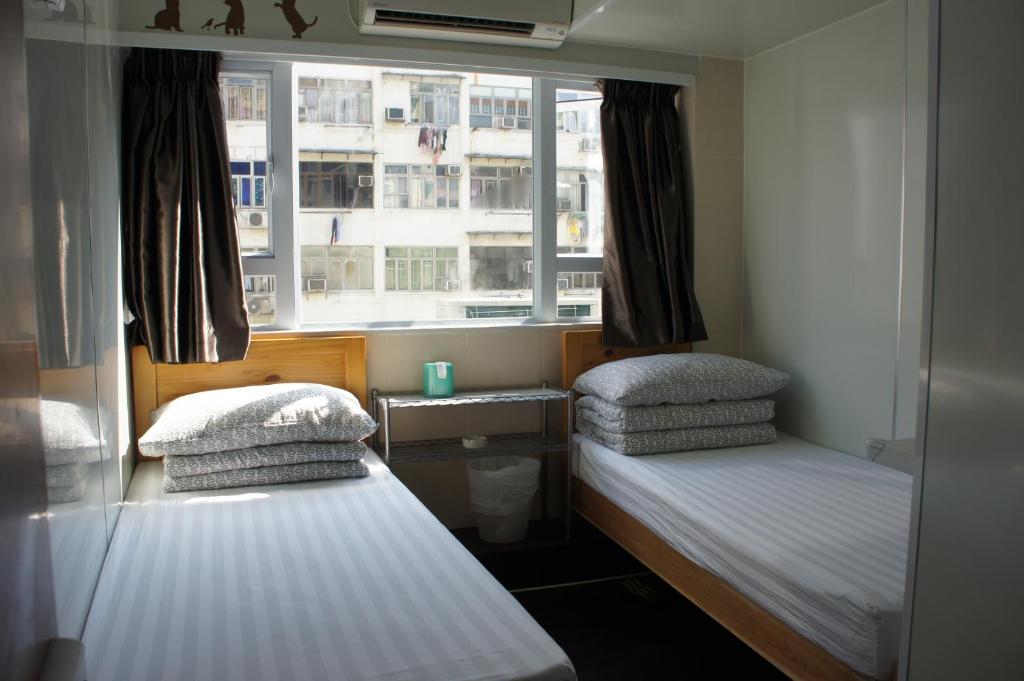
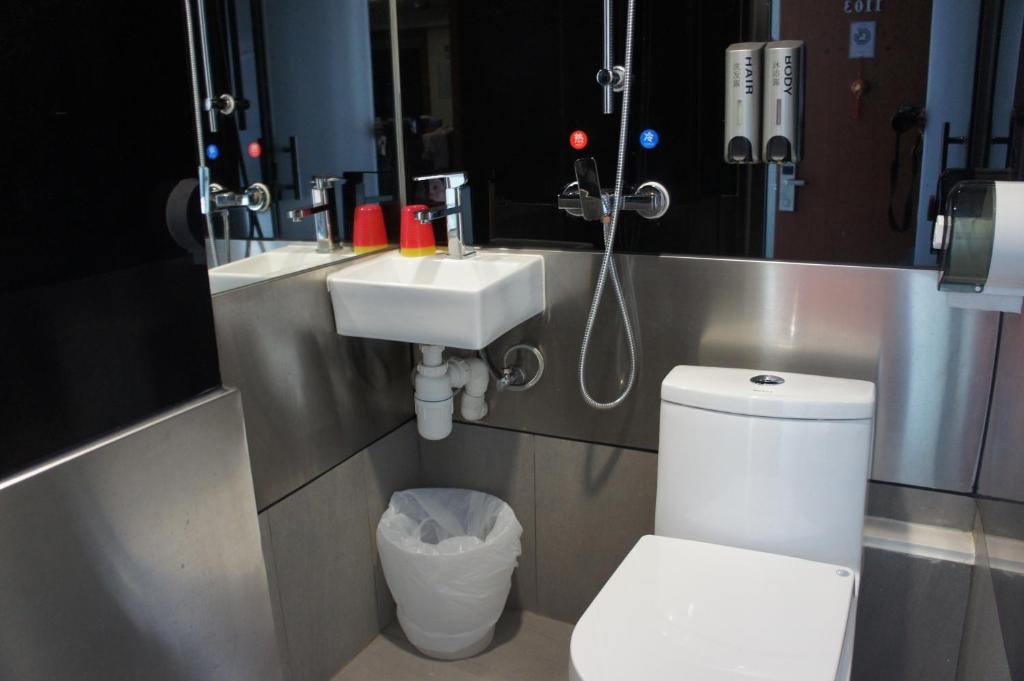

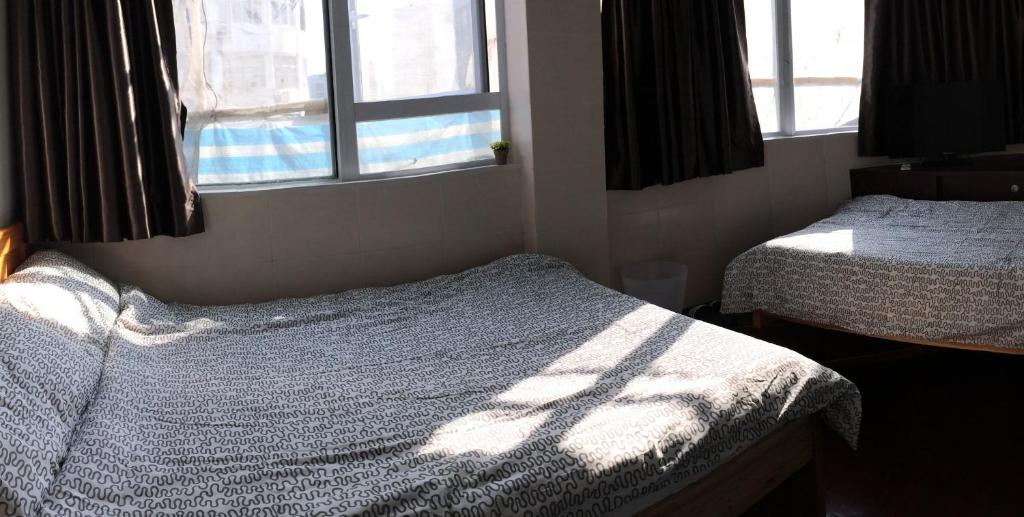
Welcome to Hong Kong, the Kowloon district that never sleeps. You are in the vibrant heart of the city. Stroll along the promenade between modern skyscrapers and take in the sea air from the local bay. Enjoy the evening skyline of the city with the highest concentration of skyscrapers in the world. Enjoy the famous nighttime Symphony of Lights, during which the buildings around you light up in all colours. Before you immerse yourself in this light show, step back in time for a moment to a period before the massive construction and enjoy the atmosphere of traditional Hong Kong at the local markets, where you can prepare your stomach for the local cuisine by sampling some of the famous Asian delicacies.
To move around the city, there is a high-quality and reliable public transport system provided by MTR. The metro is the most used, with local trams and ferries used less. You probably won't need buses.
On the MTR website (there's also a mobile app) you'll find maps of each line, fares and a route planner:
web - https://www.mtr.com.hk/en/customer/main/index.html
Metro operates a total of 9 lines across the city, plus an airport express line (with a separate fare). The MTR also takes you reliably to the outer reaches of Hong Kong and to the Chinese border.
Fare is based on distance travelled and ranges from HK$5 for the shortest routes to around HK$20 for longer distances within the city. For example, a journey from the city centre to the cable car station at Big Buddha (Tung Chung) will cost approximately HKD 19. A ride from the centre to the Chinese border costs around HKD 44 - however, you are unlikely to use it in this itinerary, we list it more as a point of interest.
metro, red line Tsuen Wan line, direction Tsuen Wan → stop Mong Kok
frequency - approx. 5 min
travel time - 7 min
price - 5.9 with Octopus card
Mong Kok is one of Hong Kong's - and perhaps the world's - most vibrant areas, bustling with life day and night. As well as markets selling cheap goods of all kinds, there are, of course, countless food stalls. For a first introduction to the local cuisine, which in coastal Asia is based - how else - on noodles, rice and seafood, there is perhaps no better place. Although you're not in Arabia, be sure to haggle over the price of the goods (not the food).
market opening hours - vary, described for each market in the terms below
You probably won't be able to buy anything at the Yuen Po Street Bird Market with its traditional Chinese-style garden, but the atmosphere of the market and the surrounding garden, along with the exotic birds on display, are well worth a visit. In addition to the birds, you can also find accessories for their breeding and often beautiful cages made of bamboo, for example.
sales hours- daily 7:00 am - 8:00 pm
The Flower Market is connected to the bird market on Flower Market Road, Prince Edward Road West, Sai Yee Street and Yuen Po Street and is full of beautiful exotic plants whose beautiful flowers and fragrances will light up your senses. Although you probably won't buy anything here, it's worth the atmosphere.
sales hours - daily 7:00 am - 7:00 pm
As the name suggests, here you will find a huge selection of freshwater or marine fish and other animals of the underwater world. Again, you probably won't buy anything, but it's a nice experience.
sales hours - daily approx. 10:00 - 21:00
web - https://www.goldfish-market.hk/
One of the main markets in Mong Kok and Hong Kong in general. Located on Tung Choi Street. As the name suggests, it's a great place for the ladies - there's a huge range of cheap clothes, cosmetics and accessories. However, men are not left out either, as you can find all sorts of things here (watches, antiques, souvenirs and cuddly toys, for example).
sales hours - noon - 11pm
Continue heading south along Nathan Road:
Every metropolis has its main street, and in the case of Hong Kong, it is this very road that stretches from the Tsim Sha Tsui waterfront northwards across the entire Kowloon district all the way to Mong Kok, famous for its markets. Along this approximately 4 km long boulevard, you'll experience the hustle and bustle of the big city, busy traffic, but above all, plenty of restaurants, shops, and traditional markets. Fans of shopping, gastronomy, markets, and nightlife will find exactly what they're looking for right here.
The name of the night market is a bit misleading, because it is open from 4 pm. However, to really enjoy it in all its glory, it's best to visit it during the evening when it's lit up with lamps and neon and is lively. So you can walk around during the day (it's on your way) and shop for cheap clothes, electronics, watches, suitcases and souvenirs, for example. But be sure to come back at night, when the market really comes alive, especially at the many restaurants and food stalls serving local cuisine. The perfect place for dinner, don't you think?
Hours of sale: daily approx. 16:00 - 00:00
The 484-metre high International Commerce Centre (ICC) was completed in 2010 and is Hong Kong's tallest building. The Sky100 observation deck, located on the 100th floor, may be of interest to tourists. However, I don't think the view is worth the money and effort, as there is a better view from the top of The Peak in Victoria Park. The building also houses shops with luxury fashion brands, restaurants and office space.
Opening hours: daily approx 10:00am - 8:30pm (last entry 8:00pm)
Web (can book entry): https://sky100.com.hk/en/visits-sky100/
Kowloon, along with the adjacent Hong Kong Island, is one of the city's highest-density urban centres, pulsating day and night. Here you'll find the largest selection of accommodation, shops, restaurants and markets. Perhaps the multicultural nature of Kowloon is most evident in the city. On the streets, you'll meet people from all over the world running shops, restaurants or running lucrative businesses. Beyond the hustle and bustle, however, you'll find tranquillity in one of the parks or temples.
The district is ideal for shopping, visiting markets, sampling local and international cuisine and enjoying the nightlife. In Kowloon, don't miss a stroll along the Tsim Sha Tsui promenade (see below), from where, incidentally, the famous SMymphony of Lights (every evening at 8pm) is perhaps best viewed.
Kowloon Park:
An escape from the hustle and bustle of the big city is best provided by this sprawling urban park, which contrasts with the surrounding concrete jungle and skyscrapers to form a sort of green oasis of calm in a hectic city. The park was formerly a British military base. In the park you will find a sports centre, a playground, a swimming pool, a maze, an aviary with parrots and of course many trees providing shade and landscaped grassy areas with plants. There is also a drinking water fountain. The mosque located on the southern edge along Nathan Road will be of interest.
WARNING! It is forbidden to tread on the grass in many places. Follow the signs.
TIP! There are dragon dance and martial arts demonstrations in the park on Sundays from 2:30 to 4:30 p.m.
Opening hours: daily approx. 5:00 am - 12:00 pm

Hong Kong Museum of History offers a fascinating insight into Hong Kong's history and culture, from its original settlement to the modern era. The museum is divided into several themed exhibitions covering archaeology, ethnography, the history of urban development and the region's cultural heritage.
opening hours - daily approx. 5:00 - 00:00

The waterfront district and one of the most vibrant centres of the city, not to be missed. Actually, you can't, because you'll always have a way through here, at least for the ferry. The beautiful promenade stretching from the wharf to the Avenue of Stars provides the best views of Victoria Harbour Bay and the skyline of the skyscraper-studded Hong Kong Island opposite. It's a beautiful sight, especially in the evening. But be prepared for crowds, as this is one of the best places to see the local attraction - the symphony of lights. If you want to enjoy it from a good spot, I recommend arriving even 30 minutes before the show starts, which is daily at 8pm.
Museum enthusiasts will enjoy visiting one of the two museums here:
1) The Museum of Art - https://hk.art.museum/en/web/ma/home.html
Opening Hours:MON - FR 10:00 am - 6:00 pm, weekends and holidays 10:00 am - 9:00 pm, CLOSED THURS
Admission: free
2) Space Museum - https://hk.space.museum/en/web/spm/home.html
Opening Hours: Mon - Fri 1:00pm - 9:00pm, Weekend and Holidays 10:00am - 9:00pm, CLOSED THURS
Admission: 10 HKD (exhibition), 30 - 40 HKD (theatre depending on location), children get in for half price.

Hong Kong's most beautiful promenade (and also the most popular and therefore very lively) is made up of a wide boulevard that is partly bridged and runs right over the waters of Victoria Harbour. There is no shortage of beautiful views of the bay and the skyscrapers of Hong Kong Island opposite. And as the name suggests, you can stargaze here. Not the ones in the sky, which are minimally visible due to light pollution and often cloudy skies, but the cinematic ones. Following the example of Hollywood, the promenade is lined with portraits of famous figures from the Hong Kong and Chinese film industries.
Symphony of Lights:
The popular evening light show, in which the surrounding skyscrapers are lit up to music and various colourful scenes and lasers are projected on them, draws crowds every night at 8pm, so it's a good idea to find a seat at least 30 minutes beforehand. It is the largest permanent light and sound show in the world. This particular promenade is very popular for viewing. The show runs daily except on days with extremely bad weather.

A monument and reminder of British rule, this clock tower is a remnant of the former Kowloon railway station. You can't climb it, but the surrounding park with its palm tree-lined fountain and nearby promenade and wharf is still a pleasant stop, especially on clear days.
A huge multi-storey shopping complex stretches from the Jet Star ferry dock to the terminal of ships sailing to mainland China. It is the largest shopping mall in all of HK and if you need to get something or perhaps cool off in an air-conditioned room or, conversely, shelter from the rain, this building can serve the purpose. In addition to shops from the world's most exclusive fashion brands, there are, of course, a number of restaurants.
Sail across Victoria Harbour Bay to Hong Kong Island and enjoy views of the skyscrapers from sea level. Take a ride on the legendary "ding ding" tram in the style of London's doubledeckers. See the local "rabbit hutches". Walk the promenade and enjoy the view across the bay under the golden flower that has become the symbol of the national flag. At the end of the day, take a legendary tube ride between the skyscrapers to just below the top of Hong Kong Island and enjoy spectacular views of the evening bay and the forest of illuminated skyscrapers - the most common image from postcards and catalogues.
The port of the traditional Star ferry, which takes you from Tsim Sha Tsui in Kowloon across the bay to the opposite island of Hong Kong.

A pleasant way to travel between the Kowloon Peninsula and Hong Kong Island, offering a view of the skyscrapers from the sea, is the Star Ferry, which provides cruises on historic vessels at very affordable prices. Locals also use them for everyday commuting. Compared to sightseeing harbor cruises, it's a fraction of the cost.
frequency - approx. 10 min
cruise time - 10 min
price - between 4-7 HKD, varies by day of the week and whether you're on the upper or lower deck - see the website for the price list, payment can be made with an Octopus card
website - https://www.starferry.com.hk/en/service
A very original but mainly practical way of getting from the central island of Hong Kong to the higher Mid-levels is the longest (800m) public outdoor (but covered) escalator, which will help you cover the distance and, more importantly, the height metres without any effort. It starts at Queen's Road Central, connects to the Central Market Flyover and winds its way through Central to Conduit Road. It is a network of interconnecting one-way escalators that change direction depending on the peak time of day. The escalator has obviously become one of the most popular attractions, but for locals it is a common mode of transport to/from work.
Operating Hours:
DOWN: 6:00 am - 10:00 am
UP: 10:20am - 12:00pm

One of the oldest temples in HK, characterised by its green tiled roof, contains well-preserved artefacts such as a bronze bell from the Qing Dynasty. Worshippers who visit the temple pray for success and prosperity and offer gifts of vegetables and fruits, scented sticks, etc. in exchange.
Opening Hours - daily approx. 8:00 am - 6:00 pm

The escalators going down won't be running, so walk down alongside them or take another route back to the seaside promenade and follow it towards the square.
After a stroll along the seaside promenade, you will arrive at the main square, dominated by a statue of the golden bauhinia flower, which has become a national symbol and has its place on the flag that stands nearby. The site is also popular for its views of the bay and the aforementioned symphony of lights in the evening.
It's time to hop on one of the city's icons – the double-decker tram, nicknamed "ding ding" because of the typical bell sound it makes in the hustle and bustle of the city. Grab a seat upstairs by the front window for a unique view of the busy city streets. Head away from the waterfront towards the city center to the main Hennessy Road, which the tram runs along, and head east. Get off at the Mt. Parker Road stop.
price per ride - 3 HKD, Octopus card accepted
website - https://www.hktramways.com/en/
Hong Kong is sandwiched between the sea and the mountains, so it has little room to grow except in height (as a result, the city boasts the highest concentration of skyscrapers on Earth). In order to fit all the residents in, you have to build buildings high up and try to fit as many apartments as possible into each building. The apartments are therefore often very small (you may have heard of the infamous "cage" apartments). An interesting example of this architecture is this block of five buildings in Quarry Bay, where up to 10,000 people reportedly live in over 2,200 flats. A decent "rabbit warren", wouldn't you say? You can see this massive residential area for yourself from a publicly accessible courtyard.
metro, blue line Island line, direction Kennedy town → Admiralty station
frequency - approx. 5 min
travel time - 13 min
price - 7.4 HKD with Octopus card
One of the main attractions of Hong Kong, which, despite the high price, should not be missed by any visitor. It is not a tram, as the name would suggest, but rather a "toboggan" pulled by a rope to the top of Victoria Peak. The journey is particularly amazing because of its incline, which reaches up to 50 degrees in places, which means firstly a very fast traversal of the vertical metres, and also the optical illusion where the skyscrapers seem to "bend". The tram has a glass roof and during the journey you can observe absolutely unique shots, where you ride directly between the skyscrapers, only to continue later surrounded by hilly nature.

The Peak Tram:
operating hours - 7:30 - 23:00
frequency - 15 min
travel time - 8-10 min
ticket price:
Various discounted packages are available, e.g., with a ticket to the Sky Terrace 428 viewing platform. Personally, however, I recommend using just the transport, because you can find similarly beautiful views at the top for free and with smaller crowds.
combo tickets see website - https://www.thepeak.com.hk/en/ticket-and-booking/purchase-ticket/peak-tram-sky-pass
website about The Peak Tram - https://www.thepeak.com.hk/en
!!ATTENTION!! Especially during the most popular time of day (dusk/evening), expect long queues. Buying a ticket online will save you from waiting at the ticket booth, but be prepared that you will still have a long wait for the tram.
Here you will find 2 shopping malls: the Peak Tower is right at the terminus of the cable car, and you will find the Sky Terrace 428 paid observation deck (depending on altitude). A little further on is the Peak Galleria, whose rooftop observation deck is free.

Peak Tower is a shopping mall that you enter immediately after exiting the cable car at the top station, and you will find the Sky Terrace 428 paid observation deck (depending on altitude).
I do not recommend visiting the paid observation deck due to the large crowds and the many free observation decks available in the area.
opening hours - 10:00 a.m. - 10:00 p.m.

What I recommend, on the other hand, is this pleasant walk with minimal elevation gain, when you can enjoy the magnificent views of the city skyline and the harbour. A big bonus, besides the free access, is the minimal number of tourists compared to the "famous" Sky Terrace. The trail runs along The Peak, which is a pleasant walk to get to.

Walking from the saddle near the intersection of Lugard Road, Hatton Road, and the steps to The Peak, we'll head down the paved, wooded path and reach the nearest MTR station, HKU, in 20-30 minutes.
If you don't feel like walking, you have 2 options – both starting from the tram station at Victoria Gap..
1) buy a round-trip tram ticket and go back down the same way (in my opinion, unnecessarily expensive and you wait in line twice)
2) hop on bus 15 at the bus terminal and ride it to Central station for the MTR (approx. 13 HKD) - cheap, but unfortunately, there are long queues for the bus as well.
!!Because of the crowds at public transport, I recommend walking down!!
1) metro, Island line, direction Chai Wan → stop Central
2) metro, Tsuen Wan line, direction Tsuen Wan
frequency - approx. 5 - 10 min
travel time - 15 min
price - 13.2 HKD with Octopus card
After the many kilometres covered in the previous days in the city and countryside, today it is time to rest and absorb the rich experiences. HK has excellent opportunities for this, which will be appreciated by children as well as adults. Today, you can choose from two popular theme parks that are completely different from each other. So take your pick. Of course, you can combine the two, but given their vastness and the huge number of attractions, as well as the long travel time between them, I would recommend that you rather experience one of them to the fullest.
1) MTR, red line Tsuen Wan line, direction Central → Admiralty station
2) MTR, lime line South Island line, direction South Horizons → Ocean Park station
frequency - approx. 5 min
travel time - 14 min (excluding transfer wait time)
price - 13.2 HKD with Octopus card
One of the most popular amusement parks combines a waterpark, aquarium and zoo, and is complemented by elements of an amusement park. All of this is set against the beautiful backdrop of a rugged coastline with wooded hills and complemented by scenic cable car rides over the sea.
Basic sections:
The Waterfront
Aqua City - a classic waterpark with indoor and outdoor pools, fountains and restaurants with bars.
Amazing Asian Animals - a zoo with pavilions and interactive exhibits, including the most popular inhabitants and symbols of mainland China - the pandas.
Grand Aquarium - an underwater aquarium with many species of marine animals.
Whiskers Harbour - a section especially suitable for children, where they can enjoy various games and rides.
After exploring this section, you can take the iconic scenic cable car which takes you over the rugged coastline for approximately 1km, offering spectacular views of the green hills and endless blue sea. A faster and perhaps even more interesting alternative is the four-minute Ocean Express ride, which simulates a submarine ride. Transportation both ways is included in the ticket price.
The Summit
Thrill Mountain - the most adrenaline-pumping attraction, including roller coasters.
Polar Adventure - themed section with Arctic animals.
Rainforest - tropical rainforest with exotic animals.
Marine World - includes an aquarium with sharks, rays and jellyfish.
Adventure Land - another section full of adventure attractions.
Waterworld
SA separate section with a classic waterpark, pools and water slides. Admission is charged separately.
‼ WARNING: Some attractions may be closed or restricted during the year. Please visit the official website for the latest information:
https://www.oceanpark.com.hk/en
Opening hours: daily from 10:00 am to 7:00 pm

1) subway, lime line South island line, direction Admiratly → stop Admiralty
2) subway, red Tsuen Wan line, direction Tsuen Wan
frequency - approx. 5 min
travel time - 14 min (no waiting at transfer)
price - HKD 13.2 with Octopus card
1) metro, red line Tsuen Wan line, towards Tsuen Wan → stop Lai King
2) metro, orange line Tung Chung line, towards Tung Chung → stop Sunny bay
3) metro, pink line Disneyland resort line, towards Disneyland Resort
frequency - approx. 5 min
travel time - 39 min (excluding transfer wait times)
price - 22.2 HKD with Octopus card
This sprawling theme park, the largest in Hong Kong, opened in 2005 on the forested island of Lantau and is easily accessible by subway. The thematic focus needs little introduction - fans of Walt Disney films and fairy tales in particular will be in heaven and can easily spend a whole day here.
The park is dominated by the iconic Disney Castle, around which four main themed areas are spread. Main Street, U.S.A. is reminiscent of a quaint early 20th century American Midwestern town. Adventureland transports you to a tropical jungle setting full of adventure. Fantasyland will especially delight lovers of classic fairy tales and magical worlds. Tomorrowland is a futuristic area focused on technology, science and science fiction.
The park is gradually expanding with new sections inspired by popular movie worlds. Already in operation is World of Frozen, a themed area dedicated to the Ice Kingdom, and attractions related to Marvel superheroes are being added. The original Sleeping Beauty Castle has also undergone a significant transformation, and in 2020 it will be transformed into the new Castle of Magical Dreams, a symbol of the entire modernisation.
The necessary facilities including restaurants, cafes and gift shops are available throughout the site. Characters familiar from Disney films roam freely for you to take photos with, and there are daily shows, parades and performances. There are also roller coasters, themed rides and other attractions suitable for children and adults alike.
The park's opening hours are daily from 10:30 am to 8:00 pm. Tickets must be booked in advance on the official website: https://www.hongkongdisneyland.com/reservation/landing/

1) metro, pink line Disneyland resort line, direction Sunny bay → stop Sunny bay
2) metro, orange line Tung Chung line, direction Hong Kong central → stop Lai King
3) metro, red line Tsuen Wan line, direction Hong Kong central
frequency - approx. 5 min
travel time - 39 min (without waiting for transfers)
price - 22.2 HKD with Octopus card
Take a cable car ride between the mountains and coves and enjoy breathtaking views of the sea, forested hillsides and one of the world's longest road bridges that stretches over the water and disappears into the distant horizon. Climb the steps leading up to the largest seated Buddha statue in Hong Kong and enjoy its majesty and the surrounding tranquillity. Find mental balance at the beautiful Po Lin Buddhist Temple hidden among the mountains.
Slow down and step back in time as you visit the authentic fishing village of Tai O, where you can sample fresh seafood prepared by the locals. If you're a nature and hiking enthusiast, take one of the hilly trails that line the coves and quiet corners of the island. You'll be rewarded with views and relaxation on one of the white sand beaches with clear waters.
Lantau Island will delight everyone - and a visit is likely to be one of the highlights of your holiday.
1) metro, Tuen Ma line (brown), direction Tuen Mun → stop Nam Cheong
2) metro, Tung Chung line (yellow), direction Tung Chung
frequency - approx. 5 min
travel time - 34 min (excluding transfer time)
price - 18.7 HKD with Octopus card

The well-known saying that sometimes the journey itself is the destination is fully confirmed at the Ngong Ping 360 cable car, which takes you to the Ngong Ping Plateau, the highest tourist area on Lantau Island, surrounded by forested hills and picturesque coves. It is one of Hong Kong's most popular tourist attractions, offering breathtaking views throughout the ride.
At the start of the journey you'll see the skyline of Hong Kong's great city, then the iconic international airport built on an artificial island (this is where your journey usually begins and ends), and finally you'll get a glimpse of one of the most amazing engineering feats of modern times - the Hong Kong-Zhuhai-Macau Bridge (HZM Bridge), which arches over the sea and connects three major cities with a delicate structure that looks like a revelation. The entire cable car route is accompanied by views of sea coves, beaches and surrounding green mountains.
The cable car is also the easiest and fastest way to reach the Po Lin Temple, famous for its huge statue of Tian Tan Buddha, also known as the Great Buddha.
Operating hours - weekdays 10:00 am - 6:00 pm, weekend and holidays 9:00 am - 6:30 pm
Price: You can purchase a regular ticket for a standard cab, or a more expensive option with a glass bottom (called Crystal Cabin). Tickets can be purchased on site, but advance booking is recommended in high season.

Ngong Ping 360 cable car:
frequency - one after another :)
travel time - 25 min
A huge bronze statue of the seated Buddha, 34 metres high and weighing 250 tonnes, towers majestically over the landscape of Lantau Island, visible from a great distance. The journey to it is not to be missed, either for the statue itself or the magnificent scenery that surrounds you as you climb. The statue is part of the Po Lin Buddhist monastery complex and has a total of 268 steps leading up to it.
The interior of the statue is partially open to the public and houses a small museum with artefacts and an exhibition related to Buddhism. The main experience, however, lies in the sight of the Buddha himself, seated on a lotus flower and surrounded by six smaller statues of gods offering traditional offerings: flowers, incense, a lamp, ointment, fruit and music - symbols necessary for attaining enlightenment. From the viewing gallery around the statue, you have a beautiful view of the surrounding landscape and the temple complex.
opening hours - 10:00 - 17:45
The aforementioned Buddha is part of the beautiful Po Lin Buddhist Monastery, which is considered the most important monastery in all of Hong Kong. Translated, its original name means approximately "Beautiful Lotus". The grounds include the main temple (which is not open to the public), monastic buildings, a restaurant and shops where you can buy scented sticks and then burn them as part of a traditional ritual.
The temple is home to three Buddha statues, which symbolize the past, present and future. The interior is decorated with numerous Buddhist inscriptions and decorations. If you are lucky enough to stumble upon a monk prayer in progress, you are in for a profound spiritual experience that will enhance the atmosphere of the entire place.
opening hours - 10:00 am - 5:30 pm
bus 21, Ngong Ping → Tai O
frequency - for timetables see the website https://hkbus.app/en/route/21-1-tai-o-ngong-ping (journey time → schedule)
journey time - 15 min
price - 7.9 HKD (19.2 HKD on Sundays and public holidays), pay with Octopus card
In the authentic fishing village of Tai O, located in a cove on the west coast of Lantau Island, you can experience what Hong Kong was like decades ago. Thanks to its remote location, the village has retained its original character despite the growing tourist interest in the area. Tai O is particularly famous for its traditional stilt houses, called pang uk, which literally "grow" out of the water, and its harbour with fishing and sightseeing boats that you can take out on the surrounding waters.
If you're lucky, you might spot the rare white Chinese dolphins that live in the local coastal waters. There are also several hiking trails along the coast, smaller temples and pleasant beaches. Don't forget to visit the local markets for a taste of fresh fish or seafood - or, traditionally, dried and salted fish with a distinctive spiciness.
If your visit hits the 5th day of the 5th month of the Chinese lunar calendar, you can witness the famous Dragon Boat Festival. Listed as an intangible cultural heritage of China, this traditional festival is full of colourful boats, drums and a festive atmosphere.
Once you've explored the village, there are several options for how to spend the rest of the day - and there are different return options to match. The choice depends on your preferences, time and weather. Two options include hikes through the surrounding countryside with beautiful views of the sea. The other option is ideal for those who want to relax on the beach and enjoy relaxing by the sea. The last option is for those who have already explored the island and want to spend the rest of the day on the Hong Kong mainland.

OPTION 1: HIKE ALONG THE WEST COAST WITH VIEWS OF THE BRIDGE AND AIRPORT
The first option is to embark on an approximately 15 km long hike along a route that follows the coastline for most of the way and has relatively little elevation gain. Throughout the journey, you will climb about 360 meters in total, caused by occasional steeper ascents and subsequent descents when crossing smaller ridges.
The route follows the ancient Tung O Ancient Trail through the village of Sha Lo Wan, where there are basic facilities (toilets, and the option to refill water). Because the path follows the coastline, you get beautiful views of sea bays and the open sea, and in some places, you can relax on natural beaches. Along the way, you may also come across smaller religious sites.
This option is ideal for hiking enthusiasts and those who love sea views. It will also delight aviation fans – a large part of the route leads close to Hong Kong International Airport, which is in some places just a few hundred meters away across the strait. You will also find yourself very close to the monumental Hong Kong–Zhuhai–Macau Bridge, one of the longest bridge complexes in the world. With a slight adjustment to the route, you can get almost directly underneath its structure.

OPTION 2: HIKE ALONG THE SOUTH COAST WITH SEA VIEWS
The second option is a bit more demanding in terms of distance and elevation gain—it's roughly 16 km long with 460 meters of climbing. However, it follows a well-marked and comfortable route that hugs the island's southern coast the whole way.
The route follows the popular Lantau Trail, specifically sections 7 and 8. Most of the path is paved and part of it is also an official bike trail, so it's easily accessible and suitable for cyclists too. Because of the trail's popularity, you'll encounter more hikers, but there are better facilities—for example, there’s an emergency rescue point about every 500 meters. Along the way, you can enjoy beautiful sea views and take the chance to cool off at one of the natural beaches.
The hike ends at the Shek Pik Reservoir, where you join the road. From there, you can catch bus No. 11, which will take you back to the nearest MTR station.
This option is perfect for those who prefer comfortable paved paths with good signage and views of the sea, hills, and quiet beaches. There are also a few small shrines and temples along the way.
route length: 16 km
elevation gain: 460 m
gear: quality footwear, weather-appropriate clothing, raincoat, sun protection, water, snack

bus 11, 11A, 23 from Sha Tsui stop immediately after turning onto the road by the pond → Tung Chung
frequency - for timetables see the website https://hkbus.app/en/route/11-1-tai-o-tung-chung-station-bus-terminus/12 (journey time → schedule)
journey time - 50 min
price - 10.1 HKD (17.6 HKD on Sundays and public holidays), payment via Octopus card
bus 11, from stop Tai O → stop Upper Cheung Sha beach
frequency - for timetables see the website https://hkbus.app/en/route/11-1-tai-o-tung-chung-station-bus-terminus/12 (journey time → schedule)
travel time - 36 min
price - 10.1 HKD (17.6 HKD on Sundays and holidays), payment via Octopus card
Option 3: BEACHES - WALKING, RELAXING, SHOPPING BY TIME
Whether you're lounging on the beach enjoying the view, swimming, doing water sports or just strolling along the beach and the surrounding area and enjoying the scenery, this option is more relaxing and laid back compared to the previous two sports-oriented options.
We recommend taking a walk along the long Cheung Sha beach, which is divided into upper and lower sections, or finding the perfect spot here for your beach fun.
This approximately 3 km long beach with fine white sand, clear blue water and surrounding mountainous, forested landscape is the longest and one of the most beautiful beaches in Hong Kong. It is also home to restaurants and bars serving fresh seafood, cocktails and wines.
The beach has 2 sections:
Upper - quieter, ideal for relaxing, walking and taking pictures of the beautiful tropical scenery of the surrounding mountains and forests.
Lower - smaller, livelier and busier. Offering richer facilities, it is popular for classic beach activities and water sports. You may also spot the local buffaloes, who like to go into the sea water to cool off.
TIP: If Cheung Sha isn't enough for you, or you want to take a stroll, another popular beach, Pui O, is about 2km away, also accessible by buses 11, 11A or 23.
web - https://www.discoverhongkong.com/eng/explore/great-outdoor/wellness/cheung-sha-beach.html
web about HK beaches including location and lifeguard hours:
https://www.lcsd.gov.hk/en/beach/index/beach-location-nt/beach-address-is.html
Buses no. 11, 11A, 23, from Cheung Sha Ha Tsuen stop → Tung Chung bus terminal stop
frequency - for timetables see the website https://hkbus.app/en/route/11-1-tai-o-tung-chung-station-bus-terminus/12 (journey time → schedule)
journey time - 33 min
price - 7.1 HKD (14.2 HKD on Sundays and holidays), payment via Octopus card
OPTION 4: DEPART FROM THE ISLAND BACK TO THE CENTRE
If you've enjoyed the island enough, after visiting Tai O Village, you can take the No. 11 bus back to the mainland - specifically to Tung Chung subway station, where you can conveniently take the subway to downtown Hong Kong.
On your return to the city, you can then plan your evening's activities - such as visiting the Temple Street Night Market, strolling along Tsim Sha Tsui Promenade, stopping by the Avenue of Stars, enjoying the Symphony of Lights light show, enjoying a nice dinner... or simply relaxing at your accommodation. Each to their own.
Bus No. 11, from Tai O stop → Tung Chung bus terminal stop
frequency - timetables https://hkbus.app/en/route/11-1-tai-o-tung-chung-station-bus-terminus/12 (journey time → schedule)
travel time - 71 min
price - 14 HKD (23.3 HKD on Sundays and public holidays), payment via Octopus card
Whichever option you choose, all routes converge here - at Tung Chung subway station, where you can take the subway back to central Hong Kong.
1) metro, yellow line Tung Chung line, direction Hong Kong → stop Nam Cheong
2) metro, brown line Tuen Ma line, direction Wu Kai Sha
frequency - approx. 5 min
travel time - 34 min (excluding transfer wait time)
price - 18.7 HKD with Octopus card
Welcome to China... I mean Portugal... or maybe Las Vegas? Just Macau! Experience this fabulously rich region first-hand and discover the unique combination of the atmosphere of nearby China, distant Portugal and even more distant Las Vegas. All these worlds meet here - in the Macau Special Administrative Region.
Today takes you to the European part of the city, specifically to an old historic city with Portuguese colonial architecture on the Se Peninsula. Here you will see inscriptions in Portuguese and walk through narrow, shady streets between churches with an atmosphere reminiscent of the European Mediterranean. Explore the ruins of the famous St Paul's Church - its iconic façade, rising above the surrounding ruins, is visible from afar, especially from the nearby fortress. Walk around the old harbour with its colonial houses and miniature "Colosseum".
Reminisce about your European homeland in the alleys of the old city before finding yourself minutes later in front of a modern golden lotus flower-shaped skyscraper - and a Buddhist temple a short distance away. Macau is simply unique.
1) metro, red line Tsuen Wan line, direction Central → stop Central, transfer
2) metro, blue line Island line, direction Kennedy Town
frequency - approx. 5 min
travel time - 12 min (without transfer waiting time)
price - 10.6 HKD with Octopus card
At the terminal, you say goodbye to Hong Kong (although you'll be back - but only on the way from Macau to the airport), and the question of how to handle the Octopus card arises. You've probably already used up the credit worth about 200 CZK (depending on the Lantau programme you've chosen, you may even have topped it up).
There are two options:
The first option is to keep the card for the return trip and possibly top up another credit on it - either while still in Hong Kong or at the terminal in Macau. You can then use the card to pay for both the bus journey from the HZMB terminal in Hong Kong to the airport (HK$9.8) and the HZMB bus journey from Macau to Hong Kong (HK$65-70). Once you arrive at the airport, simply return the card and use the remaining credit or deposit for your last purchases or to be refunded in cash.
Another option is to return the card now at the ferry terminal and receive a refundable deposit of HKD 50. This can be exchanged in Macau for the local currency MOP - you don't need to exchange the whole amount, they accept smaller amounts - or you can use it directly to pay in Hong Kong dollars, which are commonly accepted in Macau, including on public transport. The HZMB bus from Macau to Hong Kong can be paid for with a credit card and then pay for the one-way trip from the HZMB terminal in Hong Kong to the airport in cash with the remaining HK dollars (HK$9.8).
Both options are completely hassle-free and feasible. The author of the itinerary opted for the second option with exchange into Macau MOP currency, purely because he collects foreign currency - however, the average traveller can comfortably do without this cash.
The journey between Hong Kong and Macau can be made either by sea ferry or by bus over the HZMB bridge complex, one of the longest bridges in the world. We recommend trying both ways - each in one direction. The bus is also practical, especially on the return journey, as it stops close to Hong Kong Airport, while the ferry offers a pleasant cruising experience.
To travel from Hong Kong to Macau, we recommend taking the ferry:
Port in Hong Kong: Sheung Wan on Hong Kong Island (Blue Line Subway - Island Line)
Port in Macau:
1) Macau Outer Harbour (near the historic centre) - this is the preferred port for this itinerary
2) Macau Taipa (on the island near the casinos)
Transportation is provided by 2 companies (same prices and routes):
1) Turbojethttps://www.turbojet.com.hk/en/
Routes:
HK (Sheung Wan) → Macau outer harbour (more suitable for this itinerary)
HK (Sheung Wan) → Macau Taipa
Schedules and fares see website:
https://www.turbojet.com.hk/en/routing-sailing-schedule/hong-kong-macau/sailing-schedule-fares.aspx
2) Cotai Water Jethttps://www.cotaiwaterjet.com/
route: HK (Sheung Wan) → Macau Taipa
Both companies offer the same prices, similar frequency of departures and approximately the same sailing time, so it doesn't matter which one you choose. Due to the frequent departures of both carriers, it's usually not a problem to purchase a ticket on the spot. Payment can also be made via Octopus card. However, if you are planning a specific service, advance booking is recommended.
Passport control:
Each time you travel between these cities (or special administrative areas), you will go through passport control on both sides of the border. The process is quick and straightforward - usually taking under 10 minutes. Passport control takes place on departure before entering the waiting area at the pier and on arrival just before leaving the terminal.
HK ferry (Sheung Wan) → Macau outer harbour:
frequency – 30 min
travel time – approx. 60 min
price: (varies by class and also by night/weekend fares) - Octopus card can be used
After exiting the terminal, you will go through passport control and find yourself in another country - specifically the Macau Special Administrative Region.
While at the terminal, I recommend you consider the following:
1) Local currency exchange MOP:
If you have enough cash in Hong Kong Dollars (HKD) and are not planning to take some small coins as souvenirs, exchanging into Macau Patacas (MOP) is not necessary. HKD is commonly accepted in shops and public transport, and international credit cards can be used in restaurants and some shops. I still recommend carrying some cash - for use on public transport, at markets or for small purchases, for example. You can also withdraw cash from an ATM at any time, or exchange it later in the city centre.
2) Getting a Macau Pass:
Macau Pass is a contactless payment card similar to Hong Kong's Octopus card. It allows you to travel more conveniently on public transport and can also be used in some shops and restaurants. It will save you time and money on transport - for example, a regular fare costs MOP 6, but with the Macau Pass it costs only MOP 3.
However, you need to consider whether it's worth getting one for a short visit. The card costs MOP 130, of which MOP 30 is a refundable deposit (which can only be reclaimed during office hours at selected kiosks) and MOP 100 is a loaded credit. Since Macau is small and most visitors spend only one day here, you probably won't be able to run through the entire credit - more likely just a fraction of it. Aside from transport, the card doesn't have as wide a use as the Octopus in Hong Kong.
So from my perspective, the Macau Pass is not worth it for a short stay. If you still want to get one, it is available at 7-Eleven or Circle K stores, for example, including outlets right at the terminal.
For more information, visit the official website: https://www.macaupass.com/
The first place of interest after arriving by ferry is the complex located approximately five minutes walk from the port terminal. Here you can walk along the seafront promenade, watching the sea and the busy port traffic, but we definitely recommend a stroll down the central alley surrounded by beautiful colonial houses. In them you will find shops with goods, restaurants and exhibition spaces. The central square is dominated by an amphitheatre inspired by the Italian Colosseum.
Opening hours: 24 hours

The Golden Lotus Square, the symbol also displayed on the Macau flag, is another place to visit along the way. The square itself doesn't offer much else to see, but since it lies on the road to the fortress, it's definitely worth a short stop and a photo.
The Fortaleza do Monte, a UNESCO World Heritage Site along with other parts of Macau's historic centre, offers spectacular views of the city, including the iconic lotus flower-shaped Grand Lisboa Hotel. The complex also includes the famous ruins of St Paul's Church and the Macau Museum. The remains of a former defensive fortress, located on a 60-metre-high hill above the city, still preserve the old cannons and defensive towers.
opening hours - 7:00 a.m. - 7:00 p.m., free admission to the fort
Macau Museum:opening hours - 10:00 am - 6:00 pm, closed on Mon
"Mater Dei" - the ruins of St. Paul's Church, located in the heart of historic Macau, are, together with Monte Fortress, the city's main historical monument and an important symbol. The imposing façade, which was preserved after a fire in 1835, contrasts sharply with the surrounding apartment blocks and modern skyscrapers in the background. It was originally one of the largest Christian churches in Asia, built in the 17th century. Today you can tour the ruins of the church for free, descend into the crypt and visit a small museum. The facade rises on a slight hill, with wide steps leading up to it. From the foot of the hill, you can see into the streets of the old town.
hours.
museum and crypt: open hours - 9:00 a.m. - 6:00 p.m., 2:00 p.m. only on Tue
The main square, where you can feel the atmosphere of Portuguese sailors, reminds you of a European Mediterranean town. This atmosphere is evoked by the colonial buildings of the town hall, the Santa Casa da Misericórdia convent, St Dominic's Church and the post office. The square is paved with a typical black and white mosaic symbolising the waves of the sea. Narrow streets full of shops and restaurants run off the square.

A rather kitsch structure resembling a golden lotus flower, the Grand Lisboa Hotel houses luxury accommodation and a casino. In its distinctive form, it looks like an eyesore in the surrounding historic buildings, but it is its unmistakable shape and size that has made it a postcard-worthy icon of the city.
You probably won't consider staying here - prices are high - but that doesn't mean you can't take a look inside. The lobby and casino are open to non-guests and admission is free.
open hours - the casino is open 24 hours
web - https://www.grandlisboa.com/en/offers
The oldest temple complex in Macau - A-Ma Temple - was built before the city was founded. According to legend, the temple gave the name to the entire city, as the Chinese term "A-Ma-Gau" means "A-Ma Bay."
The grounds include a memorial arch, prayer halls, the Hall of Benevolence, the Hall of the Goddess Guanyin and the Zhengjiao Chanlin Pavilion (Buddhist Pavilion). The temple is a beautiful reminder that despite its proximity to the "Portuguese" quarter, you are still in the territory of China, whose spiritual traditions - Confucianism, Taoism and Buddhism - are harmoniously intertwined in this place.
opening hours - 7:00 am - 6:00 pm
Macao Tower offers a wide range of adrenaline experiences in addition to the classic glass viewing platform at 223 metres. Besides the skyjump, skywalk, climbing wall and tower, the biggest attraction is the world's highest bungee jump from the building, which is listed in the Guinness Book of World Records.
Opening Hours - 10:00 a.m. - 7:00 p.m., weekend 10:00 a.m. - 8:00 p.m.
entry:
In addition to standard admission, there are also extended offers and combination packages. We recommend checking the website for current offers, where tickets can also be purchased in advance.
https://www.macautower.com.mo/product/general_admission/
adrenaline attractions- https://www.skyparkmacau.com/a


Enjoy a day of contrasts and "travel" through time between the colonial period and the timeless present. Explore the "Las Vegas of the East" and try your luck at one of the casinos. Travel the world on the Cotai Strip, transporting you to Paris, London or Venice. Try a local beach, stroll through the natural landscape and remember you're still de facto in China - so an encounter with the national symbol, the panda, shouldn't be missed.
MHD Macau:
Macau can largely be explored on foot, however, today you will move to the more remote Coloane area, which is best reached by bus - four journeys in total.
Public transport here consists of a short monorail route running around the Cotai Strip and the airport, but you'll mainly use buses operated by two companies. The fare is uniform: 6 MOP for any route, regardless of the length of the journey. So it doesn't matter which company you choose. If you don't own a Macau Pass, you need to drop cash into the driver's cash box when you board (both MOP and HKD currency is accepted at a 1:1 ratio).
Bus companies:
TRANSMAC - website has been down for a long time - https://www.transmac.com.mo/en/
TCM - http://www.tcm.com.mo/web/EV/
Service Finder - https://www.dsat.gov.mo/dsat/subpage.aspx?a_id=1610598965 - route planner
Buses no. 50, 25, 21A, 26A, 52 depart from the stop at Praça Ferreira Amaral square (main transport hub) and you get off at the One Oasis / Mahogany Tower stop.
frequency – individual buses about 15-20 min, so one of them leaves every few minutes
travel time – approx. 30 min
While yesterday you were on the Sé Peninsula, today you will explore the former islands of Taipa and Coloane. Yes - former - because they were joined together in the past by the Chinese authorities and connected to the Se Peninsula by several bridges.
Your first stop will be at the Coloane Natural Area, specifically the Macau Giant Panda Pavilion, located on the slopes of Seac Pai Van Park. The fan-shaped complex includes two indoor and one outdoor enclosures for the giant pandas that are the symbol of China. The complex also includes a rare animal pavilion where you can see animals such as red pandas.
At the Macau Giant Panda Visitor Center, you can learn more about the life of these endangered animals. The centre is located in a two-storey building with exhibition areas, video rooms, reading rooms and interactive elements. There are also refreshments and a gift shop. Admission is free.
Opening Hours - 10:00 a.m. - 1:00 p.m., 2:00 p.m. - 5:00 p.m., closed Mondays (or the day after a holiday Monday)
web - hhttps://nature.iam.gov.mo/e/panda

If you don't feel like walking, just hop back on one of the buses (50, 25, 21A, 26A, 52) you took to get to the pandas and keep heading in the same direction to the village of Coloane. The fare is still 6 MOP.
The calm before the storm (or after the storm, depending on the tourists' agenda) is a visit to the old fishing village of Coloane in the southwest of the former island of the same name. The beautiful colonial architecture of the local houses, the promenade along the strait (from where you watch China) and the cute little temples are in really stark contrast to the "madhouse" and luxury of the Cotai Strip only a few kilometres away.

The path first leads a few hundred meters along the main road heading east towards the coast. Then, marked trails begin through the forested area of the nature park. First, you follow the blue trail, and later the red one. Check the tourist map in the Mapy.cz app, which you should download for offline use.
If you don't feel like walking, hop on one of the 15A, 21A, or 26A buses and continue to Hac Sa Beach. The fare is 6 MOP again. From the beach, you can then walk to the A-Ma Cultural Village.
A sort of "open-air" historical village is located near the tallest statue of the goddess A-Ma on the top of a mountain on the island of Coloane in Macau. The village architecture consists mainly of a pavilion-style front gate, a carved marble altar, the Tin Hau Palace, a dressing room along with a bell tower and a drum tower. Visitors can follow the hiking trail to the magnificent A-Ma statue at the top of the hill and enjoy the breathtaking view of the island.
Opening Hours - Tin Hau Palace 9:00 am - 6:00 pm
From A-Ma, head down to the beach first via the red trail and then take the short stairs near the Hac Sa reservoir. Check out Mapy.cz.
One of the few (actually, probably the only) beaches suitable for swimming in the sea or for walking and relaxing. It is located in a wooded natural area in the south of the former island of Coloane. A promenade runs along this 1 km long beach and there is no lack of classic facilities. Be prepared for the dark sand, which is not very good-looking and turns to mud in the sea. The water is therefore far from clear. Macau is simply not a typical bathing destination. Free showers are available.
Buses 26A, 21A, 15 from the Praia Hac Sa stop.
get off at the beginning of the Cotai Strip near The Parisian hotel.
frequency – individual buses every 15-20 mins, so one of them is always coming along soon
travel time – approx. 20 mins
"Chinese Las Vegas" (whose American model, given the region's folksiness, is easily pocketed by visitors) and an incredible show of luxury, lights and sometimes kitsch. It's a wide boulevard whose inspiration is clear - the Las Vegas Strip in America's gambling and casino city. The Cotai Strip is located roughly in the middle of the island, which was formed by the joining of two formerly separate islands (Coloane and Taipa) - hence the name "Cotai". As in American Vegas, you will find luxury hotels styled after famous European destinations with miniature versions of their symbols - for example, the Parisian Hotel has a small Eiffel Tower and the Arc de Triomphe, the Venetian has a water canal and the Londoner has a Big Ben tower. You can also enter the casinos located in these hotels as a non-guest. The Cotai Strip is very easy to navigate - it is, after all, much shorter and more compact than its American counterpart, and you can move around the air-conditioned arcades full of upmarket fashion boutiques, jewellery shops and other accessories. You can also take advantage of the monorail or buses that run through here. Admission to the casinos is 21 and over. Long trousers and sturdy shoes are required to enter the casino; you won't be allowed in shorts, miniskirts or flip-flops. Photography is usually prohibited.

Cross the footbridge over the lake, which offers views of the Cotai Strip, and continue on into the old town.
Old Taipa Village, combining Portuguese colonial houses and Chinese temples, standing literally in the shadow of the Cotai Strip's luxurious luminous buildings and casinos, will be a worthy farewell to this quaint city-state and the entire holiday. Choose from one of the many restaurants and grab a bite to eat.
From Old Taipa Village, hop on one of the buses—21A, 26, or MT4—to get to your accommodation.
Get off at one of the stops near Rua das Lorchas or at the main station nearby.
Frequency: The buses run every 15–20 minutes, so there's always one coming soon.
Travel time: about 15 minutes
Your stay is coming to an end and all that's left is the transfer back to Hong Kong airport. But this journey is not just any journey - it is an experience in itself, in fact the last of your "South China" adventure. You will travel over the sea on a 55km long bridge that spans the Pearl River Delta in the South China Sea. Until recently, it was the longest road bridge in the world. A beautiful end to your journey.
trip to the HZMB bus terminal:
bus 101X from the R. do Guimaraes stop → HONG KONG-ZHUHAI-MACAU BRIDGE FRONTIER POST
frequency – 10 min
travel time – 20 min
On the way back to Hong Kong, we’ll take advantage of the fact that the HZMB golden shuttle bus stops near the airport, so this time we'll travel overland across the famous HZMB bridge.
Upon arriving at the HZMB terminal in Macau, you'll go through immigration and then hop on the HZMB shuttle bus heading to Hong Kong. This bus runs 24 hours a day.
frequency – 5 mins during the day, 10–15 mins early in the morning and evening, 15–30 mins at night
travel time – approx. 50 mins, or about 1 hour and 15 mins total including immigration on both sides
price – tickets can be bought online or at the terminal (cash, card, Octopus/Macau pass)
bus stop in HK: HZMB HK Port near the airport
trip from HK Port to the airport terminal:
bus B4, nonstop, frequency 15-20 min, travel time - 3 min, cash or Octopus card
If you haven't already returned your Octopus card at the port on your way to Macau, don't forget to return it at Hong Kong airport and use the remaining credit for refreshments.
You have arrived back at the airport - your journey is over. You have visited two countries in one week and experienced a colourful mix of the modern world, colonial history and traditional Chinese culture. Both Macau and Hong Kong offer unexpected contrasts: the luxury of casinos, historic centres, temples, nature and views of futuristic cities.
If you're looking for an original escape from the European winter, this destination is definitely worth it.
Hong Kong and Macau - Asian exoticism with European comfort.
Imagine strolling through bustling streets smelling of fresh dumplings, admiring ancient temples hidden among the skyscrapers and ending the day with a sunset view over the South China Sea. Climb the iconic Victoria Peak and enjoy one of the most beautiful panoramic views in the world. Stroll through Macau's traditional markets, where Chinese vibrancy mixes with Portuguese charm, and sample fresh seafood delicacies. No visas, no censorship - just a comfortable, safe journey full of contrasts and experiences. And that's just the beginning - there's so much more to discover with us!
Enjoy your first panoramas on the flight and on the way out of the airport. Depending on the weather, time of day and your position on the plane, you won't want to miss the fascinating view of Hong Kong and the densely populated area around it (Macau and South China). This view is already impressive during landing. You'll feel the sophistication of the place as soon as you arrive - the modern airport terminal and excellent infrastructure ensure a quick transfer to the city centre, which is approximately 25 minutes from the airport. When you consider that you cover a distance of around 30 km and cross two islands in that time, it's really impressive, don't you think? What's more, part of the metro runs on the surface, so you'll enjoy beautiful views along the way in daylight. Depending on the time of arrival and your energy, you can still visit one of the local markets on the day of your arrival, take a stroll along the promenade or enjoy some of the famous Asian cuisine.
One of the world's busiest airports was built on an artificial island and is located approximately 30 kilometres from the centre of Hong Kong, near the popular tourist island of Lantau. The airport is partially visible from the cable car on the way to Po Lin Monastery. The terminal is large but very modern and clear, so you will have no problem finding your way around.
An arrival form may be required to be completed before passing through immigration control. This is usually given to you on the plane by the cabin crew or is available at the desks upon arrival. It provides basic information about your stay, such as your arrival and departure dates or your accommodation address.
To protect against the introduction of diseases and pests, you are not allowed to bring in plant or animal products such as seeds, meat or dairy products. Therefore, it is better to consume these foods during the flight or leave them at home. You may, however, bring a bottle of hard liquor for personal use, up to a maximum of one litre per person over the age of eighteen.
The importation of any weapons is also prohibited, including pepper spray. Their possession is considered a criminal offence. Possession or transportation of drugs is severely punished. Please also note the sensitivity of political issues concerning Hong Kong's position vis-à-vis China. Inappropriate comments on social media or public statements may lead to inconvenience when entering the country or during your stay.
The first thing you should do after going through immigration control and collecting your luggage is to get an Octopus Card. It's a rechargeable, contactless card that makes travelling around Hong Kong convenient - and you can use it on your way from the airport. You load credit onto the card and it is then automatically deducted according to the distance travelled or the fare.
Benefits:
- lower fares compared to single tickets
- easy to use (when boarding, you just attach the card to the reader, when exiting the metro you attach it again and the system automatically calculates the fare)
- the card can also be used to pay in many shops, such as supermarkets, cafés or vending machines
Shopping locations:
At the airport at MTR
kiosksat some stores (e.g. the extensive chain 7-eleven, Circle K...)
Price:
You will pay a refundable deposit of HK$50 at the time of purchase, which will be refunded when you return the card, as well as any unused balance. You will receive the refund in cash. We recommend that you load an initial credit, such as HKD 200, at the time of purchase. The card can be topped up at subway stations, vending machines and the shops mentioned above.
You can also purchase the card at the airport by credit card. However, in the city itself, most top-ups are done in cash.
You can also use the card and also top up via your phone using Apple pay through the Octopus Tourists app. It is also possible to request a refund via the app, which you will then receive on your credit card (not verified by the author).
Validity: The card can be used on the entire MTR network - subways, buses, trams, minibuses and also on the Victoria Bay ferry between Hong Kong Island and the Kowloon Peninsula.
Official website: https://www.octopus.com.hk/en/consumer/index.html
You can get from the airport to downtown Hong Kong comfortably and quickly by the MTR subway. You can find information about the subway as well as the local legendary "ding ding" trams on the transport operator's website. There are line maps, ticket prices, and a route planner available there.
website - https://www.mtr.com.hk/en/customer/main/index.html
A covered pedestrian walkway will lead you from the terminal directly to the subway station.
The Airport Express line goes to Kowloon station and has only three intermediate stops. Transferring from Kowloon to the brown subway line (Tuen Ma line) towards your accommodation can be more complicated, expensive, and involves a longer walk. Therefore, we recommend the following route:
1) Subway – MTR Blue Line AEL (Airport Express Line), towards Hong Kong, get off at Tsing Yi (14 min)
2) Subway – MTR Orange Line Tung Chung Line, towards Hong Kong, get off at Nam Cheong (4 min)
3) Subway – MTR Brown Line Tuen Ma Line, towards Wu Kai Sha, get off at East Tsim Sha Tsui (10 min)
connection frequency - 10 min
first/last connections – 1st connection from the airport 5:54, last connection from the airport 00:48
travel time – 38 min (without waiting for transfers)
price –
adults (12+) - 83 HKD, with Octopus card 65 HKD
children (3-11 years) and seniors (65+) - 40 HKD, with Octopus card 32.5 HKD
when traveling in a group, you can take advantage of significant discounts on the express line from the airport:
see website https://www.mtr.com.hk/en/customer/tickets/promotions_4persons.html
website about the express line - https://www.mtr.com.hk/en/customer/services/timetable_index.html
express line price list - https://www.hongkongairport.com/en/transport/to-from-airport/airport-express.page
Welcome to Hong Kong, the Kowloon district that never sleeps. You are in the vibrant heart of the city. Stroll along the promenade between modern skyscrapers and take in the sea air from the local bay. Enjoy the evening skyline of the city with the highest concentration of skyscrapers in the world. Enjoy the famous nighttime Symphony of Lights, during which the buildings around you light up in all colours. Before you immerse yourself in this light show, step back in time for a moment to a period before the massive construction and enjoy the atmosphere of traditional Hong Kong at the local markets, where you can prepare your stomach for the local cuisine by sampling some of the famous Asian delicacies.
To move around the city, there is a high-quality and reliable public transport system provided by MTR. The metro is the most used, with local trams and ferries used less. You probably won't need buses.
On the MTR website (there's also a mobile app) you'll find maps of each line, fares and a route planner:
web - https://www.mtr.com.hk/en/customer/main/index.html
Metro operates a total of 9 lines across the city, plus an airport express line (with a separate fare). The MTR also takes you reliably to the outer reaches of Hong Kong and to the Chinese border.
Fare is based on distance travelled and ranges from HK$5 for the shortest routes to around HK$20 for longer distances within the city. For example, a journey from the city centre to the cable car station at Big Buddha (Tung Chung) will cost approximately HKD 19. A ride from the centre to the Chinese border costs around HKD 44 - however, you are unlikely to use it in this itinerary, we list it more as a point of interest.
metro, red line Tsuen Wan line, direction Tsuen Wan → stop Mong Kok
frequency - approx. 5 min
travel time - 7 min
price - 5.9 with Octopus card
Mong Kok is one of Hong Kong's - and perhaps the world's - most vibrant areas, bustling with life day and night. As well as markets selling cheap goods of all kinds, there are, of course, countless food stalls. For a first introduction to the local cuisine, which in coastal Asia is based - how else - on noodles, rice and seafood, there is perhaps no better place. Although you're not in Arabia, be sure to haggle over the price of the goods (not the food).
market opening hours - vary, described for each market in the terms below
You probably won't be able to buy anything at the Yuen Po Street Bird Market with its traditional Chinese-style garden, but the atmosphere of the market and the surrounding garden, along with the exotic birds on display, are well worth a visit. In addition to the birds, you can also find accessories for their breeding and often beautiful cages made of bamboo, for example.
sales hours- daily 7:00 am - 8:00 pm
The Flower Market is connected to the bird market on Flower Market Road, Prince Edward Road West, Sai Yee Street and Yuen Po Street and is full of beautiful exotic plants whose beautiful flowers and fragrances will light up your senses. Although you probably won't buy anything here, it's worth the atmosphere.
sales hours - daily 7:00 am - 7:00 pm
As the name suggests, here you will find a huge selection of freshwater or marine fish and other animals of the underwater world. Again, you probably won't buy anything, but it's a nice experience.
sales hours - daily approx. 10:00 - 21:00
web - https://www.goldfish-market.hk/
One of the main markets in Mong Kok and Hong Kong in general. Located on Tung Choi Street. As the name suggests, it's a great place for the ladies - there's a huge range of cheap clothes, cosmetics and accessories. However, men are not left out either, as you can find all sorts of things here (watches, antiques, souvenirs and cuddly toys, for example).
sales hours - noon - 11pm
Continue heading south along Nathan Road:
Every metropolis has its main street, and in the case of Hong Kong, it is this very road that stretches from the Tsim Sha Tsui waterfront northwards across the entire Kowloon district all the way to Mong Kok, famous for its markets. Along this approximately 4 km long boulevard, you'll experience the hustle and bustle of the big city, busy traffic, but above all, plenty of restaurants, shops, and traditional markets. Fans of shopping, gastronomy, markets, and nightlife will find exactly what they're looking for right here.
The name of the night market is a bit misleading, because it is open from 4 pm. However, to really enjoy it in all its glory, it's best to visit it during the evening when it's lit up with lamps and neon and is lively. So you can walk around during the day (it's on your way) and shop for cheap clothes, electronics, watches, suitcases and souvenirs, for example. But be sure to come back at night, when the market really comes alive, especially at the many restaurants and food stalls serving local cuisine. The perfect place for dinner, don't you think?
Hours of sale: daily approx. 16:00 - 00:00
The 484-metre high International Commerce Centre (ICC) was completed in 2010 and is Hong Kong's tallest building. The Sky100 observation deck, located on the 100th floor, may be of interest to tourists. However, I don't think the view is worth the money and effort, as there is a better view from the top of The Peak in Victoria Park. The building also houses shops with luxury fashion brands, restaurants and office space.
Opening hours: daily approx 10:00am - 8:30pm (last entry 8:00pm)
Web (can book entry): https://sky100.com.hk/en/visits-sky100/
Kowloon, along with the adjacent Hong Kong Island, is one of the city's highest-density urban centres, pulsating day and night. Here you'll find the largest selection of accommodation, shops, restaurants and markets. Perhaps the multicultural nature of Kowloon is most evident in the city. On the streets, you'll meet people from all over the world running shops, restaurants or running lucrative businesses. Beyond the hustle and bustle, however, you'll find tranquillity in one of the parks or temples.
The district is ideal for shopping, visiting markets, sampling local and international cuisine and enjoying the nightlife. In Kowloon, don't miss a stroll along the Tsim Sha Tsui promenade (see below), from where, incidentally, the famous SMymphony of Lights (every evening at 8pm) is perhaps best viewed.
Kowloon Park:
An escape from the hustle and bustle of the big city is best provided by this sprawling urban park, which contrasts with the surrounding concrete jungle and skyscrapers to form a sort of green oasis of calm in a hectic city. The park was formerly a British military base. In the park you will find a sports centre, a playground, a swimming pool, a maze, an aviary with parrots and of course many trees providing shade and landscaped grassy areas with plants. There is also a drinking water fountain. The mosque located on the southern edge along Nathan Road will be of interest.
WARNING! It is forbidden to tread on the grass in many places. Follow the signs.
TIP! There are dragon dance and martial arts demonstrations in the park on Sundays from 2:30 to 4:30 p.m.
Opening hours: daily approx. 5:00 am - 12:00 pm
Hong Kong Museum of History offers a fascinating insight into Hong Kong's history and culture, from its original settlement to the modern era. The museum is divided into several themed exhibitions covering archaeology, ethnography, the history of urban development and the region's cultural heritage.
opening hours - daily approx. 5:00 - 00:00
The waterfront district and one of the most vibrant centres of the city, not to be missed. Actually, you can't, because you'll always have a way through here, at least for the ferry. The beautiful promenade stretching from the wharf to the Avenue of Stars provides the best views of Victoria Harbour Bay and the skyline of the skyscraper-studded Hong Kong Island opposite. It's a beautiful sight, especially in the evening. But be prepared for crowds, as this is one of the best places to see the local attraction - the symphony of lights. If you want to enjoy it from a good spot, I recommend arriving even 30 minutes before the show starts, which is daily at 8pm.
Museum enthusiasts will enjoy visiting one of the two museums here:
1) The Museum of Art - https://hk.art.museum/en/web/ma/home.html
Opening Hours:MON - FR 10:00 am - 6:00 pm, weekends and holidays 10:00 am - 9:00 pm, CLOSED THURS
Admission: free
2) Space Museum - https://hk.space.museum/en/web/spm/home.html
Opening Hours: Mon - Fri 1:00pm - 9:00pm, Weekend and Holidays 10:00am - 9:00pm, CLOSED THURS
Admission: 10 HKD (exhibition), 30 - 40 HKD (theatre depending on location), children get in for half price.
Hong Kong's most beautiful promenade (and also the most popular and therefore very lively) is made up of a wide boulevard that is partly bridged and runs right over the waters of Victoria Harbour. There is no shortage of beautiful views of the bay and the skyscrapers of Hong Kong Island opposite. And as the name suggests, you can stargaze here. Not the ones in the sky, which are minimally visible due to light pollution and often cloudy skies, but the cinematic ones. Following the example of Hollywood, the promenade is lined with portraits of famous figures from the Hong Kong and Chinese film industries.
Symphony of Lights:
The popular evening light show, in which the surrounding skyscrapers are lit up to music and various colourful scenes and lasers are projected on them, draws crowds every night at 8pm, so it's a good idea to find a seat at least 30 minutes beforehand. It is the largest permanent light and sound show in the world. This particular promenade is very popular for viewing. The show runs daily except on days with extremely bad weather.
A monument and reminder of British rule, this clock tower is a remnant of the former Kowloon railway station. You can't climb it, but the surrounding park with its palm tree-lined fountain and nearby promenade and wharf is still a pleasant stop, especially on clear days.
A huge multi-storey shopping complex stretches from the Jet Star ferry dock to the terminal of ships sailing to mainland China. It is the largest shopping mall in all of HK and if you need to get something or perhaps cool off in an air-conditioned room or, conversely, shelter from the rain, this building can serve the purpose. In addition to shops from the world's most exclusive fashion brands, there are, of course, a number of restaurants.
Sail across Victoria Harbour Bay to Hong Kong Island and enjoy views of the skyscrapers from sea level. Take a ride on the legendary "ding ding" tram in the style of London's doubledeckers. See the local "rabbit hutches". Walk the promenade and enjoy the view across the bay under the golden flower that has become the symbol of the national flag. At the end of the day, take a legendary tube ride between the skyscrapers to just below the top of Hong Kong Island and enjoy spectacular views of the evening bay and the forest of illuminated skyscrapers - the most common image from postcards and catalogues.
The port of the traditional Star ferry, which takes you from Tsim Sha Tsui in Kowloon across the bay to the opposite island of Hong Kong.
A pleasant way to travel between the Kowloon Peninsula and Hong Kong Island, offering a view of the skyscrapers from the sea, is the Star Ferry, which provides cruises on historic vessels at very affordable prices. Locals also use them for everyday commuting. Compared to sightseeing harbor cruises, it's a fraction of the cost.
frequency - approx. 10 min
cruise time - 10 min
price - between 4-7 HKD, varies by day of the week and whether you're on the upper or lower deck - see the website for the price list, payment can be made with an Octopus card
website - https://www.starferry.com.hk/en/service
A very original but mainly practical way of getting from the central island of Hong Kong to the higher Mid-levels is the longest (800m) public outdoor (but covered) escalator, which will help you cover the distance and, more importantly, the height metres without any effort. It starts at Queen's Road Central, connects to the Central Market Flyover and winds its way through Central to Conduit Road. It is a network of interconnecting one-way escalators that change direction depending on the peak time of day. The escalator has obviously become one of the most popular attractions, but for locals it is a common mode of transport to/from work.
Operating Hours:
DOWN: 6:00 am - 10:00 am
UP: 10:20am - 12:00pm
One of the oldest temples in HK, characterised by its green tiled roof, contains well-preserved artefacts such as a bronze bell from the Qing Dynasty. Worshippers who visit the temple pray for success and prosperity and offer gifts of vegetables and fruits, scented sticks, etc. in exchange.
Opening Hours - daily approx. 8:00 am - 6:00 pm
The escalators going down won't be running, so walk down alongside them or take another route back to the seaside promenade and follow it towards the square.
After a stroll along the seaside promenade, you will arrive at the main square, dominated by a statue of the golden bauhinia flower, which has become a national symbol and has its place on the flag that stands nearby. The site is also popular for its views of the bay and the aforementioned symphony of lights in the evening.
It's time to hop on one of the city's icons – the double-decker tram, nicknamed "ding ding" because of the typical bell sound it makes in the hustle and bustle of the city. Grab a seat upstairs by the front window for a unique view of the busy city streets. Head away from the waterfront towards the city center to the main Hennessy Road, which the tram runs along, and head east. Get off at the Mt. Parker Road stop.
price per ride - 3 HKD, Octopus card accepted
website - https://www.hktramways.com/en/
Hong Kong is sandwiched between the sea and the mountains, so it has little room to grow except in height (as a result, the city boasts the highest concentration of skyscrapers on Earth). In order to fit all the residents in, you have to build buildings high up and try to fit as many apartments as possible into each building. The apartments are therefore often very small (you may have heard of the infamous "cage" apartments). An interesting example of this architecture is this block of five buildings in Quarry Bay, where up to 10,000 people reportedly live in over 2,200 flats. A decent "rabbit warren", wouldn't you say? You can see this massive residential area for yourself from a publicly accessible courtyard.
metro, blue line Island line, direction Kennedy town → Admiralty station
frequency - approx. 5 min
travel time - 13 min
price - 7.4 HKD with Octopus card
One of the main attractions of Hong Kong, which, despite the high price, should not be missed by any visitor. It is not a tram, as the name would suggest, but rather a "toboggan" pulled by a rope to the top of Victoria Peak. The journey is particularly amazing because of its incline, which reaches up to 50 degrees in places, which means firstly a very fast traversal of the vertical metres, and also the optical illusion where the skyscrapers seem to "bend". The tram has a glass roof and during the journey you can observe absolutely unique shots, where you ride directly between the skyscrapers, only to continue later surrounded by hilly nature.
The Peak Tram:
operating hours - 7:30 - 23:00
frequency - 15 min
travel time - 8-10 min
ticket price:
Various discounted packages are available, e.g., with a ticket to the Sky Terrace 428 viewing platform. Personally, however, I recommend using just the transport, because you can find similarly beautiful views at the top for free and with smaller crowds.
combo tickets see website - https://www.thepeak.com.hk/en/ticket-and-booking/purchase-ticket/peak-tram-sky-pass
website about The Peak Tram - https://www.thepeak.com.hk/en
!!ATTENTION!! Especially during the most popular time of day (dusk/evening), expect long queues. Buying a ticket online will save you from waiting at the ticket booth, but be prepared that you will still have a long wait for the tram.
Here you will find 2 shopping malls: the Peak Tower is right at the terminus of the cable car, and you will find the Sky Terrace 428 paid observation deck (depending on altitude). A little further on is the Peak Galleria, whose rooftop observation deck is free.
Peak Tower is a shopping mall that you enter immediately after exiting the cable car at the top station, and you will find the Sky Terrace 428 paid observation deck (depending on altitude).
I do not recommend visiting the paid observation deck due to the large crowds and the many free observation decks available in the area.
opening hours - 10:00 a.m. - 10:00 p.m.
What I recommend, on the other hand, is this pleasant walk with minimal elevation gain, when you can enjoy the magnificent views of the city skyline and the harbour. A big bonus, besides the free access, is the minimal number of tourists compared to the "famous" Sky Terrace. The trail runs along The Peak, which is a pleasant walk to get to.
Walking from the saddle near the intersection of Lugard Road, Hatton Road, and the steps to The Peak, we'll head down the paved, wooded path and reach the nearest MTR station, HKU, in 20-30 minutes.
If you don't feel like walking, you have 2 options – both starting from the tram station at Victoria Gap..
1) buy a round-trip tram ticket and go back down the same way (in my opinion, unnecessarily expensive and you wait in line twice)
2) hop on bus 15 at the bus terminal and ride it to Central station for the MTR (approx. 13 HKD) - cheap, but unfortunately, there are long queues for the bus as well.
!!Because of the crowds at public transport, I recommend walking down!!
1) metro, Island line, direction Chai Wan → stop Central
2) metro, Tsuen Wan line, direction Tsuen Wan
frequency - approx. 5 - 10 min
travel time - 15 min
price - 13.2 HKD with Octopus card
After the many kilometres covered in the previous days in the city and countryside, today it is time to rest and absorb the rich experiences. HK has excellent opportunities for this, which will be appreciated by children as well as adults. Today, you can choose from two popular theme parks that are completely different from each other. So take your pick. Of course, you can combine the two, but given their vastness and the huge number of attractions, as well as the long travel time between them, I would recommend that you rather experience one of them to the fullest.
1) MTR, red line Tsuen Wan line, direction Central → Admiralty station
2) MTR, lime line South Island line, direction South Horizons → Ocean Park station
frequency - approx. 5 min
travel time - 14 min (excluding transfer wait time)
price - 13.2 HKD with Octopus card
One of the most popular amusement parks combines a waterpark, aquarium and zoo, and is complemented by elements of an amusement park. All of this is set against the beautiful backdrop of a rugged coastline with wooded hills and complemented by scenic cable car rides over the sea.
Basic sections:
The Waterfront
Aqua City - a classic waterpark with indoor and outdoor pools, fountains and restaurants with bars.
Amazing Asian Animals - a zoo with pavilions and interactive exhibits, including the most popular inhabitants and symbols of mainland China - the pandas.
Grand Aquarium - an underwater aquarium with many species of marine animals.
Whiskers Harbour - a section especially suitable for children, where they can enjoy various games and rides.
After exploring this section, you can take the iconic scenic cable car which takes you over the rugged coastline for approximately 1km, offering spectacular views of the green hills and endless blue sea. A faster and perhaps even more interesting alternative is the four-minute Ocean Express ride, which simulates a submarine ride. Transportation both ways is included in the ticket price.
The Summit
Thrill Mountain - the most adrenaline-pumping attraction, including roller coasters.
Polar Adventure - themed section with Arctic animals.
Rainforest - tropical rainforest with exotic animals.
Marine World - includes an aquarium with sharks, rays and jellyfish.
Adventure Land - another section full of adventure attractions.
Waterworld
SA separate section with a classic waterpark, pools and water slides. Admission is charged separately.
‼ WARNING: Some attractions may be closed or restricted during the year. Please visit the official website for the latest information:
https://www.oceanpark.com.hk/en
Opening hours: daily from 10:00 am to 7:00 pm
1) subway, lime line South island line, direction Admiratly → stop Admiralty
2) subway, red Tsuen Wan line, direction Tsuen Wan
frequency - approx. 5 min
travel time - 14 min (no waiting at transfer)
price - HKD 13.2 with Octopus card
1) metro, red line Tsuen Wan line, towards Tsuen Wan → stop Lai King
2) metro, orange line Tung Chung line, towards Tung Chung → stop Sunny bay
3) metro, pink line Disneyland resort line, towards Disneyland Resort
frequency - approx. 5 min
travel time - 39 min (excluding transfer wait times)
price - 22.2 HKD with Octopus card
This sprawling theme park, the largest in Hong Kong, opened in 2005 on the forested island of Lantau and is easily accessible by subway. The thematic focus needs little introduction - fans of Walt Disney films and fairy tales in particular will be in heaven and can easily spend a whole day here.
The park is dominated by the iconic Disney Castle, around which four main themed areas are spread. Main Street, U.S.A. is reminiscent of a quaint early 20th century American Midwestern town. Adventureland transports you to a tropical jungle setting full of adventure. Fantasyland will especially delight lovers of classic fairy tales and magical worlds. Tomorrowland is a futuristic area focused on technology, science and science fiction.
The park is gradually expanding with new sections inspired by popular movie worlds. Already in operation is World of Frozen, a themed area dedicated to the Ice Kingdom, and attractions related to Marvel superheroes are being added. The original Sleeping Beauty Castle has also undergone a significant transformation, and in 2020 it will be transformed into the new Castle of Magical Dreams, a symbol of the entire modernisation.
The necessary facilities including restaurants, cafes and gift shops are available throughout the site. Characters familiar from Disney films roam freely for you to take photos with, and there are daily shows, parades and performances. There are also roller coasters, themed rides and other attractions suitable for children and adults alike.
The park's opening hours are daily from 10:30 am to 8:00 pm. Tickets must be booked in advance on the official website: https://www.hongkongdisneyland.com/reservation/landing/
1) metro, pink line Disneyland resort line, direction Sunny bay → stop Sunny bay
2) metro, orange line Tung Chung line, direction Hong Kong central → stop Lai King
3) metro, red line Tsuen Wan line, direction Hong Kong central
frequency - approx. 5 min
travel time - 39 min (without waiting for transfers)
price - 22.2 HKD with Octopus card
Take a cable car ride between the mountains and coves and enjoy breathtaking views of the sea, forested hillsides and one of the world's longest road bridges that stretches over the water and disappears into the distant horizon. Climb the steps leading up to the largest seated Buddha statue in Hong Kong and enjoy its majesty and the surrounding tranquillity. Find mental balance at the beautiful Po Lin Buddhist Temple hidden among the mountains.
Slow down and step back in time as you visit the authentic fishing village of Tai O, where you can sample fresh seafood prepared by the locals. If you're a nature and hiking enthusiast, take one of the hilly trails that line the coves and quiet corners of the island. You'll be rewarded with views and relaxation on one of the white sand beaches with clear waters.
Lantau Island will delight everyone - and a visit is likely to be one of the highlights of your holiday.
1) metro, Tuen Ma line (brown), direction Tuen Mun → stop Nam Cheong
2) metro, Tung Chung line (yellow), direction Tung Chung
frequency - approx. 5 min
travel time - 34 min (excluding transfer time)
price - 18.7 HKD with Octopus card
The well-known saying that sometimes the journey itself is the destination is fully confirmed at the Ngong Ping 360 cable car, which takes you to the Ngong Ping Plateau, the highest tourist area on Lantau Island, surrounded by forested hills and picturesque coves. It is one of Hong Kong's most popular tourist attractions, offering breathtaking views throughout the ride.
At the start of the journey you'll see the skyline of Hong Kong's great city, then the iconic international airport built on an artificial island (this is where your journey usually begins and ends), and finally you'll get a glimpse of one of the most amazing engineering feats of modern times - the Hong Kong-Zhuhai-Macau Bridge (HZM Bridge), which arches over the sea and connects three major cities with a delicate structure that looks like a revelation. The entire cable car route is accompanied by views of sea coves, beaches and surrounding green mountains.
The cable car is also the easiest and fastest way to reach the Po Lin Temple, famous for its huge statue of Tian Tan Buddha, also known as the Great Buddha.
Operating hours - weekdays 10:00 am - 6:00 pm, weekend and holidays 9:00 am - 6:30 pm
Price: You can purchase a regular ticket for a standard cab, or a more expensive option with a glass bottom (called Crystal Cabin). Tickets can be purchased on site, but advance booking is recommended in high season.
Ngong Ping 360 cable car:
frequency - one after another :)
travel time - 25 min
A huge bronze statue of the seated Buddha, 34 metres high and weighing 250 tonnes, towers majestically over the landscape of Lantau Island, visible from a great distance. The journey to it is not to be missed, either for the statue itself or the magnificent scenery that surrounds you as you climb. The statue is part of the Po Lin Buddhist monastery complex and has a total of 268 steps leading up to it.
The interior of the statue is partially open to the public and houses a small museum with artefacts and an exhibition related to Buddhism. The main experience, however, lies in the sight of the Buddha himself, seated on a lotus flower and surrounded by six smaller statues of gods offering traditional offerings: flowers, incense, a lamp, ointment, fruit and music - symbols necessary for attaining enlightenment. From the viewing gallery around the statue, you have a beautiful view of the surrounding landscape and the temple complex.
opening hours - 10:00 - 17:45
The aforementioned Buddha is part of the beautiful Po Lin Buddhist Monastery, which is considered the most important monastery in all of Hong Kong. Translated, its original name means approximately "Beautiful Lotus". The grounds include the main temple (which is not open to the public), monastic buildings, a restaurant and shops where you can buy scented sticks and then burn them as part of a traditional ritual.
The temple is home to three Buddha statues, which symbolize the past, present and future. The interior is decorated with numerous Buddhist inscriptions and decorations. If you are lucky enough to stumble upon a monk prayer in progress, you are in for a profound spiritual experience that will enhance the atmosphere of the entire place.
opening hours - 10:00 am - 5:30 pm
bus 21, Ngong Ping → Tai O
frequency - for timetables see the website https://hkbus.app/en/route/21-1-tai-o-ngong-ping (journey time → schedule)
journey time - 15 min
price - 7.9 HKD (19.2 HKD on Sundays and public holidays), pay with Octopus card
In the authentic fishing village of Tai O, located in a cove on the west coast of Lantau Island, you can experience what Hong Kong was like decades ago. Thanks to its remote location, the village has retained its original character despite the growing tourist interest in the area. Tai O is particularly famous for its traditional stilt houses, called pang uk, which literally "grow" out of the water, and its harbour with fishing and sightseeing boats that you can take out on the surrounding waters.
If you're lucky, you might spot the rare white Chinese dolphins that live in the local coastal waters. There are also several hiking trails along the coast, smaller temples and pleasant beaches. Don't forget to visit the local markets for a taste of fresh fish or seafood - or, traditionally, dried and salted fish with a distinctive spiciness.
If your visit hits the 5th day of the 5th month of the Chinese lunar calendar, you can witness the famous Dragon Boat Festival. Listed as an intangible cultural heritage of China, this traditional festival is full of colourful boats, drums and a festive atmosphere.
Once you've explored the village, there are several options for how to spend the rest of the day - and there are different return options to match. The choice depends on your preferences, time and weather. Two options include hikes through the surrounding countryside with beautiful views of the sea. The other option is ideal for those who want to relax on the beach and enjoy relaxing by the sea. The last option is for those who have already explored the island and want to spend the rest of the day on the Hong Kong mainland.
OPTION 1: HIKE ALONG THE WEST COAST WITH VIEWS OF THE BRIDGE AND AIRPORT
The first option is to embark on an approximately 15 km long hike along a route that follows the coastline for most of the way and has relatively little elevation gain. Throughout the journey, you will climb about 360 meters in total, caused by occasional steeper ascents and subsequent descents when crossing smaller ridges.
The route follows the ancient Tung O Ancient Trail through the village of Sha Lo Wan, where there are basic facilities (toilets, and the option to refill water). Because the path follows the coastline, you get beautiful views of sea bays and the open sea, and in some places, you can relax on natural beaches. Along the way, you may also come across smaller religious sites.
This option is ideal for hiking enthusiasts and those who love sea views. It will also delight aviation fans – a large part of the route leads close to Hong Kong International Airport, which is in some places just a few hundred meters away across the strait. You will also find yourself very close to the monumental Hong Kong–Zhuhai–Macau Bridge, one of the longest bridge complexes in the world. With a slight adjustment to the route, you can get almost directly underneath its structure.
OPTION 2: HIKE ALONG THE SOUTH COAST WITH SEA VIEWS
The second option is a bit more demanding in terms of distance and elevation gain—it's roughly 16 km long with 460 meters of climbing. However, it follows a well-marked and comfortable route that hugs the island's southern coast the whole way.
The route follows the popular Lantau Trail, specifically sections 7 and 8. Most of the path is paved and part of it is also an official bike trail, so it's easily accessible and suitable for cyclists too. Because of the trail's popularity, you'll encounter more hikers, but there are better facilities—for example, there’s an emergency rescue point about every 500 meters. Along the way, you can enjoy beautiful sea views and take the chance to cool off at one of the natural beaches.
The hike ends at the Shek Pik Reservoir, where you join the road. From there, you can catch bus No. 11, which will take you back to the nearest MTR station.
This option is perfect for those who prefer comfortable paved paths with good signage and views of the sea, hills, and quiet beaches. There are also a few small shrines and temples along the way.
route length: 16 km
elevation gain: 460 m
gear: quality footwear, weather-appropriate clothing, raincoat, sun protection, water, snack
bus 11, 11A, 23 from Sha Tsui stop immediately after turning onto the road by the pond → Tung Chung
frequency - for timetables see the website https://hkbus.app/en/route/11-1-tai-o-tung-chung-station-bus-terminus/12 (journey time → schedule)
journey time - 50 min
price - 10.1 HKD (17.6 HKD on Sundays and public holidays), payment via Octopus card
bus 11, from stop Tai O → stop Upper Cheung Sha beach
frequency - for timetables see the website https://hkbus.app/en/route/11-1-tai-o-tung-chung-station-bus-terminus/12 (journey time → schedule)
travel time - 36 min
price - 10.1 HKD (17.6 HKD on Sundays and holidays), payment via Octopus card
Option 3: BEACHES - WALKING, RELAXING, SHOPPING BY TIME
Whether you're lounging on the beach enjoying the view, swimming, doing water sports or just strolling along the beach and the surrounding area and enjoying the scenery, this option is more relaxing and laid back compared to the previous two sports-oriented options.
We recommend taking a walk along the long Cheung Sha beach, which is divided into upper and lower sections, or finding the perfect spot here for your beach fun.
This approximately 3 km long beach with fine white sand, clear blue water and surrounding mountainous, forested landscape is the longest and one of the most beautiful beaches in Hong Kong. It is also home to restaurants and bars serving fresh seafood, cocktails and wines.
The beach has 2 sections:
Upper - quieter, ideal for relaxing, walking and taking pictures of the beautiful tropical scenery of the surrounding mountains and forests.
Lower - smaller, livelier and busier. Offering richer facilities, it is popular for classic beach activities and water sports. You may also spot the local buffaloes, who like to go into the sea water to cool off.
TIP: If Cheung Sha isn't enough for you, or you want to take a stroll, another popular beach, Pui O, is about 2km away, also accessible by buses 11, 11A or 23.
web - https://www.discoverhongkong.com/eng/explore/great-outdoor/wellness/cheung-sha-beach.html
web about HK beaches including location and lifeguard hours:
https://www.lcsd.gov.hk/en/beach/index/beach-location-nt/beach-address-is.html
Buses no. 11, 11A, 23, from Cheung Sha Ha Tsuen stop → Tung Chung bus terminal stop
frequency - for timetables see the website https://hkbus.app/en/route/11-1-tai-o-tung-chung-station-bus-terminus/12 (journey time → schedule)
journey time - 33 min
price - 7.1 HKD (14.2 HKD on Sundays and holidays), payment via Octopus card
OPTION 4: DEPART FROM THE ISLAND BACK TO THE CENTRE
If you've enjoyed the island enough, after visiting Tai O Village, you can take the No. 11 bus back to the mainland - specifically to Tung Chung subway station, where you can conveniently take the subway to downtown Hong Kong.
On your return to the city, you can then plan your evening's activities - such as visiting the Temple Street Night Market, strolling along Tsim Sha Tsui Promenade, stopping by the Avenue of Stars, enjoying the Symphony of Lights light show, enjoying a nice dinner... or simply relaxing at your accommodation. Each to their own.
Bus No. 11, from Tai O stop → Tung Chung bus terminal stop
frequency - timetables https://hkbus.app/en/route/11-1-tai-o-tung-chung-station-bus-terminus/12 (journey time → schedule)
travel time - 71 min
price - 14 HKD (23.3 HKD on Sundays and public holidays), payment via Octopus card
Whichever option you choose, all routes converge here - at Tung Chung subway station, where you can take the subway back to central Hong Kong.
1) metro, yellow line Tung Chung line, direction Hong Kong → stop Nam Cheong
2) metro, brown line Tuen Ma line, direction Wu Kai Sha
frequency - approx. 5 min
travel time - 34 min (excluding transfer wait time)
price - 18.7 HKD with Octopus card
Welcome to China... I mean Portugal... or maybe Las Vegas? Just Macau! Experience this fabulously rich region first-hand and discover the unique combination of the atmosphere of nearby China, distant Portugal and even more distant Las Vegas. All these worlds meet here - in the Macau Special Administrative Region.
Today takes you to the European part of the city, specifically to an old historic city with Portuguese colonial architecture on the Se Peninsula. Here you will see inscriptions in Portuguese and walk through narrow, shady streets between churches with an atmosphere reminiscent of the European Mediterranean. Explore the ruins of the famous St Paul's Church - its iconic façade, rising above the surrounding ruins, is visible from afar, especially from the nearby fortress. Walk around the old harbour with its colonial houses and miniature "Colosseum".
Reminisce about your European homeland in the alleys of the old city before finding yourself minutes later in front of a modern golden lotus flower-shaped skyscraper - and a Buddhist temple a short distance away. Macau is simply unique.
1) metro, red line Tsuen Wan line, direction Central → stop Central, transfer
2) metro, blue line Island line, direction Kennedy Town
frequency - approx. 5 min
travel time - 12 min (without transfer waiting time)
price - 10.6 HKD with Octopus card
At the terminal, you say goodbye to Hong Kong (although you'll be back - but only on the way from Macau to the airport), and the question of how to handle the Octopus card arises. You've probably already used up the credit worth about 200 CZK (depending on the Lantau programme you've chosen, you may even have topped it up).
There are two options:
The first option is to keep the card for the return trip and possibly top up another credit on it - either while still in Hong Kong or at the terminal in Macau. You can then use the card to pay for both the bus journey from the HZMB terminal in Hong Kong to the airport (HK$9.8) and the HZMB bus journey from Macau to Hong Kong (HK$65-70). Once you arrive at the airport, simply return the card and use the remaining credit or deposit for your last purchases or to be refunded in cash.
Another option is to return the card now at the ferry terminal and receive a refundable deposit of HKD 50. This can be exchanged in Macau for the local currency MOP - you don't need to exchange the whole amount, they accept smaller amounts - or you can use it directly to pay in Hong Kong dollars, which are commonly accepted in Macau, including on public transport. The HZMB bus from Macau to Hong Kong can be paid for with a credit card and then pay for the one-way trip from the HZMB terminal in Hong Kong to the airport in cash with the remaining HK dollars (HK$9.8).
Both options are completely hassle-free and feasible. The author of the itinerary opted for the second option with exchange into Macau MOP currency, purely because he collects foreign currency - however, the average traveller can comfortably do without this cash.
The journey between Hong Kong and Macau can be made either by sea ferry or by bus over the HZMB bridge complex, one of the longest bridges in the world. We recommend trying both ways - each in one direction. The bus is also practical, especially on the return journey, as it stops close to Hong Kong Airport, while the ferry offers a pleasant cruising experience.
To travel from Hong Kong to Macau, we recommend taking the ferry:
Port in Hong Kong: Sheung Wan on Hong Kong Island (Blue Line Subway - Island Line)
Port in Macau:
1) Macau Outer Harbour (near the historic centre) - this is the preferred port for this itinerary
2) Macau Taipa (on the island near the casinos)
Transportation is provided by 2 companies (same prices and routes):
1) Turbojethttps://www.turbojet.com.hk/en/
Routes:
HK (Sheung Wan) → Macau outer harbour (more suitable for this itinerary)
HK (Sheung Wan) → Macau Taipa
Schedules and fares see website:
https://www.turbojet.com.hk/en/routing-sailing-schedule/hong-kong-macau/sailing-schedule-fares.aspx
2) Cotai Water Jethttps://www.cotaiwaterjet.com/
route: HK (Sheung Wan) → Macau Taipa
Both companies offer the same prices, similar frequency of departures and approximately the same sailing time, so it doesn't matter which one you choose. Due to the frequent departures of both carriers, it's usually not a problem to purchase a ticket on the spot. Payment can also be made via Octopus card. However, if you are planning a specific service, advance booking is recommended.
Passport control:
Each time you travel between these cities (or special administrative areas), you will go through passport control on both sides of the border. The process is quick and straightforward - usually taking under 10 minutes. Passport control takes place on departure before entering the waiting area at the pier and on arrival just before leaving the terminal.
HK ferry (Sheung Wan) → Macau outer harbour:
frequency – 30 min
travel time – approx. 60 min
price: (varies by class and also by night/weekend fares) - Octopus card can be used
After exiting the terminal, you will go through passport control and find yourself in another country - specifically the Macau Special Administrative Region.
While at the terminal, I recommend you consider the following:
1) Local currency exchange MOP:
If you have enough cash in Hong Kong Dollars (HKD) and are not planning to take some small coins as souvenirs, exchanging into Macau Patacas (MOP) is not necessary. HKD is commonly accepted in shops and public transport, and international credit cards can be used in restaurants and some shops. I still recommend carrying some cash - for use on public transport, at markets or for small purchases, for example. You can also withdraw cash from an ATM at any time, or exchange it later in the city centre.
2) Getting a Macau Pass:
Macau Pass is a contactless payment card similar to Hong Kong's Octopus card. It allows you to travel more conveniently on public transport and can also be used in some shops and restaurants. It will save you time and money on transport - for example, a regular fare costs MOP 6, but with the Macau Pass it costs only MOP 3.
However, you need to consider whether it's worth getting one for a short visit. The card costs MOP 130, of which MOP 30 is a refundable deposit (which can only be reclaimed during office hours at selected kiosks) and MOP 100 is a loaded credit. Since Macau is small and most visitors spend only one day here, you probably won't be able to run through the entire credit - more likely just a fraction of it. Aside from transport, the card doesn't have as wide a use as the Octopus in Hong Kong.
So from my perspective, the Macau Pass is not worth it for a short stay. If you still want to get one, it is available at 7-Eleven or Circle K stores, for example, including outlets right at the terminal.
For more information, visit the official website: https://www.macaupass.com/
The first place of interest after arriving by ferry is the complex located approximately five minutes walk from the port terminal. Here you can walk along the seafront promenade, watching the sea and the busy port traffic, but we definitely recommend a stroll down the central alley surrounded by beautiful colonial houses. In them you will find shops with goods, restaurants and exhibition spaces. The central square is dominated by an amphitheatre inspired by the Italian Colosseum.
Opening hours: 24 hours
The Golden Lotus Square, the symbol also displayed on the Macau flag, is another place to visit along the way. The square itself doesn't offer much else to see, but since it lies on the road to the fortress, it's definitely worth a short stop and a photo.
The Fortaleza do Monte, a UNESCO World Heritage Site along with other parts of Macau's historic centre, offers spectacular views of the city, including the iconic lotus flower-shaped Grand Lisboa Hotel. The complex also includes the famous ruins of St Paul's Church and the Macau Museum. The remains of a former defensive fortress, located on a 60-metre-high hill above the city, still preserve the old cannons and defensive towers.
opening hours - 7:00 a.m. - 7:00 p.m., free admission to the fort
Macau Museum:opening hours - 10:00 am - 6:00 pm, closed on Mon
"Mater Dei" - the ruins of St. Paul's Church, located in the heart of historic Macau, are, together with Monte Fortress, the city's main historical monument and an important symbol. The imposing façade, which was preserved after a fire in 1835, contrasts sharply with the surrounding apartment blocks and modern skyscrapers in the background. It was originally one of the largest Christian churches in Asia, built in the 17th century. Today you can tour the ruins of the church for free, descend into the crypt and visit a small museum. The facade rises on a slight hill, with wide steps leading up to it. From the foot of the hill, you can see into the streets of the old town.
hours.
museum and crypt: open hours - 9:00 a.m. - 6:00 p.m., 2:00 p.m. only on Tue
The main square, where you can feel the atmosphere of Portuguese sailors, reminds you of a European Mediterranean town. This atmosphere is evoked by the colonial buildings of the town hall, the Santa Casa da Misericórdia convent, St Dominic's Church and the post office. The square is paved with a typical black and white mosaic symbolising the waves of the sea. Narrow streets full of shops and restaurants run off the square.
A rather kitsch structure resembling a golden lotus flower, the Grand Lisboa Hotel houses luxury accommodation and a casino. In its distinctive form, it looks like an eyesore in the surrounding historic buildings, but it is its unmistakable shape and size that has made it a postcard-worthy icon of the city.
You probably won't consider staying here - prices are high - but that doesn't mean you can't take a look inside. The lobby and casino are open to non-guests and admission is free.
open hours - the casino is open 24 hours
web - https://www.grandlisboa.com/en/offers
The oldest temple complex in Macau - A-Ma Temple - was built before the city was founded. According to legend, the temple gave the name to the entire city, as the Chinese term "A-Ma-Gau" means "A-Ma Bay."
The grounds include a memorial arch, prayer halls, the Hall of Benevolence, the Hall of the Goddess Guanyin and the Zhengjiao Chanlin Pavilion (Buddhist Pavilion). The temple is a beautiful reminder that despite its proximity to the "Portuguese" quarter, you are still in the territory of China, whose spiritual traditions - Confucianism, Taoism and Buddhism - are harmoniously intertwined in this place.
opening hours - 7:00 am - 6:00 pm
Macao Tower offers a wide range of adrenaline experiences in addition to the classic glass viewing platform at 223 metres. Besides the skyjump, skywalk, climbing wall and tower, the biggest attraction is the world's highest bungee jump from the building, which is listed in the Guinness Book of World Records.
Opening Hours - 10:00 a.m. - 7:00 p.m., weekend 10:00 a.m. - 8:00 p.m.
entry:
In addition to standard admission, there are also extended offers and combination packages. We recommend checking the website for current offers, where tickets can also be purchased in advance.
https://www.macautower.com.mo/product/general_admission/
adrenaline attractions- https://www.skyparkmacau.com/a
Enjoy a day of contrasts and "travel" through time between the colonial period and the timeless present. Explore the "Las Vegas of the East" and try your luck at one of the casinos. Travel the world on the Cotai Strip, transporting you to Paris, London or Venice. Try a local beach, stroll through the natural landscape and remember you're still de facto in China - so an encounter with the national symbol, the panda, shouldn't be missed.
MHD Macau:
Macau can largely be explored on foot, however, today you will move to the more remote Coloane area, which is best reached by bus - four journeys in total.
Public transport here consists of a short monorail route running around the Cotai Strip and the airport, but you'll mainly use buses operated by two companies. The fare is uniform: 6 MOP for any route, regardless of the length of the journey. So it doesn't matter which company you choose. If you don't own a Macau Pass, you need to drop cash into the driver's cash box when you board (both MOP and HKD currency is accepted at a 1:1 ratio).
Bus companies:
TRANSMAC - website has been down for a long time - https://www.transmac.com.mo/en/
TCM - http://www.tcm.com.mo/web/EV/
Service Finder - https://www.dsat.gov.mo/dsat/subpage.aspx?a_id=1610598965 - route planner
Buses no. 50, 25, 21A, 26A, 52 depart from the stop at Praça Ferreira Amaral square (main transport hub) and you get off at the One Oasis / Mahogany Tower stop.
frequency – individual buses about 15-20 min, so one of them leaves every few minutes
travel time – approx. 30 min
While yesterday you were on the Sé Peninsula, today you will explore the former islands of Taipa and Coloane. Yes - former - because they were joined together in the past by the Chinese authorities and connected to the Se Peninsula by several bridges.
Your first stop will be at the Coloane Natural Area, specifically the Macau Giant Panda Pavilion, located on the slopes of Seac Pai Van Park. The fan-shaped complex includes two indoor and one outdoor enclosures for the giant pandas that are the symbol of China. The complex also includes a rare animal pavilion where you can see animals such as red pandas.
At the Macau Giant Panda Visitor Center, you can learn more about the life of these endangered animals. The centre is located in a two-storey building with exhibition areas, video rooms, reading rooms and interactive elements. There are also refreshments and a gift shop. Admission is free.
Opening Hours - 10:00 a.m. - 1:00 p.m., 2:00 p.m. - 5:00 p.m., closed Mondays (or the day after a holiday Monday)
web - hhttps://nature.iam.gov.mo/e/panda
If you don't feel like walking, just hop back on one of the buses (50, 25, 21A, 26A, 52) you took to get to the pandas and keep heading in the same direction to the village of Coloane. The fare is still 6 MOP.
The calm before the storm (or after the storm, depending on the tourists' agenda) is a visit to the old fishing village of Coloane in the southwest of the former island of the same name. The beautiful colonial architecture of the local houses, the promenade along the strait (from where you watch China) and the cute little temples are in really stark contrast to the "madhouse" and luxury of the Cotai Strip only a few kilometres away.
The path first leads a few hundred meters along the main road heading east towards the coast. Then, marked trails begin through the forested area of the nature park. First, you follow the blue trail, and later the red one. Check the tourist map in the Mapy.cz app, which you should download for offline use.
If you don't feel like walking, hop on one of the 15A, 21A, or 26A buses and continue to Hac Sa Beach. The fare is 6 MOP again. From the beach, you can then walk to the A-Ma Cultural Village.
A sort of "open-air" historical village is located near the tallest statue of the goddess A-Ma on the top of a mountain on the island of Coloane in Macau. The village architecture consists mainly of a pavilion-style front gate, a carved marble altar, the Tin Hau Palace, a dressing room along with a bell tower and a drum tower. Visitors can follow the hiking trail to the magnificent A-Ma statue at the top of the hill and enjoy the breathtaking view of the island.
Opening Hours - Tin Hau Palace 9:00 am - 6:00 pm
From A-Ma, head down to the beach first via the red trail and then take the short stairs near the Hac Sa reservoir. Check out Mapy.cz.
One of the few (actually, probably the only) beaches suitable for swimming in the sea or for walking and relaxing. It is located in a wooded natural area in the south of the former island of Coloane. A promenade runs along this 1 km long beach and there is no lack of classic facilities. Be prepared for the dark sand, which is not very good-looking and turns to mud in the sea. The water is therefore far from clear. Macau is simply not a typical bathing destination. Free showers are available.
Buses 26A, 21A, 15 from the Praia Hac Sa stop.
get off at the beginning of the Cotai Strip near The Parisian hotel.
frequency – individual buses every 15-20 mins, so one of them is always coming along soon
travel time – approx. 20 mins
"Chinese Las Vegas" (whose American model, given the region's folksiness, is easily pocketed by visitors) and an incredible show of luxury, lights and sometimes kitsch. It's a wide boulevard whose inspiration is clear - the Las Vegas Strip in America's gambling and casino city. The Cotai Strip is located roughly in the middle of the island, which was formed by the joining of two formerly separate islands (Coloane and Taipa) - hence the name "Cotai". As in American Vegas, you will find luxury hotels styled after famous European destinations with miniature versions of their symbols - for example, the Parisian Hotel has a small Eiffel Tower and the Arc de Triomphe, the Venetian has a water canal and the Londoner has a Big Ben tower. You can also enter the casinos located in these hotels as a non-guest. The Cotai Strip is very easy to navigate - it is, after all, much shorter and more compact than its American counterpart, and you can move around the air-conditioned arcades full of upmarket fashion boutiques, jewellery shops and other accessories. You can also take advantage of the monorail or buses that run through here. Admission to the casinos is 21 and over. Long trousers and sturdy shoes are required to enter the casino; you won't be allowed in shorts, miniskirts or flip-flops. Photography is usually prohibited.
Cross the footbridge over the lake, which offers views of the Cotai Strip, and continue on into the old town.
Old Taipa Village, combining Portuguese colonial houses and Chinese temples, standing literally in the shadow of the Cotai Strip's luxurious luminous buildings and casinos, will be a worthy farewell to this quaint city-state and the entire holiday. Choose from one of the many restaurants and grab a bite to eat.
From Old Taipa Village, hop on one of the buses—21A, 26, or MT4—to get to your accommodation.
Get off at one of the stops near Rua das Lorchas or at the main station nearby.
Frequency: The buses run every 15–20 minutes, so there's always one coming soon.
Travel time: about 15 minutes
Your stay is coming to an end and all that's left is the transfer back to Hong Kong airport. But this journey is not just any journey - it is an experience in itself, in fact the last of your "South China" adventure. You will travel over the sea on a 55km long bridge that spans the Pearl River Delta in the South China Sea. Until recently, it was the longest road bridge in the world. A beautiful end to your journey.
trip to the HZMB bus terminal:
bus 101X from the R. do Guimaraes stop → HONG KONG-ZHUHAI-MACAU BRIDGE FRONTIER POST
frequency – 10 min
travel time – 20 min
On the way back to Hong Kong, we’ll take advantage of the fact that the HZMB golden shuttle bus stops near the airport, so this time we'll travel overland across the famous HZMB bridge.
Upon arriving at the HZMB terminal in Macau, you'll go through immigration and then hop on the HZMB shuttle bus heading to Hong Kong. This bus runs 24 hours a day.
frequency – 5 mins during the day, 10–15 mins early in the morning and evening, 15–30 mins at night
travel time – approx. 50 mins, or about 1 hour and 15 mins total including immigration on both sides
price – tickets can be bought online or at the terminal (cash, card, Octopus/Macau pass)
bus stop in HK: HZMB HK Port near the airport
trip from HK Port to the airport terminal:
bus B4, nonstop, frequency 15-20 min, travel time - 3 min, cash or Octopus card
If you haven't already returned your Octopus card at the port on your way to Macau, don't forget to return it at Hong Kong airport and use the remaining credit for refreshments.
You have arrived back at the airport - your journey is over. You have visited two countries in one week and experienced a colourful mix of the modern world, colonial history and traditional Chinese culture. Both Macau and Hong Kong offer unexpected contrasts: the luxury of casinos, historic centres, temples, nature and views of futuristic cities.
If you're looking for an original escape from the European winter, this destination is definitely worth it.




itinerary by Jakub
Hong Kong and Macau - Asian exoticism with European comfort.
Imagine strolling through bustling streets smelling of fresh dumplings, admiring ancient temples hidden among the skyscrapers and ending the day with a sunset view over the South China Sea. Climb the iconic Victoria Peak and enjoy one of the most beautiful panoramic views in the world. Stroll through Macau's traditional markets, where Chinese vibrancy mixes with Portuguese charm, and sample fresh seafood delicacies. No visas, no censorship - just a comfortable, safe journey full of contrasts and experiences. And that's just the beginning - there's so much more to discover with us!
Enjoy your first panoramas on the flight and on the way out of the airport. Depending on the weather, time of day and your position on the plane, you won't want to miss the fascinating view of Hong Kong and the densely populated area around it (Macau and South China). This view is already impressive during landing. You'll feel the sophistication of the place as soon as you arrive - the modern airport terminal and excellent infrastructure ensure a quick transfer to the city centre, which is approximately 25 minutes from the airport. When you consider that you cover a distance of around 30 km and cross two islands in that time, it's really impressive, don't you think? What's more, part of the metro runs on the surface, so you'll enjoy beautiful views along the way in daylight. Depending on the time of arrival and your energy, you can still visit one of the local markets on the day of your arrival, take a stroll along the promenade or enjoy some of the famous Asian cuisine.
One of the world's busiest airports was built on an artificial island and is located approximately 30 kilometres from the centre of Hong Kong, near the popular tourist island of Lantau. The airport is partially visible from the cable car on the way to Po Lin Monastery. The terminal is large but very modern and clear, so you will have no problem finding your way around.
An arrival form may be required to be completed before passing through immigration control. This is usually given to you on the plane by the cabin crew or is available at the desks upon arrival. It provides basic information about your stay, such as your arrival and departure dates or your accommodation address.
To protect against the introduction of diseases and pests, you are not allowed to bring in plant or animal products such as seeds, meat or dairy products. Therefore, it is better to consume these foods during the flight or leave them at home. You may, however, bring a bottle of hard liquor for personal use, up to a maximum of one litre per person over the age of eighteen.
The importation of any weapons is also prohibited, including pepper spray. Their possession is considered a criminal offence. Possession or transportation of drugs is severely punished. Please also note the sensitivity of political issues concerning Hong Kong's position vis-à-vis China. Inappropriate comments on social media or public statements may lead to inconvenience when entering the country or during your stay.
The first thing you should do after going through immigration control and collecting your luggage is to get an Octopus Card. It's a rechargeable, contactless card that makes travelling around Hong Kong convenient - and you can use it on your way from the airport. You load credit onto the card and it is then automatically deducted according to the distance travelled or the fare.
Benefits:
- lower fares compared to single tickets
- easy to use (when boarding, you just attach the card to the reader, when exiting the metro you attach it again and the system automatically calculates the fare)
- the card can also be used to pay in many shops, such as supermarkets, cafés or vending machines
Shopping locations:
At the airport at MTR
kiosksat some stores (e.g. the extensive chain 7-eleven, Circle K...)
Price:
You will pay a refundable deposit of HK$50 at the time of purchase, which will be refunded when you return the card, as well as any unused balance. You will receive the refund in cash. We recommend that you load an initial credit, such as HKD 200, at the time of purchase. The card can be topped up at subway stations, vending machines and the shops mentioned above.
You can also purchase the card at the airport by credit card. However, in the city itself, most top-ups are done in cash.
You can also use the card and also top up via your phone using Apple pay through the Octopus Tourists app. It is also possible to request a refund via the app, which you will then receive on your credit card (not verified by the author).
Validity: The card can be used on the entire MTR network - subways, buses, trams, minibuses and also on the Victoria Bay ferry between Hong Kong Island and the Kowloon Peninsula.
Official website: https://www.octopus.com.hk/en/consumer/index.html
You can get from the airport to downtown Hong Kong comfortably and quickly by the MTR subway. You can find information about the subway as well as the local legendary "ding ding" trams on the transport operator's website. There are line maps, ticket prices, and a route planner available there.
website - https://www.mtr.com.hk/en/customer/main/index.html
A covered pedestrian walkway will lead you from the terminal directly to the subway station.
The Airport Express line goes to Kowloon station and has only three intermediate stops. Transferring from Kowloon to the brown subway line (Tuen Ma line) towards your accommodation can be more complicated, expensive, and involves a longer walk. Therefore, we recommend the following route:
1) Subway – MTR Blue Line AEL (Airport Express Line), towards Hong Kong, get off at Tsing Yi (14 min)
2) Subway – MTR Orange Line Tung Chung Line, towards Hong Kong, get off at Nam Cheong (4 min)
3) Subway – MTR Brown Line Tuen Ma Line, towards Wu Kai Sha, get off at East Tsim Sha Tsui (10 min)
connection frequency - 10 min
first/last connections – 1st connection from the airport 5:54, last connection from the airport 00:48
travel time – 38 min (without waiting for transfers)
price –
adults (12+) - 83 HKD, with Octopus card 65 HKD
children (3-11 years) and seniors (65+) - 40 HKD, with Octopus card 32.5 HKD
when traveling in a group, you can take advantage of significant discounts on the express line from the airport:
see website https://www.mtr.com.hk/en/customer/tickets/promotions_4persons.html
website about the express line - https://www.mtr.com.hk/en/customer/services/timetable_index.html
express line price list - https://www.hongkongairport.com/en/transport/to-from-airport/airport-express.page
Welcome to Hong Kong, the Kowloon district that never sleeps. You are in the vibrant heart of the city. Stroll along the promenade between modern skyscrapers and take in the sea air from the local bay. Enjoy the evening skyline of the city with the highest concentration of skyscrapers in the world. Enjoy the famous nighttime Symphony of Lights, during which the buildings around you light up in all colours. Before you immerse yourself in this light show, step back in time for a moment to a period before the massive construction and enjoy the atmosphere of traditional Hong Kong at the local markets, where you can prepare your stomach for the local cuisine by sampling some of the famous Asian delicacies.
To move around the city, there is a high-quality and reliable public transport system provided by MTR. The metro is the most used, with local trams and ferries used less. You probably won't need buses.
On the MTR website (there's also a mobile app) you'll find maps of each line, fares and a route planner:
web - https://www.mtr.com.hk/en/customer/main/index.html
Metro operates a total of 9 lines across the city, plus an airport express line (with a separate fare). The MTR also takes you reliably to the outer reaches of Hong Kong and to the Chinese border.
Fare is based on distance travelled and ranges from HK$5 for the shortest routes to around HK$20 for longer distances within the city. For example, a journey from the city centre to the cable car station at Big Buddha (Tung Chung) will cost approximately HKD 19. A ride from the centre to the Chinese border costs around HKD 44 - however, you are unlikely to use it in this itinerary, we list it more as a point of interest.
metro, red line Tsuen Wan line, direction Tsuen Wan → stop Mong Kok
frequency - approx. 5 min
travel time - 7 min
price - 5.9 with Octopus card
Mong Kok is one of Hong Kong's - and perhaps the world's - most vibrant areas, bustling with life day and night. As well as markets selling cheap goods of all kinds, there are, of course, countless food stalls. For a first introduction to the local cuisine, which in coastal Asia is based - how else - on noodles, rice and seafood, there is perhaps no better place. Although you're not in Arabia, be sure to haggle over the price of the goods (not the food).
market opening hours - vary, described for each market in the terms below
You probably won't be able to buy anything at the Yuen Po Street Bird Market with its traditional Chinese-style garden, but the atmosphere of the market and the surrounding garden, along with the exotic birds on display, are well worth a visit. In addition to the birds, you can also find accessories for their breeding and often beautiful cages made of bamboo, for example.
sales hours- daily 7:00 am - 8:00 pm
The Flower Market is connected to the bird market on Flower Market Road, Prince Edward Road West, Sai Yee Street and Yuen Po Street and is full of beautiful exotic plants whose beautiful flowers and fragrances will light up your senses. Although you probably won't buy anything here, it's worth the atmosphere.
sales hours - daily 7:00 am - 7:00 pm
As the name suggests, here you will find a huge selection of freshwater or marine fish and other animals of the underwater world. Again, you probably won't buy anything, but it's a nice experience.
sales hours - daily approx. 10:00 - 21:00
web - https://www.goldfish-market.hk/
One of the main markets in Mong Kok and Hong Kong in general. Located on Tung Choi Street. As the name suggests, it's a great place for the ladies - there's a huge range of cheap clothes, cosmetics and accessories. However, men are not left out either, as you can find all sorts of things here (watches, antiques, souvenirs and cuddly toys, for example).
sales hours - noon - 11pm
Continue heading south along Nathan Road:
Every metropolis has its main street, and in the case of Hong Kong, it is this very road that stretches from the Tsim Sha Tsui waterfront northwards across the entire Kowloon district all the way to Mong Kok, famous for its markets. Along this approximately 4 km long boulevard, you'll experience the hustle and bustle of the big city, busy traffic, but above all, plenty of restaurants, shops, and traditional markets. Fans of shopping, gastronomy, markets, and nightlife will find exactly what they're looking for right here.
The name of the night market is a bit misleading, because it is open from 4 pm. However, to really enjoy it in all its glory, it's best to visit it during the evening when it's lit up with lamps and neon and is lively. So you can walk around during the day (it's on your way) and shop for cheap clothes, electronics, watches, suitcases and souvenirs, for example. But be sure to come back at night, when the market really comes alive, especially at the many restaurants and food stalls serving local cuisine. The perfect place for dinner, don't you think?
Hours of sale: daily approx. 16:00 - 00:00
The 484-metre high International Commerce Centre (ICC) was completed in 2010 and is Hong Kong's tallest building. The Sky100 observation deck, located on the 100th floor, may be of interest to tourists. However, I don't think the view is worth the money and effort, as there is a better view from the top of The Peak in Victoria Park. The building also houses shops with luxury fashion brands, restaurants and office space.
Opening hours: daily approx 10:00am - 8:30pm (last entry 8:00pm)
Web (can book entry): https://sky100.com.hk/en/visits-sky100/
Kowloon, along with the adjacent Hong Kong Island, is one of the city's highest-density urban centres, pulsating day and night. Here you'll find the largest selection of accommodation, shops, restaurants and markets. Perhaps the multicultural nature of Kowloon is most evident in the city. On the streets, you'll meet people from all over the world running shops, restaurants or running lucrative businesses. Beyond the hustle and bustle, however, you'll find tranquillity in one of the parks or temples.
The district is ideal for shopping, visiting markets, sampling local and international cuisine and enjoying the nightlife. In Kowloon, don't miss a stroll along the Tsim Sha Tsui promenade (see below), from where, incidentally, the famous SMymphony of Lights (every evening at 8pm) is perhaps best viewed.
Kowloon Park:
An escape from the hustle and bustle of the big city is best provided by this sprawling urban park, which contrasts with the surrounding concrete jungle and skyscrapers to form a sort of green oasis of calm in a hectic city. The park was formerly a British military base. In the park you will find a sports centre, a playground, a swimming pool, a maze, an aviary with parrots and of course many trees providing shade and landscaped grassy areas with plants. There is also a drinking water fountain. The mosque located on the southern edge along Nathan Road will be of interest.
WARNING! It is forbidden to tread on the grass in many places. Follow the signs.
TIP! There are dragon dance and martial arts demonstrations in the park on Sundays from 2:30 to 4:30 p.m.
Opening hours: daily approx. 5:00 am - 12:00 pm
Hong Kong Museum of History offers a fascinating insight into Hong Kong's history and culture, from its original settlement to the modern era. The museum is divided into several themed exhibitions covering archaeology, ethnography, the history of urban development and the region's cultural heritage.
opening hours - daily approx. 5:00 - 00:00
The waterfront district and one of the most vibrant centres of the city, not to be missed. Actually, you can't, because you'll always have a way through here, at least for the ferry. The beautiful promenade stretching from the wharf to the Avenue of Stars provides the best views of Victoria Harbour Bay and the skyline of the skyscraper-studded Hong Kong Island opposite. It's a beautiful sight, especially in the evening. But be prepared for crowds, as this is one of the best places to see the local attraction - the symphony of lights. If you want to enjoy it from a good spot, I recommend arriving even 30 minutes before the show starts, which is daily at 8pm.
Museum enthusiasts will enjoy visiting one of the two museums here:
1) The Museum of Art - https://hk.art.museum/en/web/ma/home.html
Opening Hours:MON - FR 10:00 am - 6:00 pm, weekends and holidays 10:00 am - 9:00 pm, CLOSED THURS
Admission: free
2) Space Museum - https://hk.space.museum/en/web/spm/home.html
Opening Hours: Mon - Fri 1:00pm - 9:00pm, Weekend and Holidays 10:00am - 9:00pm, CLOSED THURS
Admission: 10 HKD (exhibition), 30 - 40 HKD (theatre depending on location), children get in for half price.
Hong Kong's most beautiful promenade (and also the most popular and therefore very lively) is made up of a wide boulevard that is partly bridged and runs right over the waters of Victoria Harbour. There is no shortage of beautiful views of the bay and the skyscrapers of Hong Kong Island opposite. And as the name suggests, you can stargaze here. Not the ones in the sky, which are minimally visible due to light pollution and often cloudy skies, but the cinematic ones. Following the example of Hollywood, the promenade is lined with portraits of famous figures from the Hong Kong and Chinese film industries.
Symphony of Lights:
The popular evening light show, in which the surrounding skyscrapers are lit up to music and various colourful scenes and lasers are projected on them, draws crowds every night at 8pm, so it's a good idea to find a seat at least 30 minutes beforehand. It is the largest permanent light and sound show in the world. This particular promenade is very popular for viewing. The show runs daily except on days with extremely bad weather.
A monument and reminder of British rule, this clock tower is a remnant of the former Kowloon railway station. You can't climb it, but the surrounding park with its palm tree-lined fountain and nearby promenade and wharf is still a pleasant stop, especially on clear days.
A huge multi-storey shopping complex stretches from the Jet Star ferry dock to the terminal of ships sailing to mainland China. It is the largest shopping mall in all of HK and if you need to get something or perhaps cool off in an air-conditioned room or, conversely, shelter from the rain, this building can serve the purpose. In addition to shops from the world's most exclusive fashion brands, there are, of course, a number of restaurants.
Sail across Victoria Harbour Bay to Hong Kong Island and enjoy views of the skyscrapers from sea level. Take a ride on the legendary "ding ding" tram in the style of London's doubledeckers. See the local "rabbit hutches". Walk the promenade and enjoy the view across the bay under the golden flower that has become the symbol of the national flag. At the end of the day, take a legendary tube ride between the skyscrapers to just below the top of Hong Kong Island and enjoy spectacular views of the evening bay and the forest of illuminated skyscrapers - the most common image from postcards and catalogues.
The port of the traditional Star ferry, which takes you from Tsim Sha Tsui in Kowloon across the bay to the opposite island of Hong Kong.
A pleasant way to travel between the Kowloon Peninsula and Hong Kong Island, offering a view of the skyscrapers from the sea, is the Star Ferry, which provides cruises on historic vessels at very affordable prices. Locals also use them for everyday commuting. Compared to sightseeing harbor cruises, it's a fraction of the cost.
frequency - approx. 10 min
cruise time - 10 min
price - between 4-7 HKD, varies by day of the week and whether you're on the upper or lower deck - see the website for the price list, payment can be made with an Octopus card
website - https://www.starferry.com.hk/en/service
A very original but mainly practical way of getting from the central island of Hong Kong to the higher Mid-levels is the longest (800m) public outdoor (but covered) escalator, which will help you cover the distance and, more importantly, the height metres without any effort. It starts at Queen's Road Central, connects to the Central Market Flyover and winds its way through Central to Conduit Road. It is a network of interconnecting one-way escalators that change direction depending on the peak time of day. The escalator has obviously become one of the most popular attractions, but for locals it is a common mode of transport to/from work.
Operating Hours:
DOWN: 6:00 am - 10:00 am
UP: 10:20am - 12:00pm
One of the oldest temples in HK, characterised by its green tiled roof, contains well-preserved artefacts such as a bronze bell from the Qing Dynasty. Worshippers who visit the temple pray for success and prosperity and offer gifts of vegetables and fruits, scented sticks, etc. in exchange.
Opening Hours - daily approx. 8:00 am - 6:00 pm
The escalators going down won't be running, so walk down alongside them or take another route back to the seaside promenade and follow it towards the square.
After a stroll along the seaside promenade, you will arrive at the main square, dominated by a statue of the golden bauhinia flower, which has become a national symbol and has its place on the flag that stands nearby. The site is also popular for its views of the bay and the aforementioned symphony of lights in the evening.
It's time to hop on one of the city's icons – the double-decker tram, nicknamed "ding ding" because of the typical bell sound it makes in the hustle and bustle of the city. Grab a seat upstairs by the front window for a unique view of the busy city streets. Head away from the waterfront towards the city center to the main Hennessy Road, which the tram runs along, and head east. Get off at the Mt. Parker Road stop.
price per ride - 3 HKD, Octopus card accepted
website - https://www.hktramways.com/en/
Hong Kong is sandwiched between the sea and the mountains, so it has little room to grow except in height (as a result, the city boasts the highest concentration of skyscrapers on Earth). In order to fit all the residents in, you have to build buildings high up and try to fit as many apartments as possible into each building. The apartments are therefore often very small (you may have heard of the infamous "cage" apartments). An interesting example of this architecture is this block of five buildings in Quarry Bay, where up to 10,000 people reportedly live in over 2,200 flats. A decent "rabbit warren", wouldn't you say? You can see this massive residential area for yourself from a publicly accessible courtyard.
metro, blue line Island line, direction Kennedy town → Admiralty station
frequency - approx. 5 min
travel time - 13 min
price - 7.4 HKD with Octopus card
One of the main attractions of Hong Kong, which, despite the high price, should not be missed by any visitor. It is not a tram, as the name would suggest, but rather a "toboggan" pulled by a rope to the top of Victoria Peak. The journey is particularly amazing because of its incline, which reaches up to 50 degrees in places, which means firstly a very fast traversal of the vertical metres, and also the optical illusion where the skyscrapers seem to "bend". The tram has a glass roof and during the journey you can observe absolutely unique shots, where you ride directly between the skyscrapers, only to continue later surrounded by hilly nature.
The Peak Tram:
operating hours - 7:30 - 23:00
frequency - 15 min
travel time - 8-10 min
ticket price:
Various discounted packages are available, e.g., with a ticket to the Sky Terrace 428 viewing platform. Personally, however, I recommend using just the transport, because you can find similarly beautiful views at the top for free and with smaller crowds.
combo tickets see website - https://www.thepeak.com.hk/en/ticket-and-booking/purchase-ticket/peak-tram-sky-pass
website about The Peak Tram - https://www.thepeak.com.hk/en
!!ATTENTION!! Especially during the most popular time of day (dusk/evening), expect long queues. Buying a ticket online will save you from waiting at the ticket booth, but be prepared that you will still have a long wait for the tram.
Here you will find 2 shopping malls: the Peak Tower is right at the terminus of the cable car, and you will find the Sky Terrace 428 paid observation deck (depending on altitude). A little further on is the Peak Galleria, whose rooftop observation deck is free.
Peak Tower is a shopping mall that you enter immediately after exiting the cable car at the top station, and you will find the Sky Terrace 428 paid observation deck (depending on altitude).
I do not recommend visiting the paid observation deck due to the large crowds and the many free observation decks available in the area.
opening hours - 10:00 a.m. - 10:00 p.m.
What I recommend, on the other hand, is this pleasant walk with minimal elevation gain, when you can enjoy the magnificent views of the city skyline and the harbour. A big bonus, besides the free access, is the minimal number of tourists compared to the "famous" Sky Terrace. The trail runs along The Peak, which is a pleasant walk to get to.
Walking from the saddle near the intersection of Lugard Road, Hatton Road, and the steps to The Peak, we'll head down the paved, wooded path and reach the nearest MTR station, HKU, in 20-30 minutes.
If you don't feel like walking, you have 2 options – both starting from the tram station at Victoria Gap..
1) buy a round-trip tram ticket and go back down the same way (in my opinion, unnecessarily expensive and you wait in line twice)
2) hop on bus 15 at the bus terminal and ride it to Central station for the MTR (approx. 13 HKD) - cheap, but unfortunately, there are long queues for the bus as well.
!!Because of the crowds at public transport, I recommend walking down!!
1) metro, Island line, direction Chai Wan → stop Central
2) metro, Tsuen Wan line, direction Tsuen Wan
frequency - approx. 5 - 10 min
travel time - 15 min
price - 13.2 HKD with Octopus card
After the many kilometres covered in the previous days in the city and countryside, today it is time to rest and absorb the rich experiences. HK has excellent opportunities for this, which will be appreciated by children as well as adults. Today, you can choose from two popular theme parks that are completely different from each other. So take your pick. Of course, you can combine the two, but given their vastness and the huge number of attractions, as well as the long travel time between them, I would recommend that you rather experience one of them to the fullest.
1) MTR, red line Tsuen Wan line, direction Central → Admiralty station
2) MTR, lime line South Island line, direction South Horizons → Ocean Park station
frequency - approx. 5 min
travel time - 14 min (excluding transfer wait time)
price - 13.2 HKD with Octopus card
One of the most popular amusement parks combines a waterpark, aquarium and zoo, and is complemented by elements of an amusement park. All of this is set against the beautiful backdrop of a rugged coastline with wooded hills and complemented by scenic cable car rides over the sea.
Basic sections:
The Waterfront
Aqua City - a classic waterpark with indoor and outdoor pools, fountains and restaurants with bars.
Amazing Asian Animals - a zoo with pavilions and interactive exhibits, including the most popular inhabitants and symbols of mainland China - the pandas.
Grand Aquarium - an underwater aquarium with many species of marine animals.
Whiskers Harbour - a section especially suitable for children, where they can enjoy various games and rides.
After exploring this section, you can take the iconic scenic cable car which takes you over the rugged coastline for approximately 1km, offering spectacular views of the green hills and endless blue sea. A faster and perhaps even more interesting alternative is the four-minute Ocean Express ride, which simulates a submarine ride. Transportation both ways is included in the ticket price.
The Summit
Thrill Mountain - the most adrenaline-pumping attraction, including roller coasters.
Polar Adventure - themed section with Arctic animals.
Rainforest - tropical rainforest with exotic animals.
Marine World - includes an aquarium with sharks, rays and jellyfish.
Adventure Land - another section full of adventure attractions.
Waterworld
SA separate section with a classic waterpark, pools and water slides. Admission is charged separately.
‼ WARNING: Some attractions may be closed or restricted during the year. Please visit the official website for the latest information:
https://www.oceanpark.com.hk/en
Opening hours: daily from 10:00 am to 7:00 pm
1) subway, lime line South island line, direction Admiratly → stop Admiralty
2) subway, red Tsuen Wan line, direction Tsuen Wan
frequency - approx. 5 min
travel time - 14 min (no waiting at transfer)
price - HKD 13.2 with Octopus card
1) metro, red line Tsuen Wan line, towards Tsuen Wan → stop Lai King
2) metro, orange line Tung Chung line, towards Tung Chung → stop Sunny bay
3) metro, pink line Disneyland resort line, towards Disneyland Resort
frequency - approx. 5 min
travel time - 39 min (excluding transfer wait times)
price - 22.2 HKD with Octopus card
This sprawling theme park, the largest in Hong Kong, opened in 2005 on the forested island of Lantau and is easily accessible by subway. The thematic focus needs little introduction - fans of Walt Disney films and fairy tales in particular will be in heaven and can easily spend a whole day here.
The park is dominated by the iconic Disney Castle, around which four main themed areas are spread. Main Street, U.S.A. is reminiscent of a quaint early 20th century American Midwestern town. Adventureland transports you to a tropical jungle setting full of adventure. Fantasyland will especially delight lovers of classic fairy tales and magical worlds. Tomorrowland is a futuristic area focused on technology, science and science fiction.
The park is gradually expanding with new sections inspired by popular movie worlds. Already in operation is World of Frozen, a themed area dedicated to the Ice Kingdom, and attractions related to Marvel superheroes are being added. The original Sleeping Beauty Castle has also undergone a significant transformation, and in 2020 it will be transformed into the new Castle of Magical Dreams, a symbol of the entire modernisation.
The necessary facilities including restaurants, cafes and gift shops are available throughout the site. Characters familiar from Disney films roam freely for you to take photos with, and there are daily shows, parades and performances. There are also roller coasters, themed rides and other attractions suitable for children and adults alike.
The park's opening hours are daily from 10:30 am to 8:00 pm. Tickets must be booked in advance on the official website: https://www.hongkongdisneyland.com/reservation/landing/
1) metro, pink line Disneyland resort line, direction Sunny bay → stop Sunny bay
2) metro, orange line Tung Chung line, direction Hong Kong central → stop Lai King
3) metro, red line Tsuen Wan line, direction Hong Kong central
frequency - approx. 5 min
travel time - 39 min (without waiting for transfers)
price - 22.2 HKD with Octopus card
Take a cable car ride between the mountains and coves and enjoy breathtaking views of the sea, forested hillsides and one of the world's longest road bridges that stretches over the water and disappears into the distant horizon. Climb the steps leading up to the largest seated Buddha statue in Hong Kong and enjoy its majesty and the surrounding tranquillity. Find mental balance at the beautiful Po Lin Buddhist Temple hidden among the mountains.
Slow down and step back in time as you visit the authentic fishing village of Tai O, where you can sample fresh seafood prepared by the locals. If you're a nature and hiking enthusiast, take one of the hilly trails that line the coves and quiet corners of the island. You'll be rewarded with views and relaxation on one of the white sand beaches with clear waters.
Lantau Island will delight everyone - and a visit is likely to be one of the highlights of your holiday.
1) metro, Tuen Ma line (brown), direction Tuen Mun → stop Nam Cheong
2) metro, Tung Chung line (yellow), direction Tung Chung
frequency - approx. 5 min
travel time - 34 min (excluding transfer time)
price - 18.7 HKD with Octopus card
The well-known saying that sometimes the journey itself is the destination is fully confirmed at the Ngong Ping 360 cable car, which takes you to the Ngong Ping Plateau, the highest tourist area on Lantau Island, surrounded by forested hills and picturesque coves. It is one of Hong Kong's most popular tourist attractions, offering breathtaking views throughout the ride.
At the start of the journey you'll see the skyline of Hong Kong's great city, then the iconic international airport built on an artificial island (this is where your journey usually begins and ends), and finally you'll get a glimpse of one of the most amazing engineering feats of modern times - the Hong Kong-Zhuhai-Macau Bridge (HZM Bridge), which arches over the sea and connects three major cities with a delicate structure that looks like a revelation. The entire cable car route is accompanied by views of sea coves, beaches and surrounding green mountains.
The cable car is also the easiest and fastest way to reach the Po Lin Temple, famous for its huge statue of Tian Tan Buddha, also known as the Great Buddha.
Operating hours - weekdays 10:00 am - 6:00 pm, weekend and holidays 9:00 am - 6:30 pm
Price: You can purchase a regular ticket for a standard cab, or a more expensive option with a glass bottom (called Crystal Cabin). Tickets can be purchased on site, but advance booking is recommended in high season.
Ngong Ping 360 cable car:
frequency - one after another :)
travel time - 25 min
A huge bronze statue of the seated Buddha, 34 metres high and weighing 250 tonnes, towers majestically over the landscape of Lantau Island, visible from a great distance. The journey to it is not to be missed, either for the statue itself or the magnificent scenery that surrounds you as you climb. The statue is part of the Po Lin Buddhist monastery complex and has a total of 268 steps leading up to it.
The interior of the statue is partially open to the public and houses a small museum with artefacts and an exhibition related to Buddhism. The main experience, however, lies in the sight of the Buddha himself, seated on a lotus flower and surrounded by six smaller statues of gods offering traditional offerings: flowers, incense, a lamp, ointment, fruit and music - symbols necessary for attaining enlightenment. From the viewing gallery around the statue, you have a beautiful view of the surrounding landscape and the temple complex.
opening hours - 10:00 - 17:45
The aforementioned Buddha is part of the beautiful Po Lin Buddhist Monastery, which is considered the most important monastery in all of Hong Kong. Translated, its original name means approximately "Beautiful Lotus". The grounds include the main temple (which is not open to the public), monastic buildings, a restaurant and shops where you can buy scented sticks and then burn them as part of a traditional ritual.
The temple is home to three Buddha statues, which symbolize the past, present and future. The interior is decorated with numerous Buddhist inscriptions and decorations. If you are lucky enough to stumble upon a monk prayer in progress, you are in for a profound spiritual experience that will enhance the atmosphere of the entire place.
opening hours - 10:00 am - 5:30 pm
bus 21, Ngong Ping → Tai O
frequency - for timetables see the website https://hkbus.app/en/route/21-1-tai-o-ngong-ping (journey time → schedule)
journey time - 15 min
price - 7.9 HKD (19.2 HKD on Sundays and public holidays), pay with Octopus card
In the authentic fishing village of Tai O, located in a cove on the west coast of Lantau Island, you can experience what Hong Kong was like decades ago. Thanks to its remote location, the village has retained its original character despite the growing tourist interest in the area. Tai O is particularly famous for its traditional stilt houses, called pang uk, which literally "grow" out of the water, and its harbour with fishing and sightseeing boats that you can take out on the surrounding waters.
If you're lucky, you might spot the rare white Chinese dolphins that live in the local coastal waters. There are also several hiking trails along the coast, smaller temples and pleasant beaches. Don't forget to visit the local markets for a taste of fresh fish or seafood - or, traditionally, dried and salted fish with a distinctive spiciness.
If your visit hits the 5th day of the 5th month of the Chinese lunar calendar, you can witness the famous Dragon Boat Festival. Listed as an intangible cultural heritage of China, this traditional festival is full of colourful boats, drums and a festive atmosphere.
Once you've explored the village, there are several options for how to spend the rest of the day - and there are different return options to match. The choice depends on your preferences, time and weather. Two options include hikes through the surrounding countryside with beautiful views of the sea. The other option is ideal for those who want to relax on the beach and enjoy relaxing by the sea. The last option is for those who have already explored the island and want to spend the rest of the day on the Hong Kong mainland.
OPTION 1: HIKE ALONG THE WEST COAST WITH VIEWS OF THE BRIDGE AND AIRPORT
The first option is to embark on an approximately 15 km long hike along a route that follows the coastline for most of the way and has relatively little elevation gain. Throughout the journey, you will climb about 360 meters in total, caused by occasional steeper ascents and subsequent descents when crossing smaller ridges.
The route follows the ancient Tung O Ancient Trail through the village of Sha Lo Wan, where there are basic facilities (toilets, and the option to refill water). Because the path follows the coastline, you get beautiful views of sea bays and the open sea, and in some places, you can relax on natural beaches. Along the way, you may also come across smaller religious sites.
This option is ideal for hiking enthusiasts and those who love sea views. It will also delight aviation fans – a large part of the route leads close to Hong Kong International Airport, which is in some places just a few hundred meters away across the strait. You will also find yourself very close to the monumental Hong Kong–Zhuhai–Macau Bridge, one of the longest bridge complexes in the world. With a slight adjustment to the route, you can get almost directly underneath its structure.
OPTION 2: HIKE ALONG THE SOUTH COAST WITH SEA VIEWS
The second option is a bit more demanding in terms of distance and elevation gain—it's roughly 16 km long with 460 meters of climbing. However, it follows a well-marked and comfortable route that hugs the island's southern coast the whole way.
The route follows the popular Lantau Trail, specifically sections 7 and 8. Most of the path is paved and part of it is also an official bike trail, so it's easily accessible and suitable for cyclists too. Because of the trail's popularity, you'll encounter more hikers, but there are better facilities—for example, there’s an emergency rescue point about every 500 meters. Along the way, you can enjoy beautiful sea views and take the chance to cool off at one of the natural beaches.
The hike ends at the Shek Pik Reservoir, where you join the road. From there, you can catch bus No. 11, which will take you back to the nearest MTR station.
This option is perfect for those who prefer comfortable paved paths with good signage and views of the sea, hills, and quiet beaches. There are also a few small shrines and temples along the way.
route length: 16 km
elevation gain: 460 m
gear: quality footwear, weather-appropriate clothing, raincoat, sun protection, water, snack
bus 11, 11A, 23 from Sha Tsui stop immediately after turning onto the road by the pond → Tung Chung
frequency - for timetables see the website https://hkbus.app/en/route/11-1-tai-o-tung-chung-station-bus-terminus/12 (journey time → schedule)
journey time - 50 min
price - 10.1 HKD (17.6 HKD on Sundays and public holidays), payment via Octopus card
bus 11, from stop Tai O → stop Upper Cheung Sha beach
frequency - for timetables see the website https://hkbus.app/en/route/11-1-tai-o-tung-chung-station-bus-terminus/12 (journey time → schedule)
travel time - 36 min
price - 10.1 HKD (17.6 HKD on Sundays and holidays), payment via Octopus card
Option 3: BEACHES - WALKING, RELAXING, SHOPPING BY TIME
Whether you're lounging on the beach enjoying the view, swimming, doing water sports or just strolling along the beach and the surrounding area and enjoying the scenery, this option is more relaxing and laid back compared to the previous two sports-oriented options.
We recommend taking a walk along the long Cheung Sha beach, which is divided into upper and lower sections, or finding the perfect spot here for your beach fun.
This approximately 3 km long beach with fine white sand, clear blue water and surrounding mountainous, forested landscape is the longest and one of the most beautiful beaches in Hong Kong. It is also home to restaurants and bars serving fresh seafood, cocktails and wines.
The beach has 2 sections:
Upper - quieter, ideal for relaxing, walking and taking pictures of the beautiful tropical scenery of the surrounding mountains and forests.
Lower - smaller, livelier and busier. Offering richer facilities, it is popular for classic beach activities and water sports. You may also spot the local buffaloes, who like to go into the sea water to cool off.
TIP: If Cheung Sha isn't enough for you, or you want to take a stroll, another popular beach, Pui O, is about 2km away, also accessible by buses 11, 11A or 23.
web - https://www.discoverhongkong.com/eng/explore/great-outdoor/wellness/cheung-sha-beach.html
web about HK beaches including location and lifeguard hours:
https://www.lcsd.gov.hk/en/beach/index/beach-location-nt/beach-address-is.html
Buses no. 11, 11A, 23, from Cheung Sha Ha Tsuen stop → Tung Chung bus terminal stop
frequency - for timetables see the website https://hkbus.app/en/route/11-1-tai-o-tung-chung-station-bus-terminus/12 (journey time → schedule)
journey time - 33 min
price - 7.1 HKD (14.2 HKD on Sundays and holidays), payment via Octopus card
OPTION 4: DEPART FROM THE ISLAND BACK TO THE CENTRE
If you've enjoyed the island enough, after visiting Tai O Village, you can take the No. 11 bus back to the mainland - specifically to Tung Chung subway station, where you can conveniently take the subway to downtown Hong Kong.
On your return to the city, you can then plan your evening's activities - such as visiting the Temple Street Night Market, strolling along Tsim Sha Tsui Promenade, stopping by the Avenue of Stars, enjoying the Symphony of Lights light show, enjoying a nice dinner... or simply relaxing at your accommodation. Each to their own.
Bus No. 11, from Tai O stop → Tung Chung bus terminal stop
frequency - timetables https://hkbus.app/en/route/11-1-tai-o-tung-chung-station-bus-terminus/12 (journey time → schedule)
travel time - 71 min
price - 14 HKD (23.3 HKD on Sundays and public holidays), payment via Octopus card
Whichever option you choose, all routes converge here - at Tung Chung subway station, where you can take the subway back to central Hong Kong.
1) metro, yellow line Tung Chung line, direction Hong Kong → stop Nam Cheong
2) metro, brown line Tuen Ma line, direction Wu Kai Sha
frequency - approx. 5 min
travel time - 34 min (excluding transfer wait time)
price - 18.7 HKD with Octopus card
Welcome to China... I mean Portugal... or maybe Las Vegas? Just Macau! Experience this fabulously rich region first-hand and discover the unique combination of the atmosphere of nearby China, distant Portugal and even more distant Las Vegas. All these worlds meet here - in the Macau Special Administrative Region.
Today takes you to the European part of the city, specifically to an old historic city with Portuguese colonial architecture on the Se Peninsula. Here you will see inscriptions in Portuguese and walk through narrow, shady streets between churches with an atmosphere reminiscent of the European Mediterranean. Explore the ruins of the famous St Paul's Church - its iconic façade, rising above the surrounding ruins, is visible from afar, especially from the nearby fortress. Walk around the old harbour with its colonial houses and miniature "Colosseum".
Reminisce about your European homeland in the alleys of the old city before finding yourself minutes later in front of a modern golden lotus flower-shaped skyscraper - and a Buddhist temple a short distance away. Macau is simply unique.
1) metro, red line Tsuen Wan line, direction Central → stop Central, transfer
2) metro, blue line Island line, direction Kennedy Town
frequency - approx. 5 min
travel time - 12 min (without transfer waiting time)
price - 10.6 HKD with Octopus card
At the terminal, you say goodbye to Hong Kong (although you'll be back - but only on the way from Macau to the airport), and the question of how to handle the Octopus card arises. You've probably already used up the credit worth about 200 CZK (depending on the Lantau programme you've chosen, you may even have topped it up).
There are two options:
The first option is to keep the card for the return trip and possibly top up another credit on it - either while still in Hong Kong or at the terminal in Macau. You can then use the card to pay for both the bus journey from the HZMB terminal in Hong Kong to the airport (HK$9.8) and the HZMB bus journey from Macau to Hong Kong (HK$65-70). Once you arrive at the airport, simply return the card and use the remaining credit or deposit for your last purchases or to be refunded in cash.
Another option is to return the card now at the ferry terminal and receive a refundable deposit of HKD 50. This can be exchanged in Macau for the local currency MOP - you don't need to exchange the whole amount, they accept smaller amounts - or you can use it directly to pay in Hong Kong dollars, which are commonly accepted in Macau, including on public transport. The HZMB bus from Macau to Hong Kong can be paid for with a credit card and then pay for the one-way trip from the HZMB terminal in Hong Kong to the airport in cash with the remaining HK dollars (HK$9.8).
Both options are completely hassle-free and feasible. The author of the itinerary opted for the second option with exchange into Macau MOP currency, purely because he collects foreign currency - however, the average traveller can comfortably do without this cash.
The journey between Hong Kong and Macau can be made either by sea ferry or by bus over the HZMB bridge complex, one of the longest bridges in the world. We recommend trying both ways - each in one direction. The bus is also practical, especially on the return journey, as it stops close to Hong Kong Airport, while the ferry offers a pleasant cruising experience.
To travel from Hong Kong to Macau, we recommend taking the ferry:
Port in Hong Kong: Sheung Wan on Hong Kong Island (Blue Line Subway - Island Line)
Port in Macau:
1) Macau Outer Harbour (near the historic centre) - this is the preferred port for this itinerary
2) Macau Taipa (on the island near the casinos)
Transportation is provided by 2 companies (same prices and routes):
1) Turbojethttps://www.turbojet.com.hk/en/
Routes:
HK (Sheung Wan) → Macau outer harbour (more suitable for this itinerary)
HK (Sheung Wan) → Macau Taipa
Schedules and fares see website:
https://www.turbojet.com.hk/en/routing-sailing-schedule/hong-kong-macau/sailing-schedule-fares.aspx
2) Cotai Water Jethttps://www.cotaiwaterjet.com/
route: HK (Sheung Wan) → Macau Taipa
Both companies offer the same prices, similar frequency of departures and approximately the same sailing time, so it doesn't matter which one you choose. Due to the frequent departures of both carriers, it's usually not a problem to purchase a ticket on the spot. Payment can also be made via Octopus card. However, if you are planning a specific service, advance booking is recommended.
Passport control:
Each time you travel between these cities (or special administrative areas), you will go through passport control on both sides of the border. The process is quick and straightforward - usually taking under 10 minutes. Passport control takes place on departure before entering the waiting area at the pier and on arrival just before leaving the terminal.
HK ferry (Sheung Wan) → Macau outer harbour:
frequency – 30 min
travel time – approx. 60 min
price: (varies by class and also by night/weekend fares) - Octopus card can be used
After exiting the terminal, you will go through passport control and find yourself in another country - specifically the Macau Special Administrative Region.
While at the terminal, I recommend you consider the following:
1) Local currency exchange MOP:
If you have enough cash in Hong Kong Dollars (HKD) and are not planning to take some small coins as souvenirs, exchanging into Macau Patacas (MOP) is not necessary. HKD is commonly accepted in shops and public transport, and international credit cards can be used in restaurants and some shops. I still recommend carrying some cash - for use on public transport, at markets or for small purchases, for example. You can also withdraw cash from an ATM at any time, or exchange it later in the city centre.
2) Getting a Macau Pass:
Macau Pass is a contactless payment card similar to Hong Kong's Octopus card. It allows you to travel more conveniently on public transport and can also be used in some shops and restaurants. It will save you time and money on transport - for example, a regular fare costs MOP 6, but with the Macau Pass it costs only MOP 3.
However, you need to consider whether it's worth getting one for a short visit. The card costs MOP 130, of which MOP 30 is a refundable deposit (which can only be reclaimed during office hours at selected kiosks) and MOP 100 is a loaded credit. Since Macau is small and most visitors spend only one day here, you probably won't be able to run through the entire credit - more likely just a fraction of it. Aside from transport, the card doesn't have as wide a use as the Octopus in Hong Kong.
So from my perspective, the Macau Pass is not worth it for a short stay. If you still want to get one, it is available at 7-Eleven or Circle K stores, for example, including outlets right at the terminal.
For more information, visit the official website: https://www.macaupass.com/
The first place of interest after arriving by ferry is the complex located approximately five minutes walk from the port terminal. Here you can walk along the seafront promenade, watching the sea and the busy port traffic, but we definitely recommend a stroll down the central alley surrounded by beautiful colonial houses. In them you will find shops with goods, restaurants and exhibition spaces. The central square is dominated by an amphitheatre inspired by the Italian Colosseum.
Opening hours: 24 hours
The Golden Lotus Square, the symbol also displayed on the Macau flag, is another place to visit along the way. The square itself doesn't offer much else to see, but since it lies on the road to the fortress, it's definitely worth a short stop and a photo.
The Fortaleza do Monte, a UNESCO World Heritage Site along with other parts of Macau's historic centre, offers spectacular views of the city, including the iconic lotus flower-shaped Grand Lisboa Hotel. The complex also includes the famous ruins of St Paul's Church and the Macau Museum. The remains of a former defensive fortress, located on a 60-metre-high hill above the city, still preserve the old cannons and defensive towers.
opening hours - 7:00 a.m. - 7:00 p.m., free admission to the fort
Macau Museum:opening hours - 10:00 am - 6:00 pm, closed on Mon
"Mater Dei" - the ruins of St. Paul's Church, located in the heart of historic Macau, are, together with Monte Fortress, the city's main historical monument and an important symbol. The imposing façade, which was preserved after a fire in 1835, contrasts sharply with the surrounding apartment blocks and modern skyscrapers in the background. It was originally one of the largest Christian churches in Asia, built in the 17th century. Today you can tour the ruins of the church for free, descend into the crypt and visit a small museum. The facade rises on a slight hill, with wide steps leading up to it. From the foot of the hill, you can see into the streets of the old town.
hours.
museum and crypt: open hours - 9:00 a.m. - 6:00 p.m., 2:00 p.m. only on Tue
The main square, where you can feel the atmosphere of Portuguese sailors, reminds you of a European Mediterranean town. This atmosphere is evoked by the colonial buildings of the town hall, the Santa Casa da Misericórdia convent, St Dominic's Church and the post office. The square is paved with a typical black and white mosaic symbolising the waves of the sea. Narrow streets full of shops and restaurants run off the square.
A rather kitsch structure resembling a golden lotus flower, the Grand Lisboa Hotel houses luxury accommodation and a casino. In its distinctive form, it looks like an eyesore in the surrounding historic buildings, but it is its unmistakable shape and size that has made it a postcard-worthy icon of the city.
You probably won't consider staying here - prices are high - but that doesn't mean you can't take a look inside. The lobby and casino are open to non-guests and admission is free.
open hours - the casino is open 24 hours
web - https://www.grandlisboa.com/en/offers
The oldest temple complex in Macau - A-Ma Temple - was built before the city was founded. According to legend, the temple gave the name to the entire city, as the Chinese term "A-Ma-Gau" means "A-Ma Bay."
The grounds include a memorial arch, prayer halls, the Hall of Benevolence, the Hall of the Goddess Guanyin and the Zhengjiao Chanlin Pavilion (Buddhist Pavilion). The temple is a beautiful reminder that despite its proximity to the "Portuguese" quarter, you are still in the territory of China, whose spiritual traditions - Confucianism, Taoism and Buddhism - are harmoniously intertwined in this place.
opening hours - 7:00 am - 6:00 pm
Macao Tower offers a wide range of adrenaline experiences in addition to the classic glass viewing platform at 223 metres. Besides the skyjump, skywalk, climbing wall and tower, the biggest attraction is the world's highest bungee jump from the building, which is listed in the Guinness Book of World Records.
Opening Hours - 10:00 a.m. - 7:00 p.m., weekend 10:00 a.m. - 8:00 p.m.
entry:
In addition to standard admission, there are also extended offers and combination packages. We recommend checking the website for current offers, where tickets can also be purchased in advance.
https://www.macautower.com.mo/product/general_admission/
adrenaline attractions- https://www.skyparkmacau.com/a
Enjoy a day of contrasts and "travel" through time between the colonial period and the timeless present. Explore the "Las Vegas of the East" and try your luck at one of the casinos. Travel the world on the Cotai Strip, transporting you to Paris, London or Venice. Try a local beach, stroll through the natural landscape and remember you're still de facto in China - so an encounter with the national symbol, the panda, shouldn't be missed.
MHD Macau:
Macau can largely be explored on foot, however, today you will move to the more remote Coloane area, which is best reached by bus - four journeys in total.
Public transport here consists of a short monorail route running around the Cotai Strip and the airport, but you'll mainly use buses operated by two companies. The fare is uniform: 6 MOP for any route, regardless of the length of the journey. So it doesn't matter which company you choose. If you don't own a Macau Pass, you need to drop cash into the driver's cash box when you board (both MOP and HKD currency is accepted at a 1:1 ratio).
Bus companies:
TRANSMAC - website has been down for a long time - https://www.transmac.com.mo/en/
TCM - http://www.tcm.com.mo/web/EV/
Service Finder - https://www.dsat.gov.mo/dsat/subpage.aspx?a_id=1610598965 - route planner
Buses no. 50, 25, 21A, 26A, 52 depart from the stop at Praça Ferreira Amaral square (main transport hub) and you get off at the One Oasis / Mahogany Tower stop.
frequency – individual buses about 15-20 min, so one of them leaves every few minutes
travel time – approx. 30 min
While yesterday you were on the Sé Peninsula, today you will explore the former islands of Taipa and Coloane. Yes - former - because they were joined together in the past by the Chinese authorities and connected to the Se Peninsula by several bridges.
Your first stop will be at the Coloane Natural Area, specifically the Macau Giant Panda Pavilion, located on the slopes of Seac Pai Van Park. The fan-shaped complex includes two indoor and one outdoor enclosures for the giant pandas that are the symbol of China. The complex also includes a rare animal pavilion where you can see animals such as red pandas.
At the Macau Giant Panda Visitor Center, you can learn more about the life of these endangered animals. The centre is located in a two-storey building with exhibition areas, video rooms, reading rooms and interactive elements. There are also refreshments and a gift shop. Admission is free.
Opening Hours - 10:00 a.m. - 1:00 p.m., 2:00 p.m. - 5:00 p.m., closed Mondays (or the day after a holiday Monday)
web - hhttps://nature.iam.gov.mo/e/panda
If you don't feel like walking, just hop back on one of the buses (50, 25, 21A, 26A, 52) you took to get to the pandas and keep heading in the same direction to the village of Coloane. The fare is still 6 MOP.
The calm before the storm (or after the storm, depending on the tourists' agenda) is a visit to the old fishing village of Coloane in the southwest of the former island of the same name. The beautiful colonial architecture of the local houses, the promenade along the strait (from where you watch China) and the cute little temples are in really stark contrast to the "madhouse" and luxury of the Cotai Strip only a few kilometres away.
The path first leads a few hundred meters along the main road heading east towards the coast. Then, marked trails begin through the forested area of the nature park. First, you follow the blue trail, and later the red one. Check the tourist map in the Mapy.cz app, which you should download for offline use.
If you don't feel like walking, hop on one of the 15A, 21A, or 26A buses and continue to Hac Sa Beach. The fare is 6 MOP again. From the beach, you can then walk to the A-Ma Cultural Village.
A sort of "open-air" historical village is located near the tallest statue of the goddess A-Ma on the top of a mountain on the island of Coloane in Macau. The village architecture consists mainly of a pavilion-style front gate, a carved marble altar, the Tin Hau Palace, a dressing room along with a bell tower and a drum tower. Visitors can follow the hiking trail to the magnificent A-Ma statue at the top of the hill and enjoy the breathtaking view of the island.
Opening Hours - Tin Hau Palace 9:00 am - 6:00 pm
From A-Ma, head down to the beach first via the red trail and then take the short stairs near the Hac Sa reservoir. Check out Mapy.cz.
One of the few (actually, probably the only) beaches suitable for swimming in the sea or for walking and relaxing. It is located in a wooded natural area in the south of the former island of Coloane. A promenade runs along this 1 km long beach and there is no lack of classic facilities. Be prepared for the dark sand, which is not very good-looking and turns to mud in the sea. The water is therefore far from clear. Macau is simply not a typical bathing destination. Free showers are available.
Buses 26A, 21A, 15 from the Praia Hac Sa stop.
get off at the beginning of the Cotai Strip near The Parisian hotel.
frequency – individual buses every 15-20 mins, so one of them is always coming along soon
travel time – approx. 20 mins
"Chinese Las Vegas" (whose American model, given the region's folksiness, is easily pocketed by visitors) and an incredible show of luxury, lights and sometimes kitsch. It's a wide boulevard whose inspiration is clear - the Las Vegas Strip in America's gambling and casino city. The Cotai Strip is located roughly in the middle of the island, which was formed by the joining of two formerly separate islands (Coloane and Taipa) - hence the name "Cotai". As in American Vegas, you will find luxury hotels styled after famous European destinations with miniature versions of their symbols - for example, the Parisian Hotel has a small Eiffel Tower and the Arc de Triomphe, the Venetian has a water canal and the Londoner has a Big Ben tower. You can also enter the casinos located in these hotels as a non-guest. The Cotai Strip is very easy to navigate - it is, after all, much shorter and more compact than its American counterpart, and you can move around the air-conditioned arcades full of upmarket fashion boutiques, jewellery shops and other accessories. You can also take advantage of the monorail or buses that run through here. Admission to the casinos is 21 and over. Long trousers and sturdy shoes are required to enter the casino; you won't be allowed in shorts, miniskirts or flip-flops. Photography is usually prohibited.
Cross the footbridge over the lake, which offers views of the Cotai Strip, and continue on into the old town.
Old Taipa Village, combining Portuguese colonial houses and Chinese temples, standing literally in the shadow of the Cotai Strip's luxurious luminous buildings and casinos, will be a worthy farewell to this quaint city-state and the entire holiday. Choose from one of the many restaurants and grab a bite to eat.
From Old Taipa Village, hop on one of the buses—21A, 26, or MT4—to get to your accommodation.
Get off at one of the stops near Rua das Lorchas or at the main station nearby.
Frequency: The buses run every 15–20 minutes, so there's always one coming soon.
Travel time: about 15 minutes
Your stay is coming to an end and all that's left is the transfer back to Hong Kong airport. But this journey is not just any journey - it is an experience in itself, in fact the last of your "South China" adventure. You will travel over the sea on a 55km long bridge that spans the Pearl River Delta in the South China Sea. Until recently, it was the longest road bridge in the world. A beautiful end to your journey.
trip to the HZMB bus terminal:
bus 101X from the R. do Guimaraes stop → HONG KONG-ZHUHAI-MACAU BRIDGE FRONTIER POST
frequency – 10 min
travel time – 20 min
On the way back to Hong Kong, we’ll take advantage of the fact that the HZMB golden shuttle bus stops near the airport, so this time we'll travel overland across the famous HZMB bridge.
Upon arriving at the HZMB terminal in Macau, you'll go through immigration and then hop on the HZMB shuttle bus heading to Hong Kong. This bus runs 24 hours a day.
frequency – 5 mins during the day, 10–15 mins early in the morning and evening, 15–30 mins at night
travel time – approx. 50 mins, or about 1 hour and 15 mins total including immigration on both sides
price – tickets can be bought online or at the terminal (cash, card, Octopus/Macau pass)
bus stop in HK: HZMB HK Port near the airport
trip from HK Port to the airport terminal:
bus B4, nonstop, frequency 15-20 min, travel time - 3 min, cash or Octopus card
If you haven't already returned your Octopus card at the port on your way to Macau, don't forget to return it at Hong Kong airport and use the remaining credit for refreshments.
You have arrived back at the airport - your journey is over. You have visited two countries in one week and experienced a colourful mix of the modern world, colonial history and traditional Chinese culture. Both Macau and Hong Kong offer unexpected contrasts: the luxury of casinos, historic centres, temples, nature and views of futuristic cities.
If you're looking for an original escape from the European winter, this destination is definitely worth it.
Hong Kong and Macau - Asian exoticism with European comfort.
Imagine strolling through bustling streets smelling of fresh dumplings, admiring ancient temples hidden among the skyscrapers and ending the day with a sunset view over the South China Sea. Climb the iconic Victoria Peak and enjoy one of the most beautiful panoramic views in the world. Stroll through Macau's traditional markets, where Chinese vibrancy mixes with Portuguese charm, and sample fresh seafood delicacies. No visas, no censorship - just a comfortable, safe journey full of contrasts and experiences. And that's just the beginning - there's so much more to discover with us!
Enjoy your first panoramas on the flight and on the way out of the airport. Depending on the weather, time of day and your position on the plane, you won't want to miss the fascinating view of Hong Kong and the densely populated area around it (Macau and South China). This view is already impressive during landing. You'll feel the sophistication of the place as soon as you arrive - the modern airport terminal and excellent infrastructure ensure a quick transfer to the city centre, which is approximately 25 minutes from the airport. When you consider that you cover a distance of around 30 km and cross two islands in that time, it's really impressive, don't you think? What's more, part of the metro runs on the surface, so you'll enjoy beautiful views along the way in daylight. Depending on the time of arrival and your energy, you can still visit one of the local markets on the day of your arrival, take a stroll along the promenade or enjoy some of the famous Asian cuisine.
One of the world's busiest airports was built on an artificial island and is located approximately 30 kilometres from the centre of Hong Kong, near the popular tourist island of Lantau. The airport is partially visible from the cable car on the way to Po Lin Monastery. The terminal is large but very modern and clear, so you will have no problem finding your way around.
An arrival form may be required to be completed before passing through immigration control. This is usually given to you on the plane by the cabin crew or is available at the desks upon arrival. It provides basic information about your stay, such as your arrival and departure dates or your accommodation address.
To protect against the introduction of diseases and pests, you are not allowed to bring in plant or animal products such as seeds, meat or dairy products. Therefore, it is better to consume these foods during the flight or leave them at home. You may, however, bring a bottle of hard liquor for personal use, up to a maximum of one litre per person over the age of eighteen.
The importation of any weapons is also prohibited, including pepper spray. Their possession is considered a criminal offence. Possession or transportation of drugs is severely punished. Please also note the sensitivity of political issues concerning Hong Kong's position vis-à-vis China. Inappropriate comments on social media or public statements may lead to inconvenience when entering the country or during your stay.
The first thing you should do after going through immigration control and collecting your luggage is to get an Octopus Card. It's a rechargeable, contactless card that makes travelling around Hong Kong convenient - and you can use it on your way from the airport. You load credit onto the card and it is then automatically deducted according to the distance travelled or the fare.
Benefits:
- lower fares compared to single tickets
- easy to use (when boarding, you just attach the card to the reader, when exiting the metro you attach it again and the system automatically calculates the fare)
- the card can also be used to pay in many shops, such as supermarkets, cafés or vending machines
Shopping locations:
At the airport at MTR
kiosksat some stores (e.g. the extensive chain 7-eleven, Circle K...)
Price:
You will pay a refundable deposit of HK$50 at the time of purchase, which will be refunded when you return the card, as well as any unused balance. You will receive the refund in cash. We recommend that you load an initial credit, such as HKD 200, at the time of purchase. The card can be topped up at subway stations, vending machines and the shops mentioned above.
You can also purchase the card at the airport by credit card. However, in the city itself, most top-ups are done in cash.
You can also use the card and also top up via your phone using Apple pay through the Octopus Tourists app. It is also possible to request a refund via the app, which you will then receive on your credit card (not verified by the author).
Validity: The card can be used on the entire MTR network - subways, buses, trams, minibuses and also on the Victoria Bay ferry between Hong Kong Island and the Kowloon Peninsula.
Official website: https://www.octopus.com.hk/en/consumer/index.html
You can get from the airport to downtown Hong Kong comfortably and quickly by the MTR subway. You can find information about the subway as well as the local legendary "ding ding" trams on the transport operator's website. There are line maps, ticket prices, and a route planner available there.
website - https://www.mtr.com.hk/en/customer/main/index.html
A covered pedestrian walkway will lead you from the terminal directly to the subway station.
The Airport Express line goes to Kowloon station and has only three intermediate stops. Transferring from Kowloon to the brown subway line (Tuen Ma line) towards your accommodation can be more complicated, expensive, and involves a longer walk. Therefore, we recommend the following route:
1) Subway – MTR Blue Line AEL (Airport Express Line), towards Hong Kong, get off at Tsing Yi (14 min)
2) Subway – MTR Orange Line Tung Chung Line, towards Hong Kong, get off at Nam Cheong (4 min)
3) Subway – MTR Brown Line Tuen Ma Line, towards Wu Kai Sha, get off at East Tsim Sha Tsui (10 min)
connection frequency - 10 min
first/last connections – 1st connection from the airport 5:54, last connection from the airport 00:48
travel time – 38 min (without waiting for transfers)
price –
adults (12+) - 83 HKD, with Octopus card 65 HKD
children (3-11 years) and seniors (65+) - 40 HKD, with Octopus card 32.5 HKD
when traveling in a group, you can take advantage of significant discounts on the express line from the airport:
see website https://www.mtr.com.hk/en/customer/tickets/promotions_4persons.html
website about the express line - https://www.mtr.com.hk/en/customer/services/timetable_index.html
express line price list - https://www.hongkongairport.com/en/transport/to-from-airport/airport-express.page
Welcome to Hong Kong, the Kowloon district that never sleeps. You are in the vibrant heart of the city. Stroll along the promenade between modern skyscrapers and take in the sea air from the local bay. Enjoy the evening skyline of the city with the highest concentration of skyscrapers in the world. Enjoy the famous nighttime Symphony of Lights, during which the buildings around you light up in all colours. Before you immerse yourself in this light show, step back in time for a moment to a period before the massive construction and enjoy the atmosphere of traditional Hong Kong at the local markets, where you can prepare your stomach for the local cuisine by sampling some of the famous Asian delicacies.
To move around the city, there is a high-quality and reliable public transport system provided by MTR. The metro is the most used, with local trams and ferries used less. You probably won't need buses.
On the MTR website (there's also a mobile app) you'll find maps of each line, fares and a route planner:
web - https://www.mtr.com.hk/en/customer/main/index.html
Metro operates a total of 9 lines across the city, plus an airport express line (with a separate fare). The MTR also takes you reliably to the outer reaches of Hong Kong and to the Chinese border.
Fare is based on distance travelled and ranges from HK$5 for the shortest routes to around HK$20 for longer distances within the city. For example, a journey from the city centre to the cable car station at Big Buddha (Tung Chung) will cost approximately HKD 19. A ride from the centre to the Chinese border costs around HKD 44 - however, you are unlikely to use it in this itinerary, we list it more as a point of interest.
metro, red line Tsuen Wan line, direction Tsuen Wan → stop Mong Kok
frequency - approx. 5 min
travel time - 7 min
price - 5.9 with Octopus card
Mong Kok is one of Hong Kong's - and perhaps the world's - most vibrant areas, bustling with life day and night. As well as markets selling cheap goods of all kinds, there are, of course, countless food stalls. For a first introduction to the local cuisine, which in coastal Asia is based - how else - on noodles, rice and seafood, there is perhaps no better place. Although you're not in Arabia, be sure to haggle over the price of the goods (not the food).
market opening hours - vary, described for each market in the terms below
You probably won't be able to buy anything at the Yuen Po Street Bird Market with its traditional Chinese-style garden, but the atmosphere of the market and the surrounding garden, along with the exotic birds on display, are well worth a visit. In addition to the birds, you can also find accessories for their breeding and often beautiful cages made of bamboo, for example.
sales hours- daily 7:00 am - 8:00 pm
The Flower Market is connected to the bird market on Flower Market Road, Prince Edward Road West, Sai Yee Street and Yuen Po Street and is full of beautiful exotic plants whose beautiful flowers and fragrances will light up your senses. Although you probably won't buy anything here, it's worth the atmosphere.
sales hours - daily 7:00 am - 7:00 pm
As the name suggests, here you will find a huge selection of freshwater or marine fish and other animals of the underwater world. Again, you probably won't buy anything, but it's a nice experience.
sales hours - daily approx. 10:00 - 21:00
web - https://www.goldfish-market.hk/
One of the main markets in Mong Kok and Hong Kong in general. Located on Tung Choi Street. As the name suggests, it's a great place for the ladies - there's a huge range of cheap clothes, cosmetics and accessories. However, men are not left out either, as you can find all sorts of things here (watches, antiques, souvenirs and cuddly toys, for example).
sales hours - noon - 11pm
Continue heading south along Nathan Road:
Every metropolis has its main street, and in the case of Hong Kong, it is this very road that stretches from the Tsim Sha Tsui waterfront northwards across the entire Kowloon district all the way to Mong Kok, famous for its markets. Along this approximately 4 km long boulevard, you'll experience the hustle and bustle of the big city, busy traffic, but above all, plenty of restaurants, shops, and traditional markets. Fans of shopping, gastronomy, markets, and nightlife will find exactly what they're looking for right here.
The name of the night market is a bit misleading, because it is open from 4 pm. However, to really enjoy it in all its glory, it's best to visit it during the evening when it's lit up with lamps and neon and is lively. So you can walk around during the day (it's on your way) and shop for cheap clothes, electronics, watches, suitcases and souvenirs, for example. But be sure to come back at night, when the market really comes alive, especially at the many restaurants and food stalls serving local cuisine. The perfect place for dinner, don't you think?
Hours of sale: daily approx. 16:00 - 00:00
The 484-metre high International Commerce Centre (ICC) was completed in 2010 and is Hong Kong's tallest building. The Sky100 observation deck, located on the 100th floor, may be of interest to tourists. However, I don't think the view is worth the money and effort, as there is a better view from the top of The Peak in Victoria Park. The building also houses shops with luxury fashion brands, restaurants and office space.
Opening hours: daily approx 10:00am - 8:30pm (last entry 8:00pm)
Web (can book entry): https://sky100.com.hk/en/visits-sky100/
Kowloon, along with the adjacent Hong Kong Island, is one of the city's highest-density urban centres, pulsating day and night. Here you'll find the largest selection of accommodation, shops, restaurants and markets. Perhaps the multicultural nature of Kowloon is most evident in the city. On the streets, you'll meet people from all over the world running shops, restaurants or running lucrative businesses. Beyond the hustle and bustle, however, you'll find tranquillity in one of the parks or temples.
The district is ideal for shopping, visiting markets, sampling local and international cuisine and enjoying the nightlife. In Kowloon, don't miss a stroll along the Tsim Sha Tsui promenade (see below), from where, incidentally, the famous SMymphony of Lights (every evening at 8pm) is perhaps best viewed.
Kowloon Park:
An escape from the hustle and bustle of the big city is best provided by this sprawling urban park, which contrasts with the surrounding concrete jungle and skyscrapers to form a sort of green oasis of calm in a hectic city. The park was formerly a British military base. In the park you will find a sports centre, a playground, a swimming pool, a maze, an aviary with parrots and of course many trees providing shade and landscaped grassy areas with plants. There is also a drinking water fountain. The mosque located on the southern edge along Nathan Road will be of interest.
WARNING! It is forbidden to tread on the grass in many places. Follow the signs.
TIP! There are dragon dance and martial arts demonstrations in the park on Sundays from 2:30 to 4:30 p.m.
Opening hours: daily approx. 5:00 am - 12:00 pm
Hong Kong Museum of History offers a fascinating insight into Hong Kong's history and culture, from its original settlement to the modern era. The museum is divided into several themed exhibitions covering archaeology, ethnography, the history of urban development and the region's cultural heritage.
opening hours - daily approx. 5:00 - 00:00
The waterfront district and one of the most vibrant centres of the city, not to be missed. Actually, you can't, because you'll always have a way through here, at least for the ferry. The beautiful promenade stretching from the wharf to the Avenue of Stars provides the best views of Victoria Harbour Bay and the skyline of the skyscraper-studded Hong Kong Island opposite. It's a beautiful sight, especially in the evening. But be prepared for crowds, as this is one of the best places to see the local attraction - the symphony of lights. If you want to enjoy it from a good spot, I recommend arriving even 30 minutes before the show starts, which is daily at 8pm.
Museum enthusiasts will enjoy visiting one of the two museums here:
1) The Museum of Art - https://hk.art.museum/en/web/ma/home.html
Opening Hours:MON - FR 10:00 am - 6:00 pm, weekends and holidays 10:00 am - 9:00 pm, CLOSED THURS
Admission: free
2) Space Museum - https://hk.space.museum/en/web/spm/home.html
Opening Hours: Mon - Fri 1:00pm - 9:00pm, Weekend and Holidays 10:00am - 9:00pm, CLOSED THURS
Admission: 10 HKD (exhibition), 30 - 40 HKD (theatre depending on location), children get in for half price.
Hong Kong's most beautiful promenade (and also the most popular and therefore very lively) is made up of a wide boulevard that is partly bridged and runs right over the waters of Victoria Harbour. There is no shortage of beautiful views of the bay and the skyscrapers of Hong Kong Island opposite. And as the name suggests, you can stargaze here. Not the ones in the sky, which are minimally visible due to light pollution and often cloudy skies, but the cinematic ones. Following the example of Hollywood, the promenade is lined with portraits of famous figures from the Hong Kong and Chinese film industries.
Symphony of Lights:
The popular evening light show, in which the surrounding skyscrapers are lit up to music and various colourful scenes and lasers are projected on them, draws crowds every night at 8pm, so it's a good idea to find a seat at least 30 minutes beforehand. It is the largest permanent light and sound show in the world. This particular promenade is very popular for viewing. The show runs daily except on days with extremely bad weather.
A monument and reminder of British rule, this clock tower is a remnant of the former Kowloon railway station. You can't climb it, but the surrounding park with its palm tree-lined fountain and nearby promenade and wharf is still a pleasant stop, especially on clear days.
A huge multi-storey shopping complex stretches from the Jet Star ferry dock to the terminal of ships sailing to mainland China. It is the largest shopping mall in all of HK and if you need to get something or perhaps cool off in an air-conditioned room or, conversely, shelter from the rain, this building can serve the purpose. In addition to shops from the world's most exclusive fashion brands, there are, of course, a number of restaurants.
Sail across Victoria Harbour Bay to Hong Kong Island and enjoy views of the skyscrapers from sea level. Take a ride on the legendary "ding ding" tram in the style of London's doubledeckers. See the local "rabbit hutches". Walk the promenade and enjoy the view across the bay under the golden flower that has become the symbol of the national flag. At the end of the day, take a legendary tube ride between the skyscrapers to just below the top of Hong Kong Island and enjoy spectacular views of the evening bay and the forest of illuminated skyscrapers - the most common image from postcards and catalogues.
The port of the traditional Star ferry, which takes you from Tsim Sha Tsui in Kowloon across the bay to the opposite island of Hong Kong.
A pleasant way to travel between the Kowloon Peninsula and Hong Kong Island, offering a view of the skyscrapers from the sea, is the Star Ferry, which provides cruises on historic vessels at very affordable prices. Locals also use them for everyday commuting. Compared to sightseeing harbor cruises, it's a fraction of the cost.
frequency - approx. 10 min
cruise time - 10 min
price - between 4-7 HKD, varies by day of the week and whether you're on the upper or lower deck - see the website for the price list, payment can be made with an Octopus card
website - https://www.starferry.com.hk/en/service
A very original but mainly practical way of getting from the central island of Hong Kong to the higher Mid-levels is the longest (800m) public outdoor (but covered) escalator, which will help you cover the distance and, more importantly, the height metres without any effort. It starts at Queen's Road Central, connects to the Central Market Flyover and winds its way through Central to Conduit Road. It is a network of interconnecting one-way escalators that change direction depending on the peak time of day. The escalator has obviously become one of the most popular attractions, but for locals it is a common mode of transport to/from work.
Operating Hours:
DOWN: 6:00 am - 10:00 am
UP: 10:20am - 12:00pm
One of the oldest temples in HK, characterised by its green tiled roof, contains well-preserved artefacts such as a bronze bell from the Qing Dynasty. Worshippers who visit the temple pray for success and prosperity and offer gifts of vegetables and fruits, scented sticks, etc. in exchange.
Opening Hours - daily approx. 8:00 am - 6:00 pm
The escalators going down won't be running, so walk down alongside them or take another route back to the seaside promenade and follow it towards the square.
After a stroll along the seaside promenade, you will arrive at the main square, dominated by a statue of the golden bauhinia flower, which has become a national symbol and has its place on the flag that stands nearby. The site is also popular for its views of the bay and the aforementioned symphony of lights in the evening.
It's time to hop on one of the city's icons – the double-decker tram, nicknamed "ding ding" because of the typical bell sound it makes in the hustle and bustle of the city. Grab a seat upstairs by the front window for a unique view of the busy city streets. Head away from the waterfront towards the city center to the main Hennessy Road, which the tram runs along, and head east. Get off at the Mt. Parker Road stop.
price per ride - 3 HKD, Octopus card accepted
website - https://www.hktramways.com/en/
Hong Kong is sandwiched between the sea and the mountains, so it has little room to grow except in height (as a result, the city boasts the highest concentration of skyscrapers on Earth). In order to fit all the residents in, you have to build buildings high up and try to fit as many apartments as possible into each building. The apartments are therefore often very small (you may have heard of the infamous "cage" apartments). An interesting example of this architecture is this block of five buildings in Quarry Bay, where up to 10,000 people reportedly live in over 2,200 flats. A decent "rabbit warren", wouldn't you say? You can see this massive residential area for yourself from a publicly accessible courtyard.
metro, blue line Island line, direction Kennedy town → Admiralty station
frequency - approx. 5 min
travel time - 13 min
price - 7.4 HKD with Octopus card
One of the main attractions of Hong Kong, which, despite the high price, should not be missed by any visitor. It is not a tram, as the name would suggest, but rather a "toboggan" pulled by a rope to the top of Victoria Peak. The journey is particularly amazing because of its incline, which reaches up to 50 degrees in places, which means firstly a very fast traversal of the vertical metres, and also the optical illusion where the skyscrapers seem to "bend". The tram has a glass roof and during the journey you can observe absolutely unique shots, where you ride directly between the skyscrapers, only to continue later surrounded by hilly nature.
The Peak Tram:
operating hours - 7:30 - 23:00
frequency - 15 min
travel time - 8-10 min
ticket price:
Various discounted packages are available, e.g., with a ticket to the Sky Terrace 428 viewing platform. Personally, however, I recommend using just the transport, because you can find similarly beautiful views at the top for free and with smaller crowds.
combo tickets see website - https://www.thepeak.com.hk/en/ticket-and-booking/purchase-ticket/peak-tram-sky-pass
website about The Peak Tram - https://www.thepeak.com.hk/en
!!ATTENTION!! Especially during the most popular time of day (dusk/evening), expect long queues. Buying a ticket online will save you from waiting at the ticket booth, but be prepared that you will still have a long wait for the tram.
Here you will find 2 shopping malls: the Peak Tower is right at the terminus of the cable car, and you will find the Sky Terrace 428 paid observation deck (depending on altitude). A little further on is the Peak Galleria, whose rooftop observation deck is free.
Peak Tower is a shopping mall that you enter immediately after exiting the cable car at the top station, and you will find the Sky Terrace 428 paid observation deck (depending on altitude).
I do not recommend visiting the paid observation deck due to the large crowds and the many free observation decks available in the area.
opening hours - 10:00 a.m. - 10:00 p.m.
What I recommend, on the other hand, is this pleasant walk with minimal elevation gain, when you can enjoy the magnificent views of the city skyline and the harbour. A big bonus, besides the free access, is the minimal number of tourists compared to the "famous" Sky Terrace. The trail runs along The Peak, which is a pleasant walk to get to.
Walking from the saddle near the intersection of Lugard Road, Hatton Road, and the steps to The Peak, we'll head down the paved, wooded path and reach the nearest MTR station, HKU, in 20-30 minutes.
If you don't feel like walking, you have 2 options – both starting from the tram station at Victoria Gap..
1) buy a round-trip tram ticket and go back down the same way (in my opinion, unnecessarily expensive and you wait in line twice)
2) hop on bus 15 at the bus terminal and ride it to Central station for the MTR (approx. 13 HKD) - cheap, but unfortunately, there are long queues for the bus as well.
!!Because of the crowds at public transport, I recommend walking down!!
1) metro, Island line, direction Chai Wan → stop Central
2) metro, Tsuen Wan line, direction Tsuen Wan
frequency - approx. 5 - 10 min
travel time - 15 min
price - 13.2 HKD with Octopus card
After the many kilometres covered in the previous days in the city and countryside, today it is time to rest and absorb the rich experiences. HK has excellent opportunities for this, which will be appreciated by children as well as adults. Today, you can choose from two popular theme parks that are completely different from each other. So take your pick. Of course, you can combine the two, but given their vastness and the huge number of attractions, as well as the long travel time between them, I would recommend that you rather experience one of them to the fullest.
1) MTR, red line Tsuen Wan line, direction Central → Admiralty station
2) MTR, lime line South Island line, direction South Horizons → Ocean Park station
frequency - approx. 5 min
travel time - 14 min (excluding transfer wait time)
price - 13.2 HKD with Octopus card
One of the most popular amusement parks combines a waterpark, aquarium and zoo, and is complemented by elements of an amusement park. All of this is set against the beautiful backdrop of a rugged coastline with wooded hills and complemented by scenic cable car rides over the sea.
Basic sections:
The Waterfront
Aqua City - a classic waterpark with indoor and outdoor pools, fountains and restaurants with bars.
Amazing Asian Animals - a zoo with pavilions and interactive exhibits, including the most popular inhabitants and symbols of mainland China - the pandas.
Grand Aquarium - an underwater aquarium with many species of marine animals.
Whiskers Harbour - a section especially suitable for children, where they can enjoy various games and rides.
After exploring this section, you can take the iconic scenic cable car which takes you over the rugged coastline for approximately 1km, offering spectacular views of the green hills and endless blue sea. A faster and perhaps even more interesting alternative is the four-minute Ocean Express ride, which simulates a submarine ride. Transportation both ways is included in the ticket price.
The Summit
Thrill Mountain - the most adrenaline-pumping attraction, including roller coasters.
Polar Adventure - themed section with Arctic animals.
Rainforest - tropical rainforest with exotic animals.
Marine World - includes an aquarium with sharks, rays and jellyfish.
Adventure Land - another section full of adventure attractions.
Waterworld
SA separate section with a classic waterpark, pools and water slides. Admission is charged separately.
‼ WARNING: Some attractions may be closed or restricted during the year. Please visit the official website for the latest information:
https://www.oceanpark.com.hk/en
Opening hours: daily from 10:00 am to 7:00 pm
1) subway, lime line South island line, direction Admiratly → stop Admiralty
2) subway, red Tsuen Wan line, direction Tsuen Wan
frequency - approx. 5 min
travel time - 14 min (no waiting at transfer)
price - HKD 13.2 with Octopus card
1) metro, red line Tsuen Wan line, towards Tsuen Wan → stop Lai King
2) metro, orange line Tung Chung line, towards Tung Chung → stop Sunny bay
3) metro, pink line Disneyland resort line, towards Disneyland Resort
frequency - approx. 5 min
travel time - 39 min (excluding transfer wait times)
price - 22.2 HKD with Octopus card
This sprawling theme park, the largest in Hong Kong, opened in 2005 on the forested island of Lantau and is easily accessible by subway. The thematic focus needs little introduction - fans of Walt Disney films and fairy tales in particular will be in heaven and can easily spend a whole day here.
The park is dominated by the iconic Disney Castle, around which four main themed areas are spread. Main Street, U.S.A. is reminiscent of a quaint early 20th century American Midwestern town. Adventureland transports you to a tropical jungle setting full of adventure. Fantasyland will especially delight lovers of classic fairy tales and magical worlds. Tomorrowland is a futuristic area focused on technology, science and science fiction.
The park is gradually expanding with new sections inspired by popular movie worlds. Already in operation is World of Frozen, a themed area dedicated to the Ice Kingdom, and attractions related to Marvel superheroes are being added. The original Sleeping Beauty Castle has also undergone a significant transformation, and in 2020 it will be transformed into the new Castle of Magical Dreams, a symbol of the entire modernisation.
The necessary facilities including restaurants, cafes and gift shops are available throughout the site. Characters familiar from Disney films roam freely for you to take photos with, and there are daily shows, parades and performances. There are also roller coasters, themed rides and other attractions suitable for children and adults alike.
The park's opening hours are daily from 10:30 am to 8:00 pm. Tickets must be booked in advance on the official website: https://www.hongkongdisneyland.com/reservation/landing/
1) metro, pink line Disneyland resort line, direction Sunny bay → stop Sunny bay
2) metro, orange line Tung Chung line, direction Hong Kong central → stop Lai King
3) metro, red line Tsuen Wan line, direction Hong Kong central
frequency - approx. 5 min
travel time - 39 min (without waiting for transfers)
price - 22.2 HKD with Octopus card
Take a cable car ride between the mountains and coves and enjoy breathtaking views of the sea, forested hillsides and one of the world's longest road bridges that stretches over the water and disappears into the distant horizon. Climb the steps leading up to the largest seated Buddha statue in Hong Kong and enjoy its majesty and the surrounding tranquillity. Find mental balance at the beautiful Po Lin Buddhist Temple hidden among the mountains.
Slow down and step back in time as you visit the authentic fishing village of Tai O, where you can sample fresh seafood prepared by the locals. If you're a nature and hiking enthusiast, take one of the hilly trails that line the coves and quiet corners of the island. You'll be rewarded with views and relaxation on one of the white sand beaches with clear waters.
Lantau Island will delight everyone - and a visit is likely to be one of the highlights of your holiday.
1) metro, Tuen Ma line (brown), direction Tuen Mun → stop Nam Cheong
2) metro, Tung Chung line (yellow), direction Tung Chung
frequency - approx. 5 min
travel time - 34 min (excluding transfer time)
price - 18.7 HKD with Octopus card
The well-known saying that sometimes the journey itself is the destination is fully confirmed at the Ngong Ping 360 cable car, which takes you to the Ngong Ping Plateau, the highest tourist area on Lantau Island, surrounded by forested hills and picturesque coves. It is one of Hong Kong's most popular tourist attractions, offering breathtaking views throughout the ride.
At the start of the journey you'll see the skyline of Hong Kong's great city, then the iconic international airport built on an artificial island (this is where your journey usually begins and ends), and finally you'll get a glimpse of one of the most amazing engineering feats of modern times - the Hong Kong-Zhuhai-Macau Bridge (HZM Bridge), which arches over the sea and connects three major cities with a delicate structure that looks like a revelation. The entire cable car route is accompanied by views of sea coves, beaches and surrounding green mountains.
The cable car is also the easiest and fastest way to reach the Po Lin Temple, famous for its huge statue of Tian Tan Buddha, also known as the Great Buddha.
Operating hours - weekdays 10:00 am - 6:00 pm, weekend and holidays 9:00 am - 6:30 pm
Price: You can purchase a regular ticket for a standard cab, or a more expensive option with a glass bottom (called Crystal Cabin). Tickets can be purchased on site, but advance booking is recommended in high season.
Ngong Ping 360 cable car:
frequency - one after another :)
travel time - 25 min
A huge bronze statue of the seated Buddha, 34 metres high and weighing 250 tonnes, towers majestically over the landscape of Lantau Island, visible from a great distance. The journey to it is not to be missed, either for the statue itself or the magnificent scenery that surrounds you as you climb. The statue is part of the Po Lin Buddhist monastery complex and has a total of 268 steps leading up to it.
The interior of the statue is partially open to the public and houses a small museum with artefacts and an exhibition related to Buddhism. The main experience, however, lies in the sight of the Buddha himself, seated on a lotus flower and surrounded by six smaller statues of gods offering traditional offerings: flowers, incense, a lamp, ointment, fruit and music - symbols necessary for attaining enlightenment. From the viewing gallery around the statue, you have a beautiful view of the surrounding landscape and the temple complex.
opening hours - 10:00 - 17:45
The aforementioned Buddha is part of the beautiful Po Lin Buddhist Monastery, which is considered the most important monastery in all of Hong Kong. Translated, its original name means approximately "Beautiful Lotus". The grounds include the main temple (which is not open to the public), monastic buildings, a restaurant and shops where you can buy scented sticks and then burn them as part of a traditional ritual.
The temple is home to three Buddha statues, which symbolize the past, present and future. The interior is decorated with numerous Buddhist inscriptions and decorations. If you are lucky enough to stumble upon a monk prayer in progress, you are in for a profound spiritual experience that will enhance the atmosphere of the entire place.
opening hours - 10:00 am - 5:30 pm
bus 21, Ngong Ping → Tai O
frequency - for timetables see the website https://hkbus.app/en/route/21-1-tai-o-ngong-ping (journey time → schedule)
journey time - 15 min
price - 7.9 HKD (19.2 HKD on Sundays and public holidays), pay with Octopus card
In the authentic fishing village of Tai O, located in a cove on the west coast of Lantau Island, you can experience what Hong Kong was like decades ago. Thanks to its remote location, the village has retained its original character despite the growing tourist interest in the area. Tai O is particularly famous for its traditional stilt houses, called pang uk, which literally "grow" out of the water, and its harbour with fishing and sightseeing boats that you can take out on the surrounding waters.
If you're lucky, you might spot the rare white Chinese dolphins that live in the local coastal waters. There are also several hiking trails along the coast, smaller temples and pleasant beaches. Don't forget to visit the local markets for a taste of fresh fish or seafood - or, traditionally, dried and salted fish with a distinctive spiciness.
If your visit hits the 5th day of the 5th month of the Chinese lunar calendar, you can witness the famous Dragon Boat Festival. Listed as an intangible cultural heritage of China, this traditional festival is full of colourful boats, drums and a festive atmosphere.
Once you've explored the village, there are several options for how to spend the rest of the day - and there are different return options to match. The choice depends on your preferences, time and weather. Two options include hikes through the surrounding countryside with beautiful views of the sea. The other option is ideal for those who want to relax on the beach and enjoy relaxing by the sea. The last option is for those who have already explored the island and want to spend the rest of the day on the Hong Kong mainland.
OPTION 1: HIKE ALONG THE WEST COAST WITH VIEWS OF THE BRIDGE AND AIRPORT
The first option is to embark on an approximately 15 km long hike along a route that follows the coastline for most of the way and has relatively little elevation gain. Throughout the journey, you will climb about 360 meters in total, caused by occasional steeper ascents and subsequent descents when crossing smaller ridges.
The route follows the ancient Tung O Ancient Trail through the village of Sha Lo Wan, where there are basic facilities (toilets, and the option to refill water). Because the path follows the coastline, you get beautiful views of sea bays and the open sea, and in some places, you can relax on natural beaches. Along the way, you may also come across smaller religious sites.
This option is ideal for hiking enthusiasts and those who love sea views. It will also delight aviation fans – a large part of the route leads close to Hong Kong International Airport, which is in some places just a few hundred meters away across the strait. You will also find yourself very close to the monumental Hong Kong–Zhuhai–Macau Bridge, one of the longest bridge complexes in the world. With a slight adjustment to the route, you can get almost directly underneath its structure.
OPTION 2: HIKE ALONG THE SOUTH COAST WITH SEA VIEWS
The second option is a bit more demanding in terms of distance and elevation gain—it's roughly 16 km long with 460 meters of climbing. However, it follows a well-marked and comfortable route that hugs the island's southern coast the whole way.
The route follows the popular Lantau Trail, specifically sections 7 and 8. Most of the path is paved and part of it is also an official bike trail, so it's easily accessible and suitable for cyclists too. Because of the trail's popularity, you'll encounter more hikers, but there are better facilities—for example, there’s an emergency rescue point about every 500 meters. Along the way, you can enjoy beautiful sea views and take the chance to cool off at one of the natural beaches.
The hike ends at the Shek Pik Reservoir, where you join the road. From there, you can catch bus No. 11, which will take you back to the nearest MTR station.
This option is perfect for those who prefer comfortable paved paths with good signage and views of the sea, hills, and quiet beaches. There are also a few small shrines and temples along the way.
route length: 16 km
elevation gain: 460 m
gear: quality footwear, weather-appropriate clothing, raincoat, sun protection, water, snack
bus 11, 11A, 23 from Sha Tsui stop immediately after turning onto the road by the pond → Tung Chung
frequency - for timetables see the website https://hkbus.app/en/route/11-1-tai-o-tung-chung-station-bus-terminus/12 (journey time → schedule)
journey time - 50 min
price - 10.1 HKD (17.6 HKD on Sundays and public holidays), payment via Octopus card
bus 11, from stop Tai O → stop Upper Cheung Sha beach
frequency - for timetables see the website https://hkbus.app/en/route/11-1-tai-o-tung-chung-station-bus-terminus/12 (journey time → schedule)
travel time - 36 min
price - 10.1 HKD (17.6 HKD on Sundays and holidays), payment via Octopus card
Option 3: BEACHES - WALKING, RELAXING, SHOPPING BY TIME
Whether you're lounging on the beach enjoying the view, swimming, doing water sports or just strolling along the beach and the surrounding area and enjoying the scenery, this option is more relaxing and laid back compared to the previous two sports-oriented options.
We recommend taking a walk along the long Cheung Sha beach, which is divided into upper and lower sections, or finding the perfect spot here for your beach fun.
This approximately 3 km long beach with fine white sand, clear blue water and surrounding mountainous, forested landscape is the longest and one of the most beautiful beaches in Hong Kong. It is also home to restaurants and bars serving fresh seafood, cocktails and wines.
The beach has 2 sections:
Upper - quieter, ideal for relaxing, walking and taking pictures of the beautiful tropical scenery of the surrounding mountains and forests.
Lower - smaller, livelier and busier. Offering richer facilities, it is popular for classic beach activities and water sports. You may also spot the local buffaloes, who like to go into the sea water to cool off.
TIP: If Cheung Sha isn't enough for you, or you want to take a stroll, another popular beach, Pui O, is about 2km away, also accessible by buses 11, 11A or 23.
web - https://www.discoverhongkong.com/eng/explore/great-outdoor/wellness/cheung-sha-beach.html
web about HK beaches including location and lifeguard hours:
https://www.lcsd.gov.hk/en/beach/index/beach-location-nt/beach-address-is.html
Buses no. 11, 11A, 23, from Cheung Sha Ha Tsuen stop → Tung Chung bus terminal stop
frequency - for timetables see the website https://hkbus.app/en/route/11-1-tai-o-tung-chung-station-bus-terminus/12 (journey time → schedule)
journey time - 33 min
price - 7.1 HKD (14.2 HKD on Sundays and holidays), payment via Octopus card
OPTION 4: DEPART FROM THE ISLAND BACK TO THE CENTRE
If you've enjoyed the island enough, after visiting Tai O Village, you can take the No. 11 bus back to the mainland - specifically to Tung Chung subway station, where you can conveniently take the subway to downtown Hong Kong.
On your return to the city, you can then plan your evening's activities - such as visiting the Temple Street Night Market, strolling along Tsim Sha Tsui Promenade, stopping by the Avenue of Stars, enjoying the Symphony of Lights light show, enjoying a nice dinner... or simply relaxing at your accommodation. Each to their own.
Bus No. 11, from Tai O stop → Tung Chung bus terminal stop
frequency - timetables https://hkbus.app/en/route/11-1-tai-o-tung-chung-station-bus-terminus/12 (journey time → schedule)
travel time - 71 min
price - 14 HKD (23.3 HKD on Sundays and public holidays), payment via Octopus card
Whichever option you choose, all routes converge here - at Tung Chung subway station, where you can take the subway back to central Hong Kong.
1) metro, yellow line Tung Chung line, direction Hong Kong → stop Nam Cheong
2) metro, brown line Tuen Ma line, direction Wu Kai Sha
frequency - approx. 5 min
travel time - 34 min (excluding transfer wait time)
price - 18.7 HKD with Octopus card
Welcome to China... I mean Portugal... or maybe Las Vegas? Just Macau! Experience this fabulously rich region first-hand and discover the unique combination of the atmosphere of nearby China, distant Portugal and even more distant Las Vegas. All these worlds meet here - in the Macau Special Administrative Region.
Today takes you to the European part of the city, specifically to an old historic city with Portuguese colonial architecture on the Se Peninsula. Here you will see inscriptions in Portuguese and walk through narrow, shady streets between churches with an atmosphere reminiscent of the European Mediterranean. Explore the ruins of the famous St Paul's Church - its iconic façade, rising above the surrounding ruins, is visible from afar, especially from the nearby fortress. Walk around the old harbour with its colonial houses and miniature "Colosseum".
Reminisce about your European homeland in the alleys of the old city before finding yourself minutes later in front of a modern golden lotus flower-shaped skyscraper - and a Buddhist temple a short distance away. Macau is simply unique.
1) metro, red line Tsuen Wan line, direction Central → stop Central, transfer
2) metro, blue line Island line, direction Kennedy Town
frequency - approx. 5 min
travel time - 12 min (without transfer waiting time)
price - 10.6 HKD with Octopus card
At the terminal, you say goodbye to Hong Kong (although you'll be back - but only on the way from Macau to the airport), and the question of how to handle the Octopus card arises. You've probably already used up the credit worth about 200 CZK (depending on the Lantau programme you've chosen, you may even have topped it up).
There are two options:
The first option is to keep the card for the return trip and possibly top up another credit on it - either while still in Hong Kong or at the terminal in Macau. You can then use the card to pay for both the bus journey from the HZMB terminal in Hong Kong to the airport (HK$9.8) and the HZMB bus journey from Macau to Hong Kong (HK$65-70). Once you arrive at the airport, simply return the card and use the remaining credit or deposit for your last purchases or to be refunded in cash.
Another option is to return the card now at the ferry terminal and receive a refundable deposit of HKD 50. This can be exchanged in Macau for the local currency MOP - you don't need to exchange the whole amount, they accept smaller amounts - or you can use it directly to pay in Hong Kong dollars, which are commonly accepted in Macau, including on public transport. The HZMB bus from Macau to Hong Kong can be paid for with a credit card and then pay for the one-way trip from the HZMB terminal in Hong Kong to the airport in cash with the remaining HK dollars (HK$9.8).
Both options are completely hassle-free and feasible. The author of the itinerary opted for the second option with exchange into Macau MOP currency, purely because he collects foreign currency - however, the average traveller can comfortably do without this cash.
The journey between Hong Kong and Macau can be made either by sea ferry or by bus over the HZMB bridge complex, one of the longest bridges in the world. We recommend trying both ways - each in one direction. The bus is also practical, especially on the return journey, as it stops close to Hong Kong Airport, while the ferry offers a pleasant cruising experience.
To travel from Hong Kong to Macau, we recommend taking the ferry:
Port in Hong Kong: Sheung Wan on Hong Kong Island (Blue Line Subway - Island Line)
Port in Macau:
1) Macau Outer Harbour (near the historic centre) - this is the preferred port for this itinerary
2) Macau Taipa (on the island near the casinos)
Transportation is provided by 2 companies (same prices and routes):
1) Turbojethttps://www.turbojet.com.hk/en/
Routes:
HK (Sheung Wan) → Macau outer harbour (more suitable for this itinerary)
HK (Sheung Wan) → Macau Taipa
Schedules and fares see website:
https://www.turbojet.com.hk/en/routing-sailing-schedule/hong-kong-macau/sailing-schedule-fares.aspx
2) Cotai Water Jethttps://www.cotaiwaterjet.com/
route: HK (Sheung Wan) → Macau Taipa
Both companies offer the same prices, similar frequency of departures and approximately the same sailing time, so it doesn't matter which one you choose. Due to the frequent departures of both carriers, it's usually not a problem to purchase a ticket on the spot. Payment can also be made via Octopus card. However, if you are planning a specific service, advance booking is recommended.
Passport control:
Each time you travel between these cities (or special administrative areas), you will go through passport control on both sides of the border. The process is quick and straightforward - usually taking under 10 minutes. Passport control takes place on departure before entering the waiting area at the pier and on arrival just before leaving the terminal.
HK ferry (Sheung Wan) → Macau outer harbour:
frequency – 30 min
travel time – approx. 60 min
price: (varies by class and also by night/weekend fares) - Octopus card can be used
After exiting the terminal, you will go through passport control and find yourself in another country - specifically the Macau Special Administrative Region.
While at the terminal, I recommend you consider the following:
1) Local currency exchange MOP:
If you have enough cash in Hong Kong Dollars (HKD) and are not planning to take some small coins as souvenirs, exchanging into Macau Patacas (MOP) is not necessary. HKD is commonly accepted in shops and public transport, and international credit cards can be used in restaurants and some shops. I still recommend carrying some cash - for use on public transport, at markets or for small purchases, for example. You can also withdraw cash from an ATM at any time, or exchange it later in the city centre.
2) Getting a Macau Pass:
Macau Pass is a contactless payment card similar to Hong Kong's Octopus card. It allows you to travel more conveniently on public transport and can also be used in some shops and restaurants. It will save you time and money on transport - for example, a regular fare costs MOP 6, but with the Macau Pass it costs only MOP 3.
However, you need to consider whether it's worth getting one for a short visit. The card costs MOP 130, of which MOP 30 is a refundable deposit (which can only be reclaimed during office hours at selected kiosks) and MOP 100 is a loaded credit. Since Macau is small and most visitors spend only one day here, you probably won't be able to run through the entire credit - more likely just a fraction of it. Aside from transport, the card doesn't have as wide a use as the Octopus in Hong Kong.
So from my perspective, the Macau Pass is not worth it for a short stay. If you still want to get one, it is available at 7-Eleven or Circle K stores, for example, including outlets right at the terminal.
For more information, visit the official website: https://www.macaupass.com/
The first place of interest after arriving by ferry is the complex located approximately five minutes walk from the port terminal. Here you can walk along the seafront promenade, watching the sea and the busy port traffic, but we definitely recommend a stroll down the central alley surrounded by beautiful colonial houses. In them you will find shops with goods, restaurants and exhibition spaces. The central square is dominated by an amphitheatre inspired by the Italian Colosseum.
Opening hours: 24 hours
The Golden Lotus Square, the symbol also displayed on the Macau flag, is another place to visit along the way. The square itself doesn't offer much else to see, but since it lies on the road to the fortress, it's definitely worth a short stop and a photo.
The Fortaleza do Monte, a UNESCO World Heritage Site along with other parts of Macau's historic centre, offers spectacular views of the city, including the iconic lotus flower-shaped Grand Lisboa Hotel. The complex also includes the famous ruins of St Paul's Church and the Macau Museum. The remains of a former defensive fortress, located on a 60-metre-high hill above the city, still preserve the old cannons and defensive towers.
opening hours - 7:00 a.m. - 7:00 p.m., free admission to the fort
Macau Museum:opening hours - 10:00 am - 6:00 pm, closed on Mon
"Mater Dei" - the ruins of St. Paul's Church, located in the heart of historic Macau, are, together with Monte Fortress, the city's main historical monument and an important symbol. The imposing façade, which was preserved after a fire in 1835, contrasts sharply with the surrounding apartment blocks and modern skyscrapers in the background. It was originally one of the largest Christian churches in Asia, built in the 17th century. Today you can tour the ruins of the church for free, descend into the crypt and visit a small museum. The facade rises on a slight hill, with wide steps leading up to it. From the foot of the hill, you can see into the streets of the old town.
hours.
museum and crypt: open hours - 9:00 a.m. - 6:00 p.m., 2:00 p.m. only on Tue
The main square, where you can feel the atmosphere of Portuguese sailors, reminds you of a European Mediterranean town. This atmosphere is evoked by the colonial buildings of the town hall, the Santa Casa da Misericórdia convent, St Dominic's Church and the post office. The square is paved with a typical black and white mosaic symbolising the waves of the sea. Narrow streets full of shops and restaurants run off the square.
A rather kitsch structure resembling a golden lotus flower, the Grand Lisboa Hotel houses luxury accommodation and a casino. In its distinctive form, it looks like an eyesore in the surrounding historic buildings, but it is its unmistakable shape and size that has made it a postcard-worthy icon of the city.
You probably won't consider staying here - prices are high - but that doesn't mean you can't take a look inside. The lobby and casino are open to non-guests and admission is free.
open hours - the casino is open 24 hours
web - https://www.grandlisboa.com/en/offers
The oldest temple complex in Macau - A-Ma Temple - was built before the city was founded. According to legend, the temple gave the name to the entire city, as the Chinese term "A-Ma-Gau" means "A-Ma Bay."
The grounds include a memorial arch, prayer halls, the Hall of Benevolence, the Hall of the Goddess Guanyin and the Zhengjiao Chanlin Pavilion (Buddhist Pavilion). The temple is a beautiful reminder that despite its proximity to the "Portuguese" quarter, you are still in the territory of China, whose spiritual traditions - Confucianism, Taoism and Buddhism - are harmoniously intertwined in this place.
opening hours - 7:00 am - 6:00 pm
Macao Tower offers a wide range of adrenaline experiences in addition to the classic glass viewing platform at 223 metres. Besides the skyjump, skywalk, climbing wall and tower, the biggest attraction is the world's highest bungee jump from the building, which is listed in the Guinness Book of World Records.
Opening Hours - 10:00 a.m. - 7:00 p.m., weekend 10:00 a.m. - 8:00 p.m.
entry:
In addition to standard admission, there are also extended offers and combination packages. We recommend checking the website for current offers, where tickets can also be purchased in advance.
https://www.macautower.com.mo/product/general_admission/
adrenaline attractions- https://www.skyparkmacau.com/a
Enjoy a day of contrasts and "travel" through time between the colonial period and the timeless present. Explore the "Las Vegas of the East" and try your luck at one of the casinos. Travel the world on the Cotai Strip, transporting you to Paris, London or Venice. Try a local beach, stroll through the natural landscape and remember you're still de facto in China - so an encounter with the national symbol, the panda, shouldn't be missed.
MHD Macau:
Macau can largely be explored on foot, however, today you will move to the more remote Coloane area, which is best reached by bus - four journeys in total.
Public transport here consists of a short monorail route running around the Cotai Strip and the airport, but you'll mainly use buses operated by two companies. The fare is uniform: 6 MOP for any route, regardless of the length of the journey. So it doesn't matter which company you choose. If you don't own a Macau Pass, you need to drop cash into the driver's cash box when you board (both MOP and HKD currency is accepted at a 1:1 ratio).
Bus companies:
TRANSMAC - website has been down for a long time - https://www.transmac.com.mo/en/
TCM - http://www.tcm.com.mo/web/EV/
Service Finder - https://www.dsat.gov.mo/dsat/subpage.aspx?a_id=1610598965 - route planner
Buses no. 50, 25, 21A, 26A, 52 depart from the stop at Praça Ferreira Amaral square (main transport hub) and you get off at the One Oasis / Mahogany Tower stop.
frequency – individual buses about 15-20 min, so one of them leaves every few minutes
travel time – approx. 30 min
While yesterday you were on the Sé Peninsula, today you will explore the former islands of Taipa and Coloane. Yes - former - because they were joined together in the past by the Chinese authorities and connected to the Se Peninsula by several bridges.
Your first stop will be at the Coloane Natural Area, specifically the Macau Giant Panda Pavilion, located on the slopes of Seac Pai Van Park. The fan-shaped complex includes two indoor and one outdoor enclosures for the giant pandas that are the symbol of China. The complex also includes a rare animal pavilion where you can see animals such as red pandas.
At the Macau Giant Panda Visitor Center, you can learn more about the life of these endangered animals. The centre is located in a two-storey building with exhibition areas, video rooms, reading rooms and interactive elements. There are also refreshments and a gift shop. Admission is free.
Opening Hours - 10:00 a.m. - 1:00 p.m., 2:00 p.m. - 5:00 p.m., closed Mondays (or the day after a holiday Monday)
web - hhttps://nature.iam.gov.mo/e/panda
If you don't feel like walking, just hop back on one of the buses (50, 25, 21A, 26A, 52) you took to get to the pandas and keep heading in the same direction to the village of Coloane. The fare is still 6 MOP.
The calm before the storm (or after the storm, depending on the tourists' agenda) is a visit to the old fishing village of Coloane in the southwest of the former island of the same name. The beautiful colonial architecture of the local houses, the promenade along the strait (from where you watch China) and the cute little temples are in really stark contrast to the "madhouse" and luxury of the Cotai Strip only a few kilometres away.
The path first leads a few hundred meters along the main road heading east towards the coast. Then, marked trails begin through the forested area of the nature park. First, you follow the blue trail, and later the red one. Check the tourist map in the Mapy.cz app, which you should download for offline use.
If you don't feel like walking, hop on one of the 15A, 21A, or 26A buses and continue to Hac Sa Beach. The fare is 6 MOP again. From the beach, you can then walk to the A-Ma Cultural Village.
A sort of "open-air" historical village is located near the tallest statue of the goddess A-Ma on the top of a mountain on the island of Coloane in Macau. The village architecture consists mainly of a pavilion-style front gate, a carved marble altar, the Tin Hau Palace, a dressing room along with a bell tower and a drum tower. Visitors can follow the hiking trail to the magnificent A-Ma statue at the top of the hill and enjoy the breathtaking view of the island.
Opening Hours - Tin Hau Palace 9:00 am - 6:00 pm
From A-Ma, head down to the beach first via the red trail and then take the short stairs near the Hac Sa reservoir. Check out Mapy.cz.
One of the few (actually, probably the only) beaches suitable for swimming in the sea or for walking and relaxing. It is located in a wooded natural area in the south of the former island of Coloane. A promenade runs along this 1 km long beach and there is no lack of classic facilities. Be prepared for the dark sand, which is not very good-looking and turns to mud in the sea. The water is therefore far from clear. Macau is simply not a typical bathing destination. Free showers are available.
Buses 26A, 21A, 15 from the Praia Hac Sa stop.
get off at the beginning of the Cotai Strip near The Parisian hotel.
frequency – individual buses every 15-20 mins, so one of them is always coming along soon
travel time – approx. 20 mins
"Chinese Las Vegas" (whose American model, given the region's folksiness, is easily pocketed by visitors) and an incredible show of luxury, lights and sometimes kitsch. It's a wide boulevard whose inspiration is clear - the Las Vegas Strip in America's gambling and casino city. The Cotai Strip is located roughly in the middle of the island, which was formed by the joining of two formerly separate islands (Coloane and Taipa) - hence the name "Cotai". As in American Vegas, you will find luxury hotels styled after famous European destinations with miniature versions of their symbols - for example, the Parisian Hotel has a small Eiffel Tower and the Arc de Triomphe, the Venetian has a water canal and the Londoner has a Big Ben tower. You can also enter the casinos located in these hotels as a non-guest. The Cotai Strip is very easy to navigate - it is, after all, much shorter and more compact than its American counterpart, and you can move around the air-conditioned arcades full of upmarket fashion boutiques, jewellery shops and other accessories. You can also take advantage of the monorail or buses that run through here. Admission to the casinos is 21 and over. Long trousers and sturdy shoes are required to enter the casino; you won't be allowed in shorts, miniskirts or flip-flops. Photography is usually prohibited.
Cross the footbridge over the lake, which offers views of the Cotai Strip, and continue on into the old town.
Old Taipa Village, combining Portuguese colonial houses and Chinese temples, standing literally in the shadow of the Cotai Strip's luxurious luminous buildings and casinos, will be a worthy farewell to this quaint city-state and the entire holiday. Choose from one of the many restaurants and grab a bite to eat.
From Old Taipa Village, hop on one of the buses—21A, 26, or MT4—to get to your accommodation.
Get off at one of the stops near Rua das Lorchas or at the main station nearby.
Frequency: The buses run every 15–20 minutes, so there's always one coming soon.
Travel time: about 15 minutes
Your stay is coming to an end and all that's left is the transfer back to Hong Kong airport. But this journey is not just any journey - it is an experience in itself, in fact the last of your "South China" adventure. You will travel over the sea on a 55km long bridge that spans the Pearl River Delta in the South China Sea. Until recently, it was the longest road bridge in the world. A beautiful end to your journey.
trip to the HZMB bus terminal:
bus 101X from the R. do Guimaraes stop → HONG KONG-ZHUHAI-MACAU BRIDGE FRONTIER POST
frequency – 10 min
travel time – 20 min
On the way back to Hong Kong, we’ll take advantage of the fact that the HZMB golden shuttle bus stops near the airport, so this time we'll travel overland across the famous HZMB bridge.
Upon arriving at the HZMB terminal in Macau, you'll go through immigration and then hop on the HZMB shuttle bus heading to Hong Kong. This bus runs 24 hours a day.
frequency – 5 mins during the day, 10–15 mins early in the morning and evening, 15–30 mins at night
travel time – approx. 50 mins, or about 1 hour and 15 mins total including immigration on both sides
price – tickets can be bought online or at the terminal (cash, card, Octopus/Macau pass)
bus stop in HK: HZMB HK Port near the airport
trip from HK Port to the airport terminal:
bus B4, nonstop, frequency 15-20 min, travel time - 3 min, cash or Octopus card
If you haven't already returned your Octopus card at the port on your way to Macau, don't forget to return it at Hong Kong airport and use the remaining credit for refreshments.
You have arrived back at the airport - your journey is over. You have visited two countries in one week and experienced a colourful mix of the modern world, colonial history and traditional Chinese culture. Both Macau and Hong Kong offer unexpected contrasts: the luxury of casinos, historic centres, temples, nature and views of futuristic cities.
If you're looking for an original escape from the European winter, this destination is definitely worth it.