Venture into this likeable country, which is far from just a beach paradise with white sand and palm trees as far as the eye can see. In the interior, a mountainous jungle awaits you with the incredible biodiversity of the local wilderness of Taman Negara National Park, terraced hills covered with lush green tea bushes on plantations in the Cameron Highlands, a karst area with cave temples around the city of Ipoh, and of course, the ubiquitous mix of Chinese, Indian, and Malaysian culture.
If you want to stroll through Chinatown with Buddhist temples and pagodas one moment and taste the famous dumplings or fried noodles, then visit Hindu shrines around the corner in a street smelling of curry spices, and visit a mosque a block later, Malaysia is the country for you. The icing on the cake is the modern center of Kuala Lumpur with its glittering futuristic skyscrapers led by the legendary Petronas Towers. Thanks to its strategic position, abundant natural resources, and political stability, the country boasts a high level of development, wealth, and organization that is not exactly typical for tropical Asian countries. It is the safety, developed infrastructure, year-round warm climate, and local smiling and friendly English-speaking residents that make Malaysia an ideal gateway to beautiful Southeast Asia.
Come and see for yourself and explore this unique country in the footsteps of this itinerary.
You can find a summary of practical information about the country and traveling in it here.
Your arrival day will serve as a first taste of the country (both figuratively and literally). After arriving, you can easily and quickly get to the center of Kuala Lumpur by express train. Depending on the time, you can then rest after a long journey and start adjusting to the significant time difference, or go explore the city. The local Chinatown is very suitable for this, which is very easily accessible from the airport and lies in the heart of the city. In it, you will find, in addition to many accommodation options, also famous Chinese bistros and shops. What better way to tune into the rhythm of the city than by walking through its arteries and tasting local delicacies? Be sure to try the local specialty nasi lemak, or anything from the excellent Chinese or Indian cuisine, which strongly influenced the local gastronomy. In Chinatown, there will be no shortage of noodles or rice in all sorts of ways, while the Indian influence is evident in the presence of curry and naan breads. As you probably already suspect, a visit to Malaysia will be a gastronomic experience in addition to discovering natural and cultural gems.
Good morning! Welcome to Malaysia. You have landed at Kuala Lumpur International Airport in Sepang, known for hosting F1 races. Although the airport is quite far from the center of KL, the express train will get you to the center very quickly and comfortably. In addition, thanks to the pre-filled arrival card, you will not spend endless time waiting in line for an immigration officer, but you will pass through automatic gates, similar to those in Europe. Then all you have to do is pick up your luggage and head to the airport express.

KLIA Ekspres train:
Frequency - 20 min
Operating hours - first train departs at 04:55 from Terminal 2 (and 5:00 from Terminal 1), last at 01:00 from T2
Journey time - 28 min from T1, 33 min from T2
Airport stop - at both terminals (T1 and T2)
City center stop - KL Sentral main train station, with many metro and overground connections
Ticket - can be purchased on the spot by placing your payment card to the terminal reader before entering the station, then do the same upon exiting and the system will deduct the appropriate amount
Web - here https://www.kliaekspres.com/
TIP: By purchasing a ticket online, you save approximately 5 MYR compared to purchasing on the spot (as of 2/26/2026 it is 50 MYR compared to 55 MYR). You also save approximately 20 MYR when purchasing a return ticket online (as of 2/26/2026 it is 90 MYR compared to 110 MYR on the spot)
Overground LRT KELANA JAYA LINE (dark red, No. 5), direction Gombak, Pasar Seni stop
frequency - 5 - 10 min
travel time - 4 min
You can find information about public transport in Kuala Lumpur in the practical summary of information about the country (link in the introduction to the trip).
The ideal starting point for exploring the beauty and flavors of Malaysia is the traditional Chinese quarter. Here you will find countless cheap street bistros and stalls not only with food, but also with clothing, jewelry, electronics...in short, you will find everything you can think of, as befits a Chinatown :) If you have arrived at a reasonable time, your first steps should lead here. Due to its location in the city center near the metro station and many options for accommodation, shopping and dining, Chinatown is the ideal gateway to Kuala Lumpur and all of Malaysia. Hooray for laksa or noodles!


Kuala Lumpur is a city of contrasts, as you will see on your very first day. You'll start in the traditional Chinatown, full of street food stalls, shops and temples of various religions. Across the main square, where this beautiful country was born, you will reach the iconic mosque standing at the confluence of two rivers. A few stops away, a completely different world awaits you – you will find yourself surrounded by modern, shining skyscrapers in a beautiful natural park with a lake and a light show of fountains under the legendary twin skyscrapers of Petronas Towers. In the evening, you can end the day in a vibrant district tasting local delicacies.
The city's symbolic heart offers opportunities to taste local delicacies. You can choose from many restaurants with different prices, from the finer ones to classic Chinese street bistros. Once you've filled your stomachs, various shops with cheap goods and beautiful colonial buildings await you in the local streets decorated with lanterns and entrance gates with typical Chinese dragons. Of course, there are also Buddhist and Hindu temples. Interesting places are described in the sub-locations. In addition to these, it is worth occasionally looking up and spotting the modern Merdeka 118 skyscraper - the 2nd tallest building in the city, contrasting with the old quarter. However, there is no point in getting closer - you will not find any view on it. A nice view of the skyscraper is provided by the small square here .
The most famous street and one of the symbols of Chinatown will be especially appreciated by shopping lovers - in the covered and very busy street you will find street stalls offering everything possible including souvenirs.
When you start to feel dizzy from the crowds and chaos of the busy shopping street, go calm your mind and soak up the spiritual atmosphere in the Hindu temple, which impresses at first glance with its colorfulness typical of Hinduism and the dominant front entrance tower (the so-called gopuram) depicting some of the many divine figures. Inside you will find a main hall with a sanctuary decorated with paintings of gods. In the surrounding courtyard you can admire other small shrines and statues of deities. Respect the local culture and take off your shoes or cover yourself. You can enter for free, you only pay a symbolic 0.5 MRY (in cash) for leaving your shoes.
Opening hours: approx. 6:00 – 13:00, 16:00 – 20:30–21:30
The magic of Malaysia lies in the peaceful coexistence of several different cultures. You can see it in practice here in Chinatown, where after visiting a Hindu shrine, you can visit the Taoist temple with its distinctive red walls and green tiled roof, which is almost directly opposite. Admission is free.
Opening hours: depending on the season and events 07:00 – 19:00, or 07:30 – 19:00, sometimes only until 15:30
Just near the central market stands the oldest Taoist temple in the city, which is an important spiritual place for the Chinese community. It will give you the last moments of peace before the imaginary storm at the bustling Central Market. Admission is free again.
Opening hours: approx. 7:00–17:00
The outdoor covered street running along the eastern side of the Central Market is like an open market and offers opportunities to buy souvenirs, street food, freshly squeezed fruit juices, matcha products, etc. The entrance gate to the street is guarded by the so-called "Wau" – a traditional Malaysian paper kite.
Another shopping option is the large covered market locally known as Pasar Seni. It is thematically divided into Malaysian, Chinese, and Indian sections. In addition to the classic offerings such as souvenirs, street food, etc., you will also find galleries and live performances here. It is not just a regular market, but also a kind of cultural center.
Opening hours: approx. 10:00–22:00
Dataran Merdeka (Independence Square), the main city square, is the heart of the country because, as the name suggests, it was here that Malaysian independence was declared. Previously, it was a cricket field. In the square, you will find the Malaysian flag hanging on an almost 100-meter-high flagpole, the tourist-favorite "I love KL" statue, the beautiful historical Sultan Abdul Samad Building, museums, galleries, and also an Anglican church - one of the reminders of the British past.
A beautiful mosque standing at the confluence of two rivers is one of the oldest and most important mosques in Kuala Lumpur. It is surrounded by beautiful gardens. Admission is free outside of prayer times, but the dress code must be observed (covered knees and shoulders, women's hair as well). Clothes are available for rent at the entrance. Entry is for a symbolic fee of 1 MYR (cash).
Opening hours: 8:30 – 12:30, 14:30 – 16:30
Elevated LRT KELANA JAYA LINE (dark red, No. 5), direction Gombak, stop Masjid Jamek → stop KLCC
frequency - 5 - 10 min
travel time - 6 min
KLCC is the designation for a modern city center and entertainment district full of skyscrapers, shopping malls, lights, and luxury. A huge contrast to the previous traditional Chinatown. Here you will find KLCC Park, the underwater tunnel with sharks Aquaria KLCC, the Park mall, the Petronas towers with a view and the Skybridge, or KL city walk - a covered street with street food. Near the park is the As Syakirin Mosque.
The city's unmistakable symbol was once the tallest building in the world, before being surpassed by giants led by Dubai's Burj Khalifa. However, the Petronas Towers are still the tallest "twins" among skyscrapers. On the ground floor, you'll find the luxurious Suria KLCC shopping center and a philharmonic hall, while on the upper floors, there's a viewpoint with the option to walk the Skybridge - a glass bridge between the two towers.
Details including opening hours and ticket purchases can be found here https://www.petronastwintowers.com.my/
Opening hours: TUE - SUN: 9:00 AM - 9:00 PM (last entry 8:30 PM), MON closed
!!ATTENTION!! I recommend buying tickets in advance, ideally about a week ahead
TIP: If you go to the viewpoint, it's ideal to time your entry around the transition from day to night

A green oasis in the middle of gleaming skyscrapers and ubiquitous concrete and glass provides a welcome escape into nature with the vegetation of a tropical rainforest. The Lake Symphony fountain lights up every evening at a specific time with a light and music show. The view from the park from the fountain to the glowing Petronas Towers is one of the most famous images of Kuala Lumpur. Don't leave until you see everything at night in the glow of lights.
Fountain music show times: from 8:00 PM to 10:00 PM in 30-minute intervals (8:30 PM, 9:00 PM, etc.), duration 10 minutes
The evening and night are ideal to spend in a pulsating shopping, entertainment and nightlife district full of bars, department stores, markets, street food, but also massages. Stroll down Jalan Alor Street and taste some of the local delicacies, admire the street art on Jalan Rembia Street, and visit Berjaya Times Square Theme Park - an amusement park and shopping center. You can have fun here until the late hours.
MRT KAJANG LINE (dark green metro line 9), towards Kwasa Damansara, Bukit Bintang station → Pasar Seni station
frequency - 5 - 10 min
ride time - 4 min
You will venture to the outskirts of Kuala Lumpur, where you will be greeted by the monumental golden statue of the god Murugan, guarding the entrance to the deep caves. One of the most important pilgrimage sites for followers of Hinduism will transport you to exotic India - macaques climbing on the roofs of colorful temples, statues of gods hidden in caves, and a distinctive Indian population really resemble a picture of this tropical subcontinent. The rest of the day will be dedicated to exploring local culture and history with a visit to the National Museum and Mosque. Harmony with tropical nature will be ensured by the bird park and botanical garden.
Elevated LRT KELANA JAYA LINE (dark red, No. 5), direction Putra Heights, stop KL Sentral
frequency - 5 - 10 min
travel time - 4 min
KTM TRAIN 1: BATU CAVES – PULAU SEBANG LINE, towards Batu Caves
Frequency - 30 - 60 min
Timetables - here https://www.ktmb.com.my/assets/pdf/2025/28%20April%202025%20Batu%20Caves-Pulau%20Sebang.pdf
Journey time - 30 min
One of the symbols of the city, as well as the whole country, is the magnificent Batu Caves cave complex located on the northern periphery of KL. The entrance to the hundred-million-year-old caves hiding Hindu temples and statues of gods, which requires climbing more than 250 colorful steps, is guarded by a monumental golden statue of the god Murugan. On the way up the stairs and in the cave itself, watch out for the cheeky macaque monkeys, which do not hesitate to steal anything resembling food from visitors. Even before entering the staircase leading to the caves, you can visit two Hindu temples. Admission to them and to the main cave is free. Only the entrance to the nearby Ramayana Cave temple, which you will find near the train station and whose entrance is guarded by the statue of Kumbhakarna, is subject to a fee.
Batu Caves opening hours: 6:00 a.m. to 9:00 p.m.
Ramayana Cave opening hours: 9:00 a.m. – 6:30 p.m., admission is approximately 15 MYR
KTM 1 TRAIN: BATU CAVES – PULAU SEBANG LINE, towards Batu Caves
Frequency - 30 - 60 min
Travel time - 30 min
Continue over bridges, underpasses, and overpasses to the museum.
Not far from the main station KL Sentral stands the National Museum, presenting the history, culture and art of Malaysia from prehistoric times to the present. In addition to the indoor exhibition (admission for foreign visitors was MYR 5 in February 2026), you will also find a car exhibition in front of the museum.
More information can be found here.
Opening hours: 9:00 - 17:00
One of the main city mosques is built in a modern style, with the roof resembling an unfolded umbrella and the minaret a folded one, symbolizing the local rainy tropical climate. In addition to the mosque itself, the nearby Pahlawan tomb, where important figures of Malaysian history rest, is also worth a visit. Of course, you must take off your shoes and cover any exposed parts before entering.
Opening hours: except for prayer times 09:00 – 12:00, 15:00 – 16:00, 17:30 – 18:30, on FRI from 15:00
Next to the botanical garden lies a bird ZOO (actually one huge walk-through aviary) with free-flying birds. Besides colorful fliers, you will also find flightless giants such as ostriches, emus or exotic cassowaries. More information (including feeding times or various shows) can be found on the website.
opening hours: 9:00 – 17:30
A pleasant experience is a walk through the nature park, where around you will flutter a thousand butterflies mainly from the local tropical landscape of Southeast Asia. Thanks to the lures in the form of juicy flowering plants and sweet fruit, you can watch the butterflies while sucking nectar and take pictures of them in peace. If you're lucky, one might even sit on you.
More information can be found on the website.
Opening hours: 9:00 – 16:30
In addition to the butterfly and bird garden, in the wooded landscape of the western center, you can also visit an extensive botanical garden full of paths and rest areas thematically divided into several sections, including a beautiful orchid garden. Around the central lake you will also find palm and bamboo groves. The park is an ideal place for walks, picnics and nature watching in the middle of a bustling city. Admission is also free.
Opening hours: 6:30 – 22:00
MRT KAJANG LINE (dark green metro line 9), towards Kajang, Pasar Seni station
frequency - 5 - 10 min
travel time - 3 min
First, you will pick up your car at the airport (according to the instructions you receive before the flight), and then the real road trip through the Malaysian jungle can begin! The first stop will be an elephant breeding station, where you will feed the local beauties with bamboo, cuddle with their trunks, and, if you are interested, take a bath with baby elephants. Later, you will move to a remote jungle village, where you will cross the river by boat and find yourself in one of the oldest rainforests in Asia, full of rich vegetation and wildlife. It's up to you how you get to know the jungle - you can choose from many activities, from independent ones to guided ones. In the evening, you can spend time on the terrace of one of the floating restaurants and enjoy local delicacies at a reasonable price.
Elevated LRT KELANA JAYA LINE (dark red, No. 5), direction Putra Heights, stop KL Sentral
frequency - 5 - 10 min
travel time - 4 min
KLIA Ekspres train:
Frequency - 20 min
Travel time - 28 min from T1, 33 min from T2
At the airport, pick up your car (according to the instructions you will receive before the flight) and your road trip through the Malaysian countryside can begin! Don't forget to buy a Touch 'n go card at one of the metro and train stations or on the way at one of the gas stations, thanks to which you will be able to pay the toll for using the highway. You pay this at the toll gates by placing the card to the reader. Details about the card can be found in the practical summary of information about the country (link in the introduction to the trip). Remember that in Malaysia they drive on the left!!
!!ATTENTION!! the card can only be recharged with cash. A credit of approximately 80 - 100 MYR should be sufficient for the entire trip
TIP: It is better to recharge more so that you do not have to be delayed by repeated recharging along the way. The remaining credit can be used for public transport and in some shops
About halfway to the Taman Negara National Park jungle, it's worth getting off the highway and heading to the nearby Indian elephant breeding station. Here, you first fill out a registration form at the info center and then take a free walk through the park, where several elephants of various ages will be waiting for you. You can buy (in February 2026 for 5 MRY) a bundle of bamboo and feed the elephants, or arrange a special program of bathing with a baby elephant in the river.
Opening hours: 10:30 - 15:30

The road to the remote jungle village of Kuala Tahan is beautifully passable and covered with high-quality asphalt. The last section of the road from the town of Jerantut to the village of Kuala Tahan leads along a district road through the jungle and palm groves. You may encounter buffalo or tapir along the way.
Kuala Tahan is probably the best gateway to the wild Taman Negara National Park, whose vast mountain rainforest is home to rare animals such as tigers, rhinos and elephants. While you probably won't encounter these giants, you're very likely to spot monkeys frolicking in the treetops, exotic birds or reptiles, and of course, lots of insects.
In Kuala Tahan, first check in and leave your car here (either directly on the hotel grounds or freely on the street, e.g. near the information center and the boat ferry), then stop at the information center, where you will find an offer of organized activities taking place on the other side of the river in the jungle or directly on the river. They will also be happy to help you with the organization directly in the accommodation. The village is small and everyone seems to be here, so the accommodation providers direct tourists into the hands of guides and thus help them with the organization of trips. For example, you can choose from:
- boat trip on the river to Lata Berkoh waterfalls and natural pools
- visit to Gua Telinga caves
- boat trip on the Sungai Tahan river with rainforest observation
- visit to the indigenous village of Orang Asli Village
- guided walk through the rainforest with wildlife watching
- night jungle trek with wildlife watching with a guide
You can also take a ferry on your own to the other side of the river and take a trek through the jungle along the wooden sidewalks. The itinerary counts on this program the following day.
NOTE: In the information center standing at the end of the road on the southern bank of the river near the ferry (location approx. here) you will find a large board with an offer of activities including prices
In the village of Kuala Tahan itself, visit one of the restaurants floating on the river, which offer very cheap and tasty local cuisine along with delicious juices made from freshly squeezed fruit.
!!ATTENTION!! The humid rainforest around the river is an ideal home for mosquitoes and other parasites (e.g. leeches). Due to the risk of parasitic diseases (malaria, dengue fever, etc.), it is useful to protect yourself from mosquito bites. Before entering the jungle or on a boat, I recommend wearing long clothes, a mosquito net on your head and using a quality repellent.
TIP: I recommend taking binoculars with you


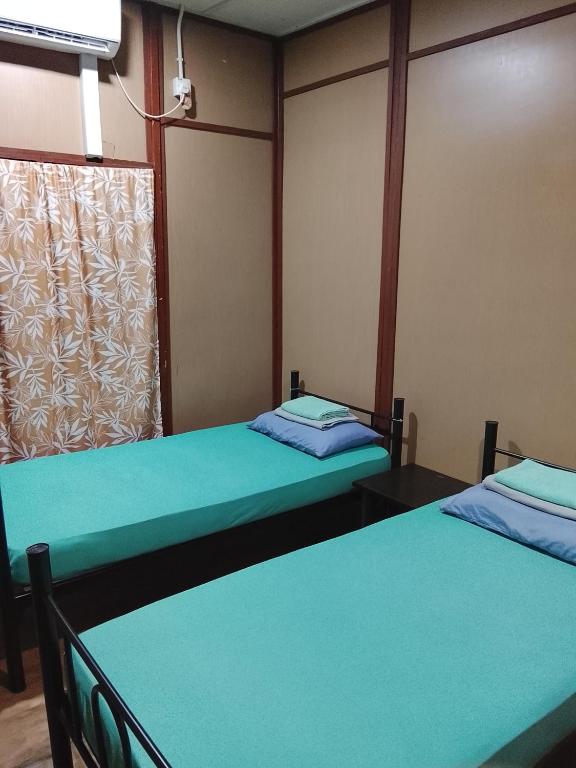
Today, a real adventure awaits you!! A short motorboat ride to the opposite bank of the river will take you to the heart of the tropical rainforest, where you will feel like you are at the end of the world, completely isolated from civilization, surrounded by lush vegetation and rich fauna. But the opposite is true - rarely is a rainforest so easily accessible and comfortable thanks to the surrounding village with facilities and wooden walkways that provide most of the marked trails in the area. Stop at one of the observatories and immerse yourself in the sounds of the jungle. If you are patient, you will surely see at least a few monkeys frolicking, maybe even more :)
From Kuala Tahan Jetty (here), take a motorboat to the other side of the river. Ferries run on demand and the journey costs 2 MYR per person (February 2026). According to local information, they should be operating all day from 7:00 AM until late at night (around 11:00 PM).
The gateway to Taman Negara National Park is the information center at Mutiara Taman Negara Resort. As soon as you get off the boat, you will be directed there by arrows. The whole area on the riverbank is quite well developed, and you can even find an ATM here. At the information center, first register and get a permit to enter the park for a symbolic 1 MYR (February 2026). If you want to take photos, add 5 MYR per device and you can set off on the trail.
You can choose from several marked trails, a large part of which can be walked on your own without a guide. You can take a larger or smaller circuit along the paved wooden walkways, or you can extend and complicate the route by climbing to the top of Bukit Teresek, which is only accessible by an unpaved path through the dense jungle, so there will be no shortage of adventure. The reward will be views of the endless green rainforest.
To plan your trip, study the map in the information center or on the Mapy.com portal.
A suggested leisurely route, mostly along wooden walkways (with the exception of an approximately one-kilometer section leading uphill on a footpath), can be found here.
If you have time, you can combine a walk on your own with one of the guided activities on offer. Whatever route or activity you choose, a stay in the rainforest will be a great experience that you won't soon forget.
TIP: I recommend taking binoculars with you

Not far from the information center and the village stands a lookout tower above a dried-up pond surrounded by jungle, to which a comfortable wooden path leads. From there you can observe the local wildlife. If you are patient, something will surely appear sooner or later. The author of the itinerary was rewarded after about ten minutes of waiting with a family of monkeys frolicking on vines and tree branches.
TIP: I recommend using binoculars

The path leads further from the lookout tower along a wooden path towards the east. The map in Wordlee shows an incorrect route leading to the opposite bank of the river.
The park's main attraction offers a bird's-eye view of the jungle thanks to a rope bridge leading over the treetops. Admission used to be 5 MYR.
!!ATTENTION!! Unfortunately, this attraction is closed for the long term due to damage during a tropical storm. The reopening date is unknown, reportedly 2026, but it's hard to say.
Opening hours (before closure): 10:00 – 15:00 (last entry 14:30), closed FRI
Take the ferry back across the river to Kuala Tahan, or continue with another program.
Venture into the heart of the Malaysian highlands in the Cameron Highlands, where you can enjoy pleasant cooling, stunning views, and romantic walks through the rolling landscape with lush green tea bushes on local plantations producing the finest teas of the well-known BOH brand. You can also taste these in local tea rooms and see the production process in the local factory. Afterwards, you can enjoy the views from the terrace into the endless green hills with a cup of delicious black tea. In addition to tea bushes, the area also thrives with strawberries and other fruits, which you can taste on many farms, as well as roses and other flowers. Throughout the area, you can take shorter or longer hikes around the tea bushes or the surrounding misty rainforest.
The somewhat remote (but easily accessible by car, making it all the more beautiful and peaceful) area of the Boh Tea Centre Habu tea plantations falls under the world-renowned BOH Tea Plantation. It offers a tea room overlooking the plantations, which you can also walk through, and a visitor center with the option of a tour of the factory and purchasing a diverse range of teas directly from the producer. Admission is free, you only pay for tea consumption according to the offer.
Opening hours: 8:30 AM – 4:30 PM, closed on MONDAYS
At the next stop, you can take a walk around the tea plantation among the green bushes. First, you'll ascend quite steeply to the viewpoint near the popular Cameron Valley Tea sign. Then, you continue through the rolling landscape of tea plants along a circular route, which leads you back to the tea house, where you can end your trip with another cup of local tea. The entire route is here.
TIP: Almost opposite the tea house is a strawberry farm. You can visit it, but you'll have more opportunities during your stay in the Cameron Highlands. The location of the farm is here.
Opening hours of the tea house and hiking trail: 8:30 AM – 6:00 PM (last entry to the trail is at 5:30 PM)
There is an entrance fee to the trail (it was 5 MYR in February 2026)

For fitter individuals, a hike to the summit of Gunung Jasar can be a nice end to the day. The relatively challenging jungle path will reward you with beautiful views of the rolling Cameron Highlands landscape. Park at the end of the asphalt road at the beginning of the trail (marked as 10 and 12). Then follow the trail to the top. You can then continue along trails 10 and 12 to another peak - Gunung Perdah, popular for watching the sunset. The entire route is here.
You can end a pleasant day spent in the mountains and plantations at a popular night market, where you can find local farmers' products in addition to the usual goods (textiles, souvenirs, etc.). You can taste and then buy, for example, local famous strawberries or honey. You will also find a lot of other food here, including meat, sausages and cold cuts. You can park for free along the street.
TIP: Near the market you will find Gunung Perdah hill with a viewpoint popular for watching the sunset. You can drive almost to the top, or walk here from the night market. Another option is to walk here from the previous place - Gunung Jasar mountain along the above-mentioned path.
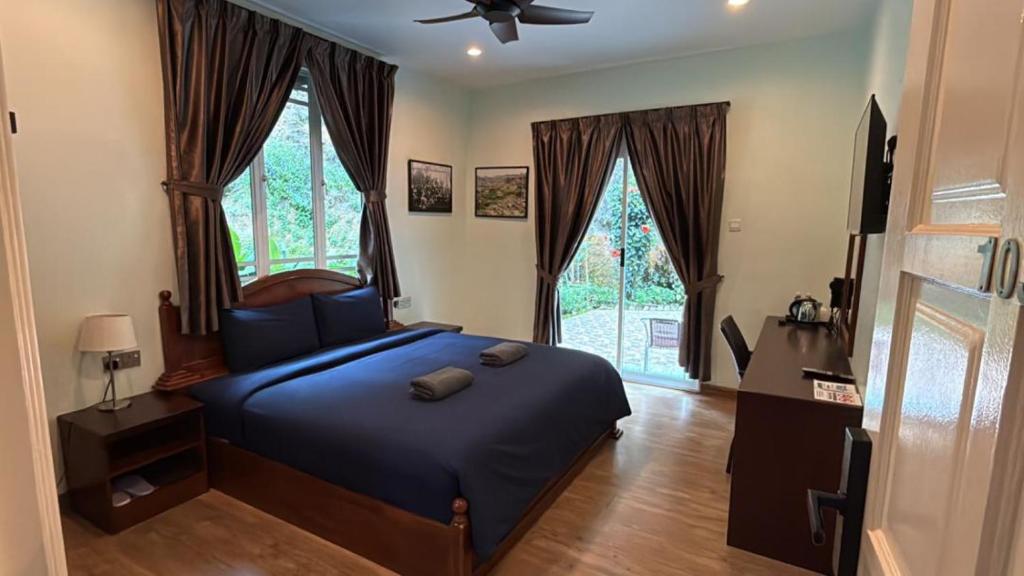


You will continue to discover the beauty of Cameron Highlands. First, you will experience a bit of culture and spirituality during a visit to the Sam Poh Temple, standing on a hill above the town. In it, you will soak up the spiritual atmosphere against a natural backdrop thanks to the harmony with the surrounding nature. Then you will fully immerse yourself in exploring this iconic landscape, engaging various senses. In addition to the beautiful panoramas of tea plantations and misty rainforest with mossy vegetation, today you will enjoy many goodies at local strawberry and tea farms.
A pleasant Buddhist sanctuary standing on a high hill above the town, surrounded by lush nature. Here you can pay homage to the local statues of gods, including the iconic Buddha, and find peace of mind while strolling through the surrounding garden with ponds and bonsai trees. The temple terraces offer a beautiful view of the local plantations and farms.
Opening hours: 08:00 - 17:00
It's not just tea and fruit that thrive in this mountainous landscape. Flower lovers will enjoy the terraced flower park, where the main attraction is the various types of roses and other colorful flowers, arranged on several levels of the hilly garden. At the top, there is also a viewing platform overlooking the surrounding landscape. Admission is around 6 MYR.
opening hours: 08:00 - 18:00
At ZooMania Butterfly Farm Cameron Highlands, you can walk through a garden surrounded by free-flying butterflies, including the magnificent tropical Raja Brooke, known for its striking coloration. Besides butterflies, you will also see other animals, especially insects, beetles, and a few small vertebrates. The entrance fee was 15 MYR in February 2026.
Opening hours: 08:30 - 18:00
You've already visited the tea, butterfly, and rose farms, so all that's left is to visit one of the many strawberry farms where you can taste the local famous juicy strawberries and their products, such as delicious jam, ice cream, juice, or milkshake. There are many farms along the way, and the itinerary offers this one as an example, which is located near the butterfly farm. At most farms, you can pick and weigh your own strawberries. Admission is free, you only pay for the products you buy.
Opening hours: most farms usually operate between 08:00 - 18:00
The second highest peak in the Cameron Highlands is almost entirely accessible by car (you can drive to the parking lot below the peak, no further) on a very challenging road. To reach it, you have to overcome several kilometers of sometimes very steep, narrow and winding road. At the top, you will find impressive views of the surrounding landscape and hills. From there, you will have the whole highlands at your fingertips. The summit can also be reached by a moderately difficult trek through a misty forest with dense vegetation of mosses or orchids. The route is here.
In the vicinity of the mountain, you can visit a unique cloud forest ecosystem covered with dense vegetation of old mosses and other plants. The Mossy Forest is a true example of wilderness and natural power. There is a fee to enter the trail with a wooden walkway; in February 2026 it was 30 MYR.
!!ATTENTION!! Many sections and viewpoints are closed to regular pedestrians. You can only walk about 500 meters of the trail. An alternative may be an organized guided tour including transportation to the site. If interested, inquire in the city; the hotel reception will surely help you.
Opening hours: 09:00 - 16:00
Another of the tea plantations of the world-famous tea brand BOH, Sungei Palas Tea Garden, offers you the opportunity to tour the factory, where you will learn everything about the process of making this beverage. If you are interested in a tour, please study the website. Be sure to visit the local tea room, where you can enjoy one of the local types of quality tea on the open terrace with a wonderful view of the plantation. Once you have chosen the right tea for you, in the local shop you can buy many types of tea in various forms from classic tea bags to instant to leaf. Details can be found here. Admission to the area including the factory is free, you only pay for tea consumption in the local tea room.
opening hours: 08:30 - 16:30, closed on MONDAYS

On the way to Ipoh, you can try visiting the Hobbit Village located along the main road. However, it was closed in February 2026 due to reconstruction. You can find information about the village on the website.


Embark on the beautiful island of Penang, connected to the mainland by two highway bridges. On the island, diverse attractions await you, led by the largest Buddhist temple in the country with a distinctive pagoda, where you will begin your journey through this popular destination. From the temple, you will head to the cable car, which will take you to the highest peak of the island - Penang Hill. In addition to the magnificent views of the jungle, sea and cities, it also offers a breathtaking walk across a rope bridge and a treetop path, or a beautiful Hindu temple. Later, you will move to the capital, Georgetown, a UNESCO World Heritage Site for its colonial architecture. In its lively shopping streets, the scents of local street food alternate with the characteristic smell of durian, which you can taste in many places. Above all, temples of all world religions loom, peeking out at you on every corner.
The country's main Buddhist temple, with its dominant seven-story pagoda of ten thousand Buddhas, is an important pilgrimage site for Malaysian Buddhists. In the architecturally rich temple, you will find, among other things, a bronze statue of Guan Yi - the Goddess of Mercy - more than 30 m high. You can walk or take a short cable car to it. During the Chinese New Year celebrations, the courtyard and interiors are filled with thousands of lanterns and lanterns. More information here.
opening hours: 08:30 – 17:30, longer during Chinese New Year celebrations
entrance fee: the main temple is free, entrance to the pagoda costs approximately 2 MYR, the main cable car to the temple 8 MYR and the cable car (called inclined lift) to the Guan Yi statue then approximately 3 - 6 MYR depending on the one-way or return journey
access: first, a cable car leads from the car park at the bottom to the courtyard and prayer room (16 MYR return journey, 8 MYR one way), then another cable car leads from the pagoda and gardens to the Guan Yi statue (6 MYR return, 3 MYR one way)
parking: a large car park is available at the bottom in front of the cable car entrance, another smaller one in the middle and top of the complex. If it is full, you can leave the car on the street. The fee is approximately 3 MYR for the first 3 hours of parking

Park here for 6 MYR (February 2026), which will be collected in cash by the local worker, and go down the stairs and then a short alley to the lower cable car station to Penang Hill. It will take you to the top of the mountain in five minutes. You can choose between a return trip (30 MYR in February 2026) and a one-way trip (15 MYR in February 2026). More here.
Cable car operating hours: 6:30 AM - 11:00 PM (last ride up 10:00 PM, last ride down 11:00 PM)
You can find information about Penang Hill, including its attractions and cable car, here.
You take the cable car to the top.
Around the upper cable car station, you will find viewing terraces offering beautiful views of the sea, city skyscrapers and highway bridges arching across the sea to the mainland. Other attractions (besides The Habitat and the temple mentioned below) include Little Village and the Earthquake & Typhoon Pavilion, which doesn't have very good reviews (the author has no personal experience). Information about these two places can be found here.

The main attraction, however, lies a little further from the station. Tha Habitat is a rainforest nature reserve offering educational jungle trails and, above all, a rope bridge leading over a chasm and the Sky Walk treetop path. The route is passable, and at the end, you can return by shuttle bus, or (like the author) return the same way and enjoy the rainforest nature for longer. If you're lucky, you might spot monkeys. In February 2026, the entrance fee was 60 MYR. More information can be found here.
Opening hours: entry 9:00 - 17:30, exit by 19:00
A traditional Hindu temple dedicated to the god Murugan, adorned with a series of colorful statues of gods and traditional Dravidian architectural elements, stands near the entrance to The Habitat park. Admission is free, please take off your shoes and respect local customs.
Opening hours: approx. 6:30 AM–8:30 PM

Take the cable car back down to the parking lot.
First, check in to your accommodation and leave your car at the hotel, as it would be in the way in the city. Then head out into the hustle and bustle of the city.
Historic Georgetown, the island's capital, will charm you with its pleasant atmosphere of old neighborhoods with streets lined with colonial buildings and old temples, with each of the world's major religions having its sanctuary here. You can visit a Buddhist temple, a Hindu shrine, a mosque and a church during one walk around the city. One of the traditional neighborhoods you shouldn't miss is Chinatown. In addition to the history and traditions of Eastern culture that you will breathe here, you can use the bustling streets to taste local delicacies and shop. The main artery connecting Chinatown with the Indian quarter and other places in the center is Lebuh Chulia.

After experiencing Chinese culture, the neighboring Little India will transport you to the atmosphere of the Indian subcontinent. In addition to tasting the excellent and inexpensive local cuisine in one of the many street bistros, be sure to take a look at the Hindu Sri Mahamariamman Temple.
Temple opening hours: 6:30 AM – 12:00 PM, 4:30 PM – 9:00 PM

Chew Jetty is a beautiful example of local history in the form of traditional wooden piers and stilt settlements (“Clan Jetties”) and is part of the UNESCO-listed historic center. The harbor district originally served Chinese immigrants from the Chew clan, who founded their communities and fishing houses above the water here. Today, it is mainly a tourist attraction with many souvenir shops and surrounding covered street food.
Georgetown is known for its traditional architecture of colonial villas, temples, and mosques, as well as its distinctive street art in the form of numerous murals. You can view these in another historic alley, this time Armenian Street, which leads from Chew Jetty towards the heart of the city. In addition to artistic images, you will also find street food and souvenir shops here. You can also taste durian in one of the souvenir shops. Usually, durian is sold whole for about 80 MYR, but here you will find a shop where they will sell you just a small piece for 10 MYR (February 2026).
TIP: On the way along Armenian Street, you can make a short detour and visit Khoo Kongsi - one of the largest and most opulent clan temples in Penang, a stunning example of Chinese architecture


Embark on an adventurous journey through the rainforest, surrounded by lush vegetation of vibrant green trees and mangroves. Listen to the sounds of the jungle and watch monkeys frolicking on vines. From the jungle, reach a remote natural turtle beach with fine sand, a freshwater pond, and a breeding station where you can observe sea turtles. At the end of the day, wait for the sunset on a popular city beach. Before that, however, take a walk among colorful tropical butterflies and other rainforest fauna in the local amusement park and taste tropical fruits or on a fruit farm.
Head along the northern coast of the axis to the entrance gate of Penang National Park.
The entrance to Penang National Park (Taman Negara Pulau Pinang) with an information center is located in Teluk Bahang. Before entering, park your car (fee 3 MYR) and then register at the information center (don't forget to bring your passport), which will give you permission to enter the national park. For a trek to Turtle or Monkey Beach, a fee of 50 MYR is required (February 2026). If you want to use a rented boat or an organized cruise to get to Turtle Beach, stop by the neighboring resort. The itinerary includes a walk through the jungle both ways.
Embark on an adventurous trip through the rainforest of the smallest national park in the country, covered with mangroves, along footpaths leading to hidden sandy beaches with rich and wild nature.
There are two main routes available, both leading to natural beaches:
1st option - Turtle Beach with a turtle breeding station, length approx. 3.8 km in one direction, route here
2nd option - Monkey Beach, length approx. 3.6 km in one direction, route here
Fit individuals with enough time and supplies can combine both routes.
park opening hours: 08:00 - 18:00, registration window 08:00 – 16:30
!!ATTENTION!! Swimming is officially prohibited on Turtle Beach for safety reasons (unpredictable currents and the presence of dangerous jellyfish). Jellyfish can of course also be a risk on Monkey Beach
!!ATTENTION!! Before you set off, make sure you have enough water and good shoes with you, and use mosquito repellent, or long clothing and a mosquito net
The reward for a relatively strenuous jungle trek is a beautiful natural beach hidden from civilization. Here you may be completely or almost alone and enjoy the true tropical idyll on a sandy beach with fine sand surrounded by dense jungle and crystal clear sea. Unfortunately, due to the occurrence of jellyfish and cyanobacteria, there is a sign prohibiting swimming. Instead, you can visit the sea turtle breeding station here. In addition to it, you will also find a natural pond and a rope bridge.
Opening hours of the breeding station: 10:00 – 16:30, admission is free
!!ATTENTION!! Do not leave things unattended on the beach - local monkeys are very cheeky and like to steal :)
Return the same way back to the entrance of the national park. Alternatively, you can continue to Monkey Beach.
Another option is to visit Monkey Beach, which is a bit more accessible (the path to it runs along the coast, so you don't have to climb as high as you would for Turtle Beach, which is behind the hill) and more civilized and equipped. Swimming is calmer and safer here, and you'll also find small facilities in the form of refreshments. The downside is that it's more crowded. You probably won't be alone here.
Stroll through butterfly gardens with waterfalls and ponds. Thanks to fruit lures and many colorful flowers, you can observe butterflies up close and take beautiful photos. In addition to adults, you will also find butterfly cocoons here, all supplemented with informative texts. But it's not just butterflies here. Inside you will find terrariums with tropical reptiles, spiders and other critters. In the outdoor pond, several individuals of the alligator snapping turtle, known for its strong bite, rest. In February 2026, the ticket cost 75 MYR. More information can be found here.
Opening hours: 9:00 – 18:00 (last entry 17:00), there are also night entries - information can be found on the website
Tickets can be purchased on site at the vending machine in front of the entrance or online on the website.

A farm cultivating tropical fruits is hidden in the winding roads of the mountainous rainforest, where you can taste them fresh or in the form of juices, ice cream, and other delicacies made from them. Sit on the terrace and enjoy juice from freshly squeezed exotic fruits such as dragon fruit, watermelon, pineapple, etc. You can also buy fresh pieces of fruit or anything made from it, including souvenirs. The farm organizes guided tours during which you will learn about tropical fruits, including how they are grown. Details can be found here.
Opening hours: 9:00 – 17:30

While the beaches in Penang National Park are natural, Batu Ferringhi Beach is a classic urban beach stretching for several kilometers along the resort of the same name, full of restaurants, bars, and hotels. Here, you can comfortably swim, eat at one of the bistros, or rent a jet ski or engage in water sports. Just before sunset, the beach fills up with locals and tourists posing in front of cameras. The entrance from the parking lot leads through a restaurant. Locals collect a fee of 6 MYR in cash at the parking lot (February 2026).

Roughly halfway to Kuala Lumpur lies the city of Ipoh, surrounded by beautiful and very photogenic karst scenery. From a distance, you will be greeted by massive karst hills with caves covered in tropical vegetation. These conceal mysterious Buddhist temples that beautifully combine the natural beauty of limestone caves with the culture and spirituality of the local temples and divine statues. Explore these temples richly decorated with statues and murals, often complemented by viewing terraces and natural gardens with ponds.
The city is also famous for its gastronomy and colonial architecture, so in addition to the temples, consider a short walk through the center of the old town around Jalan Panglima, Jalan Bandar Timah, and Jalan Market, where, in addition to admiring the historic buildings, you can have lunch in one of the bistros offering the greatest delicacies of the local diverse cuisine. The train station building, reminiscent of the Indian Taj Mahal, is also interesting. In short, Ipoh will be a wonderful end to your Malaysian adventure.
An iconic cave temple built by Chinese immigrants in a limestone massif. During a visit to the cave, you can admire dozens of statues of deities and colorful murals depicting Chinese mythology. Above all this stands a 12-meter-high statue of a golden Buddha. From the viewpoint on the terrace, which is reached by almost four hundred steps from the cave, you will have a wonderful view of the city of Ipoh and its panorama of limestone hills. Admission to the cave is free.
Opening hours: 8:00 – 17:00
Not far from Perak Tong Cave and the center of Ipoh lies a natural park with a lake featuring a calm water surface surrounded by limestone hills and green islands. You can take a walk along the hiking trails or enjoy a boat trip on the lake with views of the surrounding limestone hills. Admission is free, and boat trips cost around 10 MYR.
Opening hours: approx. 8:00 AM – 6:00 PM, may vary depending on the season
One of the most photogenic and colorful temples in Ipoh stands at the foot of dramatic limestone hills and is part of a vast complex of other cave temples, making it easy to combine its visit with other temples, including the nearby famous Sam Poh Tong Temple. Admission is free again. In addition to the temple itself, you can admire the distinctive colorful statues of Taoist and Buddhist figures, including typical Chinese dragons, gods and other mythological creatures. There is also an open terrace with views of the rocks.
Opening hours: approx. 8:00 a.m. – 5:00 p.m.
The oldest and most important cave temple in Ipoh is built inside a limestone cave and offers iconic cave paintings with Buddhist, Taoist, and Hindu scenes, showcasing Malaysia's diverse history, and of course, statues of deities, including a massive Buddha. In the natural pond in the garden in front of the temple, you can feed turtles or fish, and then climb approximately 250 steps to a terrace overlooking the city. Admission is free.
Opening hours: approx. 8:00 AM – 5:00 PM
Not far from the cave temple complex lies Tasik Cermin, or Mirror Lake, hidden among limestone cliffs that are reflected on its surface (hence the name "Mirror Lake"). You can enjoy the view of the lake from a wooden pier, which you can reach via an almost 100-meter-long tunnel carved into the rock. Near the main lake lies another lake, Tasik Cermin 2. There is a small entrance fee to visit the lakes, approximately 10 MYR. You can take a boat trip for approximately 30 MYR.
Opening hours: approx. 8:00 AM – 6:00 PM
On the opposite side of the hill from the previous temples stands one of the most photogenic and peaceful cave temples, combining a natural cave with Buddhist and Taoist statues and a sprawling garden with ponds. Admission is free, as with all the other temples here.
Opening hours: approx. 8:00 AM – 5:00 PM
You'll say goodbye to the fairytale karst landscape of Ipoh in the Gua Tempurung cave complex, located just outside the city near the highway to Kuala Lumpur. This time it is a purely natural monument in the form of caves over 400 million years old, offering beautiful formations of stalactites and stalagmites and an underground river, with approximately 2 km of the total 4.5 km and 5 main domes accessible. You won't find any temples here. Entry is only possible as part of an organized guided tour, with several options to choose from. Information can be found here.
Opening hours: approx. 9:00 – 17:00
All good things come to an end, and all that remains for you is to say goodbye to this pleasant country. So head to the airport and don't forget to set aside enough time. The airport is located relatively far from the center, and depending on the time of your flight, expect a possible traffic jam that can dramatically extend the journey to the airport.
If you have enough time before your departure, the location of your accommodation directly invites you to visit two traditional Malaysian neighborhoods - Kampung Baru and Chow Kit. Both areas offer an inexhaustible amount of cheap street bistros, street food and shops with everything possible, making them an ideal option for last-minute shopping and tasting Malaysian cuisine. In Kampung Baru, I recommend walking along Jalan Raja Muda Musa and peeking into the Masjid Jamek Kampung Baru mosque. In the Chow Kit district, which is a bit like one big marketplace, I recommend shopping at Chow Kit Market.
After arriving at the airport, all that's left is to return the rental car and head to the check-in counter. The airport is modern and easy to navigate, consisting of 2 terminals, each with its own satellite terminal. If needed, an automated train will take you between the terminals for free, running at very short intervals. Getting through the airport should be quick. However, this time you won't avoid a visit to the immigration officer, who will give you a physical stamp in your passport.
During the long check-in procedures and the subsequent demanding flight, you have enough space to finalize the recap of your tropical adventure.
On your journey, you had the opportunity to explore various facets of this diverse country, where a blend of traditions and rich culture of the local Eastern peoples merges with an unexpected level of advancement and organization for this region. Futuristic skyscrapers in the cities alternate with expansive tropical gardens and old traditional quarters, which together create perfect harmony. As soon as you leave the city, you will be engulfed by the ubiquitous jungle with the unmistakable energy of lush nature and the typical humid and hot climate. In the mountainous interior, however, you can cool off with a walk through tea plantations, and a little further on, you can refresh yourself in the clear sea on beautiful beaches with fine sand and palm groves. The diverse range of natural and cultural attractions is complemented by the karst landscape of Ipoh, with limestone caves hiding mysterious temples.
It is the omnipresent temples of all major religions and the diverse cuisine influenced by a colorful mix of local people that give you a unique opportunity to experience the exotic and often chaotic Far East in a small and well-organized space. A bonus is the legacy of the British colony in the form of English-speaking locals, regardless of their ethnic origin.
Malaysia is simply an ideal option for escaping the cold and stereotype of Western countries and a great choice for a first taste of tropical Asia with all the comfort of Western standards.
So, Selamat tinggal, Malaysia!
Venture into this likeable country, which is far from just a beach paradise with white sand and palm trees as far as the eye can see. In the interior, a mountainous jungle awaits you with the incredible biodiversity of the local wilderness of Taman Negara National Park, terraced hills covered with lush green tea bushes on plantations in the Cameron Highlands, a karst area with cave temples around the city of Ipoh, and of course, the ubiquitous mix of Chinese, Indian, and Malaysian culture.
If you want to stroll through Chinatown with Buddhist temples and pagodas one moment and taste the famous dumplings or fried noodles, then visit Hindu shrines around the corner in a street smelling of curry spices, and visit a mosque a block later, Malaysia is the country for you. The icing on the cake is the modern center of Kuala Lumpur with its glittering futuristic skyscrapers led by the legendary Petronas Towers. Thanks to its strategic position, abundant natural resources, and political stability, the country boasts a high level of development, wealth, and organization that is not exactly typical for tropical Asian countries. It is the safety, developed infrastructure, year-round warm climate, and local smiling and friendly English-speaking residents that make Malaysia an ideal gateway to beautiful Southeast Asia.
Come and see for yourself and explore this unique country in the footsteps of this itinerary.
You can find a summary of practical information about the country and traveling in it here.
Your arrival day will serve as a first taste of the country (both figuratively and literally). After arriving, you can easily and quickly get to the center of Kuala Lumpur by express train. Depending on the time, you can then rest after a long journey and start adjusting to the significant time difference, or go explore the city. The local Chinatown is very suitable for this, which is very easily accessible from the airport and lies in the heart of the city. In it, you will find, in addition to many accommodation options, also famous Chinese bistros and shops. What better way to tune into the rhythm of the city than by walking through its arteries and tasting local delicacies? Be sure to try the local specialty nasi lemak, or anything from the excellent Chinese or Indian cuisine, which strongly influenced the local gastronomy. In Chinatown, there will be no shortage of noodles or rice in all sorts of ways, while the Indian influence is evident in the presence of curry and naan breads. As you probably already suspect, a visit to Malaysia will be a gastronomic experience in addition to discovering natural and cultural gems.
Good morning! Welcome to Malaysia. You have landed at Kuala Lumpur International Airport in Sepang, known for hosting F1 races. Although the airport is quite far from the center of KL, the express train will get you to the center very quickly and comfortably. In addition, thanks to the pre-filled arrival card, you will not spend endless time waiting in line for an immigration officer, but you will pass through automatic gates, similar to those in Europe. Then all you have to do is pick up your luggage and head to the airport express.
KLIA Ekspres train:
Frequency - 20 min
Operating hours - first train departs at 04:55 from Terminal 2 (and 5:00 from Terminal 1), last at 01:00 from T2
Journey time - 28 min from T1, 33 min from T2
Airport stop - at both terminals (T1 and T2)
City center stop - KL Sentral main train station, with many metro and overground connections
Ticket - can be purchased on the spot by placing your payment card to the terminal reader before entering the station, then do the same upon exiting and the system will deduct the appropriate amount
Web - here https://www.kliaekspres.com/
TIP: By purchasing a ticket online, you save approximately 5 MYR compared to purchasing on the spot (as of 2/26/2026 it is 50 MYR compared to 55 MYR). You also save approximately 20 MYR when purchasing a return ticket online (as of 2/26/2026 it is 90 MYR compared to 110 MYR on the spot)
Overground LRT KELANA JAYA LINE (dark red, No. 5), direction Gombak, Pasar Seni stop
frequency - 5 - 10 min
travel time - 4 min
You can find information about public transport in Kuala Lumpur in the practical summary of information about the country (link in the introduction to the trip).
The ideal starting point for exploring the beauty and flavors of Malaysia is the traditional Chinese quarter. Here you will find countless cheap street bistros and stalls not only with food, but also with clothing, jewelry, electronics...in short, you will find everything you can think of, as befits a Chinatown :) If you have arrived at a reasonable time, your first steps should lead here. Due to its location in the city center near the metro station and many options for accommodation, shopping and dining, Chinatown is the ideal gateway to Kuala Lumpur and all of Malaysia. Hooray for laksa or noodles!
Kuala Lumpur is a city of contrasts, as you will see on your very first day. You'll start in the traditional Chinatown, full of street food stalls, shops and temples of various religions. Across the main square, where this beautiful country was born, you will reach the iconic mosque standing at the confluence of two rivers. A few stops away, a completely different world awaits you – you will find yourself surrounded by modern, shining skyscrapers in a beautiful natural park with a lake and a light show of fountains under the legendary twin skyscrapers of Petronas Towers. In the evening, you can end the day in a vibrant district tasting local delicacies.
The city's symbolic heart offers opportunities to taste local delicacies. You can choose from many restaurants with different prices, from the finer ones to classic Chinese street bistros. Once you've filled your stomachs, various shops with cheap goods and beautiful colonial buildings await you in the local streets decorated with lanterns and entrance gates with typical Chinese dragons. Of course, there are also Buddhist and Hindu temples. Interesting places are described in the sub-locations. In addition to these, it is worth occasionally looking up and spotting the modern Merdeka 118 skyscraper - the 2nd tallest building in the city, contrasting with the old quarter. However, there is no point in getting closer - you will not find any view on it. A nice view of the skyscraper is provided by the small square here .
The most famous street and one of the symbols of Chinatown will be especially appreciated by shopping lovers - in the covered and very busy street you will find street stalls offering everything possible including souvenirs.
When you start to feel dizzy from the crowds and chaos of the busy shopping street, go calm your mind and soak up the spiritual atmosphere in the Hindu temple, which impresses at first glance with its colorfulness typical of Hinduism and the dominant front entrance tower (the so-called gopuram) depicting some of the many divine figures. Inside you will find a main hall with a sanctuary decorated with paintings of gods. In the surrounding courtyard you can admire other small shrines and statues of deities. Respect the local culture and take off your shoes or cover yourself. You can enter for free, you only pay a symbolic 0.5 MRY (in cash) for leaving your shoes.
Opening hours: approx. 6:00 – 13:00, 16:00 – 20:30–21:30
The magic of Malaysia lies in the peaceful coexistence of several different cultures. You can see it in practice here in Chinatown, where after visiting a Hindu shrine, you can visit the Taoist temple with its distinctive red walls and green tiled roof, which is almost directly opposite. Admission is free.
Opening hours: depending on the season and events 07:00 – 19:00, or 07:30 – 19:00, sometimes only until 15:30
Just near the central market stands the oldest Taoist temple in the city, which is an important spiritual place for the Chinese community. It will give you the last moments of peace before the imaginary storm at the bustling Central Market. Admission is free again.
Opening hours: approx. 7:00–17:00
The outdoor covered street running along the eastern side of the Central Market is like an open market and offers opportunities to buy souvenirs, street food, freshly squeezed fruit juices, matcha products, etc. The entrance gate to the street is guarded by the so-called "Wau" – a traditional Malaysian paper kite.
Another shopping option is the large covered market locally known as Pasar Seni. It is thematically divided into Malaysian, Chinese, and Indian sections. In addition to the classic offerings such as souvenirs, street food, etc., you will also find galleries and live performances here. It is not just a regular market, but also a kind of cultural center.
Opening hours: approx. 10:00–22:00
Dataran Merdeka (Independence Square), the main city square, is the heart of the country because, as the name suggests, it was here that Malaysian independence was declared. Previously, it was a cricket field. In the square, you will find the Malaysian flag hanging on an almost 100-meter-high flagpole, the tourist-favorite "I love KL" statue, the beautiful historical Sultan Abdul Samad Building, museums, galleries, and also an Anglican church - one of the reminders of the British past.
A beautiful mosque standing at the confluence of two rivers is one of the oldest and most important mosques in Kuala Lumpur. It is surrounded by beautiful gardens. Admission is free outside of prayer times, but the dress code must be observed (covered knees and shoulders, women's hair as well). Clothes are available for rent at the entrance. Entry is for a symbolic fee of 1 MYR (cash).
Opening hours: 8:30 – 12:30, 14:30 – 16:30
Elevated LRT KELANA JAYA LINE (dark red, No. 5), direction Gombak, stop Masjid Jamek → stop KLCC
frequency - 5 - 10 min
travel time - 6 min
KLCC is the designation for a modern city center and entertainment district full of skyscrapers, shopping malls, lights, and luxury. A huge contrast to the previous traditional Chinatown. Here you will find KLCC Park, the underwater tunnel with sharks Aquaria KLCC, the Park mall, the Petronas towers with a view and the Skybridge, or KL city walk - a covered street with street food. Near the park is the As Syakirin Mosque.
The city's unmistakable symbol was once the tallest building in the world, before being surpassed by giants led by Dubai's Burj Khalifa. However, the Petronas Towers are still the tallest "twins" among skyscrapers. On the ground floor, you'll find the luxurious Suria KLCC shopping center and a philharmonic hall, while on the upper floors, there's a viewpoint with the option to walk the Skybridge - a glass bridge between the two towers.
Details including opening hours and ticket purchases can be found here https://www.petronastwintowers.com.my/
Opening hours: TUE - SUN: 9:00 AM - 9:00 PM (last entry 8:30 PM), MON closed
!!ATTENTION!! I recommend buying tickets in advance, ideally about a week ahead
TIP: If you go to the viewpoint, it's ideal to time your entry around the transition from day to night
A green oasis in the middle of gleaming skyscrapers and ubiquitous concrete and glass provides a welcome escape into nature with the vegetation of a tropical rainforest. The Lake Symphony fountain lights up every evening at a specific time with a light and music show. The view from the park from the fountain to the glowing Petronas Towers is one of the most famous images of Kuala Lumpur. Don't leave until you see everything at night in the glow of lights.
Fountain music show times: from 8:00 PM to 10:00 PM in 30-minute intervals (8:30 PM, 9:00 PM, etc.), duration 10 minutes
The evening and night are ideal to spend in a pulsating shopping, entertainment and nightlife district full of bars, department stores, markets, street food, but also massages. Stroll down Jalan Alor Street and taste some of the local delicacies, admire the street art on Jalan Rembia Street, and visit Berjaya Times Square Theme Park - an amusement park and shopping center. You can have fun here until the late hours.
MRT KAJANG LINE (dark green metro line 9), towards Kwasa Damansara, Bukit Bintang station → Pasar Seni station
frequency - 5 - 10 min
ride time - 4 min
You will venture to the outskirts of Kuala Lumpur, where you will be greeted by the monumental golden statue of the god Murugan, guarding the entrance to the deep caves. One of the most important pilgrimage sites for followers of Hinduism will transport you to exotic India - macaques climbing on the roofs of colorful temples, statues of gods hidden in caves, and a distinctive Indian population really resemble a picture of this tropical subcontinent. The rest of the day will be dedicated to exploring local culture and history with a visit to the National Museum and Mosque. Harmony with tropical nature will be ensured by the bird park and botanical garden.
Elevated LRT KELANA JAYA LINE (dark red, No. 5), direction Putra Heights, stop KL Sentral
frequency - 5 - 10 min
travel time - 4 min
KTM TRAIN 1: BATU CAVES – PULAU SEBANG LINE, towards Batu Caves
Frequency - 30 - 60 min
Timetables - here https://www.ktmb.com.my/assets/pdf/2025/28%20April%202025%20Batu%20Caves-Pulau%20Sebang.pdf
Journey time - 30 min
One of the symbols of the city, as well as the whole country, is the magnificent Batu Caves cave complex located on the northern periphery of KL. The entrance to the hundred-million-year-old caves hiding Hindu temples and statues of gods, which requires climbing more than 250 colorful steps, is guarded by a monumental golden statue of the god Murugan. On the way up the stairs and in the cave itself, watch out for the cheeky macaque monkeys, which do not hesitate to steal anything resembling food from visitors. Even before entering the staircase leading to the caves, you can visit two Hindu temples. Admission to them and to the main cave is free. Only the entrance to the nearby Ramayana Cave temple, which you will find near the train station and whose entrance is guarded by the statue of Kumbhakarna, is subject to a fee.
Batu Caves opening hours: 6:00 a.m. to 9:00 p.m.
Ramayana Cave opening hours: 9:00 a.m. – 6:30 p.m., admission is approximately 15 MYR
KTM 1 TRAIN: BATU CAVES – PULAU SEBANG LINE, towards Batu Caves
Frequency - 30 - 60 min
Travel time - 30 min
Continue over bridges, underpasses, and overpasses to the museum.
Not far from the main station KL Sentral stands the National Museum, presenting the history, culture and art of Malaysia from prehistoric times to the present. In addition to the indoor exhibition (admission for foreign visitors was MYR 5 in February 2026), you will also find a car exhibition in front of the museum.
More information can be found here.
Opening hours: 9:00 - 17:00
One of the main city mosques is built in a modern style, with the roof resembling an unfolded umbrella and the minaret a folded one, symbolizing the local rainy tropical climate. In addition to the mosque itself, the nearby Pahlawan tomb, where important figures of Malaysian history rest, is also worth a visit. Of course, you must take off your shoes and cover any exposed parts before entering.
Opening hours: except for prayer times 09:00 – 12:00, 15:00 – 16:00, 17:30 – 18:30, on FRI from 15:00
Next to the botanical garden lies a bird ZOO (actually one huge walk-through aviary) with free-flying birds. Besides colorful fliers, you will also find flightless giants such as ostriches, emus or exotic cassowaries. More information (including feeding times or various shows) can be found on the website.
opening hours: 9:00 – 17:30
A pleasant experience is a walk through the nature park, where around you will flutter a thousand butterflies mainly from the local tropical landscape of Southeast Asia. Thanks to the lures in the form of juicy flowering plants and sweet fruit, you can watch the butterflies while sucking nectar and take pictures of them in peace. If you're lucky, one might even sit on you.
More information can be found on the website.
Opening hours: 9:00 – 16:30
In addition to the butterfly and bird garden, in the wooded landscape of the western center, you can also visit an extensive botanical garden full of paths and rest areas thematically divided into several sections, including a beautiful orchid garden. Around the central lake you will also find palm and bamboo groves. The park is an ideal place for walks, picnics and nature watching in the middle of a bustling city. Admission is also free.
Opening hours: 6:30 – 22:00
MRT KAJANG LINE (dark green metro line 9), towards Kajang, Pasar Seni station
frequency - 5 - 10 min
travel time - 3 min
First, you will pick up your car at the airport (according to the instructions you receive before the flight), and then the real road trip through the Malaysian jungle can begin! The first stop will be an elephant breeding station, where you will feed the local beauties with bamboo, cuddle with their trunks, and, if you are interested, take a bath with baby elephants. Later, you will move to a remote jungle village, where you will cross the river by boat and find yourself in one of the oldest rainforests in Asia, full of rich vegetation and wildlife. It's up to you how you get to know the jungle - you can choose from many activities, from independent ones to guided ones. In the evening, you can spend time on the terrace of one of the floating restaurants and enjoy local delicacies at a reasonable price.
Elevated LRT KELANA JAYA LINE (dark red, No. 5), direction Putra Heights, stop KL Sentral
frequency - 5 - 10 min
travel time - 4 min
KLIA Ekspres train:
Frequency - 20 min
Travel time - 28 min from T1, 33 min from T2
At the airport, pick up your car (according to the instructions you will receive before the flight) and your road trip through the Malaysian countryside can begin! Don't forget to buy a Touch 'n go card at one of the metro and train stations or on the way at one of the gas stations, thanks to which you will be able to pay the toll for using the highway. You pay this at the toll gates by placing the card to the reader. Details about the card can be found in the practical summary of information about the country (link in the introduction to the trip). Remember that in Malaysia they drive on the left!!
!!ATTENTION!! the card can only be recharged with cash. A credit of approximately 80 - 100 MYR should be sufficient for the entire trip
TIP: It is better to recharge more so that you do not have to be delayed by repeated recharging along the way. The remaining credit can be used for public transport and in some shops
About halfway to the Taman Negara National Park jungle, it's worth getting off the highway and heading to the nearby Indian elephant breeding station. Here, you first fill out a registration form at the info center and then take a free walk through the park, where several elephants of various ages will be waiting for you. You can buy (in February 2026 for 5 MRY) a bundle of bamboo and feed the elephants, or arrange a special program of bathing with a baby elephant in the river.
Opening hours: 10:30 - 15:30
The road to the remote jungle village of Kuala Tahan is beautifully passable and covered with high-quality asphalt. The last section of the road from the town of Jerantut to the village of Kuala Tahan leads along a district road through the jungle and palm groves. You may encounter buffalo or tapir along the way.
Kuala Tahan is probably the best gateway to the wild Taman Negara National Park, whose vast mountain rainforest is home to rare animals such as tigers, rhinos and elephants. While you probably won't encounter these giants, you're very likely to spot monkeys frolicking in the treetops, exotic birds or reptiles, and of course, lots of insects.
In Kuala Tahan, first check in and leave your car here (either directly on the hotel grounds or freely on the street, e.g. near the information center and the boat ferry), then stop at the information center, where you will find an offer of organized activities taking place on the other side of the river in the jungle or directly on the river. They will also be happy to help you with the organization directly in the accommodation. The village is small and everyone seems to be here, so the accommodation providers direct tourists into the hands of guides and thus help them with the organization of trips. For example, you can choose from:
- boat trip on the river to Lata Berkoh waterfalls and natural pools
- visit to Gua Telinga caves
- boat trip on the Sungai Tahan river with rainforest observation
- visit to the indigenous village of Orang Asli Village
- guided walk through the rainforest with wildlife watching
- night jungle trek with wildlife watching with a guide
You can also take a ferry on your own to the other side of the river and take a trek through the jungle along the wooden sidewalks. The itinerary counts on this program the following day.
NOTE: In the information center standing at the end of the road on the southern bank of the river near the ferry (location approx. here) you will find a large board with an offer of activities including prices
In the village of Kuala Tahan itself, visit one of the restaurants floating on the river, which offer very cheap and tasty local cuisine along with delicious juices made from freshly squeezed fruit.
!!ATTENTION!! The humid rainforest around the river is an ideal home for mosquitoes and other parasites (e.g. leeches). Due to the risk of parasitic diseases (malaria, dengue fever, etc.), it is useful to protect yourself from mosquito bites. Before entering the jungle or on a boat, I recommend wearing long clothes, a mosquito net on your head and using a quality repellent.
TIP: I recommend taking binoculars with you
Today, a real adventure awaits you!! A short motorboat ride to the opposite bank of the river will take you to the heart of the tropical rainforest, where you will feel like you are at the end of the world, completely isolated from civilization, surrounded by lush vegetation and rich fauna. But the opposite is true - rarely is a rainforest so easily accessible and comfortable thanks to the surrounding village with facilities and wooden walkways that provide most of the marked trails in the area. Stop at one of the observatories and immerse yourself in the sounds of the jungle. If you are patient, you will surely see at least a few monkeys frolicking, maybe even more :)
From Kuala Tahan Jetty (here), take a motorboat to the other side of the river. Ferries run on demand and the journey costs 2 MYR per person (February 2026). According to local information, they should be operating all day from 7:00 AM until late at night (around 11:00 PM).
The gateway to Taman Negara National Park is the information center at Mutiara Taman Negara Resort. As soon as you get off the boat, you will be directed there by arrows. The whole area on the riverbank is quite well developed, and you can even find an ATM here. At the information center, first register and get a permit to enter the park for a symbolic 1 MYR (February 2026). If you want to take photos, add 5 MYR per device and you can set off on the trail.
You can choose from several marked trails, a large part of which can be walked on your own without a guide. You can take a larger or smaller circuit along the paved wooden walkways, or you can extend and complicate the route by climbing to the top of Bukit Teresek, which is only accessible by an unpaved path through the dense jungle, so there will be no shortage of adventure. The reward will be views of the endless green rainforest.
To plan your trip, study the map in the information center or on the Mapy.com portal.
A suggested leisurely route, mostly along wooden walkways (with the exception of an approximately one-kilometer section leading uphill on a footpath), can be found here.
If you have time, you can combine a walk on your own with one of the guided activities on offer. Whatever route or activity you choose, a stay in the rainforest will be a great experience that you won't soon forget.
TIP: I recommend taking binoculars with you
Not far from the information center and the village stands a lookout tower above a dried-up pond surrounded by jungle, to which a comfortable wooden path leads. From there you can observe the local wildlife. If you are patient, something will surely appear sooner or later. The author of the itinerary was rewarded after about ten minutes of waiting with a family of monkeys frolicking on vines and tree branches.
TIP: I recommend using binoculars
The path leads further from the lookout tower along a wooden path towards the east. The map in Wordlee shows an incorrect route leading to the opposite bank of the river.
The park's main attraction offers a bird's-eye view of the jungle thanks to a rope bridge leading over the treetops. Admission used to be 5 MYR.
!!ATTENTION!! Unfortunately, this attraction is closed for the long term due to damage during a tropical storm. The reopening date is unknown, reportedly 2026, but it's hard to say.
Opening hours (before closure): 10:00 – 15:00 (last entry 14:30), closed FRI
Take the ferry back across the river to Kuala Tahan, or continue with another program.
Venture into the heart of the Malaysian highlands in the Cameron Highlands, where you can enjoy pleasant cooling, stunning views, and romantic walks through the rolling landscape with lush green tea bushes on local plantations producing the finest teas of the well-known BOH brand. You can also taste these in local tea rooms and see the production process in the local factory. Afterwards, you can enjoy the views from the terrace into the endless green hills with a cup of delicious black tea. In addition to tea bushes, the area also thrives with strawberries and other fruits, which you can taste on many farms, as well as roses and other flowers. Throughout the area, you can take shorter or longer hikes around the tea bushes or the surrounding misty rainforest.
The somewhat remote (but easily accessible by car, making it all the more beautiful and peaceful) area of the Boh Tea Centre Habu tea plantations falls under the world-renowned BOH Tea Plantation. It offers a tea room overlooking the plantations, which you can also walk through, and a visitor center with the option of a tour of the factory and purchasing a diverse range of teas directly from the producer. Admission is free, you only pay for tea consumption according to the offer.
Opening hours: 8:30 AM – 4:30 PM, closed on MONDAYS
At the next stop, you can take a walk around the tea plantation among the green bushes. First, you'll ascend quite steeply to the viewpoint near the popular Cameron Valley Tea sign. Then, you continue through the rolling landscape of tea plants along a circular route, which leads you back to the tea house, where you can end your trip with another cup of local tea. The entire route is here.
TIP: Almost opposite the tea house is a strawberry farm. You can visit it, but you'll have more opportunities during your stay in the Cameron Highlands. The location of the farm is here.
Opening hours of the tea house and hiking trail: 8:30 AM – 6:00 PM (last entry to the trail is at 5:30 PM)
There is an entrance fee to the trail (it was 5 MYR in February 2026)
For fitter individuals, a hike to the summit of Gunung Jasar can be a nice end to the day. The relatively challenging jungle path will reward you with beautiful views of the rolling Cameron Highlands landscape. Park at the end of the asphalt road at the beginning of the trail (marked as 10 and 12). Then follow the trail to the top. You can then continue along trails 10 and 12 to another peak - Gunung Perdah, popular for watching the sunset. The entire route is here.
You can end a pleasant day spent in the mountains and plantations at a popular night market, where you can find local farmers' products in addition to the usual goods (textiles, souvenirs, etc.). You can taste and then buy, for example, local famous strawberries or honey. You will also find a lot of other food here, including meat, sausages and cold cuts. You can park for free along the street.
TIP: Near the market you will find Gunung Perdah hill with a viewpoint popular for watching the sunset. You can drive almost to the top, or walk here from the night market. Another option is to walk here from the previous place - Gunung Jasar mountain along the above-mentioned path.
You will continue to discover the beauty of Cameron Highlands. First, you will experience a bit of culture and spirituality during a visit to the Sam Poh Temple, standing on a hill above the town. In it, you will soak up the spiritual atmosphere against a natural backdrop thanks to the harmony with the surrounding nature. Then you will fully immerse yourself in exploring this iconic landscape, engaging various senses. In addition to the beautiful panoramas of tea plantations and misty rainforest with mossy vegetation, today you will enjoy many goodies at local strawberry and tea farms.
A pleasant Buddhist sanctuary standing on a high hill above the town, surrounded by lush nature. Here you can pay homage to the local statues of gods, including the iconic Buddha, and find peace of mind while strolling through the surrounding garden with ponds and bonsai trees. The temple terraces offer a beautiful view of the local plantations and farms.
Opening hours: 08:00 - 17:00
It's not just tea and fruit that thrive in this mountainous landscape. Flower lovers will enjoy the terraced flower park, where the main attraction is the various types of roses and other colorful flowers, arranged on several levels of the hilly garden. At the top, there is also a viewing platform overlooking the surrounding landscape. Admission is around 6 MYR.
opening hours: 08:00 - 18:00
At ZooMania Butterfly Farm Cameron Highlands, you can walk through a garden surrounded by free-flying butterflies, including the magnificent tropical Raja Brooke, known for its striking coloration. Besides butterflies, you will also see other animals, especially insects, beetles, and a few small vertebrates. The entrance fee was 15 MYR in February 2026.
Opening hours: 08:30 - 18:00
You've already visited the tea, butterfly, and rose farms, so all that's left is to visit one of the many strawberry farms where you can taste the local famous juicy strawberries and their products, such as delicious jam, ice cream, juice, or milkshake. There are many farms along the way, and the itinerary offers this one as an example, which is located near the butterfly farm. At most farms, you can pick and weigh your own strawberries. Admission is free, you only pay for the products you buy.
Opening hours: most farms usually operate between 08:00 - 18:00
The second highest peak in the Cameron Highlands is almost entirely accessible by car (you can drive to the parking lot below the peak, no further) on a very challenging road. To reach it, you have to overcome several kilometers of sometimes very steep, narrow and winding road. At the top, you will find impressive views of the surrounding landscape and hills. From there, you will have the whole highlands at your fingertips. The summit can also be reached by a moderately difficult trek through a misty forest with dense vegetation of mosses or orchids. The route is here.
In the vicinity of the mountain, you can visit a unique cloud forest ecosystem covered with dense vegetation of old mosses and other plants. The Mossy Forest is a true example of wilderness and natural power. There is a fee to enter the trail with a wooden walkway; in February 2026 it was 30 MYR.
!!ATTENTION!! Many sections and viewpoints are closed to regular pedestrians. You can only walk about 500 meters of the trail. An alternative may be an organized guided tour including transportation to the site. If interested, inquire in the city; the hotel reception will surely help you.
Opening hours: 09:00 - 16:00
Another of the tea plantations of the world-famous tea brand BOH, Sungei Palas Tea Garden, offers you the opportunity to tour the factory, where you will learn everything about the process of making this beverage. If you are interested in a tour, please study the website. Be sure to visit the local tea room, where you can enjoy one of the local types of quality tea on the open terrace with a wonderful view of the plantation. Once you have chosen the right tea for you, in the local shop you can buy many types of tea in various forms from classic tea bags to instant to leaf. Details can be found here. Admission to the area including the factory is free, you only pay for tea consumption in the local tea room.
opening hours: 08:30 - 16:30, closed on MONDAYS
On the way to Ipoh, you can try visiting the Hobbit Village located along the main road. However, it was closed in February 2026 due to reconstruction. You can find information about the village on the website.
Embark on the beautiful island of Penang, connected to the mainland by two highway bridges. On the island, diverse attractions await you, led by the largest Buddhist temple in the country with a distinctive pagoda, where you will begin your journey through this popular destination. From the temple, you will head to the cable car, which will take you to the highest peak of the island - Penang Hill. In addition to the magnificent views of the jungle, sea and cities, it also offers a breathtaking walk across a rope bridge and a treetop path, or a beautiful Hindu temple. Later, you will move to the capital, Georgetown, a UNESCO World Heritage Site for its colonial architecture. In its lively shopping streets, the scents of local street food alternate with the characteristic smell of durian, which you can taste in many places. Above all, temples of all world religions loom, peeking out at you on every corner.
The country's main Buddhist temple, with its dominant seven-story pagoda of ten thousand Buddhas, is an important pilgrimage site for Malaysian Buddhists. In the architecturally rich temple, you will find, among other things, a bronze statue of Guan Yi - the Goddess of Mercy - more than 30 m high. You can walk or take a short cable car to it. During the Chinese New Year celebrations, the courtyard and interiors are filled with thousands of lanterns and lanterns. More information here.
opening hours: 08:30 – 17:30, longer during Chinese New Year celebrations
entrance fee: the main temple is free, entrance to the pagoda costs approximately 2 MYR, the main cable car to the temple 8 MYR and the cable car (called inclined lift) to the Guan Yi statue then approximately 3 - 6 MYR depending on the one-way or return journey
access: first, a cable car leads from the car park at the bottom to the courtyard and prayer room (16 MYR return journey, 8 MYR one way), then another cable car leads from the pagoda and gardens to the Guan Yi statue (6 MYR return, 3 MYR one way)
parking: a large car park is available at the bottom in front of the cable car entrance, another smaller one in the middle and top of the complex. If it is full, you can leave the car on the street. The fee is approximately 3 MYR for the first 3 hours of parking
Park here for 6 MYR (February 2026), which will be collected in cash by the local worker, and go down the stairs and then a short alley to the lower cable car station to Penang Hill. It will take you to the top of the mountain in five minutes. You can choose between a return trip (30 MYR in February 2026) and a one-way trip (15 MYR in February 2026). More here.
Cable car operating hours: 6:30 AM - 11:00 PM (last ride up 10:00 PM, last ride down 11:00 PM)
You can find information about Penang Hill, including its attractions and cable car, here.
You take the cable car to the top.
Around the upper cable car station, you will find viewing terraces offering beautiful views of the sea, city skyscrapers and highway bridges arching across the sea to the mainland. Other attractions (besides The Habitat and the temple mentioned below) include Little Village and the Earthquake & Typhoon Pavilion, which doesn't have very good reviews (the author has no personal experience). Information about these two places can be found here.
The main attraction, however, lies a little further from the station. Tha Habitat is a rainforest nature reserve offering educational jungle trails and, above all, a rope bridge leading over a chasm and the Sky Walk treetop path. The route is passable, and at the end, you can return by shuttle bus, or (like the author) return the same way and enjoy the rainforest nature for longer. If you're lucky, you might spot monkeys. In February 2026, the entrance fee was 60 MYR. More information can be found here.
Opening hours: entry 9:00 - 17:30, exit by 19:00
A traditional Hindu temple dedicated to the god Murugan, adorned with a series of colorful statues of gods and traditional Dravidian architectural elements, stands near the entrance to The Habitat park. Admission is free, please take off your shoes and respect local customs.
Opening hours: approx. 6:30 AM–8:30 PM
Take the cable car back down to the parking lot.
First, check in to your accommodation and leave your car at the hotel, as it would be in the way in the city. Then head out into the hustle and bustle of the city.
Historic Georgetown, the island's capital, will charm you with its pleasant atmosphere of old neighborhoods with streets lined with colonial buildings and old temples, with each of the world's major religions having its sanctuary here. You can visit a Buddhist temple, a Hindu shrine, a mosque and a church during one walk around the city. One of the traditional neighborhoods you shouldn't miss is Chinatown. In addition to the history and traditions of Eastern culture that you will breathe here, you can use the bustling streets to taste local delicacies and shop. The main artery connecting Chinatown with the Indian quarter and other places in the center is Lebuh Chulia.
After experiencing Chinese culture, the neighboring Little India will transport you to the atmosphere of the Indian subcontinent. In addition to tasting the excellent and inexpensive local cuisine in one of the many street bistros, be sure to take a look at the Hindu Sri Mahamariamman Temple.
Temple opening hours: 6:30 AM – 12:00 PM, 4:30 PM – 9:00 PM
Chew Jetty is a beautiful example of local history in the form of traditional wooden piers and stilt settlements (“Clan Jetties”) and is part of the UNESCO-listed historic center. The harbor district originally served Chinese immigrants from the Chew clan, who founded their communities and fishing houses above the water here. Today, it is mainly a tourist attraction with many souvenir shops and surrounding covered street food.
Georgetown is known for its traditional architecture of colonial villas, temples, and mosques, as well as its distinctive street art in the form of numerous murals. You can view these in another historic alley, this time Armenian Street, which leads from Chew Jetty towards the heart of the city. In addition to artistic images, you will also find street food and souvenir shops here. You can also taste durian in one of the souvenir shops. Usually, durian is sold whole for about 80 MYR, but here you will find a shop where they will sell you just a small piece for 10 MYR (February 2026).
TIP: On the way along Armenian Street, you can make a short detour and visit Khoo Kongsi - one of the largest and most opulent clan temples in Penang, a stunning example of Chinese architecture
Embark on an adventurous journey through the rainforest, surrounded by lush vegetation of vibrant green trees and mangroves. Listen to the sounds of the jungle and watch monkeys frolicking on vines. From the jungle, reach a remote natural turtle beach with fine sand, a freshwater pond, and a breeding station where you can observe sea turtles. At the end of the day, wait for the sunset on a popular city beach. Before that, however, take a walk among colorful tropical butterflies and other rainforest fauna in the local amusement park and taste tropical fruits or on a fruit farm.
Head along the northern coast of the axis to the entrance gate of Penang National Park.
The entrance to Penang National Park (Taman Negara Pulau Pinang) with an information center is located in Teluk Bahang. Before entering, park your car (fee 3 MYR) and then register at the information center (don't forget to bring your passport), which will give you permission to enter the national park. For a trek to Turtle or Monkey Beach, a fee of 50 MYR is required (February 2026). If you want to use a rented boat or an organized cruise to get to Turtle Beach, stop by the neighboring resort. The itinerary includes a walk through the jungle both ways.
Embark on an adventurous trip through the rainforest of the smallest national park in the country, covered with mangroves, along footpaths leading to hidden sandy beaches with rich and wild nature.
There are two main routes available, both leading to natural beaches:
1st option - Turtle Beach with a turtle breeding station, length approx. 3.8 km in one direction, route here
2nd option - Monkey Beach, length approx. 3.6 km in one direction, route here
Fit individuals with enough time and supplies can combine both routes.
park opening hours: 08:00 - 18:00, registration window 08:00 – 16:30
!!ATTENTION!! Swimming is officially prohibited on Turtle Beach for safety reasons (unpredictable currents and the presence of dangerous jellyfish). Jellyfish can of course also be a risk on Monkey Beach
!!ATTENTION!! Before you set off, make sure you have enough water and good shoes with you, and use mosquito repellent, or long clothing and a mosquito net
The reward for a relatively strenuous jungle trek is a beautiful natural beach hidden from civilization. Here you may be completely or almost alone and enjoy the true tropical idyll on a sandy beach with fine sand surrounded by dense jungle and crystal clear sea. Unfortunately, due to the occurrence of jellyfish and cyanobacteria, there is a sign prohibiting swimming. Instead, you can visit the sea turtle breeding station here. In addition to it, you will also find a natural pond and a rope bridge.
Opening hours of the breeding station: 10:00 – 16:30, admission is free
!!ATTENTION!! Do not leave things unattended on the beach - local monkeys are very cheeky and like to steal :)
Return the same way back to the entrance of the national park. Alternatively, you can continue to Monkey Beach.
Another option is to visit Monkey Beach, which is a bit more accessible (the path to it runs along the coast, so you don't have to climb as high as you would for Turtle Beach, which is behind the hill) and more civilized and equipped. Swimming is calmer and safer here, and you'll also find small facilities in the form of refreshments. The downside is that it's more crowded. You probably won't be alone here.
Stroll through butterfly gardens with waterfalls and ponds. Thanks to fruit lures and many colorful flowers, you can observe butterflies up close and take beautiful photos. In addition to adults, you will also find butterfly cocoons here, all supplemented with informative texts. But it's not just butterflies here. Inside you will find terrariums with tropical reptiles, spiders and other critters. In the outdoor pond, several individuals of the alligator snapping turtle, known for its strong bite, rest. In February 2026, the ticket cost 75 MYR. More information can be found here.
Opening hours: 9:00 – 18:00 (last entry 17:00), there are also night entries - information can be found on the website
Tickets can be purchased on site at the vending machine in front of the entrance or online on the website.
A farm cultivating tropical fruits is hidden in the winding roads of the mountainous rainforest, where you can taste them fresh or in the form of juices, ice cream, and other delicacies made from them. Sit on the terrace and enjoy juice from freshly squeezed exotic fruits such as dragon fruit, watermelon, pineapple, etc. You can also buy fresh pieces of fruit or anything made from it, including souvenirs. The farm organizes guided tours during which you will learn about tropical fruits, including how they are grown. Details can be found here.
Opening hours: 9:00 – 17:30
While the beaches in Penang National Park are natural, Batu Ferringhi Beach is a classic urban beach stretching for several kilometers along the resort of the same name, full of restaurants, bars, and hotels. Here, you can comfortably swim, eat at one of the bistros, or rent a jet ski or engage in water sports. Just before sunset, the beach fills up with locals and tourists posing in front of cameras. The entrance from the parking lot leads through a restaurant. Locals collect a fee of 6 MYR in cash at the parking lot (February 2026).
Roughly halfway to Kuala Lumpur lies the city of Ipoh, surrounded by beautiful and very photogenic karst scenery. From a distance, you will be greeted by massive karst hills with caves covered in tropical vegetation. These conceal mysterious Buddhist temples that beautifully combine the natural beauty of limestone caves with the culture and spirituality of the local temples and divine statues. Explore these temples richly decorated with statues and murals, often complemented by viewing terraces and natural gardens with ponds.
The city is also famous for its gastronomy and colonial architecture, so in addition to the temples, consider a short walk through the center of the old town around Jalan Panglima, Jalan Bandar Timah, and Jalan Market, where, in addition to admiring the historic buildings, you can have lunch in one of the bistros offering the greatest delicacies of the local diverse cuisine. The train station building, reminiscent of the Indian Taj Mahal, is also interesting. In short, Ipoh will be a wonderful end to your Malaysian adventure.
An iconic cave temple built by Chinese immigrants in a limestone massif. During a visit to the cave, you can admire dozens of statues of deities and colorful murals depicting Chinese mythology. Above all this stands a 12-meter-high statue of a golden Buddha. From the viewpoint on the terrace, which is reached by almost four hundred steps from the cave, you will have a wonderful view of the city of Ipoh and its panorama of limestone hills. Admission to the cave is free.
Opening hours: 8:00 – 17:00
Not far from Perak Tong Cave and the center of Ipoh lies a natural park with a lake featuring a calm water surface surrounded by limestone hills and green islands. You can take a walk along the hiking trails or enjoy a boat trip on the lake with views of the surrounding limestone hills. Admission is free, and boat trips cost around 10 MYR.
Opening hours: approx. 8:00 AM – 6:00 PM, may vary depending on the season
One of the most photogenic and colorful temples in Ipoh stands at the foot of dramatic limestone hills and is part of a vast complex of other cave temples, making it easy to combine its visit with other temples, including the nearby famous Sam Poh Tong Temple. Admission is free again. In addition to the temple itself, you can admire the distinctive colorful statues of Taoist and Buddhist figures, including typical Chinese dragons, gods and other mythological creatures. There is also an open terrace with views of the rocks.
Opening hours: approx. 8:00 a.m. – 5:00 p.m.
The oldest and most important cave temple in Ipoh is built inside a limestone cave and offers iconic cave paintings with Buddhist, Taoist, and Hindu scenes, showcasing Malaysia's diverse history, and of course, statues of deities, including a massive Buddha. In the natural pond in the garden in front of the temple, you can feed turtles or fish, and then climb approximately 250 steps to a terrace overlooking the city. Admission is free.
Opening hours: approx. 8:00 AM – 5:00 PM
Not far from the cave temple complex lies Tasik Cermin, or Mirror Lake, hidden among limestone cliffs that are reflected on its surface (hence the name "Mirror Lake"). You can enjoy the view of the lake from a wooden pier, which you can reach via an almost 100-meter-long tunnel carved into the rock. Near the main lake lies another lake, Tasik Cermin 2. There is a small entrance fee to visit the lakes, approximately 10 MYR. You can take a boat trip for approximately 30 MYR.
Opening hours: approx. 8:00 AM – 6:00 PM
On the opposite side of the hill from the previous temples stands one of the most photogenic and peaceful cave temples, combining a natural cave with Buddhist and Taoist statues and a sprawling garden with ponds. Admission is free, as with all the other temples here.
Opening hours: approx. 8:00 AM – 5:00 PM
You'll say goodbye to the fairytale karst landscape of Ipoh in the Gua Tempurung cave complex, located just outside the city near the highway to Kuala Lumpur. This time it is a purely natural monument in the form of caves over 400 million years old, offering beautiful formations of stalactites and stalagmites and an underground river, with approximately 2 km of the total 4.5 km and 5 main domes accessible. You won't find any temples here. Entry is only possible as part of an organized guided tour, with several options to choose from. Information can be found here.
Opening hours: approx. 9:00 – 17:00
All good things come to an end, and all that remains for you is to say goodbye to this pleasant country. So head to the airport and don't forget to set aside enough time. The airport is located relatively far from the center, and depending on the time of your flight, expect a possible traffic jam that can dramatically extend the journey to the airport.
If you have enough time before your departure, the location of your accommodation directly invites you to visit two traditional Malaysian neighborhoods - Kampung Baru and Chow Kit. Both areas offer an inexhaustible amount of cheap street bistros, street food and shops with everything possible, making them an ideal option for last-minute shopping and tasting Malaysian cuisine. In Kampung Baru, I recommend walking along Jalan Raja Muda Musa and peeking into the Masjid Jamek Kampung Baru mosque. In the Chow Kit district, which is a bit like one big marketplace, I recommend shopping at Chow Kit Market.
After arriving at the airport, all that's left is to return the rental car and head to the check-in counter. The airport is modern and easy to navigate, consisting of 2 terminals, each with its own satellite terminal. If needed, an automated train will take you between the terminals for free, running at very short intervals. Getting through the airport should be quick. However, this time you won't avoid a visit to the immigration officer, who will give you a physical stamp in your passport.
During the long check-in procedures and the subsequent demanding flight, you have enough space to finalize the recap of your tropical adventure.
On your journey, you had the opportunity to explore various facets of this diverse country, where a blend of traditions and rich culture of the local Eastern peoples merges with an unexpected level of advancement and organization for this region. Futuristic skyscrapers in the cities alternate with expansive tropical gardens and old traditional quarters, which together create perfect harmony. As soon as you leave the city, you will be engulfed by the ubiquitous jungle with the unmistakable energy of lush nature and the typical humid and hot climate. In the mountainous interior, however, you can cool off with a walk through tea plantations, and a little further on, you can refresh yourself in the clear sea on beautiful beaches with fine sand and palm groves. The diverse range of natural and cultural attractions is complemented by the karst landscape of Ipoh, with limestone caves hiding mysterious temples.
It is the omnipresent temples of all major religions and the diverse cuisine influenced by a colorful mix of local people that give you a unique opportunity to experience the exotic and often chaotic Far East in a small and well-organized space. A bonus is the legacy of the British colony in the form of English-speaking locals, regardless of their ethnic origin.
Malaysia is simply an ideal option for escaping the cold and stereotype of Western countries and a great choice for a first taste of tropical Asia with all the comfort of Western standards.
So, Selamat tinggal, Malaysia!




itinerary by Jakub
Venture into this likeable country, which is far from just a beach paradise with white sand and palm trees as far as the eye can see. In the interior, a mountainous jungle awaits you with the incredible biodiversity of the local wilderness of Taman Negara National Park, terraced hills covered with lush green tea bushes on plantations in the Cameron Highlands, a karst area with cave temples around the city of Ipoh, and of course, the ubiquitous mix of Chinese, Indian, and Malaysian culture.
If you want to stroll through Chinatown with Buddhist temples and pagodas one moment and taste the famous dumplings or fried noodles, then visit Hindu shrines around the corner in a street smelling of curry spices, and visit a mosque a block later, Malaysia is the country for you. The icing on the cake is the modern center of Kuala Lumpur with its glittering futuristic skyscrapers led by the legendary Petronas Towers. Thanks to its strategic position, abundant natural resources, and political stability, the country boasts a high level of development, wealth, and organization that is not exactly typical for tropical Asian countries. It is the safety, developed infrastructure, year-round warm climate, and local smiling and friendly English-speaking residents that make Malaysia an ideal gateway to beautiful Southeast Asia.
Come and see for yourself and explore this unique country in the footsteps of this itinerary.
You can find a summary of practical information about the country and traveling in it here.
Your arrival day will serve as a first taste of the country (both figuratively and literally). After arriving, you can easily and quickly get to the center of Kuala Lumpur by express train. Depending on the time, you can then rest after a long journey and start adjusting to the significant time difference, or go explore the city. The local Chinatown is very suitable for this, which is very easily accessible from the airport and lies in the heart of the city. In it, you will find, in addition to many accommodation options, also famous Chinese bistros and shops. What better way to tune into the rhythm of the city than by walking through its arteries and tasting local delicacies? Be sure to try the local specialty nasi lemak, or anything from the excellent Chinese or Indian cuisine, which strongly influenced the local gastronomy. In Chinatown, there will be no shortage of noodles or rice in all sorts of ways, while the Indian influence is evident in the presence of curry and naan breads. As you probably already suspect, a visit to Malaysia will be a gastronomic experience in addition to discovering natural and cultural gems.
Good morning! Welcome to Malaysia. You have landed at Kuala Lumpur International Airport in Sepang, known for hosting F1 races. Although the airport is quite far from the center of KL, the express train will get you to the center very quickly and comfortably. In addition, thanks to the pre-filled arrival card, you will not spend endless time waiting in line for an immigration officer, but you will pass through automatic gates, similar to those in Europe. Then all you have to do is pick up your luggage and head to the airport express.
KLIA Ekspres train:
Frequency - 20 min
Operating hours - first train departs at 04:55 from Terminal 2 (and 5:00 from Terminal 1), last at 01:00 from T2
Journey time - 28 min from T1, 33 min from T2
Airport stop - at both terminals (T1 and T2)
City center stop - KL Sentral main train station, with many metro and overground connections
Ticket - can be purchased on the spot by placing your payment card to the terminal reader before entering the station, then do the same upon exiting and the system will deduct the appropriate amount
Web - here https://www.kliaekspres.com/
TIP: By purchasing a ticket online, you save approximately 5 MYR compared to purchasing on the spot (as of 2/26/2026 it is 50 MYR compared to 55 MYR). You also save approximately 20 MYR when purchasing a return ticket online (as of 2/26/2026 it is 90 MYR compared to 110 MYR on the spot)
Overground LRT KELANA JAYA LINE (dark red, No. 5), direction Gombak, Pasar Seni stop
frequency - 5 - 10 min
travel time - 4 min
You can find information about public transport in Kuala Lumpur in the practical summary of information about the country (link in the introduction to the trip).
The ideal starting point for exploring the beauty and flavors of Malaysia is the traditional Chinese quarter. Here you will find countless cheap street bistros and stalls not only with food, but also with clothing, jewelry, electronics...in short, you will find everything you can think of, as befits a Chinatown :) If you have arrived at a reasonable time, your first steps should lead here. Due to its location in the city center near the metro station and many options for accommodation, shopping and dining, Chinatown is the ideal gateway to Kuala Lumpur and all of Malaysia. Hooray for laksa or noodles!
Kuala Lumpur is a city of contrasts, as you will see on your very first day. You'll start in the traditional Chinatown, full of street food stalls, shops and temples of various religions. Across the main square, where this beautiful country was born, you will reach the iconic mosque standing at the confluence of two rivers. A few stops away, a completely different world awaits you – you will find yourself surrounded by modern, shining skyscrapers in a beautiful natural park with a lake and a light show of fountains under the legendary twin skyscrapers of Petronas Towers. In the evening, you can end the day in a vibrant district tasting local delicacies.
The city's symbolic heart offers opportunities to taste local delicacies. You can choose from many restaurants with different prices, from the finer ones to classic Chinese street bistros. Once you've filled your stomachs, various shops with cheap goods and beautiful colonial buildings await you in the local streets decorated with lanterns and entrance gates with typical Chinese dragons. Of course, there are also Buddhist and Hindu temples. Interesting places are described in the sub-locations. In addition to these, it is worth occasionally looking up and spotting the modern Merdeka 118 skyscraper - the 2nd tallest building in the city, contrasting with the old quarter. However, there is no point in getting closer - you will not find any view on it. A nice view of the skyscraper is provided by the small square here .
The most famous street and one of the symbols of Chinatown will be especially appreciated by shopping lovers - in the covered and very busy street you will find street stalls offering everything possible including souvenirs.
When you start to feel dizzy from the crowds and chaos of the busy shopping street, go calm your mind and soak up the spiritual atmosphere in the Hindu temple, which impresses at first glance with its colorfulness typical of Hinduism and the dominant front entrance tower (the so-called gopuram) depicting some of the many divine figures. Inside you will find a main hall with a sanctuary decorated with paintings of gods. In the surrounding courtyard you can admire other small shrines and statues of deities. Respect the local culture and take off your shoes or cover yourself. You can enter for free, you only pay a symbolic 0.5 MRY (in cash) for leaving your shoes.
Opening hours: approx. 6:00 – 13:00, 16:00 – 20:30–21:30
The magic of Malaysia lies in the peaceful coexistence of several different cultures. You can see it in practice here in Chinatown, where after visiting a Hindu shrine, you can visit the Taoist temple with its distinctive red walls and green tiled roof, which is almost directly opposite. Admission is free.
Opening hours: depending on the season and events 07:00 – 19:00, or 07:30 – 19:00, sometimes only until 15:30
Just near the central market stands the oldest Taoist temple in the city, which is an important spiritual place for the Chinese community. It will give you the last moments of peace before the imaginary storm at the bustling Central Market. Admission is free again.
Opening hours: approx. 7:00–17:00
The outdoor covered street running along the eastern side of the Central Market is like an open market and offers opportunities to buy souvenirs, street food, freshly squeezed fruit juices, matcha products, etc. The entrance gate to the street is guarded by the so-called "Wau" – a traditional Malaysian paper kite.
Another shopping option is the large covered market locally known as Pasar Seni. It is thematically divided into Malaysian, Chinese, and Indian sections. In addition to the classic offerings such as souvenirs, street food, etc., you will also find galleries and live performances here. It is not just a regular market, but also a kind of cultural center.
Opening hours: approx. 10:00–22:00
Dataran Merdeka (Independence Square), the main city square, is the heart of the country because, as the name suggests, it was here that Malaysian independence was declared. Previously, it was a cricket field. In the square, you will find the Malaysian flag hanging on an almost 100-meter-high flagpole, the tourist-favorite "I love KL" statue, the beautiful historical Sultan Abdul Samad Building, museums, galleries, and also an Anglican church - one of the reminders of the British past.
A beautiful mosque standing at the confluence of two rivers is one of the oldest and most important mosques in Kuala Lumpur. It is surrounded by beautiful gardens. Admission is free outside of prayer times, but the dress code must be observed (covered knees and shoulders, women's hair as well). Clothes are available for rent at the entrance. Entry is for a symbolic fee of 1 MYR (cash).
Opening hours: 8:30 – 12:30, 14:30 – 16:30
Elevated LRT KELANA JAYA LINE (dark red, No. 5), direction Gombak, stop Masjid Jamek → stop KLCC
frequency - 5 - 10 min
travel time - 6 min
KLCC is the designation for a modern city center and entertainment district full of skyscrapers, shopping malls, lights, and luxury. A huge contrast to the previous traditional Chinatown. Here you will find KLCC Park, the underwater tunnel with sharks Aquaria KLCC, the Park mall, the Petronas towers with a view and the Skybridge, or KL city walk - a covered street with street food. Near the park is the As Syakirin Mosque.
The city's unmistakable symbol was once the tallest building in the world, before being surpassed by giants led by Dubai's Burj Khalifa. However, the Petronas Towers are still the tallest "twins" among skyscrapers. On the ground floor, you'll find the luxurious Suria KLCC shopping center and a philharmonic hall, while on the upper floors, there's a viewpoint with the option to walk the Skybridge - a glass bridge between the two towers.
Details including opening hours and ticket purchases can be found here https://www.petronastwintowers.com.my/
Opening hours: TUE - SUN: 9:00 AM - 9:00 PM (last entry 8:30 PM), MON closed
!!ATTENTION!! I recommend buying tickets in advance, ideally about a week ahead
TIP: If you go to the viewpoint, it's ideal to time your entry around the transition from day to night
A green oasis in the middle of gleaming skyscrapers and ubiquitous concrete and glass provides a welcome escape into nature with the vegetation of a tropical rainforest. The Lake Symphony fountain lights up every evening at a specific time with a light and music show. The view from the park from the fountain to the glowing Petronas Towers is one of the most famous images of Kuala Lumpur. Don't leave until you see everything at night in the glow of lights.
Fountain music show times: from 8:00 PM to 10:00 PM in 30-minute intervals (8:30 PM, 9:00 PM, etc.), duration 10 minutes
The evening and night are ideal to spend in a pulsating shopping, entertainment and nightlife district full of bars, department stores, markets, street food, but also massages. Stroll down Jalan Alor Street and taste some of the local delicacies, admire the street art on Jalan Rembia Street, and visit Berjaya Times Square Theme Park - an amusement park and shopping center. You can have fun here until the late hours.
MRT KAJANG LINE (dark green metro line 9), towards Kwasa Damansara, Bukit Bintang station → Pasar Seni station
frequency - 5 - 10 min
ride time - 4 min
You will venture to the outskirts of Kuala Lumpur, where you will be greeted by the monumental golden statue of the god Murugan, guarding the entrance to the deep caves. One of the most important pilgrimage sites for followers of Hinduism will transport you to exotic India - macaques climbing on the roofs of colorful temples, statues of gods hidden in caves, and a distinctive Indian population really resemble a picture of this tropical subcontinent. The rest of the day will be dedicated to exploring local culture and history with a visit to the National Museum and Mosque. Harmony with tropical nature will be ensured by the bird park and botanical garden.
Elevated LRT KELANA JAYA LINE (dark red, No. 5), direction Putra Heights, stop KL Sentral
frequency - 5 - 10 min
travel time - 4 min
KTM TRAIN 1: BATU CAVES – PULAU SEBANG LINE, towards Batu Caves
Frequency - 30 - 60 min
Timetables - here https://www.ktmb.com.my/assets/pdf/2025/28%20April%202025%20Batu%20Caves-Pulau%20Sebang.pdf
Journey time - 30 min
One of the symbols of the city, as well as the whole country, is the magnificent Batu Caves cave complex located on the northern periphery of KL. The entrance to the hundred-million-year-old caves hiding Hindu temples and statues of gods, which requires climbing more than 250 colorful steps, is guarded by a monumental golden statue of the god Murugan. On the way up the stairs and in the cave itself, watch out for the cheeky macaque monkeys, which do not hesitate to steal anything resembling food from visitors. Even before entering the staircase leading to the caves, you can visit two Hindu temples. Admission to them and to the main cave is free. Only the entrance to the nearby Ramayana Cave temple, which you will find near the train station and whose entrance is guarded by the statue of Kumbhakarna, is subject to a fee.
Batu Caves opening hours: 6:00 a.m. to 9:00 p.m.
Ramayana Cave opening hours: 9:00 a.m. – 6:30 p.m., admission is approximately 15 MYR
KTM 1 TRAIN: BATU CAVES – PULAU SEBANG LINE, towards Batu Caves
Frequency - 30 - 60 min
Travel time - 30 min
Continue over bridges, underpasses, and overpasses to the museum.
Not far from the main station KL Sentral stands the National Museum, presenting the history, culture and art of Malaysia from prehistoric times to the present. In addition to the indoor exhibition (admission for foreign visitors was MYR 5 in February 2026), you will also find a car exhibition in front of the museum.
More information can be found here.
Opening hours: 9:00 - 17:00
One of the main city mosques is built in a modern style, with the roof resembling an unfolded umbrella and the minaret a folded one, symbolizing the local rainy tropical climate. In addition to the mosque itself, the nearby Pahlawan tomb, where important figures of Malaysian history rest, is also worth a visit. Of course, you must take off your shoes and cover any exposed parts before entering.
Opening hours: except for prayer times 09:00 – 12:00, 15:00 – 16:00, 17:30 – 18:30, on FRI from 15:00
Next to the botanical garden lies a bird ZOO (actually one huge walk-through aviary) with free-flying birds. Besides colorful fliers, you will also find flightless giants such as ostriches, emus or exotic cassowaries. More information (including feeding times or various shows) can be found on the website.
opening hours: 9:00 – 17:30
A pleasant experience is a walk through the nature park, where around you will flutter a thousand butterflies mainly from the local tropical landscape of Southeast Asia. Thanks to the lures in the form of juicy flowering plants and sweet fruit, you can watch the butterflies while sucking nectar and take pictures of them in peace. If you're lucky, one might even sit on you.
More information can be found on the website.
Opening hours: 9:00 – 16:30
In addition to the butterfly and bird garden, in the wooded landscape of the western center, you can also visit an extensive botanical garden full of paths and rest areas thematically divided into several sections, including a beautiful orchid garden. Around the central lake you will also find palm and bamboo groves. The park is an ideal place for walks, picnics and nature watching in the middle of a bustling city. Admission is also free.
Opening hours: 6:30 – 22:00
MRT KAJANG LINE (dark green metro line 9), towards Kajang, Pasar Seni station
frequency - 5 - 10 min
travel time - 3 min
First, you will pick up your car at the airport (according to the instructions you receive before the flight), and then the real road trip through the Malaysian jungle can begin! The first stop will be an elephant breeding station, where you will feed the local beauties with bamboo, cuddle with their trunks, and, if you are interested, take a bath with baby elephants. Later, you will move to a remote jungle village, where you will cross the river by boat and find yourself in one of the oldest rainforests in Asia, full of rich vegetation and wildlife. It's up to you how you get to know the jungle - you can choose from many activities, from independent ones to guided ones. In the evening, you can spend time on the terrace of one of the floating restaurants and enjoy local delicacies at a reasonable price.
Elevated LRT KELANA JAYA LINE (dark red, No. 5), direction Putra Heights, stop KL Sentral
frequency - 5 - 10 min
travel time - 4 min
KLIA Ekspres train:
Frequency - 20 min
Travel time - 28 min from T1, 33 min from T2
At the airport, pick up your car (according to the instructions you will receive before the flight) and your road trip through the Malaysian countryside can begin! Don't forget to buy a Touch 'n go card at one of the metro and train stations or on the way at one of the gas stations, thanks to which you will be able to pay the toll for using the highway. You pay this at the toll gates by placing the card to the reader. Details about the card can be found in the practical summary of information about the country (link in the introduction to the trip). Remember that in Malaysia they drive on the left!!
!!ATTENTION!! the card can only be recharged with cash. A credit of approximately 80 - 100 MYR should be sufficient for the entire trip
TIP: It is better to recharge more so that you do not have to be delayed by repeated recharging along the way. The remaining credit can be used for public transport and in some shops
About halfway to the Taman Negara National Park jungle, it's worth getting off the highway and heading to the nearby Indian elephant breeding station. Here, you first fill out a registration form at the info center and then take a free walk through the park, where several elephants of various ages will be waiting for you. You can buy (in February 2026 for 5 MRY) a bundle of bamboo and feed the elephants, or arrange a special program of bathing with a baby elephant in the river.
Opening hours: 10:30 - 15:30
The road to the remote jungle village of Kuala Tahan is beautifully passable and covered with high-quality asphalt. The last section of the road from the town of Jerantut to the village of Kuala Tahan leads along a district road through the jungle and palm groves. You may encounter buffalo or tapir along the way.
Kuala Tahan is probably the best gateway to the wild Taman Negara National Park, whose vast mountain rainforest is home to rare animals such as tigers, rhinos and elephants. While you probably won't encounter these giants, you're very likely to spot monkeys frolicking in the treetops, exotic birds or reptiles, and of course, lots of insects.
In Kuala Tahan, first check in and leave your car here (either directly on the hotel grounds or freely on the street, e.g. near the information center and the boat ferry), then stop at the information center, where you will find an offer of organized activities taking place on the other side of the river in the jungle or directly on the river. They will also be happy to help you with the organization directly in the accommodation. The village is small and everyone seems to be here, so the accommodation providers direct tourists into the hands of guides and thus help them with the organization of trips. For example, you can choose from:
- boat trip on the river to Lata Berkoh waterfalls and natural pools
- visit to Gua Telinga caves
- boat trip on the Sungai Tahan river with rainforest observation
- visit to the indigenous village of Orang Asli Village
- guided walk through the rainforest with wildlife watching
- night jungle trek with wildlife watching with a guide
You can also take a ferry on your own to the other side of the river and take a trek through the jungle along the wooden sidewalks. The itinerary counts on this program the following day.
NOTE: In the information center standing at the end of the road on the southern bank of the river near the ferry (location approx. here) you will find a large board with an offer of activities including prices
In the village of Kuala Tahan itself, visit one of the restaurants floating on the river, which offer very cheap and tasty local cuisine along with delicious juices made from freshly squeezed fruit.
!!ATTENTION!! The humid rainforest around the river is an ideal home for mosquitoes and other parasites (e.g. leeches). Due to the risk of parasitic diseases (malaria, dengue fever, etc.), it is useful to protect yourself from mosquito bites. Before entering the jungle or on a boat, I recommend wearing long clothes, a mosquito net on your head and using a quality repellent.
TIP: I recommend taking binoculars with you
Today, a real adventure awaits you!! A short motorboat ride to the opposite bank of the river will take you to the heart of the tropical rainforest, where you will feel like you are at the end of the world, completely isolated from civilization, surrounded by lush vegetation and rich fauna. But the opposite is true - rarely is a rainforest so easily accessible and comfortable thanks to the surrounding village with facilities and wooden walkways that provide most of the marked trails in the area. Stop at one of the observatories and immerse yourself in the sounds of the jungle. If you are patient, you will surely see at least a few monkeys frolicking, maybe even more :)
From Kuala Tahan Jetty (here), take a motorboat to the other side of the river. Ferries run on demand and the journey costs 2 MYR per person (February 2026). According to local information, they should be operating all day from 7:00 AM until late at night (around 11:00 PM).
The gateway to Taman Negara National Park is the information center at Mutiara Taman Negara Resort. As soon as you get off the boat, you will be directed there by arrows. The whole area on the riverbank is quite well developed, and you can even find an ATM here. At the information center, first register and get a permit to enter the park for a symbolic 1 MYR (February 2026). If you want to take photos, add 5 MYR per device and you can set off on the trail.
You can choose from several marked trails, a large part of which can be walked on your own without a guide. You can take a larger or smaller circuit along the paved wooden walkways, or you can extend and complicate the route by climbing to the top of Bukit Teresek, which is only accessible by an unpaved path through the dense jungle, so there will be no shortage of adventure. The reward will be views of the endless green rainforest.
To plan your trip, study the map in the information center or on the Mapy.com portal.
A suggested leisurely route, mostly along wooden walkways (with the exception of an approximately one-kilometer section leading uphill on a footpath), can be found here.
If you have time, you can combine a walk on your own with one of the guided activities on offer. Whatever route or activity you choose, a stay in the rainforest will be a great experience that you won't soon forget.
TIP: I recommend taking binoculars with you
Not far from the information center and the village stands a lookout tower above a dried-up pond surrounded by jungle, to which a comfortable wooden path leads. From there you can observe the local wildlife. If you are patient, something will surely appear sooner or later. The author of the itinerary was rewarded after about ten minutes of waiting with a family of monkeys frolicking on vines and tree branches.
TIP: I recommend using binoculars
The path leads further from the lookout tower along a wooden path towards the east. The map in Wordlee shows an incorrect route leading to the opposite bank of the river.
The park's main attraction offers a bird's-eye view of the jungle thanks to a rope bridge leading over the treetops. Admission used to be 5 MYR.
!!ATTENTION!! Unfortunately, this attraction is closed for the long term due to damage during a tropical storm. The reopening date is unknown, reportedly 2026, but it's hard to say.
Opening hours (before closure): 10:00 – 15:00 (last entry 14:30), closed FRI
Take the ferry back across the river to Kuala Tahan, or continue with another program.
Venture into the heart of the Malaysian highlands in the Cameron Highlands, where you can enjoy pleasant cooling, stunning views, and romantic walks through the rolling landscape with lush green tea bushes on local plantations producing the finest teas of the well-known BOH brand. You can also taste these in local tea rooms and see the production process in the local factory. Afterwards, you can enjoy the views from the terrace into the endless green hills with a cup of delicious black tea. In addition to tea bushes, the area also thrives with strawberries and other fruits, which you can taste on many farms, as well as roses and other flowers. Throughout the area, you can take shorter or longer hikes around the tea bushes or the surrounding misty rainforest.
The somewhat remote (but easily accessible by car, making it all the more beautiful and peaceful) area of the Boh Tea Centre Habu tea plantations falls under the world-renowned BOH Tea Plantation. It offers a tea room overlooking the plantations, which you can also walk through, and a visitor center with the option of a tour of the factory and purchasing a diverse range of teas directly from the producer. Admission is free, you only pay for tea consumption according to the offer.
Opening hours: 8:30 AM – 4:30 PM, closed on MONDAYS
At the next stop, you can take a walk around the tea plantation among the green bushes. First, you'll ascend quite steeply to the viewpoint near the popular Cameron Valley Tea sign. Then, you continue through the rolling landscape of tea plants along a circular route, which leads you back to the tea house, where you can end your trip with another cup of local tea. The entire route is here.
TIP: Almost opposite the tea house is a strawberry farm. You can visit it, but you'll have more opportunities during your stay in the Cameron Highlands. The location of the farm is here.
Opening hours of the tea house and hiking trail: 8:30 AM – 6:00 PM (last entry to the trail is at 5:30 PM)
There is an entrance fee to the trail (it was 5 MYR in February 2026)
For fitter individuals, a hike to the summit of Gunung Jasar can be a nice end to the day. The relatively challenging jungle path will reward you with beautiful views of the rolling Cameron Highlands landscape. Park at the end of the asphalt road at the beginning of the trail (marked as 10 and 12). Then follow the trail to the top. You can then continue along trails 10 and 12 to another peak - Gunung Perdah, popular for watching the sunset. The entire route is here.
You can end a pleasant day spent in the mountains and plantations at a popular night market, where you can find local farmers' products in addition to the usual goods (textiles, souvenirs, etc.). You can taste and then buy, for example, local famous strawberries or honey. You will also find a lot of other food here, including meat, sausages and cold cuts. You can park for free along the street.
TIP: Near the market you will find Gunung Perdah hill with a viewpoint popular for watching the sunset. You can drive almost to the top, or walk here from the night market. Another option is to walk here from the previous place - Gunung Jasar mountain along the above-mentioned path.
You will continue to discover the beauty of Cameron Highlands. First, you will experience a bit of culture and spirituality during a visit to the Sam Poh Temple, standing on a hill above the town. In it, you will soak up the spiritual atmosphere against a natural backdrop thanks to the harmony with the surrounding nature. Then you will fully immerse yourself in exploring this iconic landscape, engaging various senses. In addition to the beautiful panoramas of tea plantations and misty rainforest with mossy vegetation, today you will enjoy many goodies at local strawberry and tea farms.
A pleasant Buddhist sanctuary standing on a high hill above the town, surrounded by lush nature. Here you can pay homage to the local statues of gods, including the iconic Buddha, and find peace of mind while strolling through the surrounding garden with ponds and bonsai trees. The temple terraces offer a beautiful view of the local plantations and farms.
Opening hours: 08:00 - 17:00
It's not just tea and fruit that thrive in this mountainous landscape. Flower lovers will enjoy the terraced flower park, where the main attraction is the various types of roses and other colorful flowers, arranged on several levels of the hilly garden. At the top, there is also a viewing platform overlooking the surrounding landscape. Admission is around 6 MYR.
opening hours: 08:00 - 18:00
At ZooMania Butterfly Farm Cameron Highlands, you can walk through a garden surrounded by free-flying butterflies, including the magnificent tropical Raja Brooke, known for its striking coloration. Besides butterflies, you will also see other animals, especially insects, beetles, and a few small vertebrates. The entrance fee was 15 MYR in February 2026.
Opening hours: 08:30 - 18:00
You've already visited the tea, butterfly, and rose farms, so all that's left is to visit one of the many strawberry farms where you can taste the local famous juicy strawberries and their products, such as delicious jam, ice cream, juice, or milkshake. There are many farms along the way, and the itinerary offers this one as an example, which is located near the butterfly farm. At most farms, you can pick and weigh your own strawberries. Admission is free, you only pay for the products you buy.
Opening hours: most farms usually operate between 08:00 - 18:00
The second highest peak in the Cameron Highlands is almost entirely accessible by car (you can drive to the parking lot below the peak, no further) on a very challenging road. To reach it, you have to overcome several kilometers of sometimes very steep, narrow and winding road. At the top, you will find impressive views of the surrounding landscape and hills. From there, you will have the whole highlands at your fingertips. The summit can also be reached by a moderately difficult trek through a misty forest with dense vegetation of mosses or orchids. The route is here.
In the vicinity of the mountain, you can visit a unique cloud forest ecosystem covered with dense vegetation of old mosses and other plants. The Mossy Forest is a true example of wilderness and natural power. There is a fee to enter the trail with a wooden walkway; in February 2026 it was 30 MYR.
!!ATTENTION!! Many sections and viewpoints are closed to regular pedestrians. You can only walk about 500 meters of the trail. An alternative may be an organized guided tour including transportation to the site. If interested, inquire in the city; the hotel reception will surely help you.
Opening hours: 09:00 - 16:00
Another of the tea plantations of the world-famous tea brand BOH, Sungei Palas Tea Garden, offers you the opportunity to tour the factory, where you will learn everything about the process of making this beverage. If you are interested in a tour, please study the website. Be sure to visit the local tea room, where you can enjoy one of the local types of quality tea on the open terrace with a wonderful view of the plantation. Once you have chosen the right tea for you, in the local shop you can buy many types of tea in various forms from classic tea bags to instant to leaf. Details can be found here. Admission to the area including the factory is free, you only pay for tea consumption in the local tea room.
opening hours: 08:30 - 16:30, closed on MONDAYS
On the way to Ipoh, you can try visiting the Hobbit Village located along the main road. However, it was closed in February 2026 due to reconstruction. You can find information about the village on the website.
Embark on the beautiful island of Penang, connected to the mainland by two highway bridges. On the island, diverse attractions await you, led by the largest Buddhist temple in the country with a distinctive pagoda, where you will begin your journey through this popular destination. From the temple, you will head to the cable car, which will take you to the highest peak of the island - Penang Hill. In addition to the magnificent views of the jungle, sea and cities, it also offers a breathtaking walk across a rope bridge and a treetop path, or a beautiful Hindu temple. Later, you will move to the capital, Georgetown, a UNESCO World Heritage Site for its colonial architecture. In its lively shopping streets, the scents of local street food alternate with the characteristic smell of durian, which you can taste in many places. Above all, temples of all world religions loom, peeking out at you on every corner.
The country's main Buddhist temple, with its dominant seven-story pagoda of ten thousand Buddhas, is an important pilgrimage site for Malaysian Buddhists. In the architecturally rich temple, you will find, among other things, a bronze statue of Guan Yi - the Goddess of Mercy - more than 30 m high. You can walk or take a short cable car to it. During the Chinese New Year celebrations, the courtyard and interiors are filled with thousands of lanterns and lanterns. More information here.
opening hours: 08:30 – 17:30, longer during Chinese New Year celebrations
entrance fee: the main temple is free, entrance to the pagoda costs approximately 2 MYR, the main cable car to the temple 8 MYR and the cable car (called inclined lift) to the Guan Yi statue then approximately 3 - 6 MYR depending on the one-way or return journey
access: first, a cable car leads from the car park at the bottom to the courtyard and prayer room (16 MYR return journey, 8 MYR one way), then another cable car leads from the pagoda and gardens to the Guan Yi statue (6 MYR return, 3 MYR one way)
parking: a large car park is available at the bottom in front of the cable car entrance, another smaller one in the middle and top of the complex. If it is full, you can leave the car on the street. The fee is approximately 3 MYR for the first 3 hours of parking
Park here for 6 MYR (February 2026), which will be collected in cash by the local worker, and go down the stairs and then a short alley to the lower cable car station to Penang Hill. It will take you to the top of the mountain in five minutes. You can choose between a return trip (30 MYR in February 2026) and a one-way trip (15 MYR in February 2026). More here.
Cable car operating hours: 6:30 AM - 11:00 PM (last ride up 10:00 PM, last ride down 11:00 PM)
You can find information about Penang Hill, including its attractions and cable car, here.
You take the cable car to the top.
Around the upper cable car station, you will find viewing terraces offering beautiful views of the sea, city skyscrapers and highway bridges arching across the sea to the mainland. Other attractions (besides The Habitat and the temple mentioned below) include Little Village and the Earthquake & Typhoon Pavilion, which doesn't have very good reviews (the author has no personal experience). Information about these two places can be found here.
The main attraction, however, lies a little further from the station. Tha Habitat is a rainforest nature reserve offering educational jungle trails and, above all, a rope bridge leading over a chasm and the Sky Walk treetop path. The route is passable, and at the end, you can return by shuttle bus, or (like the author) return the same way and enjoy the rainforest nature for longer. If you're lucky, you might spot monkeys. In February 2026, the entrance fee was 60 MYR. More information can be found here.
Opening hours: entry 9:00 - 17:30, exit by 19:00
A traditional Hindu temple dedicated to the god Murugan, adorned with a series of colorful statues of gods and traditional Dravidian architectural elements, stands near the entrance to The Habitat park. Admission is free, please take off your shoes and respect local customs.
Opening hours: approx. 6:30 AM–8:30 PM
Take the cable car back down to the parking lot.
First, check in to your accommodation and leave your car at the hotel, as it would be in the way in the city. Then head out into the hustle and bustle of the city.
Historic Georgetown, the island's capital, will charm you with its pleasant atmosphere of old neighborhoods with streets lined with colonial buildings and old temples, with each of the world's major religions having its sanctuary here. You can visit a Buddhist temple, a Hindu shrine, a mosque and a church during one walk around the city. One of the traditional neighborhoods you shouldn't miss is Chinatown. In addition to the history and traditions of Eastern culture that you will breathe here, you can use the bustling streets to taste local delicacies and shop. The main artery connecting Chinatown with the Indian quarter and other places in the center is Lebuh Chulia.
After experiencing Chinese culture, the neighboring Little India will transport you to the atmosphere of the Indian subcontinent. In addition to tasting the excellent and inexpensive local cuisine in one of the many street bistros, be sure to take a look at the Hindu Sri Mahamariamman Temple.
Temple opening hours: 6:30 AM – 12:00 PM, 4:30 PM – 9:00 PM
Chew Jetty is a beautiful example of local history in the form of traditional wooden piers and stilt settlements (“Clan Jetties”) and is part of the UNESCO-listed historic center. The harbor district originally served Chinese immigrants from the Chew clan, who founded their communities and fishing houses above the water here. Today, it is mainly a tourist attraction with many souvenir shops and surrounding covered street food.
Georgetown is known for its traditional architecture of colonial villas, temples, and mosques, as well as its distinctive street art in the form of numerous murals. You can view these in another historic alley, this time Armenian Street, which leads from Chew Jetty towards the heart of the city. In addition to artistic images, you will also find street food and souvenir shops here. You can also taste durian in one of the souvenir shops. Usually, durian is sold whole for about 80 MYR, but here you will find a shop where they will sell you just a small piece for 10 MYR (February 2026).
TIP: On the way along Armenian Street, you can make a short detour and visit Khoo Kongsi - one of the largest and most opulent clan temples in Penang, a stunning example of Chinese architecture
Embark on an adventurous journey through the rainforest, surrounded by lush vegetation of vibrant green trees and mangroves. Listen to the sounds of the jungle and watch monkeys frolicking on vines. From the jungle, reach a remote natural turtle beach with fine sand, a freshwater pond, and a breeding station where you can observe sea turtles. At the end of the day, wait for the sunset on a popular city beach. Before that, however, take a walk among colorful tropical butterflies and other rainforest fauna in the local amusement park and taste tropical fruits or on a fruit farm.
Head along the northern coast of the axis to the entrance gate of Penang National Park.
The entrance to Penang National Park (Taman Negara Pulau Pinang) with an information center is located in Teluk Bahang. Before entering, park your car (fee 3 MYR) and then register at the information center (don't forget to bring your passport), which will give you permission to enter the national park. For a trek to Turtle or Monkey Beach, a fee of 50 MYR is required (February 2026). If you want to use a rented boat or an organized cruise to get to Turtle Beach, stop by the neighboring resort. The itinerary includes a walk through the jungle both ways.
Embark on an adventurous trip through the rainforest of the smallest national park in the country, covered with mangroves, along footpaths leading to hidden sandy beaches with rich and wild nature.
There are two main routes available, both leading to natural beaches:
1st option - Turtle Beach with a turtle breeding station, length approx. 3.8 km in one direction, route here
2nd option - Monkey Beach, length approx. 3.6 km in one direction, route here
Fit individuals with enough time and supplies can combine both routes.
park opening hours: 08:00 - 18:00, registration window 08:00 – 16:30
!!ATTENTION!! Swimming is officially prohibited on Turtle Beach for safety reasons (unpredictable currents and the presence of dangerous jellyfish). Jellyfish can of course also be a risk on Monkey Beach
!!ATTENTION!! Before you set off, make sure you have enough water and good shoes with you, and use mosquito repellent, or long clothing and a mosquito net
The reward for a relatively strenuous jungle trek is a beautiful natural beach hidden from civilization. Here you may be completely or almost alone and enjoy the true tropical idyll on a sandy beach with fine sand surrounded by dense jungle and crystal clear sea. Unfortunately, due to the occurrence of jellyfish and cyanobacteria, there is a sign prohibiting swimming. Instead, you can visit the sea turtle breeding station here. In addition to it, you will also find a natural pond and a rope bridge.
Opening hours of the breeding station: 10:00 – 16:30, admission is free
!!ATTENTION!! Do not leave things unattended on the beach - local monkeys are very cheeky and like to steal :)
Return the same way back to the entrance of the national park. Alternatively, you can continue to Monkey Beach.
Another option is to visit Monkey Beach, which is a bit more accessible (the path to it runs along the coast, so you don't have to climb as high as you would for Turtle Beach, which is behind the hill) and more civilized and equipped. Swimming is calmer and safer here, and you'll also find small facilities in the form of refreshments. The downside is that it's more crowded. You probably won't be alone here.
Stroll through butterfly gardens with waterfalls and ponds. Thanks to fruit lures and many colorful flowers, you can observe butterflies up close and take beautiful photos. In addition to adults, you will also find butterfly cocoons here, all supplemented with informative texts. But it's not just butterflies here. Inside you will find terrariums with tropical reptiles, spiders and other critters. In the outdoor pond, several individuals of the alligator snapping turtle, known for its strong bite, rest. In February 2026, the ticket cost 75 MYR. More information can be found here.
Opening hours: 9:00 – 18:00 (last entry 17:00), there are also night entries - information can be found on the website
Tickets can be purchased on site at the vending machine in front of the entrance or online on the website.
A farm cultivating tropical fruits is hidden in the winding roads of the mountainous rainforest, where you can taste them fresh or in the form of juices, ice cream, and other delicacies made from them. Sit on the terrace and enjoy juice from freshly squeezed exotic fruits such as dragon fruit, watermelon, pineapple, etc. You can also buy fresh pieces of fruit or anything made from it, including souvenirs. The farm organizes guided tours during which you will learn about tropical fruits, including how they are grown. Details can be found here.
Opening hours: 9:00 – 17:30
While the beaches in Penang National Park are natural, Batu Ferringhi Beach is a classic urban beach stretching for several kilometers along the resort of the same name, full of restaurants, bars, and hotels. Here, you can comfortably swim, eat at one of the bistros, or rent a jet ski or engage in water sports. Just before sunset, the beach fills up with locals and tourists posing in front of cameras. The entrance from the parking lot leads through a restaurant. Locals collect a fee of 6 MYR in cash at the parking lot (February 2026).
Roughly halfway to Kuala Lumpur lies the city of Ipoh, surrounded by beautiful and very photogenic karst scenery. From a distance, you will be greeted by massive karst hills with caves covered in tropical vegetation. These conceal mysterious Buddhist temples that beautifully combine the natural beauty of limestone caves with the culture and spirituality of the local temples and divine statues. Explore these temples richly decorated with statues and murals, often complemented by viewing terraces and natural gardens with ponds.
The city is also famous for its gastronomy and colonial architecture, so in addition to the temples, consider a short walk through the center of the old town around Jalan Panglima, Jalan Bandar Timah, and Jalan Market, where, in addition to admiring the historic buildings, you can have lunch in one of the bistros offering the greatest delicacies of the local diverse cuisine. The train station building, reminiscent of the Indian Taj Mahal, is also interesting. In short, Ipoh will be a wonderful end to your Malaysian adventure.
An iconic cave temple built by Chinese immigrants in a limestone massif. During a visit to the cave, you can admire dozens of statues of deities and colorful murals depicting Chinese mythology. Above all this stands a 12-meter-high statue of a golden Buddha. From the viewpoint on the terrace, which is reached by almost four hundred steps from the cave, you will have a wonderful view of the city of Ipoh and its panorama of limestone hills. Admission to the cave is free.
Opening hours: 8:00 – 17:00
Not far from Perak Tong Cave and the center of Ipoh lies a natural park with a lake featuring a calm water surface surrounded by limestone hills and green islands. You can take a walk along the hiking trails or enjoy a boat trip on the lake with views of the surrounding limestone hills. Admission is free, and boat trips cost around 10 MYR.
Opening hours: approx. 8:00 AM – 6:00 PM, may vary depending on the season
One of the most photogenic and colorful temples in Ipoh stands at the foot of dramatic limestone hills and is part of a vast complex of other cave temples, making it easy to combine its visit with other temples, including the nearby famous Sam Poh Tong Temple. Admission is free again. In addition to the temple itself, you can admire the distinctive colorful statues of Taoist and Buddhist figures, including typical Chinese dragons, gods and other mythological creatures. There is also an open terrace with views of the rocks.
Opening hours: approx. 8:00 a.m. – 5:00 p.m.
The oldest and most important cave temple in Ipoh is built inside a limestone cave and offers iconic cave paintings with Buddhist, Taoist, and Hindu scenes, showcasing Malaysia's diverse history, and of course, statues of deities, including a massive Buddha. In the natural pond in the garden in front of the temple, you can feed turtles or fish, and then climb approximately 250 steps to a terrace overlooking the city. Admission is free.
Opening hours: approx. 8:00 AM – 5:00 PM
Not far from the cave temple complex lies Tasik Cermin, or Mirror Lake, hidden among limestone cliffs that are reflected on its surface (hence the name "Mirror Lake"). You can enjoy the view of the lake from a wooden pier, which you can reach via an almost 100-meter-long tunnel carved into the rock. Near the main lake lies another lake, Tasik Cermin 2. There is a small entrance fee to visit the lakes, approximately 10 MYR. You can take a boat trip for approximately 30 MYR.
Opening hours: approx. 8:00 AM – 6:00 PM
On the opposite side of the hill from the previous temples stands one of the most photogenic and peaceful cave temples, combining a natural cave with Buddhist and Taoist statues and a sprawling garden with ponds. Admission is free, as with all the other temples here.
Opening hours: approx. 8:00 AM – 5:00 PM
You'll say goodbye to the fairytale karst landscape of Ipoh in the Gua Tempurung cave complex, located just outside the city near the highway to Kuala Lumpur. This time it is a purely natural monument in the form of caves over 400 million years old, offering beautiful formations of stalactites and stalagmites and an underground river, with approximately 2 km of the total 4.5 km and 5 main domes accessible. You won't find any temples here. Entry is only possible as part of an organized guided tour, with several options to choose from. Information can be found here.
Opening hours: approx. 9:00 – 17:00
All good things come to an end, and all that remains for you is to say goodbye to this pleasant country. So head to the airport and don't forget to set aside enough time. The airport is located relatively far from the center, and depending on the time of your flight, expect a possible traffic jam that can dramatically extend the journey to the airport.
If you have enough time before your departure, the location of your accommodation directly invites you to visit two traditional Malaysian neighborhoods - Kampung Baru and Chow Kit. Both areas offer an inexhaustible amount of cheap street bistros, street food and shops with everything possible, making them an ideal option for last-minute shopping and tasting Malaysian cuisine. In Kampung Baru, I recommend walking along Jalan Raja Muda Musa and peeking into the Masjid Jamek Kampung Baru mosque. In the Chow Kit district, which is a bit like one big marketplace, I recommend shopping at Chow Kit Market.
After arriving at the airport, all that's left is to return the rental car and head to the check-in counter. The airport is modern and easy to navigate, consisting of 2 terminals, each with its own satellite terminal. If needed, an automated train will take you between the terminals for free, running at very short intervals. Getting through the airport should be quick. However, this time you won't avoid a visit to the immigration officer, who will give you a physical stamp in your passport.
During the long check-in procedures and the subsequent demanding flight, you have enough space to finalize the recap of your tropical adventure.
On your journey, you had the opportunity to explore various facets of this diverse country, where a blend of traditions and rich culture of the local Eastern peoples merges with an unexpected level of advancement and organization for this region. Futuristic skyscrapers in the cities alternate with expansive tropical gardens and old traditional quarters, which together create perfect harmony. As soon as you leave the city, you will be engulfed by the ubiquitous jungle with the unmistakable energy of lush nature and the typical humid and hot climate. In the mountainous interior, however, you can cool off with a walk through tea plantations, and a little further on, you can refresh yourself in the clear sea on beautiful beaches with fine sand and palm groves. The diverse range of natural and cultural attractions is complemented by the karst landscape of Ipoh, with limestone caves hiding mysterious temples.
It is the omnipresent temples of all major religions and the diverse cuisine influenced by a colorful mix of local people that give you a unique opportunity to experience the exotic and often chaotic Far East in a small and well-organized space. A bonus is the legacy of the British colony in the form of English-speaking locals, regardless of their ethnic origin.
Malaysia is simply an ideal option for escaping the cold and stereotype of Western countries and a great choice for a first taste of tropical Asia with all the comfort of Western standards.
So, Selamat tinggal, Malaysia!
Venture into this likeable country, which is far from just a beach paradise with white sand and palm trees as far as the eye can see. In the interior, a mountainous jungle awaits you with the incredible biodiversity of the local wilderness of Taman Negara National Park, terraced hills covered with lush green tea bushes on plantations in the Cameron Highlands, a karst area with cave temples around the city of Ipoh, and of course, the ubiquitous mix of Chinese, Indian, and Malaysian culture.
If you want to stroll through Chinatown with Buddhist temples and pagodas one moment and taste the famous dumplings or fried noodles, then visit Hindu shrines around the corner in a street smelling of curry spices, and visit a mosque a block later, Malaysia is the country for you. The icing on the cake is the modern center of Kuala Lumpur with its glittering futuristic skyscrapers led by the legendary Petronas Towers. Thanks to its strategic position, abundant natural resources, and political stability, the country boasts a high level of development, wealth, and organization that is not exactly typical for tropical Asian countries. It is the safety, developed infrastructure, year-round warm climate, and local smiling and friendly English-speaking residents that make Malaysia an ideal gateway to beautiful Southeast Asia.
Come and see for yourself and explore this unique country in the footsteps of this itinerary.
You can find a summary of practical information about the country and traveling in it here.
Your arrival day will serve as a first taste of the country (both figuratively and literally). After arriving, you can easily and quickly get to the center of Kuala Lumpur by express train. Depending on the time, you can then rest after a long journey and start adjusting to the significant time difference, or go explore the city. The local Chinatown is very suitable for this, which is very easily accessible from the airport and lies in the heart of the city. In it, you will find, in addition to many accommodation options, also famous Chinese bistros and shops. What better way to tune into the rhythm of the city than by walking through its arteries and tasting local delicacies? Be sure to try the local specialty nasi lemak, or anything from the excellent Chinese or Indian cuisine, which strongly influenced the local gastronomy. In Chinatown, there will be no shortage of noodles or rice in all sorts of ways, while the Indian influence is evident in the presence of curry and naan breads. As you probably already suspect, a visit to Malaysia will be a gastronomic experience in addition to discovering natural and cultural gems.
Good morning! Welcome to Malaysia. You have landed at Kuala Lumpur International Airport in Sepang, known for hosting F1 races. Although the airport is quite far from the center of KL, the express train will get you to the center very quickly and comfortably. In addition, thanks to the pre-filled arrival card, you will not spend endless time waiting in line for an immigration officer, but you will pass through automatic gates, similar to those in Europe. Then all you have to do is pick up your luggage and head to the airport express.
KLIA Ekspres train:
Frequency - 20 min
Operating hours - first train departs at 04:55 from Terminal 2 (and 5:00 from Terminal 1), last at 01:00 from T2
Journey time - 28 min from T1, 33 min from T2
Airport stop - at both terminals (T1 and T2)
City center stop - KL Sentral main train station, with many metro and overground connections
Ticket - can be purchased on the spot by placing your payment card to the terminal reader before entering the station, then do the same upon exiting and the system will deduct the appropriate amount
Web - here https://www.kliaekspres.com/
TIP: By purchasing a ticket online, you save approximately 5 MYR compared to purchasing on the spot (as of 2/26/2026 it is 50 MYR compared to 55 MYR). You also save approximately 20 MYR when purchasing a return ticket online (as of 2/26/2026 it is 90 MYR compared to 110 MYR on the spot)
Overground LRT KELANA JAYA LINE (dark red, No. 5), direction Gombak, Pasar Seni stop
frequency - 5 - 10 min
travel time - 4 min
You can find information about public transport in Kuala Lumpur in the practical summary of information about the country (link in the introduction to the trip).
The ideal starting point for exploring the beauty and flavors of Malaysia is the traditional Chinese quarter. Here you will find countless cheap street bistros and stalls not only with food, but also with clothing, jewelry, electronics...in short, you will find everything you can think of, as befits a Chinatown :) If you have arrived at a reasonable time, your first steps should lead here. Due to its location in the city center near the metro station and many options for accommodation, shopping and dining, Chinatown is the ideal gateway to Kuala Lumpur and all of Malaysia. Hooray for laksa or noodles!
Kuala Lumpur is a city of contrasts, as you will see on your very first day. You'll start in the traditional Chinatown, full of street food stalls, shops and temples of various religions. Across the main square, where this beautiful country was born, you will reach the iconic mosque standing at the confluence of two rivers. A few stops away, a completely different world awaits you – you will find yourself surrounded by modern, shining skyscrapers in a beautiful natural park with a lake and a light show of fountains under the legendary twin skyscrapers of Petronas Towers. In the evening, you can end the day in a vibrant district tasting local delicacies.
The city's symbolic heart offers opportunities to taste local delicacies. You can choose from many restaurants with different prices, from the finer ones to classic Chinese street bistros. Once you've filled your stomachs, various shops with cheap goods and beautiful colonial buildings await you in the local streets decorated with lanterns and entrance gates with typical Chinese dragons. Of course, there are also Buddhist and Hindu temples. Interesting places are described in the sub-locations. In addition to these, it is worth occasionally looking up and spotting the modern Merdeka 118 skyscraper - the 2nd tallest building in the city, contrasting with the old quarter. However, there is no point in getting closer - you will not find any view on it. A nice view of the skyscraper is provided by the small square here .
The most famous street and one of the symbols of Chinatown will be especially appreciated by shopping lovers - in the covered and very busy street you will find street stalls offering everything possible including souvenirs.
When you start to feel dizzy from the crowds and chaos of the busy shopping street, go calm your mind and soak up the spiritual atmosphere in the Hindu temple, which impresses at first glance with its colorfulness typical of Hinduism and the dominant front entrance tower (the so-called gopuram) depicting some of the many divine figures. Inside you will find a main hall with a sanctuary decorated with paintings of gods. In the surrounding courtyard you can admire other small shrines and statues of deities. Respect the local culture and take off your shoes or cover yourself. You can enter for free, you only pay a symbolic 0.5 MRY (in cash) for leaving your shoes.
Opening hours: approx. 6:00 – 13:00, 16:00 – 20:30–21:30
The magic of Malaysia lies in the peaceful coexistence of several different cultures. You can see it in practice here in Chinatown, where after visiting a Hindu shrine, you can visit the Taoist temple with its distinctive red walls and green tiled roof, which is almost directly opposite. Admission is free.
Opening hours: depending on the season and events 07:00 – 19:00, or 07:30 – 19:00, sometimes only until 15:30
Just near the central market stands the oldest Taoist temple in the city, which is an important spiritual place for the Chinese community. It will give you the last moments of peace before the imaginary storm at the bustling Central Market. Admission is free again.
Opening hours: approx. 7:00–17:00
The outdoor covered street running along the eastern side of the Central Market is like an open market and offers opportunities to buy souvenirs, street food, freshly squeezed fruit juices, matcha products, etc. The entrance gate to the street is guarded by the so-called "Wau" – a traditional Malaysian paper kite.
Another shopping option is the large covered market locally known as Pasar Seni. It is thematically divided into Malaysian, Chinese, and Indian sections. In addition to the classic offerings such as souvenirs, street food, etc., you will also find galleries and live performances here. It is not just a regular market, but also a kind of cultural center.
Opening hours: approx. 10:00–22:00
Dataran Merdeka (Independence Square), the main city square, is the heart of the country because, as the name suggests, it was here that Malaysian independence was declared. Previously, it was a cricket field. In the square, you will find the Malaysian flag hanging on an almost 100-meter-high flagpole, the tourist-favorite "I love KL" statue, the beautiful historical Sultan Abdul Samad Building, museums, galleries, and also an Anglican church - one of the reminders of the British past.
A beautiful mosque standing at the confluence of two rivers is one of the oldest and most important mosques in Kuala Lumpur. It is surrounded by beautiful gardens. Admission is free outside of prayer times, but the dress code must be observed (covered knees and shoulders, women's hair as well). Clothes are available for rent at the entrance. Entry is for a symbolic fee of 1 MYR (cash).
Opening hours: 8:30 – 12:30, 14:30 – 16:30
Elevated LRT KELANA JAYA LINE (dark red, No. 5), direction Gombak, stop Masjid Jamek → stop KLCC
frequency - 5 - 10 min
travel time - 6 min
KLCC is the designation for a modern city center and entertainment district full of skyscrapers, shopping malls, lights, and luxury. A huge contrast to the previous traditional Chinatown. Here you will find KLCC Park, the underwater tunnel with sharks Aquaria KLCC, the Park mall, the Petronas towers with a view and the Skybridge, or KL city walk - a covered street with street food. Near the park is the As Syakirin Mosque.
The city's unmistakable symbol was once the tallest building in the world, before being surpassed by giants led by Dubai's Burj Khalifa. However, the Petronas Towers are still the tallest "twins" among skyscrapers. On the ground floor, you'll find the luxurious Suria KLCC shopping center and a philharmonic hall, while on the upper floors, there's a viewpoint with the option to walk the Skybridge - a glass bridge between the two towers.
Details including opening hours and ticket purchases can be found here https://www.petronastwintowers.com.my/
Opening hours: TUE - SUN: 9:00 AM - 9:00 PM (last entry 8:30 PM), MON closed
!!ATTENTION!! I recommend buying tickets in advance, ideally about a week ahead
TIP: If you go to the viewpoint, it's ideal to time your entry around the transition from day to night
A green oasis in the middle of gleaming skyscrapers and ubiquitous concrete and glass provides a welcome escape into nature with the vegetation of a tropical rainforest. The Lake Symphony fountain lights up every evening at a specific time with a light and music show. The view from the park from the fountain to the glowing Petronas Towers is one of the most famous images of Kuala Lumpur. Don't leave until you see everything at night in the glow of lights.
Fountain music show times: from 8:00 PM to 10:00 PM in 30-minute intervals (8:30 PM, 9:00 PM, etc.), duration 10 minutes
The evening and night are ideal to spend in a pulsating shopping, entertainment and nightlife district full of bars, department stores, markets, street food, but also massages. Stroll down Jalan Alor Street and taste some of the local delicacies, admire the street art on Jalan Rembia Street, and visit Berjaya Times Square Theme Park - an amusement park and shopping center. You can have fun here until the late hours.
MRT KAJANG LINE (dark green metro line 9), towards Kwasa Damansara, Bukit Bintang station → Pasar Seni station
frequency - 5 - 10 min
ride time - 4 min
You will venture to the outskirts of Kuala Lumpur, where you will be greeted by the monumental golden statue of the god Murugan, guarding the entrance to the deep caves. One of the most important pilgrimage sites for followers of Hinduism will transport you to exotic India - macaques climbing on the roofs of colorful temples, statues of gods hidden in caves, and a distinctive Indian population really resemble a picture of this tropical subcontinent. The rest of the day will be dedicated to exploring local culture and history with a visit to the National Museum and Mosque. Harmony with tropical nature will be ensured by the bird park and botanical garden.
Elevated LRT KELANA JAYA LINE (dark red, No. 5), direction Putra Heights, stop KL Sentral
frequency - 5 - 10 min
travel time - 4 min
KTM TRAIN 1: BATU CAVES – PULAU SEBANG LINE, towards Batu Caves
Frequency - 30 - 60 min
Timetables - here https://www.ktmb.com.my/assets/pdf/2025/28%20April%202025%20Batu%20Caves-Pulau%20Sebang.pdf
Journey time - 30 min
One of the symbols of the city, as well as the whole country, is the magnificent Batu Caves cave complex located on the northern periphery of KL. The entrance to the hundred-million-year-old caves hiding Hindu temples and statues of gods, which requires climbing more than 250 colorful steps, is guarded by a monumental golden statue of the god Murugan. On the way up the stairs and in the cave itself, watch out for the cheeky macaque monkeys, which do not hesitate to steal anything resembling food from visitors. Even before entering the staircase leading to the caves, you can visit two Hindu temples. Admission to them and to the main cave is free. Only the entrance to the nearby Ramayana Cave temple, which you will find near the train station and whose entrance is guarded by the statue of Kumbhakarna, is subject to a fee.
Batu Caves opening hours: 6:00 a.m. to 9:00 p.m.
Ramayana Cave opening hours: 9:00 a.m. – 6:30 p.m., admission is approximately 15 MYR
KTM 1 TRAIN: BATU CAVES – PULAU SEBANG LINE, towards Batu Caves
Frequency - 30 - 60 min
Travel time - 30 min
Continue over bridges, underpasses, and overpasses to the museum.
Not far from the main station KL Sentral stands the National Museum, presenting the history, culture and art of Malaysia from prehistoric times to the present. In addition to the indoor exhibition (admission for foreign visitors was MYR 5 in February 2026), you will also find a car exhibition in front of the museum.
More information can be found here.
Opening hours: 9:00 - 17:00
One of the main city mosques is built in a modern style, with the roof resembling an unfolded umbrella and the minaret a folded one, symbolizing the local rainy tropical climate. In addition to the mosque itself, the nearby Pahlawan tomb, where important figures of Malaysian history rest, is also worth a visit. Of course, you must take off your shoes and cover any exposed parts before entering.
Opening hours: except for prayer times 09:00 – 12:00, 15:00 – 16:00, 17:30 – 18:30, on FRI from 15:00
Next to the botanical garden lies a bird ZOO (actually one huge walk-through aviary) with free-flying birds. Besides colorful fliers, you will also find flightless giants such as ostriches, emus or exotic cassowaries. More information (including feeding times or various shows) can be found on the website.
opening hours: 9:00 – 17:30
A pleasant experience is a walk through the nature park, where around you will flutter a thousand butterflies mainly from the local tropical landscape of Southeast Asia. Thanks to the lures in the form of juicy flowering plants and sweet fruit, you can watch the butterflies while sucking nectar and take pictures of them in peace. If you're lucky, one might even sit on you.
More information can be found on the website.
Opening hours: 9:00 – 16:30
In addition to the butterfly and bird garden, in the wooded landscape of the western center, you can also visit an extensive botanical garden full of paths and rest areas thematically divided into several sections, including a beautiful orchid garden. Around the central lake you will also find palm and bamboo groves. The park is an ideal place for walks, picnics and nature watching in the middle of a bustling city. Admission is also free.
Opening hours: 6:30 – 22:00
MRT KAJANG LINE (dark green metro line 9), towards Kajang, Pasar Seni station
frequency - 5 - 10 min
travel time - 3 min
First, you will pick up your car at the airport (according to the instructions you receive before the flight), and then the real road trip through the Malaysian jungle can begin! The first stop will be an elephant breeding station, where you will feed the local beauties with bamboo, cuddle with their trunks, and, if you are interested, take a bath with baby elephants. Later, you will move to a remote jungle village, where you will cross the river by boat and find yourself in one of the oldest rainforests in Asia, full of rich vegetation and wildlife. It's up to you how you get to know the jungle - you can choose from many activities, from independent ones to guided ones. In the evening, you can spend time on the terrace of one of the floating restaurants and enjoy local delicacies at a reasonable price.
Elevated LRT KELANA JAYA LINE (dark red, No. 5), direction Putra Heights, stop KL Sentral
frequency - 5 - 10 min
travel time - 4 min
KLIA Ekspres train:
Frequency - 20 min
Travel time - 28 min from T1, 33 min from T2
At the airport, pick up your car (according to the instructions you will receive before the flight) and your road trip through the Malaysian countryside can begin! Don't forget to buy a Touch 'n go card at one of the metro and train stations or on the way at one of the gas stations, thanks to which you will be able to pay the toll for using the highway. You pay this at the toll gates by placing the card to the reader. Details about the card can be found in the practical summary of information about the country (link in the introduction to the trip). Remember that in Malaysia they drive on the left!!
!!ATTENTION!! the card can only be recharged with cash. A credit of approximately 80 - 100 MYR should be sufficient for the entire trip
TIP: It is better to recharge more so that you do not have to be delayed by repeated recharging along the way. The remaining credit can be used for public transport and in some shops
About halfway to the Taman Negara National Park jungle, it's worth getting off the highway and heading to the nearby Indian elephant breeding station. Here, you first fill out a registration form at the info center and then take a free walk through the park, where several elephants of various ages will be waiting for you. You can buy (in February 2026 for 5 MRY) a bundle of bamboo and feed the elephants, or arrange a special program of bathing with a baby elephant in the river.
Opening hours: 10:30 - 15:30
The road to the remote jungle village of Kuala Tahan is beautifully passable and covered with high-quality asphalt. The last section of the road from the town of Jerantut to the village of Kuala Tahan leads along a district road through the jungle and palm groves. You may encounter buffalo or tapir along the way.
Kuala Tahan is probably the best gateway to the wild Taman Negara National Park, whose vast mountain rainforest is home to rare animals such as tigers, rhinos and elephants. While you probably won't encounter these giants, you're very likely to spot monkeys frolicking in the treetops, exotic birds or reptiles, and of course, lots of insects.
In Kuala Tahan, first check in and leave your car here (either directly on the hotel grounds or freely on the street, e.g. near the information center and the boat ferry), then stop at the information center, where you will find an offer of organized activities taking place on the other side of the river in the jungle or directly on the river. They will also be happy to help you with the organization directly in the accommodation. The village is small and everyone seems to be here, so the accommodation providers direct tourists into the hands of guides and thus help them with the organization of trips. For example, you can choose from:
- boat trip on the river to Lata Berkoh waterfalls and natural pools
- visit to Gua Telinga caves
- boat trip on the Sungai Tahan river with rainforest observation
- visit to the indigenous village of Orang Asli Village
- guided walk through the rainforest with wildlife watching
- night jungle trek with wildlife watching with a guide
You can also take a ferry on your own to the other side of the river and take a trek through the jungle along the wooden sidewalks. The itinerary counts on this program the following day.
NOTE: In the information center standing at the end of the road on the southern bank of the river near the ferry (location approx. here) you will find a large board with an offer of activities including prices
In the village of Kuala Tahan itself, visit one of the restaurants floating on the river, which offer very cheap and tasty local cuisine along with delicious juices made from freshly squeezed fruit.
!!ATTENTION!! The humid rainforest around the river is an ideal home for mosquitoes and other parasites (e.g. leeches). Due to the risk of parasitic diseases (malaria, dengue fever, etc.), it is useful to protect yourself from mosquito bites. Before entering the jungle or on a boat, I recommend wearing long clothes, a mosquito net on your head and using a quality repellent.
TIP: I recommend taking binoculars with you
Today, a real adventure awaits you!! A short motorboat ride to the opposite bank of the river will take you to the heart of the tropical rainforest, where you will feel like you are at the end of the world, completely isolated from civilization, surrounded by lush vegetation and rich fauna. But the opposite is true - rarely is a rainforest so easily accessible and comfortable thanks to the surrounding village with facilities and wooden walkways that provide most of the marked trails in the area. Stop at one of the observatories and immerse yourself in the sounds of the jungle. If you are patient, you will surely see at least a few monkeys frolicking, maybe even more :)
From Kuala Tahan Jetty (here), take a motorboat to the other side of the river. Ferries run on demand and the journey costs 2 MYR per person (February 2026). According to local information, they should be operating all day from 7:00 AM until late at night (around 11:00 PM).
The gateway to Taman Negara National Park is the information center at Mutiara Taman Negara Resort. As soon as you get off the boat, you will be directed there by arrows. The whole area on the riverbank is quite well developed, and you can even find an ATM here. At the information center, first register and get a permit to enter the park for a symbolic 1 MYR (February 2026). If you want to take photos, add 5 MYR per device and you can set off on the trail.
You can choose from several marked trails, a large part of which can be walked on your own without a guide. You can take a larger or smaller circuit along the paved wooden walkways, or you can extend and complicate the route by climbing to the top of Bukit Teresek, which is only accessible by an unpaved path through the dense jungle, so there will be no shortage of adventure. The reward will be views of the endless green rainforest.
To plan your trip, study the map in the information center or on the Mapy.com portal.
A suggested leisurely route, mostly along wooden walkways (with the exception of an approximately one-kilometer section leading uphill on a footpath), can be found here.
If you have time, you can combine a walk on your own with one of the guided activities on offer. Whatever route or activity you choose, a stay in the rainforest will be a great experience that you won't soon forget.
TIP: I recommend taking binoculars with you
Not far from the information center and the village stands a lookout tower above a dried-up pond surrounded by jungle, to which a comfortable wooden path leads. From there you can observe the local wildlife. If you are patient, something will surely appear sooner or later. The author of the itinerary was rewarded after about ten minutes of waiting with a family of monkeys frolicking on vines and tree branches.
TIP: I recommend using binoculars
The path leads further from the lookout tower along a wooden path towards the east. The map in Wordlee shows an incorrect route leading to the opposite bank of the river.
The park's main attraction offers a bird's-eye view of the jungle thanks to a rope bridge leading over the treetops. Admission used to be 5 MYR.
!!ATTENTION!! Unfortunately, this attraction is closed for the long term due to damage during a tropical storm. The reopening date is unknown, reportedly 2026, but it's hard to say.
Opening hours (before closure): 10:00 – 15:00 (last entry 14:30), closed FRI
Take the ferry back across the river to Kuala Tahan, or continue with another program.
Venture into the heart of the Malaysian highlands in the Cameron Highlands, where you can enjoy pleasant cooling, stunning views, and romantic walks through the rolling landscape with lush green tea bushes on local plantations producing the finest teas of the well-known BOH brand. You can also taste these in local tea rooms and see the production process in the local factory. Afterwards, you can enjoy the views from the terrace into the endless green hills with a cup of delicious black tea. In addition to tea bushes, the area also thrives with strawberries and other fruits, which you can taste on many farms, as well as roses and other flowers. Throughout the area, you can take shorter or longer hikes around the tea bushes or the surrounding misty rainforest.
The somewhat remote (but easily accessible by car, making it all the more beautiful and peaceful) area of the Boh Tea Centre Habu tea plantations falls under the world-renowned BOH Tea Plantation. It offers a tea room overlooking the plantations, which you can also walk through, and a visitor center with the option of a tour of the factory and purchasing a diverse range of teas directly from the producer. Admission is free, you only pay for tea consumption according to the offer.
Opening hours: 8:30 AM – 4:30 PM, closed on MONDAYS
At the next stop, you can take a walk around the tea plantation among the green bushes. First, you'll ascend quite steeply to the viewpoint near the popular Cameron Valley Tea sign. Then, you continue through the rolling landscape of tea plants along a circular route, which leads you back to the tea house, where you can end your trip with another cup of local tea. The entire route is here.
TIP: Almost opposite the tea house is a strawberry farm. You can visit it, but you'll have more opportunities during your stay in the Cameron Highlands. The location of the farm is here.
Opening hours of the tea house and hiking trail: 8:30 AM – 6:00 PM (last entry to the trail is at 5:30 PM)
There is an entrance fee to the trail (it was 5 MYR in February 2026)
For fitter individuals, a hike to the summit of Gunung Jasar can be a nice end to the day. The relatively challenging jungle path will reward you with beautiful views of the rolling Cameron Highlands landscape. Park at the end of the asphalt road at the beginning of the trail (marked as 10 and 12). Then follow the trail to the top. You can then continue along trails 10 and 12 to another peak - Gunung Perdah, popular for watching the sunset. The entire route is here.
You can end a pleasant day spent in the mountains and plantations at a popular night market, where you can find local farmers' products in addition to the usual goods (textiles, souvenirs, etc.). You can taste and then buy, for example, local famous strawberries or honey. You will also find a lot of other food here, including meat, sausages and cold cuts. You can park for free along the street.
TIP: Near the market you will find Gunung Perdah hill with a viewpoint popular for watching the sunset. You can drive almost to the top, or walk here from the night market. Another option is to walk here from the previous place - Gunung Jasar mountain along the above-mentioned path.
You will continue to discover the beauty of Cameron Highlands. First, you will experience a bit of culture and spirituality during a visit to the Sam Poh Temple, standing on a hill above the town. In it, you will soak up the spiritual atmosphere against a natural backdrop thanks to the harmony with the surrounding nature. Then you will fully immerse yourself in exploring this iconic landscape, engaging various senses. In addition to the beautiful panoramas of tea plantations and misty rainforest with mossy vegetation, today you will enjoy many goodies at local strawberry and tea farms.
A pleasant Buddhist sanctuary standing on a high hill above the town, surrounded by lush nature. Here you can pay homage to the local statues of gods, including the iconic Buddha, and find peace of mind while strolling through the surrounding garden with ponds and bonsai trees. The temple terraces offer a beautiful view of the local plantations and farms.
Opening hours: 08:00 - 17:00
It's not just tea and fruit that thrive in this mountainous landscape. Flower lovers will enjoy the terraced flower park, where the main attraction is the various types of roses and other colorful flowers, arranged on several levels of the hilly garden. At the top, there is also a viewing platform overlooking the surrounding landscape. Admission is around 6 MYR.
opening hours: 08:00 - 18:00
At ZooMania Butterfly Farm Cameron Highlands, you can walk through a garden surrounded by free-flying butterflies, including the magnificent tropical Raja Brooke, known for its striking coloration. Besides butterflies, you will also see other animals, especially insects, beetles, and a few small vertebrates. The entrance fee was 15 MYR in February 2026.
Opening hours: 08:30 - 18:00
You've already visited the tea, butterfly, and rose farms, so all that's left is to visit one of the many strawberry farms where you can taste the local famous juicy strawberries and their products, such as delicious jam, ice cream, juice, or milkshake. There are many farms along the way, and the itinerary offers this one as an example, which is located near the butterfly farm. At most farms, you can pick and weigh your own strawberries. Admission is free, you only pay for the products you buy.
Opening hours: most farms usually operate between 08:00 - 18:00
The second highest peak in the Cameron Highlands is almost entirely accessible by car (you can drive to the parking lot below the peak, no further) on a very challenging road. To reach it, you have to overcome several kilometers of sometimes very steep, narrow and winding road. At the top, you will find impressive views of the surrounding landscape and hills. From there, you will have the whole highlands at your fingertips. The summit can also be reached by a moderately difficult trek through a misty forest with dense vegetation of mosses or orchids. The route is here.
In the vicinity of the mountain, you can visit a unique cloud forest ecosystem covered with dense vegetation of old mosses and other plants. The Mossy Forest is a true example of wilderness and natural power. There is a fee to enter the trail with a wooden walkway; in February 2026 it was 30 MYR.
!!ATTENTION!! Many sections and viewpoints are closed to regular pedestrians. You can only walk about 500 meters of the trail. An alternative may be an organized guided tour including transportation to the site. If interested, inquire in the city; the hotel reception will surely help you.
Opening hours: 09:00 - 16:00
Another of the tea plantations of the world-famous tea brand BOH, Sungei Palas Tea Garden, offers you the opportunity to tour the factory, where you will learn everything about the process of making this beverage. If you are interested in a tour, please study the website. Be sure to visit the local tea room, where you can enjoy one of the local types of quality tea on the open terrace with a wonderful view of the plantation. Once you have chosen the right tea for you, in the local shop you can buy many types of tea in various forms from classic tea bags to instant to leaf. Details can be found here. Admission to the area including the factory is free, you only pay for tea consumption in the local tea room.
opening hours: 08:30 - 16:30, closed on MONDAYS
On the way to Ipoh, you can try visiting the Hobbit Village located along the main road. However, it was closed in February 2026 due to reconstruction. You can find information about the village on the website.
Embark on the beautiful island of Penang, connected to the mainland by two highway bridges. On the island, diverse attractions await you, led by the largest Buddhist temple in the country with a distinctive pagoda, where you will begin your journey through this popular destination. From the temple, you will head to the cable car, which will take you to the highest peak of the island - Penang Hill. In addition to the magnificent views of the jungle, sea and cities, it also offers a breathtaking walk across a rope bridge and a treetop path, or a beautiful Hindu temple. Later, you will move to the capital, Georgetown, a UNESCO World Heritage Site for its colonial architecture. In its lively shopping streets, the scents of local street food alternate with the characteristic smell of durian, which you can taste in many places. Above all, temples of all world religions loom, peeking out at you on every corner.
The country's main Buddhist temple, with its dominant seven-story pagoda of ten thousand Buddhas, is an important pilgrimage site for Malaysian Buddhists. In the architecturally rich temple, you will find, among other things, a bronze statue of Guan Yi - the Goddess of Mercy - more than 30 m high. You can walk or take a short cable car to it. During the Chinese New Year celebrations, the courtyard and interiors are filled with thousands of lanterns and lanterns. More information here.
opening hours: 08:30 – 17:30, longer during Chinese New Year celebrations
entrance fee: the main temple is free, entrance to the pagoda costs approximately 2 MYR, the main cable car to the temple 8 MYR and the cable car (called inclined lift) to the Guan Yi statue then approximately 3 - 6 MYR depending on the one-way or return journey
access: first, a cable car leads from the car park at the bottom to the courtyard and prayer room (16 MYR return journey, 8 MYR one way), then another cable car leads from the pagoda and gardens to the Guan Yi statue (6 MYR return, 3 MYR one way)
parking: a large car park is available at the bottom in front of the cable car entrance, another smaller one in the middle and top of the complex. If it is full, you can leave the car on the street. The fee is approximately 3 MYR for the first 3 hours of parking
Park here for 6 MYR (February 2026), which will be collected in cash by the local worker, and go down the stairs and then a short alley to the lower cable car station to Penang Hill. It will take you to the top of the mountain in five minutes. You can choose between a return trip (30 MYR in February 2026) and a one-way trip (15 MYR in February 2026). More here.
Cable car operating hours: 6:30 AM - 11:00 PM (last ride up 10:00 PM, last ride down 11:00 PM)
You can find information about Penang Hill, including its attractions and cable car, here.
You take the cable car to the top.
Around the upper cable car station, you will find viewing terraces offering beautiful views of the sea, city skyscrapers and highway bridges arching across the sea to the mainland. Other attractions (besides The Habitat and the temple mentioned below) include Little Village and the Earthquake & Typhoon Pavilion, which doesn't have very good reviews (the author has no personal experience). Information about these two places can be found here.
The main attraction, however, lies a little further from the station. Tha Habitat is a rainforest nature reserve offering educational jungle trails and, above all, a rope bridge leading over a chasm and the Sky Walk treetop path. The route is passable, and at the end, you can return by shuttle bus, or (like the author) return the same way and enjoy the rainforest nature for longer. If you're lucky, you might spot monkeys. In February 2026, the entrance fee was 60 MYR. More information can be found here.
Opening hours: entry 9:00 - 17:30, exit by 19:00
A traditional Hindu temple dedicated to the god Murugan, adorned with a series of colorful statues of gods and traditional Dravidian architectural elements, stands near the entrance to The Habitat park. Admission is free, please take off your shoes and respect local customs.
Opening hours: approx. 6:30 AM–8:30 PM
Take the cable car back down to the parking lot.
First, check in to your accommodation and leave your car at the hotel, as it would be in the way in the city. Then head out into the hustle and bustle of the city.
Historic Georgetown, the island's capital, will charm you with its pleasant atmosphere of old neighborhoods with streets lined with colonial buildings and old temples, with each of the world's major religions having its sanctuary here. You can visit a Buddhist temple, a Hindu shrine, a mosque and a church during one walk around the city. One of the traditional neighborhoods you shouldn't miss is Chinatown. In addition to the history and traditions of Eastern culture that you will breathe here, you can use the bustling streets to taste local delicacies and shop. The main artery connecting Chinatown with the Indian quarter and other places in the center is Lebuh Chulia.
After experiencing Chinese culture, the neighboring Little India will transport you to the atmosphere of the Indian subcontinent. In addition to tasting the excellent and inexpensive local cuisine in one of the many street bistros, be sure to take a look at the Hindu Sri Mahamariamman Temple.
Temple opening hours: 6:30 AM – 12:00 PM, 4:30 PM – 9:00 PM
Chew Jetty is a beautiful example of local history in the form of traditional wooden piers and stilt settlements (“Clan Jetties”) and is part of the UNESCO-listed historic center. The harbor district originally served Chinese immigrants from the Chew clan, who founded their communities and fishing houses above the water here. Today, it is mainly a tourist attraction with many souvenir shops and surrounding covered street food.
Georgetown is known for its traditional architecture of colonial villas, temples, and mosques, as well as its distinctive street art in the form of numerous murals. You can view these in another historic alley, this time Armenian Street, which leads from Chew Jetty towards the heart of the city. In addition to artistic images, you will also find street food and souvenir shops here. You can also taste durian in one of the souvenir shops. Usually, durian is sold whole for about 80 MYR, but here you will find a shop where they will sell you just a small piece for 10 MYR (February 2026).
TIP: On the way along Armenian Street, you can make a short detour and visit Khoo Kongsi - one of the largest and most opulent clan temples in Penang, a stunning example of Chinese architecture
Embark on an adventurous journey through the rainforest, surrounded by lush vegetation of vibrant green trees and mangroves. Listen to the sounds of the jungle and watch monkeys frolicking on vines. From the jungle, reach a remote natural turtle beach with fine sand, a freshwater pond, and a breeding station where you can observe sea turtles. At the end of the day, wait for the sunset on a popular city beach. Before that, however, take a walk among colorful tropical butterflies and other rainforest fauna in the local amusement park and taste tropical fruits or on a fruit farm.
Head along the northern coast of the axis to the entrance gate of Penang National Park.
The entrance to Penang National Park (Taman Negara Pulau Pinang) with an information center is located in Teluk Bahang. Before entering, park your car (fee 3 MYR) and then register at the information center (don't forget to bring your passport), which will give you permission to enter the national park. For a trek to Turtle or Monkey Beach, a fee of 50 MYR is required (February 2026). If you want to use a rented boat or an organized cruise to get to Turtle Beach, stop by the neighboring resort. The itinerary includes a walk through the jungle both ways.
Embark on an adventurous trip through the rainforest of the smallest national park in the country, covered with mangroves, along footpaths leading to hidden sandy beaches with rich and wild nature.
There are two main routes available, both leading to natural beaches:
1st option - Turtle Beach with a turtle breeding station, length approx. 3.8 km in one direction, route here
2nd option - Monkey Beach, length approx. 3.6 km in one direction, route here
Fit individuals with enough time and supplies can combine both routes.
park opening hours: 08:00 - 18:00, registration window 08:00 – 16:30
!!ATTENTION!! Swimming is officially prohibited on Turtle Beach for safety reasons (unpredictable currents and the presence of dangerous jellyfish). Jellyfish can of course also be a risk on Monkey Beach
!!ATTENTION!! Before you set off, make sure you have enough water and good shoes with you, and use mosquito repellent, or long clothing and a mosquito net
The reward for a relatively strenuous jungle trek is a beautiful natural beach hidden from civilization. Here you may be completely or almost alone and enjoy the true tropical idyll on a sandy beach with fine sand surrounded by dense jungle and crystal clear sea. Unfortunately, due to the occurrence of jellyfish and cyanobacteria, there is a sign prohibiting swimming. Instead, you can visit the sea turtle breeding station here. In addition to it, you will also find a natural pond and a rope bridge.
Opening hours of the breeding station: 10:00 – 16:30, admission is free
!!ATTENTION!! Do not leave things unattended on the beach - local monkeys are very cheeky and like to steal :)
Return the same way back to the entrance of the national park. Alternatively, you can continue to Monkey Beach.
Another option is to visit Monkey Beach, which is a bit more accessible (the path to it runs along the coast, so you don't have to climb as high as you would for Turtle Beach, which is behind the hill) and more civilized and equipped. Swimming is calmer and safer here, and you'll also find small facilities in the form of refreshments. The downside is that it's more crowded. You probably won't be alone here.
Stroll through butterfly gardens with waterfalls and ponds. Thanks to fruit lures and many colorful flowers, you can observe butterflies up close and take beautiful photos. In addition to adults, you will also find butterfly cocoons here, all supplemented with informative texts. But it's not just butterflies here. Inside you will find terrariums with tropical reptiles, spiders and other critters. In the outdoor pond, several individuals of the alligator snapping turtle, known for its strong bite, rest. In February 2026, the ticket cost 75 MYR. More information can be found here.
Opening hours: 9:00 – 18:00 (last entry 17:00), there are also night entries - information can be found on the website
Tickets can be purchased on site at the vending machine in front of the entrance or online on the website.
A farm cultivating tropical fruits is hidden in the winding roads of the mountainous rainforest, where you can taste them fresh or in the form of juices, ice cream, and other delicacies made from them. Sit on the terrace and enjoy juice from freshly squeezed exotic fruits such as dragon fruit, watermelon, pineapple, etc. You can also buy fresh pieces of fruit or anything made from it, including souvenirs. The farm organizes guided tours during which you will learn about tropical fruits, including how they are grown. Details can be found here.
Opening hours: 9:00 – 17:30
While the beaches in Penang National Park are natural, Batu Ferringhi Beach is a classic urban beach stretching for several kilometers along the resort of the same name, full of restaurants, bars, and hotels. Here, you can comfortably swim, eat at one of the bistros, or rent a jet ski or engage in water sports. Just before sunset, the beach fills up with locals and tourists posing in front of cameras. The entrance from the parking lot leads through a restaurant. Locals collect a fee of 6 MYR in cash at the parking lot (February 2026).
Roughly halfway to Kuala Lumpur lies the city of Ipoh, surrounded by beautiful and very photogenic karst scenery. From a distance, you will be greeted by massive karst hills with caves covered in tropical vegetation. These conceal mysterious Buddhist temples that beautifully combine the natural beauty of limestone caves with the culture and spirituality of the local temples and divine statues. Explore these temples richly decorated with statues and murals, often complemented by viewing terraces and natural gardens with ponds.
The city is also famous for its gastronomy and colonial architecture, so in addition to the temples, consider a short walk through the center of the old town around Jalan Panglima, Jalan Bandar Timah, and Jalan Market, where, in addition to admiring the historic buildings, you can have lunch in one of the bistros offering the greatest delicacies of the local diverse cuisine. The train station building, reminiscent of the Indian Taj Mahal, is also interesting. In short, Ipoh will be a wonderful end to your Malaysian adventure.
An iconic cave temple built by Chinese immigrants in a limestone massif. During a visit to the cave, you can admire dozens of statues of deities and colorful murals depicting Chinese mythology. Above all this stands a 12-meter-high statue of a golden Buddha. From the viewpoint on the terrace, which is reached by almost four hundred steps from the cave, you will have a wonderful view of the city of Ipoh and its panorama of limestone hills. Admission to the cave is free.
Opening hours: 8:00 – 17:00
Not far from Perak Tong Cave and the center of Ipoh lies a natural park with a lake featuring a calm water surface surrounded by limestone hills and green islands. You can take a walk along the hiking trails or enjoy a boat trip on the lake with views of the surrounding limestone hills. Admission is free, and boat trips cost around 10 MYR.
Opening hours: approx. 8:00 AM – 6:00 PM, may vary depending on the season
One of the most photogenic and colorful temples in Ipoh stands at the foot of dramatic limestone hills and is part of a vast complex of other cave temples, making it easy to combine its visit with other temples, including the nearby famous Sam Poh Tong Temple. Admission is free again. In addition to the temple itself, you can admire the distinctive colorful statues of Taoist and Buddhist figures, including typical Chinese dragons, gods and other mythological creatures. There is also an open terrace with views of the rocks.
Opening hours: approx. 8:00 a.m. – 5:00 p.m.
The oldest and most important cave temple in Ipoh is built inside a limestone cave and offers iconic cave paintings with Buddhist, Taoist, and Hindu scenes, showcasing Malaysia's diverse history, and of course, statues of deities, including a massive Buddha. In the natural pond in the garden in front of the temple, you can feed turtles or fish, and then climb approximately 250 steps to a terrace overlooking the city. Admission is free.
Opening hours: approx. 8:00 AM – 5:00 PM
Not far from the cave temple complex lies Tasik Cermin, or Mirror Lake, hidden among limestone cliffs that are reflected on its surface (hence the name "Mirror Lake"). You can enjoy the view of the lake from a wooden pier, which you can reach via an almost 100-meter-long tunnel carved into the rock. Near the main lake lies another lake, Tasik Cermin 2. There is a small entrance fee to visit the lakes, approximately 10 MYR. You can take a boat trip for approximately 30 MYR.
Opening hours: approx. 8:00 AM – 6:00 PM
On the opposite side of the hill from the previous temples stands one of the most photogenic and peaceful cave temples, combining a natural cave with Buddhist and Taoist statues and a sprawling garden with ponds. Admission is free, as with all the other temples here.
Opening hours: approx. 8:00 AM – 5:00 PM
You'll say goodbye to the fairytale karst landscape of Ipoh in the Gua Tempurung cave complex, located just outside the city near the highway to Kuala Lumpur. This time it is a purely natural monument in the form of caves over 400 million years old, offering beautiful formations of stalactites and stalagmites and an underground river, with approximately 2 km of the total 4.5 km and 5 main domes accessible. You won't find any temples here. Entry is only possible as part of an organized guided tour, with several options to choose from. Information can be found here.
Opening hours: approx. 9:00 – 17:00
All good things come to an end, and all that remains for you is to say goodbye to this pleasant country. So head to the airport and don't forget to set aside enough time. The airport is located relatively far from the center, and depending on the time of your flight, expect a possible traffic jam that can dramatically extend the journey to the airport.
If you have enough time before your departure, the location of your accommodation directly invites you to visit two traditional Malaysian neighborhoods - Kampung Baru and Chow Kit. Both areas offer an inexhaustible amount of cheap street bistros, street food and shops with everything possible, making them an ideal option for last-minute shopping and tasting Malaysian cuisine. In Kampung Baru, I recommend walking along Jalan Raja Muda Musa and peeking into the Masjid Jamek Kampung Baru mosque. In the Chow Kit district, which is a bit like one big marketplace, I recommend shopping at Chow Kit Market.
After arriving at the airport, all that's left is to return the rental car and head to the check-in counter. The airport is modern and easy to navigate, consisting of 2 terminals, each with its own satellite terminal. If needed, an automated train will take you between the terminals for free, running at very short intervals. Getting through the airport should be quick. However, this time you won't avoid a visit to the immigration officer, who will give you a physical stamp in your passport.
During the long check-in procedures and the subsequent demanding flight, you have enough space to finalize the recap of your tropical adventure.
On your journey, you had the opportunity to explore various facets of this diverse country, where a blend of traditions and rich culture of the local Eastern peoples merges with an unexpected level of advancement and organization for this region. Futuristic skyscrapers in the cities alternate with expansive tropical gardens and old traditional quarters, which together create perfect harmony. As soon as you leave the city, you will be engulfed by the ubiquitous jungle with the unmistakable energy of lush nature and the typical humid and hot climate. In the mountainous interior, however, you can cool off with a walk through tea plantations, and a little further on, you can refresh yourself in the clear sea on beautiful beaches with fine sand and palm groves. The diverse range of natural and cultural attractions is complemented by the karst landscape of Ipoh, with limestone caves hiding mysterious temples.
It is the omnipresent temples of all major religions and the diverse cuisine influenced by a colorful mix of local people that give you a unique opportunity to experience the exotic and often chaotic Far East in a small and well-organized space. A bonus is the legacy of the British colony in the form of English-speaking locals, regardless of their ethnic origin.
Malaysia is simply an ideal option for escaping the cold and stereotype of Western countries and a great choice for a first taste of tropical Asia with all the comfort of Western standards.
So, Selamat tinggal, Malaysia!