The adventure awaits


Morocco completely captivated us with its diversity and intensity. In just nine days, we managed to cover an incredible amount of ground—from the chaos of city alleyways to the absolute serenity of the mountains and the desert. It was exactly the type of trip I love best: early mornings, a fast pace, and completely different scenery every single day. We started and ended our nine-day Moroccan journey in Marrakech, a city that assaults all your senses with its colorful souks and maze-like streets. The route took us through Morocco's "Hollywood," the Atlas film studios, where we walked through sets of famous movies, all the way to the rock formations of Monkey Fingers and the breathtaking views in Dades Gorges. We soaked up the authentic atmosphere of the markets in Rissani before losing ourselves in the endless orange dunes of the Sahara in Merzouga, where the sunset was the perfect way to end the day. We wrapped up the whole adventure in the mountain village of Imlil, trading hot sand for the beauty and fresh air of the Atlas Mountains. We saved Marrakech itself for the very end of our trip. The prices listed in the itinerary are from 2026.
Welcome to Marrakech. Depending on your arrival time and accommodation, there are two ways to start your Marrakech adventure. If you arrive early and feel like getting an immediate feel for the city's atmosphere, head out into the streets on your own and let your instincts guide you. However, if you prefer a plan, use the key points described in Day 8, which form a logical loop through the best of the medina.
I recommend waiting until you reach the city center to exchange your money for Moroccan dirhams; just exchange up to €50 at the airport and swap the rest in the city for a better rate. After collecting your luggage, I suggest looking for a Maroc Telecom kiosk (white and red logo) to buy a SIM card with data. Waze will come in handy for driving, and for walking, I recommend Mapy.com with an offline map of Morocco.
Pick up your rental car at the airport (following the instructions you'll receive before the trip) and head off to explore Morocco.
P.S. The prices listed in the itinerary are from 2026 and may change over the years.


Staying right in the heart of the Marrakech medina is an experience that lets you completely forget about the outside world for a while. The alleys of the Marrakech medina are like a living organism that swallows you up the very first second. It's a fascinating chaos where colors, sounds, and scents shift second by second.
Visiting the Moroccan "Hollywood" around Ouarzazate is a fascinating trip into the history of world cinema. The real star is Ksar Aït-Ben-Haddou, a UNESCO-listed fortified clay village whose iconic silhouettes you know from Gladiator or Game of Thrones. At Atlas Studios, you can literally walk between worlds, from Egyptian temples to medieval fortresses, and watch how plaster sets against the backdrop of a rugged landscape turn into reality. It was here, in the endless red scenery, that Ridley Scott's blockbuster Kingdom of Heaven came to life, and looking at the horizon, you can almost feel the atmosphere of the crusades. It is a place where the line between cinematic illusion and the raw beauty of Morocco finally blurs.
Head out after eight in the morning; you have a long day ahead of you, packed with beautiful views and experiences.
Driving over the Tizi n'Tichka mountain pass is one of the most intense driving experiences Morocco has to offer. This legendary road climbs up to 2,260 meters above sea level, making it the highest paved mountain pass in North Africa and a natural gateway between Marrakech and the Sahara. During the endless serpentines, the scenery changes right before your eyes – from fertile green valleys to the arid, red high-altitude wilderness of the Atlas Mountains, where villages are literally glued to the cliffs. It is here that you can fully appreciate the raw beauty of the mountains and the adrenaline of a journey that opens up new, breathtaking horizons with every turn. Grab a Moroccan tea here, enjoy the views, and recharge for the next part of your journey.
 For kids
Park your car in the lot, pay a small fee, and head across the river using the makeshift bridge—it’s definitely a more exciting experience than a concrete one. After crossing, make your way up the hill on a path that winds past small local artisan workshops and shops selling traditional jewelry. Every step reveals new details—ornate towers, hidden passages, and terraces that once served for defense. The real highlight of the tour is reaching the old granary (agadir) at the very top. From there, a breathtaking panorama unfolds: on one side, a green ribbon of palm groves along the river, and on the other, an endless, sun-scorched wasteland stretching toward the Atlas Mountains. It’s a place with indescribable energy, where cinematic fame gives way to the deep, authentic history of Berber culture. Plan for a maximum of 2 hours for the tour.
 For kids
Visiting Atlas Film Studios near Ouarzazate is a fascinating look behind the scenes of world cinema at one of the largest film studios on the planet. Across a vast area, you can transport yourself from ancient Egypt to a Tibetan monastery or biblical Jerusalem in an instant, walking among sets that have seen stars like Russell Crowe and Orlando Bloom. It’s breathtaking to see how masterfully filmmakers used plaster and polystyrene to create monumental palaces for movies like Gladiator, Kingdom of Heaven, or Game of Thrones. The whole complex feels almost surreal in the middle of the Moroccan wilderness, and thanks to the combination of movie magic and the harsh reality of the desert sun, it offers a completely unique atmosphere that will thrill any fan of the silver screen. You can find more information here. You'll need about an hour for the tour.
For kidsThe film location of the epic Kingdom of Heaven near Ouarzazate offers a fascinating glimpse of monumental replicas of Jerusalem's walls and gates, even if the access road leading to them isn't clearly marked. In the middle of the arid landscape, the atmosphere of Ridley Scott's crusades still lingers, complemented by the remains of catapults and siege engines. For history fans, it's a unique place where film illusion gains a completely tangible and raw dimension thanks to the dust and the scorching Moroccan sun. You'll need about half an hour for the tour.
Don't linger too much on the way, so you get to your accommodation before dusk.
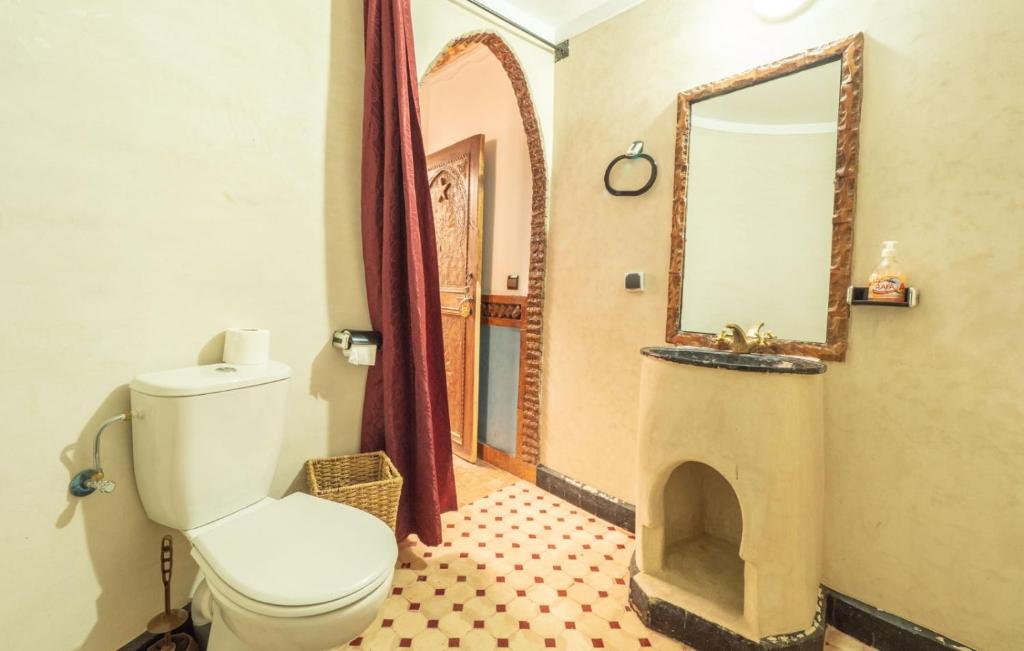

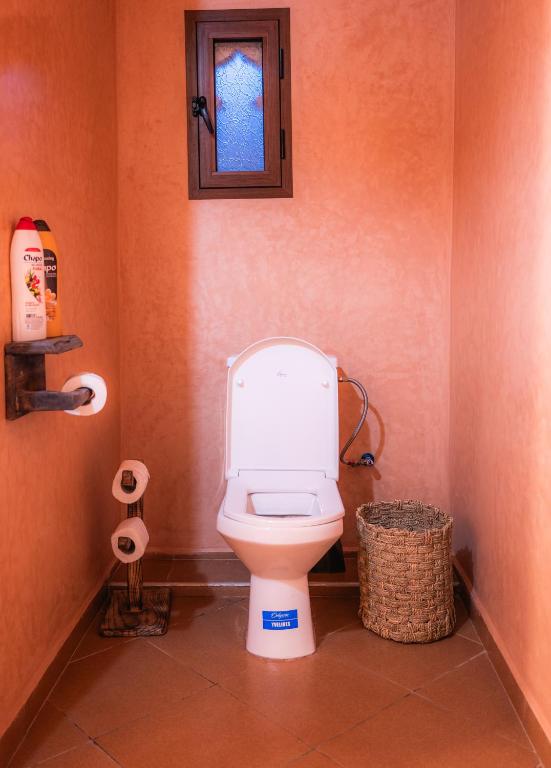
The accommodation was strategically chosen in this area, not only for its beautiful views but also as a starting point for the hike the following day.
In the Dades Gorge, you'll be amazed by unique rock formations known as Monkey Fingers, where erosion has shaped red sandstone into smooth, rounded towers resembling fingers. In contrast, the Gorges du Todra is majestically monumental; at its narrowest point, the limestone walls are up to 300 meters high and only 10 meters apart. While Dades fascinates with its playful geometry, Todra takes your breath away with its vertical depth and the turquoise river flowing through the canyon floor.
Leave your car at your accommodation and head out on foot to the View Point, then follow the attached map. The route in the Monkey Fingers area of the Dades Valley offers an adventurous exploration of unique red sandstone formations that, thanks to erosion, resemble giant clenched fingers. The path takes you deep into narrow, winding gorges where you'll need to squeeze between smooth walls and climb over small rocky ledges. Self-appointed local guides are often found at the start of the trail; they can safely lead you through the rock labyrinth and help you over trickier spots. It is definitely worth using their services so you can enjoy this unique natural maze without any worries and find the most beautiful hidden viewpoints. The contrast between the deep red rocks and the azure sky only enhances the magical atmosphere of this exceptional place. Follow the attached map. The total route is 8 km long and will take you 3.5 hours of walking and soaking in the views.
The gorge is labeled differently on maps—sometimes you'll see Todra, other times Toudra; don't worry, it's the exact same place. Depending on your fitness and how tired you are from the previous gorge, either head out on the longer loop from the parking lot heading west up the stone stairs, or just enjoy the gorge from the asphalt road.
The hiking trail above Todra Gorge allows you to escape the tourist crowds at the bottom of the canyon and see this natural landmark from a bird's-eye view. The path climbs along rocky trails high above the river, where panoramic views of the monumental vertical walls and the green strip of the oasis winding far below open up. During the hike, you'll encounter the authentic world of local nomads who still graze their herds in these inhospitable mountains, and you'll experience total peace that you won't find in the busy valley near the road. This loop is the perfect way to combine the adrenaline of heights with the deep silence of the Moroccan countryside and enjoy the raw beauty of the Atlas Mountains in all its majesty. The route is 9 km long, and during these 3 hours, you'll climb 500 meters of elevation. As you descend, you'll get a view of the village where you'll spend tonight. The attached route will help you with orientation on where to go. The path itself is occasionally marked with trail markers on stones.
If you're tired after visiting Monkey Fingers, a smaller walk might be a good alternative. Leave your car in the designated parking area and just walk through the gorge. The walk along the road itself, which winds beneath these giant massifs, offers a fascinating play of light and shadow, where even in the middle of a hot day, you'll feel the pleasant coolness of the rocks. It's a place where you can soak in the views from below or watch rock climbers tackling the vertical walls.


Head out before 9 AM, and the journey from Todra Gorge towards Merzouga will take you through the fascinating transformation of the Moroccan landscape. You'll leave the Atlas walls behind and head into endless wastelands and rocky plains. Passing through the small town of Alnif, famous for its fossils, you'll continue to historic Rissani, once a key stop for caravans, which still retains the vibe of an authentic market for spices and crafts today. Once you pass Rissani, the magical silhouette of the orange Erg Chebbi dunes will appear on the horizon, signaling your arrival in Merzouga, the gateway to the real Sahara. This route is a visual transition from mountains to sand, during which you'll experience the raw beauty of the pre-desert regions and feel the approaching peace of desert solitude.
The Ihmadi Trilobites Centre in Alnif is a fascinating stop for anyone interested in the history of our planet and the incredible wealth of Moroccan fossils. Hundreds of millions of years ago, this area was the bottom of a prehistoric ocean. A visit will allow you to not only admire world-class museum pieces but also understand why Morocco is considered a paleontological paradise and take home an authentic souvenir with a story half a billion years old.
For a city tour, if you stop at all the stops listed below, you will need 3.5 hours.
A stop at the City Gate of Rissani is worth it primarily for its architecture. This monumental gate with its rich ornamentation is a symbol of the entrance to the desert region. It's an ideal photo spot where you can feel the history of old caravan routes and the atmosphere of the "gateway to the Sahara" before you finally enter the sand dunes in Merzouga.
For kidsIn Rissani itself, definitely don't miss the legendary Donkey Parking, one of the most authentic spots in all of Morocco, where the modern world has stopped and traditions take center stage. Leave your car at the marked parking lot, where a local guide will take care of you for a small tip. Use their services so you don't get lost. They will show you a fascinating sight of hundreds of "parked" donkeys patiently waiting for their owners; it's best to experience this on a Tuesday, Thursday, or Sunday, when the largest markets in the region are held. On these days, the town fills up with merchants from distant oases, and the parking lot comes alive with incredible hustle and bustle, a unique atmosphere, and a raw trading spirit that gives you a glimpse into the daily reality of the locals, for whom the donkey is still an absolutely key means of transport.

After an interesting tour of the market and the donkey parking lot, you'll surely be hungry, so I recommend the Berber pizza at this restaurant. Go all the way to the top, where you can see the whole city from the roof terrace.

Then head over to the Moulay Ali Cherif Mausoleum, an architectural gem: You'll be enchanted by its serenity and exquisite craftsmanship, from the beautifully carved cedar ceilings to the intricate mosaics and stucco decor in the inner courtyard. While only Muslims can enter the tomb itself, visitors can admire the stunning gardens and public areas of the complex, which offer an oasis of silence and meditation in the middle of the bustling desert town.

You leave your car at the designated spot, which the campsite will send you before your arrival, and from there you have to count on paid transport to and from the camp.
All campsites in this area operate similarly. They are luxury tents equipped with a bed, shower, and flush toilet inside the tent. Paid transport to/from the camp by camel or jeep is usually offered.
At the camps, there is an option for an extra fee to go sandboarding, camel riding, jeep tours, or quad biking.
Sunsets and sunrises in the dunes will make your vacation a top-notch experience. The temperature changes throughout the day, and with daytime highs of 30°C, it can drop to 5°C at night.
If you have some time, you can drive to the lake yourself and look for fossil remains on the shore.


You can spend a day in the Sahara relaxing at the camp or (which I highly recommend) taking a packed half-day jeep tour. It will take you to visit local nomads, a fossil site, and the village of Khamlia for traditional Gnawa music. If there is enough water, you might even spot flamingos at the lake in Merzouga. The day then culminates in an iconic camel ride along the dune ridges during sunset. This program offers the ultimate experience and insight into desert culture all in one day.
A day spent in the Sahara offers a unique opportunity to slow down and explore. You can choose to rest quietly right at the camp and relax with a view of the endless dunes, but for a truly powerful experience, I recommend taking a half-day jeep trip. This excursion, available for an extra charge, will take you deep into the desert to visit local nomads, where you will get a glimpse into their traditional way of life. You'll reach a site where you can try your hand at searching for fossilized remains. The trip also includes a visit to the village of Khamlia, where you'll listen to the rhythms of the Gnawa musicians, whose ancestors came here from sub-Saharan Africa. If conditions allow, you'll also stop at a seasonal lake in Merzouga, which attracts flamingos in the middle of the arid landscape, creating a fascinating contrast with the surrounding sand. You can then crown the entire day with an iconic camel ride along the dune ridges at sunset. I definitely recommend taking advantage of this comprehensive program, as it will allow you to experience the Sahara in all its cultural and natural diversity.
I won't lie to you, the trip from Merzouga to Imlil is a long one. This day is mostly for driving. However, the scenery is incredibly diverse, taking you from sand dunes across arid plains right into the heart of the High Atlas. To make the journey more pleasant, a perfect stop about halfway is Ouarzazate, where you can visit the Cinema Museum. At this museum, you can take a break from driving for a while and walk among authentic sets, historical costumes, and film equipment used in the filming of famous blockbusters. It's a peaceful place with a unique atmosphere, offering a welcome pause in the pleasant shade of the buildings before you start climbing the serpentines into the mountains towards Imlil. This short relaxation amidst film history will give you energy for the final part of the journey to the foothills of Toubkal.
For kidsThis museum is in the same town as the previous ones you visited, but here you can touch and sit on the exhibits and sets, so you'll get photos like a movie star. An hour is enough for your visit, then continue on into the mountains. Allow 45 minutes for the tour.

Imlil is a picturesque mountain village at an altitude of 1,740 meters, serving as the main gateway to the High Atlas and the starting point for climbing the highest mountain in North Africa, Jebel Toubkal. Instead of the red dust of the medina, you will be surrounded by fresh mountain air, walnut groves, crystal-clear streams, and terraced fields that create a fascinating green contrast to the surrounding rocky peaks. Even for those who don't plan on summit treks, Imlil offers an authentic atmosphere and a network of paths for easy walks to waterfalls or nearby villages. This quiet mountain hideaway is the perfect escape from the heat of Marrakech and lets you experience the rugged yet deeply hospitable side of the Moroccan mountains. However, tomorrow's mountain trek is the reason why you came here.


Even if you're tired from the long journey, don't give up and make it all the way to Imlil, the starting point for treks in Toubkal National Park. Breakfast on the rooftop terrace in the morning will be a lovely way to start your day.
A roughly 12km hike into the heart of the High Atlas awaits you, designed as a round trip (6 km there and 6 km back). Along the way, you'll tackle an elevation gain of 550 meters, which at a relaxed pace with breaks for photos or tea will take about 4.5 hours of walking in total. It's the perfect route for those who want to soak in the raw beauty of the Moroccan mountains and the atmosphere of the Sidi Chamharouch pilgrimage site without needing an extreme athletic performance. You don't need any special physical fitness for this hike.
Note: A guide is mandatory in Toubkal National Park; book one at your accommodation or at the information center, approximate price 600MAD. You can also hire a mule to carry your backpacks. The price for a mule is about half the cost of a guide.
For kidsWhile climbing the 550m elevation gain, the landscape shifts from green walnut groves to a raw alpine scenery with stony trails alongside the river. Along the way, you can stop at makeshift stalls for orange juice cooled in an icy stream and watch mule caravans heading toward Toubkal. The destination is a pilgrimage settlement by an iconic white boulder, an ideal place to relax with some tea before heading back down to the valley.
The landmark of Sidi Chamharouch is a huge, brightly painted white boulder that marks the entrance to the shrine, at the base of which local pilgrims gather, hoping for healing. The entire settlement is wedged into a narrow neck of the valley above a rushing mountain stream, which creates roaring cascades and waterfalls here. The atmosphere is complemented by modest stone teahouses, where drinks are cooled directly in the icy river, and the constant movement of mule caravans resting before their further ascent to the peaks of the High Atlas.
 For kids
On your way back from Sidi Chamharouch, take a slight detour to the refreshing waterfalls above Imlil. This stop is the perfect way to wrap up your trip; the path leads through shaded cherry and walnut orchards that offer a pleasant cool-down in the heat of the afternoon. You can admire the crystal-clear water cascading down steep rock faces and enjoy a final glass of mint tea at one of the many small cafés right by the water. The sound of the falling water and the peaceful atmosphere of the gardens below the village of Aroumd make for an ideal spot to relax your tired legs before making the final descent back to the center of Imlil.
Pick up your car and hit the road back to Marrakech.
Marrakesh, nicknamed the "Red City," is the beating heart of Morocco, where the thousand-year history of the medieval medina meets the unbridled energy of the Orient. The city's landmark is the Jemaa el-Fna square, which turns into a magical theater full of street performers and the scent of traditional dishes after sunset, all while the majestic Koutoubia Mosque minaret watches over it. As you wander through the labyrinth of endless markets (souks), you'll discover incredible handicrafts and spices, which you can immediately swap for a quiet oasis in the azure blue Majorelle Garden. Marrakesh is a city of fascinating contrasts, where the luxury of modern districts mingles with authentic life in narrow alleys, and every sit-down with mint tea on a rooftop terrace offers an unforgettable view of the peaks of the nearby High Atlas mountains.
The Ben Youssef Madrasa is one of the most stunning architectural gems in Marrakesh and was once the largest Islamic school in all of North Africa. Founded in the 14th century and grandly rebuilt during the Saadi dynasty, this historic college served as home to up to 800 Quranic students who lived in incredibly modest cells on the upper floor. However, the real treasure is hidden in the central courtyard, a masterclass in Moroccan craftsmanship – the walls are covered in fascinating geometric zellige mosaics, delicate stucco calligraphy, and carved cedar wood. The calm surface of the marble pool in the center of the courtyard perfectly reflects the symmetry of the surrounding arches, creating a meditative atmosphere that instantly transports you back centuries, far away from the relentless chaos of the nearby medina. More info on the website.
Visiting the Souk des Teinturiers, or the Dyers' Souk, is one of the most photogenic and authentic corners of the Marrakech medina. Visit this spot in the afternoon when the sun beautifully illuminates everything. It is here that you can see with your own eyes the ancient craft of fabric dyeing, which has remained unchanged for centuries. Freshly dyed skeins of wool and silk in vibrant shades of cobalt blue, saffron yellow, or deep red hang on bamboo poles above the narrow alleyways, creating an incredible colorful backdrop in the sunlight. In deep vats, master dyers mix natural pigments, and although there is a strong aroma of dyes and wool in the area, a visit to this souk offers a fascinating glimpse into traditional Moroccan production, where every color shade has its precise meaning and history.
Jardin Majorelle is one of the most visited and beautiful landmarks in Marrakech, offering a refreshing escape from the noisy medina into a world of tranquility and rich colors. This botanical oasis was created by French painter Jacques Majorelle over forty years, and he gave it a unique character by combining exotic plants from five continents with striking architecture in an iconic shade of cobalt blue, now known as "Majorelle Blue." In 1980, the garden was saved from destruction by the famous fashion designer Yves Saint Laurent and his partner Pierre Bergé, who restored it to its former glory. While walking along the shaded paths, you will see monumental cacti, bamboo groves, and lily ponds that create a perfect contrast to the vibrant yellow and orange accents scattered throughout the garden. The complex also includes a top-tier Berber culture museum and a memorial to Saint Laurent himself, whose ashes were scattered in this garden, which he loved above all else.
Note: you can only purchase tickets online a few days in advance on the website.
This modern museum with its stunning terracotta brick architecture opened in 2017. It is dedicated to the work of the famous designer and exhibits a rotating collection of his most iconic designs (e.g., women's tuxedos or Mondrian-inspired dresses), accessories, and photographs. It also includes an extensive library, a lecture hall, and a stylish café.
The Koutoubia Mosque is the largest mosque in Marrakesh, and its 77-meter-high minaret is an unmistakable symbol of the city, serving as a primary landmark for both locals and tourists. This 12th-century structure is a masterpiece of Almohad architecture, and its influence can be seen in the famous Giralda tower in Seville and the Hassan Tower in Rabat. The name translates to "Mosque of the Booksellers," referring to the historic book and manuscript markets that once took place in its vicinity. Although only Muslims are permitted to enter the mosque's interior, its exterior, with its rich decorations, ceramic bands, and surrounding rose gardens, offers a fascinating spectacle. Every evening, the captivating call of the muezzin to prayer echoes from here, carrying over the nearby Jemaa el-Fna square, while the illuminated tower dominates the night skyline of Marrakesh.
Jemaa el-Fnaa is the pulsing heart of Marrakech and one of the most incredible squares in the world. By day, it’s a scene of apparent chaos with vendors selling fresh orange juice, snake charmers, monkey tamers, and henna tattoo artists. But the real magic starts at sunset, when the square transforms within minutes into a massive open-air dining hall. The air fills with the smoke of grilled meat and spices from dozens of stalls, surrounded by circles of spectators listening to folk storytellers, Gnaoua musicians, or watching acrobats. It’s a place where medieval traditions meet modern tourism, and the best view of this non-stop theater is from the rooftop terraces of nearby cafes, where you can soak up the fascinating hum of this human anthill over a sunset glass of mint tea.
For lunch, head over to Cuisine De Terroir. It's just a short walk from the main square. It's one of the most popular spots for great value for money. They have a fantastic rooftop terrace, and the food is authentic.
One of two places in Marrakesh where you can try camel meat (among other dishes).
The palace is a labyrinth of 150 rooms, courtyards, and gardens. What makes Bahia special is the incredibly detailed decoration—from floors with delicate mosaics and stucco walls with calligraphy to cedar wood ceilings with rich paintings. The heart of the palace is a vast marble courtyard, designed to provide coolness and tranquility on hot summer days. As you walk through the empty halls that once teemed with luxury and intrigue, you can admire the masterful symmetry and elegance that were meant to leave visitors in awe of the power and wealth of the rulers of that time.
This quiet oasis hides the Saadian Tombs, with the Hall of Twelve Columns being the absolute highlight, featuring incredibly detailed marble, cedar wood, and fine stucco decorations. The entire site, including the outdoor graves adorned with colorful mosaics, is a masterful example of Islamic architecture and a reminder of the golden age of Moroccan history.

Le Jardin Secret is an oasis of calm and a masterpiece of Islamic garden architecture, hidden behind unassuming walls in the heart of the busiest part of the Marrakech medina. This renovated palace complex offers a unique layout, split between a lush exotic garden featuring flora from around the world and a strictly symmetrical Islamic garden that evokes an earthly paradise through traditional irrigation channels. The entire space is dominated by one of the tallest towers in the old city, offering panoramic views of the sea of rooftops and the peaks of the Atlas Mountains, while the gardens themselves are filled with harmony accompanied only by the sound of flowing water, making it the perfect retreat from the hustle and bustle of the surrounding markets.
You'll return the car at the airport and head home. Depending on your flight time, you can walk around the city and see the sights you didn't manage to visit the previous day.
Arrive at Marrakesh airport at least 3 hours in advance to give yourself plenty of time for the car rental return process. Once you've sorted out the paperwork at the rental agency, head to the terminal, where you'll go through a multi-stage security check. Before your flight, we recommend spending any leftover dirhams at the airport, as the currency can't be exchanged outside of Morocco. Then, it's just time for boarding and your flight back home.
Note: In 2026, paper boarding passes were required and were issued for free at the check-in counter.
I hope your trip through Morocco was an intense assault on all the senses and a journey into a world where time seems to have stood still. The journey began and ended in Marrakech, which surely absorbed you with its labyrinth of winding streets in the medina, the scent of exotic spices, and the non-stop life on Jemaa el-Fnaa square. You took a peek behind the scenes of film studios, discovering that not everything in a movie is real. You tested your physical fitness in the mountains, but surely the views and experiences were worth the effort. And I hope that the main experience for you, just as it was for me, was the desert.
Morocco completely captivated us with its diversity and intensity. In just nine days, we managed to cover an incredible amount of ground—from the chaos of city alleyways to the absolute serenity of the mountains and the desert. It was exactly the type of trip I love best: early mornings, a fast pace, and completely different scenery every single day. We started and ended our nine-day Moroccan journey in Marrakech, a city that assaults all your senses with its colorful souks and maze-like streets. The route took us through Morocco's "Hollywood," the Atlas film studios, where we walked through sets of famous movies, all the way to the rock formations of Monkey Fingers and the breathtaking views in Dades Gorges. We soaked up the authentic atmosphere of the markets in Rissani before losing ourselves in the endless orange dunes of the Sahara in Merzouga, where the sunset was the perfect way to end the day. We wrapped up the whole adventure in the mountain village of Imlil, trading hot sand for the beauty and fresh air of the Atlas Mountains. We saved Marrakech itself for the very end of our trip. The prices listed in the itinerary are from 2026.
Welcome to Marrakech. Depending on your arrival time and accommodation, there are two ways to start your Marrakech adventure. If you arrive early and feel like getting an immediate feel for the city's atmosphere, head out into the streets on your own and let your instincts guide you. However, if you prefer a plan, use the key points described in Day 8, which form a logical loop through the best of the medina.
I recommend waiting until you reach the city center to exchange your money for Moroccan dirhams; just exchange up to €50 at the airport and swap the rest in the city for a better rate. After collecting your luggage, I suggest looking for a Maroc Telecom kiosk (white and red logo) to buy a SIM card with data. Waze will come in handy for driving, and for walking, I recommend Mapy.com with an offline map of Morocco.
Pick up your rental car at the airport (following the instructions you'll receive before the trip) and head off to explore Morocco.
P.S. The prices listed in the itinerary are from 2026 and may change over the years.
Staying right in the heart of the Marrakech medina is an experience that lets you completely forget about the outside world for a while. The alleys of the Marrakech medina are like a living organism that swallows you up the very first second. It's a fascinating chaos where colors, sounds, and scents shift second by second.
Visiting the Moroccan "Hollywood" around Ouarzazate is a fascinating trip into the history of world cinema. The real star is Ksar Aït-Ben-Haddou, a UNESCO-listed fortified clay village whose iconic silhouettes you know from Gladiator or Game of Thrones. At Atlas Studios, you can literally walk between worlds, from Egyptian temples to medieval fortresses, and watch how plaster sets against the backdrop of a rugged landscape turn into reality. It was here, in the endless red scenery, that Ridley Scott's blockbuster Kingdom of Heaven came to life, and looking at the horizon, you can almost feel the atmosphere of the crusades. It is a place where the line between cinematic illusion and the raw beauty of Morocco finally blurs.
Head out after eight in the morning; you have a long day ahead of you, packed with beautiful views and experiences.
Driving over the Tizi n'Tichka mountain pass is one of the most intense driving experiences Morocco has to offer. This legendary road climbs up to 2,260 meters above sea level, making it the highest paved mountain pass in North Africa and a natural gateway between Marrakech and the Sahara. During the endless serpentines, the scenery changes right before your eyes – from fertile green valleys to the arid, red high-altitude wilderness of the Atlas Mountains, where villages are literally glued to the cliffs. It is here that you can fully appreciate the raw beauty of the mountains and the adrenaline of a journey that opens up new, breathtaking horizons with every turn. Grab a Moroccan tea here, enjoy the views, and recharge for the next part of your journey.
For kidsPark your car in the lot, pay a small fee, and head across the river using the makeshift bridge—it’s definitely a more exciting experience than a concrete one. After crossing, make your way up the hill on a path that winds past small local artisan workshops and shops selling traditional jewelry. Every step reveals new details—ornate towers, hidden passages, and terraces that once served for defense. The real highlight of the tour is reaching the old granary (agadir) at the very top. From there, a breathtaking panorama unfolds: on one side, a green ribbon of palm groves along the river, and on the other, an endless, sun-scorched wasteland stretching toward the Atlas Mountains. It’s a place with indescribable energy, where cinematic fame gives way to the deep, authentic history of Berber culture. Plan for a maximum of 2 hours for the tour.
For kidsVisiting Atlas Film Studios near Ouarzazate is a fascinating look behind the scenes of world cinema at one of the largest film studios on the planet. Across a vast area, you can transport yourself from ancient Egypt to a Tibetan monastery or biblical Jerusalem in an instant, walking among sets that have seen stars like Russell Crowe and Orlando Bloom. It’s breathtaking to see how masterfully filmmakers used plaster and polystyrene to create monumental palaces for movies like Gladiator, Kingdom of Heaven, or Game of Thrones. The whole complex feels almost surreal in the middle of the Moroccan wilderness, and thanks to the combination of movie magic and the harsh reality of the desert sun, it offers a completely unique atmosphere that will thrill any fan of the silver screen. You can find more information here. You'll need about an hour for the tour.
For kidsThe film location of the epic Kingdom of Heaven near Ouarzazate offers a fascinating glimpse of monumental replicas of Jerusalem's walls and gates, even if the access road leading to them isn't clearly marked. In the middle of the arid landscape, the atmosphere of Ridley Scott's crusades still lingers, complemented by the remains of catapults and siege engines. For history fans, it's a unique place where film illusion gains a completely tangible and raw dimension thanks to the dust and the scorching Moroccan sun. You'll need about half an hour for the tour.
Don't linger too much on the way, so you get to your accommodation before dusk.
The accommodation was strategically chosen in this area, not only for its beautiful views but also as a starting point for the hike the following day.
In the Dades Gorge, you'll be amazed by unique rock formations known as Monkey Fingers, where erosion has shaped red sandstone into smooth, rounded towers resembling fingers. In contrast, the Gorges du Todra is majestically monumental; at its narrowest point, the limestone walls are up to 300 meters high and only 10 meters apart. While Dades fascinates with its playful geometry, Todra takes your breath away with its vertical depth and the turquoise river flowing through the canyon floor.
Leave your car at your accommodation and head out on foot to the View Point, then follow the attached map. The route in the Monkey Fingers area of the Dades Valley offers an adventurous exploration of unique red sandstone formations that, thanks to erosion, resemble giant clenched fingers. The path takes you deep into narrow, winding gorges where you'll need to squeeze between smooth walls and climb over small rocky ledges. Self-appointed local guides are often found at the start of the trail; they can safely lead you through the rock labyrinth and help you over trickier spots. It is definitely worth using their services so you can enjoy this unique natural maze without any worries and find the most beautiful hidden viewpoints. The contrast between the deep red rocks and the azure sky only enhances the magical atmosphere of this exceptional place. Follow the attached map. The total route is 8 km long and will take you 3.5 hours of walking and soaking in the views.
The gorge is labeled differently on maps—sometimes you'll see Todra, other times Toudra; don't worry, it's the exact same place. Depending on your fitness and how tired you are from the previous gorge, either head out on the longer loop from the parking lot heading west up the stone stairs, or just enjoy the gorge from the asphalt road.
The hiking trail above Todra Gorge allows you to escape the tourist crowds at the bottom of the canyon and see this natural landmark from a bird's-eye view. The path climbs along rocky trails high above the river, where panoramic views of the monumental vertical walls and the green strip of the oasis winding far below open up. During the hike, you'll encounter the authentic world of local nomads who still graze their herds in these inhospitable mountains, and you'll experience total peace that you won't find in the busy valley near the road. This loop is the perfect way to combine the adrenaline of heights with the deep silence of the Moroccan countryside and enjoy the raw beauty of the Atlas Mountains in all its majesty. The route is 9 km long, and during these 3 hours, you'll climb 500 meters of elevation. As you descend, you'll get a view of the village where you'll spend tonight. The attached route will help you with orientation on where to go. The path itself is occasionally marked with trail markers on stones.
If you're tired after visiting Monkey Fingers, a smaller walk might be a good alternative. Leave your car in the designated parking area and just walk through the gorge. The walk along the road itself, which winds beneath these giant massifs, offers a fascinating play of light and shadow, where even in the middle of a hot day, you'll feel the pleasant coolness of the rocks. It's a place where you can soak in the views from below or watch rock climbers tackling the vertical walls.
Head out before 9 AM, and the journey from Todra Gorge towards Merzouga will take you through the fascinating transformation of the Moroccan landscape. You'll leave the Atlas walls behind and head into endless wastelands and rocky plains. Passing through the small town of Alnif, famous for its fossils, you'll continue to historic Rissani, once a key stop for caravans, which still retains the vibe of an authentic market for spices and crafts today. Once you pass Rissani, the magical silhouette of the orange Erg Chebbi dunes will appear on the horizon, signaling your arrival in Merzouga, the gateway to the real Sahara. This route is a visual transition from mountains to sand, during which you'll experience the raw beauty of the pre-desert regions and feel the approaching peace of desert solitude.
The Ihmadi Trilobites Centre in Alnif is a fascinating stop for anyone interested in the history of our planet and the incredible wealth of Moroccan fossils. Hundreds of millions of years ago, this area was the bottom of a prehistoric ocean. A visit will allow you to not only admire world-class museum pieces but also understand why Morocco is considered a paleontological paradise and take home an authentic souvenir with a story half a billion years old.
For a city tour, if you stop at all the stops listed below, you will need 3.5 hours.
A stop at the City Gate of Rissani is worth it primarily for its architecture. This monumental gate with its rich ornamentation is a symbol of the entrance to the desert region. It's an ideal photo spot where you can feel the history of old caravan routes and the atmosphere of the "gateway to the Sahara" before you finally enter the sand dunes in Merzouga.
For kidsIn Rissani itself, definitely don't miss the legendary Donkey Parking, one of the most authentic spots in all of Morocco, where the modern world has stopped and traditions take center stage. Leave your car at the marked parking lot, where a local guide will take care of you for a small tip. Use their services so you don't get lost. They will show you a fascinating sight of hundreds of "parked" donkeys patiently waiting for their owners; it's best to experience this on a Tuesday, Thursday, or Sunday, when the largest markets in the region are held. On these days, the town fills up with merchants from distant oases, and the parking lot comes alive with incredible hustle and bustle, a unique atmosphere, and a raw trading spirit that gives you a glimpse into the daily reality of the locals, for whom the donkey is still an absolutely key means of transport.
After an interesting tour of the market and the donkey parking lot, you'll surely be hungry, so I recommend the Berber pizza at this restaurant. Go all the way to the top, where you can see the whole city from the roof terrace.
Then head over to the Moulay Ali Cherif Mausoleum, an architectural gem: You'll be enchanted by its serenity and exquisite craftsmanship, from the beautifully carved cedar ceilings to the intricate mosaics and stucco decor in the inner courtyard. While only Muslims can enter the tomb itself, visitors can admire the stunning gardens and public areas of the complex, which offer an oasis of silence and meditation in the middle of the bustling desert town.
You leave your car at the designated spot, which the campsite will send you before your arrival, and from there you have to count on paid transport to and from the camp.
All campsites in this area operate similarly. They are luxury tents equipped with a bed, shower, and flush toilet inside the tent. Paid transport to/from the camp by camel or jeep is usually offered.
At the camps, there is an option for an extra fee to go sandboarding, camel riding, jeep tours, or quad biking.
Sunsets and sunrises in the dunes will make your vacation a top-notch experience. The temperature changes throughout the day, and with daytime highs of 30°C, it can drop to 5°C at night.
If you have some time, you can drive to the lake yourself and look for fossil remains on the shore.
You can spend a day in the Sahara relaxing at the camp or (which I highly recommend) taking a packed half-day jeep tour. It will take you to visit local nomads, a fossil site, and the village of Khamlia for traditional Gnawa music. If there is enough water, you might even spot flamingos at the lake in Merzouga. The day then culminates in an iconic camel ride along the dune ridges during sunset. This program offers the ultimate experience and insight into desert culture all in one day.
A day spent in the Sahara offers a unique opportunity to slow down and explore. You can choose to rest quietly right at the camp and relax with a view of the endless dunes, but for a truly powerful experience, I recommend taking a half-day jeep trip. This excursion, available for an extra charge, will take you deep into the desert to visit local nomads, where you will get a glimpse into their traditional way of life. You'll reach a site where you can try your hand at searching for fossilized remains. The trip also includes a visit to the village of Khamlia, where you'll listen to the rhythms of the Gnawa musicians, whose ancestors came here from sub-Saharan Africa. If conditions allow, you'll also stop at a seasonal lake in Merzouga, which attracts flamingos in the middle of the arid landscape, creating a fascinating contrast with the surrounding sand. You can then crown the entire day with an iconic camel ride along the dune ridges at sunset. I definitely recommend taking advantage of this comprehensive program, as it will allow you to experience the Sahara in all its cultural and natural diversity.
I won't lie to you, the trip from Merzouga to Imlil is a long one. This day is mostly for driving. However, the scenery is incredibly diverse, taking you from sand dunes across arid plains right into the heart of the High Atlas. To make the journey more pleasant, a perfect stop about halfway is Ouarzazate, where you can visit the Cinema Museum. At this museum, you can take a break from driving for a while and walk among authentic sets, historical costumes, and film equipment used in the filming of famous blockbusters. It's a peaceful place with a unique atmosphere, offering a welcome pause in the pleasant shade of the buildings before you start climbing the serpentines into the mountains towards Imlil. This short relaxation amidst film history will give you energy for the final part of the journey to the foothills of Toubkal.
For kidsThis museum is in the same town as the previous ones you visited, but here you can touch and sit on the exhibits and sets, so you'll get photos like a movie star. An hour is enough for your visit, then continue on into the mountains. Allow 45 minutes for the tour.
Imlil is a picturesque mountain village at an altitude of 1,740 meters, serving as the main gateway to the High Atlas and the starting point for climbing the highest mountain in North Africa, Jebel Toubkal. Instead of the red dust of the medina, you will be surrounded by fresh mountain air, walnut groves, crystal-clear streams, and terraced fields that create a fascinating green contrast to the surrounding rocky peaks. Even for those who don't plan on summit treks, Imlil offers an authentic atmosphere and a network of paths for easy walks to waterfalls or nearby villages. This quiet mountain hideaway is the perfect escape from the heat of Marrakech and lets you experience the rugged yet deeply hospitable side of the Moroccan mountains. However, tomorrow's mountain trek is the reason why you came here.
Even if you're tired from the long journey, don't give up and make it all the way to Imlil, the starting point for treks in Toubkal National Park. Breakfast on the rooftop terrace in the morning will be a lovely way to start your day.
A roughly 12km hike into the heart of the High Atlas awaits you, designed as a round trip (6 km there and 6 km back). Along the way, you'll tackle an elevation gain of 550 meters, which at a relaxed pace with breaks for photos or tea will take about 4.5 hours of walking in total. It's the perfect route for those who want to soak in the raw beauty of the Moroccan mountains and the atmosphere of the Sidi Chamharouch pilgrimage site without needing an extreme athletic performance. You don't need any special physical fitness for this hike.
Note: A guide is mandatory in Toubkal National Park; book one at your accommodation or at the information center, approximate price 600MAD. You can also hire a mule to carry your backpacks. The price for a mule is about half the cost of a guide.
For kidsWhile climbing the 550m elevation gain, the landscape shifts from green walnut groves to a raw alpine scenery with stony trails alongside the river. Along the way, you can stop at makeshift stalls for orange juice cooled in an icy stream and watch mule caravans heading toward Toubkal. The destination is a pilgrimage settlement by an iconic white boulder, an ideal place to relax with some tea before heading back down to the valley.
The landmark of Sidi Chamharouch is a huge, brightly painted white boulder that marks the entrance to the shrine, at the base of which local pilgrims gather, hoping for healing. The entire settlement is wedged into a narrow neck of the valley above a rushing mountain stream, which creates roaring cascades and waterfalls here. The atmosphere is complemented by modest stone teahouses, where drinks are cooled directly in the icy river, and the constant movement of mule caravans resting before their further ascent to the peaks of the High Atlas.
For kidsOn your way back from Sidi Chamharouch, take a slight detour to the refreshing waterfalls above Imlil. This stop is the perfect way to wrap up your trip; the path leads through shaded cherry and walnut orchards that offer a pleasant cool-down in the heat of the afternoon. You can admire the crystal-clear water cascading down steep rock faces and enjoy a final glass of mint tea at one of the many small cafés right by the water. The sound of the falling water and the peaceful atmosphere of the gardens below the village of Aroumd make for an ideal spot to relax your tired legs before making the final descent back to the center of Imlil.
Pick up your car and hit the road back to Marrakech.
Marrakesh, nicknamed the "Red City," is the beating heart of Morocco, where the thousand-year history of the medieval medina meets the unbridled energy of the Orient. The city's landmark is the Jemaa el-Fna square, which turns into a magical theater full of street performers and the scent of traditional dishes after sunset, all while the majestic Koutoubia Mosque minaret watches over it. As you wander through the labyrinth of endless markets (souks), you'll discover incredible handicrafts and spices, which you can immediately swap for a quiet oasis in the azure blue Majorelle Garden. Marrakesh is a city of fascinating contrasts, where the luxury of modern districts mingles with authentic life in narrow alleys, and every sit-down with mint tea on a rooftop terrace offers an unforgettable view of the peaks of the nearby High Atlas mountains.
The Ben Youssef Madrasa is one of the most stunning architectural gems in Marrakesh and was once the largest Islamic school in all of North Africa. Founded in the 14th century and grandly rebuilt during the Saadi dynasty, this historic college served as home to up to 800 Quranic students who lived in incredibly modest cells on the upper floor. However, the real treasure is hidden in the central courtyard, a masterclass in Moroccan craftsmanship – the walls are covered in fascinating geometric zellige mosaics, delicate stucco calligraphy, and carved cedar wood. The calm surface of the marble pool in the center of the courtyard perfectly reflects the symmetry of the surrounding arches, creating a meditative atmosphere that instantly transports you back centuries, far away from the relentless chaos of the nearby medina. More info on the website.
Visiting the Souk des Teinturiers, or the Dyers' Souk, is one of the most photogenic and authentic corners of the Marrakech medina. Visit this spot in the afternoon when the sun beautifully illuminates everything. It is here that you can see with your own eyes the ancient craft of fabric dyeing, which has remained unchanged for centuries. Freshly dyed skeins of wool and silk in vibrant shades of cobalt blue, saffron yellow, or deep red hang on bamboo poles above the narrow alleyways, creating an incredible colorful backdrop in the sunlight. In deep vats, master dyers mix natural pigments, and although there is a strong aroma of dyes and wool in the area, a visit to this souk offers a fascinating glimpse into traditional Moroccan production, where every color shade has its precise meaning and history.
Jardin Majorelle is one of the most visited and beautiful landmarks in Marrakech, offering a refreshing escape from the noisy medina into a world of tranquility and rich colors. This botanical oasis was created by French painter Jacques Majorelle over forty years, and he gave it a unique character by combining exotic plants from five continents with striking architecture in an iconic shade of cobalt blue, now known as "Majorelle Blue." In 1980, the garden was saved from destruction by the famous fashion designer Yves Saint Laurent and his partner Pierre Bergé, who restored it to its former glory. While walking along the shaded paths, you will see monumental cacti, bamboo groves, and lily ponds that create a perfect contrast to the vibrant yellow and orange accents scattered throughout the garden. The complex also includes a top-tier Berber culture museum and a memorial to Saint Laurent himself, whose ashes were scattered in this garden, which he loved above all else.
Note: you can only purchase tickets online a few days in advance on the website.
This modern museum with its stunning terracotta brick architecture opened in 2017. It is dedicated to the work of the famous designer and exhibits a rotating collection of his most iconic designs (e.g., women's tuxedos or Mondrian-inspired dresses), accessories, and photographs. It also includes an extensive library, a lecture hall, and a stylish café.
The Koutoubia Mosque is the largest mosque in Marrakesh, and its 77-meter-high minaret is an unmistakable symbol of the city, serving as a primary landmark for both locals and tourists. This 12th-century structure is a masterpiece of Almohad architecture, and its influence can be seen in the famous Giralda tower in Seville and the Hassan Tower in Rabat. The name translates to "Mosque of the Booksellers," referring to the historic book and manuscript markets that once took place in its vicinity. Although only Muslims are permitted to enter the mosque's interior, its exterior, with its rich decorations, ceramic bands, and surrounding rose gardens, offers a fascinating spectacle. Every evening, the captivating call of the muezzin to prayer echoes from here, carrying over the nearby Jemaa el-Fna square, while the illuminated tower dominates the night skyline of Marrakesh.
Jemaa el-Fnaa is the pulsing heart of Marrakech and one of the most incredible squares in the world. By day, it’s a scene of apparent chaos with vendors selling fresh orange juice, snake charmers, monkey tamers, and henna tattoo artists. But the real magic starts at sunset, when the square transforms within minutes into a massive open-air dining hall. The air fills with the smoke of grilled meat and spices from dozens of stalls, surrounded by circles of spectators listening to folk storytellers, Gnaoua musicians, or watching acrobats. It’s a place where medieval traditions meet modern tourism, and the best view of this non-stop theater is from the rooftop terraces of nearby cafes, where you can soak up the fascinating hum of this human anthill over a sunset glass of mint tea.
For lunch, head over to Cuisine De Terroir. It's just a short walk from the main square. It's one of the most popular spots for great value for money. They have a fantastic rooftop terrace, and the food is authentic.
One of two places in Marrakesh where you can try camel meat (among other dishes).
The palace is a labyrinth of 150 rooms, courtyards, and gardens. What makes Bahia special is the incredibly detailed decoration—from floors with delicate mosaics and stucco walls with calligraphy to cedar wood ceilings with rich paintings. The heart of the palace is a vast marble courtyard, designed to provide coolness and tranquility on hot summer days. As you walk through the empty halls that once teemed with luxury and intrigue, you can admire the masterful symmetry and elegance that were meant to leave visitors in awe of the power and wealth of the rulers of that time.
This quiet oasis hides the Saadian Tombs, with the Hall of Twelve Columns being the absolute highlight, featuring incredibly detailed marble, cedar wood, and fine stucco decorations. The entire site, including the outdoor graves adorned with colorful mosaics, is a masterful example of Islamic architecture and a reminder of the golden age of Moroccan history.
Le Jardin Secret is an oasis of calm and a masterpiece of Islamic garden architecture, hidden behind unassuming walls in the heart of the busiest part of the Marrakech medina. This renovated palace complex offers a unique layout, split between a lush exotic garden featuring flora from around the world and a strictly symmetrical Islamic garden that evokes an earthly paradise through traditional irrigation channels. The entire space is dominated by one of the tallest towers in the old city, offering panoramic views of the sea of rooftops and the peaks of the Atlas Mountains, while the gardens themselves are filled with harmony accompanied only by the sound of flowing water, making it the perfect retreat from the hustle and bustle of the surrounding markets.
You'll return the car at the airport and head home. Depending on your flight time, you can walk around the city and see the sights you didn't manage to visit the previous day.
Arrive at Marrakesh airport at least 3 hours in advance to give yourself plenty of time for the car rental return process. Once you've sorted out the paperwork at the rental agency, head to the terminal, where you'll go through a multi-stage security check. Before your flight, we recommend spending any leftover dirhams at the airport, as the currency can't be exchanged outside of Morocco. Then, it's just time for boarding and your flight back home.
Note: In 2026, paper boarding passes were required and were issued for free at the check-in counter.
I hope your trip through Morocco was an intense assault on all the senses and a journey into a world where time seems to have stood still. The journey began and ended in Marrakech, which surely absorbed you with its labyrinth of winding streets in the medina, the scent of exotic spices, and the non-stop life on Jemaa el-Fnaa square. You took a peek behind the scenes of film studios, discovering that not everything in a movie is real. You tested your physical fitness in the mountains, but surely the views and experiences were worth the effort. And I hope that the main experience for you, just as it was for me, was the desert.




itinerary by Petr Bozek
The adventure awaits
Morocco completely captivated us with its diversity and intensity. In just nine days, we managed to cover an incredible amount of ground—from the chaos of city alleyways to the absolute serenity of the mountains and the desert. It was exactly the type of trip I love best: early mornings, a fast pace, and completely different scenery every single day. We started and ended our nine-day Moroccan journey in Marrakech, a city that assaults all your senses with its colorful souks and maze-like streets. The route took us through Morocco's "Hollywood," the Atlas film studios, where we walked through sets of famous movies, all the way to the rock formations of Monkey Fingers and the breathtaking views in Dades Gorges. We soaked up the authentic atmosphere of the markets in Rissani before losing ourselves in the endless orange dunes of the Sahara in Merzouga, where the sunset was the perfect way to end the day. We wrapped up the whole adventure in the mountain village of Imlil, trading hot sand for the beauty and fresh air of the Atlas Mountains. We saved Marrakech itself for the very end of our trip. The prices listed in the itinerary are from 2026.
Welcome to Marrakech. Depending on your arrival time and accommodation, there are two ways to start your Marrakech adventure. If you arrive early and feel like getting an immediate feel for the city's atmosphere, head out into the streets on your own and let your instincts guide you. However, if you prefer a plan, use the key points described in Day 8, which form a logical loop through the best of the medina.
I recommend waiting until you reach the city center to exchange your money for Moroccan dirhams; just exchange up to €50 at the airport and swap the rest in the city for a better rate. After collecting your luggage, I suggest looking for a Maroc Telecom kiosk (white and red logo) to buy a SIM card with data. Waze will come in handy for driving, and for walking, I recommend Mapy.com with an offline map of Morocco.
Pick up your rental car at the airport (following the instructions you'll receive before the trip) and head off to explore Morocco.
P.S. The prices listed in the itinerary are from 2026 and may change over the years.
Staying right in the heart of the Marrakech medina is an experience that lets you completely forget about the outside world for a while. The alleys of the Marrakech medina are like a living organism that swallows you up the very first second. It's a fascinating chaos where colors, sounds, and scents shift second by second.
Visiting the Moroccan "Hollywood" around Ouarzazate is a fascinating trip into the history of world cinema. The real star is Ksar Aït-Ben-Haddou, a UNESCO-listed fortified clay village whose iconic silhouettes you know from Gladiator or Game of Thrones. At Atlas Studios, you can literally walk between worlds, from Egyptian temples to medieval fortresses, and watch how plaster sets against the backdrop of a rugged landscape turn into reality. It was here, in the endless red scenery, that Ridley Scott's blockbuster Kingdom of Heaven came to life, and looking at the horizon, you can almost feel the atmosphere of the crusades. It is a place where the line between cinematic illusion and the raw beauty of Morocco finally blurs.
Head out after eight in the morning; you have a long day ahead of you, packed with beautiful views and experiences.
Driving over the Tizi n'Tichka mountain pass is one of the most intense driving experiences Morocco has to offer. This legendary road climbs up to 2,260 meters above sea level, making it the highest paved mountain pass in North Africa and a natural gateway between Marrakech and the Sahara. During the endless serpentines, the scenery changes right before your eyes – from fertile green valleys to the arid, red high-altitude wilderness of the Atlas Mountains, where villages are literally glued to the cliffs. It is here that you can fully appreciate the raw beauty of the mountains and the adrenaline of a journey that opens up new, breathtaking horizons with every turn. Grab a Moroccan tea here, enjoy the views, and recharge for the next part of your journey.
For kidsPark your car in the lot, pay a small fee, and head across the river using the makeshift bridge—it’s definitely a more exciting experience than a concrete one. After crossing, make your way up the hill on a path that winds past small local artisan workshops and shops selling traditional jewelry. Every step reveals new details—ornate towers, hidden passages, and terraces that once served for defense. The real highlight of the tour is reaching the old granary (agadir) at the very top. From there, a breathtaking panorama unfolds: on one side, a green ribbon of palm groves along the river, and on the other, an endless, sun-scorched wasteland stretching toward the Atlas Mountains. It’s a place with indescribable energy, where cinematic fame gives way to the deep, authentic history of Berber culture. Plan for a maximum of 2 hours for the tour.
For kidsVisiting Atlas Film Studios near Ouarzazate is a fascinating look behind the scenes of world cinema at one of the largest film studios on the planet. Across a vast area, you can transport yourself from ancient Egypt to a Tibetan monastery or biblical Jerusalem in an instant, walking among sets that have seen stars like Russell Crowe and Orlando Bloom. It’s breathtaking to see how masterfully filmmakers used plaster and polystyrene to create monumental palaces for movies like Gladiator, Kingdom of Heaven, or Game of Thrones. The whole complex feels almost surreal in the middle of the Moroccan wilderness, and thanks to the combination of movie magic and the harsh reality of the desert sun, it offers a completely unique atmosphere that will thrill any fan of the silver screen. You can find more information here. You'll need about an hour for the tour.
For kidsThe film location of the epic Kingdom of Heaven near Ouarzazate offers a fascinating glimpse of monumental replicas of Jerusalem's walls and gates, even if the access road leading to them isn't clearly marked. In the middle of the arid landscape, the atmosphere of Ridley Scott's crusades still lingers, complemented by the remains of catapults and siege engines. For history fans, it's a unique place where film illusion gains a completely tangible and raw dimension thanks to the dust and the scorching Moroccan sun. You'll need about half an hour for the tour.
Don't linger too much on the way, so you get to your accommodation before dusk.
The accommodation was strategically chosen in this area, not only for its beautiful views but also as a starting point for the hike the following day.
In the Dades Gorge, you'll be amazed by unique rock formations known as Monkey Fingers, where erosion has shaped red sandstone into smooth, rounded towers resembling fingers. In contrast, the Gorges du Todra is majestically monumental; at its narrowest point, the limestone walls are up to 300 meters high and only 10 meters apart. While Dades fascinates with its playful geometry, Todra takes your breath away with its vertical depth and the turquoise river flowing through the canyon floor.
Leave your car at your accommodation and head out on foot to the View Point, then follow the attached map. The route in the Monkey Fingers area of the Dades Valley offers an adventurous exploration of unique red sandstone formations that, thanks to erosion, resemble giant clenched fingers. The path takes you deep into narrow, winding gorges where you'll need to squeeze between smooth walls and climb over small rocky ledges. Self-appointed local guides are often found at the start of the trail; they can safely lead you through the rock labyrinth and help you over trickier spots. It is definitely worth using their services so you can enjoy this unique natural maze without any worries and find the most beautiful hidden viewpoints. The contrast between the deep red rocks and the azure sky only enhances the magical atmosphere of this exceptional place. Follow the attached map. The total route is 8 km long and will take you 3.5 hours of walking and soaking in the views.
The gorge is labeled differently on maps—sometimes you'll see Todra, other times Toudra; don't worry, it's the exact same place. Depending on your fitness and how tired you are from the previous gorge, either head out on the longer loop from the parking lot heading west up the stone stairs, or just enjoy the gorge from the asphalt road.
The hiking trail above Todra Gorge allows you to escape the tourist crowds at the bottom of the canyon and see this natural landmark from a bird's-eye view. The path climbs along rocky trails high above the river, where panoramic views of the monumental vertical walls and the green strip of the oasis winding far below open up. During the hike, you'll encounter the authentic world of local nomads who still graze their herds in these inhospitable mountains, and you'll experience total peace that you won't find in the busy valley near the road. This loop is the perfect way to combine the adrenaline of heights with the deep silence of the Moroccan countryside and enjoy the raw beauty of the Atlas Mountains in all its majesty. The route is 9 km long, and during these 3 hours, you'll climb 500 meters of elevation. As you descend, you'll get a view of the village where you'll spend tonight. The attached route will help you with orientation on where to go. The path itself is occasionally marked with trail markers on stones.
If you're tired after visiting Monkey Fingers, a smaller walk might be a good alternative. Leave your car in the designated parking area and just walk through the gorge. The walk along the road itself, which winds beneath these giant massifs, offers a fascinating play of light and shadow, where even in the middle of a hot day, you'll feel the pleasant coolness of the rocks. It's a place where you can soak in the views from below or watch rock climbers tackling the vertical walls.
Head out before 9 AM, and the journey from Todra Gorge towards Merzouga will take you through the fascinating transformation of the Moroccan landscape. You'll leave the Atlas walls behind and head into endless wastelands and rocky plains. Passing through the small town of Alnif, famous for its fossils, you'll continue to historic Rissani, once a key stop for caravans, which still retains the vibe of an authentic market for spices and crafts today. Once you pass Rissani, the magical silhouette of the orange Erg Chebbi dunes will appear on the horizon, signaling your arrival in Merzouga, the gateway to the real Sahara. This route is a visual transition from mountains to sand, during which you'll experience the raw beauty of the pre-desert regions and feel the approaching peace of desert solitude.
The Ihmadi Trilobites Centre in Alnif is a fascinating stop for anyone interested in the history of our planet and the incredible wealth of Moroccan fossils. Hundreds of millions of years ago, this area was the bottom of a prehistoric ocean. A visit will allow you to not only admire world-class museum pieces but also understand why Morocco is considered a paleontological paradise and take home an authentic souvenir with a story half a billion years old.
For a city tour, if you stop at all the stops listed below, you will need 3.5 hours.
A stop at the City Gate of Rissani is worth it primarily for its architecture. This monumental gate with its rich ornamentation is a symbol of the entrance to the desert region. It's an ideal photo spot where you can feel the history of old caravan routes and the atmosphere of the "gateway to the Sahara" before you finally enter the sand dunes in Merzouga.
For kidsIn Rissani itself, definitely don't miss the legendary Donkey Parking, one of the most authentic spots in all of Morocco, where the modern world has stopped and traditions take center stage. Leave your car at the marked parking lot, where a local guide will take care of you for a small tip. Use their services so you don't get lost. They will show you a fascinating sight of hundreds of "parked" donkeys patiently waiting for their owners; it's best to experience this on a Tuesday, Thursday, or Sunday, when the largest markets in the region are held. On these days, the town fills up with merchants from distant oases, and the parking lot comes alive with incredible hustle and bustle, a unique atmosphere, and a raw trading spirit that gives you a glimpse into the daily reality of the locals, for whom the donkey is still an absolutely key means of transport.
After an interesting tour of the market and the donkey parking lot, you'll surely be hungry, so I recommend the Berber pizza at this restaurant. Go all the way to the top, where you can see the whole city from the roof terrace.
Then head over to the Moulay Ali Cherif Mausoleum, an architectural gem: You'll be enchanted by its serenity and exquisite craftsmanship, from the beautifully carved cedar ceilings to the intricate mosaics and stucco decor in the inner courtyard. While only Muslims can enter the tomb itself, visitors can admire the stunning gardens and public areas of the complex, which offer an oasis of silence and meditation in the middle of the bustling desert town.
You leave your car at the designated spot, which the campsite will send you before your arrival, and from there you have to count on paid transport to and from the camp.
All campsites in this area operate similarly. They are luxury tents equipped with a bed, shower, and flush toilet inside the tent. Paid transport to/from the camp by camel or jeep is usually offered.
At the camps, there is an option for an extra fee to go sandboarding, camel riding, jeep tours, or quad biking.
Sunsets and sunrises in the dunes will make your vacation a top-notch experience. The temperature changes throughout the day, and with daytime highs of 30°C, it can drop to 5°C at night.
If you have some time, you can drive to the lake yourself and look for fossil remains on the shore.
You can spend a day in the Sahara relaxing at the camp or (which I highly recommend) taking a packed half-day jeep tour. It will take you to visit local nomads, a fossil site, and the village of Khamlia for traditional Gnawa music. If there is enough water, you might even spot flamingos at the lake in Merzouga. The day then culminates in an iconic camel ride along the dune ridges during sunset. This program offers the ultimate experience and insight into desert culture all in one day.
A day spent in the Sahara offers a unique opportunity to slow down and explore. You can choose to rest quietly right at the camp and relax with a view of the endless dunes, but for a truly powerful experience, I recommend taking a half-day jeep trip. This excursion, available for an extra charge, will take you deep into the desert to visit local nomads, where you will get a glimpse into their traditional way of life. You'll reach a site where you can try your hand at searching for fossilized remains. The trip also includes a visit to the village of Khamlia, where you'll listen to the rhythms of the Gnawa musicians, whose ancestors came here from sub-Saharan Africa. If conditions allow, you'll also stop at a seasonal lake in Merzouga, which attracts flamingos in the middle of the arid landscape, creating a fascinating contrast with the surrounding sand. You can then crown the entire day with an iconic camel ride along the dune ridges at sunset. I definitely recommend taking advantage of this comprehensive program, as it will allow you to experience the Sahara in all its cultural and natural diversity.
I won't lie to you, the trip from Merzouga to Imlil is a long one. This day is mostly for driving. However, the scenery is incredibly diverse, taking you from sand dunes across arid plains right into the heart of the High Atlas. To make the journey more pleasant, a perfect stop about halfway is Ouarzazate, where you can visit the Cinema Museum. At this museum, you can take a break from driving for a while and walk among authentic sets, historical costumes, and film equipment used in the filming of famous blockbusters. It's a peaceful place with a unique atmosphere, offering a welcome pause in the pleasant shade of the buildings before you start climbing the serpentines into the mountains towards Imlil. This short relaxation amidst film history will give you energy for the final part of the journey to the foothills of Toubkal.
For kidsThis museum is in the same town as the previous ones you visited, but here you can touch and sit on the exhibits and sets, so you'll get photos like a movie star. An hour is enough for your visit, then continue on into the mountains. Allow 45 minutes for the tour.
Imlil is a picturesque mountain village at an altitude of 1,740 meters, serving as the main gateway to the High Atlas and the starting point for climbing the highest mountain in North Africa, Jebel Toubkal. Instead of the red dust of the medina, you will be surrounded by fresh mountain air, walnut groves, crystal-clear streams, and terraced fields that create a fascinating green contrast to the surrounding rocky peaks. Even for those who don't plan on summit treks, Imlil offers an authentic atmosphere and a network of paths for easy walks to waterfalls or nearby villages. This quiet mountain hideaway is the perfect escape from the heat of Marrakech and lets you experience the rugged yet deeply hospitable side of the Moroccan mountains. However, tomorrow's mountain trek is the reason why you came here.
Even if you're tired from the long journey, don't give up and make it all the way to Imlil, the starting point for treks in Toubkal National Park. Breakfast on the rooftop terrace in the morning will be a lovely way to start your day.
A roughly 12km hike into the heart of the High Atlas awaits you, designed as a round trip (6 km there and 6 km back). Along the way, you'll tackle an elevation gain of 550 meters, which at a relaxed pace with breaks for photos or tea will take about 4.5 hours of walking in total. It's the perfect route for those who want to soak in the raw beauty of the Moroccan mountains and the atmosphere of the Sidi Chamharouch pilgrimage site without needing an extreme athletic performance. You don't need any special physical fitness for this hike.
Note: A guide is mandatory in Toubkal National Park; book one at your accommodation or at the information center, approximate price 600MAD. You can also hire a mule to carry your backpacks. The price for a mule is about half the cost of a guide.
For kidsWhile climbing the 550m elevation gain, the landscape shifts from green walnut groves to a raw alpine scenery with stony trails alongside the river. Along the way, you can stop at makeshift stalls for orange juice cooled in an icy stream and watch mule caravans heading toward Toubkal. The destination is a pilgrimage settlement by an iconic white boulder, an ideal place to relax with some tea before heading back down to the valley.
The landmark of Sidi Chamharouch is a huge, brightly painted white boulder that marks the entrance to the shrine, at the base of which local pilgrims gather, hoping for healing. The entire settlement is wedged into a narrow neck of the valley above a rushing mountain stream, which creates roaring cascades and waterfalls here. The atmosphere is complemented by modest stone teahouses, where drinks are cooled directly in the icy river, and the constant movement of mule caravans resting before their further ascent to the peaks of the High Atlas.
For kidsOn your way back from Sidi Chamharouch, take a slight detour to the refreshing waterfalls above Imlil. This stop is the perfect way to wrap up your trip; the path leads through shaded cherry and walnut orchards that offer a pleasant cool-down in the heat of the afternoon. You can admire the crystal-clear water cascading down steep rock faces and enjoy a final glass of mint tea at one of the many small cafés right by the water. The sound of the falling water and the peaceful atmosphere of the gardens below the village of Aroumd make for an ideal spot to relax your tired legs before making the final descent back to the center of Imlil.
Pick up your car and hit the road back to Marrakech.
Marrakesh, nicknamed the "Red City," is the beating heart of Morocco, where the thousand-year history of the medieval medina meets the unbridled energy of the Orient. The city's landmark is the Jemaa el-Fna square, which turns into a magical theater full of street performers and the scent of traditional dishes after sunset, all while the majestic Koutoubia Mosque minaret watches over it. As you wander through the labyrinth of endless markets (souks), you'll discover incredible handicrafts and spices, which you can immediately swap for a quiet oasis in the azure blue Majorelle Garden. Marrakesh is a city of fascinating contrasts, where the luxury of modern districts mingles with authentic life in narrow alleys, and every sit-down with mint tea on a rooftop terrace offers an unforgettable view of the peaks of the nearby High Atlas mountains.
The Ben Youssef Madrasa is one of the most stunning architectural gems in Marrakesh and was once the largest Islamic school in all of North Africa. Founded in the 14th century and grandly rebuilt during the Saadi dynasty, this historic college served as home to up to 800 Quranic students who lived in incredibly modest cells on the upper floor. However, the real treasure is hidden in the central courtyard, a masterclass in Moroccan craftsmanship – the walls are covered in fascinating geometric zellige mosaics, delicate stucco calligraphy, and carved cedar wood. The calm surface of the marble pool in the center of the courtyard perfectly reflects the symmetry of the surrounding arches, creating a meditative atmosphere that instantly transports you back centuries, far away from the relentless chaos of the nearby medina. More info on the website.
Visiting the Souk des Teinturiers, or the Dyers' Souk, is one of the most photogenic and authentic corners of the Marrakech medina. Visit this spot in the afternoon when the sun beautifully illuminates everything. It is here that you can see with your own eyes the ancient craft of fabric dyeing, which has remained unchanged for centuries. Freshly dyed skeins of wool and silk in vibrant shades of cobalt blue, saffron yellow, or deep red hang on bamboo poles above the narrow alleyways, creating an incredible colorful backdrop in the sunlight. In deep vats, master dyers mix natural pigments, and although there is a strong aroma of dyes and wool in the area, a visit to this souk offers a fascinating glimpse into traditional Moroccan production, where every color shade has its precise meaning and history.
Jardin Majorelle is one of the most visited and beautiful landmarks in Marrakech, offering a refreshing escape from the noisy medina into a world of tranquility and rich colors. This botanical oasis was created by French painter Jacques Majorelle over forty years, and he gave it a unique character by combining exotic plants from five continents with striking architecture in an iconic shade of cobalt blue, now known as "Majorelle Blue." In 1980, the garden was saved from destruction by the famous fashion designer Yves Saint Laurent and his partner Pierre Bergé, who restored it to its former glory. While walking along the shaded paths, you will see monumental cacti, bamboo groves, and lily ponds that create a perfect contrast to the vibrant yellow and orange accents scattered throughout the garden. The complex also includes a top-tier Berber culture museum and a memorial to Saint Laurent himself, whose ashes were scattered in this garden, which he loved above all else.
Note: you can only purchase tickets online a few days in advance on the website.
This modern museum with its stunning terracotta brick architecture opened in 2017. It is dedicated to the work of the famous designer and exhibits a rotating collection of his most iconic designs (e.g., women's tuxedos or Mondrian-inspired dresses), accessories, and photographs. It also includes an extensive library, a lecture hall, and a stylish café.
The Koutoubia Mosque is the largest mosque in Marrakesh, and its 77-meter-high minaret is an unmistakable symbol of the city, serving as a primary landmark for both locals and tourists. This 12th-century structure is a masterpiece of Almohad architecture, and its influence can be seen in the famous Giralda tower in Seville and the Hassan Tower in Rabat. The name translates to "Mosque of the Booksellers," referring to the historic book and manuscript markets that once took place in its vicinity. Although only Muslims are permitted to enter the mosque's interior, its exterior, with its rich decorations, ceramic bands, and surrounding rose gardens, offers a fascinating spectacle. Every evening, the captivating call of the muezzin to prayer echoes from here, carrying over the nearby Jemaa el-Fna square, while the illuminated tower dominates the night skyline of Marrakesh.
Jemaa el-Fnaa is the pulsing heart of Marrakech and one of the most incredible squares in the world. By day, it’s a scene of apparent chaos with vendors selling fresh orange juice, snake charmers, monkey tamers, and henna tattoo artists. But the real magic starts at sunset, when the square transforms within minutes into a massive open-air dining hall. The air fills with the smoke of grilled meat and spices from dozens of stalls, surrounded by circles of spectators listening to folk storytellers, Gnaoua musicians, or watching acrobats. It’s a place where medieval traditions meet modern tourism, and the best view of this non-stop theater is from the rooftop terraces of nearby cafes, where you can soak up the fascinating hum of this human anthill over a sunset glass of mint tea.
For lunch, head over to Cuisine De Terroir. It's just a short walk from the main square. It's one of the most popular spots for great value for money. They have a fantastic rooftop terrace, and the food is authentic.
One of two places in Marrakesh where you can try camel meat (among other dishes).
The palace is a labyrinth of 150 rooms, courtyards, and gardens. What makes Bahia special is the incredibly detailed decoration—from floors with delicate mosaics and stucco walls with calligraphy to cedar wood ceilings with rich paintings. The heart of the palace is a vast marble courtyard, designed to provide coolness and tranquility on hot summer days. As you walk through the empty halls that once teemed with luxury and intrigue, you can admire the masterful symmetry and elegance that were meant to leave visitors in awe of the power and wealth of the rulers of that time.
This quiet oasis hides the Saadian Tombs, with the Hall of Twelve Columns being the absolute highlight, featuring incredibly detailed marble, cedar wood, and fine stucco decorations. The entire site, including the outdoor graves adorned with colorful mosaics, is a masterful example of Islamic architecture and a reminder of the golden age of Moroccan history.
Le Jardin Secret is an oasis of calm and a masterpiece of Islamic garden architecture, hidden behind unassuming walls in the heart of the busiest part of the Marrakech medina. This renovated palace complex offers a unique layout, split between a lush exotic garden featuring flora from around the world and a strictly symmetrical Islamic garden that evokes an earthly paradise through traditional irrigation channels. The entire space is dominated by one of the tallest towers in the old city, offering panoramic views of the sea of rooftops and the peaks of the Atlas Mountains, while the gardens themselves are filled with harmony accompanied only by the sound of flowing water, making it the perfect retreat from the hustle and bustle of the surrounding markets.
You'll return the car at the airport and head home. Depending on your flight time, you can walk around the city and see the sights you didn't manage to visit the previous day.
Arrive at Marrakesh airport at least 3 hours in advance to give yourself plenty of time for the car rental return process. Once you've sorted out the paperwork at the rental agency, head to the terminal, where you'll go through a multi-stage security check. Before your flight, we recommend spending any leftover dirhams at the airport, as the currency can't be exchanged outside of Morocco. Then, it's just time for boarding and your flight back home.
Note: In 2026, paper boarding passes were required and were issued for free at the check-in counter.
I hope your trip through Morocco was an intense assault on all the senses and a journey into a world where time seems to have stood still. The journey began and ended in Marrakech, which surely absorbed you with its labyrinth of winding streets in the medina, the scent of exotic spices, and the non-stop life on Jemaa el-Fnaa square. You took a peek behind the scenes of film studios, discovering that not everything in a movie is real. You tested your physical fitness in the mountains, but surely the views and experiences were worth the effort. And I hope that the main experience for you, just as it was for me, was the desert.
Morocco completely captivated us with its diversity and intensity. In just nine days, we managed to cover an incredible amount of ground—from the chaos of city alleyways to the absolute serenity of the mountains and the desert. It was exactly the type of trip I love best: early mornings, a fast pace, and completely different scenery every single day. We started and ended our nine-day Moroccan journey in Marrakech, a city that assaults all your senses with its colorful souks and maze-like streets. The route took us through Morocco's "Hollywood," the Atlas film studios, where we walked through sets of famous movies, all the way to the rock formations of Monkey Fingers and the breathtaking views in Dades Gorges. We soaked up the authentic atmosphere of the markets in Rissani before losing ourselves in the endless orange dunes of the Sahara in Merzouga, where the sunset was the perfect way to end the day. We wrapped up the whole adventure in the mountain village of Imlil, trading hot sand for the beauty and fresh air of the Atlas Mountains. We saved Marrakech itself for the very end of our trip. The prices listed in the itinerary are from 2026.
Welcome to Marrakech. Depending on your arrival time and accommodation, there are two ways to start your Marrakech adventure. If you arrive early and feel like getting an immediate feel for the city's atmosphere, head out into the streets on your own and let your instincts guide you. However, if you prefer a plan, use the key points described in Day 8, which form a logical loop through the best of the medina.
I recommend waiting until you reach the city center to exchange your money for Moroccan dirhams; just exchange up to €50 at the airport and swap the rest in the city for a better rate. After collecting your luggage, I suggest looking for a Maroc Telecom kiosk (white and red logo) to buy a SIM card with data. Waze will come in handy for driving, and for walking, I recommend Mapy.com with an offline map of Morocco.
Pick up your rental car at the airport (following the instructions you'll receive before the trip) and head off to explore Morocco.
P.S. The prices listed in the itinerary are from 2026 and may change over the years.
Staying right in the heart of the Marrakech medina is an experience that lets you completely forget about the outside world for a while. The alleys of the Marrakech medina are like a living organism that swallows you up the very first second. It's a fascinating chaos where colors, sounds, and scents shift second by second.
Visiting the Moroccan "Hollywood" around Ouarzazate is a fascinating trip into the history of world cinema. The real star is Ksar Aït-Ben-Haddou, a UNESCO-listed fortified clay village whose iconic silhouettes you know from Gladiator or Game of Thrones. At Atlas Studios, you can literally walk between worlds, from Egyptian temples to medieval fortresses, and watch how plaster sets against the backdrop of a rugged landscape turn into reality. It was here, in the endless red scenery, that Ridley Scott's blockbuster Kingdom of Heaven came to life, and looking at the horizon, you can almost feel the atmosphere of the crusades. It is a place where the line between cinematic illusion and the raw beauty of Morocco finally blurs.
Head out after eight in the morning; you have a long day ahead of you, packed with beautiful views and experiences.
Driving over the Tizi n'Tichka mountain pass is one of the most intense driving experiences Morocco has to offer. This legendary road climbs up to 2,260 meters above sea level, making it the highest paved mountain pass in North Africa and a natural gateway between Marrakech and the Sahara. During the endless serpentines, the scenery changes right before your eyes – from fertile green valleys to the arid, red high-altitude wilderness of the Atlas Mountains, where villages are literally glued to the cliffs. It is here that you can fully appreciate the raw beauty of the mountains and the adrenaline of a journey that opens up new, breathtaking horizons with every turn. Grab a Moroccan tea here, enjoy the views, and recharge for the next part of your journey.
For kidsPark your car in the lot, pay a small fee, and head across the river using the makeshift bridge—it’s definitely a more exciting experience than a concrete one. After crossing, make your way up the hill on a path that winds past small local artisan workshops and shops selling traditional jewelry. Every step reveals new details—ornate towers, hidden passages, and terraces that once served for defense. The real highlight of the tour is reaching the old granary (agadir) at the very top. From there, a breathtaking panorama unfolds: on one side, a green ribbon of palm groves along the river, and on the other, an endless, sun-scorched wasteland stretching toward the Atlas Mountains. It’s a place with indescribable energy, where cinematic fame gives way to the deep, authentic history of Berber culture. Plan for a maximum of 2 hours for the tour.
For kidsVisiting Atlas Film Studios near Ouarzazate is a fascinating look behind the scenes of world cinema at one of the largest film studios on the planet. Across a vast area, you can transport yourself from ancient Egypt to a Tibetan monastery or biblical Jerusalem in an instant, walking among sets that have seen stars like Russell Crowe and Orlando Bloom. It’s breathtaking to see how masterfully filmmakers used plaster and polystyrene to create monumental palaces for movies like Gladiator, Kingdom of Heaven, or Game of Thrones. The whole complex feels almost surreal in the middle of the Moroccan wilderness, and thanks to the combination of movie magic and the harsh reality of the desert sun, it offers a completely unique atmosphere that will thrill any fan of the silver screen. You can find more information here. You'll need about an hour for the tour.
For kidsThe film location of the epic Kingdom of Heaven near Ouarzazate offers a fascinating glimpse of monumental replicas of Jerusalem's walls and gates, even if the access road leading to them isn't clearly marked. In the middle of the arid landscape, the atmosphere of Ridley Scott's crusades still lingers, complemented by the remains of catapults and siege engines. For history fans, it's a unique place where film illusion gains a completely tangible and raw dimension thanks to the dust and the scorching Moroccan sun. You'll need about half an hour for the tour.
Don't linger too much on the way, so you get to your accommodation before dusk.
The accommodation was strategically chosen in this area, not only for its beautiful views but also as a starting point for the hike the following day.
In the Dades Gorge, you'll be amazed by unique rock formations known as Monkey Fingers, where erosion has shaped red sandstone into smooth, rounded towers resembling fingers. In contrast, the Gorges du Todra is majestically monumental; at its narrowest point, the limestone walls are up to 300 meters high and only 10 meters apart. While Dades fascinates with its playful geometry, Todra takes your breath away with its vertical depth and the turquoise river flowing through the canyon floor.
Leave your car at your accommodation and head out on foot to the View Point, then follow the attached map. The route in the Monkey Fingers area of the Dades Valley offers an adventurous exploration of unique red sandstone formations that, thanks to erosion, resemble giant clenched fingers. The path takes you deep into narrow, winding gorges where you'll need to squeeze between smooth walls and climb over small rocky ledges. Self-appointed local guides are often found at the start of the trail; they can safely lead you through the rock labyrinth and help you over trickier spots. It is definitely worth using their services so you can enjoy this unique natural maze without any worries and find the most beautiful hidden viewpoints. The contrast between the deep red rocks and the azure sky only enhances the magical atmosphere of this exceptional place. Follow the attached map. The total route is 8 km long and will take you 3.5 hours of walking and soaking in the views.
The gorge is labeled differently on maps—sometimes you'll see Todra, other times Toudra; don't worry, it's the exact same place. Depending on your fitness and how tired you are from the previous gorge, either head out on the longer loop from the parking lot heading west up the stone stairs, or just enjoy the gorge from the asphalt road.
The hiking trail above Todra Gorge allows you to escape the tourist crowds at the bottom of the canyon and see this natural landmark from a bird's-eye view. The path climbs along rocky trails high above the river, where panoramic views of the monumental vertical walls and the green strip of the oasis winding far below open up. During the hike, you'll encounter the authentic world of local nomads who still graze their herds in these inhospitable mountains, and you'll experience total peace that you won't find in the busy valley near the road. This loop is the perfect way to combine the adrenaline of heights with the deep silence of the Moroccan countryside and enjoy the raw beauty of the Atlas Mountains in all its majesty. The route is 9 km long, and during these 3 hours, you'll climb 500 meters of elevation. As you descend, you'll get a view of the village where you'll spend tonight. The attached route will help you with orientation on where to go. The path itself is occasionally marked with trail markers on stones.
If you're tired after visiting Monkey Fingers, a smaller walk might be a good alternative. Leave your car in the designated parking area and just walk through the gorge. The walk along the road itself, which winds beneath these giant massifs, offers a fascinating play of light and shadow, where even in the middle of a hot day, you'll feel the pleasant coolness of the rocks. It's a place where you can soak in the views from below or watch rock climbers tackling the vertical walls.
Head out before 9 AM, and the journey from Todra Gorge towards Merzouga will take you through the fascinating transformation of the Moroccan landscape. You'll leave the Atlas walls behind and head into endless wastelands and rocky plains. Passing through the small town of Alnif, famous for its fossils, you'll continue to historic Rissani, once a key stop for caravans, which still retains the vibe of an authentic market for spices and crafts today. Once you pass Rissani, the magical silhouette of the orange Erg Chebbi dunes will appear on the horizon, signaling your arrival in Merzouga, the gateway to the real Sahara. This route is a visual transition from mountains to sand, during which you'll experience the raw beauty of the pre-desert regions and feel the approaching peace of desert solitude.
The Ihmadi Trilobites Centre in Alnif is a fascinating stop for anyone interested in the history of our planet and the incredible wealth of Moroccan fossils. Hundreds of millions of years ago, this area was the bottom of a prehistoric ocean. A visit will allow you to not only admire world-class museum pieces but also understand why Morocco is considered a paleontological paradise and take home an authentic souvenir with a story half a billion years old.
For a city tour, if you stop at all the stops listed below, you will need 3.5 hours.
A stop at the City Gate of Rissani is worth it primarily for its architecture. This monumental gate with its rich ornamentation is a symbol of the entrance to the desert region. It's an ideal photo spot where you can feel the history of old caravan routes and the atmosphere of the "gateway to the Sahara" before you finally enter the sand dunes in Merzouga.
For kidsIn Rissani itself, definitely don't miss the legendary Donkey Parking, one of the most authentic spots in all of Morocco, where the modern world has stopped and traditions take center stage. Leave your car at the marked parking lot, where a local guide will take care of you for a small tip. Use their services so you don't get lost. They will show you a fascinating sight of hundreds of "parked" donkeys patiently waiting for their owners; it's best to experience this on a Tuesday, Thursday, or Sunday, when the largest markets in the region are held. On these days, the town fills up with merchants from distant oases, and the parking lot comes alive with incredible hustle and bustle, a unique atmosphere, and a raw trading spirit that gives you a glimpse into the daily reality of the locals, for whom the donkey is still an absolutely key means of transport.
After an interesting tour of the market and the donkey parking lot, you'll surely be hungry, so I recommend the Berber pizza at this restaurant. Go all the way to the top, where you can see the whole city from the roof terrace.
Then head over to the Moulay Ali Cherif Mausoleum, an architectural gem: You'll be enchanted by its serenity and exquisite craftsmanship, from the beautifully carved cedar ceilings to the intricate mosaics and stucco decor in the inner courtyard. While only Muslims can enter the tomb itself, visitors can admire the stunning gardens and public areas of the complex, which offer an oasis of silence and meditation in the middle of the bustling desert town.
You leave your car at the designated spot, which the campsite will send you before your arrival, and from there you have to count on paid transport to and from the camp.
All campsites in this area operate similarly. They are luxury tents equipped with a bed, shower, and flush toilet inside the tent. Paid transport to/from the camp by camel or jeep is usually offered.
At the camps, there is an option for an extra fee to go sandboarding, camel riding, jeep tours, or quad biking.
Sunsets and sunrises in the dunes will make your vacation a top-notch experience. The temperature changes throughout the day, and with daytime highs of 30°C, it can drop to 5°C at night.
If you have some time, you can drive to the lake yourself and look for fossil remains on the shore.
You can spend a day in the Sahara relaxing at the camp or (which I highly recommend) taking a packed half-day jeep tour. It will take you to visit local nomads, a fossil site, and the village of Khamlia for traditional Gnawa music. If there is enough water, you might even spot flamingos at the lake in Merzouga. The day then culminates in an iconic camel ride along the dune ridges during sunset. This program offers the ultimate experience and insight into desert culture all in one day.
A day spent in the Sahara offers a unique opportunity to slow down and explore. You can choose to rest quietly right at the camp and relax with a view of the endless dunes, but for a truly powerful experience, I recommend taking a half-day jeep trip. This excursion, available for an extra charge, will take you deep into the desert to visit local nomads, where you will get a glimpse into their traditional way of life. You'll reach a site where you can try your hand at searching for fossilized remains. The trip also includes a visit to the village of Khamlia, where you'll listen to the rhythms of the Gnawa musicians, whose ancestors came here from sub-Saharan Africa. If conditions allow, you'll also stop at a seasonal lake in Merzouga, which attracts flamingos in the middle of the arid landscape, creating a fascinating contrast with the surrounding sand. You can then crown the entire day with an iconic camel ride along the dune ridges at sunset. I definitely recommend taking advantage of this comprehensive program, as it will allow you to experience the Sahara in all its cultural and natural diversity.
I won't lie to you, the trip from Merzouga to Imlil is a long one. This day is mostly for driving. However, the scenery is incredibly diverse, taking you from sand dunes across arid plains right into the heart of the High Atlas. To make the journey more pleasant, a perfect stop about halfway is Ouarzazate, where you can visit the Cinema Museum. At this museum, you can take a break from driving for a while and walk among authentic sets, historical costumes, and film equipment used in the filming of famous blockbusters. It's a peaceful place with a unique atmosphere, offering a welcome pause in the pleasant shade of the buildings before you start climbing the serpentines into the mountains towards Imlil. This short relaxation amidst film history will give you energy for the final part of the journey to the foothills of Toubkal.
For kidsThis museum is in the same town as the previous ones you visited, but here you can touch and sit on the exhibits and sets, so you'll get photos like a movie star. An hour is enough for your visit, then continue on into the mountains. Allow 45 minutes for the tour.
Imlil is a picturesque mountain village at an altitude of 1,740 meters, serving as the main gateway to the High Atlas and the starting point for climbing the highest mountain in North Africa, Jebel Toubkal. Instead of the red dust of the medina, you will be surrounded by fresh mountain air, walnut groves, crystal-clear streams, and terraced fields that create a fascinating green contrast to the surrounding rocky peaks. Even for those who don't plan on summit treks, Imlil offers an authentic atmosphere and a network of paths for easy walks to waterfalls or nearby villages. This quiet mountain hideaway is the perfect escape from the heat of Marrakech and lets you experience the rugged yet deeply hospitable side of the Moroccan mountains. However, tomorrow's mountain trek is the reason why you came here.
Even if you're tired from the long journey, don't give up and make it all the way to Imlil, the starting point for treks in Toubkal National Park. Breakfast on the rooftop terrace in the morning will be a lovely way to start your day.
A roughly 12km hike into the heart of the High Atlas awaits you, designed as a round trip (6 km there and 6 km back). Along the way, you'll tackle an elevation gain of 550 meters, which at a relaxed pace with breaks for photos or tea will take about 4.5 hours of walking in total. It's the perfect route for those who want to soak in the raw beauty of the Moroccan mountains and the atmosphere of the Sidi Chamharouch pilgrimage site without needing an extreme athletic performance. You don't need any special physical fitness for this hike.
Note: A guide is mandatory in Toubkal National Park; book one at your accommodation or at the information center, approximate price 600MAD. You can also hire a mule to carry your backpacks. The price for a mule is about half the cost of a guide.
For kidsWhile climbing the 550m elevation gain, the landscape shifts from green walnut groves to a raw alpine scenery with stony trails alongside the river. Along the way, you can stop at makeshift stalls for orange juice cooled in an icy stream and watch mule caravans heading toward Toubkal. The destination is a pilgrimage settlement by an iconic white boulder, an ideal place to relax with some tea before heading back down to the valley.
The landmark of Sidi Chamharouch is a huge, brightly painted white boulder that marks the entrance to the shrine, at the base of which local pilgrims gather, hoping for healing. The entire settlement is wedged into a narrow neck of the valley above a rushing mountain stream, which creates roaring cascades and waterfalls here. The atmosphere is complemented by modest stone teahouses, where drinks are cooled directly in the icy river, and the constant movement of mule caravans resting before their further ascent to the peaks of the High Atlas.
For kidsOn your way back from Sidi Chamharouch, take a slight detour to the refreshing waterfalls above Imlil. This stop is the perfect way to wrap up your trip; the path leads through shaded cherry and walnut orchards that offer a pleasant cool-down in the heat of the afternoon. You can admire the crystal-clear water cascading down steep rock faces and enjoy a final glass of mint tea at one of the many small cafés right by the water. The sound of the falling water and the peaceful atmosphere of the gardens below the village of Aroumd make for an ideal spot to relax your tired legs before making the final descent back to the center of Imlil.
Pick up your car and hit the road back to Marrakech.
Marrakesh, nicknamed the "Red City," is the beating heart of Morocco, where the thousand-year history of the medieval medina meets the unbridled energy of the Orient. The city's landmark is the Jemaa el-Fna square, which turns into a magical theater full of street performers and the scent of traditional dishes after sunset, all while the majestic Koutoubia Mosque minaret watches over it. As you wander through the labyrinth of endless markets (souks), you'll discover incredible handicrafts and spices, which you can immediately swap for a quiet oasis in the azure blue Majorelle Garden. Marrakesh is a city of fascinating contrasts, where the luxury of modern districts mingles with authentic life in narrow alleys, and every sit-down with mint tea on a rooftop terrace offers an unforgettable view of the peaks of the nearby High Atlas mountains.
The Ben Youssef Madrasa is one of the most stunning architectural gems in Marrakesh and was once the largest Islamic school in all of North Africa. Founded in the 14th century and grandly rebuilt during the Saadi dynasty, this historic college served as home to up to 800 Quranic students who lived in incredibly modest cells on the upper floor. However, the real treasure is hidden in the central courtyard, a masterclass in Moroccan craftsmanship – the walls are covered in fascinating geometric zellige mosaics, delicate stucco calligraphy, and carved cedar wood. The calm surface of the marble pool in the center of the courtyard perfectly reflects the symmetry of the surrounding arches, creating a meditative atmosphere that instantly transports you back centuries, far away from the relentless chaos of the nearby medina. More info on the website.
Visiting the Souk des Teinturiers, or the Dyers' Souk, is one of the most photogenic and authentic corners of the Marrakech medina. Visit this spot in the afternoon when the sun beautifully illuminates everything. It is here that you can see with your own eyes the ancient craft of fabric dyeing, which has remained unchanged for centuries. Freshly dyed skeins of wool and silk in vibrant shades of cobalt blue, saffron yellow, or deep red hang on bamboo poles above the narrow alleyways, creating an incredible colorful backdrop in the sunlight. In deep vats, master dyers mix natural pigments, and although there is a strong aroma of dyes and wool in the area, a visit to this souk offers a fascinating glimpse into traditional Moroccan production, where every color shade has its precise meaning and history.
Jardin Majorelle is one of the most visited and beautiful landmarks in Marrakech, offering a refreshing escape from the noisy medina into a world of tranquility and rich colors. This botanical oasis was created by French painter Jacques Majorelle over forty years, and he gave it a unique character by combining exotic plants from five continents with striking architecture in an iconic shade of cobalt blue, now known as "Majorelle Blue." In 1980, the garden was saved from destruction by the famous fashion designer Yves Saint Laurent and his partner Pierre Bergé, who restored it to its former glory. While walking along the shaded paths, you will see monumental cacti, bamboo groves, and lily ponds that create a perfect contrast to the vibrant yellow and orange accents scattered throughout the garden. The complex also includes a top-tier Berber culture museum and a memorial to Saint Laurent himself, whose ashes were scattered in this garden, which he loved above all else.
Note: you can only purchase tickets online a few days in advance on the website.
This modern museum with its stunning terracotta brick architecture opened in 2017. It is dedicated to the work of the famous designer and exhibits a rotating collection of his most iconic designs (e.g., women's tuxedos or Mondrian-inspired dresses), accessories, and photographs. It also includes an extensive library, a lecture hall, and a stylish café.
The Koutoubia Mosque is the largest mosque in Marrakesh, and its 77-meter-high minaret is an unmistakable symbol of the city, serving as a primary landmark for both locals and tourists. This 12th-century structure is a masterpiece of Almohad architecture, and its influence can be seen in the famous Giralda tower in Seville and the Hassan Tower in Rabat. The name translates to "Mosque of the Booksellers," referring to the historic book and manuscript markets that once took place in its vicinity. Although only Muslims are permitted to enter the mosque's interior, its exterior, with its rich decorations, ceramic bands, and surrounding rose gardens, offers a fascinating spectacle. Every evening, the captivating call of the muezzin to prayer echoes from here, carrying over the nearby Jemaa el-Fna square, while the illuminated tower dominates the night skyline of Marrakesh.
Jemaa el-Fnaa is the pulsing heart of Marrakech and one of the most incredible squares in the world. By day, it’s a scene of apparent chaos with vendors selling fresh orange juice, snake charmers, monkey tamers, and henna tattoo artists. But the real magic starts at sunset, when the square transforms within minutes into a massive open-air dining hall. The air fills with the smoke of grilled meat and spices from dozens of stalls, surrounded by circles of spectators listening to folk storytellers, Gnaoua musicians, or watching acrobats. It’s a place where medieval traditions meet modern tourism, and the best view of this non-stop theater is from the rooftop terraces of nearby cafes, where you can soak up the fascinating hum of this human anthill over a sunset glass of mint tea.
For lunch, head over to Cuisine De Terroir. It's just a short walk from the main square. It's one of the most popular spots for great value for money. They have a fantastic rooftop terrace, and the food is authentic.
One of two places in Marrakesh where you can try camel meat (among other dishes).
The palace is a labyrinth of 150 rooms, courtyards, and gardens. What makes Bahia special is the incredibly detailed decoration—from floors with delicate mosaics and stucco walls with calligraphy to cedar wood ceilings with rich paintings. The heart of the palace is a vast marble courtyard, designed to provide coolness and tranquility on hot summer days. As you walk through the empty halls that once teemed with luxury and intrigue, you can admire the masterful symmetry and elegance that were meant to leave visitors in awe of the power and wealth of the rulers of that time.
This quiet oasis hides the Saadian Tombs, with the Hall of Twelve Columns being the absolute highlight, featuring incredibly detailed marble, cedar wood, and fine stucco decorations. The entire site, including the outdoor graves adorned with colorful mosaics, is a masterful example of Islamic architecture and a reminder of the golden age of Moroccan history.
Le Jardin Secret is an oasis of calm and a masterpiece of Islamic garden architecture, hidden behind unassuming walls in the heart of the busiest part of the Marrakech medina. This renovated palace complex offers a unique layout, split between a lush exotic garden featuring flora from around the world and a strictly symmetrical Islamic garden that evokes an earthly paradise through traditional irrigation channels. The entire space is dominated by one of the tallest towers in the old city, offering panoramic views of the sea of rooftops and the peaks of the Atlas Mountains, while the gardens themselves are filled with harmony accompanied only by the sound of flowing water, making it the perfect retreat from the hustle and bustle of the surrounding markets.
You'll return the car at the airport and head home. Depending on your flight time, you can walk around the city and see the sights you didn't manage to visit the previous day.
Arrive at Marrakesh airport at least 3 hours in advance to give yourself plenty of time for the car rental return process. Once you've sorted out the paperwork at the rental agency, head to the terminal, where you'll go through a multi-stage security check. Before your flight, we recommend spending any leftover dirhams at the airport, as the currency can't be exchanged outside of Morocco. Then, it's just time for boarding and your flight back home.
Note: In 2026, paper boarding passes were required and were issued for free at the check-in counter.
I hope your trip through Morocco was an intense assault on all the senses and a journey into a world where time seems to have stood still. The journey began and ended in Marrakech, which surely absorbed you with its labyrinth of winding streets in the medina, the scent of exotic spices, and the non-stop life on Jemaa el-Fnaa square. You took a peek behind the scenes of film studios, discovering that not everything in a movie is real. You tested your physical fitness in the mountains, but surely the views and experiences were worth the effort. And I hope that the main experience for you, just as it was for me, was the desert.