You’re heading to one of the world's most advanced economies, a tech giant and a land of vibrant metropolises full of skyscrapers, home to brands like Samsung and Hyundai. Here, modern life naturally blends with traditions that people still preserve today, especially in the countryside.
Add in the beautiful Jeju Island, nicknamed the "Korean Hawaii," Buddhist temples with a spiritual atmosphere hidden in the shadow of skyscrapers, lively markets, and street food stalls full of friendly people—and you have a destination that still escapes the tourist crowds. Follow this itinerary to discover a country that is small in size but enormous in its charm.
Your arrival day serves as a first taste of the country (figuratively and literally). Immediately upon landing, you'll see the local renowned precision and technological perfection for yourself at the amazing Incheon Airport. Despite its relatively long distance from the center of Seoul, the connection is fast, clear, and comfortable. Thanks to this, you can save time and energy and use the rest of the day for your first exploration of the city.
Depending on your arrival time and your mood, you can soak up the atmosphere of lively Asian markets and street bistros at one of the local famous markets (we particularly recommend the Namdaemun outdoor market, which is great for buying souvenirs or other items, or alternatively, the gastronomically focused Gwangjang indoor market with an endless array of stalls selling local delicacies). Both markets are easily accessible by subway.
If you're drawn to the hill near the city center where the iconic structure and landmark of the entire metropolis stands—the N Seoul Tower—you can start right there. You can hike up Namsan Hill, where the tower stands, or take the cable car. Your reward will be a beautiful view of the pulsating city (the night view of neon-lit skyscrapers is especially worth it).
Fans of war history and military technology can begin their journey through the country with a visit to the War Memorial of Korea, which features a massive museum mapping this dark part of the country's history.
However, you can also spend the whole day or just a few evening hours in many other places without a specific goal, for example, by wandering through the lively Myeongdong district in the center of Seoul, the famous Gangnam district south of the Han River, or perhaps walking along the promenades in the popular Cheonggyecheon relaxation zone, built along the stream of the same name flowing through the city center.
This itinerary covers all these mentioned places in the following days, and details for them are provided accordingly. However, including one of them on your arrival or departure day will save you time, as there is really a lot to see in Seoul and the itinerary is quite packed. So it's up to you what you feel like doing after a long (perhaps even overnight) flight :)
Hello (Annyeonghaseyo), welcome to South Korea! You have just landed at Incheon International Airport, located on artificial land between two small islands more than 50 kilometers west of Seoul, one of Asia's largest urban areas and a modern, vibrant metropolis.
After arrival, you will go through standard procedures, led by passport control. Citizens of the Czech Republic and other European Union states (as well as the UK, USA, or Canada) are exempt from visas if their stay does not exceed 90 days. To enter the country, you only need a passport valid for at least 6 months from the date of entry and an e-arrival card filled out in advance (see the Notes section for details on entry requirements).
Arriving at and spending time at Incheon Airport is an experience in itself. It is an airport that regularly ranks at the top for service quality. In addition to the essentials like shops, restaurants, currency exchanges, ATMs, drinking water, or free Wi-Fi (which you can use to purchase an electronic SIM card, for example), the airport also offers premium services (especially practical during long layovers or wait times), such as a golf course, spas with massages, an ice rink, art performances, a museum, a casino... For passengers with long layovers, a relaxation zone is available, and there are even free showers.
Also of interest is ECOBEE—the local airport Maglev train that connects the airport terminal with the parking area, administrative zone, Paradise City (a hotel resort with an amusement park), and a water park.


metro AREX (airport railroad):
the stops are located underground at both terminals (the train starts at terminal 2 and then stops at terminal 1)
there are 2 types of lines, with separate platforms:
NOTE: Both lines stop at both terminals and end at Seoul station
1) airport railroad express:
stops only at both airport terminals and then directly at Seoul station; these connections are marked in orange at the stations; you can buy a ticket at a machine at the station (payment by foreign card is possible); travel cards like T-money are not valid.
frequency: 30-40 min
first/last connections from the airport to Seoul: 5:16, 22:40
travel time: 50 min (from terminal 2)
price: 13,000 KRW (from terminal 2)
website here - https://www.airportrailroad.com/?langCd=1
NOTE: You can also buy a ticket online via the website
2) all-stop train:
stops at both airport terminals and at every station along the route; these connections are marked in blue at the stations; you can buy a single ticket at a machine at the station (cash only); transport cards (T-money, etc.) are valid
frequency: 5-15 min
first/last connections from the airport to Seoul: 5:18, 23:32
travel time: 66 min (from terminal 2)
price: approx. 5,300 KRW (from terminal 2 to your metro stop)
more about both types of metro see website - https://www.arex.or.kr/main.do
!!ATTENTION!! Given the location of your accommodation (you need to get off before Seoul station and transfer to another line), along with the convenience of paying via T-money (especially beneficial when transferring) and the lower price, I recommend using the all-stop train line. Just buy a T-money card, top up credit, and then just tap the card when entering the metro. You do the same when exiting at your final stop, and the system will deduct the amount.
Route from the airport to your accommodation:
metro AREX, all-stop train - direction Seoul station, get off at Hongik University, transfer to line 2 (green)
metro 2 (green circular line) - direction "inner circle line" (clockwise), get off at Sinchon
connection frequency - 5-10 min
travel time - approx. 72 min (from terminal 2)
NOTE: For info on how the metro and public transport work in Seoul in general, see the Notes section


Seoul is not just a bustling metropolis of skyscrapers and advanced technology, but also a place with an amazing history and the architecture of local temples and palaces. And it is this side of the city that you will set out to explore today. At the very beginning of your exploration, don't forget to pay your respects to the most important monarch in Korean history, King Sejong the Great. Later, explore the magnificent palaces adorned with manicured gardens featuring ponds and pavilions, built during the reign of his dynasty. Walk through the winding alleys surrounded by old houses built with traditional architecture and let yourself be drawn into the unique atmosphere of this ancient neighborhood in one of the local cafes. At the end of the day, enjoy a walk along the stream cutting through the city center, with glowing skyscrapers reflecting on the water, so you don't forget that despite the rich history, you are in a modern metropolis.
metro 2 (green circle line) - towards "inner circle line" (clockwise), stop: City Hall
frequency - 3-5 min
travel time - 6 min
NOTE: Prices for all journeys in this itinerary are based on payment via a transit card (T-money). Single tickets are slightly more expensive.
After exiting the subway, you'll find yourself in the city center at Seoul Plaza, right by the City Hall and library buildings. Walk north along the main Sejong Avenue from City Hall. On your left, you'll see the first of the five local palaces - Deoksugung. Save visiting it for tomorrow, though, as you're already hitting 4 palaces on today's route :). After a few hundred meters, on your right, you'll reach the start of a popular relaxation spot for locals and tourists alike - the park built along the Cheonggyecheon stream. Exploring that is planned for the way back, but you can definitely stop by for a moment right now if you like :)
On the way to Gyeongbokgung Palace, you'll pass by many interesting buildings, such as a Christian church, several museums, embassies, or a theater.
The first interesting (albeit short) stop is Gwanghwamun Square, from where the statue of the local ruler - King Sejong the Great from the longest-ruling Sejong dynasty - proudly looks down on you from afar. It was during his reign that all five local palaces you are about to visit were built. You can already see the first one in front of you.

The first of the local palaces built by the ruling Joseon dynasty is the oldest and largest in the city. The former royal residence is actually a vast complex of several buildings, which, like the other palaces here, is inscribed on the UNESCO World Heritage list. A changing of the guard ceremony takes place twice a day in front of the monumental main gate, Gwanghwamun Gate. Once you enter the courtyard, you will find several gates positioned one after another, with pavilions and gazebos standing between them, as well as beautiful gardens with water features and bridges.
You cannot enter the interiors of the pavilions, but you can peek inside from the outside. I recommend entering through the main southern gate, although there are three other entrance/exit points in the complex, one on each side. On the east side, you can use the Folk Museum to exit; like the palace museum located to the left of the southern gate, it is part of the complex, and you don't pay any extra admission to visit them.
opening hours:
June - August: 9:00 AM - 6:30 PM
March - May, September - October: 9:00 AM - 6:00 PM
!!ATTENTION!! Closed on Tuesdays, last admission one hour before closing time
changing of the guard - 10:00 AM, 2:00 PM (lasts 20 minutes)
TIP: If you are wearing traditional hanbok attire, you get free entry to all palaces.
TIP: I recommend purchasing a combined ticket that entitles you to visit all 5 major palaces within three months - in addition to Gyeongbokgung, there is Changdeokgung including the Secret Garden, Changgyeonggung, Deoksugung, and the Jongmyo Shrine.

Leave the palace through the east side near the folk art museum. Not far from the palace is the traditional Bukchon Hanok Village. The path there goes uphill and involves stairs, but anyone with average fitness shouldn't have a problem with the climb.
The city's historic soul truly shines in this small neighborhood perched on a hill between Gyeongbokgung and Changdeokgung palaces. Despite being so close to the modern center, this picturesque village has kept its traditional look, featuring typical Korean homes from the Joseon dynasty era known as hanoks (hence the district's name), with wooden frames, clay walls, and curved tiled roofs. The houses are tucked along winding, narrow alleyways connected by steep hills and stairs. Thanks to its hillside location, some spots offer beautiful views of the modern part of the city, dominated by the majestic TV tower, which perfectly highlights the contrast between the traditional and modern sides of Seoul.
While some houses now serve as restaurants, cafes, or souvenir shops, people still live here, so it's definitely not a museum village :) There isn't one specific landmark to see; it's more about exploring the alleys and getting lost in them for a while. That said, there is one main street that draws the most attention from tourists: Bukchon-ro 11ga-gil.
opening hours: as it's a public space and residential area, it's accessible 24/7

Once you've enjoyed the atmosphere of the old quarter enough, head south towards the next palace.
The next of the five local palaces and the second oldest is interesting for its location in a vast forest park called the Forbidden Garden. It has a separate entrance and is listed in the itinerary as a sub-location of this palace.
opening hours:
June - August: 9:00-18:30
February - May, September - October: 9:00-18:00
!!ATTENTION!! Closed on Mondays, last admission one hour before closing time
TIP: If you purchased a combined ticket at the previous palace, you have admission to this palace including the garden included in its price, so you don't pay anything here.

A beautiful, expansive forest park connected to the palace, once accessible only to the royal family (hence the name "Forbidden Garden"). It's a great spot for relaxing and strolling in the shade of trees, featuring lush greenery, water features, as well as gazebos and pavilions.
opening hours: 10:00 - 17:00 (last entry 16:00), closed on Mondays
!!ATTENTION!! Entry to the garden is only possible with a guide, and there is a limited number of visitors allowed per day. I highly recommend booking your tickets in advance (6 days ahead) via the website.

Right next to Changdeokgung Palace lies another palace, which, just like the previous one, is surrounded by an extensive garden with a beautiful lake in the middle. The palace was built by King Sejong for his father, King Taejong. It often served as living quarters for queens. The palace buildings have spacious courtyards, but are otherwise quite modest.
opening hours:
June - August: 9:00 AM - 6:30 PM
February - May, September - October: 9:00 AM - 6:00 PM
!!ATTENTION!! Closed on Mondays, last admission one hour before closing time
TIP: If you purchased a combined ticket at the previous palace, admission to this palace including the garden is included in the price, so you don't pay anything here.

Unlike the other 4 "big five" palaces, the Jongmyo Shrine did not serve as a residence, but was the main site for the burial and worship of kings throughout the Joseon Dynasty. The shrine is known as a venue for memorial services and traditional musical performances.
opening hours:
June - August: 9:00-18:30
February - May, September - October: 9:00-18:00
!!ATTENTION!! Closed on Tuesdays, last admission one hour before closing time
TIP: If you purchased a combined ticket at the previous palace, entry to the shrine is included in the price, so you don't pay anything here.

From the shrine, head straight south and you'll reach the Sewoon Bridge leading over the Cheonggyecheon stream.
The Sewoon Bridge is the spot where you can jump onto the promenade along Cheonggyecheon Stream.
Head west along the promenade by the creek and you'll reach the town hall, where your journey today both started and will end.
Formerly an unsightly sewer, today, after renovation, it is a popular recreational zone with a built-up park, a promenade with benches, and greenery following the stream for about 10 km across the city center. The promenade is set lower than the surrounding terrain, offering surprising tranquility in the otherwise busy city center. During your walk, you can watch the surrounding skyscrapers gradually lighting up under the growing veil of darkness.
The park's location across the center is convenient for visiting landmarks, many of which are nearby, as are several subway stations. It serves as a very good starting or ending point when exploring the center.
The main and busiest part is located at the very western edge near the city hall at Cheonggye Plaza. It is a meeting place for locals and a spot for events like New Year's celebrations. The place is most magical in the dark, when the surrounding glowing buildings reflect on the water's surface, and the atmosphere is complemented by the local fountains and waterfall, also shining with light.

metro line 2 (green circular line) - direction "outer circle line" (counter-clockwise), Sinchon station
frequency - 3-5 min
travel time - 6 min
While yesterday was mainly about exploring historical gems in the form of magnificent palaces and gardens, today is focused primarily on traditions and street life. Explore the vibrant local markets and street food stalls, and get lost in their winding alleys. Enjoy the wild nightlife in a pulsing district in the heart of the city that never sleeps, and experience a true shopping and culinary fever. And since exploration should be done with all senses, enjoy the local scents and flavors, as well as the colors and hum of the streets that are truly the soul of the city.
metro 2 (green circle line) - towards "outer circle line" (counter-clockwise), Hapjeong Station stop
metro 6 (ochre line) - towards Sinnae Station, Samgakji stop
connection frequency - 3-5 min
travel time (without transfers) - 19 min
A huge memorial and museum commemorating the country's dark history, especially during the Korean War (though there is also space for other conflicts in which the country was involved). In the museum, you will find both indoor and outdoor exhibitions.
Inside, several spacious halls display military equipment, smaller wartime artifacts, period photographs, and thematic videos are also shown.
The outdoor exhibition offers military hardware (fighter jets, cannons, etc.) located to the right of the building, and a memorial to soldiers who fell in battle, which stands on the vast square in front of the building's entrance, surrounded by the flags of the UN countries that were most involved during the war.
opening hours: 9:30 AM – 6:00 PM
!!ATTENTION!! Closed on Mondays, last admission one hour before closing time

metro 4 (light blue line) - towards Jinjeop station, stop Seoul station
metro 1 (dark blue line) - towards Yeoncheon Station, stop City hall
service frequency - 3-5 min
travel time (without transfers) - 11 min
The last of the five palaces (and the smallest one) previously served as the residence of King Gojong, the last king of the Joseon Dynasty and the first Korean emperor. The name of the palace loosely translates to something like "Palace of Virtue and Longevity" and signifies the desire and prayers for the long life of Emperor Gojong. Many buildings in the complex are built in a Western style. The location of the palace right in the middle of the city center surrounded by skyscrapers is another beautiful example of Seoul's contrast.
At certain times (see below), a ceremony associated with the changing of the guard, complete with traditional costumes, music, and drumming, takes place in front of the main Daehanmun Gate.
opening hours: 9:00 AM – 9:00 PM
changing of the guard ceremony: 11:00 AM, 2:00 PM, 3:30 PM
!!ATTENTION!! Closed on Mondays, last admission one hour before closing time

One of the historic gates to the mighty fortified Joseon Dynasty empire (also known as Sungnyemun) is the best-preserved one in the city. It is built in a pagoda style with a vaulted entrance in the center. On top of the platform is a pillar that supports the roof and separates the upper and lower levels of the building.
FUN FACT: In 2008, the gate was destroyed by fire and was only reopened to the public in 2013 after a five-year reconstruction.
opening hours: 9:00 – 18:00
!!ATTENTION!! Closed on Mondays, last admission at 17:50
The largest market in the country is a paradise for souvenir lovers and those looking to taste local treats, but it's also a practical place to pick up just about anything. You can literally find everything here. Fans of learning about local traditions and everyday life will also find plenty to enjoy. The market is very vibrant, offering over 10,000 shops located mostly outdoors along the main streets and side alleys, but you will also find many shops inside multi-story buildings. The place has a special atmosphere, especially in the evening when the alleys light up. Popular food alleys include Hairtail Alley, with stalls offering local fish specialties, and Noodle Alley, where you can try noodles prepared in every way possible at one of the many stalls, including the Korean national dish, bibimbap.
opening hours: depends on the individual shops, generally divided into daytime and nighttime
daytime - approx. 9:00 AM - 6:00 PM, mainly for everyday consumer goods
nighttime - from 6:00 PM until midnight, and until the early morning hours on the eve of weekends, mainly for food and souvenirs
!!ATTENTION!! Most shops are closed on Sundays

No sooner have you shaken off the crowds and chaos of the previous giant market than you arrive at another place with a high concentration of people. Myeongdong is a lively district and the symbolic heart of Seoul, where local alleys and passages mix traditional markets and street food stalls with luxury brand stores and stylish restaurants offering world-class cuisine. Do you want to indulge in another local specialty and taste some street food? Or have you, on the contrary, had enough of the local diet and long for a bite of something more Western that reminds you of home? No problem in this neighborhood.
The main artery is Myeongdong-gil, stretching west-to-east, which offers more high-end establishments and shops compared to the local stalls standing in the side alleys that branch out in all directions.
It is also a center of nightlife, so consider returning in the evening to soak up the local pulsating atmosphere at least for a while. On the main streets, you will find places open even in the early morning hours, especially on weekends.
opening hours: varies by individual shop
goods - approx. 10:00 - 22:00
street food - until midnight, on the eve of weekends even into the morning hours

To get to the next market, I recommend taking the path through Cheonggyecheon Park again.
Other markets, this time indoor ones, offer an endless supply of gastronomic experiences. You can choose from many delicacies, especially from the local cuisine. The food is prepared right in front of you, and you can eat it at one of the seating areas set up around the stalls. It's a classic street food experience with an amazing atmosphere and aromas. According to the author, this market is the best place for tasting local gastronomy with a huge selection and low prices (depending on the type of dish, you can find a portion for around 5,000 KRW, but you can find even lower prices).
FUN FACT: The market was made famous, among other things, by the popular Korean show Running Man.
opening hours: depends on individual shops
goods - 8:30-18:00
bistros - 8:30-23:00
clothing - 21:00-10:00
!!ATTENTION!! Bistros and clothing stores are open daily, the rest of the shops close on Sundays

After yesterday's exploration of historical gems and today's dive into traditional life at the markets, here's a touch of modern architecture and design to show you the city's contemporary side. The multifunctional complex of exhibition halls and museums, aptly named Design Plaza, offers interesting views from the outside, including walks through the surrounding landscaped areas filled with various design sculptures and small exhibits.
Inside, you'll find a large shopping mall along with a museum of architecture and design, among other things. Interestingly, the site of this modern building once housed a fortress, the ruins of which can also be viewed.
The entire complex hosts exhibitions, conferences, and shows, with a mission to spread awareness about the development of culture, fashion, and design.
indoor museum opening hours: 10:00-19:00 (TUE, THU, WEEKEND), 10:00-21:00 (WED, FRI)
Design Market & Design Lab - until 22:00
!!ATTENTION!! Closed on Mondays

metro 2 (green circular line) - direction "outer circle line" (counter-clockwise)
frequency - 3-5 min
travel time - 14 min
Escape the city hustle for a day and take a trip to the historic town of Suwon, easily accessible by subway. Climb up one of the ancient gates to the fortifications, walk along the old fortress walls, and enjoy a unique view of the historic buildings contrasting with the surrounding modern architecture. Explore the palace built by the region's longest-ruling dynasty and get a glimpse into its history. Soak up the atmosphere by catching a cultural performance, and don't miss the stunning view of the fortress illuminated at night.
metro 2 (green circle line) - direction "inner circle line" (clockwise), City Hall station
metro 1 (dark blue, Bundang Line) - direction Sinchang station, Suwon station
!!ATTENTION!!: The blue line 1 branches into two routes on the outskirts of Seoul, one of which ends in Incheon. If you see this terminal station on the information boards, do not board and wait for a train ending at Sinchang station
NOTE: for a faster trip, you can take the subway to Seoul station and use the Mugunghwa train. The travel time to Suwon station is about 35 minutes and costs 2,700 KRW
frequency - 10 - 15 min
travel time - approx. 60 min (pure ride time without transfers)
When leaving the train, use exit no. 7. Directly in front of the train station is a bus terminal. At platform 1, you can take buses: 66, 66-4, 60, 5, 7-1, 7-1A, 7-2, 82-1, 301, 310, 400A, 777, 900
They will take you in less than 10 minutes to the stop located by Jangan Park, near the western Hwaseomun gate.
One of the four entrance gates will lead you into the fortress.
An excellent and easily accessible day trip from Seoul is a visit to the historic town of Suwon, which is particularly attractive for its massive UNESCO-listed fortress. Surrounded by 5.7 km of walls and four entrance gates, this fortress was built in the 18th century during the reign of the famous Joseon dynasty. The fortress walls are a beautiful and peaceful place for a walk, offering breathtaking views of the surroundings and various historical artifacts.
Entrance Gates:
Hwaseomun Gate (west)
Janganmun Gate (north)
Changnyongmun Gate (east)
Paldalmun Gate (south)
NOTE: The fortress is beautifully illuminated after dark. So, consider staying until the evening and walking along the walls while they are lit up. You will be rewarded with the amazing atmosphere of the place. Admission is free and open to the public.
An excellent source of information where you can find everything you need regarding this site (from transportation and descriptions of individual attractions to tips on nearby restaurants, including a map) is the local area guide - here.

Inside the walls lies Hwaseong Hanggung, built as a temporary palace to serve as a refuge for the king and the royal family during times of war. Beyond its interesting architecture and history, the site also hosts various traditional and cultural performances that you can watch.
NOTE: You can easily spend a whole day in Suwon. In addition to seeing the main attractions (the fortress and the palace), the city itself is worth exploring, with its museums, shopping streets, a famous mural village, and 'chicken street'. All these and other interesting spots are located within the walls (with the exception of the mural village, which is just outside).
opening hours: 9:00 - 18:00 (daytime), from May to October also 18:00 - 21:30 (nighttime) on Wednesdays through Sundays

To exit, you can use the same gate, or any of the other 3 gates.
For the trip back, use the stop at the west gate again and wait for the bus heading to Suwon station. Careful, some lines don't follow the same route in both directions. Use Kakao maps or Naver maps again, or just ask the driver. They should understand the words "Suwon station".
metro 1 (dark blue, Bundang Line) - towards Yeoncheon Station, City Hall stop
metro 2 (green circular line) - towards "outer circle line" (counter-clockwise), Sinchon stop
frequency of connections - 10 - 15 min (note: if you travel late in the evening or at night, the frequency will be lower)
travel time - approx. 60 min (pure travel time without transfers)
Take a stroll through the Olympic Park square and see the places where sports history was made. Snap a photo with the mascots you used to see on TV during sports broadcasts. Take in a bird's-eye view of the city from the observation deck of the country's tallest building. Enjoy a light and water show on a beautifully illuminated bridge. Let yourself be carried away by the spiritual atmosphere of a magnificent temple nestled in the heart of a bustling modern district. And most importantly—spend a day Gangnam style. Oppan Gangnam style!!
metro line 2 (green circular line) - direction "inner circle line" (clockwise), Jamsil station
metro line 8 (pink line) - direction Byeollae Station
connection frequency - 3-5 min
travel time - approx. 50 min
The Olympic Park, built for the 1988 Summer Olympics, is a vast area featuring many sports facilities, including Korea's largest stadium. Unlike some other Olympic parks that have fallen into disrepair (e.g., in Athens), this complex, with its adjacent forest park featuring beautifully manicured lawns full of trees and wildflowers, is a popular spot for locals to relax and engage in sports.
The park is divided into several thematic areas: some parts are for leisure and sports, others serve as a cultural art park, some as an eco-park, and there is also a historical section dedicated to the rich heritage of the area (the park was built on the site of a former fortress).
Popular attractions in the complex (besides the stadiums and the aforementioned parks) include the Lone Tree meadow, the massive Thumb sculpture, the monumental entrance gate (World Peace Gate) leading to the Olympic Square, and, of course, the Olympic flame with the Olympic mascots, as well as the flags of the participating countries. In winter, an ice rink is set up on the square.
opening hours:
park - 5:00 AM - 10:00 PM, the square is open until midnight
museums - 10:00 AM - 6:00 PM, closed on Mondays

Once in the Olympic Park, you'll surely notice the tall, needle-shaped skyscraper standing nearby, towering high above the surrounding buildings (specifically reaching an impressive 555 meters, making it the tallest building in the country). This is the Lotte Tower, which you can, of course, climb (or rather, take the elevator up) to enjoy a panoramic view of the city and surrounding hills from an observation deck consisting of an enclosed room with windows and a glass floor, two outdoor balconies separated by glass, and also the Skybridge outdoor walkway.
In addition to the Seoul Sky observation deck, the Lotte Tower offers many other attractions. The building houses, among other things, a shopping mall, a luxury hotel, a concert hall, and an aquarium. Nearby, you will also find the Lotte World theme park, including an indoor ice rink and an outdoor track.
Given the number of attractions, I'm including a link to the website, where you can find the necessary information regarding opening hours and tickets for the individual attractions.
Observation deck opening hours - 10:30 AM - 10:00 PM (Sun - Thu), 10:30 AM - 11:00 PM (Fri + Sat and holidays)
!!ATTENTION!! If you are planning to visit the observation deck, definitely book your tickets online in advance, and even then, be prepared for huge lines and crowds while waiting for the elevator and during your time on the deck.

metro 2 (green circle line) - towards "inner circle line" (clockwise)
frequency - 3-5 min
travel time - approx. 5 min
You'll know you're approaching the Gangnam district, made famous by the Korean artist PSY, when you see the sculpture of crossed wrists in the plaza in front of the eastern entrance of the COEX shopping mall. It's the signature gesture from the dance in his "Gangnam Style" music video, which once broke the internet. There's a panel by the statue with a built-in speaker that plays the hit song. Locals love to pose here or dance to the beat, so you can often catch the bizarre sight of youngsters jumping around to the music.

Much has already been written about the contrast between Seoul's historical monuments and modern architecture. Here is another very striking example. An ancient Buddhist temple with a peaceful spiritual atmosphere stands just across the street from a modern shopping center featuring the aforementioned statue playing to the rhythm of Gangnam Style. Exploring the beautiful complex will provide a pleasant mental cleanse and a rest from the surrounding hustle and bustle of the big city in the shadow of skyscrapers and glass office and retail buildings.
The symbol of this temple has become the statue of Buddha carrying a book on its head. Throughout the area, you will find many other small statues.
opening hours: 5:00 AM - 10:00 PM

Another oasis of peace in the otherwise bustling Gangnam district with added historical value is this park, listed as a UNESCO World Heritage site thanks to the tombs of the Joseon dynasty rulers. The tombs have an interesting appearance – they are more or less high mounds covered with grass, symbolizing the rulers' rest in harmony with nature, in the spirit of Confucian teachings.
opening hours: February - October - 6:00 AM - 9:00 PM
!!ATTENTION!! Closed on Mondays, last entry at 8:00 PM

The goal isn't one specific spot, but rather this whole lively and vibrant neighborhood that’s worth exploring on foot.
While you've technically been in the busy, wealthy, and bohemian Gangnam district since visiting the crossed-hands statue, the temple, and the tombs, those were mostly the quiet, outlying areas.
You'll only truly experience the beating heart of the district—full of global banks, luxury shops, restaurants, bars, and endless street life—once you walk a few blocks north towards the river and reach the area around Gangnam subway station.
This district used to be known basically only to locals, but the hit song "Gangnam Style" by PSY opened the floodgates and brought crowds of curious tourists, both from Korea and the rest of the world. The music video literally celebrates this district and its bohemian lifestyle, and it even takes place right here.
In terms of atmosphere and services, Gangnam can be divided into 2 different areas:
The outlying areas – apart from the places you've already visited, this includes the area defined by the Gangnam and Sinnonhyeon subway stations, featuring the luxurious Gangnam-Daero street with wide boulevards lined with the buildings of global banks, companies, and high-end brand stores.
The inner area – made up of narrow, winding streets packed with bistros and bars that stay alive late into the night or early morning hours. This is where you'll experience the real "Gangnam style" :)

Once you get tired of wandering around and enjoying the Gangnam lifestyle (or when it's getting close to the time for the water light show at Banpo Bridge), head to the nearest subway station (Sinnonhyeon is ideal, as you can take a direct subway from there that gets you almost to the bridge without any transfers). The distance to the station mentioned in the itinerary is approximate; it obviously depends on where exactly you are in the district.
metro line 9 (brown line) - direction Gaehwa
frequency - 3-5 min
travel time - approx. 7 min
A beautifully landscaped park stretching along the riverbank on both sides of the bridge serves as the main viewing spot for the light and water show taking place on the bridge. You can find a great spot here to watch the bridge.
A rather uninteresting bridge by day (one of many over the Han River), it transforms at certain times into one of the most popular spots in all of Seoul thanks to its regular rainbow fountain shows, where streams of water spray from both sides of the bridge for over a kilometer. The music-accompanied show is especially magical in the evening when the bridge and the water jets are illuminated. This is also when most of the shows take place. The play of lights reflecting on the dark river surface is a favorite sight for tourists and locals alike, who watch the show from the beautifully landscaped park with promenades and benches along the southern bank of the river at the foot of the bridge.
Rainbow fountain show times:
April - October: daily at 12:00 (daytime show), 19:30, 20:00, 20:30, 21:00 (night light show)
July - August: extra show at 21:30
NOTE: Each show lasts approximately 20 minutes. The show is canceled in case of bad weather (author's experience).
!!ATTENTION!! The show is popular, and even though the adjacent park offers plenty of space for viewing, it’s a good idea to arrive a little early to grab a good spot.

Head back from the park towards the city to the nearest metro station. The distance depends on where exactly in the park you chose to be.
metro line 3 (orange line) - towards Daehwa Station
frequency - 3-5 min
travel time - 29 min
Set off to uncover the secrets of the 38th parallel and get a glimpse behind the curtain of the dark side of the peninsula. Ride an underground train through a tunnel dug by North Korean forces for quick raids into the South. Observe the happenings in this mysterious and isolated totalitarian country through binoculars from one of the viewpoints. Let yourself be drawn into the grim history and current state of relations between the two countries. Say goodbye to amazing Seoul with an incredible view of its glowing skyline from an iconic tower.
The departure point depends on the travel agency organizing your trip. Their staff will send you a message with the meeting place and time. Usually, it's a busy metro station in the city center, where a guide will wait for you at the specified metro exit, take you to the bus, and then you'll be off.
Book your trip on one of these websites (Tripadvisor , Viator , Getyourguide).
DMZ is a commonly used abbreviation for the Demilitarized Zone – a strip of territory (not just a border, as some people mistakenly believe) along the borders of both countries, strictly guarded by UN troops. This roughly 4 km wide and 250 km long buffer zone stretches along the entire length of the borders of both countries, approximately along the 38th parallel north, dividing the peninsula into two completely different worlds.
While south of the parallel you are currently enjoying a stay in a laid-back, democratic, and advanced country with excellent tourist infrastructure, for which a simple passport was enough to visit, the northern side of the peninsula is inhabited by people living in the isolation of the totalitarian government of the Kim family dynasty, who rule with an iron fist and do not hesitate to execute local residents for the slightest signs of dissatisfaction or dissent. Few places on Earth show such striking differences in such a small area. The countries are de facto constantly at war, although fortunately, there is currently a ceasefire, and only mutual provocations and propaganda are taking place. When you take into account the unpredictability of the country's leader and their nuclear program, the result is arguably the most guarded border in the world, full of barbed wire, mines, and soldiers, the visit of which is only possible up to a certain distance from the border and under certain conditions, which can also change from day to day.
Visiting the DMZ:
For a full and comfortable visit to the Demilitarized Zone, it is best to choose one of the many offers from various agencies that provide tours. There are many in Seoul, and each offers its own program with visits to different places.
It must be pointed out that a trip to the demilitarized zone does not mean you will find yourself directly on the border of both countries where soldiers or political representatives meet. This is only possible in the area called the Joint Security Area (JSA) in the village of Panmunjom. Previously, agencies offered the option to visit this area as well, but since the incident where American soldier Travis King crossed the border into North Korea in 2023, where he was detained (and later released), relations and security concerns have strained, and agencies have stopped offering trips to the JSA (the most interesting part of the DMZ) in their programs.
Common destinations offered by agencies:
1) Infiltration tunnels: tunnels that North Korea dug under the border in order to enter the south (a total of 4 have been discovered, but it is assumed there are more). The most visited is the 3rd tunnel, which has the best facilities, including a train that transports tourists through it, placing them directly under the border of both countries (which is not possible on the surface).
2) Observatories: a necessary part of all agencies' trips is a visit to one of the observatories (most commonly Dora), from where you can use telescopes to actually observe North Korea, including its typical propaganda in the form of large flagpoles or the (most likely) fake village of Kijong-dong, also known as "Peace Village" or "Propaganda Village," which is believed to be uninhabited and serves to convince South Koreans to defect.
3) Imjingak: here you will find a memorial park with many museums and monuments, a cable car (DMZ Gondola) that takes you across the border river Imjin, the Freedom Bridge with the last locomotive that crossed the border on display, and a fence covered with colorful notes with prayers for the reunification of the countries.
4) Dorasan Train Station: a station that is a symbol of hope for reunification and subsequent travel between the countries, with platforms ready for trains that do not run. At the same time, it is the only place with a real, functional railway track leading to the northern neighbor.
Military atmosphere: You will feel the tension because you are moving in a strictly guarded military area, with many rules about photography and behavior.
Even though a visit to the DMZ might seem dangerous at first glance, the opposite is true. Given the situation, the emphasis on safety and caution is extreme, and even at the slightest signs of trouble or unusual situations, agencies immediately cancel tours or change the program. Moreover, you will not actually come into direct contact with these countries; you will only see safe and distant places.
Organized DMZ tour:
agencies – DMZ tours, I love SEOUL... there are many of them, it is best to explore travel search engines and travel servers such as Tripadvisor , Viator , Getyourguide etc. and choose from the offer.
duration – depending on the offer, it can be a half-day or full-day trip.
price – offers vary by duration, visited attractions, season, group size... they start at about 30 USD.
organization – after booking the trip, the organizers will contact you (usually via WhatsApp) with details such as meeting place and time, the program, and any changes to it (these are frequent due to the sensitivity of relations) and recommended things to bring with you.
!!CAUTION!! A passport is required to visit some places. Make sure to bring it with you!!
!!CAUTION!! In case of trip cancellation (even by the agency), you are not entitled to a refund. Unfortunately, you must take into account this risk associated with the unpredictable relations between the two countries.

The bus will likely drop you off at the same spot where it picked you up. To get to N Seoul Tower, head to Myeongdong subway station and follow the instructions in your itinerary.
You can use several options to reach the lower cable car station:
1) Walking:
At Myeongdong subway station, take exit 3 and walk left past the 7-Eleven, then turn right past the Pacific Hotel, and keep going straight up to the stairs leading to the cable car.
2) Walking with an escalator:
At Myeongdong subway station, take exit 4 and walk back along the main street in the opposite direction of the subway. At the intersection of the main streets near the Shinsegae Department Store, turn left and continue straight until you reach the Namsan Oreumi escalator, which will take you to the cable car station for free.
opening hours - 9:00 AM - 11:00 PM, service suspended on Mondays from 9:00 AM - 2:00 PM
price - free
3) Shuttle bus:
At Myeongdong subway station, take exit 1 where a free shuttle bus marked "Namsan Cable Car" runs.
opening hours - 12:00 PM - 8:30 PM
frequency - 1 hour
travel time - 5 min
price - free
schedules here - http://www.cablecar.co.kr/eng/about/location6.html
You don't have to walk (though you certainly can), but this itinerary assumes you'll take the cable car at least for the ride up. I recommend buying just a one-way ticket and taking the easy downhill route back, which follows a well-marked and comfortable (and lit at night) path through the forested park.
cable car operating hours - 10:00 AM - 11:00 PM
frequency - 10 min
travel time - 5 min
!!ATTENTION!! Be prepared for long queues for the cable car
Alternative transport (almost) to the top (besides walking):
shuttle buses 1A (interval 6 - 9 min) and 1B (interval 15 - 18 min)
operating hours - 6:30 AM - 11:00 PM
travel time - max 20 min
price - 1,400 KRW
stop - Namsan Yejang Bus Transfer Parking Lot (4 min walk from exit 1 of Myeongdong metro station)
drop-off - just below the summit, you'll need to walk the rest of the way
The Namsan hill itself, where the tower is located, is well worth a visit. You'll find a beautifully landscaped park with a small square that offers a lovely view on its own (though not in all directions due to the vegetation, which is why the tower's observation deck is there), as well as plenty of opportunities for hiking, entertainment, and dining.
The highlight and the main reason for visiting is, of course, the Namsan Tower (N Seoul Tower), with its observation deck on the top floor of the nearly 237-meter tower (the tip of the tower reaches an altitude of 478 meters including the hill). Similar to Lotte Tower, the observation deck lacks an open-air space as the entire platform is indoors and glass-enclosed.
I recommend visiting in the late afternoon so you can enjoy the view of the city and the tower itself both by day and under the cover of darkness with the glowing city below you. The tower itself will also delight you with its color-changing light effects.
FUN FACT: The site's appeal is enhanced by its frequent use in cinematography, as the tower and the surrounding park have appeared in several works of the famous local K-drama genre or in the aforementioned Running Man show.
opening hours: 10:30-22:00 (weekdays), 10:00-23:00 (weekends and holidays), last entry 30 minutes before closing
!!ATTENTION!! Be prepared for long lines for the elevator.

For the way back, I recommend using the modified marked hiking trail. Of course, you can also take the cable car or bus again.
There are closer subway stops, specifically Hoehyeon (Namdaemun Market) or Myeongdong again, but City Hall isn't far at all and you'll avoid transfers. Plus, you can walk through Namdaemun Market on the way and grab a bite to eat. Alternatively, head to Myeongdong station, walk through the vibrant neighborhood of the same name, and enjoy your last night in Seoul in your own way :)
metro 2 (green circular line) - direction "outer circle line" (counter-clockwise)
frequency - 3-5 min
travel time - 6 min
It's time to say goodbye to vibrant Seoul and trade the busy boulevards and skyscrapers for a paradise island full of beaches, waterfalls, and volcanic craters. In just an hour's flight, you'll swap the city rush for the peaceful natural surroundings of the "Korean Hawaii," as Jeju is often nicknamed. The island is a popular vacation spot for local couples and families with kids, but it’s also perfect for adventurers and lovers of mountain hikes and fresh nature. Relax after bustling Seoul, soak up the island vibes at a local tea plantation, and treat yourself to some famous local cosmetics. Climb one of the craters and look out over the vast surroundings. Walk on the soft sand of one of the local beautiful sandy beaches and refresh yourself in the azure blue sea.
NOTE:
There's a bit too much in today's itinerary. Considering arrival time, airport procedures, picking up your car, etc., it's unlikely you'll be able to fully visit every spot. The itinerary offers options, but I recommend choosing a few and enjoying them properly rather than rushing around. It's also important to consider the closing times of certain places and adjust your schedule accordingly. Pay close attention to the limited opening hours of the spots at the end of the itinerary (the trio of nearby attractions – Cheonjeyeon Waterfall, Jusangjeolli Cliff, and Yakcheonsa Temple), which, in the author's opinion, are among the most interesting places on the island, and it would be a shame to miss them all. You can always return to them the next day (the accommodation isn't far away) and skip something else from today instead. It all depends on your priorities.
Getting to the airport:
Subway Line 2 (green circular line) - towards "outer circle line" (counter-clockwise), get off at Hongik University station
AREX subway, all-stop train - towards Incheon airport, get off at Gimpo airport
!!ATTENTION!! Flights to Jeju Island depart from Gimpo Airport, which is closer to you than Incheon Airport where you first arrived.
frequency of connections - 5-10 min
travel time (without transfers) - approx. 31 min
Your flights are handled by Worldee, so you'll receive an email with your tickets and all the details.
Welcome to the island; follow the instructions you received before your trip, go pick up your rental car, and hit the road. Don't forget that you definitely won't be able to make all the planned stops today, so choose what you want to do in advance.

A great spot for a relaxing stroll through a forested area surrounded by over a thousand different plant species typical of tropical and subtropical regions, including those native to the island. A comfortable paved path leading slightly uphill will take you to gardens and greenhouses specialized in specific groups of plants. A pleasant oasis of peace.
opening hours: outdoor trail 09:00-23:00, indoor areas 09:00 - 18:00

Jeju is a volcanic island whose nature has been shaped by past volcanic activity. In addition to the massive volcanic peak of Hallasan that dominates the island, you can see smaller cone-shaped hills "growing" out of the plains all over the island. These are smaller parasitic craters of the former extinct volcano called "oreum".
The arboretum is located at the foot of one such oreum, specifically the Gwangioreum hill. You can hike up it - there is a well-marked and maintained path leading to it directly from the arboretum.
A somewhat controversial museum, mainly outdoors (though there are indoor exhibits too), celebrating love and eroticism, featuring sculptures of people and animals in various sexual positions. Not suitable for children, who are not allowed in anyway.
opening hours: 9:00 AM - 10:00 PM
!!ATTENTION!! Entry from 18 years old, last entry at 9:00 PM)

This mysterious road (Dokkaebi road) doesn't look like anything special at first (or second, or third...) glance, yet it still draws in visitors. The reason you'll see parked cars and people placing plastic bottles or other objects to move along the slope is the location's physical anomaly.
The road is known for "defying the laws of gravity," where an unbraked car on the hill doesn't roll backwards downhill, but instead moves "upwards." In reality, of course, it's just an optical illusion, and the slope of the road is only apparent. Either way, it's a fun stop on your way further along.
There are plenty of volcanoes in this area, for example this one is worth visiting, known for its two peaks around a crater filled with a small lake (the amount of water depends on the season and weather, currently it is often dry).

This nature park, created on originally barren soil, offers sights such as a palm tree alley, a bonsai garden, a water garden, and last but not least, the park's main attractions—the Hyeopjaegul and Ssangyonggul volcanic caves and tunnels, formed during a lava eruption from the nearby Hallasan mountain. Interestingly, besides lava rock, the cave is also composed of standard limestone, so you can find typical karst formations like stalactites here.
As a bonus, this popular park also features a folk village and an amusement park, which will make the visit especially enjoyable for children.
opening hours: 09:00 - 17:30 (18:00 in summer)
Not far from the park, you'll find two nice beaches - Hyeopjae and Geumneung. You can take a break here by walking on the pleasant sand, or, depending on the weather, go for a swim in the beautiful sea and enjoy the sunshine.

Another oreum easily accessible on the way to the tea plantations offers a comfortable trail to the crater summit, with an observation deck providing beautiful views of the surroundings, including the sea, Biyangdo Island, and, of course, Hallasan volcano.
Apart from other things, Jeju is also an island of tea, so it would be a shame not to try some and learn something interesting about it. A place where you can combine a pleasant walk through a tea plantation with a tasting of not only tea, but also products made from it (e.g. ice cream), is this museum along with the tea cafe located right by the plantation. If you don't book a specialized guided tour, admission is free.
opening hours: 09:00 - 18:00
If you enjoy climbing the local mini-craters, another one, Namsong-i-Oreum, is located near the museum.
If you have a child with you, they will surely appreciate the nearby Shinhwa Theme Park.

A beautiful tea plantation stretches out right in front of the museum. It offers a pleasant walk surrounded by green leaves. Head out for a short stroll on flat terrain and then treat yourself to something nice at the local café.
Korea is famous for its high-quality natural cosmetics. Innisfree is a natural brand that uses ingredients harvested right here on the island. Treat yourself to some pleasant care and relaxation, and soothe your body and mind with one of the local treatments. In addition to enjoying the scents or testing local cosmetics, you can, for example, make your own soap from green tea or volcanic clay.
opening hours: 09:00 - 18:00
The first of the beautiful waterfalls near Seogwipo city is actually a cascade of three, where the water from the first one pools into a pond surrounded by basalt cliffs with a typical columnar structure. The water then flows through a short stream over two more waterfalls into the sea. A popular observation spot is Seonim Bridge, featuring seven nymphs carved into its sides (according to legend, seven nymphs descend from the clouds in the middle of the night, play on the ground for a while, and then ascend back to the sky).
opening hours: 09:00-17:50 (last entry 17:10)

Beautiful basalt organ-pipe cliffs—or what happens when two elements meet: fire (lava) and water—the result is something stunning.
opening hours: 09:00-18:00 (last entry 17:40)
For families with children, the nearby Teddy bear museum might be of interest.

A beautiful Buddhist temple with a healing spring and a giant wooden Buddha statue will delight you with its architecture and interior, while its spiritual atmosphere will surely leave an impression. It even offers various programs like meditation or tea ceremonies, and you can even stay overnight.
opening hours: 09:00 - 18:00

A beautiful demonstration of the power of the ocean surf, or simply give the elements time and they'll create something beautiful for you. In this case, it's a rocky outcrop separated from the main cliff by erosion. The viewpoint for the rock is located on the Jeju Olle trail that leads around the island and offers nice paths hugging the coastal cliffs with views of the sea.
opening hours: this is a public natural area, so it's open NONSTOP

The next of the three waterfalls visited (the name means something like "Falling from the heavens"), known for its high drop, the pool formed beneath the waterfall, and its nighttime light effects, is considered by the itinerary author to be the most beautiful. Before entering, you'll come across a few stone dwarf statues typical of the island. Around the comfortable path leading along a wooden boardwalk, there are plenty of blooming herbs and rare trees declared a national natural monument.
opening hours: 09:00-22:00 (last admission 21:20)

Park at your accommodation and head out to explore the city on foot.
After a busy day, you deserve a reward and some energy refilled with a gastronomic experience. The perfect place for this is the famous local market. During the day, it offers everyday goods including fresh products (since you're on an island, there’s no shortage of fresh fish and seafood), and in the evening, the market comes alive with an endless array of food stalls. Just take your pick :) There are also plenty of souvenirs, and you might notice the ubiquitous orange color. The island is known, among other things, for its production of juicy tangerines. You can buy anything orange or tangerine-themed – hats, various clothes, mugs... basically anything. On your flight back from the island, you'll likely come across local Korean tourists dressed in these very "costumes".
NOTE: If you want to eat comfortably and quietly in a restaurant or bistro, that's no problem – in the city center around the markets, there is an incredible number of restaurants offering a wide range of menus. Just walk through one of the alleys around the markets lined with restaurants and head into one. There is definitely plenty to choose from.
opening hours: 7:00 AM - 9:00 PM (regular goods section)
street food: 5:00 PM - approx. 11:00 PM/midnight (the night market, which mostly offers street food, runs late into the night)

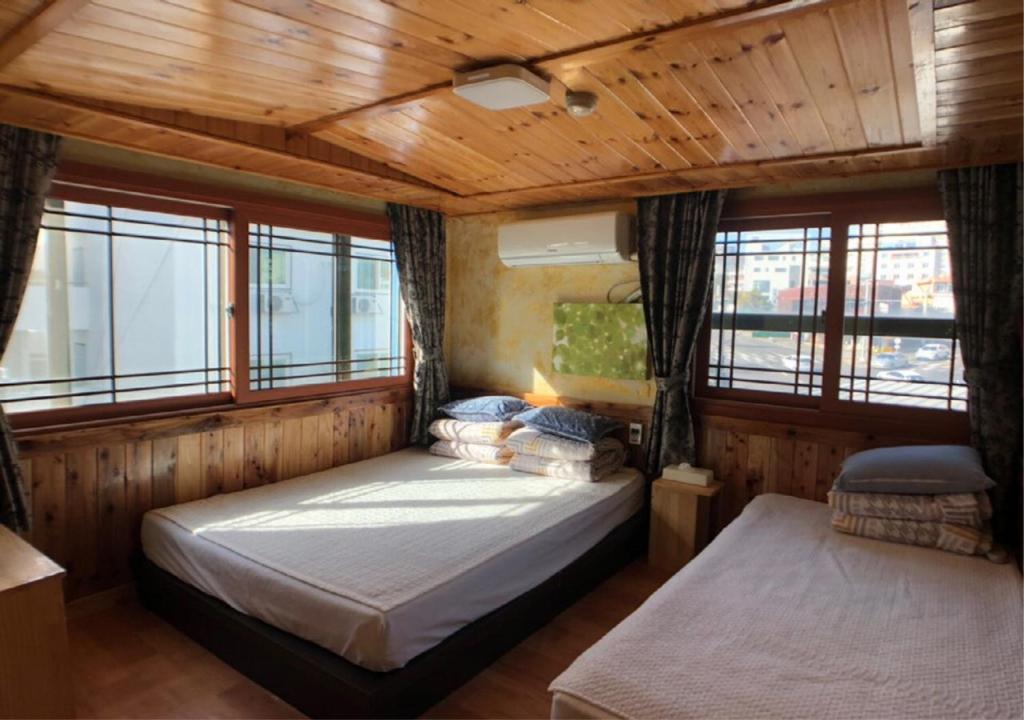
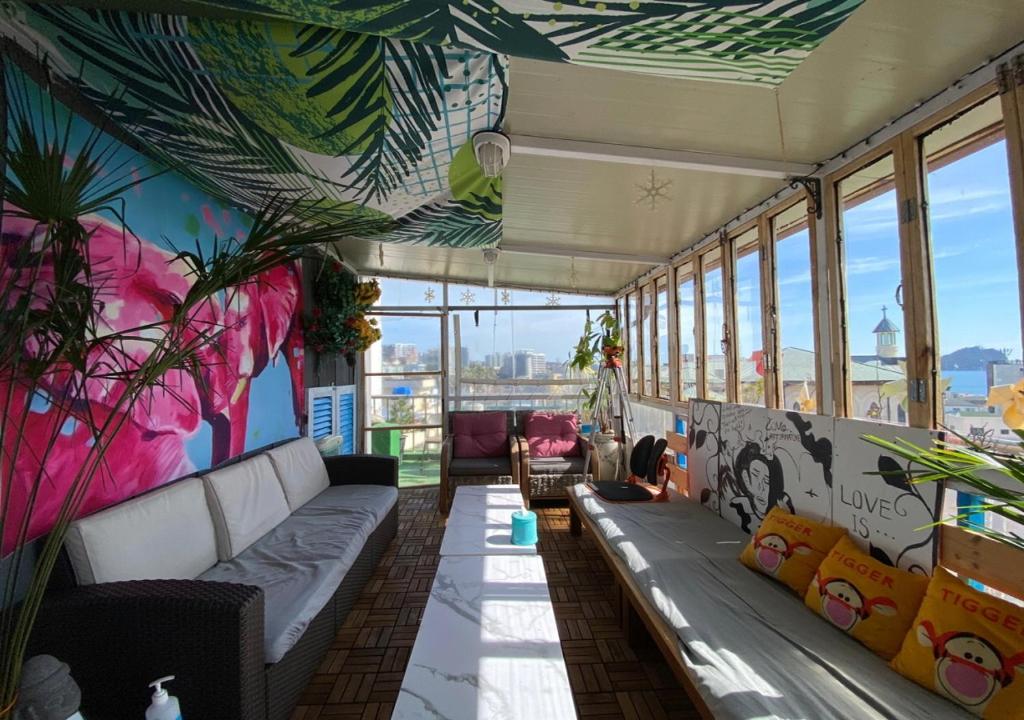
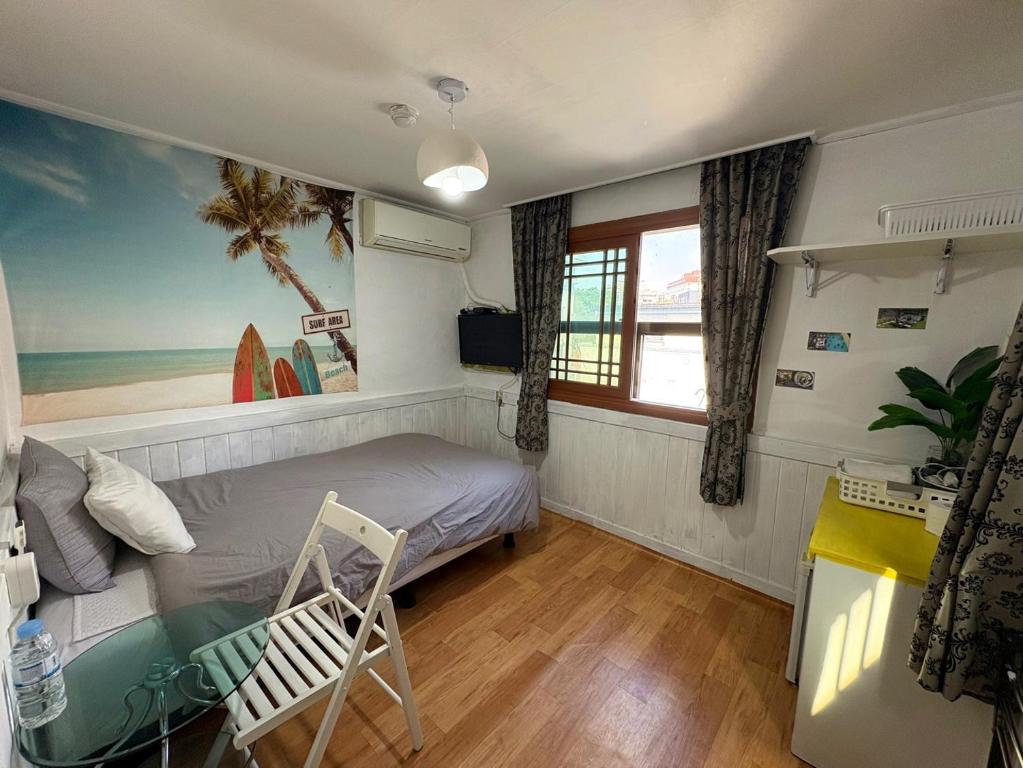
After a hearty breakfast (whether you take advantage of the hotel offer or hit the markets again), treat yourself to a morning natural shower from a waterfall cascading directly into the endless depths of the sea. Get to know the local culture in one of the traditional villages and travel the world, or maybe count the local favorite stone dwarves in one of the theme parks. Enjoy the fresh sea air with a walk along the coast with a view of the majestic crater from the lighthouse. Depending on the weather and your mood, the southern coast also offers several options for swimming and sunbathing.
NOTE:
Today, you might need to pick and choose from the suggested spots. The itinerary again shows interesting options, but for a relaxed visit, you will probably need to choose, for example, one of the two folk villages (Jeju folk village and Seongeup folk village) and then one of the two theme parks (Mini Land and Jeju stone park). It is up to you and also the weather (which may affect, for example, the length of your beach visit) how you organize your choices.
The last of the famous trio of waterfalls is the best integrated into its natural surroundings compared to the others (unlike the previous two with easy access via wooden walkways, you'll need to scramble over a few boulders to get close to this one. It's the only local waterfall that drops directly into the sea. This phenomenon is accompanied by a thunderous sound and, under good lighting conditions, completed by a rainbow contrasting with the blue sea and sky. Everything is complemented by the roar of the crashing water mass.
!!ATTENTION!! If you head closer to the waterfall, you'll be crossing rocks that can be damp and slippery. Also, be prepared for potential spray from the falling water.
opening hours: 9:00 AM - 5:20 PM

A lovely open-air museum that takes you through the traditional life of local people in the 19th century. You can take a peek into the typical houses styled by theme. Take a look at a common household, a school, or a workshop, for example.
opening hours: 9:30 AM - 6:00 PM

Leave the car parked in front of the open-air museum and take a pleasant walk along the coast until you reach Pyoseon Beach, which is a great spot to relax and, depending on the weather and your mood, even have a swim.
Another example of a traditional folk village on Jeju Island. Unlike the nearby Jeju Folk Village, this is a normally inhabited and living village (not an open-air museum) where local people maintain both tangible and intangible cultural heritage, such as folk songs and games, local food and crafts, as well as a specific dialect used among the natives of the island.
opening hours: 10:00 - 17:00
price: it is an inhabited village, so entry and walking through is free; however, you pay for participating in cultural performances or other extra experiences

This museum, dedicated to the natural beauty of this volcanic island—a UNESCO World Heritage site and the only natural heritage site in the country—will introduce you to the local flora, fauna, and, of course, the unique geology of the island formed by a volcano whose ancient eruptions largely shaped it into what it is today.
At the museum, you'll find features such as 4D cinemas, dioramas, images, and models of natural specimens, as well as the popular lava tunnel belonging to the nearby Geomun Oreum crater, with the trail to its summit beginning right at the museum.
opening hours: 9:00 - 18:00 (closed on the first Tuesday of every month)

Just like in some European cities (e.g., Brussels, The Hague, etc.), Korea also offers the opportunity to "travel the world" in a nutshell through miniatures of world-famous buildings and monuments. In a matter of minutes, you can visit the Eiffel Tower in Paris, move on to the Great Wall of China, and finish your journey across continents at the Statue of Liberty or any of the other hundred-plus replicas from approximately 50 countries around the world.
opening hours: 9:00 AM - 6:00 PM (last admission at 5:00 PM)
Another interesting theme park is nearby. It focuses on tradition and highlights the significant role of stone in the culture of Jeju Island. In the sprawling park, you can see all types of stone statues found on the island. Naturally, the island's symbol is not missing either – the local stone dwarves.
opening hours: 9:00 - 18:00 (last entry at 17:00, closed on Mondays)
TIP: If you enjoy hiking up local craters, there is another one nearby the park – Banong oreum

A popular destination for peaceful walks along paved paths, it offers many routes leading through a pleasant, shady cedar forest at the foot of the mighty Hallasan mountain. You can choose from varying difficulty levels – from mostly flat paths to the hike to the peak of Jeolmul Oreum.
opening hours: 7:00 AM - 6:00 PM
A pleasant stop, especially for children and animal lovers. In the park, you can watch deer and other wildlife from well-maintained paths or feed them in designated areas. You'll also find a small exhibition about the nearby Hallasan mountain and its ecosystem. You can follow the trail all the way to another crater – Geochin oreum.
opening hours: park and museum 9:00 - 17:00, crater trail until 18:00 (last entry 17:00)

When you take a closer look at the island's map, two small peninsulas jutting into the sea and connected to the mainland only by a narrow strip of land catch your eye. One of them hides the local gem (a massive crater), and from the other, there's a beautiful view of the first one :) So, take a walk on the latter (Seopjikoji Peninsula) along pleasant paths lining the coast with wild cliffs and a lighthouse, and get excited for tomorrow's visit to the crater on the opposite peninsula with a beautiful view of it.


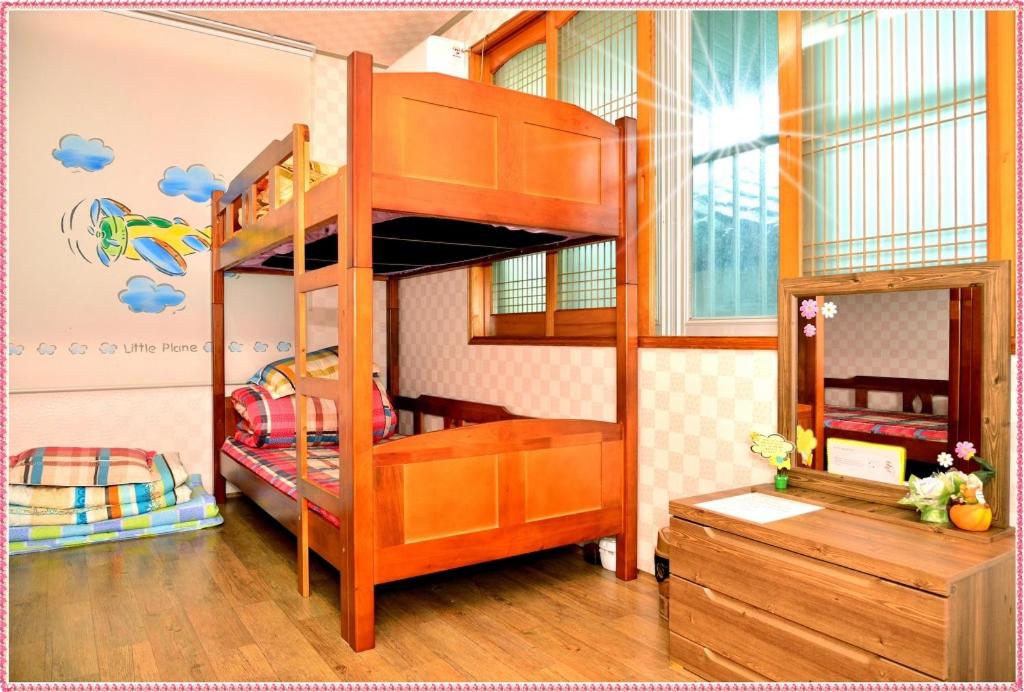

Start your day by watching the sun rise from the endless blue ocean. Watching the sunrise from the top of a majestic crater will be one of the most beautiful sights, at least on this island. Get to know the tradition of local legendary female divers and watch them in action while they fish. Peek into the island's interior with a visit to a lava tunnel featuring stunning geological formations shaped by its rich volcanic past. To end the day, treat yourself to a gastronomic experience at one of the popular night markets or street food spots.
This majestic crater is one of the island's main "stars" due to its location on the eastern tip and its perfect circular shape. It is sometimes called "Sunrise Peak" (given its location, there's probably no need to explain the origin of this name). I recommend getting up early and climbing to the top before sunrise. In addition to watching the sunrise and the endless sea, you can also see the nearby Udo Island and Mount Hallasan on the other side.
The path to the summit is uphill, of course, but it is a safe and comfortable route via wooden stairs with lush vegetation and beautiful butterflies around you. At the top, viewing platforms await you, along with a beautiful view of the grass-covered crater.
I recommend leaving your car at the hotel and walking the short distance to the entrance gate. You can park in the local parking lot, but it will likely be subject to a fee.
Opening hours: officially around 7:00 - 7:30 (depending on the season)
TIP: You can avoid the entrance fee by heading out before opening hours, as there is no physical barrier and the trail is freely accessible. This is especially necessary if you want to watch the sunrise from the top. In summer, you should set off around 4:30, and in winter around 5:30 (depending on the specific time of year and sunrise times).

Head back to the hotel to grab your car and keep going.
An interesting museum describing the tradition and culture of the local brave female divers nicknamed "Mothers of the Sea," who have been diving into the depths to catch seafood without oxygen masks since ancient times. This tradition is even inscribed on the UNESCO Intangible Cultural Heritage list, and the islanders are rightfully proud of it. You can learn about the way of life of these "mermaids," including their training, lifestyle, and diet. In the museum, you will find exhibits provided directly by these divers.
TIP: These divers are not a relic of the past, but are still active today. If you are lucky, you might even spot them in action in the surrounding seaside villages.
opening hours: 9:00 - 18:00 (closed on Mondays)

This forest is unique due to the presence of nearly 3,000 rare torreya trees, some up to 800 years old. Besides these majestic trees, you can also spot many plants, including orchids, while strolling along the many comfortable trails here.
opening hours: 9:00 AM - 6:00 PM (last entry at 5:00 PM)

Walking through the roughly one-kilometer accessible section (out of a total of 9 km, making it one of the longest in the world) of this lava tunnel is an amazing experience. During your stroll through the illuminated underground tunnel, formed by a lava eruption from a nearby volcano, you can observe interesting geological formations like stalactites or a lava column over 7 meters high (reportedly the tallest in the world). You might even spot a bat.
opening hours: 9:00 AM - 6:00 PM (last entry 5:10 PM, closed every first Wednesday of the month)

A pleasant sandy beach with great facilities, including many shops and restaurants along the main street. Besides local cuisine, you'll also find various fast-food spots with Western-style meals. Since the beach is located near the main town of Jeju and is quite popular, it gets pretty crowded during the summer season.
!!WARNING!! If you arrive during high tide, you won't be able to swim very well because it's quite a long walk to get to deep water :)

A pleasant Buddhist temple with an interesting five-story pagoda (the only stone pagoda on the island) standing at the foot of the small Wondangbong peak. Here you can soak up a bit of spiritual atmosphere after a long time.
opening hours: 9:00 - 18:00
After a busy day, check in at your leisure and leave your car in the hotel parking lot. A reward awaits you within a pleasant walking distance of the hotel...
...which is another one of the vibrant street markets where you can treat your taste buds to some delicious local cuisine. In the narrow alleys, you'll find plenty of stalls offering fresh products, prepared and served right in front of you. Fancy some fresh fish, a burger, noodles, or a bag of roasted crabs? No problem at all here.
Some of the local cooks and vendors have elevated the gastronomic experience into a lively music and dance show, dancing and singing to the rhythm of beloved K-pop while skillfully flipping fish in the pan. All of this under the watchful screens of the local youths' phones.
night market opening hours: varies by stall 18:00 - 00:00

Don't forget to drop off the car at the airport today.
bus: red express - 101, 111, 121, 122, 131, 132, 151, 181
frequency: approx. 5 min
travel time: 5 - 10 min
Besides the red express buses that go directly to the airport, many other local buses with stops also serve the airport.

Today marks the sporting highlight of your trip – the climb to the very summit of Hallasan volcano. Make sure to get a good night's sleep and have a hearty breakfast, as you'll need the energy. Put your endurance and willpower to the test by climbing to an altitude of almost two thousand meters. Along the way, enjoy the beautiful nature and rock formations created by volcanic stones of all shapes. After a demanding trek, revel in the euphoria of conquering this challenge and reward yourself with an incredible view of the entire island in its full glory and the endless surrounding sea. The main highlight, however, will be the volcanic summit crater with its small lake, from whose lava vents a large part of the island was formed long ago. A beautiful finishing touch to an amazing stay on this stunning island.
bus: 281 (regular blue), 181 (red express)
direction: Seogwipo
frequency: 10 - 12 min
travel time: approx. 30 min
stop: Seongpanak trail (right at the parking lot where the trail starts)
timetable here: https://bus.jeju.go.kr/schedule/view/281
bus route here: https://bus.jeju.go.kr/search/line?searchText=281
It's about 9.5 km to the summit via the Seongpanak trail, and you'll climb over 1100 meters. The ascent time is just an estimate.
The last day on Jeju Island in this itinerary is reserved for hiking Mount Hallasan. However, this may not be an attractive or achievable option for every member of the group.
Fortunately, Jeju Island hides plenty of other interesting places to visit, and everything is very close. So, for those not interested in the hike, you can spend the day at the beach, visiting markets, taking walks along the coast, or checking out one of the many local museums and theme parks. An alternative is to head to Mount Hallasan but choose one of the less demanding trails that don't go to the summit.
Mount Hallasan:
With an altitude of 1,950 meters, it is the highest mountain in the country and the main landmark of this volcanic island, having shaped its landscape. It is an extinct volcano composed primarily of basalt, with a crater filled by a lake (Baekrokdam) at its peak, which is likely your target destination. Due to its unique geology, flora, and fauna, the area has been declared a national park and added to the UNESCO World Natural Heritage list.
Below I provide basic information useful for organizing and completing the climb to the summit:
Entrance Reservation:
!!ATTENTION!! To use one of the two trails leading to the summit (see trail descriptions below), it is necessary to make a prior reservation here (free of charge). Trail capacity is limited, so book in advance, especially in summer. No reservation is needed for the other trails.
What to bring:
plenty of water and food (you won't find any along the way), sturdy outdoor footwear, clothing according to the weather (definitely pack a few extra layers in your backpack, as after climbing more than 1,000 vertical meters, the weather at the summit can be completely different than at the start), headwear, sunscreen, sunglasses, and possibly trekking poles.
Climbing time:
!!ATTENTION!! Start the climb as early in the morning as possible. Besides generally better weather in the mountains during the morning hours, it is also a race against time. In general, the mountain is only open during daylight hours, so the ascent and descent must be completed before sunset. Furthermore, an important piece of information that is not mentioned often is that you must reach the last shelter below the summit by 1:00 PM (in summer) to be allowed to proceed further. At the same time, you must begin your descent no later than 2:30 PM, as the area closes afterwards and you won't get to see the crater (which is quite frustrating after climbing over 1,000 vertical meters).
Trail opening hours and important times:
these vary by season depending on daylight, but in general, they are roughly:
trail opening: 5:00 AM – 6:00 AM
reaching the summit or the last shelter: 1:00 PM – 1:30 PM
trail closing: after sunset
Fees: none, only for parking (approx. 1000 KRW) if you have a car.
Trails:
There are a total of 5 trails in the national park, each starting at a different point. The start of each trail is accessible by car or bus. Each route leads from a different side of the mountain and starts at a different altitude, which means they vary in terms of difficulty, as well as the views and experiences you will have along the way.
Overview of trails: basic overview including a map here
!!ATTENTION!! The only trails that reach the summit with the crater are Gwaneumsa (N) and Seongpanak (E).
The trails are well-visible and marked, including distance information. Do not expect a walk in the park; expect a demanding, rocky, and in some places very steep path. The itinerary expects an attempt to reach the crater summit, therefore it only considers these two routes. I recommend choosing the gentler, longer Seongpanak route for the way up.
The choice of route back then depends heavily on whether you have a car. Your options:
1) return by the same Seongpanak route
2) choose the steeper and shorter Gwaneumsa route (however, you will end up at a different destination than you started at)
The choice of route back will be heavily influenced by whether you have a car. If so, it will be most practical to return to your car via the same route. If you still want to experience a different path with different views and experiences, you must return to your car by bus after the descent (there is a stop at the end of the trail).
If you don't have a car and arrived here by bus, you have better options and can choose between both trails. In any case, you will have to use a bus to return to your hotel. It is only a question of which one.
What you will see:
besides nice panoramas, lava formations, rock structures, and nature along the way, you will of course see a magnificent view of the volcano crater from its summit, but also perhaps the parasitic crater with the lake Saraoreum (a short detour to the left on the way up the Seongpanak trail).
Concluding note:
Even if it may seem that way, the trek to the summit of Hallasan is not extremely demanding. It depends, of course, on your experience and fitness, but if you have chosen this program, I assume you are not beginners and have experience with climbing similar peaks. If you don't underestimate the preparation and equipment and, above all, set off early enough, the climb should not be a problem for you.
Follow the National Park website, where, in addition to booking trail entry, you will also find current information about any trail closures or changes to entry times, etc.

The Gwaneumsa trail down is about 8.5 km, with a descent of over 1360 meters. The descent time is just an estimate.
bus 475: Gwaneumsa trail stop → Sancheondan stop, transfer to buses 281 and 181
direction: Jeju national university
frequency - 60 - 90 min
travel time - 10 min
stop: Gwaneumsa trail (right at the parking lot where the trail ends)
schedule here: https://bus.jeju.go.kr/schedule/view/475
bus route here: https://bus.jeju.go.kr/search/line?searchText=475
bus 281: Sancheondan stop → Jeju bus terminal stop
direction: Jeju bus terminal
frequency: 10 - 12 min
travel time: approx. 20 min
stop: Sancheondan
schedule here: https://bus.jeju.go.kr/schedule/view/281
bus route here: https://bus.jeju.go.kr/search/line?searchText=281
Say goodbye to the island and head off for an adventure offered by the country's second-largest city - the magnificent Busan. The city offers a great mix of comfortable stays in a modern and organized city with many unique attractions, all against a backdrop of skyscrapers scattered along a rugged coastline with bays and peninsulas hemmed in by the sea on one side and mountains on the other. You'll breathe in the fresh coastal air today while spending time on one of the nicest city beaches in the world. Later, you'll treat yourself to a stylish exploration of the coast aboard a seaside train with ocean views. You'll stay by the sea when visiting a stunning temple uniquely located right on the coastline. And since Busan also has its charm at night, you'll enjoy the glowing panorama of the city and the bay from the local tower, and then soak up the atmosphere of the city in its pulsating heart.
bus: red express - 101, 111, 121, 122, 131, 132, 151, 181
frequency: approx. 5 min
travel time: 5 - 10 min
Apart from the red express buses, which go directly to the airport, many other local buses with stops also serve the airport.

Your flights are handled by Worldee. You'll receive your tickets and all the details via email.
Airport light rail line (Busan Gimhae purple line):
stop - Gimhae International Airport is located between the domestic and international terminals
frequency: approx. 10 min
first/last trains from the airport to Sasang: 5:00, 23:44 (connecting to the green subway line)
travel time to the Sasang terminus: 6 min
price: 1,600 KRW (to the Sasang terminus with a transport card)
ticket - can be bought as a single-use ticket at the machine (cash) or paid for directly at the platform using a transport card
website for the airport line here - https://www.bglrt.com/english.web
NOTE: You can use the T-money card known from Seoul or the local Cashbee (available for purchase and top-up at machines at the airport)
Journey from the airport to accommodation:
Busan Gimhae light rail (purple line) - direction Sasang (terminal station, exit here), transfer to line 2 (green)
Subway 2 (green line) - Sasang station, direction Jangsan Station → Seomyeon station
frequency - approx. 10 min
travel time - approx. 21 min (pure travel time excluding transfers)
NOTE: For general information about how the subway and public transport work in Busan, see the Notes section
First, drop off your luggage at the hotel (it's close from this stop). Check-in is usually from 3 PM. Depending on your arrival time and hotel availability, you can either check in straight away or leave your bags in storage and head out to explore the city.
Metro line 2 (green line) - direction Jangsan Station
frequency - approx. 5 mins
travel time - approx. 30 mins
Walk down Gunam-ro Boulevard, which is packed with restaurants, street food stalls, department stores, cafes, and bars. It's bustling day and night.
The beautiful city beach is one of the most famous in the country thanks to its cleanliness, fine sand, and the surrounding amenities, including a promenade and many restaurants, bars, and nightlife spots nearby. The view of the blue sea on one side and glass skyscrapers on the other is very striking, reminiscent of cities like Miami.
TIP: You can visit the local sea aquarium - more here

This architecturally interesting conference and congress building, along with the lighthouse, is the main draw for visiting the small peninsula located at the western edge of the beach. You can reach both spots with a short walk through a beautifully landscaped park along the coastal cliffs.
opening hours: 09:00 – 18:00 (last entry at 17:00, closed every first Monday of the month)

An interesting (though somewhat pricey) attraction is this coastal railway route where you can ride in miniature colorful cars (Sky capsule). Along the way, there are stops leading to observation decks, including the popular skywalk, a walkway suspended over the sea. You can also walk through the park along the coast via the Busan Green Railway trail.
You can find more detailed information on the park's website
Especially during the peak season, I recommend making a reservation here
opening hours:
July + August: 09:00 - 20:30
May, June, September: 09:00 - 19:30
March, April, October: 09:00 - 18:30
the walking trail is open 24/7 and is free
sky capsule price: varies depending on the number of passengers and any combination with the train. Prices are listed here

One of the observation decks along the train route or a capsule where you'll find yourself right above the sea.
Another one of the viewing platforms on the route.
Coastal train or sky capsule (with a necessary transfer at Cheongsapo station).
!!ATTENTION!! The Sky capsule will only take you as far as Cheongsapo station. The itinerary continues to the temple, which requires traveling all the way to Songjeong station. So, either buy a combined ticket for the coastal train (which goes all the way to Songjeong) or walk the rest of the way along the walking path. There is also the option to use regular public transport (bus, subway).
A beautiful Buddhist temple unique for its location right on the coast (temples are usually built in the hills), with the splashing sea surrounding it only enhancing the peaceful atmosphere of the place. The entrance is lined with images of animals from the Chinese horoscope, and there is also a golden statue of the laughing Buddha.
opening hours: roughly from sunrise to sunset (depending on the season, approx. 4:30 AM - 7:00 PM)

Donghae metro (blue line) - direction Bujeon Station (final stop, get off here), transfer to line 1 (orange)
metro 1 (orange line) - direction Dadaepo Beach
frequency - approx. 5 min
travel time - approx. 46 min (actual ride excluding transfers)
Take exit no. 1 and then it's just a short walk to the park. The journey here is an interesting experience in itself. Even though the park is located on a small hill, a free escalator will take you right to the top.
An interesting park with landscaped greenery, an artificial waterfall, a temple, a bell, statues, and other decorative features, which you will especially appreciate in the evening hours thanks to its beautiful lighting. The main landmark, not just of the park but of the entire city, is the Busan Tower. You get a decent view of the harbor and the city center from the park itself, though the best view is, of course, from the tower. Whether you decide to go up or just settle for the view from the park, try to plan your visit for when it's transitioning from day to night and watch the city gradually wrap itself in darkness as thousands of lights flicker on as far as the eye can see.

Also called the Diamond Bridge. The observation tower strikingly resembles a lighthouse, symbolizing the city's connection to the sea. Unlike more famous towers around the world, this is purely an observation deck—not a TV transmitter—and you won't find any restaurants, offices, or shopping malls here. Perhaps the most interesting view from the tower is towards the harbor and the Harbor Bridge, which is beautifully illuminated at night.
opening hours: 10:00 - 22:00 (last entry 21:30)

Do you remember the Myeongdong district in Seoul? Busan also has areas that are bustling from morning till night, where you can find countless shops, restaurants, bars, and more. Simply put, neighborhoods that never sleep. One of them is Gwangbok-dong Cultural & Fashion Street...

...another similar district is Nampo-dong, which again offers plenty of options for shopping or gastronomic experiences, whether in one of the better restaurants or at traditional street food stalls.
The northern part offers covered markets (e.g., Gukje Market). This is where you have a good chance of buying anything you can think of at great prices. That's also why locals come here. So you'll get to experience a traditional atmosphere in an otherwise modern big city.
The southern part around BIFF Square is more modern and is home to more upscale shops with expensive brands.
metro 1 (orange line) - direction Nopo Station
service frequency - approx. 5 min
travel time - approx. 12 min


Visit the monks in a local monastery surrounded by wooded hills and enjoy a spiritual atmosphere in harmony with nature. Taste some fresh fish at the local bustling market. Follow in the footsteps of the Little Prince in a traditional neighborhood with colorful houses "stuck" to the hillsides and get to know the traditions of the locals. Explore the coastline and take a walk above the sea level to the edge of the cliff. Watch the magical spectacle of the sunset dropping behind the horizon of the open sea.
metro 1 (orange line) - direction Nopo Station
frequency of connections - approx. 5 min
travel time - approx. 26 min
Near the metro station, walk about 150 meters up the hill towards the roundabout to reach the bus stop, where you can catch a bus that will take you right to the temple entrance.
bus no. 90:
frequency - approx. 10 - 15 min
travel time - approx. 10 min
Unlike yesterday's unusual location of the temple right by the sea, today's is much more traditional in that regard, nestled in the forested hills on the northern outskirts of the city. Beyond the beautiful traditional architecture of the temple buildings, you can take a peek into most of the interiors, with the exception of the rooms still inhabited by monks. There is also an option to stay overnight. The temple is especially charming due to its peaceful atmosphere in harmony with the surrounding nature.
opening hours: 8:00 – 17:30

Use the same bus to get back to the metro station. However, watch out for the stop location. Since the road you arrived on is one-way, you need to continue in the direction of travel. For the return trip, use the stop near the roundabout by the large parking lot with facilities.
bus no. 90:
frequency - approx. 10 - 15 min
travel time - approx. 15 min
metro line 1 (orange line) - direction Dadaepo Beach
frequency - approx. 5 min
travel time - approx. 42 min
Busan is a seaside city, so it would be a shame not to taste some of the local catch. The perfect place for this is the country's largest fish market, located right on the coast. Along the promenade, you'll find huge multi-story halls with stalls, freezers, and tanks offering an incredible variety of the strangest fish and other sea creatures, whether fresh or portioned. Choose from a vast menu of fish and enjoy your meal one floor up in the restaurant area, where they'll prepare it for you.
In addition to the gastronomic experience of tasting the food, you'll also get to soak up the true atmosphere of a busy seaside market. On the other hand, the way the sea creatures are handled and stored won't please die-hard animal rights activists. The building itself, shaped like a fish, is also eye-catching at night when it lights up in various colors.
opening hours: 5:00 AM – approx. 10:00 PM (depends on individual stalls), closed every 1st and 3rd Tuesday of the month

bus: Saha 1-1, Seogu 2, 2-2
stop - near Jagalchi metro station on Bosu-daro street (turn right at the intersection after exiting the metro), location here - https://mapy.com/cs/turisticka?source=osm&id=147977643&x=129.0231210&y=35.0992205&z=17
frequency - approx. 10 min
travel time - approx. 15 - 20 min
Much like in Seoul, you'll find an interesting traditional neighborhood here consisting of old colorful houses nestled into steep hills, with an intricate network of steep alleys and staircases leading literally right to the front doors of homes still occupied by locals today (so please respect their privacy). This former slum has transformed into a popular tourist attraction, where visitors wander through the narrow streets past colorful houses, climb steep staircases, and visit local shops and art studios. The main street of this neighborhood is Gamnae 2-ro.
TIP: Fans of the book The Little Prince will love it here, thanks to several statues and paintings inspired by the novel, including a statue of the prince with the fox right at the very top.

Head back to Jagalchi by walking through this picturesque neighborhood—it's all downhill. Alternatively, you can take the same bus you arrived on to get back. Near Jagalchi, you'll reach the bus stop for the route to Songdo Beach.
bus: 30, 71, 96
boarding stop - Chungmu-dong Intersection, location here https://mapy.com/cs/turisticka?source=osm&id=1057023529&x=129.0212643&y=35.0943810&z=17
frequency - approx. 10 min
travel time - approx. 10 min
alighting stop - location here https://mapy.com/cs/turisticka?source=osm&id=1203146035&x=129.0088350&y=35.0778606&z=15
Compared to Haeundae yesterday, this urban beach is much quieter, even though it's relatively close to the city center. Besides swimming in the bay's calm waters, the beach and its surroundings also offer coastal views, which you can enjoy from the local attractions (a suspension bridge and a cable car).

The well-known saying that sometimes the journey itself is the destination definitely applies to the transport between Songdo Beach and Songdo Sky Park, located on the opposite tip of the Amnam Peninsula. The cable car ride offers stunning scenery from a cabin swaying above the sea, from which you can observe the beach and the surrounding coastline with its small islands.
TIP: Fans of The Little Prince will be excited once again at the boarding station, as he has his own themed park on the third floor of the building, along with the Sky Harbor observation deck.
opening hours:
July + August: 09:00-22:00
March - June, September - November: 09:00 - 21:00
TIP: I recommend booking the cable car ride in advance here, you can find the cable car website here

This suspension bridge, which leads directly over the sea and connects the mainland to a small island, offers an interesting way to enjoy views of the ocean and the rugged coastline of the bay. Some sections of the bridge have glass floors, providing an adrenaline-filled experience of walking "on the surface" of the sea.
opening hours: 06:00-23:00 (may vary in case of bad weather)

You will take the Busan Air Cruise cable car.
The cable car's upper station also serves as the gateway to Amnam Park on the peninsula of the same name. It offers endless opportunities for trips along trails leading through a well-maintained forest with viewpoints overlooking the rugged coastline.

You can walk the entire trail along the coast and stop at many viewpoints
Another suspension bridge connecting the mainland to a small island, where you'll find yourself at the very edge of the land surrounded only by the sea. From here, in addition to the vast ocean, you can also watch the cable cars swaying over the bay.
opening hours: 9:00-18:00 (last entry 17:30), closed every 1st and 3rd Monday of the month
You will take the Busan Air Cruise cable car.
bus: 30, 71, 96
frequency - approx. 10 min
travel time - approx. 10 min
metro 1 (orange line) - direction Dadaepo Beach
frequency - approx. 5 min
travel time - approx. 34 min
I definitely recommend ending your day at this beach. It’s not so much about swimming (though that’s totally possible here, of course) as it is about catching a beautiful sunset over the sea. The beach faces west and is nestled in a natural setting right where the sprawling urban area ends. So, nothing will get in the way of your view. Plus, it’s located right by a metro station.

metro 1 (orange line) - direction Nopo Station
frequency - approx. 5 min
travel time - approx. 47 min
Hop on a bullet train and speed through the countryside to the historic town of Gyeongju - the ancient capital of the Silla dynasty. There, you'll enjoy numerous historic sites, masterpieces of Buddhist art, relics, palaces, royal tombs, and temples. Explore a temple nestled in the surrounding mountains and step into a mysterious cave to see the local Buddha. Take a walk through a park surrounded by the glowing tombs of local rulers. Your romantic soul will rejoice at the sight of a magnificent palace with its lights reflecting in the surface of the nearby pond. In short, you will be enchanted by the amazing atmosphere of Gyeongju and absorbed by the spirit of the local Silla dynasty rulers.
metro 1 (orange line) - towards Dadaepo Beach
frequency - approx. 5 min
travel time - approx. 9 min
KTX high-speed train:
frequency - every 30 - 60 minutes depending on the time of day
travel time - 33 minutes
tickets - online on the website or at a station kiosk; I recommend purchasing your specific connection in advance online at https://www.korail.com/global/eng/main
Recommended connection:
KTX 016: 08:39 Busan → 09:12 Gyeongju
For more detailed information on Korean trains, see Land transport in the Notes section.
First, get from the rather distant train station to the city center and drop off your luggage at the hotel. Use one of the city buses, which you'll find stopping right in front of the station. Choose the right stop to get off based on your hotel's location. For planning, use the Naver Maps or Kakao Maps apps.
bus to the center: 50, 60, 61, 70, 300, 332, 700, 710, 711
frequency - approx. 5 min
travel time to the center - approx. 25 min
Several bus lines go to the temple; they pass through the bus station and then drive through the city center. Choose a suitable stop based on your hotel's location. Use Kakao maps or Naver maps.
buses to the temple: 10, 11, 700, 711
frequency - approx. 10 - 20 mins
travel time to the temple - approx. 35 mins
This beautiful Buddhist temple, a UNESCO World Heritage site (along with the nearby Seokguram Grotto), represents the culture of the Silla Kingdom. It was built at the foot of the lush green mountains in Gyeongju National Park, and its harmony with nature contributes to its spiritual atmosphere. In addition to several temple buildings with halls containing Buddha statues, you can also admire stone pagodas, arched bridges over ponds, and, of course, colorful lanterns and other decorative elements typical of local temples.
Opening hours: 09:00 - 18:00 (until 17:30 in October)

bus 12:
frequency: 1 hour (bus departure times are listed on signs at the stops, or you can use the Kakao app)
travel time: 20 min
boarding stop: near the parking lot at the temple exit, location here https://mapy.com/cs/turisticka?source=osm&id=1254400813&x=129.3315506&y=35.7877670&z=17
alighting stop - parking lot at the beginning of the trail to the cave (approx. 12 min walk). Here, you can ring the bell inside a beautiful gazebo for a small fee of 1000 KRW.
Bus timetable here http://www.newsmilebus.com/sub01/bus.asp?idx=8
NOTE: You can also reach the cave on foot via a forest trail that leads first to the parking lot (where the bus also stops) and then to the cave. Since the entire path is uphill, the itinerary considers it better for the return journey.
A sacred site combining a temple integrated into an artificially carved cave, housing a 3.5-meter-tall Buddha statue surrounded by other deity sculptures. A short, easy trail through the wooded hills of Gyeongju National Park leads to the cave. Short stairs lead to the very top to the cave, starting from a small square with the temple, a monument, and beautiful colorful lantern decorations.
!!ATTENTION!! Photography is prohibited inside the cave
opening hours: 09:00 - 18:00 (last entry 17:30)

For the way back, I recommend considering the hiking trail leading from the parking lot to Bulguksa Temple. You'll be going downhill the whole time and will get to enjoy the natural beauty of the national park. Alternatively, you can just take bus no. 12 again.
Route here https://mapy.com/cs/turisticka?planovani-trasy&rc=ymwQQwIgXkQSepvdp5eMv&rs=osm&rs=coor&rs=coor&ri=1032725626&ri=&ri=&mrp=%7B%22c%22%3A132%2C%22dt%22%3A%22%22%2C%22d%22%3Atrue%7D&xc=%5B%5D&rut=1&x=129.3398564&y=35.7901415&z=15
bus to the center: 10, 11, 700, 711
frequency - approx. 10 - 20 min
travel time to the center (e.g. to the tombs) - approx. 30 min
buses 10 and 11: a good starting point is e.g. the Wolseong-dong Community Center stop, or the next one
buses 700 and 711 (less frequent): stop directly in front of the entrance to the tombs (Hwangnidan-gil street)
Gyeongju is sometimes called an "open-air museum." You'll understand why after the following walk through Daereungwon Park, known for the largest concentration of tombs belonging to Silla dynasty rulers, which are typical for the city and can be found in other places as well. The tombs have the unusual appearance of grassy mounds rising from the flat terrain, beautifully illuminated at night. Walking along the paths leading around them is a great experience.
You can also visit the interior of the most famous tomb, Cheonmachong, which houses many historical and artistic artifacts (e.g., a gold crown and the famous painting "Heavenly Horse").
opening hours: 9:00 AM - 10:00 PM (last admission 9:30 PM)

This national monument, built during the Silla Dynasty, is said to be the oldest astronomical observatory in Asia. At night, it glows beautifully in the surroundings. The observatory is located in a beautifully landscaped park surrounded by meadows with blooming plants (depending on the season), and the entire area is a popular spot for photography (even while wearing local traditional hanbok clothing).
The extensive park with its many paths also features other hilly royal tombs, statues and mounds, a temple, and even the popular Woljeonggyo Bridge arching over the Namcheon River, which shines beautifully at night. The traditional Gyochon village, located in the southwestern corner of the park near the aforementioned bridge, is also worth a visit.
opening hours: 9:00 AM - 10:00 PM

A stunning complex consisting of a beautiful palace building and several pavilions and gazebos scattered along the shore of a central pond. The complex was built, as you might expect, by the Silla dynasty, who used it as one of their residences and a place for relaxation. They really had good taste :) The glowing palace building reflecting in the dark surface of the pond, together with the surrounding trees, offers a truly impressive sight, and I definitely recommend visiting the place in the evening hours.
opening hours: 9:00 - 22:00 (last entry 21:30)

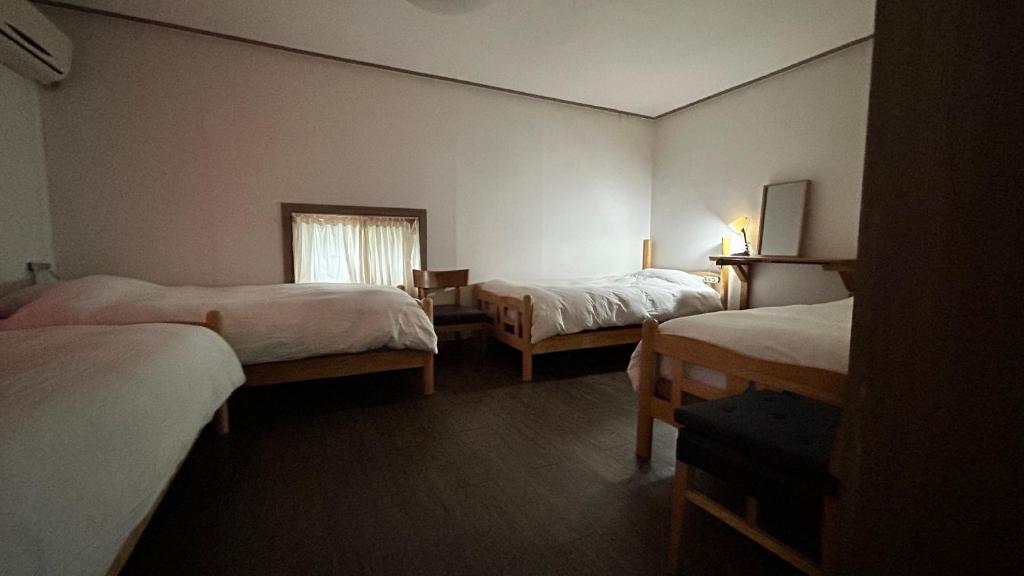
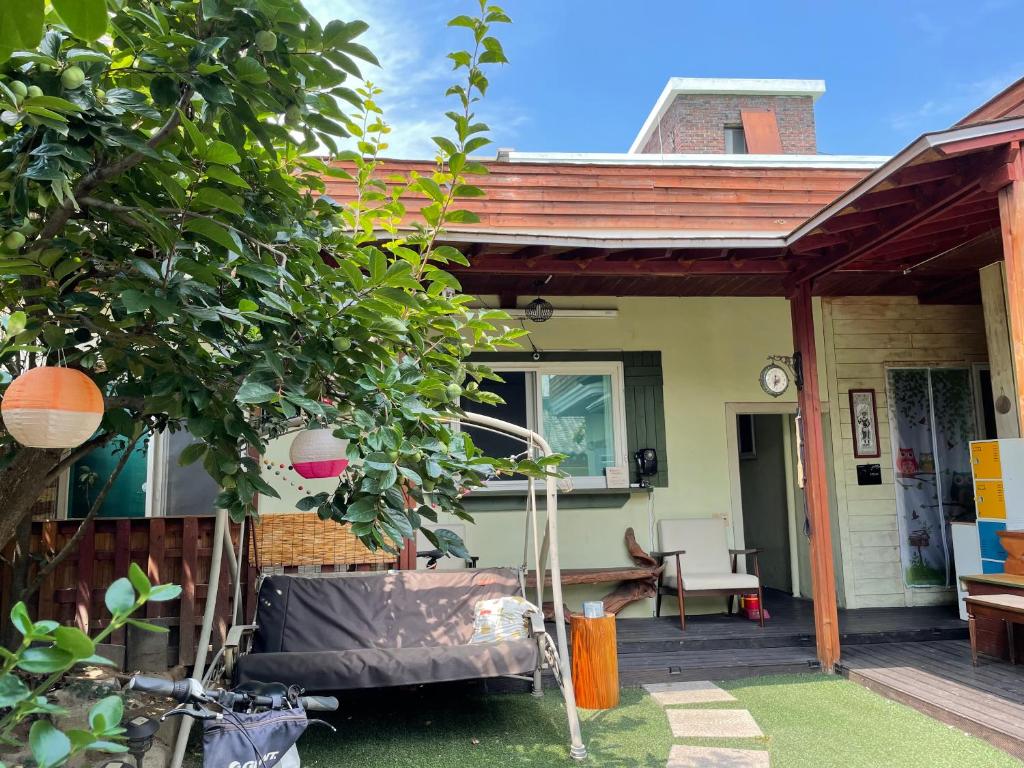
On your way back to Seoul, it's worth making a half-day stop in the town of Andong, known for its unique culture and traditions. Visit a traditional folk village inhabited for centuries by the local people and get to know the local mask tradition. With a bit of luck, you'll have the chance to catch some traditional performances. Take a walk across the beautiful moon bridge over the dam, on the opposite bank of which another example of the local rich folk traditions awaits you. In the evening, you will arrive in a "different world" - the pulsing Seoul, which you already know well :)
Choose a suitable stop based on your hotel's location. For planning, use the Naver Maps or Kakao Maps apps.
bus to the station: 50, 60, 61, 70, 300, 332, 700, 710, 711
frequency - approx. 5 min
travel time to the station - approx. 25 min
KTX train:
frequency - 5x daily
travel time - 1 hour - 1 hour 30 min
tickets - online on the website or at a station kiosk; I recommend purchasing specific connections in advance online at https://www.korail.com/global/eng/main
Recommended connection:
KTX-eum 706: 07:59 Gyeongju → 09:00 Andong
For more detailed information about Korean trains, see Land Transport in the Notes section.
After arrival, you'll need to drop off your extra luggage. Since the city is just a stopover on the way to Seoul and you don't have accommodation here, the best option is to use the luggage storage. It's located at the bus terminal across from the train station and is coin-operated. Depending on the size of your luggage, the price ranges between 2,000 and 4,000 KRW.
bus 210, 246, 46:
frequency - approx. 1 hour
travel time - approx. 1 hour
ticket - cash to the driver or T-money transport card
The bus will take you to the main parking lot, from where you can walk to the village or use the free shuttle bus.
The village in the bend of the Nakdonggang River is one of the most popular examples of traditional folk villages in the country. The place has also been visited by many world figures, led by Queen Elizabeth of England and American President Bush. In the village, which has been inhabited for hundreds of years by indigenous descendants of the Pungsan Ryu clan, you can get to know local folklore and culture, led by the national pride – Hahoe masks. There is also an adjacent museum dedicated to them.
opening hours: 09:00-17:30 (October 16:30)
TIP: If you arrive between late September and early October, you can witness the globally popular International Maskdance Festival, which is held here.

An interesting museum exhibiting not only local traditional Hahoe masks, but also other traditional masks from various countries and tribes around the world.
opening hours: 09:00-17:30 (October 16:30)
bus 210, 246, 46:
frequency - approx. 1 hour
travel time - approx. 1 hour
ticket - cash to the driver or T-money transport card
At the bus terminal, grab a taxi or a bus to the city center and then head over to the bridge.
To get from the train station to the bridge, I recommend taking a taxi. You can use the Kakao T app (a local equivalent of Uber) to order one. The advantage is that you'll know the price in advance and can pay by card. Alternatively, you can take one of the many regular taxis that will surely be hanging around the station.
If you want to save money, you can, of course, take the bus. The author doesn't have personal experience with this, but you'll likely need to get from the station to the bus terminal in the city center first and then transfer to another bus. Use the Kakao Maps app or just ask the locals. They should understand terms like Moonlight Bridge, Andong Bridge, or Woryeonggyo.
Buses that should go to the bridge: 1, 2, 80, 81, 11, 182, 188
The longest wooden bridge in the country is especially charming after dark, when its beautiful lighting, in harmony with the moonlight reflecting on the surface of the dam on the Nakdonggang River and surrounded by mountains, creates a magnificent spectacle. This is exactly why it has earned the name Moonlight bridge. The bridge is surrounded by an interesting environment that enhances the beauty and genius loci of the place. In addition to the bridge itself and various pavilions, fountains, and statues, you can find places like these in the surrounding area:
NOTE: Due to the train departure times to Seoul, you unfortunately won't be able to experience the night view of the bridge, but the place has its charm during the day as well.
Andong craftwork exhibition hall displaying traditional handicrafts
Andong folk museum (09:00-17:30, free admission)
Andong folk village (NONSTOP, free admission)
A bit further away, you can find Confucian Land - an exhibition focusing on traditional Confucian culture (10:00 - 17:00, closed on Mondays, admission 9,000 KRW).

Again, I recommend not complicating your life and just taking a taxi back to the station.
You're back at the bus terminal. All that's left is to pick up your luggage and head to the train.
KTX train:
frequency - 5x daily
travel time - approx. 2 hrs 30 min
tickets - online via the website or at a station kiosk; I recommend purchasing your specific connection in advance online at https://www.korail.com/global/eng/main
Recommended connection:
KTX-eum 714: 16:43 Andong → 19:06 Seoul
For more detailed information about Korean trains, see Land transport in the Notes section.
metro 1 (blue line) - direction Yeoncheon Station, City Hall stop
metro 2 (green circular line) - direction "outer circle line" (counter-clockwise), Sinchon stop
frequency of service - 3-5 min
travel time - 18 min
Today is reserved for your flight home, and there is nothing left to do but say goodbye to this amazing country. Depending on your flight time and your preferences, you can use any remaining time to revisit one of the vibrant districts (e.g., Myeongdong) or markets (e.g., Namdaemun or Gwangjang) and spend your last local cash on a treat for the flight or a souvenir for yourself or your loved ones.
Another option could be a visit to the interesting Insadong district, which is considered the cradle of local culture and traditions, offering many tea houses, renowned restaurants, art shops, and galleries.
If you have plenty of time and love nature, consider visiting Bukhansan National Park, whose hilly terrain, full of hiking trails and viewpoints, begins at the very northern edge of Seoul.
There is always something to do in Seoul, and however you decide to spend your last hours in Korea, you are sure to enjoy the day.
metro line 2 (green circular line) - towards "outer circle line" (counter-clockwise), stop Hongik University
AREX train, all stop train - towards Incheon airport terminal 2, exit according to your departure terminal
frequency - 5-10 min
travel time - approx. 72 min (to terminal 2)
During the long check-in procedures and the subsequent demanding flight, you have plenty of time for a final recap of your Korean adventure.
On your journey, you've had the chance to experience the different sides of this diverse country, where tradition and rich culture blend with technological prowess and modernity, all set against a backdrop of beautiful nature. From the paradise island of Jeju with its sunny beaches, tea plantations, and volcanic craters, through magnificent palaces, mysterious temples, royal tombs, and folk villages in historic cities, to the enchanting Seoul with its pulsing streets that never sleep under the glow of skyscrapers. Korea offers a truly varied range of experiences, only enhanced by interacting with the unique locals at one of the renowned markets.
Although this country is not a frequent subject of travel guide articles or travel agency offers, perhaps that is exactly what makes it so interesting. I believe that after exploring the country following this guide, you are, like its author, captivated by its charm and might return one day. After all, there are still plenty of interesting places left to visit.
So, Annyeonghi gaseyo, South Korea!!
You’re heading to one of the world's most advanced economies, a tech giant and a land of vibrant metropolises full of skyscrapers, home to brands like Samsung and Hyundai. Here, modern life naturally blends with traditions that people still preserve today, especially in the countryside.
Add in the beautiful Jeju Island, nicknamed the "Korean Hawaii," Buddhist temples with a spiritual atmosphere hidden in the shadow of skyscrapers, lively markets, and street food stalls full of friendly people—and you have a destination that still escapes the tourist crowds. Follow this itinerary to discover a country that is small in size but enormous in its charm.
Your arrival day serves as a first taste of the country (figuratively and literally). Immediately upon landing, you'll see the local renowned precision and technological perfection for yourself at the amazing Incheon Airport. Despite its relatively long distance from the center of Seoul, the connection is fast, clear, and comfortable. Thanks to this, you can save time and energy and use the rest of the day for your first exploration of the city.
Depending on your arrival time and your mood, you can soak up the atmosphere of lively Asian markets and street bistros at one of the local famous markets (we particularly recommend the Namdaemun outdoor market, which is great for buying souvenirs or other items, or alternatively, the gastronomically focused Gwangjang indoor market with an endless array of stalls selling local delicacies). Both markets are easily accessible by subway.
If you're drawn to the hill near the city center where the iconic structure and landmark of the entire metropolis stands—the N Seoul Tower—you can start right there. You can hike up Namsan Hill, where the tower stands, or take the cable car. Your reward will be a beautiful view of the pulsating city (the night view of neon-lit skyscrapers is especially worth it).
Fans of war history and military technology can begin their journey through the country with a visit to the War Memorial of Korea, which features a massive museum mapping this dark part of the country's history.
However, you can also spend the whole day or just a few evening hours in many other places without a specific goal, for example, by wandering through the lively Myeongdong district in the center of Seoul, the famous Gangnam district south of the Han River, or perhaps walking along the promenades in the popular Cheonggyecheon relaxation zone, built along the stream of the same name flowing through the city center.
This itinerary covers all these mentioned places in the following days, and details for them are provided accordingly. However, including one of them on your arrival or departure day will save you time, as there is really a lot to see in Seoul and the itinerary is quite packed. So it's up to you what you feel like doing after a long (perhaps even overnight) flight :)
Hello (Annyeonghaseyo), welcome to South Korea! You have just landed at Incheon International Airport, located on artificial land between two small islands more than 50 kilometers west of Seoul, one of Asia's largest urban areas and a modern, vibrant metropolis.
After arrival, you will go through standard procedures, led by passport control. Citizens of the Czech Republic and other European Union states (as well as the UK, USA, or Canada) are exempt from visas if their stay does not exceed 90 days. To enter the country, you only need a passport valid for at least 6 months from the date of entry and an e-arrival card filled out in advance (see the Notes section for details on entry requirements).
Arriving at and spending time at Incheon Airport is an experience in itself. It is an airport that regularly ranks at the top for service quality. In addition to the essentials like shops, restaurants, currency exchanges, ATMs, drinking water, or free Wi-Fi (which you can use to purchase an electronic SIM card, for example), the airport also offers premium services (especially practical during long layovers or wait times), such as a golf course, spas with massages, an ice rink, art performances, a museum, a casino... For passengers with long layovers, a relaxation zone is available, and there are even free showers.
Also of interest is ECOBEE—the local airport Maglev train that connects the airport terminal with the parking area, administrative zone, Paradise City (a hotel resort with an amusement park), and a water park.
metro AREX (airport railroad):
the stops are located underground at both terminals (the train starts at terminal 2 and then stops at terminal 1)
there are 2 types of lines, with separate platforms:
NOTE: Both lines stop at both terminals and end at Seoul station
1) airport railroad express:
stops only at both airport terminals and then directly at Seoul station; these connections are marked in orange at the stations; you can buy a ticket at a machine at the station (payment by foreign card is possible); travel cards like T-money are not valid.
frequency: 30-40 min
first/last connections from the airport to Seoul: 5:16, 22:40
travel time: 50 min (from terminal 2)
price: 13,000 KRW (from terminal 2)
website here - https://www.airportrailroad.com/?langCd=1
NOTE: You can also buy a ticket online via the website
2) all-stop train:
stops at both airport terminals and at every station along the route; these connections are marked in blue at the stations; you can buy a single ticket at a machine at the station (cash only); transport cards (T-money, etc.) are valid
frequency: 5-15 min
first/last connections from the airport to Seoul: 5:18, 23:32
travel time: 66 min (from terminal 2)
price: approx. 5,300 KRW (from terminal 2 to your metro stop)
more about both types of metro see website - https://www.arex.or.kr/main.do
!!ATTENTION!! Given the location of your accommodation (you need to get off before Seoul station and transfer to another line), along with the convenience of paying via T-money (especially beneficial when transferring) and the lower price, I recommend using the all-stop train line. Just buy a T-money card, top up credit, and then just tap the card when entering the metro. You do the same when exiting at your final stop, and the system will deduct the amount.
Route from the airport to your accommodation:
metro AREX, all-stop train - direction Seoul station, get off at Hongik University, transfer to line 2 (green)
metro 2 (green circular line) - direction "inner circle line" (clockwise), get off at Sinchon
connection frequency - 5-10 min
travel time - approx. 72 min (from terminal 2)
NOTE: For info on how the metro and public transport work in Seoul in general, see the Notes section
Seoul is not just a bustling metropolis of skyscrapers and advanced technology, but also a place with an amazing history and the architecture of local temples and palaces. And it is this side of the city that you will set out to explore today. At the very beginning of your exploration, don't forget to pay your respects to the most important monarch in Korean history, King Sejong the Great. Later, explore the magnificent palaces adorned with manicured gardens featuring ponds and pavilions, built during the reign of his dynasty. Walk through the winding alleys surrounded by old houses built with traditional architecture and let yourself be drawn into the unique atmosphere of this ancient neighborhood in one of the local cafes. At the end of the day, enjoy a walk along the stream cutting through the city center, with glowing skyscrapers reflecting on the water, so you don't forget that despite the rich history, you are in a modern metropolis.
metro 2 (green circle line) - towards "inner circle line" (clockwise), stop: City Hall
frequency - 3-5 min
travel time - 6 min
NOTE: Prices for all journeys in this itinerary are based on payment via a transit card (T-money). Single tickets are slightly more expensive.
After exiting the subway, you'll find yourself in the city center at Seoul Plaza, right by the City Hall and library buildings. Walk north along the main Sejong Avenue from City Hall. On your left, you'll see the first of the five local palaces - Deoksugung. Save visiting it for tomorrow, though, as you're already hitting 4 palaces on today's route :). After a few hundred meters, on your right, you'll reach the start of a popular relaxation spot for locals and tourists alike - the park built along the Cheonggyecheon stream. Exploring that is planned for the way back, but you can definitely stop by for a moment right now if you like :)
On the way to Gyeongbokgung Palace, you'll pass by many interesting buildings, such as a Christian church, several museums, embassies, or a theater.
The first interesting (albeit short) stop is Gwanghwamun Square, from where the statue of the local ruler - King Sejong the Great from the longest-ruling Sejong dynasty - proudly looks down on you from afar. It was during his reign that all five local palaces you are about to visit were built. You can already see the first one in front of you.
The first of the local palaces built by the ruling Joseon dynasty is the oldest and largest in the city. The former royal residence is actually a vast complex of several buildings, which, like the other palaces here, is inscribed on the UNESCO World Heritage list. A changing of the guard ceremony takes place twice a day in front of the monumental main gate, Gwanghwamun Gate. Once you enter the courtyard, you will find several gates positioned one after another, with pavilions and gazebos standing between them, as well as beautiful gardens with water features and bridges.
You cannot enter the interiors of the pavilions, but you can peek inside from the outside. I recommend entering through the main southern gate, although there are three other entrance/exit points in the complex, one on each side. On the east side, you can use the Folk Museum to exit; like the palace museum located to the left of the southern gate, it is part of the complex, and you don't pay any extra admission to visit them.
opening hours:
June - August: 9:00 AM - 6:30 PM
March - May, September - October: 9:00 AM - 6:00 PM
!!ATTENTION!! Closed on Tuesdays, last admission one hour before closing time
changing of the guard - 10:00 AM, 2:00 PM (lasts 20 minutes)
TIP: If you are wearing traditional hanbok attire, you get free entry to all palaces.
TIP: I recommend purchasing a combined ticket that entitles you to visit all 5 major palaces within three months - in addition to Gyeongbokgung, there is Changdeokgung including the Secret Garden, Changgyeonggung, Deoksugung, and the Jongmyo Shrine.
Leave the palace through the east side near the folk art museum. Not far from the palace is the traditional Bukchon Hanok Village. The path there goes uphill and involves stairs, but anyone with average fitness shouldn't have a problem with the climb.
The city's historic soul truly shines in this small neighborhood perched on a hill between Gyeongbokgung and Changdeokgung palaces. Despite being so close to the modern center, this picturesque village has kept its traditional look, featuring typical Korean homes from the Joseon dynasty era known as hanoks (hence the district's name), with wooden frames, clay walls, and curved tiled roofs. The houses are tucked along winding, narrow alleyways connected by steep hills and stairs. Thanks to its hillside location, some spots offer beautiful views of the modern part of the city, dominated by the majestic TV tower, which perfectly highlights the contrast between the traditional and modern sides of Seoul.
While some houses now serve as restaurants, cafes, or souvenir shops, people still live here, so it's definitely not a museum village :) There isn't one specific landmark to see; it's more about exploring the alleys and getting lost in them for a while. That said, there is one main street that draws the most attention from tourists: Bukchon-ro 11ga-gil.
opening hours: as it's a public space and residential area, it's accessible 24/7
Once you've enjoyed the atmosphere of the old quarter enough, head south towards the next palace.
The next of the five local palaces and the second oldest is interesting for its location in a vast forest park called the Forbidden Garden. It has a separate entrance and is listed in the itinerary as a sub-location of this palace.
opening hours:
June - August: 9:00-18:30
February - May, September - October: 9:00-18:00
!!ATTENTION!! Closed on Mondays, last admission one hour before closing time
TIP: If you purchased a combined ticket at the previous palace, you have admission to this palace including the garden included in its price, so you don't pay anything here.
A beautiful, expansive forest park connected to the palace, once accessible only to the royal family (hence the name "Forbidden Garden"). It's a great spot for relaxing and strolling in the shade of trees, featuring lush greenery, water features, as well as gazebos and pavilions.
opening hours: 10:00 - 17:00 (last entry 16:00), closed on Mondays
!!ATTENTION!! Entry to the garden is only possible with a guide, and there is a limited number of visitors allowed per day. I highly recommend booking your tickets in advance (6 days ahead) via the website.
Right next to Changdeokgung Palace lies another palace, which, just like the previous one, is surrounded by an extensive garden with a beautiful lake in the middle. The palace was built by King Sejong for his father, King Taejong. It often served as living quarters for queens. The palace buildings have spacious courtyards, but are otherwise quite modest.
opening hours:
June - August: 9:00 AM - 6:30 PM
February - May, September - October: 9:00 AM - 6:00 PM
!!ATTENTION!! Closed on Mondays, last admission one hour before closing time
TIP: If you purchased a combined ticket at the previous palace, admission to this palace including the garden is included in the price, so you don't pay anything here.
Unlike the other 4 "big five" palaces, the Jongmyo Shrine did not serve as a residence, but was the main site for the burial and worship of kings throughout the Joseon Dynasty. The shrine is known as a venue for memorial services and traditional musical performances.
opening hours:
June - August: 9:00-18:30
February - May, September - October: 9:00-18:00
!!ATTENTION!! Closed on Tuesdays, last admission one hour before closing time
TIP: If you purchased a combined ticket at the previous palace, entry to the shrine is included in the price, so you don't pay anything here.
From the shrine, head straight south and you'll reach the Sewoon Bridge leading over the Cheonggyecheon stream.
The Sewoon Bridge is the spot where you can jump onto the promenade along Cheonggyecheon Stream.
Head west along the promenade by the creek and you'll reach the town hall, where your journey today both started and will end.
Formerly an unsightly sewer, today, after renovation, it is a popular recreational zone with a built-up park, a promenade with benches, and greenery following the stream for about 10 km across the city center. The promenade is set lower than the surrounding terrain, offering surprising tranquility in the otherwise busy city center. During your walk, you can watch the surrounding skyscrapers gradually lighting up under the growing veil of darkness.
The park's location across the center is convenient for visiting landmarks, many of which are nearby, as are several subway stations. It serves as a very good starting or ending point when exploring the center.
The main and busiest part is located at the very western edge near the city hall at Cheonggye Plaza. It is a meeting place for locals and a spot for events like New Year's celebrations. The place is most magical in the dark, when the surrounding glowing buildings reflect on the water's surface, and the atmosphere is complemented by the local fountains and waterfall, also shining with light.
metro line 2 (green circular line) - direction "outer circle line" (counter-clockwise), Sinchon station
frequency - 3-5 min
travel time - 6 min
While yesterday was mainly about exploring historical gems in the form of magnificent palaces and gardens, today is focused primarily on traditions and street life. Explore the vibrant local markets and street food stalls, and get lost in their winding alleys. Enjoy the wild nightlife in a pulsing district in the heart of the city that never sleeps, and experience a true shopping and culinary fever. And since exploration should be done with all senses, enjoy the local scents and flavors, as well as the colors and hum of the streets that are truly the soul of the city.
metro 2 (green circle line) - towards "outer circle line" (counter-clockwise), Hapjeong Station stop
metro 6 (ochre line) - towards Sinnae Station, Samgakji stop
connection frequency - 3-5 min
travel time (without transfers) - 19 min
A huge memorial and museum commemorating the country's dark history, especially during the Korean War (though there is also space for other conflicts in which the country was involved). In the museum, you will find both indoor and outdoor exhibitions.
Inside, several spacious halls display military equipment, smaller wartime artifacts, period photographs, and thematic videos are also shown.
The outdoor exhibition offers military hardware (fighter jets, cannons, etc.) located to the right of the building, and a memorial to soldiers who fell in battle, which stands on the vast square in front of the building's entrance, surrounded by the flags of the UN countries that were most involved during the war.
opening hours: 9:30 AM – 6:00 PM
!!ATTENTION!! Closed on Mondays, last admission one hour before closing time
metro 4 (light blue line) - towards Jinjeop station, stop Seoul station
metro 1 (dark blue line) - towards Yeoncheon Station, stop City hall
service frequency - 3-5 min
travel time (without transfers) - 11 min
The last of the five palaces (and the smallest one) previously served as the residence of King Gojong, the last king of the Joseon Dynasty and the first Korean emperor. The name of the palace loosely translates to something like "Palace of Virtue and Longevity" and signifies the desire and prayers for the long life of Emperor Gojong. Many buildings in the complex are built in a Western style. The location of the palace right in the middle of the city center surrounded by skyscrapers is another beautiful example of Seoul's contrast.
At certain times (see below), a ceremony associated with the changing of the guard, complete with traditional costumes, music, and drumming, takes place in front of the main Daehanmun Gate.
opening hours: 9:00 AM – 9:00 PM
changing of the guard ceremony: 11:00 AM, 2:00 PM, 3:30 PM
!!ATTENTION!! Closed on Mondays, last admission one hour before closing time
One of the historic gates to the mighty fortified Joseon Dynasty empire (also known as Sungnyemun) is the best-preserved one in the city. It is built in a pagoda style with a vaulted entrance in the center. On top of the platform is a pillar that supports the roof and separates the upper and lower levels of the building.
FUN FACT: In 2008, the gate was destroyed by fire and was only reopened to the public in 2013 after a five-year reconstruction.
opening hours: 9:00 – 18:00
!!ATTENTION!! Closed on Mondays, last admission at 17:50
The largest market in the country is a paradise for souvenir lovers and those looking to taste local treats, but it's also a practical place to pick up just about anything. You can literally find everything here. Fans of learning about local traditions and everyday life will also find plenty to enjoy. The market is very vibrant, offering over 10,000 shops located mostly outdoors along the main streets and side alleys, but you will also find many shops inside multi-story buildings. The place has a special atmosphere, especially in the evening when the alleys light up. Popular food alleys include Hairtail Alley, with stalls offering local fish specialties, and Noodle Alley, where you can try noodles prepared in every way possible at one of the many stalls, including the Korean national dish, bibimbap.
opening hours: depends on the individual shops, generally divided into daytime and nighttime
daytime - approx. 9:00 AM - 6:00 PM, mainly for everyday consumer goods
nighttime - from 6:00 PM until midnight, and until the early morning hours on the eve of weekends, mainly for food and souvenirs
!!ATTENTION!! Most shops are closed on Sundays
No sooner have you shaken off the crowds and chaos of the previous giant market than you arrive at another place with a high concentration of people. Myeongdong is a lively district and the symbolic heart of Seoul, where local alleys and passages mix traditional markets and street food stalls with luxury brand stores and stylish restaurants offering world-class cuisine. Do you want to indulge in another local specialty and taste some street food? Or have you, on the contrary, had enough of the local diet and long for a bite of something more Western that reminds you of home? No problem in this neighborhood.
The main artery is Myeongdong-gil, stretching west-to-east, which offers more high-end establishments and shops compared to the local stalls standing in the side alleys that branch out in all directions.
It is also a center of nightlife, so consider returning in the evening to soak up the local pulsating atmosphere at least for a while. On the main streets, you will find places open even in the early morning hours, especially on weekends.
opening hours: varies by individual shop
goods - approx. 10:00 - 22:00
street food - until midnight, on the eve of weekends even into the morning hours
To get to the next market, I recommend taking the path through Cheonggyecheon Park again.
Other markets, this time indoor ones, offer an endless supply of gastronomic experiences. You can choose from many delicacies, especially from the local cuisine. The food is prepared right in front of you, and you can eat it at one of the seating areas set up around the stalls. It's a classic street food experience with an amazing atmosphere and aromas. According to the author, this market is the best place for tasting local gastronomy with a huge selection and low prices (depending on the type of dish, you can find a portion for around 5,000 KRW, but you can find even lower prices).
FUN FACT: The market was made famous, among other things, by the popular Korean show Running Man.
opening hours: depends on individual shops
goods - 8:30-18:00
bistros - 8:30-23:00
clothing - 21:00-10:00
!!ATTENTION!! Bistros and clothing stores are open daily, the rest of the shops close on Sundays
After yesterday's exploration of historical gems and today's dive into traditional life at the markets, here's a touch of modern architecture and design to show you the city's contemporary side. The multifunctional complex of exhibition halls and museums, aptly named Design Plaza, offers interesting views from the outside, including walks through the surrounding landscaped areas filled with various design sculptures and small exhibits.
Inside, you'll find a large shopping mall along with a museum of architecture and design, among other things. Interestingly, the site of this modern building once housed a fortress, the ruins of which can also be viewed.
The entire complex hosts exhibitions, conferences, and shows, with a mission to spread awareness about the development of culture, fashion, and design.
indoor museum opening hours: 10:00-19:00 (TUE, THU, WEEKEND), 10:00-21:00 (WED, FRI)
Design Market & Design Lab - until 22:00
!!ATTENTION!! Closed on Mondays
metro 2 (green circular line) - direction "outer circle line" (counter-clockwise)
frequency - 3-5 min
travel time - 14 min
Escape the city hustle for a day and take a trip to the historic town of Suwon, easily accessible by subway. Climb up one of the ancient gates to the fortifications, walk along the old fortress walls, and enjoy a unique view of the historic buildings contrasting with the surrounding modern architecture. Explore the palace built by the region's longest-ruling dynasty and get a glimpse into its history. Soak up the atmosphere by catching a cultural performance, and don't miss the stunning view of the fortress illuminated at night.
metro 2 (green circle line) - direction "inner circle line" (clockwise), City Hall station
metro 1 (dark blue, Bundang Line) - direction Sinchang station, Suwon station
!!ATTENTION!!: The blue line 1 branches into two routes on the outskirts of Seoul, one of which ends in Incheon. If you see this terminal station on the information boards, do not board and wait for a train ending at Sinchang station
NOTE: for a faster trip, you can take the subway to Seoul station and use the Mugunghwa train. The travel time to Suwon station is about 35 minutes and costs 2,700 KRW
frequency - 10 - 15 min
travel time - approx. 60 min (pure ride time without transfers)
When leaving the train, use exit no. 7. Directly in front of the train station is a bus terminal. At platform 1, you can take buses: 66, 66-4, 60, 5, 7-1, 7-1A, 7-2, 82-1, 301, 310, 400A, 777, 900
They will take you in less than 10 minutes to the stop located by Jangan Park, near the western Hwaseomun gate.
One of the four entrance gates will lead you into the fortress.
An excellent and easily accessible day trip from Seoul is a visit to the historic town of Suwon, which is particularly attractive for its massive UNESCO-listed fortress. Surrounded by 5.7 km of walls and four entrance gates, this fortress was built in the 18th century during the reign of the famous Joseon dynasty. The fortress walls are a beautiful and peaceful place for a walk, offering breathtaking views of the surroundings and various historical artifacts.
Entrance Gates:
Hwaseomun Gate (west)
Janganmun Gate (north)
Changnyongmun Gate (east)
Paldalmun Gate (south)
NOTE: The fortress is beautifully illuminated after dark. So, consider staying until the evening and walking along the walls while they are lit up. You will be rewarded with the amazing atmosphere of the place. Admission is free and open to the public.
An excellent source of information where you can find everything you need regarding this site (from transportation and descriptions of individual attractions to tips on nearby restaurants, including a map) is the local area guide - here.
Inside the walls lies Hwaseong Hanggung, built as a temporary palace to serve as a refuge for the king and the royal family during times of war. Beyond its interesting architecture and history, the site also hosts various traditional and cultural performances that you can watch.
NOTE: You can easily spend a whole day in Suwon. In addition to seeing the main attractions (the fortress and the palace), the city itself is worth exploring, with its museums, shopping streets, a famous mural village, and 'chicken street'. All these and other interesting spots are located within the walls (with the exception of the mural village, which is just outside).
opening hours: 9:00 - 18:00 (daytime), from May to October also 18:00 - 21:30 (nighttime) on Wednesdays through Sundays
To exit, you can use the same gate, or any of the other 3 gates.
For the trip back, use the stop at the west gate again and wait for the bus heading to Suwon station. Careful, some lines don't follow the same route in both directions. Use Kakao maps or Naver maps again, or just ask the driver. They should understand the words "Suwon station".
metro 1 (dark blue, Bundang Line) - towards Yeoncheon Station, City Hall stop
metro 2 (green circular line) - towards "outer circle line" (counter-clockwise), Sinchon stop
frequency of connections - 10 - 15 min (note: if you travel late in the evening or at night, the frequency will be lower)
travel time - approx. 60 min (pure travel time without transfers)
Take a stroll through the Olympic Park square and see the places where sports history was made. Snap a photo with the mascots you used to see on TV during sports broadcasts. Take in a bird's-eye view of the city from the observation deck of the country's tallest building. Enjoy a light and water show on a beautifully illuminated bridge. Let yourself be carried away by the spiritual atmosphere of a magnificent temple nestled in the heart of a bustling modern district. And most importantly—spend a day Gangnam style. Oppan Gangnam style!!
metro line 2 (green circular line) - direction "inner circle line" (clockwise), Jamsil station
metro line 8 (pink line) - direction Byeollae Station
connection frequency - 3-5 min
travel time - approx. 50 min
The Olympic Park, built for the 1988 Summer Olympics, is a vast area featuring many sports facilities, including Korea's largest stadium. Unlike some other Olympic parks that have fallen into disrepair (e.g., in Athens), this complex, with its adjacent forest park featuring beautifully manicured lawns full of trees and wildflowers, is a popular spot for locals to relax and engage in sports.
The park is divided into several thematic areas: some parts are for leisure and sports, others serve as a cultural art park, some as an eco-park, and there is also a historical section dedicated to the rich heritage of the area (the park was built on the site of a former fortress).
Popular attractions in the complex (besides the stadiums and the aforementioned parks) include the Lone Tree meadow, the massive Thumb sculpture, the monumental entrance gate (World Peace Gate) leading to the Olympic Square, and, of course, the Olympic flame with the Olympic mascots, as well as the flags of the participating countries. In winter, an ice rink is set up on the square.
opening hours:
park - 5:00 AM - 10:00 PM, the square is open until midnight
museums - 10:00 AM - 6:00 PM, closed on Mondays
Once in the Olympic Park, you'll surely notice the tall, needle-shaped skyscraper standing nearby, towering high above the surrounding buildings (specifically reaching an impressive 555 meters, making it the tallest building in the country). This is the Lotte Tower, which you can, of course, climb (or rather, take the elevator up) to enjoy a panoramic view of the city and surrounding hills from an observation deck consisting of an enclosed room with windows and a glass floor, two outdoor balconies separated by glass, and also the Skybridge outdoor walkway.
In addition to the Seoul Sky observation deck, the Lotte Tower offers many other attractions. The building houses, among other things, a shopping mall, a luxury hotel, a concert hall, and an aquarium. Nearby, you will also find the Lotte World theme park, including an indoor ice rink and an outdoor track.
Given the number of attractions, I'm including a link to the website, where you can find the necessary information regarding opening hours and tickets for the individual attractions.
Observation deck opening hours - 10:30 AM - 10:00 PM (Sun - Thu), 10:30 AM - 11:00 PM (Fri + Sat and holidays)
!!ATTENTION!! If you are planning to visit the observation deck, definitely book your tickets online in advance, and even then, be prepared for huge lines and crowds while waiting for the elevator and during your time on the deck.
metro 2 (green circle line) - towards "inner circle line" (clockwise)
frequency - 3-5 min
travel time - approx. 5 min
You'll know you're approaching the Gangnam district, made famous by the Korean artist PSY, when you see the sculpture of crossed wrists in the plaza in front of the eastern entrance of the COEX shopping mall. It's the signature gesture from the dance in his "Gangnam Style" music video, which once broke the internet. There's a panel by the statue with a built-in speaker that plays the hit song. Locals love to pose here or dance to the beat, so you can often catch the bizarre sight of youngsters jumping around to the music.
Much has already been written about the contrast between Seoul's historical monuments and modern architecture. Here is another very striking example. An ancient Buddhist temple with a peaceful spiritual atmosphere stands just across the street from a modern shopping center featuring the aforementioned statue playing to the rhythm of Gangnam Style. Exploring the beautiful complex will provide a pleasant mental cleanse and a rest from the surrounding hustle and bustle of the big city in the shadow of skyscrapers and glass office and retail buildings.
The symbol of this temple has become the statue of Buddha carrying a book on its head. Throughout the area, you will find many other small statues.
opening hours: 5:00 AM - 10:00 PM
Another oasis of peace in the otherwise bustling Gangnam district with added historical value is this park, listed as a UNESCO World Heritage site thanks to the tombs of the Joseon dynasty rulers. The tombs have an interesting appearance – they are more or less high mounds covered with grass, symbolizing the rulers' rest in harmony with nature, in the spirit of Confucian teachings.
opening hours: February - October - 6:00 AM - 9:00 PM
!!ATTENTION!! Closed on Mondays, last entry at 8:00 PM
The goal isn't one specific spot, but rather this whole lively and vibrant neighborhood that’s worth exploring on foot.
While you've technically been in the busy, wealthy, and bohemian Gangnam district since visiting the crossed-hands statue, the temple, and the tombs, those were mostly the quiet, outlying areas.
You'll only truly experience the beating heart of the district—full of global banks, luxury shops, restaurants, bars, and endless street life—once you walk a few blocks north towards the river and reach the area around Gangnam subway station.
This district used to be known basically only to locals, but the hit song "Gangnam Style" by PSY opened the floodgates and brought crowds of curious tourists, both from Korea and the rest of the world. The music video literally celebrates this district and its bohemian lifestyle, and it even takes place right here.
In terms of atmosphere and services, Gangnam can be divided into 2 different areas:
The outlying areas – apart from the places you've already visited, this includes the area defined by the Gangnam and Sinnonhyeon subway stations, featuring the luxurious Gangnam-Daero street with wide boulevards lined with the buildings of global banks, companies, and high-end brand stores.
The inner area – made up of narrow, winding streets packed with bistros and bars that stay alive late into the night or early morning hours. This is where you'll experience the real "Gangnam style" :)
Once you get tired of wandering around and enjoying the Gangnam lifestyle (or when it's getting close to the time for the water light show at Banpo Bridge), head to the nearest subway station (Sinnonhyeon is ideal, as you can take a direct subway from there that gets you almost to the bridge without any transfers). The distance to the station mentioned in the itinerary is approximate; it obviously depends on where exactly you are in the district.
metro line 9 (brown line) - direction Gaehwa
frequency - 3-5 min
travel time - approx. 7 min
A beautifully landscaped park stretching along the riverbank on both sides of the bridge serves as the main viewing spot for the light and water show taking place on the bridge. You can find a great spot here to watch the bridge.
A rather uninteresting bridge by day (one of many over the Han River), it transforms at certain times into one of the most popular spots in all of Seoul thanks to its regular rainbow fountain shows, where streams of water spray from both sides of the bridge for over a kilometer. The music-accompanied show is especially magical in the evening when the bridge and the water jets are illuminated. This is also when most of the shows take place. The play of lights reflecting on the dark river surface is a favorite sight for tourists and locals alike, who watch the show from the beautifully landscaped park with promenades and benches along the southern bank of the river at the foot of the bridge.
Rainbow fountain show times:
April - October: daily at 12:00 (daytime show), 19:30, 20:00, 20:30, 21:00 (night light show)
July - August: extra show at 21:30
NOTE: Each show lasts approximately 20 minutes. The show is canceled in case of bad weather (author's experience).
!!ATTENTION!! The show is popular, and even though the adjacent park offers plenty of space for viewing, it’s a good idea to arrive a little early to grab a good spot.
Head back from the park towards the city to the nearest metro station. The distance depends on where exactly in the park you chose to be.
metro line 3 (orange line) - towards Daehwa Station
frequency - 3-5 min
travel time - 29 min
Set off to uncover the secrets of the 38th parallel and get a glimpse behind the curtain of the dark side of the peninsula. Ride an underground train through a tunnel dug by North Korean forces for quick raids into the South. Observe the happenings in this mysterious and isolated totalitarian country through binoculars from one of the viewpoints. Let yourself be drawn into the grim history and current state of relations between the two countries. Say goodbye to amazing Seoul with an incredible view of its glowing skyline from an iconic tower.
The departure point depends on the travel agency organizing your trip. Their staff will send you a message with the meeting place and time. Usually, it's a busy metro station in the city center, where a guide will wait for you at the specified metro exit, take you to the bus, and then you'll be off.
Book your trip on one of these websites (Tripadvisor , Viator , Getyourguide).
DMZ is a commonly used abbreviation for the Demilitarized Zone – a strip of territory (not just a border, as some people mistakenly believe) along the borders of both countries, strictly guarded by UN troops. This roughly 4 km wide and 250 km long buffer zone stretches along the entire length of the borders of both countries, approximately along the 38th parallel north, dividing the peninsula into two completely different worlds.
While south of the parallel you are currently enjoying a stay in a laid-back, democratic, and advanced country with excellent tourist infrastructure, for which a simple passport was enough to visit, the northern side of the peninsula is inhabited by people living in the isolation of the totalitarian government of the Kim family dynasty, who rule with an iron fist and do not hesitate to execute local residents for the slightest signs of dissatisfaction or dissent. Few places on Earth show such striking differences in such a small area. The countries are de facto constantly at war, although fortunately, there is currently a ceasefire, and only mutual provocations and propaganda are taking place. When you take into account the unpredictability of the country's leader and their nuclear program, the result is arguably the most guarded border in the world, full of barbed wire, mines, and soldiers, the visit of which is only possible up to a certain distance from the border and under certain conditions, which can also change from day to day.
Visiting the DMZ:
For a full and comfortable visit to the Demilitarized Zone, it is best to choose one of the many offers from various agencies that provide tours. There are many in Seoul, and each offers its own program with visits to different places.
It must be pointed out that a trip to the demilitarized zone does not mean you will find yourself directly on the border of both countries where soldiers or political representatives meet. This is only possible in the area called the Joint Security Area (JSA) in the village of Panmunjom. Previously, agencies offered the option to visit this area as well, but since the incident where American soldier Travis King crossed the border into North Korea in 2023, where he was detained (and later released), relations and security concerns have strained, and agencies have stopped offering trips to the JSA (the most interesting part of the DMZ) in their programs.
Common destinations offered by agencies:
1) Infiltration tunnels: tunnels that North Korea dug under the border in order to enter the south (a total of 4 have been discovered, but it is assumed there are more). The most visited is the 3rd tunnel, which has the best facilities, including a train that transports tourists through it, placing them directly under the border of both countries (which is not possible on the surface).
2) Observatories: a necessary part of all agencies' trips is a visit to one of the observatories (most commonly Dora), from where you can use telescopes to actually observe North Korea, including its typical propaganda in the form of large flagpoles or the (most likely) fake village of Kijong-dong, also known as "Peace Village" or "Propaganda Village," which is believed to be uninhabited and serves to convince South Koreans to defect.
3) Imjingak: here you will find a memorial park with many museums and monuments, a cable car (DMZ Gondola) that takes you across the border river Imjin, the Freedom Bridge with the last locomotive that crossed the border on display, and a fence covered with colorful notes with prayers for the reunification of the countries.
4) Dorasan Train Station: a station that is a symbol of hope for reunification and subsequent travel between the countries, with platforms ready for trains that do not run. At the same time, it is the only place with a real, functional railway track leading to the northern neighbor.
Military atmosphere: You will feel the tension because you are moving in a strictly guarded military area, with many rules about photography and behavior.
Even though a visit to the DMZ might seem dangerous at first glance, the opposite is true. Given the situation, the emphasis on safety and caution is extreme, and even at the slightest signs of trouble or unusual situations, agencies immediately cancel tours or change the program. Moreover, you will not actually come into direct contact with these countries; you will only see safe and distant places.
Organized DMZ tour:
agencies – DMZ tours, I love SEOUL... there are many of them, it is best to explore travel search engines and travel servers such as Tripadvisor , Viator , Getyourguide etc. and choose from the offer.
duration – depending on the offer, it can be a half-day or full-day trip.
price – offers vary by duration, visited attractions, season, group size... they start at about 30 USD.
organization – after booking the trip, the organizers will contact you (usually via WhatsApp) with details such as meeting place and time, the program, and any changes to it (these are frequent due to the sensitivity of relations) and recommended things to bring with you.
!!CAUTION!! A passport is required to visit some places. Make sure to bring it with you!!
!!CAUTION!! In case of trip cancellation (even by the agency), you are not entitled to a refund. Unfortunately, you must take into account this risk associated with the unpredictable relations between the two countries.
The bus will likely drop you off at the same spot where it picked you up. To get to N Seoul Tower, head to Myeongdong subway station and follow the instructions in your itinerary.
You can use several options to reach the lower cable car station:
1) Walking:
At Myeongdong subway station, take exit 3 and walk left past the 7-Eleven, then turn right past the Pacific Hotel, and keep going straight up to the stairs leading to the cable car.
2) Walking with an escalator:
At Myeongdong subway station, take exit 4 and walk back along the main street in the opposite direction of the subway. At the intersection of the main streets near the Shinsegae Department Store, turn left and continue straight until you reach the Namsan Oreumi escalator, which will take you to the cable car station for free.
opening hours - 9:00 AM - 11:00 PM, service suspended on Mondays from 9:00 AM - 2:00 PM
price - free
3) Shuttle bus:
At Myeongdong subway station, take exit 1 where a free shuttle bus marked "Namsan Cable Car" runs.
opening hours - 12:00 PM - 8:30 PM
frequency - 1 hour
travel time - 5 min
price - free
schedules here - http://www.cablecar.co.kr/eng/about/location6.html
You don't have to walk (though you certainly can), but this itinerary assumes you'll take the cable car at least for the ride up. I recommend buying just a one-way ticket and taking the easy downhill route back, which follows a well-marked and comfortable (and lit at night) path through the forested park.
cable car operating hours - 10:00 AM - 11:00 PM
frequency - 10 min
travel time - 5 min
!!ATTENTION!! Be prepared for long queues for the cable car
Alternative transport (almost) to the top (besides walking):
shuttle buses 1A (interval 6 - 9 min) and 1B (interval 15 - 18 min)
operating hours - 6:30 AM - 11:00 PM
travel time - max 20 min
price - 1,400 KRW
stop - Namsan Yejang Bus Transfer Parking Lot (4 min walk from exit 1 of Myeongdong metro station)
drop-off - just below the summit, you'll need to walk the rest of the way
The Namsan hill itself, where the tower is located, is well worth a visit. You'll find a beautifully landscaped park with a small square that offers a lovely view on its own (though not in all directions due to the vegetation, which is why the tower's observation deck is there), as well as plenty of opportunities for hiking, entertainment, and dining.
The highlight and the main reason for visiting is, of course, the Namsan Tower (N Seoul Tower), with its observation deck on the top floor of the nearly 237-meter tower (the tip of the tower reaches an altitude of 478 meters including the hill). Similar to Lotte Tower, the observation deck lacks an open-air space as the entire platform is indoors and glass-enclosed.
I recommend visiting in the late afternoon so you can enjoy the view of the city and the tower itself both by day and under the cover of darkness with the glowing city below you. The tower itself will also delight you with its color-changing light effects.
FUN FACT: The site's appeal is enhanced by its frequent use in cinematography, as the tower and the surrounding park have appeared in several works of the famous local K-drama genre or in the aforementioned Running Man show.
opening hours: 10:30-22:00 (weekdays), 10:00-23:00 (weekends and holidays), last entry 30 minutes before closing
!!ATTENTION!! Be prepared for long lines for the elevator.
For the way back, I recommend using the modified marked hiking trail. Of course, you can also take the cable car or bus again.
There are closer subway stops, specifically Hoehyeon (Namdaemun Market) or Myeongdong again, but City Hall isn't far at all and you'll avoid transfers. Plus, you can walk through Namdaemun Market on the way and grab a bite to eat. Alternatively, head to Myeongdong station, walk through the vibrant neighborhood of the same name, and enjoy your last night in Seoul in your own way :)
metro 2 (green circular line) - direction "outer circle line" (counter-clockwise)
frequency - 3-5 min
travel time - 6 min
It's time to say goodbye to vibrant Seoul and trade the busy boulevards and skyscrapers for a paradise island full of beaches, waterfalls, and volcanic craters. In just an hour's flight, you'll swap the city rush for the peaceful natural surroundings of the "Korean Hawaii," as Jeju is often nicknamed. The island is a popular vacation spot for local couples and families with kids, but it’s also perfect for adventurers and lovers of mountain hikes and fresh nature. Relax after bustling Seoul, soak up the island vibes at a local tea plantation, and treat yourself to some famous local cosmetics. Climb one of the craters and look out over the vast surroundings. Walk on the soft sand of one of the local beautiful sandy beaches and refresh yourself in the azure blue sea.
NOTE:
There's a bit too much in today's itinerary. Considering arrival time, airport procedures, picking up your car, etc., it's unlikely you'll be able to fully visit every spot. The itinerary offers options, but I recommend choosing a few and enjoying them properly rather than rushing around. It's also important to consider the closing times of certain places and adjust your schedule accordingly. Pay close attention to the limited opening hours of the spots at the end of the itinerary (the trio of nearby attractions – Cheonjeyeon Waterfall, Jusangjeolli Cliff, and Yakcheonsa Temple), which, in the author's opinion, are among the most interesting places on the island, and it would be a shame to miss them all. You can always return to them the next day (the accommodation isn't far away) and skip something else from today instead. It all depends on your priorities.
Getting to the airport:
Subway Line 2 (green circular line) - towards "outer circle line" (counter-clockwise), get off at Hongik University station
AREX subway, all-stop train - towards Incheon airport, get off at Gimpo airport
!!ATTENTION!! Flights to Jeju Island depart from Gimpo Airport, which is closer to you than Incheon Airport where you first arrived.
frequency of connections - 5-10 min
travel time (without transfers) - approx. 31 min
Your flights are handled by Worldee, so you'll receive an email with your tickets and all the details.
Welcome to the island; follow the instructions you received before your trip, go pick up your rental car, and hit the road. Don't forget that you definitely won't be able to make all the planned stops today, so choose what you want to do in advance.
A great spot for a relaxing stroll through a forested area surrounded by over a thousand different plant species typical of tropical and subtropical regions, including those native to the island. A comfortable paved path leading slightly uphill will take you to gardens and greenhouses specialized in specific groups of plants. A pleasant oasis of peace.
opening hours: outdoor trail 09:00-23:00, indoor areas 09:00 - 18:00
Jeju is a volcanic island whose nature has been shaped by past volcanic activity. In addition to the massive volcanic peak of Hallasan that dominates the island, you can see smaller cone-shaped hills "growing" out of the plains all over the island. These are smaller parasitic craters of the former extinct volcano called "oreum".
The arboretum is located at the foot of one such oreum, specifically the Gwangioreum hill. You can hike up it - there is a well-marked and maintained path leading to it directly from the arboretum.
A somewhat controversial museum, mainly outdoors (though there are indoor exhibits too), celebrating love and eroticism, featuring sculptures of people and animals in various sexual positions. Not suitable for children, who are not allowed in anyway.
opening hours: 9:00 AM - 10:00 PM
!!ATTENTION!! Entry from 18 years old, last entry at 9:00 PM)
This mysterious road (Dokkaebi road) doesn't look like anything special at first (or second, or third...) glance, yet it still draws in visitors. The reason you'll see parked cars and people placing plastic bottles or other objects to move along the slope is the location's physical anomaly.
The road is known for "defying the laws of gravity," where an unbraked car on the hill doesn't roll backwards downhill, but instead moves "upwards." In reality, of course, it's just an optical illusion, and the slope of the road is only apparent. Either way, it's a fun stop on your way further along.
There are plenty of volcanoes in this area, for example this one is worth visiting, known for its two peaks around a crater filled with a small lake (the amount of water depends on the season and weather, currently it is often dry).
This nature park, created on originally barren soil, offers sights such as a palm tree alley, a bonsai garden, a water garden, and last but not least, the park's main attractions—the Hyeopjaegul and Ssangyonggul volcanic caves and tunnels, formed during a lava eruption from the nearby Hallasan mountain. Interestingly, besides lava rock, the cave is also composed of standard limestone, so you can find typical karst formations like stalactites here.
As a bonus, this popular park also features a folk village and an amusement park, which will make the visit especially enjoyable for children.
opening hours: 09:00 - 17:30 (18:00 in summer)
Not far from the park, you'll find two nice beaches - Hyeopjae and Geumneung. You can take a break here by walking on the pleasant sand, or, depending on the weather, go for a swim in the beautiful sea and enjoy the sunshine.
Another oreum easily accessible on the way to the tea plantations offers a comfortable trail to the crater summit, with an observation deck providing beautiful views of the surroundings, including the sea, Biyangdo Island, and, of course, Hallasan volcano.
Apart from other things, Jeju is also an island of tea, so it would be a shame not to try some and learn something interesting about it. A place where you can combine a pleasant walk through a tea plantation with a tasting of not only tea, but also products made from it (e.g. ice cream), is this museum along with the tea cafe located right by the plantation. If you don't book a specialized guided tour, admission is free.
opening hours: 09:00 - 18:00
If you enjoy climbing the local mini-craters, another one, Namsong-i-Oreum, is located near the museum.
If you have a child with you, they will surely appreciate the nearby Shinhwa Theme Park.
A beautiful tea plantation stretches out right in front of the museum. It offers a pleasant walk surrounded by green leaves. Head out for a short stroll on flat terrain and then treat yourself to something nice at the local café.
Korea is famous for its high-quality natural cosmetics. Innisfree is a natural brand that uses ingredients harvested right here on the island. Treat yourself to some pleasant care and relaxation, and soothe your body and mind with one of the local treatments. In addition to enjoying the scents or testing local cosmetics, you can, for example, make your own soap from green tea or volcanic clay.
opening hours: 09:00 - 18:00
The first of the beautiful waterfalls near Seogwipo city is actually a cascade of three, where the water from the first one pools into a pond surrounded by basalt cliffs with a typical columnar structure. The water then flows through a short stream over two more waterfalls into the sea. A popular observation spot is Seonim Bridge, featuring seven nymphs carved into its sides (according to legend, seven nymphs descend from the clouds in the middle of the night, play on the ground for a while, and then ascend back to the sky).
opening hours: 09:00-17:50 (last entry 17:10)
Beautiful basalt organ-pipe cliffs—or what happens when two elements meet: fire (lava) and water—the result is something stunning.
opening hours: 09:00-18:00 (last entry 17:40)
For families with children, the nearby Teddy bear museum might be of interest.
A beautiful Buddhist temple with a healing spring and a giant wooden Buddha statue will delight you with its architecture and interior, while its spiritual atmosphere will surely leave an impression. It even offers various programs like meditation or tea ceremonies, and you can even stay overnight.
opening hours: 09:00 - 18:00
A beautiful demonstration of the power of the ocean surf, or simply give the elements time and they'll create something beautiful for you. In this case, it's a rocky outcrop separated from the main cliff by erosion. The viewpoint for the rock is located on the Jeju Olle trail that leads around the island and offers nice paths hugging the coastal cliffs with views of the sea.
opening hours: this is a public natural area, so it's open NONSTOP
The next of the three waterfalls visited (the name means something like "Falling from the heavens"), known for its high drop, the pool formed beneath the waterfall, and its nighttime light effects, is considered by the itinerary author to be the most beautiful. Before entering, you'll come across a few stone dwarf statues typical of the island. Around the comfortable path leading along a wooden boardwalk, there are plenty of blooming herbs and rare trees declared a national natural monument.
opening hours: 09:00-22:00 (last admission 21:20)
Park at your accommodation and head out to explore the city on foot.
After a busy day, you deserve a reward and some energy refilled with a gastronomic experience. The perfect place for this is the famous local market. During the day, it offers everyday goods including fresh products (since you're on an island, there’s no shortage of fresh fish and seafood), and in the evening, the market comes alive with an endless array of food stalls. Just take your pick :) There are also plenty of souvenirs, and you might notice the ubiquitous orange color. The island is known, among other things, for its production of juicy tangerines. You can buy anything orange or tangerine-themed – hats, various clothes, mugs... basically anything. On your flight back from the island, you'll likely come across local Korean tourists dressed in these very "costumes".
NOTE: If you want to eat comfortably and quietly in a restaurant or bistro, that's no problem – in the city center around the markets, there is an incredible number of restaurants offering a wide range of menus. Just walk through one of the alleys around the markets lined with restaurants and head into one. There is definitely plenty to choose from.
opening hours: 7:00 AM - 9:00 PM (regular goods section)
street food: 5:00 PM - approx. 11:00 PM/midnight (the night market, which mostly offers street food, runs late into the night)
After a hearty breakfast (whether you take advantage of the hotel offer or hit the markets again), treat yourself to a morning natural shower from a waterfall cascading directly into the endless depths of the sea. Get to know the local culture in one of the traditional villages and travel the world, or maybe count the local favorite stone dwarves in one of the theme parks. Enjoy the fresh sea air with a walk along the coast with a view of the majestic crater from the lighthouse. Depending on the weather and your mood, the southern coast also offers several options for swimming and sunbathing.
NOTE:
Today, you might need to pick and choose from the suggested spots. The itinerary again shows interesting options, but for a relaxed visit, you will probably need to choose, for example, one of the two folk villages (Jeju folk village and Seongeup folk village) and then one of the two theme parks (Mini Land and Jeju stone park). It is up to you and also the weather (which may affect, for example, the length of your beach visit) how you organize your choices.
The last of the famous trio of waterfalls is the best integrated into its natural surroundings compared to the others (unlike the previous two with easy access via wooden walkways, you'll need to scramble over a few boulders to get close to this one. It's the only local waterfall that drops directly into the sea. This phenomenon is accompanied by a thunderous sound and, under good lighting conditions, completed by a rainbow contrasting with the blue sea and sky. Everything is complemented by the roar of the crashing water mass.
!!ATTENTION!! If you head closer to the waterfall, you'll be crossing rocks that can be damp and slippery. Also, be prepared for potential spray from the falling water.
opening hours: 9:00 AM - 5:20 PM
A lovely open-air museum that takes you through the traditional life of local people in the 19th century. You can take a peek into the typical houses styled by theme. Take a look at a common household, a school, or a workshop, for example.
opening hours: 9:30 AM - 6:00 PM
Leave the car parked in front of the open-air museum and take a pleasant walk along the coast until you reach Pyoseon Beach, which is a great spot to relax and, depending on the weather and your mood, even have a swim.
Another example of a traditional folk village on Jeju Island. Unlike the nearby Jeju Folk Village, this is a normally inhabited and living village (not an open-air museum) where local people maintain both tangible and intangible cultural heritage, such as folk songs and games, local food and crafts, as well as a specific dialect used among the natives of the island.
opening hours: 10:00 - 17:00
price: it is an inhabited village, so entry and walking through is free; however, you pay for participating in cultural performances or other extra experiences
This museum, dedicated to the natural beauty of this volcanic island—a UNESCO World Heritage site and the only natural heritage site in the country—will introduce you to the local flora, fauna, and, of course, the unique geology of the island formed by a volcano whose ancient eruptions largely shaped it into what it is today.
At the museum, you'll find features such as 4D cinemas, dioramas, images, and models of natural specimens, as well as the popular lava tunnel belonging to the nearby Geomun Oreum crater, with the trail to its summit beginning right at the museum.
opening hours: 9:00 - 18:00 (closed on the first Tuesday of every month)
Just like in some European cities (e.g., Brussels, The Hague, etc.), Korea also offers the opportunity to "travel the world" in a nutshell through miniatures of world-famous buildings and monuments. In a matter of minutes, you can visit the Eiffel Tower in Paris, move on to the Great Wall of China, and finish your journey across continents at the Statue of Liberty or any of the other hundred-plus replicas from approximately 50 countries around the world.
opening hours: 9:00 AM - 6:00 PM (last admission at 5:00 PM)
Another interesting theme park is nearby. It focuses on tradition and highlights the significant role of stone in the culture of Jeju Island. In the sprawling park, you can see all types of stone statues found on the island. Naturally, the island's symbol is not missing either – the local stone dwarves.
opening hours: 9:00 - 18:00 (last entry at 17:00, closed on Mondays)
TIP: If you enjoy hiking up local craters, there is another one nearby the park – Banong oreum
A popular destination for peaceful walks along paved paths, it offers many routes leading through a pleasant, shady cedar forest at the foot of the mighty Hallasan mountain. You can choose from varying difficulty levels – from mostly flat paths to the hike to the peak of Jeolmul Oreum.
opening hours: 7:00 AM - 6:00 PM
A pleasant stop, especially for children and animal lovers. In the park, you can watch deer and other wildlife from well-maintained paths or feed them in designated areas. You'll also find a small exhibition about the nearby Hallasan mountain and its ecosystem. You can follow the trail all the way to another crater – Geochin oreum.
opening hours: park and museum 9:00 - 17:00, crater trail until 18:00 (last entry 17:00)
When you take a closer look at the island's map, two small peninsulas jutting into the sea and connected to the mainland only by a narrow strip of land catch your eye. One of them hides the local gem (a massive crater), and from the other, there's a beautiful view of the first one :) So, take a walk on the latter (Seopjikoji Peninsula) along pleasant paths lining the coast with wild cliffs and a lighthouse, and get excited for tomorrow's visit to the crater on the opposite peninsula with a beautiful view of it.
Start your day by watching the sun rise from the endless blue ocean. Watching the sunrise from the top of a majestic crater will be one of the most beautiful sights, at least on this island. Get to know the tradition of local legendary female divers and watch them in action while they fish. Peek into the island's interior with a visit to a lava tunnel featuring stunning geological formations shaped by its rich volcanic past. To end the day, treat yourself to a gastronomic experience at one of the popular night markets or street food spots.
This majestic crater is one of the island's main "stars" due to its location on the eastern tip and its perfect circular shape. It is sometimes called "Sunrise Peak" (given its location, there's probably no need to explain the origin of this name). I recommend getting up early and climbing to the top before sunrise. In addition to watching the sunrise and the endless sea, you can also see the nearby Udo Island and Mount Hallasan on the other side.
The path to the summit is uphill, of course, but it is a safe and comfortable route via wooden stairs with lush vegetation and beautiful butterflies around you. At the top, viewing platforms await you, along with a beautiful view of the grass-covered crater.
I recommend leaving your car at the hotel and walking the short distance to the entrance gate. You can park in the local parking lot, but it will likely be subject to a fee.
Opening hours: officially around 7:00 - 7:30 (depending on the season)
TIP: You can avoid the entrance fee by heading out before opening hours, as there is no physical barrier and the trail is freely accessible. This is especially necessary if you want to watch the sunrise from the top. In summer, you should set off around 4:30, and in winter around 5:30 (depending on the specific time of year and sunrise times).
Head back to the hotel to grab your car and keep going.
An interesting museum describing the tradition and culture of the local brave female divers nicknamed "Mothers of the Sea," who have been diving into the depths to catch seafood without oxygen masks since ancient times. This tradition is even inscribed on the UNESCO Intangible Cultural Heritage list, and the islanders are rightfully proud of it. You can learn about the way of life of these "mermaids," including their training, lifestyle, and diet. In the museum, you will find exhibits provided directly by these divers.
TIP: These divers are not a relic of the past, but are still active today. If you are lucky, you might even spot them in action in the surrounding seaside villages.
opening hours: 9:00 - 18:00 (closed on Mondays)
This forest is unique due to the presence of nearly 3,000 rare torreya trees, some up to 800 years old. Besides these majestic trees, you can also spot many plants, including orchids, while strolling along the many comfortable trails here.
opening hours: 9:00 AM - 6:00 PM (last entry at 5:00 PM)
Walking through the roughly one-kilometer accessible section (out of a total of 9 km, making it one of the longest in the world) of this lava tunnel is an amazing experience. During your stroll through the illuminated underground tunnel, formed by a lava eruption from a nearby volcano, you can observe interesting geological formations like stalactites or a lava column over 7 meters high (reportedly the tallest in the world). You might even spot a bat.
opening hours: 9:00 AM - 6:00 PM (last entry 5:10 PM, closed every first Wednesday of the month)
A pleasant sandy beach with great facilities, including many shops and restaurants along the main street. Besides local cuisine, you'll also find various fast-food spots with Western-style meals. Since the beach is located near the main town of Jeju and is quite popular, it gets pretty crowded during the summer season.
!!WARNING!! If you arrive during high tide, you won't be able to swim very well because it's quite a long walk to get to deep water :)
A pleasant Buddhist temple with an interesting five-story pagoda (the only stone pagoda on the island) standing at the foot of the small Wondangbong peak. Here you can soak up a bit of spiritual atmosphere after a long time.
opening hours: 9:00 - 18:00
After a busy day, check in at your leisure and leave your car in the hotel parking lot. A reward awaits you within a pleasant walking distance of the hotel...
...which is another one of the vibrant street markets where you can treat your taste buds to some delicious local cuisine. In the narrow alleys, you'll find plenty of stalls offering fresh products, prepared and served right in front of you. Fancy some fresh fish, a burger, noodles, or a bag of roasted crabs? No problem at all here.
Some of the local cooks and vendors have elevated the gastronomic experience into a lively music and dance show, dancing and singing to the rhythm of beloved K-pop while skillfully flipping fish in the pan. All of this under the watchful screens of the local youths' phones.
night market opening hours: varies by stall 18:00 - 00:00
Don't forget to drop off the car at the airport today.
bus: red express - 101, 111, 121, 122, 131, 132, 151, 181
frequency: approx. 5 min
travel time: 5 - 10 min
Besides the red express buses that go directly to the airport, many other local buses with stops also serve the airport.
Today marks the sporting highlight of your trip – the climb to the very summit of Hallasan volcano. Make sure to get a good night's sleep and have a hearty breakfast, as you'll need the energy. Put your endurance and willpower to the test by climbing to an altitude of almost two thousand meters. Along the way, enjoy the beautiful nature and rock formations created by volcanic stones of all shapes. After a demanding trek, revel in the euphoria of conquering this challenge and reward yourself with an incredible view of the entire island in its full glory and the endless surrounding sea. The main highlight, however, will be the volcanic summit crater with its small lake, from whose lava vents a large part of the island was formed long ago. A beautiful finishing touch to an amazing stay on this stunning island.
bus: 281 (regular blue), 181 (red express)
direction: Seogwipo
frequency: 10 - 12 min
travel time: approx. 30 min
stop: Seongpanak trail (right at the parking lot where the trail starts)
timetable here: https://bus.jeju.go.kr/schedule/view/281
bus route here: https://bus.jeju.go.kr/search/line?searchText=281
It's about 9.5 km to the summit via the Seongpanak trail, and you'll climb over 1100 meters. The ascent time is just an estimate.
The last day on Jeju Island in this itinerary is reserved for hiking Mount Hallasan. However, this may not be an attractive or achievable option for every member of the group.
Fortunately, Jeju Island hides plenty of other interesting places to visit, and everything is very close. So, for those not interested in the hike, you can spend the day at the beach, visiting markets, taking walks along the coast, or checking out one of the many local museums and theme parks. An alternative is to head to Mount Hallasan but choose one of the less demanding trails that don't go to the summit.
Mount Hallasan:
With an altitude of 1,950 meters, it is the highest mountain in the country and the main landmark of this volcanic island, having shaped its landscape. It is an extinct volcano composed primarily of basalt, with a crater filled by a lake (Baekrokdam) at its peak, which is likely your target destination. Due to its unique geology, flora, and fauna, the area has been declared a national park and added to the UNESCO World Natural Heritage list.
Below I provide basic information useful for organizing and completing the climb to the summit:
Entrance Reservation:
!!ATTENTION!! To use one of the two trails leading to the summit (see trail descriptions below), it is necessary to make a prior reservation here (free of charge). Trail capacity is limited, so book in advance, especially in summer. No reservation is needed for the other trails.
What to bring:
plenty of water and food (you won't find any along the way), sturdy outdoor footwear, clothing according to the weather (definitely pack a few extra layers in your backpack, as after climbing more than 1,000 vertical meters, the weather at the summit can be completely different than at the start), headwear, sunscreen, sunglasses, and possibly trekking poles.
Climbing time:
!!ATTENTION!! Start the climb as early in the morning as possible. Besides generally better weather in the mountains during the morning hours, it is also a race against time. In general, the mountain is only open during daylight hours, so the ascent and descent must be completed before sunset. Furthermore, an important piece of information that is not mentioned often is that you must reach the last shelter below the summit by 1:00 PM (in summer) to be allowed to proceed further. At the same time, you must begin your descent no later than 2:30 PM, as the area closes afterwards and you won't get to see the crater (which is quite frustrating after climbing over 1,000 vertical meters).
Trail opening hours and important times:
these vary by season depending on daylight, but in general, they are roughly:
trail opening: 5:00 AM – 6:00 AM
reaching the summit or the last shelter: 1:00 PM – 1:30 PM
trail closing: after sunset
Fees: none, only for parking (approx. 1000 KRW) if you have a car.
Trails:
There are a total of 5 trails in the national park, each starting at a different point. The start of each trail is accessible by car or bus. Each route leads from a different side of the mountain and starts at a different altitude, which means they vary in terms of difficulty, as well as the views and experiences you will have along the way.
Overview of trails: basic overview including a map here
!!ATTENTION!! The only trails that reach the summit with the crater are Gwaneumsa (N) and Seongpanak (E).
The trails are well-visible and marked, including distance information. Do not expect a walk in the park; expect a demanding, rocky, and in some places very steep path. The itinerary expects an attempt to reach the crater summit, therefore it only considers these two routes. I recommend choosing the gentler, longer Seongpanak route for the way up.
The choice of route back then depends heavily on whether you have a car. Your options:
1) return by the same Seongpanak route
2) choose the steeper and shorter Gwaneumsa route (however, you will end up at a different destination than you started at)
The choice of route back will be heavily influenced by whether you have a car. If so, it will be most practical to return to your car via the same route. If you still want to experience a different path with different views and experiences, you must return to your car by bus after the descent (there is a stop at the end of the trail).
If you don't have a car and arrived here by bus, you have better options and can choose between both trails. In any case, you will have to use a bus to return to your hotel. It is only a question of which one.
What you will see:
besides nice panoramas, lava formations, rock structures, and nature along the way, you will of course see a magnificent view of the volcano crater from its summit, but also perhaps the parasitic crater with the lake Saraoreum (a short detour to the left on the way up the Seongpanak trail).
Concluding note:
Even if it may seem that way, the trek to the summit of Hallasan is not extremely demanding. It depends, of course, on your experience and fitness, but if you have chosen this program, I assume you are not beginners and have experience with climbing similar peaks. If you don't underestimate the preparation and equipment and, above all, set off early enough, the climb should not be a problem for you.
Follow the National Park website, where, in addition to booking trail entry, you will also find current information about any trail closures or changes to entry times, etc.
The Gwaneumsa trail down is about 8.5 km, with a descent of over 1360 meters. The descent time is just an estimate.
bus 475: Gwaneumsa trail stop → Sancheondan stop, transfer to buses 281 and 181
direction: Jeju national university
frequency - 60 - 90 min
travel time - 10 min
stop: Gwaneumsa trail (right at the parking lot where the trail ends)
schedule here: https://bus.jeju.go.kr/schedule/view/475
bus route here: https://bus.jeju.go.kr/search/line?searchText=475
bus 281: Sancheondan stop → Jeju bus terminal stop
direction: Jeju bus terminal
frequency: 10 - 12 min
travel time: approx. 20 min
stop: Sancheondan
schedule here: https://bus.jeju.go.kr/schedule/view/281
bus route here: https://bus.jeju.go.kr/search/line?searchText=281
Say goodbye to the island and head off for an adventure offered by the country's second-largest city - the magnificent Busan. The city offers a great mix of comfortable stays in a modern and organized city with many unique attractions, all against a backdrop of skyscrapers scattered along a rugged coastline with bays and peninsulas hemmed in by the sea on one side and mountains on the other. You'll breathe in the fresh coastal air today while spending time on one of the nicest city beaches in the world. Later, you'll treat yourself to a stylish exploration of the coast aboard a seaside train with ocean views. You'll stay by the sea when visiting a stunning temple uniquely located right on the coastline. And since Busan also has its charm at night, you'll enjoy the glowing panorama of the city and the bay from the local tower, and then soak up the atmosphere of the city in its pulsating heart.
bus: red express - 101, 111, 121, 122, 131, 132, 151, 181
frequency: approx. 5 min
travel time: 5 - 10 min
Apart from the red express buses, which go directly to the airport, many other local buses with stops also serve the airport.
Your flights are handled by Worldee. You'll receive your tickets and all the details via email.
Airport light rail line (Busan Gimhae purple line):
stop - Gimhae International Airport is located between the domestic and international terminals
frequency: approx. 10 min
first/last trains from the airport to Sasang: 5:00, 23:44 (connecting to the green subway line)
travel time to the Sasang terminus: 6 min
price: 1,600 KRW (to the Sasang terminus with a transport card)
ticket - can be bought as a single-use ticket at the machine (cash) or paid for directly at the platform using a transport card
website for the airport line here - https://www.bglrt.com/english.web
NOTE: You can use the T-money card known from Seoul or the local Cashbee (available for purchase and top-up at machines at the airport)
Journey from the airport to accommodation:
Busan Gimhae light rail (purple line) - direction Sasang (terminal station, exit here), transfer to line 2 (green)
Subway 2 (green line) - Sasang station, direction Jangsan Station → Seomyeon station
frequency - approx. 10 min
travel time - approx. 21 min (pure travel time excluding transfers)
NOTE: For general information about how the subway and public transport work in Busan, see the Notes section
First, drop off your luggage at the hotel (it's close from this stop). Check-in is usually from 3 PM. Depending on your arrival time and hotel availability, you can either check in straight away or leave your bags in storage and head out to explore the city.
Metro line 2 (green line) - direction Jangsan Station
frequency - approx. 5 mins
travel time - approx. 30 mins
Walk down Gunam-ro Boulevard, which is packed with restaurants, street food stalls, department stores, cafes, and bars. It's bustling day and night.
The beautiful city beach is one of the most famous in the country thanks to its cleanliness, fine sand, and the surrounding amenities, including a promenade and many restaurants, bars, and nightlife spots nearby. The view of the blue sea on one side and glass skyscrapers on the other is very striking, reminiscent of cities like Miami.
TIP: You can visit the local sea aquarium - more here
This architecturally interesting conference and congress building, along with the lighthouse, is the main draw for visiting the small peninsula located at the western edge of the beach. You can reach both spots with a short walk through a beautifully landscaped park along the coastal cliffs.
opening hours: 09:00 – 18:00 (last entry at 17:00, closed every first Monday of the month)
An interesting (though somewhat pricey) attraction is this coastal railway route where you can ride in miniature colorful cars (Sky capsule). Along the way, there are stops leading to observation decks, including the popular skywalk, a walkway suspended over the sea. You can also walk through the park along the coast via the Busan Green Railway trail.
You can find more detailed information on the park's website
Especially during the peak season, I recommend making a reservation here
opening hours:
July + August: 09:00 - 20:30
May, June, September: 09:00 - 19:30
March, April, October: 09:00 - 18:30
the walking trail is open 24/7 and is free
sky capsule price: varies depending on the number of passengers and any combination with the train. Prices are listed here
One of the observation decks along the train route or a capsule where you'll find yourself right above the sea.
Another one of the viewing platforms on the route.
Coastal train or sky capsule (with a necessary transfer at Cheongsapo station).
!!ATTENTION!! The Sky capsule will only take you as far as Cheongsapo station. The itinerary continues to the temple, which requires traveling all the way to Songjeong station. So, either buy a combined ticket for the coastal train (which goes all the way to Songjeong) or walk the rest of the way along the walking path. There is also the option to use regular public transport (bus, subway).
A beautiful Buddhist temple unique for its location right on the coast (temples are usually built in the hills), with the splashing sea surrounding it only enhancing the peaceful atmosphere of the place. The entrance is lined with images of animals from the Chinese horoscope, and there is also a golden statue of the laughing Buddha.
opening hours: roughly from sunrise to sunset (depending on the season, approx. 4:30 AM - 7:00 PM)
Donghae metro (blue line) - direction Bujeon Station (final stop, get off here), transfer to line 1 (orange)
metro 1 (orange line) - direction Dadaepo Beach
frequency - approx. 5 min
travel time - approx. 46 min (actual ride excluding transfers)
Take exit no. 1 and then it's just a short walk to the park. The journey here is an interesting experience in itself. Even though the park is located on a small hill, a free escalator will take you right to the top.
An interesting park with landscaped greenery, an artificial waterfall, a temple, a bell, statues, and other decorative features, which you will especially appreciate in the evening hours thanks to its beautiful lighting. The main landmark, not just of the park but of the entire city, is the Busan Tower. You get a decent view of the harbor and the city center from the park itself, though the best view is, of course, from the tower. Whether you decide to go up or just settle for the view from the park, try to plan your visit for when it's transitioning from day to night and watch the city gradually wrap itself in darkness as thousands of lights flicker on as far as the eye can see.
Also called the Diamond Bridge. The observation tower strikingly resembles a lighthouse, symbolizing the city's connection to the sea. Unlike more famous towers around the world, this is purely an observation deck—not a TV transmitter—and you won't find any restaurants, offices, or shopping malls here. Perhaps the most interesting view from the tower is towards the harbor and the Harbor Bridge, which is beautifully illuminated at night.
opening hours: 10:00 - 22:00 (last entry 21:30)
Do you remember the Myeongdong district in Seoul? Busan also has areas that are bustling from morning till night, where you can find countless shops, restaurants, bars, and more. Simply put, neighborhoods that never sleep. One of them is Gwangbok-dong Cultural & Fashion Street...
...another similar district is Nampo-dong, which again offers plenty of options for shopping or gastronomic experiences, whether in one of the better restaurants or at traditional street food stalls.
The northern part offers covered markets (e.g., Gukje Market). This is where you have a good chance of buying anything you can think of at great prices. That's also why locals come here. So you'll get to experience a traditional atmosphere in an otherwise modern big city.
The southern part around BIFF Square is more modern and is home to more upscale shops with expensive brands.
metro 1 (orange line) - direction Nopo Station
service frequency - approx. 5 min
travel time - approx. 12 min
Visit the monks in a local monastery surrounded by wooded hills and enjoy a spiritual atmosphere in harmony with nature. Taste some fresh fish at the local bustling market. Follow in the footsteps of the Little Prince in a traditional neighborhood with colorful houses "stuck" to the hillsides and get to know the traditions of the locals. Explore the coastline and take a walk above the sea level to the edge of the cliff. Watch the magical spectacle of the sunset dropping behind the horizon of the open sea.
metro 1 (orange line) - direction Nopo Station
frequency of connections - approx. 5 min
travel time - approx. 26 min
Near the metro station, walk about 150 meters up the hill towards the roundabout to reach the bus stop, where you can catch a bus that will take you right to the temple entrance.
bus no. 90:
frequency - approx. 10 - 15 min
travel time - approx. 10 min
Unlike yesterday's unusual location of the temple right by the sea, today's is much more traditional in that regard, nestled in the forested hills on the northern outskirts of the city. Beyond the beautiful traditional architecture of the temple buildings, you can take a peek into most of the interiors, with the exception of the rooms still inhabited by monks. There is also an option to stay overnight. The temple is especially charming due to its peaceful atmosphere in harmony with the surrounding nature.
opening hours: 8:00 – 17:30
Use the same bus to get back to the metro station. However, watch out for the stop location. Since the road you arrived on is one-way, you need to continue in the direction of travel. For the return trip, use the stop near the roundabout by the large parking lot with facilities.
bus no. 90:
frequency - approx. 10 - 15 min
travel time - approx. 15 min
metro line 1 (orange line) - direction Dadaepo Beach
frequency - approx. 5 min
travel time - approx. 42 min
Busan is a seaside city, so it would be a shame not to taste some of the local catch. The perfect place for this is the country's largest fish market, located right on the coast. Along the promenade, you'll find huge multi-story halls with stalls, freezers, and tanks offering an incredible variety of the strangest fish and other sea creatures, whether fresh or portioned. Choose from a vast menu of fish and enjoy your meal one floor up in the restaurant area, where they'll prepare it for you.
In addition to the gastronomic experience of tasting the food, you'll also get to soak up the true atmosphere of a busy seaside market. On the other hand, the way the sea creatures are handled and stored won't please die-hard animal rights activists. The building itself, shaped like a fish, is also eye-catching at night when it lights up in various colors.
opening hours: 5:00 AM – approx. 10:00 PM (depends on individual stalls), closed every 1st and 3rd Tuesday of the month
bus: Saha 1-1, Seogu 2, 2-2
stop - near Jagalchi metro station on Bosu-daro street (turn right at the intersection after exiting the metro), location here - https://mapy.com/cs/turisticka?source=osm&id=147977643&x=129.0231210&y=35.0992205&z=17
frequency - approx. 10 min
travel time - approx. 15 - 20 min
Much like in Seoul, you'll find an interesting traditional neighborhood here consisting of old colorful houses nestled into steep hills, with an intricate network of steep alleys and staircases leading literally right to the front doors of homes still occupied by locals today (so please respect their privacy). This former slum has transformed into a popular tourist attraction, where visitors wander through the narrow streets past colorful houses, climb steep staircases, and visit local shops and art studios. The main street of this neighborhood is Gamnae 2-ro.
TIP: Fans of the book The Little Prince will love it here, thanks to several statues and paintings inspired by the novel, including a statue of the prince with the fox right at the very top.
Head back to Jagalchi by walking through this picturesque neighborhood—it's all downhill. Alternatively, you can take the same bus you arrived on to get back. Near Jagalchi, you'll reach the bus stop for the route to Songdo Beach.
bus: 30, 71, 96
boarding stop - Chungmu-dong Intersection, location here https://mapy.com/cs/turisticka?source=osm&id=1057023529&x=129.0212643&y=35.0943810&z=17
frequency - approx. 10 min
travel time - approx. 10 min
alighting stop - location here https://mapy.com/cs/turisticka?source=osm&id=1203146035&x=129.0088350&y=35.0778606&z=15
Compared to Haeundae yesterday, this urban beach is much quieter, even though it's relatively close to the city center. Besides swimming in the bay's calm waters, the beach and its surroundings also offer coastal views, which you can enjoy from the local attractions (a suspension bridge and a cable car).
The well-known saying that sometimes the journey itself is the destination definitely applies to the transport between Songdo Beach and Songdo Sky Park, located on the opposite tip of the Amnam Peninsula. The cable car ride offers stunning scenery from a cabin swaying above the sea, from which you can observe the beach and the surrounding coastline with its small islands.
TIP: Fans of The Little Prince will be excited once again at the boarding station, as he has his own themed park on the third floor of the building, along with the Sky Harbor observation deck.
opening hours:
July + August: 09:00-22:00
March - June, September - November: 09:00 - 21:00
TIP: I recommend booking the cable car ride in advance here, you can find the cable car website here
This suspension bridge, which leads directly over the sea and connects the mainland to a small island, offers an interesting way to enjoy views of the ocean and the rugged coastline of the bay. Some sections of the bridge have glass floors, providing an adrenaline-filled experience of walking "on the surface" of the sea.
opening hours: 06:00-23:00 (may vary in case of bad weather)
You will take the Busan Air Cruise cable car.
The cable car's upper station also serves as the gateway to Amnam Park on the peninsula of the same name. It offers endless opportunities for trips along trails leading through a well-maintained forest with viewpoints overlooking the rugged coastline.
You can walk the entire trail along the coast and stop at many viewpoints
Another suspension bridge connecting the mainland to a small island, where you'll find yourself at the very edge of the land surrounded only by the sea. From here, in addition to the vast ocean, you can also watch the cable cars swaying over the bay.
opening hours: 9:00-18:00 (last entry 17:30), closed every 1st and 3rd Monday of the month
You will take the Busan Air Cruise cable car.
bus: 30, 71, 96
frequency - approx. 10 min
travel time - approx. 10 min
metro 1 (orange line) - direction Dadaepo Beach
frequency - approx. 5 min
travel time - approx. 34 min
I definitely recommend ending your day at this beach. It’s not so much about swimming (though that’s totally possible here, of course) as it is about catching a beautiful sunset over the sea. The beach faces west and is nestled in a natural setting right where the sprawling urban area ends. So, nothing will get in the way of your view. Plus, it’s located right by a metro station.
metro 1 (orange line) - direction Nopo Station
frequency - approx. 5 min
travel time - approx. 47 min
Hop on a bullet train and speed through the countryside to the historic town of Gyeongju - the ancient capital of the Silla dynasty. There, you'll enjoy numerous historic sites, masterpieces of Buddhist art, relics, palaces, royal tombs, and temples. Explore a temple nestled in the surrounding mountains and step into a mysterious cave to see the local Buddha. Take a walk through a park surrounded by the glowing tombs of local rulers. Your romantic soul will rejoice at the sight of a magnificent palace with its lights reflecting in the surface of the nearby pond. In short, you will be enchanted by the amazing atmosphere of Gyeongju and absorbed by the spirit of the local Silla dynasty rulers.
metro 1 (orange line) - towards Dadaepo Beach
frequency - approx. 5 min
travel time - approx. 9 min
KTX high-speed train:
frequency - every 30 - 60 minutes depending on the time of day
travel time - 33 minutes
tickets - online on the website or at a station kiosk; I recommend purchasing your specific connection in advance online at https://www.korail.com/global/eng/main
Recommended connection:
KTX 016: 08:39 Busan → 09:12 Gyeongju
For more detailed information on Korean trains, see Land transport in the Notes section.
First, get from the rather distant train station to the city center and drop off your luggage at the hotel. Use one of the city buses, which you'll find stopping right in front of the station. Choose the right stop to get off based on your hotel's location. For planning, use the Naver Maps or Kakao Maps apps.
bus to the center: 50, 60, 61, 70, 300, 332, 700, 710, 711
frequency - approx. 5 min
travel time to the center - approx. 25 min
Several bus lines go to the temple; they pass through the bus station and then drive through the city center. Choose a suitable stop based on your hotel's location. Use Kakao maps or Naver maps.
buses to the temple: 10, 11, 700, 711
frequency - approx. 10 - 20 mins
travel time to the temple - approx. 35 mins
This beautiful Buddhist temple, a UNESCO World Heritage site (along with the nearby Seokguram Grotto), represents the culture of the Silla Kingdom. It was built at the foot of the lush green mountains in Gyeongju National Park, and its harmony with nature contributes to its spiritual atmosphere. In addition to several temple buildings with halls containing Buddha statues, you can also admire stone pagodas, arched bridges over ponds, and, of course, colorful lanterns and other decorative elements typical of local temples.
Opening hours: 09:00 - 18:00 (until 17:30 in October)
bus 12:
frequency: 1 hour (bus departure times are listed on signs at the stops, or you can use the Kakao app)
travel time: 20 min
boarding stop: near the parking lot at the temple exit, location here https://mapy.com/cs/turisticka?source=osm&id=1254400813&x=129.3315506&y=35.7877670&z=17
alighting stop - parking lot at the beginning of the trail to the cave (approx. 12 min walk). Here, you can ring the bell inside a beautiful gazebo for a small fee of 1000 KRW.
Bus timetable here http://www.newsmilebus.com/sub01/bus.asp?idx=8
NOTE: You can also reach the cave on foot via a forest trail that leads first to the parking lot (where the bus also stops) and then to the cave. Since the entire path is uphill, the itinerary considers it better for the return journey.
A sacred site combining a temple integrated into an artificially carved cave, housing a 3.5-meter-tall Buddha statue surrounded by other deity sculptures. A short, easy trail through the wooded hills of Gyeongju National Park leads to the cave. Short stairs lead to the very top to the cave, starting from a small square with the temple, a monument, and beautiful colorful lantern decorations.
!!ATTENTION!! Photography is prohibited inside the cave
opening hours: 09:00 - 18:00 (last entry 17:30)
For the way back, I recommend considering the hiking trail leading from the parking lot to Bulguksa Temple. You'll be going downhill the whole time and will get to enjoy the natural beauty of the national park. Alternatively, you can just take bus no. 12 again.
Route here https://mapy.com/cs/turisticka?planovani-trasy&rc=ymwQQwIgXkQSepvdp5eMv&rs=osm&rs=coor&rs=coor&ri=1032725626&ri=&ri=&mrp=%7B%22c%22%3A132%2C%22dt%22%3A%22%22%2C%22d%22%3Atrue%7D&xc=%5B%5D&rut=1&x=129.3398564&y=35.7901415&z=15
bus to the center: 10, 11, 700, 711
frequency - approx. 10 - 20 min
travel time to the center (e.g. to the tombs) - approx. 30 min
buses 10 and 11: a good starting point is e.g. the Wolseong-dong Community Center stop, or the next one
buses 700 and 711 (less frequent): stop directly in front of the entrance to the tombs (Hwangnidan-gil street)
Gyeongju is sometimes called an "open-air museum." You'll understand why after the following walk through Daereungwon Park, known for the largest concentration of tombs belonging to Silla dynasty rulers, which are typical for the city and can be found in other places as well. The tombs have the unusual appearance of grassy mounds rising from the flat terrain, beautifully illuminated at night. Walking along the paths leading around them is a great experience.
You can also visit the interior of the most famous tomb, Cheonmachong, which houses many historical and artistic artifacts (e.g., a gold crown and the famous painting "Heavenly Horse").
opening hours: 9:00 AM - 10:00 PM (last admission 9:30 PM)
This national monument, built during the Silla Dynasty, is said to be the oldest astronomical observatory in Asia. At night, it glows beautifully in the surroundings. The observatory is located in a beautifully landscaped park surrounded by meadows with blooming plants (depending on the season), and the entire area is a popular spot for photography (even while wearing local traditional hanbok clothing).
The extensive park with its many paths also features other hilly royal tombs, statues and mounds, a temple, and even the popular Woljeonggyo Bridge arching over the Namcheon River, which shines beautifully at night. The traditional Gyochon village, located in the southwestern corner of the park near the aforementioned bridge, is also worth a visit.
opening hours: 9:00 AM - 10:00 PM
A stunning complex consisting of a beautiful palace building and several pavilions and gazebos scattered along the shore of a central pond. The complex was built, as you might expect, by the Silla dynasty, who used it as one of their residences and a place for relaxation. They really had good taste :) The glowing palace building reflecting in the dark surface of the pond, together with the surrounding trees, offers a truly impressive sight, and I definitely recommend visiting the place in the evening hours.
opening hours: 9:00 - 22:00 (last entry 21:30)
On your way back to Seoul, it's worth making a half-day stop in the town of Andong, known for its unique culture and traditions. Visit a traditional folk village inhabited for centuries by the local people and get to know the local mask tradition. With a bit of luck, you'll have the chance to catch some traditional performances. Take a walk across the beautiful moon bridge over the dam, on the opposite bank of which another example of the local rich folk traditions awaits you. In the evening, you will arrive in a "different world" - the pulsing Seoul, which you already know well :)
Choose a suitable stop based on your hotel's location. For planning, use the Naver Maps or Kakao Maps apps.
bus to the station: 50, 60, 61, 70, 300, 332, 700, 710, 711
frequency - approx. 5 min
travel time to the station - approx. 25 min
KTX train:
frequency - 5x daily
travel time - 1 hour - 1 hour 30 min
tickets - online on the website or at a station kiosk; I recommend purchasing specific connections in advance online at https://www.korail.com/global/eng/main
Recommended connection:
KTX-eum 706: 07:59 Gyeongju → 09:00 Andong
For more detailed information about Korean trains, see Land Transport in the Notes section.
After arrival, you'll need to drop off your extra luggage. Since the city is just a stopover on the way to Seoul and you don't have accommodation here, the best option is to use the luggage storage. It's located at the bus terminal across from the train station and is coin-operated. Depending on the size of your luggage, the price ranges between 2,000 and 4,000 KRW.
bus 210, 246, 46:
frequency - approx. 1 hour
travel time - approx. 1 hour
ticket - cash to the driver or T-money transport card
The bus will take you to the main parking lot, from where you can walk to the village or use the free shuttle bus.
The village in the bend of the Nakdonggang River is one of the most popular examples of traditional folk villages in the country. The place has also been visited by many world figures, led by Queen Elizabeth of England and American President Bush. In the village, which has been inhabited for hundreds of years by indigenous descendants of the Pungsan Ryu clan, you can get to know local folklore and culture, led by the national pride – Hahoe masks. There is also an adjacent museum dedicated to them.
opening hours: 09:00-17:30 (October 16:30)
TIP: If you arrive between late September and early October, you can witness the globally popular International Maskdance Festival, which is held here.
An interesting museum exhibiting not only local traditional Hahoe masks, but also other traditional masks from various countries and tribes around the world.
opening hours: 09:00-17:30 (October 16:30)
bus 210, 246, 46:
frequency - approx. 1 hour
travel time - approx. 1 hour
ticket - cash to the driver or T-money transport card
At the bus terminal, grab a taxi or a bus to the city center and then head over to the bridge.
To get from the train station to the bridge, I recommend taking a taxi. You can use the Kakao T app (a local equivalent of Uber) to order one. The advantage is that you'll know the price in advance and can pay by card. Alternatively, you can take one of the many regular taxis that will surely be hanging around the station.
If you want to save money, you can, of course, take the bus. The author doesn't have personal experience with this, but you'll likely need to get from the station to the bus terminal in the city center first and then transfer to another bus. Use the Kakao Maps app or just ask the locals. They should understand terms like Moonlight Bridge, Andong Bridge, or Woryeonggyo.
Buses that should go to the bridge: 1, 2, 80, 81, 11, 182, 188
The longest wooden bridge in the country is especially charming after dark, when its beautiful lighting, in harmony with the moonlight reflecting on the surface of the dam on the Nakdonggang River and surrounded by mountains, creates a magnificent spectacle. This is exactly why it has earned the name Moonlight bridge. The bridge is surrounded by an interesting environment that enhances the beauty and genius loci of the place. In addition to the bridge itself and various pavilions, fountains, and statues, you can find places like these in the surrounding area:
NOTE: Due to the train departure times to Seoul, you unfortunately won't be able to experience the night view of the bridge, but the place has its charm during the day as well.
Andong craftwork exhibition hall displaying traditional handicrafts
Andong folk museum (09:00-17:30, free admission)
Andong folk village (NONSTOP, free admission)
A bit further away, you can find Confucian Land - an exhibition focusing on traditional Confucian culture (10:00 - 17:00, closed on Mondays, admission 9,000 KRW).
Again, I recommend not complicating your life and just taking a taxi back to the station.
You're back at the bus terminal. All that's left is to pick up your luggage and head to the train.
KTX train:
frequency - 5x daily
travel time - approx. 2 hrs 30 min
tickets - online via the website or at a station kiosk; I recommend purchasing your specific connection in advance online at https://www.korail.com/global/eng/main
Recommended connection:
KTX-eum 714: 16:43 Andong → 19:06 Seoul
For more detailed information about Korean trains, see Land transport in the Notes section.
metro 1 (blue line) - direction Yeoncheon Station, City Hall stop
metro 2 (green circular line) - direction "outer circle line" (counter-clockwise), Sinchon stop
frequency of service - 3-5 min
travel time - 18 min
Today is reserved for your flight home, and there is nothing left to do but say goodbye to this amazing country. Depending on your flight time and your preferences, you can use any remaining time to revisit one of the vibrant districts (e.g., Myeongdong) or markets (e.g., Namdaemun or Gwangjang) and spend your last local cash on a treat for the flight or a souvenir for yourself or your loved ones.
Another option could be a visit to the interesting Insadong district, which is considered the cradle of local culture and traditions, offering many tea houses, renowned restaurants, art shops, and galleries.
If you have plenty of time and love nature, consider visiting Bukhansan National Park, whose hilly terrain, full of hiking trails and viewpoints, begins at the very northern edge of Seoul.
There is always something to do in Seoul, and however you decide to spend your last hours in Korea, you are sure to enjoy the day.
metro line 2 (green circular line) - towards "outer circle line" (counter-clockwise), stop Hongik University
AREX train, all stop train - towards Incheon airport terminal 2, exit according to your departure terminal
frequency - 5-10 min
travel time - approx. 72 min (to terminal 2)
During the long check-in procedures and the subsequent demanding flight, you have plenty of time for a final recap of your Korean adventure.
On your journey, you've had the chance to experience the different sides of this diverse country, where tradition and rich culture blend with technological prowess and modernity, all set against a backdrop of beautiful nature. From the paradise island of Jeju with its sunny beaches, tea plantations, and volcanic craters, through magnificent palaces, mysterious temples, royal tombs, and folk villages in historic cities, to the enchanting Seoul with its pulsing streets that never sleep under the glow of skyscrapers. Korea offers a truly varied range of experiences, only enhanced by interacting with the unique locals at one of the renowned markets.
Although this country is not a frequent subject of travel guide articles or travel agency offers, perhaps that is exactly what makes it so interesting. I believe that after exploring the country following this guide, you are, like its author, captivated by its charm and might return one day. After all, there are still plenty of interesting places left to visit.
So, Annyeonghi gaseyo, South Korea!!


itinerary by Jakub Rajsigl
You’re heading to one of the world's most advanced economies, a tech giant and a land of vibrant metropolises full of skyscrapers, home to brands like Samsung and Hyundai. Here, modern life naturally blends with traditions that people still preserve today, especially in the countryside.
Add in the beautiful Jeju Island, nicknamed the "Korean Hawaii," Buddhist temples with a spiritual atmosphere hidden in the shadow of skyscrapers, lively markets, and street food stalls full of friendly people—and you have a destination that still escapes the tourist crowds. Follow this itinerary to discover a country that is small in size but enormous in its charm.
Your arrival day serves as a first taste of the country (figuratively and literally). Immediately upon landing, you'll see the local renowned precision and technological perfection for yourself at the amazing Incheon Airport. Despite its relatively long distance from the center of Seoul, the connection is fast, clear, and comfortable. Thanks to this, you can save time and energy and use the rest of the day for your first exploration of the city.
Depending on your arrival time and your mood, you can soak up the atmosphere of lively Asian markets and street bistros at one of the local famous markets (we particularly recommend the Namdaemun outdoor market, which is great for buying souvenirs or other items, or alternatively, the gastronomically focused Gwangjang indoor market with an endless array of stalls selling local delicacies). Both markets are easily accessible by subway.
If you're drawn to the hill near the city center where the iconic structure and landmark of the entire metropolis stands—the N Seoul Tower—you can start right there. You can hike up Namsan Hill, where the tower stands, or take the cable car. Your reward will be a beautiful view of the pulsating city (the night view of neon-lit skyscrapers is especially worth it).
Fans of war history and military technology can begin their journey through the country with a visit to the War Memorial of Korea, which features a massive museum mapping this dark part of the country's history.
However, you can also spend the whole day or just a few evening hours in many other places without a specific goal, for example, by wandering through the lively Myeongdong district in the center of Seoul, the famous Gangnam district south of the Han River, or perhaps walking along the promenades in the popular Cheonggyecheon relaxation zone, built along the stream of the same name flowing through the city center.
This itinerary covers all these mentioned places in the following days, and details for them are provided accordingly. However, including one of them on your arrival or departure day will save you time, as there is really a lot to see in Seoul and the itinerary is quite packed. So it's up to you what you feel like doing after a long (perhaps even overnight) flight :)
Hello (Annyeonghaseyo), welcome to South Korea! You have just landed at Incheon International Airport, located on artificial land between two small islands more than 50 kilometers west of Seoul, one of Asia's largest urban areas and a modern, vibrant metropolis.
After arrival, you will go through standard procedures, led by passport control. Citizens of the Czech Republic and other European Union states (as well as the UK, USA, or Canada) are exempt from visas if their stay does not exceed 90 days. To enter the country, you only need a passport valid for at least 6 months from the date of entry and an e-arrival card filled out in advance (see the Notes section for details on entry requirements).
Arriving at and spending time at Incheon Airport is an experience in itself. It is an airport that regularly ranks at the top for service quality. In addition to the essentials like shops, restaurants, currency exchanges, ATMs, drinking water, or free Wi-Fi (which you can use to purchase an electronic SIM card, for example), the airport also offers premium services (especially practical during long layovers or wait times), such as a golf course, spas with massages, an ice rink, art performances, a museum, a casino... For passengers with long layovers, a relaxation zone is available, and there are even free showers.
Also of interest is ECOBEE—the local airport Maglev train that connects the airport terminal with the parking area, administrative zone, Paradise City (a hotel resort with an amusement park), and a water park.
metro AREX (airport railroad):
the stops are located underground at both terminals (the train starts at terminal 2 and then stops at terminal 1)
there are 2 types of lines, with separate platforms:
NOTE: Both lines stop at both terminals and end at Seoul station
1) airport railroad express:
stops only at both airport terminals and then directly at Seoul station; these connections are marked in orange at the stations; you can buy a ticket at a machine at the station (payment by foreign card is possible); travel cards like T-money are not valid.
frequency: 30-40 min
first/last connections from the airport to Seoul: 5:16, 22:40
travel time: 50 min (from terminal 2)
price: 13,000 KRW (from terminal 2)
website here - https://www.airportrailroad.com/?langCd=1
NOTE: You can also buy a ticket online via the website
2) all-stop train:
stops at both airport terminals and at every station along the route; these connections are marked in blue at the stations; you can buy a single ticket at a machine at the station (cash only); transport cards (T-money, etc.) are valid
frequency: 5-15 min
first/last connections from the airport to Seoul: 5:18, 23:32
travel time: 66 min (from terminal 2)
price: approx. 5,300 KRW (from terminal 2 to your metro stop)
more about both types of metro see website - https://www.arex.or.kr/main.do
!!ATTENTION!! Given the location of your accommodation (you need to get off before Seoul station and transfer to another line), along with the convenience of paying via T-money (especially beneficial when transferring) and the lower price, I recommend using the all-stop train line. Just buy a T-money card, top up credit, and then just tap the card when entering the metro. You do the same when exiting at your final stop, and the system will deduct the amount.
Route from the airport to your accommodation:
metro AREX, all-stop train - direction Seoul station, get off at Hongik University, transfer to line 2 (green)
metro 2 (green circular line) - direction "inner circle line" (clockwise), get off at Sinchon
connection frequency - 5-10 min
travel time - approx. 72 min (from terminal 2)
NOTE: For info on how the metro and public transport work in Seoul in general, see the Notes section
Seoul is not just a bustling metropolis of skyscrapers and advanced technology, but also a place with an amazing history and the architecture of local temples and palaces. And it is this side of the city that you will set out to explore today. At the very beginning of your exploration, don't forget to pay your respects to the most important monarch in Korean history, King Sejong the Great. Later, explore the magnificent palaces adorned with manicured gardens featuring ponds and pavilions, built during the reign of his dynasty. Walk through the winding alleys surrounded by old houses built with traditional architecture and let yourself be drawn into the unique atmosphere of this ancient neighborhood in one of the local cafes. At the end of the day, enjoy a walk along the stream cutting through the city center, with glowing skyscrapers reflecting on the water, so you don't forget that despite the rich history, you are in a modern metropolis.
metro 2 (green circle line) - towards "inner circle line" (clockwise), stop: City Hall
frequency - 3-5 min
travel time - 6 min
NOTE: Prices for all journeys in this itinerary are based on payment via a transit card (T-money). Single tickets are slightly more expensive.
After exiting the subway, you'll find yourself in the city center at Seoul Plaza, right by the City Hall and library buildings. Walk north along the main Sejong Avenue from City Hall. On your left, you'll see the first of the five local palaces - Deoksugung. Save visiting it for tomorrow, though, as you're already hitting 4 palaces on today's route :). After a few hundred meters, on your right, you'll reach the start of a popular relaxation spot for locals and tourists alike - the park built along the Cheonggyecheon stream. Exploring that is planned for the way back, but you can definitely stop by for a moment right now if you like :)
On the way to Gyeongbokgung Palace, you'll pass by many interesting buildings, such as a Christian church, several museums, embassies, or a theater.
The first interesting (albeit short) stop is Gwanghwamun Square, from where the statue of the local ruler - King Sejong the Great from the longest-ruling Sejong dynasty - proudly looks down on you from afar. It was during his reign that all five local palaces you are about to visit were built. You can already see the first one in front of you.
The first of the local palaces built by the ruling Joseon dynasty is the oldest and largest in the city. The former royal residence is actually a vast complex of several buildings, which, like the other palaces here, is inscribed on the UNESCO World Heritage list. A changing of the guard ceremony takes place twice a day in front of the monumental main gate, Gwanghwamun Gate. Once you enter the courtyard, you will find several gates positioned one after another, with pavilions and gazebos standing between them, as well as beautiful gardens with water features and bridges.
You cannot enter the interiors of the pavilions, but you can peek inside from the outside. I recommend entering through the main southern gate, although there are three other entrance/exit points in the complex, one on each side. On the east side, you can use the Folk Museum to exit; like the palace museum located to the left of the southern gate, it is part of the complex, and you don't pay any extra admission to visit them.
opening hours:
June - August: 9:00 AM - 6:30 PM
March - May, September - October: 9:00 AM - 6:00 PM
!!ATTENTION!! Closed on Tuesdays, last admission one hour before closing time
changing of the guard - 10:00 AM, 2:00 PM (lasts 20 minutes)
TIP: If you are wearing traditional hanbok attire, you get free entry to all palaces.
TIP: I recommend purchasing a combined ticket that entitles you to visit all 5 major palaces within three months - in addition to Gyeongbokgung, there is Changdeokgung including the Secret Garden, Changgyeonggung, Deoksugung, and the Jongmyo Shrine.
Leave the palace through the east side near the folk art museum. Not far from the palace is the traditional Bukchon Hanok Village. The path there goes uphill and involves stairs, but anyone with average fitness shouldn't have a problem with the climb.
The city's historic soul truly shines in this small neighborhood perched on a hill between Gyeongbokgung and Changdeokgung palaces. Despite being so close to the modern center, this picturesque village has kept its traditional look, featuring typical Korean homes from the Joseon dynasty era known as hanoks (hence the district's name), with wooden frames, clay walls, and curved tiled roofs. The houses are tucked along winding, narrow alleyways connected by steep hills and stairs. Thanks to its hillside location, some spots offer beautiful views of the modern part of the city, dominated by the majestic TV tower, which perfectly highlights the contrast between the traditional and modern sides of Seoul.
While some houses now serve as restaurants, cafes, or souvenir shops, people still live here, so it's definitely not a museum village :) There isn't one specific landmark to see; it's more about exploring the alleys and getting lost in them for a while. That said, there is one main street that draws the most attention from tourists: Bukchon-ro 11ga-gil.
opening hours: as it's a public space and residential area, it's accessible 24/7
Once you've enjoyed the atmosphere of the old quarter enough, head south towards the next palace.
The next of the five local palaces and the second oldest is interesting for its location in a vast forest park called the Forbidden Garden. It has a separate entrance and is listed in the itinerary as a sub-location of this palace.
opening hours:
June - August: 9:00-18:30
February - May, September - October: 9:00-18:00
!!ATTENTION!! Closed on Mondays, last admission one hour before closing time
TIP: If you purchased a combined ticket at the previous palace, you have admission to this palace including the garden included in its price, so you don't pay anything here.
A beautiful, expansive forest park connected to the palace, once accessible only to the royal family (hence the name "Forbidden Garden"). It's a great spot for relaxing and strolling in the shade of trees, featuring lush greenery, water features, as well as gazebos and pavilions.
opening hours: 10:00 - 17:00 (last entry 16:00), closed on Mondays
!!ATTENTION!! Entry to the garden is only possible with a guide, and there is a limited number of visitors allowed per day. I highly recommend booking your tickets in advance (6 days ahead) via the website.
Right next to Changdeokgung Palace lies another palace, which, just like the previous one, is surrounded by an extensive garden with a beautiful lake in the middle. The palace was built by King Sejong for his father, King Taejong. It often served as living quarters for queens. The palace buildings have spacious courtyards, but are otherwise quite modest.
opening hours:
June - August: 9:00 AM - 6:30 PM
February - May, September - October: 9:00 AM - 6:00 PM
!!ATTENTION!! Closed on Mondays, last admission one hour before closing time
TIP: If you purchased a combined ticket at the previous palace, admission to this palace including the garden is included in the price, so you don't pay anything here.
Unlike the other 4 "big five" palaces, the Jongmyo Shrine did not serve as a residence, but was the main site for the burial and worship of kings throughout the Joseon Dynasty. The shrine is known as a venue for memorial services and traditional musical performances.
opening hours:
June - August: 9:00-18:30
February - May, September - October: 9:00-18:00
!!ATTENTION!! Closed on Tuesdays, last admission one hour before closing time
TIP: If you purchased a combined ticket at the previous palace, entry to the shrine is included in the price, so you don't pay anything here.
From the shrine, head straight south and you'll reach the Sewoon Bridge leading over the Cheonggyecheon stream.
The Sewoon Bridge is the spot where you can jump onto the promenade along Cheonggyecheon Stream.
Head west along the promenade by the creek and you'll reach the town hall, where your journey today both started and will end.
Formerly an unsightly sewer, today, after renovation, it is a popular recreational zone with a built-up park, a promenade with benches, and greenery following the stream for about 10 km across the city center. The promenade is set lower than the surrounding terrain, offering surprising tranquility in the otherwise busy city center. During your walk, you can watch the surrounding skyscrapers gradually lighting up under the growing veil of darkness.
The park's location across the center is convenient for visiting landmarks, many of which are nearby, as are several subway stations. It serves as a very good starting or ending point when exploring the center.
The main and busiest part is located at the very western edge near the city hall at Cheonggye Plaza. It is a meeting place for locals and a spot for events like New Year's celebrations. The place is most magical in the dark, when the surrounding glowing buildings reflect on the water's surface, and the atmosphere is complemented by the local fountains and waterfall, also shining with light.
metro line 2 (green circular line) - direction "outer circle line" (counter-clockwise), Sinchon station
frequency - 3-5 min
travel time - 6 min
While yesterday was mainly about exploring historical gems in the form of magnificent palaces and gardens, today is focused primarily on traditions and street life. Explore the vibrant local markets and street food stalls, and get lost in their winding alleys. Enjoy the wild nightlife in a pulsing district in the heart of the city that never sleeps, and experience a true shopping and culinary fever. And since exploration should be done with all senses, enjoy the local scents and flavors, as well as the colors and hum of the streets that are truly the soul of the city.
metro 2 (green circle line) - towards "outer circle line" (counter-clockwise), Hapjeong Station stop
metro 6 (ochre line) - towards Sinnae Station, Samgakji stop
connection frequency - 3-5 min
travel time (without transfers) - 19 min
A huge memorial and museum commemorating the country's dark history, especially during the Korean War (though there is also space for other conflicts in which the country was involved). In the museum, you will find both indoor and outdoor exhibitions.
Inside, several spacious halls display military equipment, smaller wartime artifacts, period photographs, and thematic videos are also shown.
The outdoor exhibition offers military hardware (fighter jets, cannons, etc.) located to the right of the building, and a memorial to soldiers who fell in battle, which stands on the vast square in front of the building's entrance, surrounded by the flags of the UN countries that were most involved during the war.
opening hours: 9:30 AM – 6:00 PM
!!ATTENTION!! Closed on Mondays, last admission one hour before closing time
metro 4 (light blue line) - towards Jinjeop station, stop Seoul station
metro 1 (dark blue line) - towards Yeoncheon Station, stop City hall
service frequency - 3-5 min
travel time (without transfers) - 11 min
The last of the five palaces (and the smallest one) previously served as the residence of King Gojong, the last king of the Joseon Dynasty and the first Korean emperor. The name of the palace loosely translates to something like "Palace of Virtue and Longevity" and signifies the desire and prayers for the long life of Emperor Gojong. Many buildings in the complex are built in a Western style. The location of the palace right in the middle of the city center surrounded by skyscrapers is another beautiful example of Seoul's contrast.
At certain times (see below), a ceremony associated with the changing of the guard, complete with traditional costumes, music, and drumming, takes place in front of the main Daehanmun Gate.
opening hours: 9:00 AM – 9:00 PM
changing of the guard ceremony: 11:00 AM, 2:00 PM, 3:30 PM
!!ATTENTION!! Closed on Mondays, last admission one hour before closing time
One of the historic gates to the mighty fortified Joseon Dynasty empire (also known as Sungnyemun) is the best-preserved one in the city. It is built in a pagoda style with a vaulted entrance in the center. On top of the platform is a pillar that supports the roof and separates the upper and lower levels of the building.
FUN FACT: In 2008, the gate was destroyed by fire and was only reopened to the public in 2013 after a five-year reconstruction.
opening hours: 9:00 – 18:00
!!ATTENTION!! Closed on Mondays, last admission at 17:50
The largest market in the country is a paradise for souvenir lovers and those looking to taste local treats, but it's also a practical place to pick up just about anything. You can literally find everything here. Fans of learning about local traditions and everyday life will also find plenty to enjoy. The market is very vibrant, offering over 10,000 shops located mostly outdoors along the main streets and side alleys, but you will also find many shops inside multi-story buildings. The place has a special atmosphere, especially in the evening when the alleys light up. Popular food alleys include Hairtail Alley, with stalls offering local fish specialties, and Noodle Alley, where you can try noodles prepared in every way possible at one of the many stalls, including the Korean national dish, bibimbap.
opening hours: depends on the individual shops, generally divided into daytime and nighttime
daytime - approx. 9:00 AM - 6:00 PM, mainly for everyday consumer goods
nighttime - from 6:00 PM until midnight, and until the early morning hours on the eve of weekends, mainly for food and souvenirs
!!ATTENTION!! Most shops are closed on Sundays
No sooner have you shaken off the crowds and chaos of the previous giant market than you arrive at another place with a high concentration of people. Myeongdong is a lively district and the symbolic heart of Seoul, where local alleys and passages mix traditional markets and street food stalls with luxury brand stores and stylish restaurants offering world-class cuisine. Do you want to indulge in another local specialty and taste some street food? Or have you, on the contrary, had enough of the local diet and long for a bite of something more Western that reminds you of home? No problem in this neighborhood.
The main artery is Myeongdong-gil, stretching west-to-east, which offers more high-end establishments and shops compared to the local stalls standing in the side alleys that branch out in all directions.
It is also a center of nightlife, so consider returning in the evening to soak up the local pulsating atmosphere at least for a while. On the main streets, you will find places open even in the early morning hours, especially on weekends.
opening hours: varies by individual shop
goods - approx. 10:00 - 22:00
street food - until midnight, on the eve of weekends even into the morning hours
To get to the next market, I recommend taking the path through Cheonggyecheon Park again.
Other markets, this time indoor ones, offer an endless supply of gastronomic experiences. You can choose from many delicacies, especially from the local cuisine. The food is prepared right in front of you, and you can eat it at one of the seating areas set up around the stalls. It's a classic street food experience with an amazing atmosphere and aromas. According to the author, this market is the best place for tasting local gastronomy with a huge selection and low prices (depending on the type of dish, you can find a portion for around 5,000 KRW, but you can find even lower prices).
FUN FACT: The market was made famous, among other things, by the popular Korean show Running Man.
opening hours: depends on individual shops
goods - 8:30-18:00
bistros - 8:30-23:00
clothing - 21:00-10:00
!!ATTENTION!! Bistros and clothing stores are open daily, the rest of the shops close on Sundays
After yesterday's exploration of historical gems and today's dive into traditional life at the markets, here's a touch of modern architecture and design to show you the city's contemporary side. The multifunctional complex of exhibition halls and museums, aptly named Design Plaza, offers interesting views from the outside, including walks through the surrounding landscaped areas filled with various design sculptures and small exhibits.
Inside, you'll find a large shopping mall along with a museum of architecture and design, among other things. Interestingly, the site of this modern building once housed a fortress, the ruins of which can also be viewed.
The entire complex hosts exhibitions, conferences, and shows, with a mission to spread awareness about the development of culture, fashion, and design.
indoor museum opening hours: 10:00-19:00 (TUE, THU, WEEKEND), 10:00-21:00 (WED, FRI)
Design Market & Design Lab - until 22:00
!!ATTENTION!! Closed on Mondays
metro 2 (green circular line) - direction "outer circle line" (counter-clockwise)
frequency - 3-5 min
travel time - 14 min
Escape the city hustle for a day and take a trip to the historic town of Suwon, easily accessible by subway. Climb up one of the ancient gates to the fortifications, walk along the old fortress walls, and enjoy a unique view of the historic buildings contrasting with the surrounding modern architecture. Explore the palace built by the region's longest-ruling dynasty and get a glimpse into its history. Soak up the atmosphere by catching a cultural performance, and don't miss the stunning view of the fortress illuminated at night.
metro 2 (green circle line) - direction "inner circle line" (clockwise), City Hall station
metro 1 (dark blue, Bundang Line) - direction Sinchang station, Suwon station
!!ATTENTION!!: The blue line 1 branches into two routes on the outskirts of Seoul, one of which ends in Incheon. If you see this terminal station on the information boards, do not board and wait for a train ending at Sinchang station
NOTE: for a faster trip, you can take the subway to Seoul station and use the Mugunghwa train. The travel time to Suwon station is about 35 minutes and costs 2,700 KRW
frequency - 10 - 15 min
travel time - approx. 60 min (pure ride time without transfers)
When leaving the train, use exit no. 7. Directly in front of the train station is a bus terminal. At platform 1, you can take buses: 66, 66-4, 60, 5, 7-1, 7-1A, 7-2, 82-1, 301, 310, 400A, 777, 900
They will take you in less than 10 minutes to the stop located by Jangan Park, near the western Hwaseomun gate.
One of the four entrance gates will lead you into the fortress.
An excellent and easily accessible day trip from Seoul is a visit to the historic town of Suwon, which is particularly attractive for its massive UNESCO-listed fortress. Surrounded by 5.7 km of walls and four entrance gates, this fortress was built in the 18th century during the reign of the famous Joseon dynasty. The fortress walls are a beautiful and peaceful place for a walk, offering breathtaking views of the surroundings and various historical artifacts.
Entrance Gates:
Hwaseomun Gate (west)
Janganmun Gate (north)
Changnyongmun Gate (east)
Paldalmun Gate (south)
NOTE: The fortress is beautifully illuminated after dark. So, consider staying until the evening and walking along the walls while they are lit up. You will be rewarded with the amazing atmosphere of the place. Admission is free and open to the public.
An excellent source of information where you can find everything you need regarding this site (from transportation and descriptions of individual attractions to tips on nearby restaurants, including a map) is the local area guide - here.
Inside the walls lies Hwaseong Hanggung, built as a temporary palace to serve as a refuge for the king and the royal family during times of war. Beyond its interesting architecture and history, the site also hosts various traditional and cultural performances that you can watch.
NOTE: You can easily spend a whole day in Suwon. In addition to seeing the main attractions (the fortress and the palace), the city itself is worth exploring, with its museums, shopping streets, a famous mural village, and 'chicken street'. All these and other interesting spots are located within the walls (with the exception of the mural village, which is just outside).
opening hours: 9:00 - 18:00 (daytime), from May to October also 18:00 - 21:30 (nighttime) on Wednesdays through Sundays
To exit, you can use the same gate, or any of the other 3 gates.
For the trip back, use the stop at the west gate again and wait for the bus heading to Suwon station. Careful, some lines don't follow the same route in both directions. Use Kakao maps or Naver maps again, or just ask the driver. They should understand the words "Suwon station".
metro 1 (dark blue, Bundang Line) - towards Yeoncheon Station, City Hall stop
metro 2 (green circular line) - towards "outer circle line" (counter-clockwise), Sinchon stop
frequency of connections - 10 - 15 min (note: if you travel late in the evening or at night, the frequency will be lower)
travel time - approx. 60 min (pure travel time without transfers)
Take a stroll through the Olympic Park square and see the places where sports history was made. Snap a photo with the mascots you used to see on TV during sports broadcasts. Take in a bird's-eye view of the city from the observation deck of the country's tallest building. Enjoy a light and water show on a beautifully illuminated bridge. Let yourself be carried away by the spiritual atmosphere of a magnificent temple nestled in the heart of a bustling modern district. And most importantly—spend a day Gangnam style. Oppan Gangnam style!!
metro line 2 (green circular line) - direction "inner circle line" (clockwise), Jamsil station
metro line 8 (pink line) - direction Byeollae Station
connection frequency - 3-5 min
travel time - approx. 50 min
The Olympic Park, built for the 1988 Summer Olympics, is a vast area featuring many sports facilities, including Korea's largest stadium. Unlike some other Olympic parks that have fallen into disrepair (e.g., in Athens), this complex, with its adjacent forest park featuring beautifully manicured lawns full of trees and wildflowers, is a popular spot for locals to relax and engage in sports.
The park is divided into several thematic areas: some parts are for leisure and sports, others serve as a cultural art park, some as an eco-park, and there is also a historical section dedicated to the rich heritage of the area (the park was built on the site of a former fortress).
Popular attractions in the complex (besides the stadiums and the aforementioned parks) include the Lone Tree meadow, the massive Thumb sculpture, the monumental entrance gate (World Peace Gate) leading to the Olympic Square, and, of course, the Olympic flame with the Olympic mascots, as well as the flags of the participating countries. In winter, an ice rink is set up on the square.
opening hours:
park - 5:00 AM - 10:00 PM, the square is open until midnight
museums - 10:00 AM - 6:00 PM, closed on Mondays
Once in the Olympic Park, you'll surely notice the tall, needle-shaped skyscraper standing nearby, towering high above the surrounding buildings (specifically reaching an impressive 555 meters, making it the tallest building in the country). This is the Lotte Tower, which you can, of course, climb (or rather, take the elevator up) to enjoy a panoramic view of the city and surrounding hills from an observation deck consisting of an enclosed room with windows and a glass floor, two outdoor balconies separated by glass, and also the Skybridge outdoor walkway.
In addition to the Seoul Sky observation deck, the Lotte Tower offers many other attractions. The building houses, among other things, a shopping mall, a luxury hotel, a concert hall, and an aquarium. Nearby, you will also find the Lotte World theme park, including an indoor ice rink and an outdoor track.
Given the number of attractions, I'm including a link to the website, where you can find the necessary information regarding opening hours and tickets for the individual attractions.
Observation deck opening hours - 10:30 AM - 10:00 PM (Sun - Thu), 10:30 AM - 11:00 PM (Fri + Sat and holidays)
!!ATTENTION!! If you are planning to visit the observation deck, definitely book your tickets online in advance, and even then, be prepared for huge lines and crowds while waiting for the elevator and during your time on the deck.
metro 2 (green circle line) - towards "inner circle line" (clockwise)
frequency - 3-5 min
travel time - approx. 5 min
You'll know you're approaching the Gangnam district, made famous by the Korean artist PSY, when you see the sculpture of crossed wrists in the plaza in front of the eastern entrance of the COEX shopping mall. It's the signature gesture from the dance in his "Gangnam Style" music video, which once broke the internet. There's a panel by the statue with a built-in speaker that plays the hit song. Locals love to pose here or dance to the beat, so you can often catch the bizarre sight of youngsters jumping around to the music.
Much has already been written about the contrast between Seoul's historical monuments and modern architecture. Here is another very striking example. An ancient Buddhist temple with a peaceful spiritual atmosphere stands just across the street from a modern shopping center featuring the aforementioned statue playing to the rhythm of Gangnam Style. Exploring the beautiful complex will provide a pleasant mental cleanse and a rest from the surrounding hustle and bustle of the big city in the shadow of skyscrapers and glass office and retail buildings.
The symbol of this temple has become the statue of Buddha carrying a book on its head. Throughout the area, you will find many other small statues.
opening hours: 5:00 AM - 10:00 PM
Another oasis of peace in the otherwise bustling Gangnam district with added historical value is this park, listed as a UNESCO World Heritage site thanks to the tombs of the Joseon dynasty rulers. The tombs have an interesting appearance – they are more or less high mounds covered with grass, symbolizing the rulers' rest in harmony with nature, in the spirit of Confucian teachings.
opening hours: February - October - 6:00 AM - 9:00 PM
!!ATTENTION!! Closed on Mondays, last entry at 8:00 PM
The goal isn't one specific spot, but rather this whole lively and vibrant neighborhood that’s worth exploring on foot.
While you've technically been in the busy, wealthy, and bohemian Gangnam district since visiting the crossed-hands statue, the temple, and the tombs, those were mostly the quiet, outlying areas.
You'll only truly experience the beating heart of the district—full of global banks, luxury shops, restaurants, bars, and endless street life—once you walk a few blocks north towards the river and reach the area around Gangnam subway station.
This district used to be known basically only to locals, but the hit song "Gangnam Style" by PSY opened the floodgates and brought crowds of curious tourists, both from Korea and the rest of the world. The music video literally celebrates this district and its bohemian lifestyle, and it even takes place right here.
In terms of atmosphere and services, Gangnam can be divided into 2 different areas:
The outlying areas – apart from the places you've already visited, this includes the area defined by the Gangnam and Sinnonhyeon subway stations, featuring the luxurious Gangnam-Daero street with wide boulevards lined with the buildings of global banks, companies, and high-end brand stores.
The inner area – made up of narrow, winding streets packed with bistros and bars that stay alive late into the night or early morning hours. This is where you'll experience the real "Gangnam style" :)
Once you get tired of wandering around and enjoying the Gangnam lifestyle (or when it's getting close to the time for the water light show at Banpo Bridge), head to the nearest subway station (Sinnonhyeon is ideal, as you can take a direct subway from there that gets you almost to the bridge without any transfers). The distance to the station mentioned in the itinerary is approximate; it obviously depends on where exactly you are in the district.
metro line 9 (brown line) - direction Gaehwa
frequency - 3-5 min
travel time - approx. 7 min
A beautifully landscaped park stretching along the riverbank on both sides of the bridge serves as the main viewing spot for the light and water show taking place on the bridge. You can find a great spot here to watch the bridge.
A rather uninteresting bridge by day (one of many over the Han River), it transforms at certain times into one of the most popular spots in all of Seoul thanks to its regular rainbow fountain shows, where streams of water spray from both sides of the bridge for over a kilometer. The music-accompanied show is especially magical in the evening when the bridge and the water jets are illuminated. This is also when most of the shows take place. The play of lights reflecting on the dark river surface is a favorite sight for tourists and locals alike, who watch the show from the beautifully landscaped park with promenades and benches along the southern bank of the river at the foot of the bridge.
Rainbow fountain show times:
April - October: daily at 12:00 (daytime show), 19:30, 20:00, 20:30, 21:00 (night light show)
July - August: extra show at 21:30
NOTE: Each show lasts approximately 20 minutes. The show is canceled in case of bad weather (author's experience).
!!ATTENTION!! The show is popular, and even though the adjacent park offers plenty of space for viewing, it’s a good idea to arrive a little early to grab a good spot.
Head back from the park towards the city to the nearest metro station. The distance depends on where exactly in the park you chose to be.
metro line 3 (orange line) - towards Daehwa Station
frequency - 3-5 min
travel time - 29 min
Set off to uncover the secrets of the 38th parallel and get a glimpse behind the curtain of the dark side of the peninsula. Ride an underground train through a tunnel dug by North Korean forces for quick raids into the South. Observe the happenings in this mysterious and isolated totalitarian country through binoculars from one of the viewpoints. Let yourself be drawn into the grim history and current state of relations between the two countries. Say goodbye to amazing Seoul with an incredible view of its glowing skyline from an iconic tower.
The departure point depends on the travel agency organizing your trip. Their staff will send you a message with the meeting place and time. Usually, it's a busy metro station in the city center, where a guide will wait for you at the specified metro exit, take you to the bus, and then you'll be off.
Book your trip on one of these websites (Tripadvisor , Viator , Getyourguide).
DMZ is a commonly used abbreviation for the Demilitarized Zone – a strip of territory (not just a border, as some people mistakenly believe) along the borders of both countries, strictly guarded by UN troops. This roughly 4 km wide and 250 km long buffer zone stretches along the entire length of the borders of both countries, approximately along the 38th parallel north, dividing the peninsula into two completely different worlds.
While south of the parallel you are currently enjoying a stay in a laid-back, democratic, and advanced country with excellent tourist infrastructure, for which a simple passport was enough to visit, the northern side of the peninsula is inhabited by people living in the isolation of the totalitarian government of the Kim family dynasty, who rule with an iron fist and do not hesitate to execute local residents for the slightest signs of dissatisfaction or dissent. Few places on Earth show such striking differences in such a small area. The countries are de facto constantly at war, although fortunately, there is currently a ceasefire, and only mutual provocations and propaganda are taking place. When you take into account the unpredictability of the country's leader and their nuclear program, the result is arguably the most guarded border in the world, full of barbed wire, mines, and soldiers, the visit of which is only possible up to a certain distance from the border and under certain conditions, which can also change from day to day.
Visiting the DMZ:
For a full and comfortable visit to the Demilitarized Zone, it is best to choose one of the many offers from various agencies that provide tours. There are many in Seoul, and each offers its own program with visits to different places.
It must be pointed out that a trip to the demilitarized zone does not mean you will find yourself directly on the border of both countries where soldiers or political representatives meet. This is only possible in the area called the Joint Security Area (JSA) in the village of Panmunjom. Previously, agencies offered the option to visit this area as well, but since the incident where American soldier Travis King crossed the border into North Korea in 2023, where he was detained (and later released), relations and security concerns have strained, and agencies have stopped offering trips to the JSA (the most interesting part of the DMZ) in their programs.
Common destinations offered by agencies:
1) Infiltration tunnels: tunnels that North Korea dug under the border in order to enter the south (a total of 4 have been discovered, but it is assumed there are more). The most visited is the 3rd tunnel, which has the best facilities, including a train that transports tourists through it, placing them directly under the border of both countries (which is not possible on the surface).
2) Observatories: a necessary part of all agencies' trips is a visit to one of the observatories (most commonly Dora), from where you can use telescopes to actually observe North Korea, including its typical propaganda in the form of large flagpoles or the (most likely) fake village of Kijong-dong, also known as "Peace Village" or "Propaganda Village," which is believed to be uninhabited and serves to convince South Koreans to defect.
3) Imjingak: here you will find a memorial park with many museums and monuments, a cable car (DMZ Gondola) that takes you across the border river Imjin, the Freedom Bridge with the last locomotive that crossed the border on display, and a fence covered with colorful notes with prayers for the reunification of the countries.
4) Dorasan Train Station: a station that is a symbol of hope for reunification and subsequent travel between the countries, with platforms ready for trains that do not run. At the same time, it is the only place with a real, functional railway track leading to the northern neighbor.
Military atmosphere: You will feel the tension because you are moving in a strictly guarded military area, with many rules about photography and behavior.
Even though a visit to the DMZ might seem dangerous at first glance, the opposite is true. Given the situation, the emphasis on safety and caution is extreme, and even at the slightest signs of trouble or unusual situations, agencies immediately cancel tours or change the program. Moreover, you will not actually come into direct contact with these countries; you will only see safe and distant places.
Organized DMZ tour:
agencies – DMZ tours, I love SEOUL... there are many of them, it is best to explore travel search engines and travel servers such as Tripadvisor , Viator , Getyourguide etc. and choose from the offer.
duration – depending on the offer, it can be a half-day or full-day trip.
price – offers vary by duration, visited attractions, season, group size... they start at about 30 USD.
organization – after booking the trip, the organizers will contact you (usually via WhatsApp) with details such as meeting place and time, the program, and any changes to it (these are frequent due to the sensitivity of relations) and recommended things to bring with you.
!!CAUTION!! A passport is required to visit some places. Make sure to bring it with you!!
!!CAUTION!! In case of trip cancellation (even by the agency), you are not entitled to a refund. Unfortunately, you must take into account this risk associated with the unpredictable relations between the two countries.
The bus will likely drop you off at the same spot where it picked you up. To get to N Seoul Tower, head to Myeongdong subway station and follow the instructions in your itinerary.
You can use several options to reach the lower cable car station:
1) Walking:
At Myeongdong subway station, take exit 3 and walk left past the 7-Eleven, then turn right past the Pacific Hotel, and keep going straight up to the stairs leading to the cable car.
2) Walking with an escalator:
At Myeongdong subway station, take exit 4 and walk back along the main street in the opposite direction of the subway. At the intersection of the main streets near the Shinsegae Department Store, turn left and continue straight until you reach the Namsan Oreumi escalator, which will take you to the cable car station for free.
opening hours - 9:00 AM - 11:00 PM, service suspended on Mondays from 9:00 AM - 2:00 PM
price - free
3) Shuttle bus:
At Myeongdong subway station, take exit 1 where a free shuttle bus marked "Namsan Cable Car" runs.
opening hours - 12:00 PM - 8:30 PM
frequency - 1 hour
travel time - 5 min
price - free
schedules here - http://www.cablecar.co.kr/eng/about/location6.html
You don't have to walk (though you certainly can), but this itinerary assumes you'll take the cable car at least for the ride up. I recommend buying just a one-way ticket and taking the easy downhill route back, which follows a well-marked and comfortable (and lit at night) path through the forested park.
cable car operating hours - 10:00 AM - 11:00 PM
frequency - 10 min
travel time - 5 min
!!ATTENTION!! Be prepared for long queues for the cable car
Alternative transport (almost) to the top (besides walking):
shuttle buses 1A (interval 6 - 9 min) and 1B (interval 15 - 18 min)
operating hours - 6:30 AM - 11:00 PM
travel time - max 20 min
price - 1,400 KRW
stop - Namsan Yejang Bus Transfer Parking Lot (4 min walk from exit 1 of Myeongdong metro station)
drop-off - just below the summit, you'll need to walk the rest of the way
The Namsan hill itself, where the tower is located, is well worth a visit. You'll find a beautifully landscaped park with a small square that offers a lovely view on its own (though not in all directions due to the vegetation, which is why the tower's observation deck is there), as well as plenty of opportunities for hiking, entertainment, and dining.
The highlight and the main reason for visiting is, of course, the Namsan Tower (N Seoul Tower), with its observation deck on the top floor of the nearly 237-meter tower (the tip of the tower reaches an altitude of 478 meters including the hill). Similar to Lotte Tower, the observation deck lacks an open-air space as the entire platform is indoors and glass-enclosed.
I recommend visiting in the late afternoon so you can enjoy the view of the city and the tower itself both by day and under the cover of darkness with the glowing city below you. The tower itself will also delight you with its color-changing light effects.
FUN FACT: The site's appeal is enhanced by its frequent use in cinematography, as the tower and the surrounding park have appeared in several works of the famous local K-drama genre or in the aforementioned Running Man show.
opening hours: 10:30-22:00 (weekdays), 10:00-23:00 (weekends and holidays), last entry 30 minutes before closing
!!ATTENTION!! Be prepared for long lines for the elevator.
For the way back, I recommend using the modified marked hiking trail. Of course, you can also take the cable car or bus again.
There are closer subway stops, specifically Hoehyeon (Namdaemun Market) or Myeongdong again, but City Hall isn't far at all and you'll avoid transfers. Plus, you can walk through Namdaemun Market on the way and grab a bite to eat. Alternatively, head to Myeongdong station, walk through the vibrant neighborhood of the same name, and enjoy your last night in Seoul in your own way :)
metro 2 (green circular line) - direction "outer circle line" (counter-clockwise)
frequency - 3-5 min
travel time - 6 min
It's time to say goodbye to vibrant Seoul and trade the busy boulevards and skyscrapers for a paradise island full of beaches, waterfalls, and volcanic craters. In just an hour's flight, you'll swap the city rush for the peaceful natural surroundings of the "Korean Hawaii," as Jeju is often nicknamed. The island is a popular vacation spot for local couples and families with kids, but it’s also perfect for adventurers and lovers of mountain hikes and fresh nature. Relax after bustling Seoul, soak up the island vibes at a local tea plantation, and treat yourself to some famous local cosmetics. Climb one of the craters and look out over the vast surroundings. Walk on the soft sand of one of the local beautiful sandy beaches and refresh yourself in the azure blue sea.
NOTE:
There's a bit too much in today's itinerary. Considering arrival time, airport procedures, picking up your car, etc., it's unlikely you'll be able to fully visit every spot. The itinerary offers options, but I recommend choosing a few and enjoying them properly rather than rushing around. It's also important to consider the closing times of certain places and adjust your schedule accordingly. Pay close attention to the limited opening hours of the spots at the end of the itinerary (the trio of nearby attractions – Cheonjeyeon Waterfall, Jusangjeolli Cliff, and Yakcheonsa Temple), which, in the author's opinion, are among the most interesting places on the island, and it would be a shame to miss them all. You can always return to them the next day (the accommodation isn't far away) and skip something else from today instead. It all depends on your priorities.
Getting to the airport:
Subway Line 2 (green circular line) - towards "outer circle line" (counter-clockwise), get off at Hongik University station
AREX subway, all-stop train - towards Incheon airport, get off at Gimpo airport
!!ATTENTION!! Flights to Jeju Island depart from Gimpo Airport, which is closer to you than Incheon Airport where you first arrived.
frequency of connections - 5-10 min
travel time (without transfers) - approx. 31 min
Your flights are handled by Worldee, so you'll receive an email with your tickets and all the details.
Welcome to the island; follow the instructions you received before your trip, go pick up your rental car, and hit the road. Don't forget that you definitely won't be able to make all the planned stops today, so choose what you want to do in advance.
A great spot for a relaxing stroll through a forested area surrounded by over a thousand different plant species typical of tropical and subtropical regions, including those native to the island. A comfortable paved path leading slightly uphill will take you to gardens and greenhouses specialized in specific groups of plants. A pleasant oasis of peace.
opening hours: outdoor trail 09:00-23:00, indoor areas 09:00 - 18:00
Jeju is a volcanic island whose nature has been shaped by past volcanic activity. In addition to the massive volcanic peak of Hallasan that dominates the island, you can see smaller cone-shaped hills "growing" out of the plains all over the island. These are smaller parasitic craters of the former extinct volcano called "oreum".
The arboretum is located at the foot of one such oreum, specifically the Gwangioreum hill. You can hike up it - there is a well-marked and maintained path leading to it directly from the arboretum.
A somewhat controversial museum, mainly outdoors (though there are indoor exhibits too), celebrating love and eroticism, featuring sculptures of people and animals in various sexual positions. Not suitable for children, who are not allowed in anyway.
opening hours: 9:00 AM - 10:00 PM
!!ATTENTION!! Entry from 18 years old, last entry at 9:00 PM)
This mysterious road (Dokkaebi road) doesn't look like anything special at first (or second, or third...) glance, yet it still draws in visitors. The reason you'll see parked cars and people placing plastic bottles or other objects to move along the slope is the location's physical anomaly.
The road is known for "defying the laws of gravity," where an unbraked car on the hill doesn't roll backwards downhill, but instead moves "upwards." In reality, of course, it's just an optical illusion, and the slope of the road is only apparent. Either way, it's a fun stop on your way further along.
There are plenty of volcanoes in this area, for example this one is worth visiting, known for its two peaks around a crater filled with a small lake (the amount of water depends on the season and weather, currently it is often dry).
This nature park, created on originally barren soil, offers sights such as a palm tree alley, a bonsai garden, a water garden, and last but not least, the park's main attractions—the Hyeopjaegul and Ssangyonggul volcanic caves and tunnels, formed during a lava eruption from the nearby Hallasan mountain. Interestingly, besides lava rock, the cave is also composed of standard limestone, so you can find typical karst formations like stalactites here.
As a bonus, this popular park also features a folk village and an amusement park, which will make the visit especially enjoyable for children.
opening hours: 09:00 - 17:30 (18:00 in summer)
Not far from the park, you'll find two nice beaches - Hyeopjae and Geumneung. You can take a break here by walking on the pleasant sand, or, depending on the weather, go for a swim in the beautiful sea and enjoy the sunshine.
Another oreum easily accessible on the way to the tea plantations offers a comfortable trail to the crater summit, with an observation deck providing beautiful views of the surroundings, including the sea, Biyangdo Island, and, of course, Hallasan volcano.
Apart from other things, Jeju is also an island of tea, so it would be a shame not to try some and learn something interesting about it. A place where you can combine a pleasant walk through a tea plantation with a tasting of not only tea, but also products made from it (e.g. ice cream), is this museum along with the tea cafe located right by the plantation. If you don't book a specialized guided tour, admission is free.
opening hours: 09:00 - 18:00
If you enjoy climbing the local mini-craters, another one, Namsong-i-Oreum, is located near the museum.
If you have a child with you, they will surely appreciate the nearby Shinhwa Theme Park.
A beautiful tea plantation stretches out right in front of the museum. It offers a pleasant walk surrounded by green leaves. Head out for a short stroll on flat terrain and then treat yourself to something nice at the local café.
Korea is famous for its high-quality natural cosmetics. Innisfree is a natural brand that uses ingredients harvested right here on the island. Treat yourself to some pleasant care and relaxation, and soothe your body and mind with one of the local treatments. In addition to enjoying the scents or testing local cosmetics, you can, for example, make your own soap from green tea or volcanic clay.
opening hours: 09:00 - 18:00
The first of the beautiful waterfalls near Seogwipo city is actually a cascade of three, where the water from the first one pools into a pond surrounded by basalt cliffs with a typical columnar structure. The water then flows through a short stream over two more waterfalls into the sea. A popular observation spot is Seonim Bridge, featuring seven nymphs carved into its sides (according to legend, seven nymphs descend from the clouds in the middle of the night, play on the ground for a while, and then ascend back to the sky).
opening hours: 09:00-17:50 (last entry 17:10)
Beautiful basalt organ-pipe cliffs—or what happens when two elements meet: fire (lava) and water—the result is something stunning.
opening hours: 09:00-18:00 (last entry 17:40)
For families with children, the nearby Teddy bear museum might be of interest.
A beautiful Buddhist temple with a healing spring and a giant wooden Buddha statue will delight you with its architecture and interior, while its spiritual atmosphere will surely leave an impression. It even offers various programs like meditation or tea ceremonies, and you can even stay overnight.
opening hours: 09:00 - 18:00
A beautiful demonstration of the power of the ocean surf, or simply give the elements time and they'll create something beautiful for you. In this case, it's a rocky outcrop separated from the main cliff by erosion. The viewpoint for the rock is located on the Jeju Olle trail that leads around the island and offers nice paths hugging the coastal cliffs with views of the sea.
opening hours: this is a public natural area, so it's open NONSTOP
The next of the three waterfalls visited (the name means something like "Falling from the heavens"), known for its high drop, the pool formed beneath the waterfall, and its nighttime light effects, is considered by the itinerary author to be the most beautiful. Before entering, you'll come across a few stone dwarf statues typical of the island. Around the comfortable path leading along a wooden boardwalk, there are plenty of blooming herbs and rare trees declared a national natural monument.
opening hours: 09:00-22:00 (last admission 21:20)
Park at your accommodation and head out to explore the city on foot.
After a busy day, you deserve a reward and some energy refilled with a gastronomic experience. The perfect place for this is the famous local market. During the day, it offers everyday goods including fresh products (since you're on an island, there’s no shortage of fresh fish and seafood), and in the evening, the market comes alive with an endless array of food stalls. Just take your pick :) There are also plenty of souvenirs, and you might notice the ubiquitous orange color. The island is known, among other things, for its production of juicy tangerines. You can buy anything orange or tangerine-themed – hats, various clothes, mugs... basically anything. On your flight back from the island, you'll likely come across local Korean tourists dressed in these very "costumes".
NOTE: If you want to eat comfortably and quietly in a restaurant or bistro, that's no problem – in the city center around the markets, there is an incredible number of restaurants offering a wide range of menus. Just walk through one of the alleys around the markets lined with restaurants and head into one. There is definitely plenty to choose from.
opening hours: 7:00 AM - 9:00 PM (regular goods section)
street food: 5:00 PM - approx. 11:00 PM/midnight (the night market, which mostly offers street food, runs late into the night)
After a hearty breakfast (whether you take advantage of the hotel offer or hit the markets again), treat yourself to a morning natural shower from a waterfall cascading directly into the endless depths of the sea. Get to know the local culture in one of the traditional villages and travel the world, or maybe count the local favorite stone dwarves in one of the theme parks. Enjoy the fresh sea air with a walk along the coast with a view of the majestic crater from the lighthouse. Depending on the weather and your mood, the southern coast also offers several options for swimming and sunbathing.
NOTE:
Today, you might need to pick and choose from the suggested spots. The itinerary again shows interesting options, but for a relaxed visit, you will probably need to choose, for example, one of the two folk villages (Jeju folk village and Seongeup folk village) and then one of the two theme parks (Mini Land and Jeju stone park). It is up to you and also the weather (which may affect, for example, the length of your beach visit) how you organize your choices.
The last of the famous trio of waterfalls is the best integrated into its natural surroundings compared to the others (unlike the previous two with easy access via wooden walkways, you'll need to scramble over a few boulders to get close to this one. It's the only local waterfall that drops directly into the sea. This phenomenon is accompanied by a thunderous sound and, under good lighting conditions, completed by a rainbow contrasting with the blue sea and sky. Everything is complemented by the roar of the crashing water mass.
!!ATTENTION!! If you head closer to the waterfall, you'll be crossing rocks that can be damp and slippery. Also, be prepared for potential spray from the falling water.
opening hours: 9:00 AM - 5:20 PM
A lovely open-air museum that takes you through the traditional life of local people in the 19th century. You can take a peek into the typical houses styled by theme. Take a look at a common household, a school, or a workshop, for example.
opening hours: 9:30 AM - 6:00 PM
Leave the car parked in front of the open-air museum and take a pleasant walk along the coast until you reach Pyoseon Beach, which is a great spot to relax and, depending on the weather and your mood, even have a swim.
Another example of a traditional folk village on Jeju Island. Unlike the nearby Jeju Folk Village, this is a normally inhabited and living village (not an open-air museum) where local people maintain both tangible and intangible cultural heritage, such as folk songs and games, local food and crafts, as well as a specific dialect used among the natives of the island.
opening hours: 10:00 - 17:00
price: it is an inhabited village, so entry and walking through is free; however, you pay for participating in cultural performances or other extra experiences
This museum, dedicated to the natural beauty of this volcanic island—a UNESCO World Heritage site and the only natural heritage site in the country—will introduce you to the local flora, fauna, and, of course, the unique geology of the island formed by a volcano whose ancient eruptions largely shaped it into what it is today.
At the museum, you'll find features such as 4D cinemas, dioramas, images, and models of natural specimens, as well as the popular lava tunnel belonging to the nearby Geomun Oreum crater, with the trail to its summit beginning right at the museum.
opening hours: 9:00 - 18:00 (closed on the first Tuesday of every month)
Just like in some European cities (e.g., Brussels, The Hague, etc.), Korea also offers the opportunity to "travel the world" in a nutshell through miniatures of world-famous buildings and monuments. In a matter of minutes, you can visit the Eiffel Tower in Paris, move on to the Great Wall of China, and finish your journey across continents at the Statue of Liberty or any of the other hundred-plus replicas from approximately 50 countries around the world.
opening hours: 9:00 AM - 6:00 PM (last admission at 5:00 PM)
Another interesting theme park is nearby. It focuses on tradition and highlights the significant role of stone in the culture of Jeju Island. In the sprawling park, you can see all types of stone statues found on the island. Naturally, the island's symbol is not missing either – the local stone dwarves.
opening hours: 9:00 - 18:00 (last entry at 17:00, closed on Mondays)
TIP: If you enjoy hiking up local craters, there is another one nearby the park – Banong oreum
A popular destination for peaceful walks along paved paths, it offers many routes leading through a pleasant, shady cedar forest at the foot of the mighty Hallasan mountain. You can choose from varying difficulty levels – from mostly flat paths to the hike to the peak of Jeolmul Oreum.
opening hours: 7:00 AM - 6:00 PM
A pleasant stop, especially for children and animal lovers. In the park, you can watch deer and other wildlife from well-maintained paths or feed them in designated areas. You'll also find a small exhibition about the nearby Hallasan mountain and its ecosystem. You can follow the trail all the way to another crater – Geochin oreum.
opening hours: park and museum 9:00 - 17:00, crater trail until 18:00 (last entry 17:00)
When you take a closer look at the island's map, two small peninsulas jutting into the sea and connected to the mainland only by a narrow strip of land catch your eye. One of them hides the local gem (a massive crater), and from the other, there's a beautiful view of the first one :) So, take a walk on the latter (Seopjikoji Peninsula) along pleasant paths lining the coast with wild cliffs and a lighthouse, and get excited for tomorrow's visit to the crater on the opposite peninsula with a beautiful view of it.
Start your day by watching the sun rise from the endless blue ocean. Watching the sunrise from the top of a majestic crater will be one of the most beautiful sights, at least on this island. Get to know the tradition of local legendary female divers and watch them in action while they fish. Peek into the island's interior with a visit to a lava tunnel featuring stunning geological formations shaped by its rich volcanic past. To end the day, treat yourself to a gastronomic experience at one of the popular night markets or street food spots.
This majestic crater is one of the island's main "stars" due to its location on the eastern tip and its perfect circular shape. It is sometimes called "Sunrise Peak" (given its location, there's probably no need to explain the origin of this name). I recommend getting up early and climbing to the top before sunrise. In addition to watching the sunrise and the endless sea, you can also see the nearby Udo Island and Mount Hallasan on the other side.
The path to the summit is uphill, of course, but it is a safe and comfortable route via wooden stairs with lush vegetation and beautiful butterflies around you. At the top, viewing platforms await you, along with a beautiful view of the grass-covered crater.
I recommend leaving your car at the hotel and walking the short distance to the entrance gate. You can park in the local parking lot, but it will likely be subject to a fee.
Opening hours: officially around 7:00 - 7:30 (depending on the season)
TIP: You can avoid the entrance fee by heading out before opening hours, as there is no physical barrier and the trail is freely accessible. This is especially necessary if you want to watch the sunrise from the top. In summer, you should set off around 4:30, and in winter around 5:30 (depending on the specific time of year and sunrise times).
Head back to the hotel to grab your car and keep going.
An interesting museum describing the tradition and culture of the local brave female divers nicknamed "Mothers of the Sea," who have been diving into the depths to catch seafood without oxygen masks since ancient times. This tradition is even inscribed on the UNESCO Intangible Cultural Heritage list, and the islanders are rightfully proud of it. You can learn about the way of life of these "mermaids," including their training, lifestyle, and diet. In the museum, you will find exhibits provided directly by these divers.
TIP: These divers are not a relic of the past, but are still active today. If you are lucky, you might even spot them in action in the surrounding seaside villages.
opening hours: 9:00 - 18:00 (closed on Mondays)
This forest is unique due to the presence of nearly 3,000 rare torreya trees, some up to 800 years old. Besides these majestic trees, you can also spot many plants, including orchids, while strolling along the many comfortable trails here.
opening hours: 9:00 AM - 6:00 PM (last entry at 5:00 PM)
Walking through the roughly one-kilometer accessible section (out of a total of 9 km, making it one of the longest in the world) of this lava tunnel is an amazing experience. During your stroll through the illuminated underground tunnel, formed by a lava eruption from a nearby volcano, you can observe interesting geological formations like stalactites or a lava column over 7 meters high (reportedly the tallest in the world). You might even spot a bat.
opening hours: 9:00 AM - 6:00 PM (last entry 5:10 PM, closed every first Wednesday of the month)
A pleasant sandy beach with great facilities, including many shops and restaurants along the main street. Besides local cuisine, you'll also find various fast-food spots with Western-style meals. Since the beach is located near the main town of Jeju and is quite popular, it gets pretty crowded during the summer season.
!!WARNING!! If you arrive during high tide, you won't be able to swim very well because it's quite a long walk to get to deep water :)
A pleasant Buddhist temple with an interesting five-story pagoda (the only stone pagoda on the island) standing at the foot of the small Wondangbong peak. Here you can soak up a bit of spiritual atmosphere after a long time.
opening hours: 9:00 - 18:00
After a busy day, check in at your leisure and leave your car in the hotel parking lot. A reward awaits you within a pleasant walking distance of the hotel...
...which is another one of the vibrant street markets where you can treat your taste buds to some delicious local cuisine. In the narrow alleys, you'll find plenty of stalls offering fresh products, prepared and served right in front of you. Fancy some fresh fish, a burger, noodles, or a bag of roasted crabs? No problem at all here.
Some of the local cooks and vendors have elevated the gastronomic experience into a lively music and dance show, dancing and singing to the rhythm of beloved K-pop while skillfully flipping fish in the pan. All of this under the watchful screens of the local youths' phones.
night market opening hours: varies by stall 18:00 - 00:00
Don't forget to drop off the car at the airport today.
bus: red express - 101, 111, 121, 122, 131, 132, 151, 181
frequency: approx. 5 min
travel time: 5 - 10 min
Besides the red express buses that go directly to the airport, many other local buses with stops also serve the airport.
Today marks the sporting highlight of your trip – the climb to the very summit of Hallasan volcano. Make sure to get a good night's sleep and have a hearty breakfast, as you'll need the energy. Put your endurance and willpower to the test by climbing to an altitude of almost two thousand meters. Along the way, enjoy the beautiful nature and rock formations created by volcanic stones of all shapes. After a demanding trek, revel in the euphoria of conquering this challenge and reward yourself with an incredible view of the entire island in its full glory and the endless surrounding sea. The main highlight, however, will be the volcanic summit crater with its small lake, from whose lava vents a large part of the island was formed long ago. A beautiful finishing touch to an amazing stay on this stunning island.
bus: 281 (regular blue), 181 (red express)
direction: Seogwipo
frequency: 10 - 12 min
travel time: approx. 30 min
stop: Seongpanak trail (right at the parking lot where the trail starts)
timetable here: https://bus.jeju.go.kr/schedule/view/281
bus route here: https://bus.jeju.go.kr/search/line?searchText=281
It's about 9.5 km to the summit via the Seongpanak trail, and you'll climb over 1100 meters. The ascent time is just an estimate.
The last day on Jeju Island in this itinerary is reserved for hiking Mount Hallasan. However, this may not be an attractive or achievable option for every member of the group.
Fortunately, Jeju Island hides plenty of other interesting places to visit, and everything is very close. So, for those not interested in the hike, you can spend the day at the beach, visiting markets, taking walks along the coast, or checking out one of the many local museums and theme parks. An alternative is to head to Mount Hallasan but choose one of the less demanding trails that don't go to the summit.
Mount Hallasan:
With an altitude of 1,950 meters, it is the highest mountain in the country and the main landmark of this volcanic island, having shaped its landscape. It is an extinct volcano composed primarily of basalt, with a crater filled by a lake (Baekrokdam) at its peak, which is likely your target destination. Due to its unique geology, flora, and fauna, the area has been declared a national park and added to the UNESCO World Natural Heritage list.
Below I provide basic information useful for organizing and completing the climb to the summit:
Entrance Reservation:
!!ATTENTION!! To use one of the two trails leading to the summit (see trail descriptions below), it is necessary to make a prior reservation here (free of charge). Trail capacity is limited, so book in advance, especially in summer. No reservation is needed for the other trails.
What to bring:
plenty of water and food (you won't find any along the way), sturdy outdoor footwear, clothing according to the weather (definitely pack a few extra layers in your backpack, as after climbing more than 1,000 vertical meters, the weather at the summit can be completely different than at the start), headwear, sunscreen, sunglasses, and possibly trekking poles.
Climbing time:
!!ATTENTION!! Start the climb as early in the morning as possible. Besides generally better weather in the mountains during the morning hours, it is also a race against time. In general, the mountain is only open during daylight hours, so the ascent and descent must be completed before sunset. Furthermore, an important piece of information that is not mentioned often is that you must reach the last shelter below the summit by 1:00 PM (in summer) to be allowed to proceed further. At the same time, you must begin your descent no later than 2:30 PM, as the area closes afterwards and you won't get to see the crater (which is quite frustrating after climbing over 1,000 vertical meters).
Trail opening hours and important times:
these vary by season depending on daylight, but in general, they are roughly:
trail opening: 5:00 AM – 6:00 AM
reaching the summit or the last shelter: 1:00 PM – 1:30 PM
trail closing: after sunset
Fees: none, only for parking (approx. 1000 KRW) if you have a car.
Trails:
There are a total of 5 trails in the national park, each starting at a different point. The start of each trail is accessible by car or bus. Each route leads from a different side of the mountain and starts at a different altitude, which means they vary in terms of difficulty, as well as the views and experiences you will have along the way.
Overview of trails: basic overview including a map here
!!ATTENTION!! The only trails that reach the summit with the crater are Gwaneumsa (N) and Seongpanak (E).
The trails are well-visible and marked, including distance information. Do not expect a walk in the park; expect a demanding, rocky, and in some places very steep path. The itinerary expects an attempt to reach the crater summit, therefore it only considers these two routes. I recommend choosing the gentler, longer Seongpanak route for the way up.
The choice of route back then depends heavily on whether you have a car. Your options:
1) return by the same Seongpanak route
2) choose the steeper and shorter Gwaneumsa route (however, you will end up at a different destination than you started at)
The choice of route back will be heavily influenced by whether you have a car. If so, it will be most practical to return to your car via the same route. If you still want to experience a different path with different views and experiences, you must return to your car by bus after the descent (there is a stop at the end of the trail).
If you don't have a car and arrived here by bus, you have better options and can choose between both trails. In any case, you will have to use a bus to return to your hotel. It is only a question of which one.
What you will see:
besides nice panoramas, lava formations, rock structures, and nature along the way, you will of course see a magnificent view of the volcano crater from its summit, but also perhaps the parasitic crater with the lake Saraoreum (a short detour to the left on the way up the Seongpanak trail).
Concluding note:
Even if it may seem that way, the trek to the summit of Hallasan is not extremely demanding. It depends, of course, on your experience and fitness, but if you have chosen this program, I assume you are not beginners and have experience with climbing similar peaks. If you don't underestimate the preparation and equipment and, above all, set off early enough, the climb should not be a problem for you.
Follow the National Park website, where, in addition to booking trail entry, you will also find current information about any trail closures or changes to entry times, etc.
The Gwaneumsa trail down is about 8.5 km, with a descent of over 1360 meters. The descent time is just an estimate.
bus 475: Gwaneumsa trail stop → Sancheondan stop, transfer to buses 281 and 181
direction: Jeju national university
frequency - 60 - 90 min
travel time - 10 min
stop: Gwaneumsa trail (right at the parking lot where the trail ends)
schedule here: https://bus.jeju.go.kr/schedule/view/475
bus route here: https://bus.jeju.go.kr/search/line?searchText=475
bus 281: Sancheondan stop → Jeju bus terminal stop
direction: Jeju bus terminal
frequency: 10 - 12 min
travel time: approx. 20 min
stop: Sancheondan
schedule here: https://bus.jeju.go.kr/schedule/view/281
bus route here: https://bus.jeju.go.kr/search/line?searchText=281
Say goodbye to the island and head off for an adventure offered by the country's second-largest city - the magnificent Busan. The city offers a great mix of comfortable stays in a modern and organized city with many unique attractions, all against a backdrop of skyscrapers scattered along a rugged coastline with bays and peninsulas hemmed in by the sea on one side and mountains on the other. You'll breathe in the fresh coastal air today while spending time on one of the nicest city beaches in the world. Later, you'll treat yourself to a stylish exploration of the coast aboard a seaside train with ocean views. You'll stay by the sea when visiting a stunning temple uniquely located right on the coastline. And since Busan also has its charm at night, you'll enjoy the glowing panorama of the city and the bay from the local tower, and then soak up the atmosphere of the city in its pulsating heart.
bus: red express - 101, 111, 121, 122, 131, 132, 151, 181
frequency: approx. 5 min
travel time: 5 - 10 min
Apart from the red express buses, which go directly to the airport, many other local buses with stops also serve the airport.
Your flights are handled by Worldee. You'll receive your tickets and all the details via email.
Airport light rail line (Busan Gimhae purple line):
stop - Gimhae International Airport is located between the domestic and international terminals
frequency: approx. 10 min
first/last trains from the airport to Sasang: 5:00, 23:44 (connecting to the green subway line)
travel time to the Sasang terminus: 6 min
price: 1,600 KRW (to the Sasang terminus with a transport card)
ticket - can be bought as a single-use ticket at the machine (cash) or paid for directly at the platform using a transport card
website for the airport line here - https://www.bglrt.com/english.web
NOTE: You can use the T-money card known from Seoul or the local Cashbee (available for purchase and top-up at machines at the airport)
Journey from the airport to accommodation:
Busan Gimhae light rail (purple line) - direction Sasang (terminal station, exit here), transfer to line 2 (green)
Subway 2 (green line) - Sasang station, direction Jangsan Station → Seomyeon station
frequency - approx. 10 min
travel time - approx. 21 min (pure travel time excluding transfers)
NOTE: For general information about how the subway and public transport work in Busan, see the Notes section
First, drop off your luggage at the hotel (it's close from this stop). Check-in is usually from 3 PM. Depending on your arrival time and hotel availability, you can either check in straight away or leave your bags in storage and head out to explore the city.
Metro line 2 (green line) - direction Jangsan Station
frequency - approx. 5 mins
travel time - approx. 30 mins
Walk down Gunam-ro Boulevard, which is packed with restaurants, street food stalls, department stores, cafes, and bars. It's bustling day and night.
The beautiful city beach is one of the most famous in the country thanks to its cleanliness, fine sand, and the surrounding amenities, including a promenade and many restaurants, bars, and nightlife spots nearby. The view of the blue sea on one side and glass skyscrapers on the other is very striking, reminiscent of cities like Miami.
TIP: You can visit the local sea aquarium - more here
This architecturally interesting conference and congress building, along with the lighthouse, is the main draw for visiting the small peninsula located at the western edge of the beach. You can reach both spots with a short walk through a beautifully landscaped park along the coastal cliffs.
opening hours: 09:00 – 18:00 (last entry at 17:00, closed every first Monday of the month)
An interesting (though somewhat pricey) attraction is this coastal railway route where you can ride in miniature colorful cars (Sky capsule). Along the way, there are stops leading to observation decks, including the popular skywalk, a walkway suspended over the sea. You can also walk through the park along the coast via the Busan Green Railway trail.
You can find more detailed information on the park's website
Especially during the peak season, I recommend making a reservation here
opening hours:
July + August: 09:00 - 20:30
May, June, September: 09:00 - 19:30
March, April, October: 09:00 - 18:30
the walking trail is open 24/7 and is free
sky capsule price: varies depending on the number of passengers and any combination with the train. Prices are listed here
One of the observation decks along the train route or a capsule where you'll find yourself right above the sea.
Another one of the viewing platforms on the route.
Coastal train or sky capsule (with a necessary transfer at Cheongsapo station).
!!ATTENTION!! The Sky capsule will only take you as far as Cheongsapo station. The itinerary continues to the temple, which requires traveling all the way to Songjeong station. So, either buy a combined ticket for the coastal train (which goes all the way to Songjeong) or walk the rest of the way along the walking path. There is also the option to use regular public transport (bus, subway).
A beautiful Buddhist temple unique for its location right on the coast (temples are usually built in the hills), with the splashing sea surrounding it only enhancing the peaceful atmosphere of the place. The entrance is lined with images of animals from the Chinese horoscope, and there is also a golden statue of the laughing Buddha.
opening hours: roughly from sunrise to sunset (depending on the season, approx. 4:30 AM - 7:00 PM)
Donghae metro (blue line) - direction Bujeon Station (final stop, get off here), transfer to line 1 (orange)
metro 1 (orange line) - direction Dadaepo Beach
frequency - approx. 5 min
travel time - approx. 46 min (actual ride excluding transfers)
Take exit no. 1 and then it's just a short walk to the park. The journey here is an interesting experience in itself. Even though the park is located on a small hill, a free escalator will take you right to the top.
An interesting park with landscaped greenery, an artificial waterfall, a temple, a bell, statues, and other decorative features, which you will especially appreciate in the evening hours thanks to its beautiful lighting. The main landmark, not just of the park but of the entire city, is the Busan Tower. You get a decent view of the harbor and the city center from the park itself, though the best view is, of course, from the tower. Whether you decide to go up or just settle for the view from the park, try to plan your visit for when it's transitioning from day to night and watch the city gradually wrap itself in darkness as thousands of lights flicker on as far as the eye can see.
Also called the Diamond Bridge. The observation tower strikingly resembles a lighthouse, symbolizing the city's connection to the sea. Unlike more famous towers around the world, this is purely an observation deck—not a TV transmitter—and you won't find any restaurants, offices, or shopping malls here. Perhaps the most interesting view from the tower is towards the harbor and the Harbor Bridge, which is beautifully illuminated at night.
opening hours: 10:00 - 22:00 (last entry 21:30)
Do you remember the Myeongdong district in Seoul? Busan also has areas that are bustling from morning till night, where you can find countless shops, restaurants, bars, and more. Simply put, neighborhoods that never sleep. One of them is Gwangbok-dong Cultural & Fashion Street...
...another similar district is Nampo-dong, which again offers plenty of options for shopping or gastronomic experiences, whether in one of the better restaurants or at traditional street food stalls.
The northern part offers covered markets (e.g., Gukje Market). This is where you have a good chance of buying anything you can think of at great prices. That's also why locals come here. So you'll get to experience a traditional atmosphere in an otherwise modern big city.
The southern part around BIFF Square is more modern and is home to more upscale shops with expensive brands.
metro 1 (orange line) - direction Nopo Station
service frequency - approx. 5 min
travel time - approx. 12 min
Visit the monks in a local monastery surrounded by wooded hills and enjoy a spiritual atmosphere in harmony with nature. Taste some fresh fish at the local bustling market. Follow in the footsteps of the Little Prince in a traditional neighborhood with colorful houses "stuck" to the hillsides and get to know the traditions of the locals. Explore the coastline and take a walk above the sea level to the edge of the cliff. Watch the magical spectacle of the sunset dropping behind the horizon of the open sea.
metro 1 (orange line) - direction Nopo Station
frequency of connections - approx. 5 min
travel time - approx. 26 min
Near the metro station, walk about 150 meters up the hill towards the roundabout to reach the bus stop, where you can catch a bus that will take you right to the temple entrance.
bus no. 90:
frequency - approx. 10 - 15 min
travel time - approx. 10 min
Unlike yesterday's unusual location of the temple right by the sea, today's is much more traditional in that regard, nestled in the forested hills on the northern outskirts of the city. Beyond the beautiful traditional architecture of the temple buildings, you can take a peek into most of the interiors, with the exception of the rooms still inhabited by monks. There is also an option to stay overnight. The temple is especially charming due to its peaceful atmosphere in harmony with the surrounding nature.
opening hours: 8:00 – 17:30
Use the same bus to get back to the metro station. However, watch out for the stop location. Since the road you arrived on is one-way, you need to continue in the direction of travel. For the return trip, use the stop near the roundabout by the large parking lot with facilities.
bus no. 90:
frequency - approx. 10 - 15 min
travel time - approx. 15 min
metro line 1 (orange line) - direction Dadaepo Beach
frequency - approx. 5 min
travel time - approx. 42 min
Busan is a seaside city, so it would be a shame not to taste some of the local catch. The perfect place for this is the country's largest fish market, located right on the coast. Along the promenade, you'll find huge multi-story halls with stalls, freezers, and tanks offering an incredible variety of the strangest fish and other sea creatures, whether fresh or portioned. Choose from a vast menu of fish and enjoy your meal one floor up in the restaurant area, where they'll prepare it for you.
In addition to the gastronomic experience of tasting the food, you'll also get to soak up the true atmosphere of a busy seaside market. On the other hand, the way the sea creatures are handled and stored won't please die-hard animal rights activists. The building itself, shaped like a fish, is also eye-catching at night when it lights up in various colors.
opening hours: 5:00 AM – approx. 10:00 PM (depends on individual stalls), closed every 1st and 3rd Tuesday of the month
bus: Saha 1-1, Seogu 2, 2-2
stop - near Jagalchi metro station on Bosu-daro street (turn right at the intersection after exiting the metro), location here - https://mapy.com/cs/turisticka?source=osm&id=147977643&x=129.0231210&y=35.0992205&z=17
frequency - approx. 10 min
travel time - approx. 15 - 20 min
Much like in Seoul, you'll find an interesting traditional neighborhood here consisting of old colorful houses nestled into steep hills, with an intricate network of steep alleys and staircases leading literally right to the front doors of homes still occupied by locals today (so please respect their privacy). This former slum has transformed into a popular tourist attraction, where visitors wander through the narrow streets past colorful houses, climb steep staircases, and visit local shops and art studios. The main street of this neighborhood is Gamnae 2-ro.
TIP: Fans of the book The Little Prince will love it here, thanks to several statues and paintings inspired by the novel, including a statue of the prince with the fox right at the very top.
Head back to Jagalchi by walking through this picturesque neighborhood—it's all downhill. Alternatively, you can take the same bus you arrived on to get back. Near Jagalchi, you'll reach the bus stop for the route to Songdo Beach.
bus: 30, 71, 96
boarding stop - Chungmu-dong Intersection, location here https://mapy.com/cs/turisticka?source=osm&id=1057023529&x=129.0212643&y=35.0943810&z=17
frequency - approx. 10 min
travel time - approx. 10 min
alighting stop - location here https://mapy.com/cs/turisticka?source=osm&id=1203146035&x=129.0088350&y=35.0778606&z=15
Compared to Haeundae yesterday, this urban beach is much quieter, even though it's relatively close to the city center. Besides swimming in the bay's calm waters, the beach and its surroundings also offer coastal views, which you can enjoy from the local attractions (a suspension bridge and a cable car).
The well-known saying that sometimes the journey itself is the destination definitely applies to the transport between Songdo Beach and Songdo Sky Park, located on the opposite tip of the Amnam Peninsula. The cable car ride offers stunning scenery from a cabin swaying above the sea, from which you can observe the beach and the surrounding coastline with its small islands.
TIP: Fans of The Little Prince will be excited once again at the boarding station, as he has his own themed park on the third floor of the building, along with the Sky Harbor observation deck.
opening hours:
July + August: 09:00-22:00
March - June, September - November: 09:00 - 21:00
TIP: I recommend booking the cable car ride in advance here, you can find the cable car website here
This suspension bridge, which leads directly over the sea and connects the mainland to a small island, offers an interesting way to enjoy views of the ocean and the rugged coastline of the bay. Some sections of the bridge have glass floors, providing an adrenaline-filled experience of walking "on the surface" of the sea.
opening hours: 06:00-23:00 (may vary in case of bad weather)
You will take the Busan Air Cruise cable car.
The cable car's upper station also serves as the gateway to Amnam Park on the peninsula of the same name. It offers endless opportunities for trips along trails leading through a well-maintained forest with viewpoints overlooking the rugged coastline.
You can walk the entire trail along the coast and stop at many viewpoints
Another suspension bridge connecting the mainland to a small island, where you'll find yourself at the very edge of the land surrounded only by the sea. From here, in addition to the vast ocean, you can also watch the cable cars swaying over the bay.
opening hours: 9:00-18:00 (last entry 17:30), closed every 1st and 3rd Monday of the month
You will take the Busan Air Cruise cable car.
bus: 30, 71, 96
frequency - approx. 10 min
travel time - approx. 10 min
metro 1 (orange line) - direction Dadaepo Beach
frequency - approx. 5 min
travel time - approx. 34 min
I definitely recommend ending your day at this beach. It’s not so much about swimming (though that’s totally possible here, of course) as it is about catching a beautiful sunset over the sea. The beach faces west and is nestled in a natural setting right where the sprawling urban area ends. So, nothing will get in the way of your view. Plus, it’s located right by a metro station.
metro 1 (orange line) - direction Nopo Station
frequency - approx. 5 min
travel time - approx. 47 min
Hop on a bullet train and speed through the countryside to the historic town of Gyeongju - the ancient capital of the Silla dynasty. There, you'll enjoy numerous historic sites, masterpieces of Buddhist art, relics, palaces, royal tombs, and temples. Explore a temple nestled in the surrounding mountains and step into a mysterious cave to see the local Buddha. Take a walk through a park surrounded by the glowing tombs of local rulers. Your romantic soul will rejoice at the sight of a magnificent palace with its lights reflecting in the surface of the nearby pond. In short, you will be enchanted by the amazing atmosphere of Gyeongju and absorbed by the spirit of the local Silla dynasty rulers.
metro 1 (orange line) - towards Dadaepo Beach
frequency - approx. 5 min
travel time - approx. 9 min
KTX high-speed train:
frequency - every 30 - 60 minutes depending on the time of day
travel time - 33 minutes
tickets - online on the website or at a station kiosk; I recommend purchasing your specific connection in advance online at https://www.korail.com/global/eng/main
Recommended connection:
KTX 016: 08:39 Busan → 09:12 Gyeongju
For more detailed information on Korean trains, see Land transport in the Notes section.
First, get from the rather distant train station to the city center and drop off your luggage at the hotel. Use one of the city buses, which you'll find stopping right in front of the station. Choose the right stop to get off based on your hotel's location. For planning, use the Naver Maps or Kakao Maps apps.
bus to the center: 50, 60, 61, 70, 300, 332, 700, 710, 711
frequency - approx. 5 min
travel time to the center - approx. 25 min
Several bus lines go to the temple; they pass through the bus station and then drive through the city center. Choose a suitable stop based on your hotel's location. Use Kakao maps or Naver maps.
buses to the temple: 10, 11, 700, 711
frequency - approx. 10 - 20 mins
travel time to the temple - approx. 35 mins
This beautiful Buddhist temple, a UNESCO World Heritage site (along with the nearby Seokguram Grotto), represents the culture of the Silla Kingdom. It was built at the foot of the lush green mountains in Gyeongju National Park, and its harmony with nature contributes to its spiritual atmosphere. In addition to several temple buildings with halls containing Buddha statues, you can also admire stone pagodas, arched bridges over ponds, and, of course, colorful lanterns and other decorative elements typical of local temples.
Opening hours: 09:00 - 18:00 (until 17:30 in October)
bus 12:
frequency: 1 hour (bus departure times are listed on signs at the stops, or you can use the Kakao app)
travel time: 20 min
boarding stop: near the parking lot at the temple exit, location here https://mapy.com/cs/turisticka?source=osm&id=1254400813&x=129.3315506&y=35.7877670&z=17
alighting stop - parking lot at the beginning of the trail to the cave (approx. 12 min walk). Here, you can ring the bell inside a beautiful gazebo for a small fee of 1000 KRW.
Bus timetable here http://www.newsmilebus.com/sub01/bus.asp?idx=8
NOTE: You can also reach the cave on foot via a forest trail that leads first to the parking lot (where the bus also stops) and then to the cave. Since the entire path is uphill, the itinerary considers it better for the return journey.
A sacred site combining a temple integrated into an artificially carved cave, housing a 3.5-meter-tall Buddha statue surrounded by other deity sculptures. A short, easy trail through the wooded hills of Gyeongju National Park leads to the cave. Short stairs lead to the very top to the cave, starting from a small square with the temple, a monument, and beautiful colorful lantern decorations.
!!ATTENTION!! Photography is prohibited inside the cave
opening hours: 09:00 - 18:00 (last entry 17:30)
For the way back, I recommend considering the hiking trail leading from the parking lot to Bulguksa Temple. You'll be going downhill the whole time and will get to enjoy the natural beauty of the national park. Alternatively, you can just take bus no. 12 again.
Route here https://mapy.com/cs/turisticka?planovani-trasy&rc=ymwQQwIgXkQSepvdp5eMv&rs=osm&rs=coor&rs=coor&ri=1032725626&ri=&ri=&mrp=%7B%22c%22%3A132%2C%22dt%22%3A%22%22%2C%22d%22%3Atrue%7D&xc=%5B%5D&rut=1&x=129.3398564&y=35.7901415&z=15
bus to the center: 10, 11, 700, 711
frequency - approx. 10 - 20 min
travel time to the center (e.g. to the tombs) - approx. 30 min
buses 10 and 11: a good starting point is e.g. the Wolseong-dong Community Center stop, or the next one
buses 700 and 711 (less frequent): stop directly in front of the entrance to the tombs (Hwangnidan-gil street)
Gyeongju is sometimes called an "open-air museum." You'll understand why after the following walk through Daereungwon Park, known for the largest concentration of tombs belonging to Silla dynasty rulers, which are typical for the city and can be found in other places as well. The tombs have the unusual appearance of grassy mounds rising from the flat terrain, beautifully illuminated at night. Walking along the paths leading around them is a great experience.
You can also visit the interior of the most famous tomb, Cheonmachong, which houses many historical and artistic artifacts (e.g., a gold crown and the famous painting "Heavenly Horse").
opening hours: 9:00 AM - 10:00 PM (last admission 9:30 PM)
This national monument, built during the Silla Dynasty, is said to be the oldest astronomical observatory in Asia. At night, it glows beautifully in the surroundings. The observatory is located in a beautifully landscaped park surrounded by meadows with blooming plants (depending on the season), and the entire area is a popular spot for photography (even while wearing local traditional hanbok clothing).
The extensive park with its many paths also features other hilly royal tombs, statues and mounds, a temple, and even the popular Woljeonggyo Bridge arching over the Namcheon River, which shines beautifully at night. The traditional Gyochon village, located in the southwestern corner of the park near the aforementioned bridge, is also worth a visit.
opening hours: 9:00 AM - 10:00 PM
A stunning complex consisting of a beautiful palace building and several pavilions and gazebos scattered along the shore of a central pond. The complex was built, as you might expect, by the Silla dynasty, who used it as one of their residences and a place for relaxation. They really had good taste :) The glowing palace building reflecting in the dark surface of the pond, together with the surrounding trees, offers a truly impressive sight, and I definitely recommend visiting the place in the evening hours.
opening hours: 9:00 - 22:00 (last entry 21:30)
On your way back to Seoul, it's worth making a half-day stop in the town of Andong, known for its unique culture and traditions. Visit a traditional folk village inhabited for centuries by the local people and get to know the local mask tradition. With a bit of luck, you'll have the chance to catch some traditional performances. Take a walk across the beautiful moon bridge over the dam, on the opposite bank of which another example of the local rich folk traditions awaits you. In the evening, you will arrive in a "different world" - the pulsing Seoul, which you already know well :)
Choose a suitable stop based on your hotel's location. For planning, use the Naver Maps or Kakao Maps apps.
bus to the station: 50, 60, 61, 70, 300, 332, 700, 710, 711
frequency - approx. 5 min
travel time to the station - approx. 25 min
KTX train:
frequency - 5x daily
travel time - 1 hour - 1 hour 30 min
tickets - online on the website or at a station kiosk; I recommend purchasing specific connections in advance online at https://www.korail.com/global/eng/main
Recommended connection:
KTX-eum 706: 07:59 Gyeongju → 09:00 Andong
For more detailed information about Korean trains, see Land Transport in the Notes section.
After arrival, you'll need to drop off your extra luggage. Since the city is just a stopover on the way to Seoul and you don't have accommodation here, the best option is to use the luggage storage. It's located at the bus terminal across from the train station and is coin-operated. Depending on the size of your luggage, the price ranges between 2,000 and 4,000 KRW.
bus 210, 246, 46:
frequency - approx. 1 hour
travel time - approx. 1 hour
ticket - cash to the driver or T-money transport card
The bus will take you to the main parking lot, from where you can walk to the village or use the free shuttle bus.
The village in the bend of the Nakdonggang River is one of the most popular examples of traditional folk villages in the country. The place has also been visited by many world figures, led by Queen Elizabeth of England and American President Bush. In the village, which has been inhabited for hundreds of years by indigenous descendants of the Pungsan Ryu clan, you can get to know local folklore and culture, led by the national pride – Hahoe masks. There is also an adjacent museum dedicated to them.
opening hours: 09:00-17:30 (October 16:30)
TIP: If you arrive between late September and early October, you can witness the globally popular International Maskdance Festival, which is held here.
An interesting museum exhibiting not only local traditional Hahoe masks, but also other traditional masks from various countries and tribes around the world.
opening hours: 09:00-17:30 (October 16:30)
bus 210, 246, 46:
frequency - approx. 1 hour
travel time - approx. 1 hour
ticket - cash to the driver or T-money transport card
At the bus terminal, grab a taxi or a bus to the city center and then head over to the bridge.
To get from the train station to the bridge, I recommend taking a taxi. You can use the Kakao T app (a local equivalent of Uber) to order one. The advantage is that you'll know the price in advance and can pay by card. Alternatively, you can take one of the many regular taxis that will surely be hanging around the station.
If you want to save money, you can, of course, take the bus. The author doesn't have personal experience with this, but you'll likely need to get from the station to the bus terminal in the city center first and then transfer to another bus. Use the Kakao Maps app or just ask the locals. They should understand terms like Moonlight Bridge, Andong Bridge, or Woryeonggyo.
Buses that should go to the bridge: 1, 2, 80, 81, 11, 182, 188
The longest wooden bridge in the country is especially charming after dark, when its beautiful lighting, in harmony with the moonlight reflecting on the surface of the dam on the Nakdonggang River and surrounded by mountains, creates a magnificent spectacle. This is exactly why it has earned the name Moonlight bridge. The bridge is surrounded by an interesting environment that enhances the beauty and genius loci of the place. In addition to the bridge itself and various pavilions, fountains, and statues, you can find places like these in the surrounding area:
NOTE: Due to the train departure times to Seoul, you unfortunately won't be able to experience the night view of the bridge, but the place has its charm during the day as well.
Andong craftwork exhibition hall displaying traditional handicrafts
Andong folk museum (09:00-17:30, free admission)
Andong folk village (NONSTOP, free admission)
A bit further away, you can find Confucian Land - an exhibition focusing on traditional Confucian culture (10:00 - 17:00, closed on Mondays, admission 9,000 KRW).
Again, I recommend not complicating your life and just taking a taxi back to the station.
You're back at the bus terminal. All that's left is to pick up your luggage and head to the train.
KTX train:
frequency - 5x daily
travel time - approx. 2 hrs 30 min
tickets - online via the website or at a station kiosk; I recommend purchasing your specific connection in advance online at https://www.korail.com/global/eng/main
Recommended connection:
KTX-eum 714: 16:43 Andong → 19:06 Seoul
For more detailed information about Korean trains, see Land transport in the Notes section.
metro 1 (blue line) - direction Yeoncheon Station, City Hall stop
metro 2 (green circular line) - direction "outer circle line" (counter-clockwise), Sinchon stop
frequency of service - 3-5 min
travel time - 18 min
Today is reserved for your flight home, and there is nothing left to do but say goodbye to this amazing country. Depending on your flight time and your preferences, you can use any remaining time to revisit one of the vibrant districts (e.g., Myeongdong) or markets (e.g., Namdaemun or Gwangjang) and spend your last local cash on a treat for the flight or a souvenir for yourself or your loved ones.
Another option could be a visit to the interesting Insadong district, which is considered the cradle of local culture and traditions, offering many tea houses, renowned restaurants, art shops, and galleries.
If you have plenty of time and love nature, consider visiting Bukhansan National Park, whose hilly terrain, full of hiking trails and viewpoints, begins at the very northern edge of Seoul.
There is always something to do in Seoul, and however you decide to spend your last hours in Korea, you are sure to enjoy the day.
metro line 2 (green circular line) - towards "outer circle line" (counter-clockwise), stop Hongik University
AREX train, all stop train - towards Incheon airport terminal 2, exit according to your departure terminal
frequency - 5-10 min
travel time - approx. 72 min (to terminal 2)
During the long check-in procedures and the subsequent demanding flight, you have plenty of time for a final recap of your Korean adventure.
On your journey, you've had the chance to experience the different sides of this diverse country, where tradition and rich culture blend with technological prowess and modernity, all set against a backdrop of beautiful nature. From the paradise island of Jeju with its sunny beaches, tea plantations, and volcanic craters, through magnificent palaces, mysterious temples, royal tombs, and folk villages in historic cities, to the enchanting Seoul with its pulsing streets that never sleep under the glow of skyscrapers. Korea offers a truly varied range of experiences, only enhanced by interacting with the unique locals at one of the renowned markets.
Although this country is not a frequent subject of travel guide articles or travel agency offers, perhaps that is exactly what makes it so interesting. I believe that after exploring the country following this guide, you are, like its author, captivated by its charm and might return one day. After all, there are still plenty of interesting places left to visit.
So, Annyeonghi gaseyo, South Korea!!