


The adventure awaits


Discover Azerbaijan – a hidden treasure of the Caucasus! A country where breathtaking nature, millennia of history, fascinating architecture, majestic mountains, rich art, and hospitable people meet with excellent food.
You will travel from the vibrant center of Baku to the legendary Five Finger Mountain, with panoramic views of the Caspian Sea. You will visit the ancient village of Khinalig, the colorful Candy Cane Mountains, discover the secrets of Gobustan – rock caves, archaeological sites, and mud volcanoes, and visit the city of Ganja, where you will glimpse the life of the great poet Nizami.
Much more awaits you to discover the little-known beauties of this South Caucasus country.
You will depart to Heydar Aliyev International Airport in Baku.
At the airport, collect your luggage and head to pick up your car (according to the instructions sent to you before the trip). Pick up the car and drive to your accommodation.


Spend a day in Baku - explore the city center, the Caspian Sea coast, mosques, palaces, and the Literature Museum.
You will walk through the center of Baku with historical sights and stroll along the promenade on the shore of the Caspian Sea or through the streets of the old city.

Not far from the Juma Mosque in the alleys is the Muhammad Mosque from the 11th century, the minaret was damaged during the Russo-Persian War in the 18th century.
You will stop at the "Friday Mosque", which is a Shiite Islamic mosque with foundations from the twelfth century and a minaret from the fifteenth century.
In the center, you can also see the Virgin Tower from the 12th century, which is a UNESCO World Heritage Site. Its foundations date back to around the 5th - 6th century and it is surrounded by many legends.
Baku Promenade was established in 1909, and today it is almost 4 kilometers long. You can sit here, go out on the pier and get to know the city from a different perspective.
You will admire both the exterior and the exhibits of the Nizami Ganjavi Museum of Azerbaijani Literature, founded in 1939 and named after the famous 12th-century poet. It holds more than 30,000 exhibits – manuscripts, portraits, sculptures and personal items of prominent Azerbaijani writers. The building itself, with its elegant oriental-style facade, is one of the architectural gems of Nefchiler Boulevard in the center of Baku.
You will take a trip to the mountain village of Khinalig and stop at Mount Beshbarmag.
You will take the main road along the Caspian Sea and make a short detour to stop at Mount Besh Barmak ('Five Fingers'), which is a prominent rock massif. It is considered a sacred place and a pilgrimage destination with a thousand-year history of worship. The mountain also served as a landmark for caravans on the Silk Road. After a short walk to the top, you can have tea and a snack at a local vendor while enjoying the view from the mountain.


Spend a peaceful day around Chinalik, admire the mountain views, walk to the local mosque, and visit the historical museum.
Interesting and breathtaking views through the pass will take you to Khinaliq, a village high in the Khinaliq mountain range in Azerbaijan.

In Chinalik, you will see stone houses with slate roofs and narrow streets that lead into the mountains.

The Memorial Mosque in Khinalig is a historical mosque that served the local population for prayers and social gatherings. Its architecture reflects the traditional high mountain style, with simple stone walls and a modest interior.
Visit the historical and ethnographic museum in Khinaliq, which documents the life and traditions of the mountain inhabitants of the village. The exhibitions include folk costumes, tools, ceramics, and everyday objects.
The museum allows visitors to gain insight into the cultural heritage and history of this place.
From the spot above Khinalig, a panoramic view opens onto the high mountain ranges of the Greater Caucasus and the valley below the village. You can see the village of Khinalig itself with its stone houses and slate roofs, scattered across the slopes. On the horizon, grazing herds, mountain rivers, and wooded plateaus stand out, emphasizing the remoteness and rugged beauty of the area.
From the spot above Khinaliq, you'll see a panoramic view of the high-mountain ranges of the Greater Caucasus and the valley below the village. You can see the village of Khinaliq itself, with its stone houses and slate roofs, scattered across the slopes. On the horizon, grazing herds, mountain rivers, and forested plateaus stand out, highlighting the remoteness and rugged beauty of the area.

See the city of Guba, the local park, the bridge, and the old town. Then you will arrive at accommodation near the village of Laza in the northeastern part of the Greater Caucasus.
You will stop in the city of Guba, which is a city in northern Azerbaijan, known for its rich history.
As the center of the Jewish community in the region, the city offers picturesque streets, traditional markets, and access to the surrounding Caucasus Mountains, making it a touristically attractive place.

The Juma Mosque in Guba is a historic Friday mosque that serves as the main place of prayer for the local Muslim community. It resembles a faceted cylinder in appearance and has the shape of a regular octagon. Inside the mosque there is a large hall topped by a huge dome with a diameter of 16 meters.
You can sit in Nizami Park in Guba, named after the Azerbaijani poet Nizami Ganjavi, which was supposedly built by captured Germans in 1946.

Walk across the historical and protected stone bridge that connects the banks of the Qudyalçay River and serves local transport and pedestrians. It was built in 1894 according to the design of Alexander III.
The Guba Genocide Memorial commemorates the victims of the massacre of Azerbaijani civilians in 1918.
The complex includes memorial plaques, sculptures, and a memorial space dedicated to honoring the memory of those murdered.
Trip to the mountains - Laza village, waterfall, views of the Greater Caucasus, and a mosque in Anykh.
Laza welcomes you with picturesque mountain scenery and refreshing waterfalls, perfect for photographers and nature lovers alike. You can wander through the narrow streets of the village and admire the traditional stone houses, where locals still live the ancient way of life. The surrounding mountains offer hiking trails and breathtaking views, and if you go a little outside the village, you will see beautiful panoramas.

The waterfalls in Laza are among the most picturesque natural attractions in northern Azerbaijan. Mighty waterfalls cascade from high cliffs into crystal-clear pools, surrounded by green mountain valleys. A short distance from them, you can sit in peace with tea and food from local vendors.

On the way to your accommodation, be sure to stop at the not-so-famous but beautiful mosque in the village of Anykh. It is located at the very end, but it is worth visiting. The mosque is closed, but you can ask locals to open it; ask someone in the area.

You can eat at the accommodation or at this restaurant.
You'll visit the Candy Cane slate mountains and spend the night on the outskirts of Baku as a stopover on your next journey.
You will go to the Candy Cane Mountains (Şəkər əsası dağları) area and be enchanted by their colorful rock bands. You can stop at various places where you will walk between the red, white and pink layers of the mountains. Depending on the time available, you can go as far as you want, so that you get to the accommodation on the outskirts of Baku in time.
You won't go directly to the center of Baku, but you will stay overnight on the outskirts of the city before continuing your journey to the center of Azerbaijan.


You will head to the third largest city in the country, Ganja, and stop at the historical museum in Gobustan.
The Gobustan National Historical and Cultural Reserve preserves millennia-old rock carvings and petroglyphs that depict the life of the region's prehistoric inhabitants. It covers 537 hectares and contains over 6,000 rock carvings depicting people, animals, battles, ritual dances, bullfights, boats with armed oarsmen, warriors with spears, camel caravans, and celestial symbols such as the sun and stars, dating back 5,000 to 20,000 years. It also includes the Mud Volcanoes tourist complex, and the Petroglyphs Museum has been operating in the reserve since 2011.
The trip to Ganja is a bit longer. You need to pay attention to speed limits, it's better to drive slower, the signage isn't very clear, and there are speed cameras everywhere. This is a section where the police focus on collecting fines.
The Imamzadeh Complex in Ganja is a historical religious complex that attracts pilgrims and architecture enthusiasts alike. The complex includes a mausoleum containing the tomb of a prominent figure in Shia Islam, several mosques, a garden, enclosure walls, and various funerary monuments.
Ganja is the second largest city in Azerbaijan, known for its rich history, culture, and industrial importance. The city offers visitors historical centers with mosques, mausoleums, and ancient monuments, including the famous Nizami Ganjavi Mausoleum.


The city of Goygol (Helenendorf), the museum and mausoleum of the poet Nizami Ganjavi, and the city of Sheki.
In the 19th century, Germans from western Germany were resettled in this village and founded several villages, such as Helenendorf. During the Second World War, their descendants were sent to Kazakhstan, and everything was renamed. Ask for a guide to show you a typical German house and tell you something about the interesting history of the town.

You will head to the Church of St. John in Goygol, an elegant historical church building with rich 19th-century architecture. There is also an exhibition about the history of the city and the German community from the 19th and 20th centuries.
Museum and mausoleum of the important Persian poet Nizami Ganjavi, who was born in Ganja. Parking is on the side of the museum, the mausoleum is reached on foot.

Sheki is a historic city in northwestern Azerbaijan, located at the foot of the Greater Caucasus Mountains at an altitude of approximately 500 m above sea level, known for its rich culture and craft traditions.
The surrounding area offers picturesque mountains, mountain villages, and traditional textile and sweet craft products.


You will spend the day exploring Sheki - caravanserais and the palace. You can also take a trip to see the old church in Kish.
The Upper Caravanserai in Sheki is an imposing stone structure with a spacious courtyard and wide corridors, which once served caravans and merchants. The architecture combines practical functionality with traditional decorative elements, typical of the regional style.
The Winter Palace - the house of the Khans in Sheki is a magnificent palace with richly decorated interiors and stained glass windows, typical of 18th-century Caucasian architecture.
The Khans' Palace in Sheki is a historical palace, famous for its magnificent stained glass windows and rich ornamental decoration.
The Orthodox church building is located in Sheki near the Khan's Palace, named after the three Cappadocian Fathers.
The church in Kish is a Georgian Orthodox building, likely dating from the 10th-12th centuries. One of the initiators of the archaeological excavations was the famous Norwegian traveler and ethnographer Thor Heyerdahl, who also has a bust here. Archaeological research stated that it was first built as a diophysite Georgian church, later becoming a Chalcedonian church (Armenian or Caucasian Albanian).
Ascent to the Galacha Tower, the basilica in Qum, and the spiritual building in Zaqatala.
You will reach the town of Gakh, a picturesque town in northwestern Azerbaijan, surrounded by the Greater Caucasus Mountains and fertile valleys. The town is known for its rich history, traditional architecture, and cultural landmarks, including ancient mosques and fortresses.
Galacha Tower (Şamil-Qala) is a historical defense tower in the Gach region, built to protect against raiders and invasions. Its stone construction with narrow loopholes and solid walls reflects the military architecture of past centuries.
You can climb the gentle hill to the tower and enjoy panoramic views of the surrounding mountains and valleys.

On the way to Zaqatala city, you will briefly deviate and stop at the Gum Basilica, which is a three-nave domed Georgian temple from the 6th–7th centuries, located in the village of Gum in the Gakh region of Azerbaijan. It has typological similarities to some older temples in Armenia and Georgia.
You will reach the city of Zagatala and visit the Zagatala Church, which was built in 1830 in the city center and served as a church until 1953.
You will visit the ruins of a fortress built in the 1830s by the occupying Russian forces during the Caucasian War to defend the city from rebels.
You will go to Lahich, visit the local museum and take a walk around the area.
Lahıc is a village on the southern slopes of the Greater Caucasus. It has a population of approximately 900 people who speak the Tat language, also known as Tat Persian, which is a southwestern Iranian language spoken by the Tats in Azerbaijan and Russia.
It is an important place with authentic craft traditions, especially copper, carpet making and other crafts. Lahij has an old sewage system that is up to about 1,500 years old.
The Museum of Local History in Lahich showcases the cultural and historical heritage of the village and its surroundings.
Exhibits include traditional crafts, copper products, folk costumes, and everyday objects of the local people.
The Zavaro Mosque dates back to 1805 and has been destroyed several times.
Once you cross the Ghirdiman River, you will see a beautiful view of the village.
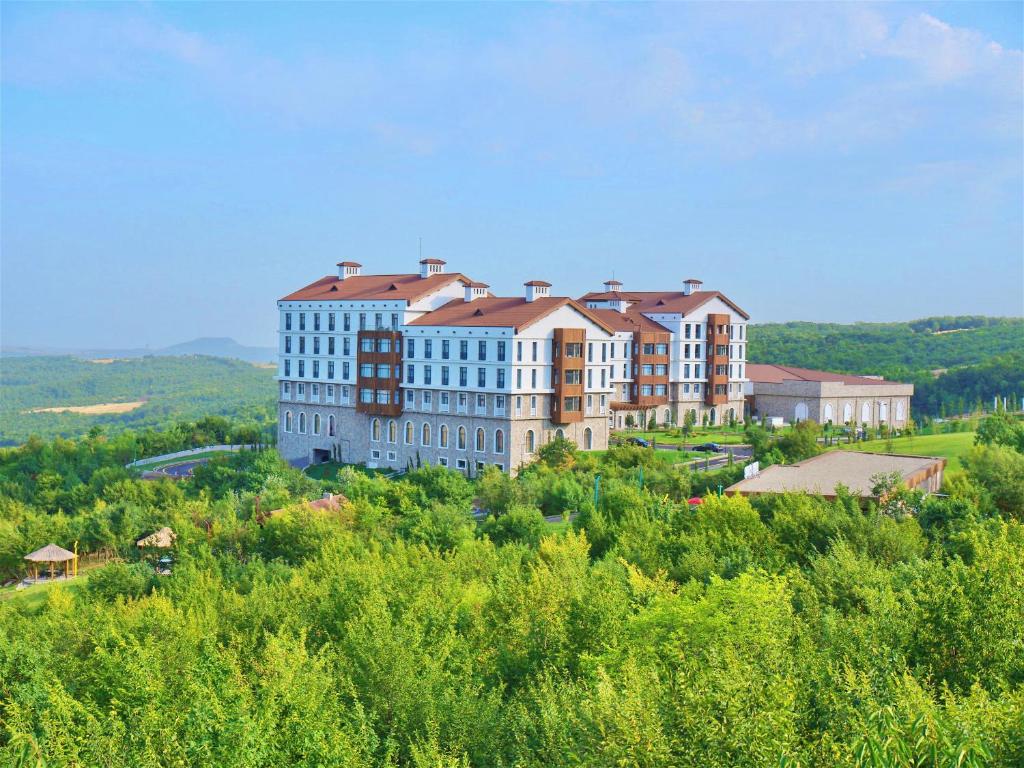


If you don't have time to see Lahıc the previous day, you can still do so in the morning. Afterwards, you will return to Baku and use the afternoon to visit the Heydar Aliyev Center and the bazaar. It is better to take the route through Şamaxı from Lahıc.

The Heydar Aliyev Center is a modern cultural and conference complex that represents an architectural icon of Azerbaijan.

Yaşıl Bazar is a traditional green market in Azerbaijan where locals sell fresh vegetables, fruits, spices, and other products.

You'll return the car, head to the airport, and return home.
Discover Azerbaijan – a hidden treasure of the Caucasus! A country where breathtaking nature, millennia of history, fascinating architecture, majestic mountains, rich art, and hospitable people meet with excellent food.
You will travel from the vibrant center of Baku to the legendary Five Finger Mountain, with panoramic views of the Caspian Sea. You will visit the ancient village of Khinalig, the colorful Candy Cane Mountains, discover the secrets of Gobustan – rock caves, archaeological sites, and mud volcanoes, and visit the city of Ganja, where you will glimpse the life of the great poet Nizami.
Much more awaits you to discover the little-known beauties of this South Caucasus country.
You will depart to Heydar Aliyev International Airport in Baku.
At the airport, collect your luggage and head to pick up your car (according to the instructions sent to you before the trip). Pick up the car and drive to your accommodation.
Spend a day in Baku - explore the city center, the Caspian Sea coast, mosques, palaces, and the Literature Museum.
You will walk through the center of Baku with historical sights and stroll along the promenade on the shore of the Caspian Sea or through the streets of the old city.
Not far from the Juma Mosque in the alleys is the Muhammad Mosque from the 11th century, the minaret was damaged during the Russo-Persian War in the 18th century.
You will stop at the "Friday Mosque", which is a Shiite Islamic mosque with foundations from the twelfth century and a minaret from the fifteenth century.
In the center, you can also see the Virgin Tower from the 12th century, which is a UNESCO World Heritage Site. Its foundations date back to around the 5th - 6th century and it is surrounded by many legends.
Baku Promenade was established in 1909, and today it is almost 4 kilometers long. You can sit here, go out on the pier and get to know the city from a different perspective.
You will admire both the exterior and the exhibits of the Nizami Ganjavi Museum of Azerbaijani Literature, founded in 1939 and named after the famous 12th-century poet. It holds more than 30,000 exhibits – manuscripts, portraits, sculptures and personal items of prominent Azerbaijani writers. The building itself, with its elegant oriental-style facade, is one of the architectural gems of Nefchiler Boulevard in the center of Baku.
You will take a trip to the mountain village of Khinalig and stop at Mount Beshbarmag.
You will take the main road along the Caspian Sea and make a short detour to stop at Mount Besh Barmak ('Five Fingers'), which is a prominent rock massif. It is considered a sacred place and a pilgrimage destination with a thousand-year history of worship. The mountain also served as a landmark for caravans on the Silk Road. After a short walk to the top, you can have tea and a snack at a local vendor while enjoying the view from the mountain.
Spend a peaceful day around Chinalik, admire the mountain views, walk to the local mosque, and visit the historical museum.
Interesting and breathtaking views through the pass will take you to Khinaliq, a village high in the Khinaliq mountain range in Azerbaijan.
In Chinalik, you will see stone houses with slate roofs and narrow streets that lead into the mountains.
The Memorial Mosque in Khinalig is a historical mosque that served the local population for prayers and social gatherings. Its architecture reflects the traditional high mountain style, with simple stone walls and a modest interior.
Visit the historical and ethnographic museum in Khinaliq, which documents the life and traditions of the mountain inhabitants of the village. The exhibitions include folk costumes, tools, ceramics, and everyday objects.
The museum allows visitors to gain insight into the cultural heritage and history of this place.
From the spot above Khinalig, a panoramic view opens onto the high mountain ranges of the Greater Caucasus and the valley below the village. You can see the village of Khinalig itself with its stone houses and slate roofs, scattered across the slopes. On the horizon, grazing herds, mountain rivers, and wooded plateaus stand out, emphasizing the remoteness and rugged beauty of the area.
From the spot above Khinaliq, you'll see a panoramic view of the high-mountain ranges of the Greater Caucasus and the valley below the village. You can see the village of Khinaliq itself, with its stone houses and slate roofs, scattered across the slopes. On the horizon, grazing herds, mountain rivers, and forested plateaus stand out, highlighting the remoteness and rugged beauty of the area.
See the city of Guba, the local park, the bridge, and the old town. Then you will arrive at accommodation near the village of Laza in the northeastern part of the Greater Caucasus.
You will stop in the city of Guba, which is a city in northern Azerbaijan, known for its rich history.
As the center of the Jewish community in the region, the city offers picturesque streets, traditional markets, and access to the surrounding Caucasus Mountains, making it a touristically attractive place.
The Juma Mosque in Guba is a historic Friday mosque that serves as the main place of prayer for the local Muslim community. It resembles a faceted cylinder in appearance and has the shape of a regular octagon. Inside the mosque there is a large hall topped by a huge dome with a diameter of 16 meters.
You can sit in Nizami Park in Guba, named after the Azerbaijani poet Nizami Ganjavi, which was supposedly built by captured Germans in 1946.
Walk across the historical and protected stone bridge that connects the banks of the Qudyalçay River and serves local transport and pedestrians. It was built in 1894 according to the design of Alexander III.
The Guba Genocide Memorial commemorates the victims of the massacre of Azerbaijani civilians in 1918.
The complex includes memorial plaques, sculptures, and a memorial space dedicated to honoring the memory of those murdered.
Trip to the mountains - Laza village, waterfall, views of the Greater Caucasus, and a mosque in Anykh.
Laza welcomes you with picturesque mountain scenery and refreshing waterfalls, perfect for photographers and nature lovers alike. You can wander through the narrow streets of the village and admire the traditional stone houses, where locals still live the ancient way of life. The surrounding mountains offer hiking trails and breathtaking views, and if you go a little outside the village, you will see beautiful panoramas.
The waterfalls in Laza are among the most picturesque natural attractions in northern Azerbaijan. Mighty waterfalls cascade from high cliffs into crystal-clear pools, surrounded by green mountain valleys. A short distance from them, you can sit in peace with tea and food from local vendors.
On the way to your accommodation, be sure to stop at the not-so-famous but beautiful mosque in the village of Anykh. It is located at the very end, but it is worth visiting. The mosque is closed, but you can ask locals to open it; ask someone in the area.
You can eat at the accommodation or at this restaurant.
You'll visit the Candy Cane slate mountains and spend the night on the outskirts of Baku as a stopover on your next journey.
You will go to the Candy Cane Mountains (Şəkər əsası dağları) area and be enchanted by their colorful rock bands. You can stop at various places where you will walk between the red, white and pink layers of the mountains. Depending on the time available, you can go as far as you want, so that you get to the accommodation on the outskirts of Baku in time.
You won't go directly to the center of Baku, but you will stay overnight on the outskirts of the city before continuing your journey to the center of Azerbaijan.
You will head to the third largest city in the country, Ganja, and stop at the historical museum in Gobustan.
The Gobustan National Historical and Cultural Reserve preserves millennia-old rock carvings and petroglyphs that depict the life of the region's prehistoric inhabitants. It covers 537 hectares and contains over 6,000 rock carvings depicting people, animals, battles, ritual dances, bullfights, boats with armed oarsmen, warriors with spears, camel caravans, and celestial symbols such as the sun and stars, dating back 5,000 to 20,000 years. It also includes the Mud Volcanoes tourist complex, and the Petroglyphs Museum has been operating in the reserve since 2011.
The trip to Ganja is a bit longer. You need to pay attention to speed limits, it's better to drive slower, the signage isn't very clear, and there are speed cameras everywhere. This is a section where the police focus on collecting fines.
The Imamzadeh Complex in Ganja is a historical religious complex that attracts pilgrims and architecture enthusiasts alike. The complex includes a mausoleum containing the tomb of a prominent figure in Shia Islam, several mosques, a garden, enclosure walls, and various funerary monuments.
Ganja is the second largest city in Azerbaijan, known for its rich history, culture, and industrial importance. The city offers visitors historical centers with mosques, mausoleums, and ancient monuments, including the famous Nizami Ganjavi Mausoleum.
The city of Goygol (Helenendorf), the museum and mausoleum of the poet Nizami Ganjavi, and the city of Sheki.
In the 19th century, Germans from western Germany were resettled in this village and founded several villages, such as Helenendorf. During the Second World War, their descendants were sent to Kazakhstan, and everything was renamed. Ask for a guide to show you a typical German house and tell you something about the interesting history of the town.
You will head to the Church of St. John in Goygol, an elegant historical church building with rich 19th-century architecture. There is also an exhibition about the history of the city and the German community from the 19th and 20th centuries.
Museum and mausoleum of the important Persian poet Nizami Ganjavi, who was born in Ganja. Parking is on the side of the museum, the mausoleum is reached on foot.
Sheki is a historic city in northwestern Azerbaijan, located at the foot of the Greater Caucasus Mountains at an altitude of approximately 500 m above sea level, known for its rich culture and craft traditions.
The surrounding area offers picturesque mountains, mountain villages, and traditional textile and sweet craft products.
You will spend the day exploring Sheki - caravanserais and the palace. You can also take a trip to see the old church in Kish.
The Upper Caravanserai in Sheki is an imposing stone structure with a spacious courtyard and wide corridors, which once served caravans and merchants. The architecture combines practical functionality with traditional decorative elements, typical of the regional style.
The Winter Palace - the house of the Khans in Sheki is a magnificent palace with richly decorated interiors and stained glass windows, typical of 18th-century Caucasian architecture.
The Khans' Palace in Sheki is a historical palace, famous for its magnificent stained glass windows and rich ornamental decoration.
The Orthodox church building is located in Sheki near the Khan's Palace, named after the three Cappadocian Fathers.
The church in Kish is a Georgian Orthodox building, likely dating from the 10th-12th centuries. One of the initiators of the archaeological excavations was the famous Norwegian traveler and ethnographer Thor Heyerdahl, who also has a bust here. Archaeological research stated that it was first built as a diophysite Georgian church, later becoming a Chalcedonian church (Armenian or Caucasian Albanian).
Ascent to the Galacha Tower, the basilica in Qum, and the spiritual building in Zaqatala.
You will reach the town of Gakh, a picturesque town in northwestern Azerbaijan, surrounded by the Greater Caucasus Mountains and fertile valleys. The town is known for its rich history, traditional architecture, and cultural landmarks, including ancient mosques and fortresses.
Galacha Tower (Şamil-Qala) is a historical defense tower in the Gach region, built to protect against raiders and invasions. Its stone construction with narrow loopholes and solid walls reflects the military architecture of past centuries.
You can climb the gentle hill to the tower and enjoy panoramic views of the surrounding mountains and valleys.
On the way to Zaqatala city, you will briefly deviate and stop at the Gum Basilica, which is a three-nave domed Georgian temple from the 6th–7th centuries, located in the village of Gum in the Gakh region of Azerbaijan. It has typological similarities to some older temples in Armenia and Georgia.
You will reach the city of Zagatala and visit the Zagatala Church, which was built in 1830 in the city center and served as a church until 1953.
You will visit the ruins of a fortress built in the 1830s by the occupying Russian forces during the Caucasian War to defend the city from rebels.
You will go to Lahich, visit the local museum and take a walk around the area.
Lahıc is a village on the southern slopes of the Greater Caucasus. It has a population of approximately 900 people who speak the Tat language, also known as Tat Persian, which is a southwestern Iranian language spoken by the Tats in Azerbaijan and Russia.
It is an important place with authentic craft traditions, especially copper, carpet making and other crafts. Lahij has an old sewage system that is up to about 1,500 years old.
The Museum of Local History in Lahich showcases the cultural and historical heritage of the village and its surroundings.
Exhibits include traditional crafts, copper products, folk costumes, and everyday objects of the local people.
The Zavaro Mosque dates back to 1805 and has been destroyed several times.
Once you cross the Ghirdiman River, you will see a beautiful view of the village.
If you don't have time to see Lahıc the previous day, you can still do so in the morning. Afterwards, you will return to Baku and use the afternoon to visit the Heydar Aliyev Center and the bazaar. It is better to take the route through Şamaxı from Lahıc.
The Heydar Aliyev Center is a modern cultural and conference complex that represents an architectural icon of Azerbaijan.
Yaşıl Bazar is a traditional green market in Azerbaijan where locals sell fresh vegetables, fruits, spices, and other products.
You'll return the car, head to the airport, and return home.


itinerary by Roman Rogner
The adventure awaits
Discover Azerbaijan – a hidden treasure of the Caucasus! A country where breathtaking nature, millennia of history, fascinating architecture, majestic mountains, rich art, and hospitable people meet with excellent food.
You will travel from the vibrant center of Baku to the legendary Five Finger Mountain, with panoramic views of the Caspian Sea. You will visit the ancient village of Khinalig, the colorful Candy Cane Mountains, discover the secrets of Gobustan – rock caves, archaeological sites, and mud volcanoes, and visit the city of Ganja, where you will glimpse the life of the great poet Nizami.
Much more awaits you to discover the little-known beauties of this South Caucasus country.
You will depart to Heydar Aliyev International Airport in Baku.
At the airport, collect your luggage and head to pick up your car (according to the instructions sent to you before the trip). Pick up the car and drive to your accommodation.
Spend a day in Baku - explore the city center, the Caspian Sea coast, mosques, palaces, and the Literature Museum.
You will walk through the center of Baku with historical sights and stroll along the promenade on the shore of the Caspian Sea or through the streets of the old city.
Not far from the Juma Mosque in the alleys is the Muhammad Mosque from the 11th century, the minaret was damaged during the Russo-Persian War in the 18th century.
You will stop at the "Friday Mosque", which is a Shiite Islamic mosque with foundations from the twelfth century and a minaret from the fifteenth century.
In the center, you can also see the Virgin Tower from the 12th century, which is a UNESCO World Heritage Site. Its foundations date back to around the 5th - 6th century and it is surrounded by many legends.
Baku Promenade was established in 1909, and today it is almost 4 kilometers long. You can sit here, go out on the pier and get to know the city from a different perspective.
You will admire both the exterior and the exhibits of the Nizami Ganjavi Museum of Azerbaijani Literature, founded in 1939 and named after the famous 12th-century poet. It holds more than 30,000 exhibits – manuscripts, portraits, sculptures and personal items of prominent Azerbaijani writers. The building itself, with its elegant oriental-style facade, is one of the architectural gems of Nefchiler Boulevard in the center of Baku.
You will take a trip to the mountain village of Khinalig and stop at Mount Beshbarmag.
You will take the main road along the Caspian Sea and make a short detour to stop at Mount Besh Barmak ('Five Fingers'), which is a prominent rock massif. It is considered a sacred place and a pilgrimage destination with a thousand-year history of worship. The mountain also served as a landmark for caravans on the Silk Road. After a short walk to the top, you can have tea and a snack at a local vendor while enjoying the view from the mountain.
Spend a peaceful day around Chinalik, admire the mountain views, walk to the local mosque, and visit the historical museum.
Interesting and breathtaking views through the pass will take you to Khinaliq, a village high in the Khinaliq mountain range in Azerbaijan.
In Chinalik, you will see stone houses with slate roofs and narrow streets that lead into the mountains.
The Memorial Mosque in Khinalig is a historical mosque that served the local population for prayers and social gatherings. Its architecture reflects the traditional high mountain style, with simple stone walls and a modest interior.
Visit the historical and ethnographic museum in Khinaliq, which documents the life and traditions of the mountain inhabitants of the village. The exhibitions include folk costumes, tools, ceramics, and everyday objects.
The museum allows visitors to gain insight into the cultural heritage and history of this place.
From the spot above Khinalig, a panoramic view opens onto the high mountain ranges of the Greater Caucasus and the valley below the village. You can see the village of Khinalig itself with its stone houses and slate roofs, scattered across the slopes. On the horizon, grazing herds, mountain rivers, and wooded plateaus stand out, emphasizing the remoteness and rugged beauty of the area.
From the spot above Khinaliq, you'll see a panoramic view of the high-mountain ranges of the Greater Caucasus and the valley below the village. You can see the village of Khinaliq itself, with its stone houses and slate roofs, scattered across the slopes. On the horizon, grazing herds, mountain rivers, and forested plateaus stand out, highlighting the remoteness and rugged beauty of the area.
See the city of Guba, the local park, the bridge, and the old town. Then you will arrive at accommodation near the village of Laza in the northeastern part of the Greater Caucasus.
You will stop in the city of Guba, which is a city in northern Azerbaijan, known for its rich history.
As the center of the Jewish community in the region, the city offers picturesque streets, traditional markets, and access to the surrounding Caucasus Mountains, making it a touristically attractive place.
The Juma Mosque in Guba is a historic Friday mosque that serves as the main place of prayer for the local Muslim community. It resembles a faceted cylinder in appearance and has the shape of a regular octagon. Inside the mosque there is a large hall topped by a huge dome with a diameter of 16 meters.
You can sit in Nizami Park in Guba, named after the Azerbaijani poet Nizami Ganjavi, which was supposedly built by captured Germans in 1946.
Walk across the historical and protected stone bridge that connects the banks of the Qudyalçay River and serves local transport and pedestrians. It was built in 1894 according to the design of Alexander III.
The Guba Genocide Memorial commemorates the victims of the massacre of Azerbaijani civilians in 1918.
The complex includes memorial plaques, sculptures, and a memorial space dedicated to honoring the memory of those murdered.
Trip to the mountains - Laza village, waterfall, views of the Greater Caucasus, and a mosque in Anykh.
Laza welcomes you with picturesque mountain scenery and refreshing waterfalls, perfect for photographers and nature lovers alike. You can wander through the narrow streets of the village and admire the traditional stone houses, where locals still live the ancient way of life. The surrounding mountains offer hiking trails and breathtaking views, and if you go a little outside the village, you will see beautiful panoramas.
The waterfalls in Laza are among the most picturesque natural attractions in northern Azerbaijan. Mighty waterfalls cascade from high cliffs into crystal-clear pools, surrounded by green mountain valleys. A short distance from them, you can sit in peace with tea and food from local vendors.
On the way to your accommodation, be sure to stop at the not-so-famous but beautiful mosque in the village of Anykh. It is located at the very end, but it is worth visiting. The mosque is closed, but you can ask locals to open it; ask someone in the area.
You can eat at the accommodation or at this restaurant.
You'll visit the Candy Cane slate mountains and spend the night on the outskirts of Baku as a stopover on your next journey.
You will go to the Candy Cane Mountains (Şəkər əsası dağları) area and be enchanted by their colorful rock bands. You can stop at various places where you will walk between the red, white and pink layers of the mountains. Depending on the time available, you can go as far as you want, so that you get to the accommodation on the outskirts of Baku in time.
You won't go directly to the center of Baku, but you will stay overnight on the outskirts of the city before continuing your journey to the center of Azerbaijan.
You will head to the third largest city in the country, Ganja, and stop at the historical museum in Gobustan.
The Gobustan National Historical and Cultural Reserve preserves millennia-old rock carvings and petroglyphs that depict the life of the region's prehistoric inhabitants. It covers 537 hectares and contains over 6,000 rock carvings depicting people, animals, battles, ritual dances, bullfights, boats with armed oarsmen, warriors with spears, camel caravans, and celestial symbols such as the sun and stars, dating back 5,000 to 20,000 years. It also includes the Mud Volcanoes tourist complex, and the Petroglyphs Museum has been operating in the reserve since 2011.
The trip to Ganja is a bit longer. You need to pay attention to speed limits, it's better to drive slower, the signage isn't very clear, and there are speed cameras everywhere. This is a section where the police focus on collecting fines.
The Imamzadeh Complex in Ganja is a historical religious complex that attracts pilgrims and architecture enthusiasts alike. The complex includes a mausoleum containing the tomb of a prominent figure in Shia Islam, several mosques, a garden, enclosure walls, and various funerary monuments.
Ganja is the second largest city in Azerbaijan, known for its rich history, culture, and industrial importance. The city offers visitors historical centers with mosques, mausoleums, and ancient monuments, including the famous Nizami Ganjavi Mausoleum.
The city of Goygol (Helenendorf), the museum and mausoleum of the poet Nizami Ganjavi, and the city of Sheki.
In the 19th century, Germans from western Germany were resettled in this village and founded several villages, such as Helenendorf. During the Second World War, their descendants were sent to Kazakhstan, and everything was renamed. Ask for a guide to show you a typical German house and tell you something about the interesting history of the town.
You will head to the Church of St. John in Goygol, an elegant historical church building with rich 19th-century architecture. There is also an exhibition about the history of the city and the German community from the 19th and 20th centuries.
Museum and mausoleum of the important Persian poet Nizami Ganjavi, who was born in Ganja. Parking is on the side of the museum, the mausoleum is reached on foot.
Sheki is a historic city in northwestern Azerbaijan, located at the foot of the Greater Caucasus Mountains at an altitude of approximately 500 m above sea level, known for its rich culture and craft traditions.
The surrounding area offers picturesque mountains, mountain villages, and traditional textile and sweet craft products.
You will spend the day exploring Sheki - caravanserais and the palace. You can also take a trip to see the old church in Kish.
The Upper Caravanserai in Sheki is an imposing stone structure with a spacious courtyard and wide corridors, which once served caravans and merchants. The architecture combines practical functionality with traditional decorative elements, typical of the regional style.
The Winter Palace - the house of the Khans in Sheki is a magnificent palace with richly decorated interiors and stained glass windows, typical of 18th-century Caucasian architecture.
The Khans' Palace in Sheki is a historical palace, famous for its magnificent stained glass windows and rich ornamental decoration.
The Orthodox church building is located in Sheki near the Khan's Palace, named after the three Cappadocian Fathers.
The church in Kish is a Georgian Orthodox building, likely dating from the 10th-12th centuries. One of the initiators of the archaeological excavations was the famous Norwegian traveler and ethnographer Thor Heyerdahl, who also has a bust here. Archaeological research stated that it was first built as a diophysite Georgian church, later becoming a Chalcedonian church (Armenian or Caucasian Albanian).
Ascent to the Galacha Tower, the basilica in Qum, and the spiritual building in Zaqatala.
You will reach the town of Gakh, a picturesque town in northwestern Azerbaijan, surrounded by the Greater Caucasus Mountains and fertile valleys. The town is known for its rich history, traditional architecture, and cultural landmarks, including ancient mosques and fortresses.
Galacha Tower (Şamil-Qala) is a historical defense tower in the Gach region, built to protect against raiders and invasions. Its stone construction with narrow loopholes and solid walls reflects the military architecture of past centuries.
You can climb the gentle hill to the tower and enjoy panoramic views of the surrounding mountains and valleys.
On the way to Zaqatala city, you will briefly deviate and stop at the Gum Basilica, which is a three-nave domed Georgian temple from the 6th–7th centuries, located in the village of Gum in the Gakh region of Azerbaijan. It has typological similarities to some older temples in Armenia and Georgia.
You will reach the city of Zagatala and visit the Zagatala Church, which was built in 1830 in the city center and served as a church until 1953.
You will visit the ruins of a fortress built in the 1830s by the occupying Russian forces during the Caucasian War to defend the city from rebels.
You will go to Lahich, visit the local museum and take a walk around the area.
Lahıc is a village on the southern slopes of the Greater Caucasus. It has a population of approximately 900 people who speak the Tat language, also known as Tat Persian, which is a southwestern Iranian language spoken by the Tats in Azerbaijan and Russia.
It is an important place with authentic craft traditions, especially copper, carpet making and other crafts. Lahij has an old sewage system that is up to about 1,500 years old.
The Museum of Local History in Lahich showcases the cultural and historical heritage of the village and its surroundings.
Exhibits include traditional crafts, copper products, folk costumes, and everyday objects of the local people.
The Zavaro Mosque dates back to 1805 and has been destroyed several times.
Once you cross the Ghirdiman River, you will see a beautiful view of the village.
If you don't have time to see Lahıc the previous day, you can still do so in the morning. Afterwards, you will return to Baku and use the afternoon to visit the Heydar Aliyev Center and the bazaar. It is better to take the route through Şamaxı from Lahıc.
The Heydar Aliyev Center is a modern cultural and conference complex that represents an architectural icon of Azerbaijan.
Yaşıl Bazar is a traditional green market in Azerbaijan where locals sell fresh vegetables, fruits, spices, and other products.
You'll return the car, head to the airport, and return home.
Discover Azerbaijan – a hidden treasure of the Caucasus! A country where breathtaking nature, millennia of history, fascinating architecture, majestic mountains, rich art, and hospitable people meet with excellent food.
You will travel from the vibrant center of Baku to the legendary Five Finger Mountain, with panoramic views of the Caspian Sea. You will visit the ancient village of Khinalig, the colorful Candy Cane Mountains, discover the secrets of Gobustan – rock caves, archaeological sites, and mud volcanoes, and visit the city of Ganja, where you will glimpse the life of the great poet Nizami.
Much more awaits you to discover the little-known beauties of this South Caucasus country.
You will depart to Heydar Aliyev International Airport in Baku.
At the airport, collect your luggage and head to pick up your car (according to the instructions sent to you before the trip). Pick up the car and drive to your accommodation.
Spend a day in Baku - explore the city center, the Caspian Sea coast, mosques, palaces, and the Literature Museum.
You will walk through the center of Baku with historical sights and stroll along the promenade on the shore of the Caspian Sea or through the streets of the old city.
Not far from the Juma Mosque in the alleys is the Muhammad Mosque from the 11th century, the minaret was damaged during the Russo-Persian War in the 18th century.
You will stop at the "Friday Mosque", which is a Shiite Islamic mosque with foundations from the twelfth century and a minaret from the fifteenth century.
In the center, you can also see the Virgin Tower from the 12th century, which is a UNESCO World Heritage Site. Its foundations date back to around the 5th - 6th century and it is surrounded by many legends.
Baku Promenade was established in 1909, and today it is almost 4 kilometers long. You can sit here, go out on the pier and get to know the city from a different perspective.
You will admire both the exterior and the exhibits of the Nizami Ganjavi Museum of Azerbaijani Literature, founded in 1939 and named after the famous 12th-century poet. It holds more than 30,000 exhibits – manuscripts, portraits, sculptures and personal items of prominent Azerbaijani writers. The building itself, with its elegant oriental-style facade, is one of the architectural gems of Nefchiler Boulevard in the center of Baku.
You will take a trip to the mountain village of Khinalig and stop at Mount Beshbarmag.
You will take the main road along the Caspian Sea and make a short detour to stop at Mount Besh Barmak ('Five Fingers'), which is a prominent rock massif. It is considered a sacred place and a pilgrimage destination with a thousand-year history of worship. The mountain also served as a landmark for caravans on the Silk Road. After a short walk to the top, you can have tea and a snack at a local vendor while enjoying the view from the mountain.
Spend a peaceful day around Chinalik, admire the mountain views, walk to the local mosque, and visit the historical museum.
Interesting and breathtaking views through the pass will take you to Khinaliq, a village high in the Khinaliq mountain range in Azerbaijan.
In Chinalik, you will see stone houses with slate roofs and narrow streets that lead into the mountains.
The Memorial Mosque in Khinalig is a historical mosque that served the local population for prayers and social gatherings. Its architecture reflects the traditional high mountain style, with simple stone walls and a modest interior.
Visit the historical and ethnographic museum in Khinaliq, which documents the life and traditions of the mountain inhabitants of the village. The exhibitions include folk costumes, tools, ceramics, and everyday objects.
The museum allows visitors to gain insight into the cultural heritage and history of this place.
From the spot above Khinalig, a panoramic view opens onto the high mountain ranges of the Greater Caucasus and the valley below the village. You can see the village of Khinalig itself with its stone houses and slate roofs, scattered across the slopes. On the horizon, grazing herds, mountain rivers, and wooded plateaus stand out, emphasizing the remoteness and rugged beauty of the area.
From the spot above Khinaliq, you'll see a panoramic view of the high-mountain ranges of the Greater Caucasus and the valley below the village. You can see the village of Khinaliq itself, with its stone houses and slate roofs, scattered across the slopes. On the horizon, grazing herds, mountain rivers, and forested plateaus stand out, highlighting the remoteness and rugged beauty of the area.
See the city of Guba, the local park, the bridge, and the old town. Then you will arrive at accommodation near the village of Laza in the northeastern part of the Greater Caucasus.
You will stop in the city of Guba, which is a city in northern Azerbaijan, known for its rich history.
As the center of the Jewish community in the region, the city offers picturesque streets, traditional markets, and access to the surrounding Caucasus Mountains, making it a touristically attractive place.
The Juma Mosque in Guba is a historic Friday mosque that serves as the main place of prayer for the local Muslim community. It resembles a faceted cylinder in appearance and has the shape of a regular octagon. Inside the mosque there is a large hall topped by a huge dome with a diameter of 16 meters.
You can sit in Nizami Park in Guba, named after the Azerbaijani poet Nizami Ganjavi, which was supposedly built by captured Germans in 1946.
Walk across the historical and protected stone bridge that connects the banks of the Qudyalçay River and serves local transport and pedestrians. It was built in 1894 according to the design of Alexander III.
The Guba Genocide Memorial commemorates the victims of the massacre of Azerbaijani civilians in 1918.
The complex includes memorial plaques, sculptures, and a memorial space dedicated to honoring the memory of those murdered.
Trip to the mountains - Laza village, waterfall, views of the Greater Caucasus, and a mosque in Anykh.
Laza welcomes you with picturesque mountain scenery and refreshing waterfalls, perfect for photographers and nature lovers alike. You can wander through the narrow streets of the village and admire the traditional stone houses, where locals still live the ancient way of life. The surrounding mountains offer hiking trails and breathtaking views, and if you go a little outside the village, you will see beautiful panoramas.
The waterfalls in Laza are among the most picturesque natural attractions in northern Azerbaijan. Mighty waterfalls cascade from high cliffs into crystal-clear pools, surrounded by green mountain valleys. A short distance from them, you can sit in peace with tea and food from local vendors.
On the way to your accommodation, be sure to stop at the not-so-famous but beautiful mosque in the village of Anykh. It is located at the very end, but it is worth visiting. The mosque is closed, but you can ask locals to open it; ask someone in the area.
You can eat at the accommodation or at this restaurant.
You'll visit the Candy Cane slate mountains and spend the night on the outskirts of Baku as a stopover on your next journey.
You will go to the Candy Cane Mountains (Şəkər əsası dağları) area and be enchanted by their colorful rock bands. You can stop at various places where you will walk between the red, white and pink layers of the mountains. Depending on the time available, you can go as far as you want, so that you get to the accommodation on the outskirts of Baku in time.
You won't go directly to the center of Baku, but you will stay overnight on the outskirts of the city before continuing your journey to the center of Azerbaijan.
You will head to the third largest city in the country, Ganja, and stop at the historical museum in Gobustan.
The Gobustan National Historical and Cultural Reserve preserves millennia-old rock carvings and petroglyphs that depict the life of the region's prehistoric inhabitants. It covers 537 hectares and contains over 6,000 rock carvings depicting people, animals, battles, ritual dances, bullfights, boats with armed oarsmen, warriors with spears, camel caravans, and celestial symbols such as the sun and stars, dating back 5,000 to 20,000 years. It also includes the Mud Volcanoes tourist complex, and the Petroglyphs Museum has been operating in the reserve since 2011.
The trip to Ganja is a bit longer. You need to pay attention to speed limits, it's better to drive slower, the signage isn't very clear, and there are speed cameras everywhere. This is a section where the police focus on collecting fines.
The Imamzadeh Complex in Ganja is a historical religious complex that attracts pilgrims and architecture enthusiasts alike. The complex includes a mausoleum containing the tomb of a prominent figure in Shia Islam, several mosques, a garden, enclosure walls, and various funerary monuments.
Ganja is the second largest city in Azerbaijan, known for its rich history, culture, and industrial importance. The city offers visitors historical centers with mosques, mausoleums, and ancient monuments, including the famous Nizami Ganjavi Mausoleum.
The city of Goygol (Helenendorf), the museum and mausoleum of the poet Nizami Ganjavi, and the city of Sheki.
In the 19th century, Germans from western Germany were resettled in this village and founded several villages, such as Helenendorf. During the Second World War, their descendants were sent to Kazakhstan, and everything was renamed. Ask for a guide to show you a typical German house and tell you something about the interesting history of the town.
You will head to the Church of St. John in Goygol, an elegant historical church building with rich 19th-century architecture. There is also an exhibition about the history of the city and the German community from the 19th and 20th centuries.
Museum and mausoleum of the important Persian poet Nizami Ganjavi, who was born in Ganja. Parking is on the side of the museum, the mausoleum is reached on foot.
Sheki is a historic city in northwestern Azerbaijan, located at the foot of the Greater Caucasus Mountains at an altitude of approximately 500 m above sea level, known for its rich culture and craft traditions.
The surrounding area offers picturesque mountains, mountain villages, and traditional textile and sweet craft products.
You will spend the day exploring Sheki - caravanserais and the palace. You can also take a trip to see the old church in Kish.
The Upper Caravanserai in Sheki is an imposing stone structure with a spacious courtyard and wide corridors, which once served caravans and merchants. The architecture combines practical functionality with traditional decorative elements, typical of the regional style.
The Winter Palace - the house of the Khans in Sheki is a magnificent palace with richly decorated interiors and stained glass windows, typical of 18th-century Caucasian architecture.
The Khans' Palace in Sheki is a historical palace, famous for its magnificent stained glass windows and rich ornamental decoration.
The Orthodox church building is located in Sheki near the Khan's Palace, named after the three Cappadocian Fathers.
The church in Kish is a Georgian Orthodox building, likely dating from the 10th-12th centuries. One of the initiators of the archaeological excavations was the famous Norwegian traveler and ethnographer Thor Heyerdahl, who also has a bust here. Archaeological research stated that it was first built as a diophysite Georgian church, later becoming a Chalcedonian church (Armenian or Caucasian Albanian).
Ascent to the Galacha Tower, the basilica in Qum, and the spiritual building in Zaqatala.
You will reach the town of Gakh, a picturesque town in northwestern Azerbaijan, surrounded by the Greater Caucasus Mountains and fertile valleys. The town is known for its rich history, traditional architecture, and cultural landmarks, including ancient mosques and fortresses.
Galacha Tower (Şamil-Qala) is a historical defense tower in the Gach region, built to protect against raiders and invasions. Its stone construction with narrow loopholes and solid walls reflects the military architecture of past centuries.
You can climb the gentle hill to the tower and enjoy panoramic views of the surrounding mountains and valleys.
On the way to Zaqatala city, you will briefly deviate and stop at the Gum Basilica, which is a three-nave domed Georgian temple from the 6th–7th centuries, located in the village of Gum in the Gakh region of Azerbaijan. It has typological similarities to some older temples in Armenia and Georgia.
You will reach the city of Zagatala and visit the Zagatala Church, which was built in 1830 in the city center and served as a church until 1953.
You will visit the ruins of a fortress built in the 1830s by the occupying Russian forces during the Caucasian War to defend the city from rebels.
You will go to Lahich, visit the local museum and take a walk around the area.
Lahıc is a village on the southern slopes of the Greater Caucasus. It has a population of approximately 900 people who speak the Tat language, also known as Tat Persian, which is a southwestern Iranian language spoken by the Tats in Azerbaijan and Russia.
It is an important place with authentic craft traditions, especially copper, carpet making and other crafts. Lahij has an old sewage system that is up to about 1,500 years old.
The Museum of Local History in Lahich showcases the cultural and historical heritage of the village and its surroundings.
Exhibits include traditional crafts, copper products, folk costumes, and everyday objects of the local people.
The Zavaro Mosque dates back to 1805 and has been destroyed several times.
Once you cross the Ghirdiman River, you will see a beautiful view of the village.
If you don't have time to see Lahıc the previous day, you can still do so in the morning. Afterwards, you will return to Baku and use the afternoon to visit the Heydar Aliyev Center and the bazaar. It is better to take the route through Şamaxı from Lahıc.
The Heydar Aliyev Center is a modern cultural and conference complex that represents an architectural icon of Azerbaijan.
Yaşıl Bazar is a traditional green market in Azerbaijan where locals sell fresh vegetables, fruits, spices, and other products.
You'll return the car, head to the airport, and return home.