Forget the crowded north and head south – to a place that has kept its pure, unadulterated face. Apulia (Puglia) is a land of centuries-old olive trees, snow-white hilltop towns, azure sea and the warmest hospitality. Italians come here themselves for the most ordinary, yet most luxurious thing in the world: the perfect moment that completely absorbs you with its authentic atmosphere.
After landing in Bari, pick up your luggage and head to the city centre by taxi or train. First, check in to your accommodation and drop off your things. If you arrive early, take a walk around the neighbourhood and along the waterfront, or you can even go for a swim in the sea. For dinner, head to the street food bistro Mastro Ciccio, where you'll taste a modern take on Apulian cuisine made with local ingredients, and then you can stroll through the city in the evening. If you arrive late or are tired, just check in and rest, as you'll fully enjoy Bari starting tomorrow.
Collect your luggage if you had it checked in. The best way to get from the airport is by taxi, which you can book in advance here. You can also take the train with Ferrotramviaria, which will take you from the airport to the city centre, to the Bari Centrale stop. The ticket price in 2026 was 5.30 EUR per person.
In the evening, you can visit the renowned Italian street food bistro located right in the heart of Bari. For over 22 years, this concept has focused on a modern take on traditional Apulian gastronomy. It prides itself on local ingredients with clear origins, such as fresh tomatoes, local cheeses (burrata, stracciatella), seafood, and typical wheat flour. Mastro Ciccio is not a classic fast food place – the food is served quickly, but the quality of the ingredients matches that of a standard restaurant. The menu offers a wide range of Apulian specialties.


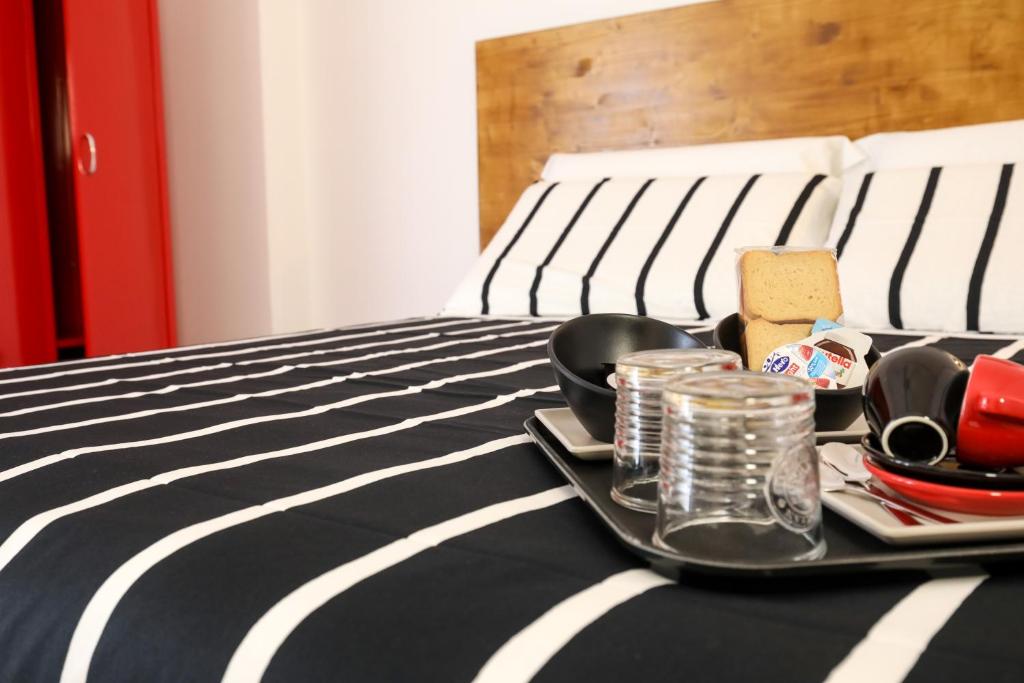

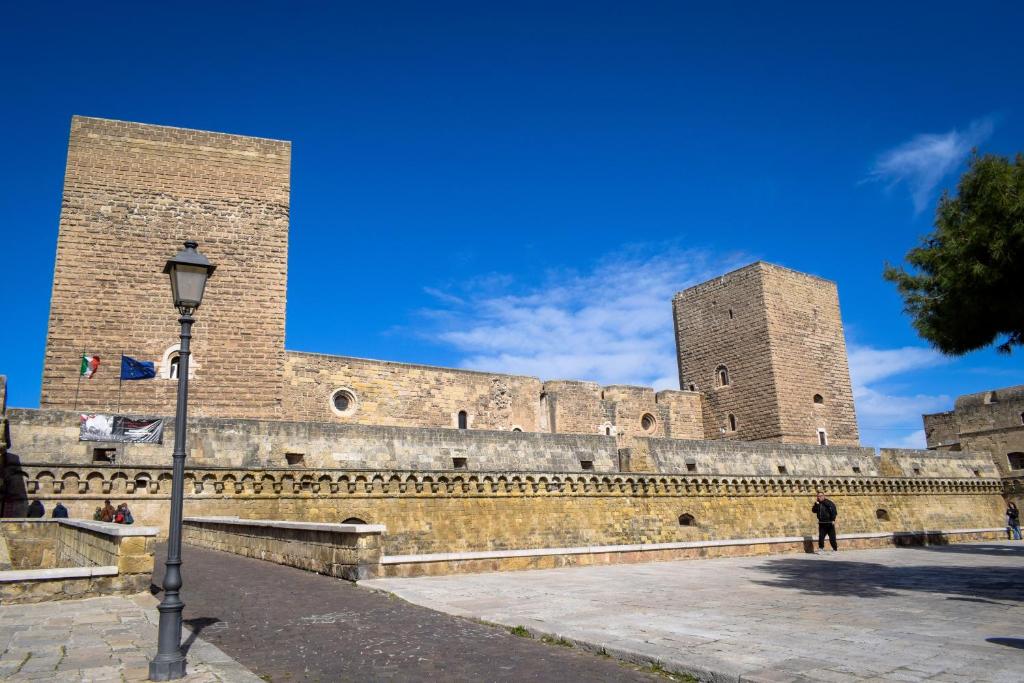
Today is all about Bari, and you'll be walking the whole time. In the morning, start at the Teatro Petruzzelli theatre and walk along the promenade past the old harbour and the Art Nouveau Teatro Margherita to Piazza del Ferrarese, where you'll enter the old town of Bari Vecchia. Stroll along the city walls with sea views, visit Piazza Mercantile, the Basilica of Saint Nicholas and the San Sabino Cathedral, and along the way try local street food, such as panzerotti, fried seafood or the dessert Tette delle Monache. End the old town tour at the Swabian Castle and in Strada Arco Alto, where local women handmade orecchiette pasta by hand.
In the afternoon, follow the Lungomare promenade to the Pane e Pomodoro city beach, where you can swim and relax. In the evening, head back to the castle for dinner and finish the day with ice cream at the historic Gelateria Gentile. The schedule is packed, but the sights in the old town are close together. You don't have to visit every church and museum; pick whatever interests you most, and if you don't feel like walking to the beach, you can take a taxi.
It is a picturesque port city on the coast of the Adriatic Sea and also the capital of the Italian region of Apulia. With more than 300 thousand inhabitants, it is the second largest center in southern Italy after Naples. The city attracts tourists with its authentic southern Italian atmosphere, rich history and excellent gastronomy.
Start your visit at the Teatro Petruzzelli. It is the fourth largest theatre in Italy and the largest private theatre in Europe. This iconic opera building, completed in 1903, represents the cultural heart of the entire Apulia region. The theatre was built by the brothers Onofrio and Antonio Petruzzelli according to a design by architect Angelo Cicciomessere. It officially opened on 14 February 1903 with Giacomo Meyerbeer's opera Les Huguenots.
The pier is located near the port in Bari. The local port is one of the most important and busiest maritime hubs in southern Italy and serves as the main gateway from the Adriatic Sea towards the Balkans and Greece.
It is divided into two main parts: the Old Port (Porto Vecchio), which mainly serves fishing and smaller boats, and the New Port (Porto Nuovo), where large ferries, cargo ships and luxury cruise liners dock.
It is one of the most striking architectural landmarks and iconic monuments in the entire Apulia region. This iconic Art Nouveau (Liberty style) building, with its distinctive salmon-pink facade, stands right on the waterfront in the historic old harbour (Porto Vecchio).
This is the main entrance gate to the historic centre of the Italian city of Bari (Bari Vecchia), which connects the modern part of the city with its ancient quarter. Beneath the square's paving lie the remains of a Roman road from the 2nd century AD. You will also find the 18th-century historic Palazzo Starita palace here.

It is an important cultural centre in the Italian city of Bari, specializing in visual arts and contemporary design.
This is a historic fortification and an elevated seaside promenade that lines the old town of the Italian city of Bari (Bari Vecchia) along Via Venezia. This 400-metre-long pedestrian zone today serves as one of the most beautiful places for a stroll in the city, offering a panoramic view of the Adriatic Sea on one side and the labyrinth of narrow alleys of the old town on the other.
It is one of the most important public spaces in the historic centre of Bari. The square has been the centre of Bari since the mid-15th century, when the buildings of the city government and important offices began to be built here. The main building of the square became the Palazzo del Sedile. In the 16th century, a clock tower was added to the palace, which to this day forms one of the symbols of Piazza Mercantile. In the middle of the square you will find the Column of Justice, also called the Column of Shame, to which sinners were tied and exposed to public shame. During the 17th century, most of the houses on the square were rebuilt, and during the 19th century, most institutions were moved to the newly emerging, more modern part of Bari. However, Piazza Mercantile still remains the main meeting point for both locals and tourists.
Typical Apulian fast food. You'll find excellent and affordable sandwiches and panzerotti here. You can grab a small lunch or a snack here.
Near the square you can taste Tette delle Monache, a traditional Italian dessert from the Puglia region. It is a fluffy sponge cake with a filling. According to legend, it originally came from the monastery kitchens of local nuns.
This basilica is an important Catholic and Orthodox pilgrimage site dating from the 12th century, which houses in its crypt the relics of Saint Nicholas of Myra (the historical inspiration for the figure of Santa Claus). This magnificent structure, built between 1087 and 1197, is one of the first and most beautiful examples of Apulian Romanesque architecture. Thanks to its two massive side towers, the basilica has a austere, almost castle-like appearance. Inside, there is a three-aisled space with a richly decorated coffered ceiling from the 17th century.
 For kids
It is the main city duomo and, together with the nearby Basilica of St. Nicholas, the crowning masterpiece of Apulian Romanesque architecture. The original Byzantine cathedral was destroyed in 1156 by the armies of King William I of Sicily. The present form of the church was built from the end of the 12th to the 13th century (it was consecrated in 1292).
You can find information about the admission fee to the cathedral with its bell tower and the opening hours here.
This renowned establishment is located right on Strada dei Dottula, opposite the San Sabino Cathedral. It specializes in fresh and crispy fried seafood, which you can take away in a cone or box as a quick lunch or dinner while strolling around the city.
Castello Svevo di Bari (Swabian Castle) is a monumental medieval fortress located on the edge of the old town. It is one of the most important historical monuments in the Apulia region. The castle was built around 1132 by the Norman king Roger II. After it was destroyed, it was rebuilt and expanded in the 13th century by the Roman-German emperor Frederick II Hohenstaufen, after whom it is named. In the 16th century, under the rule of Isabella of Aragon, the castle was converted into a Renaissance residence and fortified with massive walls with bastions. Inside the castle you can visit a museum with a unique collection of plaster casts of Romanesque sculptures (Gipsoteca), archaeological finds, and multimedia installations mapping the history of the city and the fortress. Information about tickets and opening hours can be found here.
This is an alley where local women make and sell fresh orecchiette, the ear-shaped pasta made from durum wheat and water, Apulia's most famous contribution to Italian cuisine, right in front of their own homes. You can buy them and take them home as a souvenir for your own kitchen.
In the afternoon, go for a swim. Walk along the Lungomare Nazario Sauro promenade to the public sandy beach with fine sand and a gradual entry into the sea. There are also changing rooms, toilets and a bar near the beach.

In the evening, take a walk around this square, where you will find the restaurant El Castillo, which offers typical Italian dishes and you can go there for dinner.
Right next door is the famous historic Italian artisan ice cream parlour, whose tradition dates back to 1880. It was founded by Michele Gentile in the Italian city of Bari as a small granita stand, and it is still run by the fifth generation of the same family. The business prides itself on traditional family recipes and top-quality local ingredients.
A full-day trip to Alberobello and Matera. Doing both towns on your own in one day is challenging, because there is no direct connection between them, so I recommend buying a one-day tour from Bari (you'll find the link and meeting point under Alberobello). In the morning you arrive at the meeting point and the bus first takes you to Alberobello, where you have about two to three hours to stroll among the white trulli houses in the Rione Monti district, visit the viewpoint over the town and the Trullo Sovrano house. Then you continue to Matera, where you'll have roughly three to four hours. You'll walk through the ancient cave quarters of Sassi, enjoy the view from the Belvedere Pascoli viewpoint, and see the rock church of Santa Maria de Idris. You won't manage to see all the museums and churches inside, so choose one or two in advance that you want to visit. In the evening you return to Bari and end the day with pizza at Vincenzo Capuano pizzeria.
To get to Alberobello and Matera, you can take a one-day tour from Bari, which you can book here. The meeting point is at Corso Cavour 2 in Bari, check-in starts at 8:00 and the bus departs at 8:30. Look for a bus marked Apulia Smart Tour or Ceglie Eurobus. The brochure-only option is enough, and you'll explore both towns on your own. The tour takes about 10 hours and ends at the same place in Bari. Check where your accommodation is exactly, and allow enough time to get to the meeting point.
It is a picturesque little town that has become famous worldwide for its unique trulli architecture: white circular houses with grey stone roofs, built without using mortar. Thanks to its exceptional cultural significance, the town has been on the UNESCO World Heritage List since 1996. The town's origins date back to the second half of the 16th century, when the counts of Conversano began colonizing this area. These feudal lords ordered settlers to build houses from stone laid dry, i.e. without mortar, so they could be demolished in the event of a royal inspection. This way of establishing settlements was due to the so-called prammatica de baronibus, a regulation existing from the 15th century in the Kingdom of Naples, under which founding an urban settlement was subject to a tax. The houses were therefore built as temporary structures, easy to demolish.

It is the largest, busiest and most attractive historic district in Alberobello for tourists. On the gentle southern slope, over 1,000 traditional trullo houses are crowded together, rising in a cascade one above the other.
It is one of the most famous, most beautiful and most photographed streets in the historic Rione Monti district of Alberobello. This gently rising street is lined on both sides with perfectly preserved traditional trulli houses, many of which have white mystical, Christian or pagan symbols painted on their grey roofs. Most of the houses here today serve as small shops selling souvenirs, local ceramics, handwoven textiles and typical Apulian food products.
A unique parish church built entirely in the traditional trulli architectural style. It is located at the very top of the hill in the touristic Rione Monti district. Entry to the church is free.
This is a picturesque, narrow alley in the historic quarter, which became famous for its special artistic installation of straw hats hanging high above the heads of pedestrians.
The most beautiful panoramic view of the trulli houses in Alberobello is offered by the public viewing terrace Belvedere Santa Lucia (often simply referred to as Trulli Panoramic View).
It works like an imaginary balcony at the boundary between neighborhoods, and from it opens the iconic, postcard-like view of the entire historic Rione Monti quarter, where hundreds of white roofs with gray conical caps crowd together on the hill.
At Ticket to heaven bistro you will find excellent panini sandwiches. Here you can have a light lunch.
The most important church building in the town and an unmissable landmark on the local skyline. Its two tall bell towers rise above the northern edge of the historic centre and form an interesting architectural contrast with the surrounding traditional trullo-style houses. The present monumental neoclassical form of the church dates from 1882–1885 and was designed by the famous Alberobello architect Antonio Curri. Entry to the church is free.
The largest and architecturally most significant traditional trullo house in the Italian town of Alberobello in the Apulia region. Unlike any other trullo in the world, it boasts two full residential floors and an interior staircase built directly into the massive stone wall. This unique structure from the late 18th century reaches a height of 14 metres and has been protected as a national monument since 1923. Today it serves as a fascinating historical museum that shows visitors what everyday life was like in these iconic limestone houses. You can find information about opening hours and tickets here.
Matera is a fascinating historical city in southern Italy, located in the Basilicata region. It is among the longest continuously inhabited places in the world, with a history dating back to the Paleolithic era. The city is world-famous for its ancient Sassi di Matera district (the Stones of Matera), which consists of a labyrinth of cave dwellings carved into limestone rock above the deep canyon of the Gravina River. Since 1993, this unique landmark has been listed as a UNESCO World Heritage Site. Matera's history in the last century was very dramatic. As late as the 1950s, Matera was known as the “shame of Italy”. At that time, over 15,000 people lived in the Sassi caves in extreme poverty, without electricity, running water, and in catastrophic hygienic conditions. The Italian government therefore had the entire district compulsorily relocated to newly built modern apartments. Over the following decades, however, the city went through an incredible renaissance. The caves were cleaned, restored, and transformed into luxury hotels, restaurants, and art galleries. Everything culminated in 2019, when Matera proudly held the title of European Capital of Culture.

This is the main and largest square. It serves as the main link between the modern part of the city ("il Piano") and the famous historic quarters of Sassi. Underground, there are remains of an Aragonese tower and city walls (the Porta della Bruna gate), as well as the rock church of Santo Spirito. You will also find the Church of San Domenico here, where entry is free.
Palombaro Lungo is the largest underground water cistern in the Italian city of Matera and the second largest man-made cistern in Europe. This monumental engineering feat lies directly beneath the main square, Piazza Vittorio Veneto, and forms a key part of the unique water collection system in the historic Sassi di Matera district, which is protected by UNESCO. You can find information about opening hours and admission fees here.
The church is one of the most beautiful architectural landmarks of the city. The original medieval building was substantially rebuilt in the 18th century. Today's magnificent façade, in the style of Apulian late baroque and rococo elements, is decorated with statues of the Virgin Mary, St. Francis and St. Anthony of Padua. Entry to the church is free.
The Church of the Purgatory, officially Chiesa del Purgatorio Nuovo, stands out in the context of the city with its unique theme. Its entire decoration is deeply devoted to motifs of death, the transience of life, and the redemption of souls from purgatory. Entrance to the church costs 4 - 7 EUR, depending on the current exhibition, as it also serves as a museum and cultural space.
One of the most famous, most photographed and most easily accessible viewing terraces in the entire city of Matera. The terrace opens up to a breathtaking panoramic view of the whole historic part of Matera.
This is a typical traditional cave dwelling that serves as a unique ethnographic museum. It shows the harsh reality of everyday life for poor peasant families in the historic Sassi di Matera districts before the Italian government ordered their compulsory relocation in 1952 due to unbearable hygienic conditions. Information about opening hours and admission fees can be found here.
This is arguably the most photogenic and best-known rock-cut church (chiesa rupestre) in Matera. It is entirely carved into the massive limestone cliff Monterrone (or Montirone), which rises like a lone tooth right in the middle of the historic Sasso Caveoso district. From the outside, the church catches the eye with its unique location and simple masonry facade with a small bell tower, which had to be rebuilt in the 15th century after it collapsed.

This is one of the most important, most beautiful and most lively squares in the historic part of Matera. It is located right on the southern edge of the Sasso Caveoso district, directly on the edge of the deep canyon of the Gravina river. It is a magical place where the cave dwellings of the Sassi, wild nature and monumental sacred architecture come together in a single view. Thanks to its location, the square serves as a natural meeting center, a starting point for exploring the caves, and one of the very best places in Matera to watch the sunset. On the square stands the church of Chiesa dei Santi Pietro e Paolo, whose history goes back to 1218, when it was built as a rock-cut church. In the 17th and 18th centuries it received its present impressive baroque facade with statues of St. Peter, St. Paul and the Madonna, as well as its characteristic bell tower with a pyramid-shaped spire. Inside it houses a rare wooden polyptych from 1540 and a ceiling with paintings on wood. Entry to the church is free.
On this street you will find the Fountain of Love. It is a popular spot for romantic photos and a place to rest during a walk around the town. The fountain dates back to a time when water was a precious commodity and fountains served as social places where people met, drew water and exchanged news. Today it is a quiet corner in the middle of the tourist bustle, ideal for a break and watching life in the Sassi.
This is a historic 15th-century noble residence. Today it serves as a multimedia museum and visitor centre. This unique space is partly carved directly into the limestone rock and partly built above ground. Inside the house, the acclaimed 30-minute multimedia project „I Sassi invisibili“ (The Invisible Stones) by Giovanni Carrada is screened. This film, projected onto the walls of the historic rooms, tells the story of Matera, from prehistoric cave settlements through the period of extreme post-war poverty (when Matera was referred to as “the shame of Italy“) to its cultural revival and inscription on the UNESCO list. Information about admission can be found here.
This venue, run by world-renowned master pizzaiolo Vincenzo Capuano, is famous for its extremely light, airy crust (cornicione), which is traditionally snipped with scissors right at the table to preserve its structure. It offers excellent starters and both traditional and less traditional pizzas.
You'll take a train trip to two beautiful seaside towns. First you'll reach Monopoli, where you can stroll through the old town with its white houses, see the old harbor with colorful fishing boats, the fortress of Charles V, and the baroque cathedral. Then you'll take a short train ride to Polignano a Mare, a town on cliffs above the turquoise sea. Take photos on the Ponte Borbonico bridge above Lama Monachile beach, wander through the old town with verses on its walls, and head to the viewpoints over the Grotta Palazzese cave restaurant. In the afternoon, take the train back to Bari, grab a sandwich with fresh burrata at the Mister Burrata bistro, and then you'll have time to shop for souvenirs or explore places you missed on previous days. In the evening, you can drop by the La Caffetteria del Castello café for a drink.
To get to Monopoli, take a regional train operated by Trenitalia from the main Bari Centrale station. The journey takes about 30 to 45 minutes. You can buy a ticket at the machine or at the ticket counter at the station, or in the Trenitalia app, where you can also find current timetables. Validate your paper ticket in the machine on the platform before boarding. Check exactly where your accommodation is located and allow time for the trip to the station.
Monopoli is famous for its authentic atmosphere, a labyrinth of winding alleys and a combination of historic landmarks with city beaches.
Here you will find the Centro Storico (Old Town), characterized by white houses, stone passageways and picturesque balconies with flowers.
Porto Vecchio (the Old Harbour) is one of the most photogenic corners of the town, where the traditional blue-and-red fishing boats called gozzi are moored. At the very end of the long stone pier (Molo Margherita, also known as Molo di Tramontana) you will find a lighthouse that protects the old harbour from the waves of the open sea.

A 16th-century fortress built to defend the coast against pirates, which today offers beautiful views of the sea
Impressive baroque basilica with a 61-metre-high bell tower. It is associated with a legend about an icon of the Virgin Mary that sailed across the sea on a wooden raft.
From Monopoli to Polignano a Mare, you'll take the Trenitalia regional train, the journey takes about 10 minutes. You can buy your ticket at the machine at the station or in the Trenitalia app, and validate it before boarding.
Famous for its white houses balancing on the edge of cliffs, dozens of sea caves, and dramatic views of turquoise water. If you have more time in Polignano a Mare, you can also take a boat trip along the coast. You can book your cruise here.

Stairs lead up to a spacious rocky plateau with an unusual view of the town. Above them you'll find a statue of Domenico Modugno - a bronze monument dedicated to the town's famous native son and the author of the worldwide hit "Volare"
A historic bridge arching high above the Lama Monachile beach. It offers the most famous view of the city's entire panorama
An absolute symbol of the town. This small pebble beach is nestled between two tall rock walls. There is also a small cave here that you can walk through by water.

The entrance gate to the old town full of narrow alleys, colorful shutters, and small shops. On the walls, doors, and stairs here, you can admire handwritten verses and quotes from famous authors. The walk will lead you to several viewing terraces.
If you want to see the world-famous cave restaurant Grotta Palazzese without spending hundreds of euros on an expensive menu, you have two main options for viewing it from the outside for free. This small public stone terrace is the best mainland spot. It offers a direct view of the massive limestone cliff and the dark cave entrance where the restaurant is located. The spot is especially crowded during sunset.
Next is this viewpoint located right next to the hotel. From this angle, you can at least partially glimpse the illuminated indoor terrace and the diners between the rocks.
To get back to Bari, take the Trenitalia regional train from the station in Polignano a Mare. The trip takes about 30 to 40 minutes. You can buy a ticket from the machine at the station or in the Trenitalia app, and validate it before boarding.
Anyone visiting Bari must also check out this bistro, which has achieved cult status thanks to its brilliant, fresh sandwiches filled with the famous burrata cheese. They fill your sandwich right in front of you, just the way you like it. The price is around 5 EUR.
In the afternoon you can walk around the town. Buy souvenirs. Take a look at what you missed.

In the evening you can drop by this venue for a drink. They offer both the classic Aperol Spritz and other original combinations.
Today is your departure day. If your flight is later, you can still stroll around the city in the morning, grab a coffee and a sweet breakfast at one of the local cafés, or buy those last souvenirs. Be at the airport at least 2 hours before departure. The most comfortable way to get to the airport is by taxi booked in advance, or you can take the train just like when you arrived. You'll find the link for booking a taxi at the airport.
The most comfortable way to get to the airport is by taxi, which you can book in advance here. You can also take the Ferrotramviaria train from Bari Centrale station, which will take you directly to the airport. You buy the ticket from the machine at the station. Be at the airport at least 2 hours before departure.
Forget the crowded north and head south – to a place that has kept its pure, unadulterated face. Apulia (Puglia) is a land of centuries-old olive trees, snow-white hilltop towns, azure sea and the warmest hospitality. Italians come here themselves for the most ordinary, yet most luxurious thing in the world: the perfect moment that completely absorbs you with its authentic atmosphere.
After landing in Bari, pick up your luggage and head to the city centre by taxi or train. First, check in to your accommodation and drop off your things. If you arrive early, take a walk around the neighbourhood and along the waterfront, or you can even go for a swim in the sea. For dinner, head to the street food bistro Mastro Ciccio, where you'll taste a modern take on Apulian cuisine made with local ingredients, and then you can stroll through the city in the evening. If you arrive late or are tired, just check in and rest, as you'll fully enjoy Bari starting tomorrow.
Collect your luggage if you had it checked in. The best way to get from the airport is by taxi, which you can book in advance here. You can also take the train with Ferrotramviaria, which will take you from the airport to the city centre, to the Bari Centrale stop. The ticket price in 2026 was 5.30 EUR per person.
In the evening, you can visit the renowned Italian street food bistro located right in the heart of Bari. For over 22 years, this concept has focused on a modern take on traditional Apulian gastronomy. It prides itself on local ingredients with clear origins, such as fresh tomatoes, local cheeses (burrata, stracciatella), seafood, and typical wheat flour. Mastro Ciccio is not a classic fast food place – the food is served quickly, but the quality of the ingredients matches that of a standard restaurant. The menu offers a wide range of Apulian specialties.
Today is all about Bari, and you'll be walking the whole time. In the morning, start at the Teatro Petruzzelli theatre and walk along the promenade past the old harbour and the Art Nouveau Teatro Margherita to Piazza del Ferrarese, where you'll enter the old town of Bari Vecchia. Stroll along the city walls with sea views, visit Piazza Mercantile, the Basilica of Saint Nicholas and the San Sabino Cathedral, and along the way try local street food, such as panzerotti, fried seafood or the dessert Tette delle Monache. End the old town tour at the Swabian Castle and in Strada Arco Alto, where local women handmade orecchiette pasta by hand.
In the afternoon, follow the Lungomare promenade to the Pane e Pomodoro city beach, where you can swim and relax. In the evening, head back to the castle for dinner and finish the day with ice cream at the historic Gelateria Gentile. The schedule is packed, but the sights in the old town are close together. You don't have to visit every church and museum; pick whatever interests you most, and if you don't feel like walking to the beach, you can take a taxi.
It is a picturesque port city on the coast of the Adriatic Sea and also the capital of the Italian region of Apulia. With more than 300 thousand inhabitants, it is the second largest center in southern Italy after Naples. The city attracts tourists with its authentic southern Italian atmosphere, rich history and excellent gastronomy.
Start your visit at the Teatro Petruzzelli. It is the fourth largest theatre in Italy and the largest private theatre in Europe. This iconic opera building, completed in 1903, represents the cultural heart of the entire Apulia region. The theatre was built by the brothers Onofrio and Antonio Petruzzelli according to a design by architect Angelo Cicciomessere. It officially opened on 14 February 1903 with Giacomo Meyerbeer's opera Les Huguenots.
The pier is located near the port in Bari. The local port is one of the most important and busiest maritime hubs in southern Italy and serves as the main gateway from the Adriatic Sea towards the Balkans and Greece.
It is divided into two main parts: the Old Port (Porto Vecchio), which mainly serves fishing and smaller boats, and the New Port (Porto Nuovo), where large ferries, cargo ships and luxury cruise liners dock.
It is one of the most striking architectural landmarks and iconic monuments in the entire Apulia region. This iconic Art Nouveau (Liberty style) building, with its distinctive salmon-pink facade, stands right on the waterfront in the historic old harbour (Porto Vecchio).
This is the main entrance gate to the historic centre of the Italian city of Bari (Bari Vecchia), which connects the modern part of the city with its ancient quarter. Beneath the square's paving lie the remains of a Roman road from the 2nd century AD. You will also find the 18th-century historic Palazzo Starita palace here.
It is an important cultural centre in the Italian city of Bari, specializing in visual arts and contemporary design.
This is a historic fortification and an elevated seaside promenade that lines the old town of the Italian city of Bari (Bari Vecchia) along Via Venezia. This 400-metre-long pedestrian zone today serves as one of the most beautiful places for a stroll in the city, offering a panoramic view of the Adriatic Sea on one side and the labyrinth of narrow alleys of the old town on the other.
It is one of the most important public spaces in the historic centre of Bari. The square has been the centre of Bari since the mid-15th century, when the buildings of the city government and important offices began to be built here. The main building of the square became the Palazzo del Sedile. In the 16th century, a clock tower was added to the palace, which to this day forms one of the symbols of Piazza Mercantile. In the middle of the square you will find the Column of Justice, also called the Column of Shame, to which sinners were tied and exposed to public shame. During the 17th century, most of the houses on the square were rebuilt, and during the 19th century, most institutions were moved to the newly emerging, more modern part of Bari. However, Piazza Mercantile still remains the main meeting point for both locals and tourists.
Typical Apulian fast food. You'll find excellent and affordable sandwiches and panzerotti here. You can grab a small lunch or a snack here.
Near the square you can taste Tette delle Monache, a traditional Italian dessert from the Puglia region. It is a fluffy sponge cake with a filling. According to legend, it originally came from the monastery kitchens of local nuns.
This basilica is an important Catholic and Orthodox pilgrimage site dating from the 12th century, which houses in its crypt the relics of Saint Nicholas of Myra (the historical inspiration for the figure of Santa Claus). This magnificent structure, built between 1087 and 1197, is one of the first and most beautiful examples of Apulian Romanesque architecture. Thanks to its two massive side towers, the basilica has a austere, almost castle-like appearance. Inside, there is a three-aisled space with a richly decorated coffered ceiling from the 17th century.
For kidsIt is the main city duomo and, together with the nearby Basilica of St. Nicholas, the crowning masterpiece of Apulian Romanesque architecture. The original Byzantine cathedral was destroyed in 1156 by the armies of King William I of Sicily. The present form of the church was built from the end of the 12th to the 13th century (it was consecrated in 1292).
You can find information about the admission fee to the cathedral with its bell tower and the opening hours here.
This renowned establishment is located right on Strada dei Dottula, opposite the San Sabino Cathedral. It specializes in fresh and crispy fried seafood, which you can take away in a cone or box as a quick lunch or dinner while strolling around the city.
Castello Svevo di Bari (Swabian Castle) is a monumental medieval fortress located on the edge of the old town. It is one of the most important historical monuments in the Apulia region. The castle was built around 1132 by the Norman king Roger II. After it was destroyed, it was rebuilt and expanded in the 13th century by the Roman-German emperor Frederick II Hohenstaufen, after whom it is named. In the 16th century, under the rule of Isabella of Aragon, the castle was converted into a Renaissance residence and fortified with massive walls with bastions. Inside the castle you can visit a museum with a unique collection of plaster casts of Romanesque sculptures (Gipsoteca), archaeological finds, and multimedia installations mapping the history of the city and the fortress. Information about tickets and opening hours can be found here.
This is an alley where local women make and sell fresh orecchiette, the ear-shaped pasta made from durum wheat and water, Apulia's most famous contribution to Italian cuisine, right in front of their own homes. You can buy them and take them home as a souvenir for your own kitchen.
In the afternoon, go for a swim. Walk along the Lungomare Nazario Sauro promenade to the public sandy beach with fine sand and a gradual entry into the sea. There are also changing rooms, toilets and a bar near the beach.
In the evening, take a walk around this square, where you will find the restaurant El Castillo, which offers typical Italian dishes and you can go there for dinner.
Right next door is the famous historic Italian artisan ice cream parlour, whose tradition dates back to 1880. It was founded by Michele Gentile in the Italian city of Bari as a small granita stand, and it is still run by the fifth generation of the same family. The business prides itself on traditional family recipes and top-quality local ingredients.
A full-day trip to Alberobello and Matera. Doing both towns on your own in one day is challenging, because there is no direct connection between them, so I recommend buying a one-day tour from Bari (you'll find the link and meeting point under Alberobello). In the morning you arrive at the meeting point and the bus first takes you to Alberobello, where you have about two to three hours to stroll among the white trulli houses in the Rione Monti district, visit the viewpoint over the town and the Trullo Sovrano house. Then you continue to Matera, where you'll have roughly three to four hours. You'll walk through the ancient cave quarters of Sassi, enjoy the view from the Belvedere Pascoli viewpoint, and see the rock church of Santa Maria de Idris. You won't manage to see all the museums and churches inside, so choose one or two in advance that you want to visit. In the evening you return to Bari and end the day with pizza at Vincenzo Capuano pizzeria.
To get to Alberobello and Matera, you can take a one-day tour from Bari, which you can book here. The meeting point is at Corso Cavour 2 in Bari, check-in starts at 8:00 and the bus departs at 8:30. Look for a bus marked Apulia Smart Tour or Ceglie Eurobus. The brochure-only option is enough, and you'll explore both towns on your own. The tour takes about 10 hours and ends at the same place in Bari. Check where your accommodation is exactly, and allow enough time to get to the meeting point.
It is a picturesque little town that has become famous worldwide for its unique trulli architecture: white circular houses with grey stone roofs, built without using mortar. Thanks to its exceptional cultural significance, the town has been on the UNESCO World Heritage List since 1996. The town's origins date back to the second half of the 16th century, when the counts of Conversano began colonizing this area. These feudal lords ordered settlers to build houses from stone laid dry, i.e. without mortar, so they could be demolished in the event of a royal inspection. This way of establishing settlements was due to the so-called prammatica de baronibus, a regulation existing from the 15th century in the Kingdom of Naples, under which founding an urban settlement was subject to a tax. The houses were therefore built as temporary structures, easy to demolish.
It is the largest, busiest and most attractive historic district in Alberobello for tourists. On the gentle southern slope, over 1,000 traditional trullo houses are crowded together, rising in a cascade one above the other.
It is one of the most famous, most beautiful and most photographed streets in the historic Rione Monti district of Alberobello. This gently rising street is lined on both sides with perfectly preserved traditional trulli houses, many of which have white mystical, Christian or pagan symbols painted on their grey roofs. Most of the houses here today serve as small shops selling souvenirs, local ceramics, handwoven textiles and typical Apulian food products.
A unique parish church built entirely in the traditional trulli architectural style. It is located at the very top of the hill in the touristic Rione Monti district. Entry to the church is free.
This is a picturesque, narrow alley in the historic quarter, which became famous for its special artistic installation of straw hats hanging high above the heads of pedestrians.
The most beautiful panoramic view of the trulli houses in Alberobello is offered by the public viewing terrace Belvedere Santa Lucia (often simply referred to as Trulli Panoramic View).
It works like an imaginary balcony at the boundary between neighborhoods, and from it opens the iconic, postcard-like view of the entire historic Rione Monti quarter, where hundreds of white roofs with gray conical caps crowd together on the hill.
At Ticket to heaven bistro you will find excellent panini sandwiches. Here you can have a light lunch.
The most important church building in the town and an unmissable landmark on the local skyline. Its two tall bell towers rise above the northern edge of the historic centre and form an interesting architectural contrast with the surrounding traditional trullo-style houses. The present monumental neoclassical form of the church dates from 1882–1885 and was designed by the famous Alberobello architect Antonio Curri. Entry to the church is free.
The largest and architecturally most significant traditional trullo house in the Italian town of Alberobello in the Apulia region. Unlike any other trullo in the world, it boasts two full residential floors and an interior staircase built directly into the massive stone wall. This unique structure from the late 18th century reaches a height of 14 metres and has been protected as a national monument since 1923. Today it serves as a fascinating historical museum that shows visitors what everyday life was like in these iconic limestone houses. You can find information about opening hours and tickets here.
Matera is a fascinating historical city in southern Italy, located in the Basilicata region. It is among the longest continuously inhabited places in the world, with a history dating back to the Paleolithic era. The city is world-famous for its ancient Sassi di Matera district (the Stones of Matera), which consists of a labyrinth of cave dwellings carved into limestone rock above the deep canyon of the Gravina River. Since 1993, this unique landmark has been listed as a UNESCO World Heritage Site. Matera's history in the last century was very dramatic. As late as the 1950s, Matera was known as the “shame of Italy”. At that time, over 15,000 people lived in the Sassi caves in extreme poverty, without electricity, running water, and in catastrophic hygienic conditions. The Italian government therefore had the entire district compulsorily relocated to newly built modern apartments. Over the following decades, however, the city went through an incredible renaissance. The caves were cleaned, restored, and transformed into luxury hotels, restaurants, and art galleries. Everything culminated in 2019, when Matera proudly held the title of European Capital of Culture.
This is the main and largest square. It serves as the main link between the modern part of the city ("il Piano") and the famous historic quarters of Sassi. Underground, there are remains of an Aragonese tower and city walls (the Porta della Bruna gate), as well as the rock church of Santo Spirito. You will also find the Church of San Domenico here, where entry is free.
Palombaro Lungo is the largest underground water cistern in the Italian city of Matera and the second largest man-made cistern in Europe. This monumental engineering feat lies directly beneath the main square, Piazza Vittorio Veneto, and forms a key part of the unique water collection system in the historic Sassi di Matera district, which is protected by UNESCO. You can find information about opening hours and admission fees here.
The church is one of the most beautiful architectural landmarks of the city. The original medieval building was substantially rebuilt in the 18th century. Today's magnificent façade, in the style of Apulian late baroque and rococo elements, is decorated with statues of the Virgin Mary, St. Francis and St. Anthony of Padua. Entry to the church is free.
The Church of the Purgatory, officially Chiesa del Purgatorio Nuovo, stands out in the context of the city with its unique theme. Its entire decoration is deeply devoted to motifs of death, the transience of life, and the redemption of souls from purgatory. Entrance to the church costs 4 - 7 EUR, depending on the current exhibition, as it also serves as a museum and cultural space.
One of the most famous, most photographed and most easily accessible viewing terraces in the entire city of Matera. The terrace opens up to a breathtaking panoramic view of the whole historic part of Matera.
This is a typical traditional cave dwelling that serves as a unique ethnographic museum. It shows the harsh reality of everyday life for poor peasant families in the historic Sassi di Matera districts before the Italian government ordered their compulsory relocation in 1952 due to unbearable hygienic conditions. Information about opening hours and admission fees can be found here.
This is arguably the most photogenic and best-known rock-cut church (chiesa rupestre) in Matera. It is entirely carved into the massive limestone cliff Monterrone (or Montirone), which rises like a lone tooth right in the middle of the historic Sasso Caveoso district. From the outside, the church catches the eye with its unique location and simple masonry facade with a small bell tower, which had to be rebuilt in the 15th century after it collapsed.
This is one of the most important, most beautiful and most lively squares in the historic part of Matera. It is located right on the southern edge of the Sasso Caveoso district, directly on the edge of the deep canyon of the Gravina river. It is a magical place where the cave dwellings of the Sassi, wild nature and monumental sacred architecture come together in a single view. Thanks to its location, the square serves as a natural meeting center, a starting point for exploring the caves, and one of the very best places in Matera to watch the sunset. On the square stands the church of Chiesa dei Santi Pietro e Paolo, whose history goes back to 1218, when it was built as a rock-cut church. In the 17th and 18th centuries it received its present impressive baroque facade with statues of St. Peter, St. Paul and the Madonna, as well as its characteristic bell tower with a pyramid-shaped spire. Inside it houses a rare wooden polyptych from 1540 and a ceiling with paintings on wood. Entry to the church is free.
On this street you will find the Fountain of Love. It is a popular spot for romantic photos and a place to rest during a walk around the town. The fountain dates back to a time when water was a precious commodity and fountains served as social places where people met, drew water and exchanged news. Today it is a quiet corner in the middle of the tourist bustle, ideal for a break and watching life in the Sassi.
This is a historic 15th-century noble residence. Today it serves as a multimedia museum and visitor centre. This unique space is partly carved directly into the limestone rock and partly built above ground. Inside the house, the acclaimed 30-minute multimedia project „I Sassi invisibili“ (The Invisible Stones) by Giovanni Carrada is screened. This film, projected onto the walls of the historic rooms, tells the story of Matera, from prehistoric cave settlements through the period of extreme post-war poverty (when Matera was referred to as “the shame of Italy“) to its cultural revival and inscription on the UNESCO list. Information about admission can be found here.
This venue, run by world-renowned master pizzaiolo Vincenzo Capuano, is famous for its extremely light, airy crust (cornicione), which is traditionally snipped with scissors right at the table to preserve its structure. It offers excellent starters and both traditional and less traditional pizzas.
You'll take a train trip to two beautiful seaside towns. First you'll reach Monopoli, where you can stroll through the old town with its white houses, see the old harbor with colorful fishing boats, the fortress of Charles V, and the baroque cathedral. Then you'll take a short train ride to Polignano a Mare, a town on cliffs above the turquoise sea. Take photos on the Ponte Borbonico bridge above Lama Monachile beach, wander through the old town with verses on its walls, and head to the viewpoints over the Grotta Palazzese cave restaurant. In the afternoon, take the train back to Bari, grab a sandwich with fresh burrata at the Mister Burrata bistro, and then you'll have time to shop for souvenirs or explore places you missed on previous days. In the evening, you can drop by the La Caffetteria del Castello café for a drink.
To get to Monopoli, take a regional train operated by Trenitalia from the main Bari Centrale station. The journey takes about 30 to 45 minutes. You can buy a ticket at the machine or at the ticket counter at the station, or in the Trenitalia app, where you can also find current timetables. Validate your paper ticket in the machine on the platform before boarding. Check exactly where your accommodation is located and allow time for the trip to the station.
Monopoli is famous for its authentic atmosphere, a labyrinth of winding alleys and a combination of historic landmarks with city beaches.
Here you will find the Centro Storico (Old Town), characterized by white houses, stone passageways and picturesque balconies with flowers.
Porto Vecchio (the Old Harbour) is one of the most photogenic corners of the town, where the traditional blue-and-red fishing boats called gozzi are moored. At the very end of the long stone pier (Molo Margherita, also known as Molo di Tramontana) you will find a lighthouse that protects the old harbour from the waves of the open sea.
A 16th-century fortress built to defend the coast against pirates, which today offers beautiful views of the sea
Impressive baroque basilica with a 61-metre-high bell tower. It is associated with a legend about an icon of the Virgin Mary that sailed across the sea on a wooden raft.
From Monopoli to Polignano a Mare, you'll take the Trenitalia regional train, the journey takes about 10 minutes. You can buy your ticket at the machine at the station or in the Trenitalia app, and validate it before boarding.
Famous for its white houses balancing on the edge of cliffs, dozens of sea caves, and dramatic views of turquoise water. If you have more time in Polignano a Mare, you can also take a boat trip along the coast. You can book your cruise here.
Stairs lead up to a spacious rocky plateau with an unusual view of the town. Above them you'll find a statue of Domenico Modugno - a bronze monument dedicated to the town's famous native son and the author of the worldwide hit "Volare"
A historic bridge arching high above the Lama Monachile beach. It offers the most famous view of the city's entire panorama
An absolute symbol of the town. This small pebble beach is nestled between two tall rock walls. There is also a small cave here that you can walk through by water.
The entrance gate to the old town full of narrow alleys, colorful shutters, and small shops. On the walls, doors, and stairs here, you can admire handwritten verses and quotes from famous authors. The walk will lead you to several viewing terraces.
If you want to see the world-famous cave restaurant Grotta Palazzese without spending hundreds of euros on an expensive menu, you have two main options for viewing it from the outside for free. This small public stone terrace is the best mainland spot. It offers a direct view of the massive limestone cliff and the dark cave entrance where the restaurant is located. The spot is especially crowded during sunset.
Next is this viewpoint located right next to the hotel. From this angle, you can at least partially glimpse the illuminated indoor terrace and the diners between the rocks.
To get back to Bari, take the Trenitalia regional train from the station in Polignano a Mare. The trip takes about 30 to 40 minutes. You can buy a ticket from the machine at the station or in the Trenitalia app, and validate it before boarding.
Anyone visiting Bari must also check out this bistro, which has achieved cult status thanks to its brilliant, fresh sandwiches filled with the famous burrata cheese. They fill your sandwich right in front of you, just the way you like it. The price is around 5 EUR.
In the afternoon you can walk around the town. Buy souvenirs. Take a look at what you missed.
In the evening you can drop by this venue for a drink. They offer both the classic Aperol Spritz and other original combinations.
Today is your departure day. If your flight is later, you can still stroll around the city in the morning, grab a coffee and a sweet breakfast at one of the local cafés, or buy those last souvenirs. Be at the airport at least 2 hours before departure. The most comfortable way to get to the airport is by taxi booked in advance, or you can take the train just like when you arrived. You'll find the link for booking a taxi at the airport.
The most comfortable way to get to the airport is by taxi, which you can book in advance here. You can also take the Ferrotramviaria train from Bari Centrale station, which will take you directly to the airport. You buy the ticket from the machine at the station. Be at the airport at least 2 hours before departure.




itinerary by Petra Radova
Forget the crowded north and head south – to a place that has kept its pure, unadulterated face. Apulia (Puglia) is a land of centuries-old olive trees, snow-white hilltop towns, azure sea and the warmest hospitality. Italians come here themselves for the most ordinary, yet most luxurious thing in the world: the perfect moment that completely absorbs you with its authentic atmosphere.
After landing in Bari, pick up your luggage and head to the city centre by taxi or train. First, check in to your accommodation and drop off your things. If you arrive early, take a walk around the neighbourhood and along the waterfront, or you can even go for a swim in the sea. For dinner, head to the street food bistro Mastro Ciccio, where you'll taste a modern take on Apulian cuisine made with local ingredients, and then you can stroll through the city in the evening. If you arrive late or are tired, just check in and rest, as you'll fully enjoy Bari starting tomorrow.
Collect your luggage if you had it checked in. The best way to get from the airport is by taxi, which you can book in advance here. You can also take the train with Ferrotramviaria, which will take you from the airport to the city centre, to the Bari Centrale stop. The ticket price in 2026 was 5.30 EUR per person.
In the evening, you can visit the renowned Italian street food bistro located right in the heart of Bari. For over 22 years, this concept has focused on a modern take on traditional Apulian gastronomy. It prides itself on local ingredients with clear origins, such as fresh tomatoes, local cheeses (burrata, stracciatella), seafood, and typical wheat flour. Mastro Ciccio is not a classic fast food place – the food is served quickly, but the quality of the ingredients matches that of a standard restaurant. The menu offers a wide range of Apulian specialties.
Today is all about Bari, and you'll be walking the whole time. In the morning, start at the Teatro Petruzzelli theatre and walk along the promenade past the old harbour and the Art Nouveau Teatro Margherita to Piazza del Ferrarese, where you'll enter the old town of Bari Vecchia. Stroll along the city walls with sea views, visit Piazza Mercantile, the Basilica of Saint Nicholas and the San Sabino Cathedral, and along the way try local street food, such as panzerotti, fried seafood or the dessert Tette delle Monache. End the old town tour at the Swabian Castle and in Strada Arco Alto, where local women handmade orecchiette pasta by hand.
In the afternoon, follow the Lungomare promenade to the Pane e Pomodoro city beach, where you can swim and relax. In the evening, head back to the castle for dinner and finish the day with ice cream at the historic Gelateria Gentile. The schedule is packed, but the sights in the old town are close together. You don't have to visit every church and museum; pick whatever interests you most, and if you don't feel like walking to the beach, you can take a taxi.
It is a picturesque port city on the coast of the Adriatic Sea and also the capital of the Italian region of Apulia. With more than 300 thousand inhabitants, it is the second largest center in southern Italy after Naples. The city attracts tourists with its authentic southern Italian atmosphere, rich history and excellent gastronomy.
Start your visit at the Teatro Petruzzelli. It is the fourth largest theatre in Italy and the largest private theatre in Europe. This iconic opera building, completed in 1903, represents the cultural heart of the entire Apulia region. The theatre was built by the brothers Onofrio and Antonio Petruzzelli according to a design by architect Angelo Cicciomessere. It officially opened on 14 February 1903 with Giacomo Meyerbeer's opera Les Huguenots.
The pier is located near the port in Bari. The local port is one of the most important and busiest maritime hubs in southern Italy and serves as the main gateway from the Adriatic Sea towards the Balkans and Greece.
It is divided into two main parts: the Old Port (Porto Vecchio), which mainly serves fishing and smaller boats, and the New Port (Porto Nuovo), where large ferries, cargo ships and luxury cruise liners dock.
It is one of the most striking architectural landmarks and iconic monuments in the entire Apulia region. This iconic Art Nouveau (Liberty style) building, with its distinctive salmon-pink facade, stands right on the waterfront in the historic old harbour (Porto Vecchio).
This is the main entrance gate to the historic centre of the Italian city of Bari (Bari Vecchia), which connects the modern part of the city with its ancient quarter. Beneath the square's paving lie the remains of a Roman road from the 2nd century AD. You will also find the 18th-century historic Palazzo Starita palace here.
It is an important cultural centre in the Italian city of Bari, specializing in visual arts and contemporary design.
This is a historic fortification and an elevated seaside promenade that lines the old town of the Italian city of Bari (Bari Vecchia) along Via Venezia. This 400-metre-long pedestrian zone today serves as one of the most beautiful places for a stroll in the city, offering a panoramic view of the Adriatic Sea on one side and the labyrinth of narrow alleys of the old town on the other.
It is one of the most important public spaces in the historic centre of Bari. The square has been the centre of Bari since the mid-15th century, when the buildings of the city government and important offices began to be built here. The main building of the square became the Palazzo del Sedile. In the 16th century, a clock tower was added to the palace, which to this day forms one of the symbols of Piazza Mercantile. In the middle of the square you will find the Column of Justice, also called the Column of Shame, to which sinners were tied and exposed to public shame. During the 17th century, most of the houses on the square were rebuilt, and during the 19th century, most institutions were moved to the newly emerging, more modern part of Bari. However, Piazza Mercantile still remains the main meeting point for both locals and tourists.
Typical Apulian fast food. You'll find excellent and affordable sandwiches and panzerotti here. You can grab a small lunch or a snack here.
Near the square you can taste Tette delle Monache, a traditional Italian dessert from the Puglia region. It is a fluffy sponge cake with a filling. According to legend, it originally came from the monastery kitchens of local nuns.
This basilica is an important Catholic and Orthodox pilgrimage site dating from the 12th century, which houses in its crypt the relics of Saint Nicholas of Myra (the historical inspiration for the figure of Santa Claus). This magnificent structure, built between 1087 and 1197, is one of the first and most beautiful examples of Apulian Romanesque architecture. Thanks to its two massive side towers, the basilica has a austere, almost castle-like appearance. Inside, there is a three-aisled space with a richly decorated coffered ceiling from the 17th century.
For kidsIt is the main city duomo and, together with the nearby Basilica of St. Nicholas, the crowning masterpiece of Apulian Romanesque architecture. The original Byzantine cathedral was destroyed in 1156 by the armies of King William I of Sicily. The present form of the church was built from the end of the 12th to the 13th century (it was consecrated in 1292).
You can find information about the admission fee to the cathedral with its bell tower and the opening hours here.
This renowned establishment is located right on Strada dei Dottula, opposite the San Sabino Cathedral. It specializes in fresh and crispy fried seafood, which you can take away in a cone or box as a quick lunch or dinner while strolling around the city.
Castello Svevo di Bari (Swabian Castle) is a monumental medieval fortress located on the edge of the old town. It is one of the most important historical monuments in the Apulia region. The castle was built around 1132 by the Norman king Roger II. After it was destroyed, it was rebuilt and expanded in the 13th century by the Roman-German emperor Frederick II Hohenstaufen, after whom it is named. In the 16th century, under the rule of Isabella of Aragon, the castle was converted into a Renaissance residence and fortified with massive walls with bastions. Inside the castle you can visit a museum with a unique collection of plaster casts of Romanesque sculptures (Gipsoteca), archaeological finds, and multimedia installations mapping the history of the city and the fortress. Information about tickets and opening hours can be found here.
This is an alley where local women make and sell fresh orecchiette, the ear-shaped pasta made from durum wheat and water, Apulia's most famous contribution to Italian cuisine, right in front of their own homes. You can buy them and take them home as a souvenir for your own kitchen.
In the afternoon, go for a swim. Walk along the Lungomare Nazario Sauro promenade to the public sandy beach with fine sand and a gradual entry into the sea. There are also changing rooms, toilets and a bar near the beach.
In the evening, take a walk around this square, where you will find the restaurant El Castillo, which offers typical Italian dishes and you can go there for dinner.
Right next door is the famous historic Italian artisan ice cream parlour, whose tradition dates back to 1880. It was founded by Michele Gentile in the Italian city of Bari as a small granita stand, and it is still run by the fifth generation of the same family. The business prides itself on traditional family recipes and top-quality local ingredients.
A full-day trip to Alberobello and Matera. Doing both towns on your own in one day is challenging, because there is no direct connection between them, so I recommend buying a one-day tour from Bari (you'll find the link and meeting point under Alberobello). In the morning you arrive at the meeting point and the bus first takes you to Alberobello, where you have about two to three hours to stroll among the white trulli houses in the Rione Monti district, visit the viewpoint over the town and the Trullo Sovrano house. Then you continue to Matera, where you'll have roughly three to four hours. You'll walk through the ancient cave quarters of Sassi, enjoy the view from the Belvedere Pascoli viewpoint, and see the rock church of Santa Maria de Idris. You won't manage to see all the museums and churches inside, so choose one or two in advance that you want to visit. In the evening you return to Bari and end the day with pizza at Vincenzo Capuano pizzeria.
To get to Alberobello and Matera, you can take a one-day tour from Bari, which you can book here. The meeting point is at Corso Cavour 2 in Bari, check-in starts at 8:00 and the bus departs at 8:30. Look for a bus marked Apulia Smart Tour or Ceglie Eurobus. The brochure-only option is enough, and you'll explore both towns on your own. The tour takes about 10 hours and ends at the same place in Bari. Check where your accommodation is exactly, and allow enough time to get to the meeting point.
It is a picturesque little town that has become famous worldwide for its unique trulli architecture: white circular houses with grey stone roofs, built without using mortar. Thanks to its exceptional cultural significance, the town has been on the UNESCO World Heritage List since 1996. The town's origins date back to the second half of the 16th century, when the counts of Conversano began colonizing this area. These feudal lords ordered settlers to build houses from stone laid dry, i.e. without mortar, so they could be demolished in the event of a royal inspection. This way of establishing settlements was due to the so-called prammatica de baronibus, a regulation existing from the 15th century in the Kingdom of Naples, under which founding an urban settlement was subject to a tax. The houses were therefore built as temporary structures, easy to demolish.
It is the largest, busiest and most attractive historic district in Alberobello for tourists. On the gentle southern slope, over 1,000 traditional trullo houses are crowded together, rising in a cascade one above the other.
It is one of the most famous, most beautiful and most photographed streets in the historic Rione Monti district of Alberobello. This gently rising street is lined on both sides with perfectly preserved traditional trulli houses, many of which have white mystical, Christian or pagan symbols painted on their grey roofs. Most of the houses here today serve as small shops selling souvenirs, local ceramics, handwoven textiles and typical Apulian food products.
A unique parish church built entirely in the traditional trulli architectural style. It is located at the very top of the hill in the touristic Rione Monti district. Entry to the church is free.
This is a picturesque, narrow alley in the historic quarter, which became famous for its special artistic installation of straw hats hanging high above the heads of pedestrians.
The most beautiful panoramic view of the trulli houses in Alberobello is offered by the public viewing terrace Belvedere Santa Lucia (often simply referred to as Trulli Panoramic View).
It works like an imaginary balcony at the boundary between neighborhoods, and from it opens the iconic, postcard-like view of the entire historic Rione Monti quarter, where hundreds of white roofs with gray conical caps crowd together on the hill.
At Ticket to heaven bistro you will find excellent panini sandwiches. Here you can have a light lunch.
The most important church building in the town and an unmissable landmark on the local skyline. Its two tall bell towers rise above the northern edge of the historic centre and form an interesting architectural contrast with the surrounding traditional trullo-style houses. The present monumental neoclassical form of the church dates from 1882–1885 and was designed by the famous Alberobello architect Antonio Curri. Entry to the church is free.
The largest and architecturally most significant traditional trullo house in the Italian town of Alberobello in the Apulia region. Unlike any other trullo in the world, it boasts two full residential floors and an interior staircase built directly into the massive stone wall. This unique structure from the late 18th century reaches a height of 14 metres and has been protected as a national monument since 1923. Today it serves as a fascinating historical museum that shows visitors what everyday life was like in these iconic limestone houses. You can find information about opening hours and tickets here.
Matera is a fascinating historical city in southern Italy, located in the Basilicata region. It is among the longest continuously inhabited places in the world, with a history dating back to the Paleolithic era. The city is world-famous for its ancient Sassi di Matera district (the Stones of Matera), which consists of a labyrinth of cave dwellings carved into limestone rock above the deep canyon of the Gravina River. Since 1993, this unique landmark has been listed as a UNESCO World Heritage Site. Matera's history in the last century was very dramatic. As late as the 1950s, Matera was known as the “shame of Italy”. At that time, over 15,000 people lived in the Sassi caves in extreme poverty, without electricity, running water, and in catastrophic hygienic conditions. The Italian government therefore had the entire district compulsorily relocated to newly built modern apartments. Over the following decades, however, the city went through an incredible renaissance. The caves were cleaned, restored, and transformed into luxury hotels, restaurants, and art galleries. Everything culminated in 2019, when Matera proudly held the title of European Capital of Culture.
This is the main and largest square. It serves as the main link between the modern part of the city ("il Piano") and the famous historic quarters of Sassi. Underground, there are remains of an Aragonese tower and city walls (the Porta della Bruna gate), as well as the rock church of Santo Spirito. You will also find the Church of San Domenico here, where entry is free.
Palombaro Lungo is the largest underground water cistern in the Italian city of Matera and the second largest man-made cistern in Europe. This monumental engineering feat lies directly beneath the main square, Piazza Vittorio Veneto, and forms a key part of the unique water collection system in the historic Sassi di Matera district, which is protected by UNESCO. You can find information about opening hours and admission fees here.
The church is one of the most beautiful architectural landmarks of the city. The original medieval building was substantially rebuilt in the 18th century. Today's magnificent façade, in the style of Apulian late baroque and rococo elements, is decorated with statues of the Virgin Mary, St. Francis and St. Anthony of Padua. Entry to the church is free.
The Church of the Purgatory, officially Chiesa del Purgatorio Nuovo, stands out in the context of the city with its unique theme. Its entire decoration is deeply devoted to motifs of death, the transience of life, and the redemption of souls from purgatory. Entrance to the church costs 4 - 7 EUR, depending on the current exhibition, as it also serves as a museum and cultural space.
One of the most famous, most photographed and most easily accessible viewing terraces in the entire city of Matera. The terrace opens up to a breathtaking panoramic view of the whole historic part of Matera.
This is a typical traditional cave dwelling that serves as a unique ethnographic museum. It shows the harsh reality of everyday life for poor peasant families in the historic Sassi di Matera districts before the Italian government ordered their compulsory relocation in 1952 due to unbearable hygienic conditions. Information about opening hours and admission fees can be found here.
This is arguably the most photogenic and best-known rock-cut church (chiesa rupestre) in Matera. It is entirely carved into the massive limestone cliff Monterrone (or Montirone), which rises like a lone tooth right in the middle of the historic Sasso Caveoso district. From the outside, the church catches the eye with its unique location and simple masonry facade with a small bell tower, which had to be rebuilt in the 15th century after it collapsed.
This is one of the most important, most beautiful and most lively squares in the historic part of Matera. It is located right on the southern edge of the Sasso Caveoso district, directly on the edge of the deep canyon of the Gravina river. It is a magical place where the cave dwellings of the Sassi, wild nature and monumental sacred architecture come together in a single view. Thanks to its location, the square serves as a natural meeting center, a starting point for exploring the caves, and one of the very best places in Matera to watch the sunset. On the square stands the church of Chiesa dei Santi Pietro e Paolo, whose history goes back to 1218, when it was built as a rock-cut church. In the 17th and 18th centuries it received its present impressive baroque facade with statues of St. Peter, St. Paul and the Madonna, as well as its characteristic bell tower with a pyramid-shaped spire. Inside it houses a rare wooden polyptych from 1540 and a ceiling with paintings on wood. Entry to the church is free.
On this street you will find the Fountain of Love. It is a popular spot for romantic photos and a place to rest during a walk around the town. The fountain dates back to a time when water was a precious commodity and fountains served as social places where people met, drew water and exchanged news. Today it is a quiet corner in the middle of the tourist bustle, ideal for a break and watching life in the Sassi.
This is a historic 15th-century noble residence. Today it serves as a multimedia museum and visitor centre. This unique space is partly carved directly into the limestone rock and partly built above ground. Inside the house, the acclaimed 30-minute multimedia project „I Sassi invisibili“ (The Invisible Stones) by Giovanni Carrada is screened. This film, projected onto the walls of the historic rooms, tells the story of Matera, from prehistoric cave settlements through the period of extreme post-war poverty (when Matera was referred to as “the shame of Italy“) to its cultural revival and inscription on the UNESCO list. Information about admission can be found here.
This venue, run by world-renowned master pizzaiolo Vincenzo Capuano, is famous for its extremely light, airy crust (cornicione), which is traditionally snipped with scissors right at the table to preserve its structure. It offers excellent starters and both traditional and less traditional pizzas.
You'll take a train trip to two beautiful seaside towns. First you'll reach Monopoli, where you can stroll through the old town with its white houses, see the old harbor with colorful fishing boats, the fortress of Charles V, and the baroque cathedral. Then you'll take a short train ride to Polignano a Mare, a town on cliffs above the turquoise sea. Take photos on the Ponte Borbonico bridge above Lama Monachile beach, wander through the old town with verses on its walls, and head to the viewpoints over the Grotta Palazzese cave restaurant. In the afternoon, take the train back to Bari, grab a sandwich with fresh burrata at the Mister Burrata bistro, and then you'll have time to shop for souvenirs or explore places you missed on previous days. In the evening, you can drop by the La Caffetteria del Castello café for a drink.
To get to Monopoli, take a regional train operated by Trenitalia from the main Bari Centrale station. The journey takes about 30 to 45 minutes. You can buy a ticket at the machine or at the ticket counter at the station, or in the Trenitalia app, where you can also find current timetables. Validate your paper ticket in the machine on the platform before boarding. Check exactly where your accommodation is located and allow time for the trip to the station.
Monopoli is famous for its authentic atmosphere, a labyrinth of winding alleys and a combination of historic landmarks with city beaches.
Here you will find the Centro Storico (Old Town), characterized by white houses, stone passageways and picturesque balconies with flowers.
Porto Vecchio (the Old Harbour) is one of the most photogenic corners of the town, where the traditional blue-and-red fishing boats called gozzi are moored. At the very end of the long stone pier (Molo Margherita, also known as Molo di Tramontana) you will find a lighthouse that protects the old harbour from the waves of the open sea.
A 16th-century fortress built to defend the coast against pirates, which today offers beautiful views of the sea
Impressive baroque basilica with a 61-metre-high bell tower. It is associated with a legend about an icon of the Virgin Mary that sailed across the sea on a wooden raft.
From Monopoli to Polignano a Mare, you'll take the Trenitalia regional train, the journey takes about 10 minutes. You can buy your ticket at the machine at the station or in the Trenitalia app, and validate it before boarding.
Famous for its white houses balancing on the edge of cliffs, dozens of sea caves, and dramatic views of turquoise water. If you have more time in Polignano a Mare, you can also take a boat trip along the coast. You can book your cruise here.
Stairs lead up to a spacious rocky plateau with an unusual view of the town. Above them you'll find a statue of Domenico Modugno - a bronze monument dedicated to the town's famous native son and the author of the worldwide hit "Volare"
A historic bridge arching high above the Lama Monachile beach. It offers the most famous view of the city's entire panorama
An absolute symbol of the town. This small pebble beach is nestled between two tall rock walls. There is also a small cave here that you can walk through by water.
The entrance gate to the old town full of narrow alleys, colorful shutters, and small shops. On the walls, doors, and stairs here, you can admire handwritten verses and quotes from famous authors. The walk will lead you to several viewing terraces.
If you want to see the world-famous cave restaurant Grotta Palazzese without spending hundreds of euros on an expensive menu, you have two main options for viewing it from the outside for free. This small public stone terrace is the best mainland spot. It offers a direct view of the massive limestone cliff and the dark cave entrance where the restaurant is located. The spot is especially crowded during sunset.
Next is this viewpoint located right next to the hotel. From this angle, you can at least partially glimpse the illuminated indoor terrace and the diners between the rocks.
To get back to Bari, take the Trenitalia regional train from the station in Polignano a Mare. The trip takes about 30 to 40 minutes. You can buy a ticket from the machine at the station or in the Trenitalia app, and validate it before boarding.
Anyone visiting Bari must also check out this bistro, which has achieved cult status thanks to its brilliant, fresh sandwiches filled with the famous burrata cheese. They fill your sandwich right in front of you, just the way you like it. The price is around 5 EUR.
In the afternoon you can walk around the town. Buy souvenirs. Take a look at what you missed.
In the evening you can drop by this venue for a drink. They offer both the classic Aperol Spritz and other original combinations.
Today is your departure day. If your flight is later, you can still stroll around the city in the morning, grab a coffee and a sweet breakfast at one of the local cafés, or buy those last souvenirs. Be at the airport at least 2 hours before departure. The most comfortable way to get to the airport is by taxi booked in advance, or you can take the train just like when you arrived. You'll find the link for booking a taxi at the airport.
The most comfortable way to get to the airport is by taxi, which you can book in advance here. You can also take the Ferrotramviaria train from Bari Centrale station, which will take you directly to the airport. You buy the ticket from the machine at the station. Be at the airport at least 2 hours before departure.