The adventure awaits


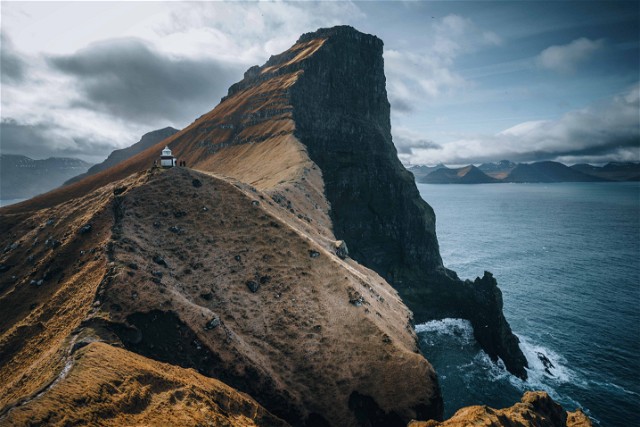


The Faroe Islands will surprise you with their raw beauty, tranquility, and dramatic landscape. Located between Iceland and Norway, they belong to Denmark, but you'll feel like you're in a completely different world. Expect steep cliffs, fog creeping over the hills, deep fjords, and a landscape that seems utterly unreal. You'll travel the islands by rented car and use local ferries. You don't need to reserve a whole day for crossings; you can get from one end of the archipelago to the other in an hour and a half. Pack sturdy shoes, because this trip isn't for those who just want to relax. Expect hikes, famous viewpoints, and moments when you'll stand on mountaintops and feel like you're at the end of the world. This isn't just about seeing something new; it's about experiencing something. And you'll be a part of it.
Upon arrival, you pick up your cars and set off to experience the Faroe Islands for the first time. A relaxed pace awaits you, along with accommodation, supplies for the next few days, and above all, your first taste of the local atmosphere. Tórshavn will welcome you with its charming streets, historic core, and unmistakable Nordic tranquility. For dinner, you can head to one of the restaurants, where you'll understand that the Faroe Islands are not just about nature, but also about flavours.
You arrive at the airport in the Faroe Islands, where you'll pick up your rental cars immediately after arrival. The first day will be mainly for acclimatization. You'll move to your accommodation, do some grocery shopping, and use your free time for a walk around the most interesting places in the capital, Tórshavn.
The pace will be slower, allowing you to adjust to the local atmosphere, relax after your journey, and soak up the first impressions of this unique archipelago.

Tórshavn is the largest city in the Faroe Islands and home to most of the local population. Despite this, it's a compact and easy-to-navigate city that you can easily explore on foot. Most of the main sights, such as the oldest parliament building Tinganes, the Skansin lighthouse, or the modern Vesturkirkjan church, are located in the very center. During a walk, you'll notice that even the capital feels calm and cozy, just like other inhabited areas on the islands.
You can end the evening with dinner at one of the renowned restaurants.



Today, you'll immerse yourself in one of the most picturesque corners of the Faroe Islands. Saksun will amaze you with its isolation and dramatic surroundings, where mountains crash into the sea and time seems to stand still. If you crave further exploration, Tjørnuvík awaits with its view of the Risin and Kellingin sea stacks, the mighty Fossá waterfall, the colorful Gjógv with its steep gorge, and the quiet Funningur surrounded by mountains. Each of these villages has its own story – and today you'll experience it firsthand.
A small village with a great atmosphere. Saksun is nestled between mountains in the north of Streymoy island and is one of the most iconic places in the Faroe Islands. Only about ten people live here, but the silence, isolation, and surrounding landscape make this location an unforgettable experience. You can see traditional farmhouses with grass roofs, a small church overlooking the fjord, and a local waterfall. There is also a short walk to a black sand beach, which at low tide reveals a dramatic coastline and views that are among the most photogenic on the islands. Entry to the area costs 200 DKK per person, payment is possible by card. The entrance fee serves to maintain and protect this exceptional place.
Tjørnuvík is one of the northernmost villages on the island of Streymoy and also one of the most picturesque places in the Faroe Islands. Surrounded by mountains and the ocean, it offers exceptional peace and a dramatic landscape. The village is dominated by a black sand beach, from which there is an iconic view of the rock formations Risin and Kellingin, which, according to local legend, represent petrified giants trying to steal the Faroe Islands to Iceland. A car can be conveniently parked in a small parking lot directly in the village, from where it is only a few steps to the beach. The place is ideal for a walk, observing the ocean and finding peaceful moments far from civilization. With a little luck, it is possible to spot whales, which occasionally appear in the surrounding waters, especially in the summer months.

Fossá is the highest waterfall in the Faroe Islands and also one of the most impressive natural phenomena you can see here. The water falls in two stages from a height of almost 140 meters, creating a dramatic backdrop among the mountains, which you hear before you see it. The waterfall is located right by the road between the villages of Haldarsvík and Hvalvík, so it is easily accessible even during a shorter stop. You can park your car in a small parking lot along the road and walk to the bottom of the waterfall in a few minutes. If you are tempted by the view from above, you can go up the path – but the terrain is slippery and requires caution. The reward will be a view of the valley and the power of the falling water from close proximity.

Gjógv is one of the most charming villages on the island of Eysturoy, surrounded by green hills and the raw Atlantic coast. The name of the village means "gorge", and it is precisely this that is its greatest attraction – a deep rock cleft that once served as a natural harbor and today is one of the most photogenic places in the Faroe Islands. From the center of the village, a well-maintained path leads to a rocky viewpoint above the gorge, offering a breathtaking view of the ocean and surrounding cliffs. The walk takes about ten minutes and is easy, ideal for a short stroll before returning to the quiet center with its typical Faroese architecture.
Funningur is one of the oldest villages in the Faroe Islands, and its location in a deep mountain valley makes it feel like a place lost in time. Traditional houses with grass roofs, a 19th-century wooden church, and the quiet of the surrounding mountains create an ideal stop for those seeking peace, authenticity, and the atmosphere of Nordic history. If you decide to climb Slættaratindur, an unforgettable hike awaits you to the highest peak of the Faroe Islands, reaching a height of 880 meters. The route starts at a small parking lot at the highest point of the pass between the villages of Funningur and Gjógv, in an area called Eiðisskarð. The place is easily accessible by car, and in good visibility, you will see a well-trodden path ascending upwards directly from the road. The route is not officially marked, but it is quite frequented and clearly visible in good weather. The ascent leads through open, treeless mountain terrain, across grassy and sometimes rocky terrain. In total, it measures approximately 3.5 to 4 kilometers there and back, with an elevation gain of around 400 meters. The climb will take you about an hour to an hour and a half, depending on your physical fitness, and the descent is significantly faster. Technically, it's not a demanding climb, but in wet or windy conditions, increased caution is needed – the surface can be slippery, and the weather changes very quickly. In the final part of the hike, you climb a wide ridge, from where breathtaking views open up. In clear weather, a large part of the Faroe Islands and exceptionally even Iceland is visible. The summit is marked by a pile of stones and offers the feeling of standing on the roof of the North Atlantic.
Today will be dedicated to the most famous viewpoints of the Faroe Islands. You will hike up to Mount Trælanípa, from where you will have an iconic view of Lake Sørvágsvatn high above the ocean. You will visit the dramatic Múlafossur waterfall cascading from a cliff in the remote village of Gásadalur, which until recently was completely cut off from the world. You will spend the end of the day in the quiet village of Bøur with a view of the islets Tindhólmur and Drangarnir, where you will walk among traditional houses and along the adjacent beach. If you want to end the day in style, you can enjoy dinner at one of the best-located restaurants on the islands.
On the third day, you'll be taken to one of the most iconic places in the Faroe Islands. You'll embark on a hike to Trælanípa mountain, which offers a famous view of Sørvágsvatn lake. Due to a unique perspective, the lake appears to hang high above the ocean. This optical illusion has become the most photographed illusion of the archipelago, and the view from the cliff is one of the biggest attractions of the whole trip.
The route starts at the parking lot in the village of Miðvágur, where the entrance gate is located. Here you pay an entrance fee of 200 DKK per person; you can conveniently pay by card. The subsequent walking path to the viewpoint is easy, measuring approximately three and a half kilometers and taking about 45 minutes one way. It leads across open country along the lake and gradually ascends to the edge of the rocky Trælanípa cliff.
The trail is clearly visible, but it can be muddy in rainy weather, so it's definitely worth taking sturdy and waterproof shoes. The view from the top offers a dramatic combination of rocks, lake, and ocean – and also a view down from the precipice, from where, according to legends, slaves who had committed offenses were thrown down. This hike will reward you not only with exceptional views but also with an atmosphere you won't experience anywhere else. It's among the best that the Faroe Islands have to offer.

A Faeroese legend is associated with this rock, telling of a giant sorceress who tried to drag the islands to Iceland. However, the sun caught her before she could complete her plan, and she turned to stone. She plunged entirely into the ocean – except for one finger, which remains sticking out above the water as a silent reminder. From the parking lot, you can reach the viewpoint via a paved path in about 15 minutes. The path is easy, and the view is definitely worth it.
Next, there's a short drive to the village of Gásadalur on the western edge of Vágar island, which until 2004 was only accessible on foot across a mountain ridge. Today, you can easily reach it through a tunnel, and you'll be treated to one of the most iconic views in the Faroe Islands – the Múlafossur waterfall cascading directly from the cliff into the ocean. You'll park in a small unofficial parking area on a gravel patch right next to the road, roughly in the middle of the village, opposite several houses. From there, you'll walk down a paved path that takes you to the viewpoint in less than ten minutes. The path is straight and well-marked, running alongside a field, and at the end, a panoramic view of the waterfall and dramatic coastline opens up. The view is ideal for taking photos and enjoying a quiet moment overlooking one of the Faroe Islands' most famous symbols.

At the end of the day, you'll stop at the picturesque coastal village of Bøur, which offers one of the most beautiful views of the Tindhólmur and Drangarnir islets. The narrow streets, grassy roofs, and peaceful atmosphere give the place a unique character. You'll walk through the village and the adjacent beach, from where the view of the surrounding cliffs opens up even more. A visit to Bøur is the ideal end to a day full of natural scenery before you return to your accommodation.

A restaurant located in a former barn on the edge of the village. It offers a farm-to-table concept focusing on fresh local ingredients, especially seafood and regional meats, with large windows overlooking the ocean and the surrounding rocky coast.
Today's adventure takes you to the most dramatic corners of the northern Faroe Islands. After hiking up Mount Klakkur, with its stunning views of fjords and islands, you'll travel to the very north of the archipelago. In the remote village of Viðareiði, you'll stroll along the coast, visit the local church, and climb above the cliffs for breathtaking views of a landscape that seems to be at the edge of the world. A quiet and visually powerful day that will stay with you for a long time.
Upon arrival in the north of the islands, a leisurely hike awaits you to Mount Klakkur, which rises above the town of Klaksvík. You can drive to the start of the trail by car along a narrow asphalt road from the town center to the Hálsur saddle, where you can park. From there, continue on foot along a visible, unmarked, but well-trodden path. The climb to the summit takes approximately 30–45 minutes of gentle ascent. The ascent is suitable even for less experienced hikers, however, the terrain can be windy and slippery in the rain, so we recommend sturdy footwear. From the summit, there are views of Klaksvík, the surrounding fjords, and the distant islands of Kalsoy, Kunoy, and Borðoy. In good weather, Klakkur is one of the best easily accessible viewpoints in the Faroe Islands.Upon arrival in the north of the islands, a leisurely hike awaits you to Mount Klakkur, which rises above the town of Klaksvík. You can drive to the start of the trail by car along a narrow asphalt road from the town center to the Hálsur saddle, where you can park. From there, continue on foot along a visible, unmarked, but well-trodden path.

After descending from Klakkur, you'll move to the very north of the Faroe Islands, to the northernmost village of Viðareiði. This picturesque village lies between dramatic cliffs and is surrounded by open countryside with ocean views. Before you set off on a hike, take a stroll around the local church, which is one of the most photogenic on the islands thanks to its location on a narrow spit of land between mountains.
You can park your car in a small parking lot by the church, from where you can set off on foot along the road uphill, towards the rectory. There, the hiking trail leading to Villingadalsfjall mountain begins. You will only go to the first part of it, about halfway up, where a beautiful view back to the village, church, ocean, and steep cliffs of Enniberg island – the northernmost point of the Faroe Islands – opens up. The trail is not officially marked, but it is clearly trodden and clear in good visibility. The first 30-40 minutes of ascent are undemanding, after which it is advisable to turn around and return the same way. The path is not technically demanding, but it can be slippery in wet terrain, so we again recommend sturdy footwear.
After descending, all that awaits you is the transfer to your new accommodation and a well-deserved rest after a day full of views.


Today you'll embark on a journey to Kalsoy island, a place that feels otherworldly. A hike to the iconic Kallur lighthouse awaits, offering breathtaking views, followed by a visit to the mysterious Seal Woman statue, and a ferry ride back across the ocean. Dramatic scenery, powerful stories, and an atmosphere that will stay with you.
The second to last day takes you to the island of Kalsoy, often nicknamed "Little Norway" for its mysterious atmosphere, narrow tunnels, and dramatic coastline. The main goal of the trip is a hike to the Kallur lighthouse, which offers one of the most breathtaking views in the Faroe Islands. During the day, you will also visit the village of Mikladalur, home to the famous Seal Woman statue, commemorating one of the most famous Faroese legends. The ferry to Kalsoy departs from the harbor in Klaksvík and is operated by Strandfaraskip Landsins on line number 56. Tickets cannot be booked in advance, so it is important to arrive at the harbor at least 45 to 60 minutes before departure. If the capacity of the ship allows, you can take your car with you. Otherwise, you can use the local bus, which is timed to the ferry and will take you to the village of Trøllanes, where the hike to the lighthouse begins. Tickets are purchased on site from the attendant or at the harbor kiosk; you can pay by card. Current timetables and other information can be found on the carrier's official website: ssl.fo. The Kalsoy trip combines raw nature, exceptional views, and a strong cultural story. It's a day that definitely ranks among the most impressive in your program.
The trek to Kallur lighthouse starts in the village of Trøllanes at the northern end of Kalsoy island. From the village parking lot, follow the visible grassy path northeast. The path is not marked, but in good visibility, the trail is clear and unmistakable. The ascent takes approximately 35 to 45 minutes with a gentle climb. Along the way, you'll be treated to breathtaking views of the ocean and surrounding cliffs. Finally, you'll reach Kallur lighthouse, from where you can continue briefly along a narrow ridge to the location where the final scene with James Bond's grave from the film No Time to Die was filmed. In fog or strong wind, we recommend extra caution, but it's practically impossible to get lost here.

In the village of Mikladalur, you'll stop by the famous statue of Kópakonan, the seal-woman, closely associated with one of the most well-known Faroese legends. The story of a creature transforming from a seal into a woman and falling in love with a human is a strong part of the local folklore, adding a magical atmosphere to the place. If the seasonal café by the statue is open, you can enjoy a short break overlooking the sea and surrounding cliffs.
After visiting Mikladalur, you will travel back across the island of Kalsoy towards the port of Syðradalur, from where you will take the ferry back to Klaksvík. After disembarking, all that remains is to transfer to your accommodation and get a well-deserved rest after a day full of views, stories and unique experiences.
On your last day, you'll start with a comfortable drive towards the airport – but before you arrive, you'll stop at a café, perhaps Hjá Jóhannu, overlooking the ocean. You'll enjoy coffee and local pastries in a peaceful morning, soak up the last impressions of the atmosphere of the Faroe Islands, and savor the final panoramas before your departure.
Then you depart towards Vágar, ideally arriving at the airport at least three hours before departure. At the same time, you'll arrange car return and check-in stress-free.
Behind you lies a journey that wasn't just about places on a map. It was an expedition into a landscape that does things its own way – harsh and gentle, raw and breathtaking. You walked through fog-covered hills, stood on cliffs where the ocean disappears below, and looked out from heights where only the wind can be heard. You visited villages that seem to have stood forever, and heard stories passed down through generations. The Faroe Islands are not a destination one simply passes through. It's a place that gets under your skin, with its purity, silence, simplicity, and the power of unplanned moments that remain. You took away more than just photos from your trip. You carry an experience that cannot be transferred except by having been truly here. Perhaps you came for the views. But you leave with something deeper: the knowledge that even peace, fog, and emptiness can be precious. And that sometimes it's enough to just stand, breathe, and perceive the world differently. And that is the power of the Faroe Islands.
The Faroe Islands will surprise you with their raw beauty, tranquility, and dramatic landscape. Located between Iceland and Norway, they belong to Denmark, but you'll feel like you're in a completely different world. Expect steep cliffs, fog creeping over the hills, deep fjords, and a landscape that seems utterly unreal. You'll travel the islands by rented car and use local ferries. You don't need to reserve a whole day for crossings; you can get from one end of the archipelago to the other in an hour and a half. Pack sturdy shoes, because this trip isn't for those who just want to relax. Expect hikes, famous viewpoints, and moments when you'll stand on mountaintops and feel like you're at the end of the world. This isn't just about seeing something new; it's about experiencing something. And you'll be a part of it.
Upon arrival, you pick up your cars and set off to experience the Faroe Islands for the first time. A relaxed pace awaits you, along with accommodation, supplies for the next few days, and above all, your first taste of the local atmosphere. Tórshavn will welcome you with its charming streets, historic core, and unmistakable Nordic tranquility. For dinner, you can head to one of the restaurants, where you'll understand that the Faroe Islands are not just about nature, but also about flavours.
You arrive at the airport in the Faroe Islands, where you'll pick up your rental cars immediately after arrival. The first day will be mainly for acclimatization. You'll move to your accommodation, do some grocery shopping, and use your free time for a walk around the most interesting places in the capital, Tórshavn.
The pace will be slower, allowing you to adjust to the local atmosphere, relax after your journey, and soak up the first impressions of this unique archipelago.
Tórshavn is the largest city in the Faroe Islands and home to most of the local population. Despite this, it's a compact and easy-to-navigate city that you can easily explore on foot. Most of the main sights, such as the oldest parliament building Tinganes, the Skansin lighthouse, or the modern Vesturkirkjan church, are located in the very center. During a walk, you'll notice that even the capital feels calm and cozy, just like other inhabited areas on the islands.
You can end the evening with dinner at one of the renowned restaurants.
Today, you'll immerse yourself in one of the most picturesque corners of the Faroe Islands. Saksun will amaze you with its isolation and dramatic surroundings, where mountains crash into the sea and time seems to stand still. If you crave further exploration, Tjørnuvík awaits with its view of the Risin and Kellingin sea stacks, the mighty Fossá waterfall, the colorful Gjógv with its steep gorge, and the quiet Funningur surrounded by mountains. Each of these villages has its own story – and today you'll experience it firsthand.
A small village with a great atmosphere. Saksun is nestled between mountains in the north of Streymoy island and is one of the most iconic places in the Faroe Islands. Only about ten people live here, but the silence, isolation, and surrounding landscape make this location an unforgettable experience. You can see traditional farmhouses with grass roofs, a small church overlooking the fjord, and a local waterfall. There is also a short walk to a black sand beach, which at low tide reveals a dramatic coastline and views that are among the most photogenic on the islands. Entry to the area costs 200 DKK per person, payment is possible by card. The entrance fee serves to maintain and protect this exceptional place.
Tjørnuvík is one of the northernmost villages on the island of Streymoy and also one of the most picturesque places in the Faroe Islands. Surrounded by mountains and the ocean, it offers exceptional peace and a dramatic landscape. The village is dominated by a black sand beach, from which there is an iconic view of the rock formations Risin and Kellingin, which, according to local legend, represent petrified giants trying to steal the Faroe Islands to Iceland. A car can be conveniently parked in a small parking lot directly in the village, from where it is only a few steps to the beach. The place is ideal for a walk, observing the ocean and finding peaceful moments far from civilization. With a little luck, it is possible to spot whales, which occasionally appear in the surrounding waters, especially in the summer months.
Fossá is the highest waterfall in the Faroe Islands and also one of the most impressive natural phenomena you can see here. The water falls in two stages from a height of almost 140 meters, creating a dramatic backdrop among the mountains, which you hear before you see it. The waterfall is located right by the road between the villages of Haldarsvík and Hvalvík, so it is easily accessible even during a shorter stop. You can park your car in a small parking lot along the road and walk to the bottom of the waterfall in a few minutes. If you are tempted by the view from above, you can go up the path – but the terrain is slippery and requires caution. The reward will be a view of the valley and the power of the falling water from close proximity.
Gjógv is one of the most charming villages on the island of Eysturoy, surrounded by green hills and the raw Atlantic coast. The name of the village means "gorge", and it is precisely this that is its greatest attraction – a deep rock cleft that once served as a natural harbor and today is one of the most photogenic places in the Faroe Islands. From the center of the village, a well-maintained path leads to a rocky viewpoint above the gorge, offering a breathtaking view of the ocean and surrounding cliffs. The walk takes about ten minutes and is easy, ideal for a short stroll before returning to the quiet center with its typical Faroese architecture.
Funningur is one of the oldest villages in the Faroe Islands, and its location in a deep mountain valley makes it feel like a place lost in time. Traditional houses with grass roofs, a 19th-century wooden church, and the quiet of the surrounding mountains create an ideal stop for those seeking peace, authenticity, and the atmosphere of Nordic history. If you decide to climb Slættaratindur, an unforgettable hike awaits you to the highest peak of the Faroe Islands, reaching a height of 880 meters. The route starts at a small parking lot at the highest point of the pass between the villages of Funningur and Gjógv, in an area called Eiðisskarð. The place is easily accessible by car, and in good visibility, you will see a well-trodden path ascending upwards directly from the road. The route is not officially marked, but it is quite frequented and clearly visible in good weather. The ascent leads through open, treeless mountain terrain, across grassy and sometimes rocky terrain. In total, it measures approximately 3.5 to 4 kilometers there and back, with an elevation gain of around 400 meters. The climb will take you about an hour to an hour and a half, depending on your physical fitness, and the descent is significantly faster. Technically, it's not a demanding climb, but in wet or windy conditions, increased caution is needed – the surface can be slippery, and the weather changes very quickly. In the final part of the hike, you climb a wide ridge, from where breathtaking views open up. In clear weather, a large part of the Faroe Islands and exceptionally even Iceland is visible. The summit is marked by a pile of stones and offers the feeling of standing on the roof of the North Atlantic.
Today will be dedicated to the most famous viewpoints of the Faroe Islands. You will hike up to Mount Trælanípa, from where you will have an iconic view of Lake Sørvágsvatn high above the ocean. You will visit the dramatic Múlafossur waterfall cascading from a cliff in the remote village of Gásadalur, which until recently was completely cut off from the world. You will spend the end of the day in the quiet village of Bøur with a view of the islets Tindhólmur and Drangarnir, where you will walk among traditional houses and along the adjacent beach. If you want to end the day in style, you can enjoy dinner at one of the best-located restaurants on the islands.
On the third day, you'll be taken to one of the most iconic places in the Faroe Islands. You'll embark on a hike to Trælanípa mountain, which offers a famous view of Sørvágsvatn lake. Due to a unique perspective, the lake appears to hang high above the ocean. This optical illusion has become the most photographed illusion of the archipelago, and the view from the cliff is one of the biggest attractions of the whole trip.
The route starts at the parking lot in the village of Miðvágur, where the entrance gate is located. Here you pay an entrance fee of 200 DKK per person; you can conveniently pay by card. The subsequent walking path to the viewpoint is easy, measuring approximately three and a half kilometers and taking about 45 minutes one way. It leads across open country along the lake and gradually ascends to the edge of the rocky Trælanípa cliff.
The trail is clearly visible, but it can be muddy in rainy weather, so it's definitely worth taking sturdy and waterproof shoes. The view from the top offers a dramatic combination of rocks, lake, and ocean – and also a view down from the precipice, from where, according to legends, slaves who had committed offenses were thrown down. This hike will reward you not only with exceptional views but also with an atmosphere you won't experience anywhere else. It's among the best that the Faroe Islands have to offer.
A Faeroese legend is associated with this rock, telling of a giant sorceress who tried to drag the islands to Iceland. However, the sun caught her before she could complete her plan, and she turned to stone. She plunged entirely into the ocean – except for one finger, which remains sticking out above the water as a silent reminder. From the parking lot, you can reach the viewpoint via a paved path in about 15 minutes. The path is easy, and the view is definitely worth it.
Next, there's a short drive to the village of Gásadalur on the western edge of Vágar island, which until 2004 was only accessible on foot across a mountain ridge. Today, you can easily reach it through a tunnel, and you'll be treated to one of the most iconic views in the Faroe Islands – the Múlafossur waterfall cascading directly from the cliff into the ocean. You'll park in a small unofficial parking area on a gravel patch right next to the road, roughly in the middle of the village, opposite several houses. From there, you'll walk down a paved path that takes you to the viewpoint in less than ten minutes. The path is straight and well-marked, running alongside a field, and at the end, a panoramic view of the waterfall and dramatic coastline opens up. The view is ideal for taking photos and enjoying a quiet moment overlooking one of the Faroe Islands' most famous symbols.
At the end of the day, you'll stop at the picturesque coastal village of Bøur, which offers one of the most beautiful views of the Tindhólmur and Drangarnir islets. The narrow streets, grassy roofs, and peaceful atmosphere give the place a unique character. You'll walk through the village and the adjacent beach, from where the view of the surrounding cliffs opens up even more. A visit to Bøur is the ideal end to a day full of natural scenery before you return to your accommodation.
A restaurant located in a former barn on the edge of the village. It offers a farm-to-table concept focusing on fresh local ingredients, especially seafood and regional meats, with large windows overlooking the ocean and the surrounding rocky coast.
Today's adventure takes you to the most dramatic corners of the northern Faroe Islands. After hiking up Mount Klakkur, with its stunning views of fjords and islands, you'll travel to the very north of the archipelago. In the remote village of Viðareiði, you'll stroll along the coast, visit the local church, and climb above the cliffs for breathtaking views of a landscape that seems to be at the edge of the world. A quiet and visually powerful day that will stay with you for a long time.
Upon arrival in the north of the islands, a leisurely hike awaits you to Mount Klakkur, which rises above the town of Klaksvík. You can drive to the start of the trail by car along a narrow asphalt road from the town center to the Hálsur saddle, where you can park. From there, continue on foot along a visible, unmarked, but well-trodden path. The climb to the summit takes approximately 30–45 minutes of gentle ascent. The ascent is suitable even for less experienced hikers, however, the terrain can be windy and slippery in the rain, so we recommend sturdy footwear. From the summit, there are views of Klaksvík, the surrounding fjords, and the distant islands of Kalsoy, Kunoy, and Borðoy. In good weather, Klakkur is one of the best easily accessible viewpoints in the Faroe Islands.Upon arrival in the north of the islands, a leisurely hike awaits you to Mount Klakkur, which rises above the town of Klaksvík. You can drive to the start of the trail by car along a narrow asphalt road from the town center to the Hálsur saddle, where you can park. From there, continue on foot along a visible, unmarked, but well-trodden path.
After descending from Klakkur, you'll move to the very north of the Faroe Islands, to the northernmost village of Viðareiði. This picturesque village lies between dramatic cliffs and is surrounded by open countryside with ocean views. Before you set off on a hike, take a stroll around the local church, which is one of the most photogenic on the islands thanks to its location on a narrow spit of land between mountains.
You can park your car in a small parking lot by the church, from where you can set off on foot along the road uphill, towards the rectory. There, the hiking trail leading to Villingadalsfjall mountain begins. You will only go to the first part of it, about halfway up, where a beautiful view back to the village, church, ocean, and steep cliffs of Enniberg island – the northernmost point of the Faroe Islands – opens up. The trail is not officially marked, but it is clearly trodden and clear in good visibility. The first 30-40 minutes of ascent are undemanding, after which it is advisable to turn around and return the same way. The path is not technically demanding, but it can be slippery in wet terrain, so we again recommend sturdy footwear.
After descending, all that awaits you is the transfer to your new accommodation and a well-deserved rest after a day full of views.
Today you'll embark on a journey to Kalsoy island, a place that feels otherworldly. A hike to the iconic Kallur lighthouse awaits, offering breathtaking views, followed by a visit to the mysterious Seal Woman statue, and a ferry ride back across the ocean. Dramatic scenery, powerful stories, and an atmosphere that will stay with you.
The second to last day takes you to the island of Kalsoy, often nicknamed "Little Norway" for its mysterious atmosphere, narrow tunnels, and dramatic coastline. The main goal of the trip is a hike to the Kallur lighthouse, which offers one of the most breathtaking views in the Faroe Islands. During the day, you will also visit the village of Mikladalur, home to the famous Seal Woman statue, commemorating one of the most famous Faroese legends. The ferry to Kalsoy departs from the harbor in Klaksvík and is operated by Strandfaraskip Landsins on line number 56. Tickets cannot be booked in advance, so it is important to arrive at the harbor at least 45 to 60 minutes before departure. If the capacity of the ship allows, you can take your car with you. Otherwise, you can use the local bus, which is timed to the ferry and will take you to the village of Trøllanes, where the hike to the lighthouse begins. Tickets are purchased on site from the attendant or at the harbor kiosk; you can pay by card. Current timetables and other information can be found on the carrier's official website: ssl.fo. The Kalsoy trip combines raw nature, exceptional views, and a strong cultural story. It's a day that definitely ranks among the most impressive in your program.
The trek to Kallur lighthouse starts in the village of Trøllanes at the northern end of Kalsoy island. From the village parking lot, follow the visible grassy path northeast. The path is not marked, but in good visibility, the trail is clear and unmistakable. The ascent takes approximately 35 to 45 minutes with a gentle climb. Along the way, you'll be treated to breathtaking views of the ocean and surrounding cliffs. Finally, you'll reach Kallur lighthouse, from where you can continue briefly along a narrow ridge to the location where the final scene with James Bond's grave from the film No Time to Die was filmed. In fog or strong wind, we recommend extra caution, but it's practically impossible to get lost here.
In the village of Mikladalur, you'll stop by the famous statue of Kópakonan, the seal-woman, closely associated with one of the most well-known Faroese legends. The story of a creature transforming from a seal into a woman and falling in love with a human is a strong part of the local folklore, adding a magical atmosphere to the place. If the seasonal café by the statue is open, you can enjoy a short break overlooking the sea and surrounding cliffs.
After visiting Mikladalur, you will travel back across the island of Kalsoy towards the port of Syðradalur, from where you will take the ferry back to Klaksvík. After disembarking, all that remains is to transfer to your accommodation and get a well-deserved rest after a day full of views, stories and unique experiences.
On your last day, you'll start with a comfortable drive towards the airport – but before you arrive, you'll stop at a café, perhaps Hjá Jóhannu, overlooking the ocean. You'll enjoy coffee and local pastries in a peaceful morning, soak up the last impressions of the atmosphere of the Faroe Islands, and savor the final panoramas before your departure.
Then you depart towards Vágar, ideally arriving at the airport at least three hours before departure. At the same time, you'll arrange car return and check-in stress-free.
Behind you lies a journey that wasn't just about places on a map. It was an expedition into a landscape that does things its own way – harsh and gentle, raw and breathtaking. You walked through fog-covered hills, stood on cliffs where the ocean disappears below, and looked out from heights where only the wind can be heard. You visited villages that seem to have stood forever, and heard stories passed down through generations. The Faroe Islands are not a destination one simply passes through. It's a place that gets under your skin, with its purity, silence, simplicity, and the power of unplanned moments that remain. You took away more than just photos from your trip. You carry an experience that cannot be transferred except by having been truly here. Perhaps you came for the views. But you leave with something deeper: the knowledge that even peace, fog, and emptiness can be precious. And that sometimes it's enough to just stand, breathe, and perceive the world differently. And that is the power of the Faroe Islands.




itinerary by Teru Menclova
The adventure awaits
The Faroe Islands will surprise you with their raw beauty, tranquility, and dramatic landscape. Located between Iceland and Norway, they belong to Denmark, but you'll feel like you're in a completely different world. Expect steep cliffs, fog creeping over the hills, deep fjords, and a landscape that seems utterly unreal. You'll travel the islands by rented car and use local ferries. You don't need to reserve a whole day for crossings; you can get from one end of the archipelago to the other in an hour and a half. Pack sturdy shoes, because this trip isn't for those who just want to relax. Expect hikes, famous viewpoints, and moments when you'll stand on mountaintops and feel like you're at the end of the world. This isn't just about seeing something new; it's about experiencing something. And you'll be a part of it.
Upon arrival, you pick up your cars and set off to experience the Faroe Islands for the first time. A relaxed pace awaits you, along with accommodation, supplies for the next few days, and above all, your first taste of the local atmosphere. Tórshavn will welcome you with its charming streets, historic core, and unmistakable Nordic tranquility. For dinner, you can head to one of the restaurants, where you'll understand that the Faroe Islands are not just about nature, but also about flavours.
You arrive at the airport in the Faroe Islands, where you'll pick up your rental cars immediately after arrival. The first day will be mainly for acclimatization. You'll move to your accommodation, do some grocery shopping, and use your free time for a walk around the most interesting places in the capital, Tórshavn.
The pace will be slower, allowing you to adjust to the local atmosphere, relax after your journey, and soak up the first impressions of this unique archipelago.
Tórshavn is the largest city in the Faroe Islands and home to most of the local population. Despite this, it's a compact and easy-to-navigate city that you can easily explore on foot. Most of the main sights, such as the oldest parliament building Tinganes, the Skansin lighthouse, or the modern Vesturkirkjan church, are located in the very center. During a walk, you'll notice that even the capital feels calm and cozy, just like other inhabited areas on the islands.
You can end the evening with dinner at one of the renowned restaurants.
Today, you'll immerse yourself in one of the most picturesque corners of the Faroe Islands. Saksun will amaze you with its isolation and dramatic surroundings, where mountains crash into the sea and time seems to stand still. If you crave further exploration, Tjørnuvík awaits with its view of the Risin and Kellingin sea stacks, the mighty Fossá waterfall, the colorful Gjógv with its steep gorge, and the quiet Funningur surrounded by mountains. Each of these villages has its own story – and today you'll experience it firsthand.
A small village with a great atmosphere. Saksun is nestled between mountains in the north of Streymoy island and is one of the most iconic places in the Faroe Islands. Only about ten people live here, but the silence, isolation, and surrounding landscape make this location an unforgettable experience. You can see traditional farmhouses with grass roofs, a small church overlooking the fjord, and a local waterfall. There is also a short walk to a black sand beach, which at low tide reveals a dramatic coastline and views that are among the most photogenic on the islands. Entry to the area costs 200 DKK per person, payment is possible by card. The entrance fee serves to maintain and protect this exceptional place.
Tjørnuvík is one of the northernmost villages on the island of Streymoy and also one of the most picturesque places in the Faroe Islands. Surrounded by mountains and the ocean, it offers exceptional peace and a dramatic landscape. The village is dominated by a black sand beach, from which there is an iconic view of the rock formations Risin and Kellingin, which, according to local legend, represent petrified giants trying to steal the Faroe Islands to Iceland. A car can be conveniently parked in a small parking lot directly in the village, from where it is only a few steps to the beach. The place is ideal for a walk, observing the ocean and finding peaceful moments far from civilization. With a little luck, it is possible to spot whales, which occasionally appear in the surrounding waters, especially in the summer months.
Fossá is the highest waterfall in the Faroe Islands and also one of the most impressive natural phenomena you can see here. The water falls in two stages from a height of almost 140 meters, creating a dramatic backdrop among the mountains, which you hear before you see it. The waterfall is located right by the road between the villages of Haldarsvík and Hvalvík, so it is easily accessible even during a shorter stop. You can park your car in a small parking lot along the road and walk to the bottom of the waterfall in a few minutes. If you are tempted by the view from above, you can go up the path – but the terrain is slippery and requires caution. The reward will be a view of the valley and the power of the falling water from close proximity.
Gjógv is one of the most charming villages on the island of Eysturoy, surrounded by green hills and the raw Atlantic coast. The name of the village means "gorge", and it is precisely this that is its greatest attraction – a deep rock cleft that once served as a natural harbor and today is one of the most photogenic places in the Faroe Islands. From the center of the village, a well-maintained path leads to a rocky viewpoint above the gorge, offering a breathtaking view of the ocean and surrounding cliffs. The walk takes about ten minutes and is easy, ideal for a short stroll before returning to the quiet center with its typical Faroese architecture.
Funningur is one of the oldest villages in the Faroe Islands, and its location in a deep mountain valley makes it feel like a place lost in time. Traditional houses with grass roofs, a 19th-century wooden church, and the quiet of the surrounding mountains create an ideal stop for those seeking peace, authenticity, and the atmosphere of Nordic history. If you decide to climb Slættaratindur, an unforgettable hike awaits you to the highest peak of the Faroe Islands, reaching a height of 880 meters. The route starts at a small parking lot at the highest point of the pass between the villages of Funningur and Gjógv, in an area called Eiðisskarð. The place is easily accessible by car, and in good visibility, you will see a well-trodden path ascending upwards directly from the road. The route is not officially marked, but it is quite frequented and clearly visible in good weather. The ascent leads through open, treeless mountain terrain, across grassy and sometimes rocky terrain. In total, it measures approximately 3.5 to 4 kilometers there and back, with an elevation gain of around 400 meters. The climb will take you about an hour to an hour and a half, depending on your physical fitness, and the descent is significantly faster. Technically, it's not a demanding climb, but in wet or windy conditions, increased caution is needed – the surface can be slippery, and the weather changes very quickly. In the final part of the hike, you climb a wide ridge, from where breathtaking views open up. In clear weather, a large part of the Faroe Islands and exceptionally even Iceland is visible. The summit is marked by a pile of stones and offers the feeling of standing on the roof of the North Atlantic.
Today will be dedicated to the most famous viewpoints of the Faroe Islands. You will hike up to Mount Trælanípa, from where you will have an iconic view of Lake Sørvágsvatn high above the ocean. You will visit the dramatic Múlafossur waterfall cascading from a cliff in the remote village of Gásadalur, which until recently was completely cut off from the world. You will spend the end of the day in the quiet village of Bøur with a view of the islets Tindhólmur and Drangarnir, where you will walk among traditional houses and along the adjacent beach. If you want to end the day in style, you can enjoy dinner at one of the best-located restaurants on the islands.
On the third day, you'll be taken to one of the most iconic places in the Faroe Islands. You'll embark on a hike to Trælanípa mountain, which offers a famous view of Sørvágsvatn lake. Due to a unique perspective, the lake appears to hang high above the ocean. This optical illusion has become the most photographed illusion of the archipelago, and the view from the cliff is one of the biggest attractions of the whole trip.
The route starts at the parking lot in the village of Miðvágur, where the entrance gate is located. Here you pay an entrance fee of 200 DKK per person; you can conveniently pay by card. The subsequent walking path to the viewpoint is easy, measuring approximately three and a half kilometers and taking about 45 minutes one way. It leads across open country along the lake and gradually ascends to the edge of the rocky Trælanípa cliff.
The trail is clearly visible, but it can be muddy in rainy weather, so it's definitely worth taking sturdy and waterproof shoes. The view from the top offers a dramatic combination of rocks, lake, and ocean – and also a view down from the precipice, from where, according to legends, slaves who had committed offenses were thrown down. This hike will reward you not only with exceptional views but also with an atmosphere you won't experience anywhere else. It's among the best that the Faroe Islands have to offer.
A Faeroese legend is associated with this rock, telling of a giant sorceress who tried to drag the islands to Iceland. However, the sun caught her before she could complete her plan, and she turned to stone. She plunged entirely into the ocean – except for one finger, which remains sticking out above the water as a silent reminder. From the parking lot, you can reach the viewpoint via a paved path in about 15 minutes. The path is easy, and the view is definitely worth it.
Next, there's a short drive to the village of Gásadalur on the western edge of Vágar island, which until 2004 was only accessible on foot across a mountain ridge. Today, you can easily reach it through a tunnel, and you'll be treated to one of the most iconic views in the Faroe Islands – the Múlafossur waterfall cascading directly from the cliff into the ocean. You'll park in a small unofficial parking area on a gravel patch right next to the road, roughly in the middle of the village, opposite several houses. From there, you'll walk down a paved path that takes you to the viewpoint in less than ten minutes. The path is straight and well-marked, running alongside a field, and at the end, a panoramic view of the waterfall and dramatic coastline opens up. The view is ideal for taking photos and enjoying a quiet moment overlooking one of the Faroe Islands' most famous symbols.
At the end of the day, you'll stop at the picturesque coastal village of Bøur, which offers one of the most beautiful views of the Tindhólmur and Drangarnir islets. The narrow streets, grassy roofs, and peaceful atmosphere give the place a unique character. You'll walk through the village and the adjacent beach, from where the view of the surrounding cliffs opens up even more. A visit to Bøur is the ideal end to a day full of natural scenery before you return to your accommodation.
A restaurant located in a former barn on the edge of the village. It offers a farm-to-table concept focusing on fresh local ingredients, especially seafood and regional meats, with large windows overlooking the ocean and the surrounding rocky coast.
Today's adventure takes you to the most dramatic corners of the northern Faroe Islands. After hiking up Mount Klakkur, with its stunning views of fjords and islands, you'll travel to the very north of the archipelago. In the remote village of Viðareiði, you'll stroll along the coast, visit the local church, and climb above the cliffs for breathtaking views of a landscape that seems to be at the edge of the world. A quiet and visually powerful day that will stay with you for a long time.
Upon arrival in the north of the islands, a leisurely hike awaits you to Mount Klakkur, which rises above the town of Klaksvík. You can drive to the start of the trail by car along a narrow asphalt road from the town center to the Hálsur saddle, where you can park. From there, continue on foot along a visible, unmarked, but well-trodden path. The climb to the summit takes approximately 30–45 minutes of gentle ascent. The ascent is suitable even for less experienced hikers, however, the terrain can be windy and slippery in the rain, so we recommend sturdy footwear. From the summit, there are views of Klaksvík, the surrounding fjords, and the distant islands of Kalsoy, Kunoy, and Borðoy. In good weather, Klakkur is one of the best easily accessible viewpoints in the Faroe Islands.Upon arrival in the north of the islands, a leisurely hike awaits you to Mount Klakkur, which rises above the town of Klaksvík. You can drive to the start of the trail by car along a narrow asphalt road from the town center to the Hálsur saddle, where you can park. From there, continue on foot along a visible, unmarked, but well-trodden path.
After descending from Klakkur, you'll move to the very north of the Faroe Islands, to the northernmost village of Viðareiði. This picturesque village lies between dramatic cliffs and is surrounded by open countryside with ocean views. Before you set off on a hike, take a stroll around the local church, which is one of the most photogenic on the islands thanks to its location on a narrow spit of land between mountains.
You can park your car in a small parking lot by the church, from where you can set off on foot along the road uphill, towards the rectory. There, the hiking trail leading to Villingadalsfjall mountain begins. You will only go to the first part of it, about halfway up, where a beautiful view back to the village, church, ocean, and steep cliffs of Enniberg island – the northernmost point of the Faroe Islands – opens up. The trail is not officially marked, but it is clearly trodden and clear in good visibility. The first 30-40 minutes of ascent are undemanding, after which it is advisable to turn around and return the same way. The path is not technically demanding, but it can be slippery in wet terrain, so we again recommend sturdy footwear.
After descending, all that awaits you is the transfer to your new accommodation and a well-deserved rest after a day full of views.
Today you'll embark on a journey to Kalsoy island, a place that feels otherworldly. A hike to the iconic Kallur lighthouse awaits, offering breathtaking views, followed by a visit to the mysterious Seal Woman statue, and a ferry ride back across the ocean. Dramatic scenery, powerful stories, and an atmosphere that will stay with you.
The second to last day takes you to the island of Kalsoy, often nicknamed "Little Norway" for its mysterious atmosphere, narrow tunnels, and dramatic coastline. The main goal of the trip is a hike to the Kallur lighthouse, which offers one of the most breathtaking views in the Faroe Islands. During the day, you will also visit the village of Mikladalur, home to the famous Seal Woman statue, commemorating one of the most famous Faroese legends. The ferry to Kalsoy departs from the harbor in Klaksvík and is operated by Strandfaraskip Landsins on line number 56. Tickets cannot be booked in advance, so it is important to arrive at the harbor at least 45 to 60 minutes before departure. If the capacity of the ship allows, you can take your car with you. Otherwise, you can use the local bus, which is timed to the ferry and will take you to the village of Trøllanes, where the hike to the lighthouse begins. Tickets are purchased on site from the attendant or at the harbor kiosk; you can pay by card. Current timetables and other information can be found on the carrier's official website: ssl.fo. The Kalsoy trip combines raw nature, exceptional views, and a strong cultural story. It's a day that definitely ranks among the most impressive in your program.
The trek to Kallur lighthouse starts in the village of Trøllanes at the northern end of Kalsoy island. From the village parking lot, follow the visible grassy path northeast. The path is not marked, but in good visibility, the trail is clear and unmistakable. The ascent takes approximately 35 to 45 minutes with a gentle climb. Along the way, you'll be treated to breathtaking views of the ocean and surrounding cliffs. Finally, you'll reach Kallur lighthouse, from where you can continue briefly along a narrow ridge to the location where the final scene with James Bond's grave from the film No Time to Die was filmed. In fog or strong wind, we recommend extra caution, but it's practically impossible to get lost here.
In the village of Mikladalur, you'll stop by the famous statue of Kópakonan, the seal-woman, closely associated with one of the most well-known Faroese legends. The story of a creature transforming from a seal into a woman and falling in love with a human is a strong part of the local folklore, adding a magical atmosphere to the place. If the seasonal café by the statue is open, you can enjoy a short break overlooking the sea and surrounding cliffs.
After visiting Mikladalur, you will travel back across the island of Kalsoy towards the port of Syðradalur, from where you will take the ferry back to Klaksvík. After disembarking, all that remains is to transfer to your accommodation and get a well-deserved rest after a day full of views, stories and unique experiences.
On your last day, you'll start with a comfortable drive towards the airport – but before you arrive, you'll stop at a café, perhaps Hjá Jóhannu, overlooking the ocean. You'll enjoy coffee and local pastries in a peaceful morning, soak up the last impressions of the atmosphere of the Faroe Islands, and savor the final panoramas before your departure.
Then you depart towards Vágar, ideally arriving at the airport at least three hours before departure. At the same time, you'll arrange car return and check-in stress-free.
Behind you lies a journey that wasn't just about places on a map. It was an expedition into a landscape that does things its own way – harsh and gentle, raw and breathtaking. You walked through fog-covered hills, stood on cliffs where the ocean disappears below, and looked out from heights where only the wind can be heard. You visited villages that seem to have stood forever, and heard stories passed down through generations. The Faroe Islands are not a destination one simply passes through. It's a place that gets under your skin, with its purity, silence, simplicity, and the power of unplanned moments that remain. You took away more than just photos from your trip. You carry an experience that cannot be transferred except by having been truly here. Perhaps you came for the views. But you leave with something deeper: the knowledge that even peace, fog, and emptiness can be precious. And that sometimes it's enough to just stand, breathe, and perceive the world differently. And that is the power of the Faroe Islands.